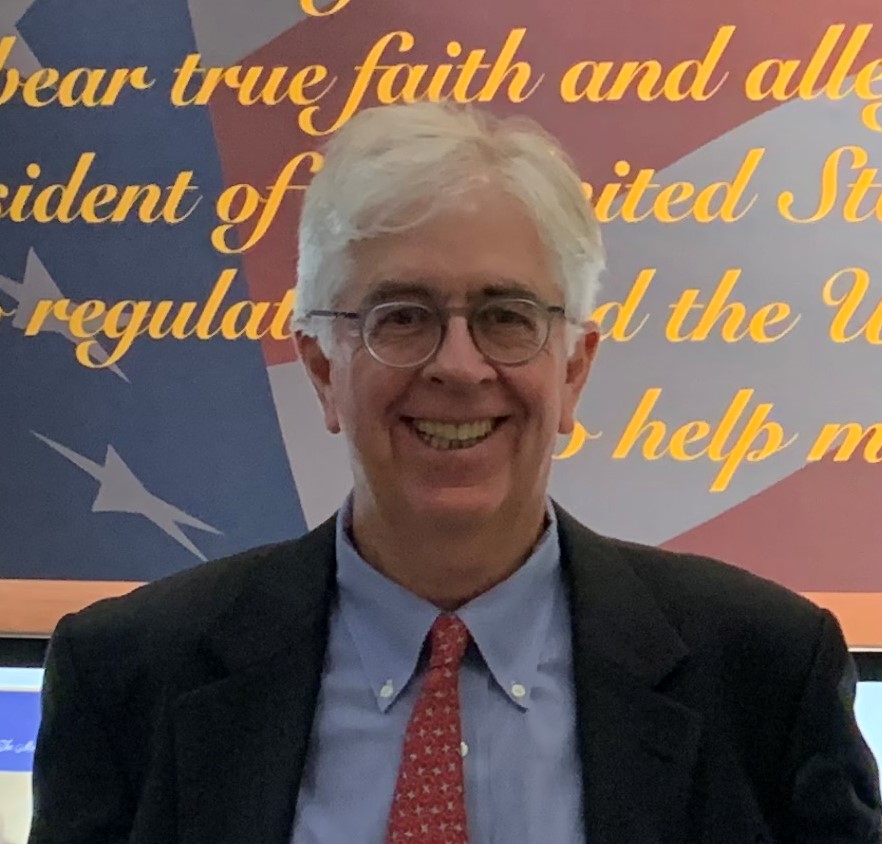
 Thomas J. Ross was born in Brooklyn, New York in 1954, grew up in Darien and graduated from Darien High School in 1973. He received a BS in Economics from the University of Dayton in 1977 and an MBA from Pace University in 1981. He has had a long career in the financial services industry starting in retail banking and then product management with Citibank and EF Hutton. He then joined the Stamford office of Shearson Lehman Brothers as a Financial Advisor in 1991. He stayed with the company as it morphed into many different firms until it became Morgan Stanley where he is now a Senior Vice President. Tom is a lifelong sailor and a long-time member of the Noroton Yacht Club and the Darien Boat Club. Tom has been active in town where volunteered at Hindley school, spent many years on the town’s RTM and was on the Board of the Darien Community Association (DCA) and a member of their investment Committee. He has been an active volunteer at the Noroton Yacht Club where he was most recently the Commodore. He and his wife, Anne, have three children and enjoy sail boat racing, cruising on their powerboat, tennis and paddle tennis, reading, playing bridge and trying to learn Golf.
Month: November 2020
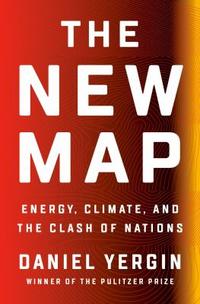 THE NEW MAP
ENERGY, CLIMATE, AND THE CLASH OF NATIONS
The latest on global energy geopolitics from the pen of an expert.
Yergin is the Pulitzer Prize–winning author of multiple magisterial volumes on world affairs as they relate to energy. In The Quest (2011), he described the stormy rivalry between an America struggling to maintain its hegemony in the face of upcoming rivals Russia and China. The following decade has not improved matters, and the current global pandemic is proving to be a disaster. However, bad news often makes for entertaining reading, and Yergin delivers a fascinating and meticulously researched page-turner. He maintains that an energy revolution has transformed the world to America’s benefit. However, it’s not wind and solar but fracking. American oil production had been dropping since 1970, but after 2000, fracking changed the game. In 2018, the U.S. overtook Russia and Saudi Arabia to again become the world’s largest oil producer. Production tripled between 2008 and 2020. Yergin astutely examines how other nations responded. Russia, with an economy “only slightly larger than Spain’s,” depends on oil income as much as the old Soviet Union. Responding to American oil sanctions, Putin has vastly improved relations with China, by many measures the world’s leading economy. “China,” writes the author, “has become what Britain had been during the industrial revolution—the manufacturing ‘workshop of the world.’ ” It’s already the largest producer of steel, aluminum, and computers as well as the largest energy consumer. Turning to the Middle East, Yergin describes an unhappy collection of failed states, civil wars, oppressive theocracies, bloody insurgencies, and wealthy ministates, all dealing with plummeting oil prices. The author views Trump with the same mild disapproval he applies to Putin and China’s Xi Jinping, and he chastises environmentalists for getting certain facts wrong. Yergin accepts that humans have dramatically affected the climate, but he doubts the practicality of proposed solutions.
Required reading. Another winner from a master.