Author: Webmaster (Page 21 of 98)

Robert Dilenschneider, “Power, Influence and Civility,” Sept 18, 2024

Robert Dilenschneider, a longtime Darien resident and DMA member,  is frequently called upon by the media to provide commentary and strategic public relations insights on major news stories. He has counseled major corporations, professional groups, trade associations and educational institutions, and has assisted clients in dealings with regulatory agencies, labor unions, and consumer groups, among others.Bob formed The Dilenschneider Group in October, 1991. Headquartered in New York and Chicago, the Firm provides strategic advice and counsel to Fortune 500 companies and leading families and individuals around the world, with experience in fields ranging from mergers and acquisitions and crisis communications to marketing, government affairs and international media.

Bob has written a number of books, including this summer’s The Ultimate Guide to Power & Influence: Everything You Need to Know.

Prior to forming his own firm, Bob served as president and chief executive officer of Hill and Knowlton, Inc. from 1986 to 1991, tripling that Firm’s revenues to nearly $200 million and delivering more than $30 million in profit. He was with that organization for nearly 25 years.

He started in public relations in 1967 in New York, shortly after receiving an M.A. in journalism from The Ohio State University, and a B.A. from the University of Notre Dame.

In 2012 The Dilenschneider Group established the Civility in America Lecture Series, which features many of the nation’s leading thinkers from a wide variety of professions and provides a perspective on what must be done to restore civility in our country.

Speaker arranged by Tom Igoe.

Summary

Robert Dilenschneider spoke of the key principles for leadership as the importance of honesty, listening, compromise, and admitting mistakes in leadership. He spoke about the upcoming election, stressing its significance and urging people to vote despite the challenges posed by the candidates. Furthermore, he touched on the global impact of political leaders and emphasizes the need for better leadership, both in the U.S. and internationally.

Bob offered his views on the media, social media’s impact on society, and the importance of effective crisis management. Drawing from his professional experiences, he shared insights into the importance of surrounding oneself with capable teams during crises, admitting mistakes promptly, and learning from them. He drew examples from prominent figures like FDR, Jack Welch, and consumer products such as Tylenol, illustrating the lasting impact of leadership decisions on public trust and organizational success.

In summary, his talk discussed leadership, power, responsibility, and influence in the context of business and politics, with a focus on integrity, decision-making, and the importance of civility in a polarized society.

Video of the Presentation 

Kit Hinrichs, “America’s National Icon: Stars and Stripes,” Sept 11, 2024

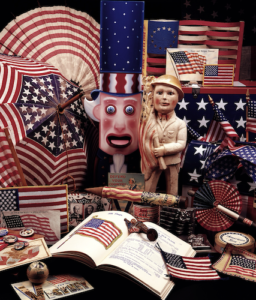
September 11, 2001 disrupted so much of our society, our security, our sense of safety. It also changed our relationship with our flag. After 9/11, the flag became ubiquitous—flying in communities, businesses, at events, and “flying” flat as decals everywhere. It has also been co-opted by partisanship. Yet we all remember an earlier time when it was not just about patriotism; it was also a whimsical theme that celebrated Americanism…just an easier way of life for us, perhaps with greater innocence. No one can remind of the imagery of that era like Kit Hinrichs, with his rich collection of amusing and idiosyncratic applications of the stars and stripes.

From one of the world’s leading graphic designers comes a stunning tribute to America’s most enduring icon-the Stars and Stripes.The Revolutionary Congress resolved in 1777 that “the flag of the United States be 13 stripes, alternate red and white, that the Union be 13 white stars in a blue field representing a new constellation.” Since that time, the American flag has been raised high in wartime triumph and peacetime celebration; burned in fervent protest; sewn lovingly onto quilts, caps, pillows, and bags; appropriated by the commercial sphere to sell goods as varied as cigars, and designer clothing, and rock-and-roll albums; and faithfully honored every 4th of July to celebrate America’s independence. This collection of more than 3,000 Stars and Stripes artifacts ranges from Civil War-era banners and Native American braided moccasins to an early 20th-century “friendship” kimono and original flag art by several of the world’s leading designers.

Kit Hinrichs, noted graphic designer and American flag collector, will give a profusely illustrated talk on America’s national icon—the stars and stripes. His conversation will include facts, myths and legends behind the flag over its nearly 250-year history.  Kit will discuss how this single piece of cloth has enmeshed  itself into our American culture from its 18th century origin until today.

Kit’s assemblage of American memorabilia numbers in the thousands. His only family heirloom, a 36 star handsewn wool flag sewn by his great, great aunt in 1865, is the corner stone of the collection.

In addition to historical flags, the collection now includes Navajo Weavings, Toy Soldiers, Antique Quilts, Political Buttons, Patriotic Posters, Children’s Toys and Games, Anti-war images, Postal Stamps, Tobacciana, Historic Photographs and volumes of pieces of Ephemera.

Kit Hinrichs served as principal in several design offices in New York and San Francisco and spent 23 years as a partner in the international design consultancy Pentagram, before opening Studio Hinrichs in 2009. His design experience incorporates a wide range of projects, including brand development, promotion, packaging, environmental graphics, editorial and exhibition design. He is also a noted American Flag collector and founder of the Stars & Stripes Foundation.

Kit’s work is included in the permanent collections of the Museum of Modern Art, New York, the San Francisco Museum of Modern Art, the Denver Museum of Art, the Los Angeles County Museum of Art and the Letterform Archive. In addition to authoring “Narrative Design,” he has co-authored other books on design .including “Typewise” and “The Pentagram Papers.” He co-founded @issue: The Journal of Business and Design.

Kit has had flag exhibitions in museums across the country, including New York, Louisville, Doylestown,, Reno, Los Angeles and San Francisco. He is an author of “Long May She Wave” A Graphic history of the American Flag. He is in the process of creating a new American flag book for the 250th anniversary of the United States, titled “Broad Stripes/Bright Stars “,

Summary

In this illustrated talk, Kit Hinrichs shared his personal passion for the American flag, discussing its history, myths, and facts. His personal collection includes more than seven thousand flag-related memorabilia, with an early inspiration being a 36-star wool flag sewn by his great-great-aunt in 1865. This vast collection also includes historical flags, Navajo weavings, toy soldiers, and antique quilts. Hinrichs described his joy in exploring the iconography of the American flag.

During the presentation, Hinrichs engaged the audience with a quiz about the American flag’s history and myths. The questions ranged from who designed the American flag (not Betsy Ross, but Francis Hopkinson, for which he was paid two jugs of rum) to the legalities of flag burning (it is both a form of free speech and the official method of retiring a flag). He also touched on how the flag’s design evolved with the addition of new states, and the longest-serving flag design being the 50-star version, in use since 1960.

Hinrichs elaborated on his collection of American memorabilia. Over the years, this passion grew into a substantial collection of over 7,500 items, including flags, postcards, toy soldiers, cookie molds, spoons, and compacts. He highlighted items from significant historical moments, such as World War I fans, patriotic women’s magazines, and stamp cancellations featuring the flag.

The talk moved through various ways the flag has been represented in American culture, from military formations creating “living flags” in the early 20th century to art, product packaging, and propaganda. Hinrichs shared insights into folk art and fine art representations of the flag, with examples from Native American beadwork, Navajo textiles, and Depression-era quilting.

Hinrichs also explored the commercialization of the flag, including its use in advertisements, product branding, and promotional materials. He cited examples of flags on candy boxes, tobacco tins, and advertising banners, showcasing how the flag permeated everyday American life.

In a lighter moment, he shared anecdotes about collecting, including buying entire sets of toy soldiers just to acquire a single flag bearer figure. His collection features over 500 flag bearers, each with unique details that represent different aspects of American history.

The talk ended on the topic of the flag in times of war, particularly its use in propaganda and as a symbol of patriotism. From World War I posters to the iconic image of the flag-raising at Iwo Jima during World War II, Hinrichs illustrated how the flag has been a powerful tool for rallying national pride and support during conflict.

In closing, Hinrichs shared a personal design he created after 9/11, a tribute to the first responders and victims of the tragedy. He left the audience with a deeper appreciation for the multifaceted history of the American flag and its continued significance in American culture.

The event concluded with a brief Q&A session, where Hinrichs addressed questions about flag myths, including the belief that the flag should never touch the ground (which is false, as long as it is not damaged), and confirmed that the U.S. flag is unique in being designed to adapt to the addition of new states. The presentation offered a rich exploration of the American flag’s cultural, historical, and artistic significance.

Video Presentation
Roger Silva,” Physical Therapy: How it can help you!” Sept 4, 2024

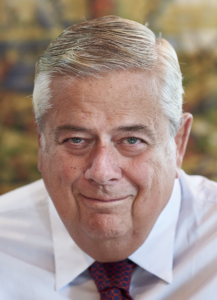
Roger Silva is the founder and owner of Live Well PT, LLC, a concierge physical therapy service for the client who wants a private one-on-one wellness program or physical therapy in the comfort of their home.  He is a Licensed Physical Therapist with over 23 years working in homecare, outpatient, and inpatient facilities treating people with neurological and orthopedic impairments.

Roger is the former Director of Clinical Education and Professor at Connecticut State Community College Norwalk’s Physical Therapist Assistant Program. He received his Master and Doctoral degree in Physical Therapy from the University of St. Augustine for Health Sciences.

He is married with 2 children in college and works out of Norwalk. Needless to say he is an active athlete in pickleball and hockey.

Summary

Roger Silva, a licensed physical therapist with over 23 years of experience, delivered an insightful presentation on the importance of physical therapy, especially for older adults. As the founder of Live Well Physical Therapy, a concierge service providing one-on-one therapy sessions at home, Roger focuses on improving quality of life through movement, strength, flexibility, and injury prevention. His talk emphasized the critical role of physical activity in maintaining independence, preventing falls, and reducing the risk of conditions like arthritis and osteoporosis.

Roger explained that physical therapists (PTs) evaluate, diagnose, and create personalized treatment plans to address movement dysfunctions, whether due to orthopedic or neurological issues. He highlighted the benefits of physical therapy, which include restoring mobility, increasing strength, maintaining bone density, and enhancing flexibility. These factors are essential for preventing injuries and maintaining independence in everyday life.

One of the central themes of Roger’s talk was the importance of preventing falls, particularly for older adults. He explained that lower body weakness, vitamin D deficiency, and poor balance contribute to the increased risk of falling. Roger also touched on environmental risks such as slippery floors, uneven surfaces, and poor lighting. He emphasized that regular strength and balance training can significantly reduce the risk of falling and the associated injuries, such as hip fractures and concussions.

In addition to injury prevention, Roger stressed the importance of reducing pain and minimizing the use of medications, particularly opioids. He advocates for addressing the root causes of pain through physical therapy rather than relying on painkillers. Roger encouraged the audience to engage in regular physical activity, even if it’s as simple as walking, stretching, or light resistance training, to maintain cardiovascular health and overall well-being.

He also addressed questions from the audience, offering practical advice on using canes correctly, the role of aggressive physical exercise in cardiovascular health, and the benefits of aquatic therapy for those with conditions like diabetes or arthritis. Roger concluded by reinforcing the importance of staying active, consulting with a PT for personalized exercise plans, and focusing on maintaining balance, strength, and flexibility as the key to enjoying a healthy, independent life

Arranged by Frank DeLeo

Video of Presentation

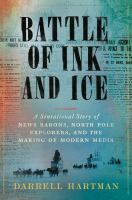
Book Club: Battle of Ink and Ice: A Sensational Story of News Barons, North Pole Explorers, and the Making of Modern Media by Darrell Hartman, Dec 11, 2024

“A sixty-year saga of frostbite and fake news that follows the no-holds-barred battle between two legendary explorers to reach the North Pole, and the newspapers which stopped at nothing to get–and sell–the story. In the fall of 1909, a pair of bitter contests captured the world’s attention. The American explorers Robert Peary and Frederick Cook both claimed to have discovered the North Pole, sparking a vicious feud that was unprecedented in international scientific and geographic circles. At the same time, the rivalry between two powerful New York City newspapers–the storied Herald and the ascendant Times–fanned the flames of the so-called polar controversy, as each paper financially and reputationally committed itself to an opposing explorer and fought desperately to defend him. The Herald was owned and edited by James Gordon Bennett, Jr., an eccentric playboy whose nose for news was matched only by his appetite for debauchery and champagne. The Times was published by Adolph Ochs, son of Jewish immigrants, who’d improbably rescued the paper from extinction and turned it into an emerging powerhouse. The battle between Cook and Peary would have enormous consequences for both newspapers, and help to determine the future of corporate media. Battle of Ink and Ice presents a frank portrayal of Arctic explorers, brave men who both inspired and divided the public. It also sketches a vivid portrait of the newspapers that funded, promoted, narrated, and often distorted their exploits. It recounts a sixty-year saga of frostbite and fake news, one that culminates with an unjustly overlooked chapter in the origin story of the modern New York Times. By turns tragic and absurd, Battle of Ink and Ice brims with contemporary relevance, touching as it does on themes of class, celebrity, the ever-quickening news cycle, and the benefits and pitfalls of an increasingly interconnected world. Above all, perhaps, its cast of characters testifies–colorfully and compellingly–to the ongoing role of personality and publicity in American cultural life as the Gilded Age gave way to the twentieth century–the American century”–

Book Club: Breaking Through by Katlin Kariko, Nov 13, 2024

“A story of perseverance and the power of convictions from the groundbreaking immigrant scientist whose decades-long research led to the COVID-19 vaccines. Katalin Karikó had an unlikely journey. The daughter of a butcher in postwar communist Hungary, Karikó grew up in a one-room home that lacked running water, and her family grew their own vegetables. She saw the wonders of nature all around her and was determined to become a scientist. That determination eventually brought her to the United States, where she arrived as a postdoctoral fellow in 1985 with $1,200 sewn into her toddler’s teddy bear and a dream to remake medicine. Karikó worked in obscurity, battled cockroaches in a windowless lab, and faced outright derision and even deportation threats from her bosses and colleagues. She balked as prestigious research institutions increasingly conflated science and money. Despite setbacks, she never wavered in her belief that an ephemeral and underappreciated molecule called messenger RNA could change the world. Karikó believed that someday mRNA would transform ordinary cells into tiny factories capable of producing their own medicines on demand. She sacrificed nearly everything for this dream, but the obstacles she faced only motivated her, and eventually she succeeded. Karikó’s three-decades-long investigation into mRNA would lead to a staggering achievement: vaccines that protected millions of people from the most dire consequences of COVID-19. These vaccines are just the beginning of mRNA’s potential. Today, the medical community eagerly awaits more mRNA vaccines-for the flu, HIV, and other emerging infectious diseases. Breaking Through isn’t just the story of an extraordinary woman-it’s an indictment of closed-minded thinking and a testament to one woman’s commitment to laboring intensely in obscurity-knowing she might never be recognized in a culture that is more driven by prestige, power, and privilege-because she believed her work would save lives”–

Book Club: Table for Two by Amor Towles, Oct 9, 2024

“The millions of readers of Amor Towles are in for a treat as he shares some of his shorter fiction: six stories set in New York City and a novella in Los Angeles. The New York stories, most of which are set around the turn of the millennium, take up everything from the death-defying acrobatics of the male ego, to the fateful consequences of brief encounters, and the delicate mechanics of comprise which operate at the heart of modern marriages. In Towles’s novel, Rules of Civility, the indomitable Evelyn Ross leaves New York City in September, 1938, with the intention of returning home to Indiana. But as her train pulls into Chicago, where her parents are waiting, she instead extends her ticket to Los Angeles. Told from seven points of view, “Eve in Hollywood” describes how Eve crafts a new future for herself-and others-in the midst of Hollywood’s golden age. Throughout the stories, two characters often find themselves sitting across a table for two where the direction of their futures may hinge upon what they say to each other next. Written with his signature wit, humor, and sophistication, Table for Two is another glittering addition to Towles’s canon of stylish and transporting historical fiction”–

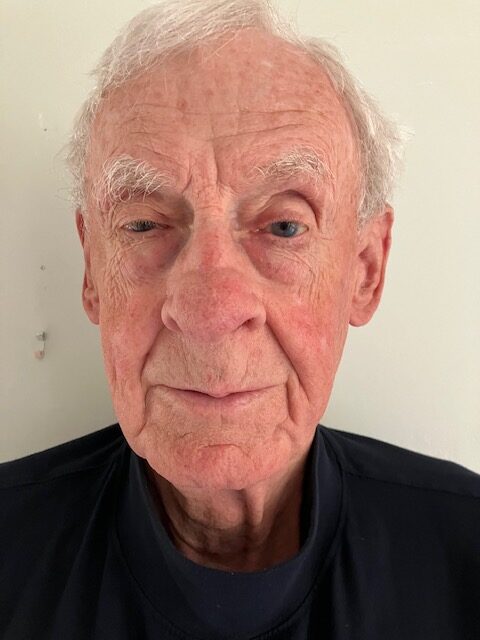
Smith, Bernie

Born on Staten Island, New York, in 1942, I attended and graduated from Curtis High School in 1960. After graduating from Nichols College, I was employed by Moody’s Investors Service in the Municipal Bond Department. My position involved analyzing municipalities, utilities and school districts and issuing a quality assessment in the form of a municipal bond rating. In 1972 I was hired by The First Boston Corporation to create a Municipal Bond Research Department. In 1985 I joined Bond Investors Guaranty (BIG), a startup company that insured municipal bonds issued by municipalities, utilities and school districts across the country. BIG was bought out in 1990 by a competitor. I then joined Enhance Financial Services Group and managed the municipal bond insurance group until my retirement in 1996.

We have two children both of whom are graduates of Darien High School. Christine graduated in 1987. She attended Trinity College in Hartford and received her law degree from George Washington University. She and her rowing partner won three World Rowing Championships and a bronze medal at the 2000 Olympics in Australia. Christine Collins is now an attorney in the legal division of Boston University. Our son Bernie, after graduating from DHS in 1990 and Guilford College in 1994, started his own company, Stealth Components, in Charlotte, NC. His company has an office in Europe and brokers electronic components worldwide.


We were members of The Country Club of Darien from 1987 until 2012. I was a member of CCD’s Board of Directors for four years and President in 2009. My wife Sonia and I now reside in North Falmouth, MA.


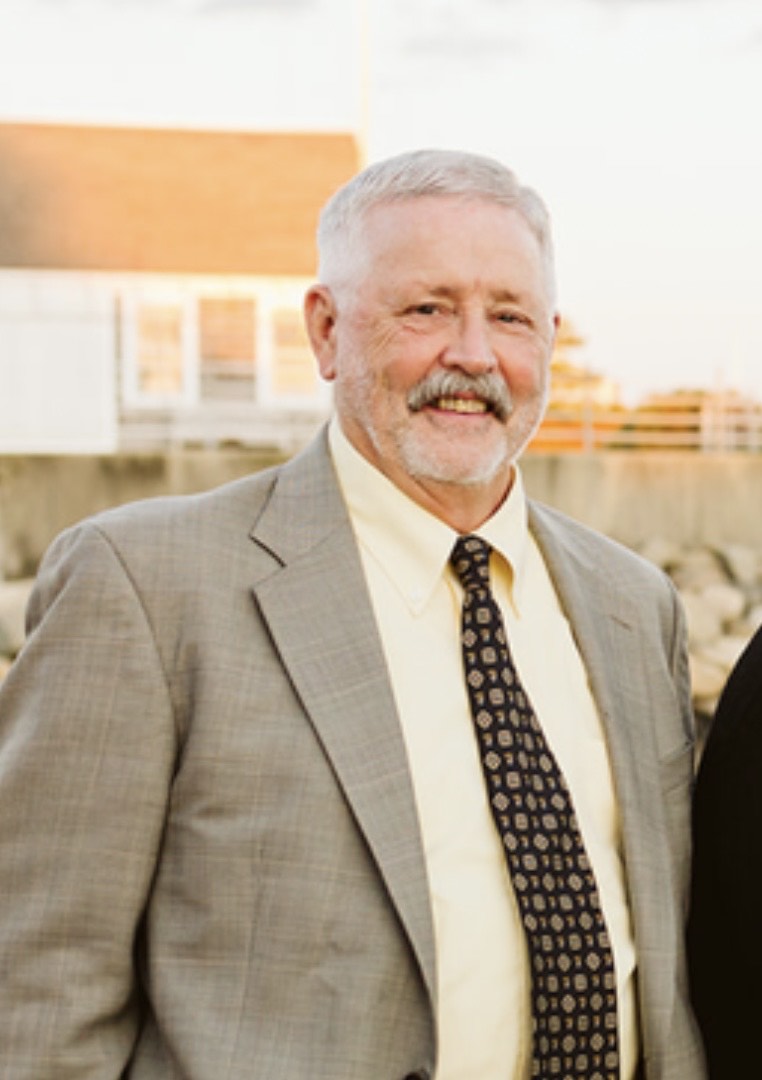
Tyler, Tom

I grew up in Darien in the third generation of Tylers. I graduated from Darien High School (DHS) in 1967 and attended Sacred Heart University before joining the Air Force in 1969, serving in Texas, Vietnam, and California as an Education Specialist and an Aircraft Cargo Loadmaster on C141’s in the Pacific. Following my military service, I attended the University of Connecticut, working summers as a shipyard laborer, casino cook, engineering intern, and independent painting contractor.

After graduating in 1977 with a Degree in Civil Engineering, I worked five years as a structural design engineer in Texas, Stamford, and New Canaan and became a Licensed Professional Engineer (PE) in the State of Connecticut in 1982. I then worked with Hardesty & Hanover Consulting Engineers, NYC for 16 years focusing on construction management and Resident Engineering. I served as the owner’s representative on major bridge rehabilitation and replacement projects which included the Yankee Doodle over the Norwalk River and two moveable bridges in the Bronx.

The next 25 years were spent with the Slattery Contracting Company (later renamed Skanska USA Civil NE) serving as Quality Manager for mega projects including the JFK AirTrain, Kosciuszko Cable Stayed Bridge, Reconstruction of the World Trade Center, and Moynihan Station on 33rd Street.  During this time, I became a member of the American Concrete Institute (ACI) and served as voting member on Committees, becoming secretary and Chair of one of them as well as a contributing author, editor, and champion on several ACI publications.

I am a registered PE in Connecticut and New York and hold certifications with ACI, the American Welding Society (AWS), the International Code Council (ICC), and the American Society for Quality (ASQ). 

My wife of 38 years, Nancy Anderson Tyler, recently passed away. Nancy was raised in Fairfield. We spent most of our time together living in Darien. She was a pillar for our family, providing guidance and motivation for both me and our daughter Lindsay, and helping numerous family members. Some of our best memories were home renovation projects early on, time spent with her parents in Fairfield, family trips to Cape Cod, and many great weekends up at Dartmouth to cheer at Lindsay’s swim meets. Aside from her thoughtfulness and sharp memory, she also had a competitive spirit and a generosity that reached friends and teammates in the community. Both Nancy and Lindsay were active at the Middlesex Club and the Darien YMCA. 

My daughter Lindsay was Salutatorian of the DHS Class of 2011 and graduated cum laude from Dartmouth College. She was varsity swim team captain in her senior years at both schools. Lindsay now lives in Manhattan and works at Morgan Stanley as an Executive Director. 

I am recently retired and am in the process of restructuring my life after a 47-year career and a 38-year marriage. I intend to spend more time outside, get more exercise (and a bit better at golf), and finish the numerous projects I never had the time to get to. I enjoy yard work, history channels, anthropology, articles in the Science Times, Mexican food, and BBQ. My favorite sports to watch include baseball, football, and college basketball. I like country, folk, and blues (old stuff) and can play a little on guitar and harmonica (better harmonica than guitar). I look forward to seeing how I can contribute to the DMA.

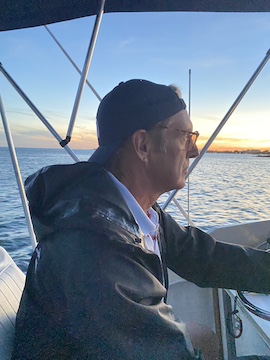
Elliott, Fred

I was born in Bronxville, NY and grew up in what is now known as Eastchester, but then it was part of Scarsdale, NY.  I attended Kent School and Marietta College (Marietta, OH), graduating in 1976 with a BA in Economics and Business Management.  

I began my career with NCR Corporation the week after graduation, in sales within their Systemedia Division (Business Forms and Supplies).  During my 37 years with NCR I had various roles which included sales, sales management, product management and product development.  

After NCR and I went our separate ways, I did sales work for a few years with small companies before retiring to become a caregiver for my wife.

While at Kent I was a member of two crews that rowed at the Henely Royal Regatta, in 1971 and 1972.  A British acquaintance commented “There are two ways to row at Henely; lose in the first round and enjoy the regatta-or win the damn thing!” That’s exactly what happened-we lost in ’71 yet in ’72 we completed an undefeated season (US Schoolboy Champions) with a Princess Elizabeth Cup win at Henley.

I continued rowing at Marietta, with an undefeated Freshman heavyweight boat (Small College Champions) and 3 years in either the Varsity lightweights or heavyweights. I also met my wife Pam while at Marietta, and we were married in 1975.

With NCR, we called Croton-on-Hudson, NY, Severna Park, MD and Centerville, OH “home” before moving to Darien, in 1988.  Our third son Mark was born here, while Peter was born almost 9 years earlier and Andrew 6 years earlier.

We have had three addresses in Darien the last two on-the-water, allowing me to take up rowing once again.  Beginning in 2006, I’ve competed in various ‘head’ races in my single scull, such as the Head of the Charles, the Schuykill, Head of the Fish and others. Currently I am also a member of the Vero Beach Rowing Club as well as Leander Club (Henley, England) and the Kent School Boat Club.

Since moving to Darien, I have been very involved in volunteer opportunities, from Darien Youth Hockey, Person-to-Person, and a variety of Outreach programs through Saint Luke’s Parish, where I am currently serving a second stint on the Vestry and am a member of its Executive Committee.  I am also a member of the Darien Sail and Power Squadron, serving as its Executive Officer.  I am the proud owner of my Mother’s 1966 Mustang and my 1969 Chris Craft powerboat, which is moored off of Noroton Yacht Club, where I have been a member since 1991.

My wife Pam was diagnosed with Parkinson’s in 2011, which quickly morphed into Lewy Body Dementia.  Because it was the right thing for me to do, I left my career to become her primary caregiver in 2015.  She passed away in 2021.    I would not trade those years for anything; I learned more about “love” than I ever imagined.

Today, I continue a heavy, heartwarming commitment to volunteer work, I continue to write and row, and I thoroughly enjoy having my two grandsons in Fairfield, CT.


« Older posts Newer posts »

© 2026

Theme by Anders Noren — Up ↑