 The French and Indian War: The Role of Native Americans as a Prelude to the American Revolution
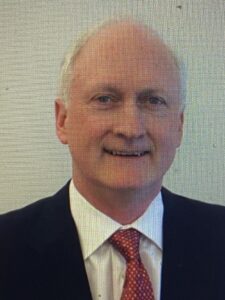
Michael Curran will present an overview of the various French and Indian wars of the 17th and 18th century with a focus on the final war which started in 1755 at the Battle of the Monongahela and ended in 1760 with the capture of Montreal. He will provide context on the conflicts highlighting the role of Native Americans including their key role in initiating and expanding the final conflict. The French and Indian War was a critical prelude to the American Revolution and influenced the colonists politically and militarily. As such it should be a better-known part of our shared understanding of America’s founding moments.
Michael Curran is a retired management consultant with 35 years of consulting and financial industry experience. His areas of focus included board of directors and executive management advisory work, strategic compensation design projects, and regulatory issues related to the interaction between risk and incentive pay. His clients included all the major US, Canadian, European, and Japanese banks and investment banks as well as leading private equity firms and hedge funds.
Upon retirement in 2016, Michael enrolled in and earned a masters degree with honors from the University of Buckingham. His thesis was on the role of Native Americans in the French & Indian War. Subsequently, he wrote a history of the various conflicts between the French, British, and Native tribal groupings as well as an historical novel focused on one of the leading French commanders.
He has held Board positions in several philanthropic organizations including: ABC of New Canaan, Regis HS, St. Joseph’s University, and Cornell University. He is a graduate of Cornell University’s School of Industrial & Labor Relations. A Bronx native, he has lived in Connecticut since 1981 and spends summers on Cape Cod.
Speaker Summary
Mike Curran provided a lively and informative overview of the history of European exploration and settlements in North America and their relationships with Native Americans leading up to the French & Indian Wars and, ultimately, the role this history and experience had on the subsequent Revolutionary War.
He started with an historical timeline of the varied expeditions to North America by many European countries motivated primarily by opportunities for financial benefits related to trading opportunities. An interesting point was that many/most of the explorations were funded and conducted on behalf of nations other than that of the explorer. Mike also showed the numerous Native American tribes and their territories in what was primarily the northeast, mid-west, mid-Atlantic and southern areas of what is now the United States, as well as into Canada. Another interesting fact – most of the tribal names were derogatory terms used by their enemies to describe them, not the names the tribes called themselves.
Mike then went into a detailed discussion of several of the wars that occurred and about the French and British settlers. He talked about what motivated each nation (the French wanted trade while the British also wanted territory), how that influenced their relationships with the Indians (largely allied with the French), and the relative military strengths of each and how the French & Indian War played out as a result. He closed with a discussion of the lessons learned from these wars and how they helped embolden and prepare the U.S. colonies to take on the British during the Revolutionary War, and why the French was an ally to the U.S during that war.
An expansionary Q&A followed that provided additional information and perspectives on key battles and aspects of the Revolutionary War, including an interesting perspective on the strengths and weaknesses of George Washington as a military leader.
 Darien School Safety and Security
 It’s Complicated: The Decision Around Dropping the Atomic Bombs on Japan.

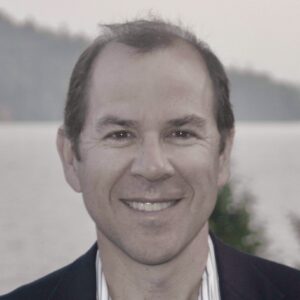
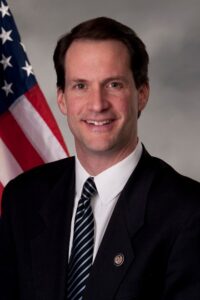 Jim Himes represents Connecticut’s 4th District in the United States House of Representatives where he is serving his eighth term. He serves as Ranking Member of the House Permanent Select Committee on Intelligence, and on the House Financial Services Committee. Jim plans to have a conversation with us that will cover a number of current topics including (among others): the most feasible path to raising the debt ceiling; continuing efforts to forge a middle ground consensus on sensible legislation that, if enacted, could alter the course of destructive gun violence spreading across our nation; the likelihood that Connecticut will continue to receive its fair share of federal government funding for major infrastructure and military investments; the likelihood that Congress will authorize funding to sustain our country’s support of Ukraine at a level that, in combination with contributions from our allies, will eventually permit Ukraine to achieve some version of victory against Russia; the recent intelligence leaks, the risks posed by Chinese spy balloons, and the ever-growing threat of cyber-warfare; and the fervent desire of many Americans that both parties in Congress move away from ideological extremism to pursue practical and reasonable legislative solutions designed to preserve our democracy and enable all Americans to have the opportunity to live productive, meaningful and satisfying lives.
 Humorist Jerry Zezima, who is a Stamford native, writes a humor column for Tribune News Service and is the author of six books, including his latest entitled One for the Ageless: How to Stay Young and Immature Even if You Are Really Old. The work is a fun and irreverant collection of reflections on aging.
 Hamilton “Tony” James will join us in conversation with DMA member John Craft to discuss the Federal Reserve’s policies on interest rates and inflation, the current banking crisis, the outlook for private equity and venture capital investing, the real estate markets, prospects for future investments in China, and the effects of COVID, the war in Ukraine and the emerging Cold War with China on the U.S. economy, international trade, supply chains, and global investments.
 Imagine life for a moment without reliable sources of electricity for our every need, no further away than the nearest wall socket. Local historian and frequent DMA speaker Art Gottlieb will enlighten us on the history of what is called “The Power Grid,” a network of power generation and distribution systems made possible by the genius of Nicola Tesla and his practical applications of Alternating Current (AC), enabling electricity to be consumed hundreds of miles away from its point of generation. This talk will also feature a discussion of alternative green energy sources contributing to “The Grid.”
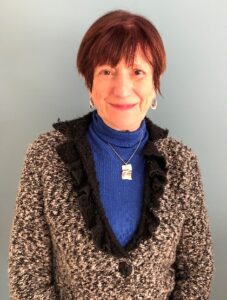 Kathryn du Pree, a life-long expert in addressing the special needs of people on the autism spectrum, will engage in a wide-ranging conversation with Tom Igoe to explore the nature of autism and recent studies that show it becoming increasingly prevalent in the population. They will discuss, among other topics: the educational, behavioral, and job training and transition services available across Connecticut for those on the autism spectrum; the critical role of schools, academies and nonprofit organizations and the dedicated people that serve this population and their families; the difficult staffing challenges that arose during the Covid pandemic and persist today; and the various lifestyle options available for people on the spectrum, including independent living, group homes and employment opportunities, all with a view to enabling these unique individuals to live rewarding and purposeful lives.
 DMA member Bert von Stuelpnagel will speak about the Marshall Plan and its effect on West Germany. This important initiative of the Truman administration, led by Secretary of State George C. Marshall, made America a “European Power,” and its impact can still be felt today, especially in Germany. In 1953, Marshall was awarded the Nobel Prize for Peace in recognition of the economic rehabilitation of Europe after the war.
 Marshall Mayer, in conversation with Ken Bernard, will discuss the heroic humanitarian relief efforts young volunteers are bringing to war-torn Ukraine and his unforgettable first-hand experiences. A Westport native, Marshall is a New York City-based finance professional who has been active in Ukraine since the firshttps://dariendma.org/wp-content/uploads/IMG_5413.movt weeks of the war to coordinate refugee assistance, supply, and transport on both sides of the border. He and his brother Brian launched the non-profit Ukraine Aid International, and together they have facilitated the shipment and delivery of more than a million pounds of food, medicine, medical supplies, and humanitarian aid into Ukraine, mostly to the war-torn regions of Kharkiv, Kherson and Donetsk.
 Ken Bernhard is a senior partner at the Connecticut law firm of Cohen and Wolf. He graduated from Yale (1966) and NYU Law School (1970) and then served in the U.S. Army as a member of the Judge Advocates Corps, first as trial counsel and then as an associate professor of law at the Military Academy at Westport, where he taught criminal and constitutional law. Ken served eight years as a State Representative representing his hometown of Westport in the Connecticut Legislature. Ken is also a Senior Attorney with the Center for International Legal Studies located in Salzburg, Austria and under its auspices taught in multiple law schools from Latvia to Mongolia, including Ukraine, which is what motivated him to get involved in what is happening there and teaming up with Marshall and Brian.


 In this upbeat and entertaining presentation, DMA members will be treated to a discussion of how baseball has changed since our youth – whenever that youth may have been. Kelley Franco Throop will discuss how the game has evolved, and cover topics such as playoff expansion, the designated hitter, and the impact of analytics on how teams are built and the game is played. Both casual and serious baseball fans will enjoy this engaging presentation.