 The Koh-i-noor Diamond is one of the world’s most well known diamonds. It is by no means the world’s biggest diamond, but it is by far the most infamous. Its storied history spans centuries-the Koh-i-nor has passed through the hands of many rulers, dynasties and empires in South and Central Asia, including the Mughal emperors of India, Persian Shahs, Afghan rulers and Sikh Maharajas, before ending up in the British Crown Jewels. This rich history and the curse it allegedly casts on male owners has added to its notoriety, mystique and fame. Its controversial “acquisition” by Queen Victoria has made its presence in the British Crown Jewels a subject of debate. India, Pakistan, Iran and even the Taliban have laid a claim to it.
Sunil Saksena’s presentation will recount some of its history and the myths and legends that surround it. It’s an amazing story.
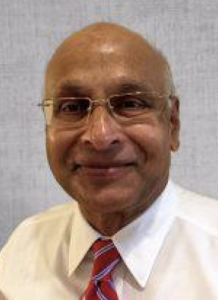
Sunil is a member of the Darien DMA and its past President. He was born in India in 1944 and received a bachelor’s degree in mechanical engineering from the Indian Institute of Technology , Roorkee.
He worked at Union Carbide India before proceeding to the University of California, Berkeley in 1966 for graduate work. He received a masters degree in engineering as well as an MBA from Berkeley. Sunil worked as a mechanical engineer with American Can Company in San Francisco where his claim to fame is that he designed the machine that puts the can cover on the beer can making it safe for you beer drinkers to safely imbibe. For the majority of his career he was in finance, first as an international banker with Bankers Trust Company serving in Singapore, Mumbai and New York and later with Fidelity Investments from which he retired in 2004.
He and his wife lived in Darien for 38 years and have just this year moved to Vermont.
Summary
Sunil Saksena shared with us the story of the The Koh-i-Noor Diamond: A Gem’s Journey Through History.
 The Koh-i-Noor diamond, currently weighing 93 carats, is a legendary gem with a rich and dramatic history spanning centuries and continents. Despite its relatively modest size by modern standards, the Koh-i-Noor’s fame stems from its ancient origins and the captivating stories surrounding it.
Origins and Early History
The diamond originated in central India, with legends tracing its beginnings to a divine gift from the sun god Suria to a local king. Unlike modern diamond mining, ancient Indian diamonds were alluvial — gently collected from riverbeds in the legendary state of Gonda. While most diamonds were tiny, occasionally a remarkable stone like the Koh-i-Noor would emerge.
Cultural Significance in Ancient India
In ancient India, diamonds were more than mere decorative objects:
- Considered auspicious objects
- Believed to channel planetary influences
- Symbols of prosperity and power
- Often used as the primary form of adornment in royal courts
India was the world’s sole source of diamonds until the discovery of Brazilian mines in 1725. Indian diamonds were coveted globally, from ancient Egypt to Rome and China. Today, the largest diamonds, which have eclipsed the Koh-i-Noor in size, are principally from Africa.
The Legendary Curse
The Koh-i-Noor carries an intriguing curse suggesting that only “God or a woman” can wear it without consequence. Throughout its history, the diamond has been associated with a trail of theft, bloodshed, and misfortune to common men and noble men alike
Journey through empires
The diamond’s journey is nothing short of extraordinary:
- 12th Century: First documented in Delhi, where it remained for 500 years
- 1737: Taken by Persian Emperor Nader Shah to Herat
- Mid-1800s: Acquired by Sikh Emperor
- 1849: Captured by the British and transported to England
The Mughal Connection
The diamond became particularly famous during the Mughal Empire. Emperor Babur, who acquired it in 1526, transformed it into the “Mountain of Light” (Koh-i-Noor’s literal translation). During this period, the Mughal Empire was incredibly wealthy, controlling over 100 million subjects across current-day India, Pakistan, Bangladesh, and Afghanistan.
The Mughals were known for their opulence and love of gemstones. Emperor Shah Jahan commissioned the spectacular Peacock Throne, which featured the Koh-i-Noor diamond as one of its centerpieces and included literally thousands of diamonds.
Persian Invasion and Afghan Rule
In 1739, Nader Shah of Persia invaded Delhi and plundered its riches, including the Koh-i-Noor. A popular legend, though unverified, tells of how Nader Shah acquired the diamond through a turban exchange with the defeated Mughal emperor, who had hidden it in his turban.
After Nader Shah’s assassination in 1747, the diamond came into the possession of Ahmad Shah Durrani, who established the kingdom of Afghanistan. The Koh-i-Noor remained in Afghanistan for the next 70 years
British Acquisition and Current Status
The British acquired the Koh-i-Noor in 1849 through a transaction that has been questioned by India as a colonial transgression and transported it to England. Today, it resides in the Tower of London as part of the British Crown jewels—the Crown of the Queen Mother, although it has not been worn publicly since 1953.
Ongoing Controversy
Currently, five different countries claim ownership of this remarkable gem: India, Iran, Afghanistan, Pakistan, and even the Taliban have made claims. England, however, has maintained that it acquired it legitimately and good faith as a spoil of empire
In the mid-19th century, British diplomats befriended a 10-year-old Punjabi Sikh prince, the Maharaja Duleep Singh, who’d inherited the Kohinoor. They took the boy’s diamond as part of an 1849 treaty marking the end of the second Anglo-Sikh war — and presented it to Queen Victoria.
 For over 40 years, Search for Common Ground has been building trust around the world, opening opportunities for collaboration between communities, and creating breakthroughs for peace. Whether global in nature, such as poverty, hunger or the environment, or closer to home, such as family or community relations, we face daily challenges to our abilities to deal with conflict constructively. Using everything from traditional diplomacy and mediation to video games and virtual exchange, we work one step at a time to change the nature of conflict – from a destructive force to a constructive one.
 Certainly one of the most prominent topics surrounding politics this year is the influence of social media, with its opportunity to publish every personal opinion without an editor focusing on truth, objectivity, and balance. This is a central them of the academic work of Susan Herbst.
 Marcus G. Miller is a distinguished saxophonist, composer, and Music Curator from South Orange, New Jersey, now based in New York City. He began performing professionally in his teens, later graduating from Harvard University in 2008 with a degree in Mathematics. After a stint at Bridgewater Associates, he returned to music, making a name for himself in New York’s jazz scene. Miller has performed at high-profile venues across the world, including the Obama White House, Madison Square Garden, the World Economic Forum at Davos, Carnegie Hall.
 Jim Knox serves as the Curator of Education for Connecticut’s Beardsley Zoo where he directs educational programming and conducts field conservation for this AZA (Association of Zoos and Aquariums) accredited institution. Jim is a graduate of Cornell University where he studied Animal Science and Applied Economics. He has tracked Gray Wolves in Yellowstone National Park, conducted field research on Alaskan Brown Bears, field conservation for Atlantic Salmon, and written for the U.S. Fish and Wildlife Service and for Natural History magazine.
 Carolyn Rinaldi is the Associate Curator of Education at Connecticut’s Beardsley Zoo where she leads Education and Conservation initiatives on and off grounds. Carolyn graduated from the University of Connecticut with a degree in Anthropology and Archaeology. As part of her studies, she travelled around the globe by ship, for three months, studying world cultures. Carolyn has experience as a veterinary technician as well as a birds of prey handler. After having a twenty-year career as a family therapist, Carolyn returned to the world of animals and joined the Connecticut’s Beardsley Zoo team. She directs the Zoo’s AZA Award Winning Teen Volunteer program the Conservation Discovery Corps, and will be leading this year’s 2024 class in a second field expedition in Yellowstone National Park. Carolyn is the host of radio show, Zoonami – Adventures from Connecticut’s Beardsley Zoo on iCRV Radio in Ivoryton, CT. She has had guest spots as a zoologist on Connoisseur Media’s Star 99.9 FM Anna & Raven Show.
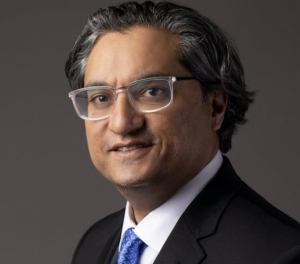 Amit Khanna, MD, is the Regional Director of Colon & Rectal Surgery, Bridgeport Hospital
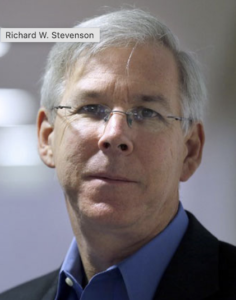 There is little question that the news media have been severely disrupted over the past two decades. New gathering has suffered from a broad loss of faith in institutions, including established media. While social media and the siloing of new sources and their discrete audiences have challenged basic tenets of news gathering, the New York Times has also found ways to enhance the publication of news and its understanding with a comprehensive digital strategy. A former managing editor of the Times suggested the newspapers may be in a slump, but journalism, in all its forms, has never been more robust.
 As the daughter of a Pan Am Captain in the 60’s, Lucia Renshaw learned to navigate before she learned to drive. She had a full passport before she had a savings account. And she knew the Pan Am flight schedule better than she knew her class schedules. What she didn’t know was the story about her father’s role in WWII.
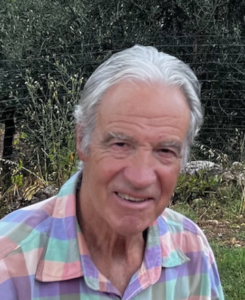 Don Loomis is an active DMA member, having presented recently in the Current Affairs group on Voting Rights and with Mark Nunan on the war in Ukraine.
 John Odermatt began his career in 1982 where he served as a New York City Housing Police Officer, patrolling public housing developments. John’s promotions with the Housing Authority Police and subsequently the New York City Police Department rise to the rank of Assistant Chief. His assignments include the Executive Officer of the NYPD’s Intelligence Division where he was the coordinator of the 55th United Nations General Assembly, Special Session and responsible for the security and coordination with Federal Agencies of over 300 dignitaries visiting New York City.
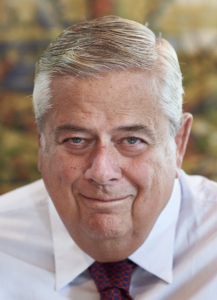 Robert Dilenschneider, a longtime Darien resident and DMA member, is frequently called upon by the media to provide commentary and strategic public relations insights on major news stories. He has counseled major corporations, professional groups, trade associations and educational institutions, and has assisted clients in dealings with regulatory agencies, labor unions, and consumer groups, among others.Bob formed The Dilenschneider Group in October, 1991. Headquartered in New York and Chicago, the Firm provides strategic advice and counsel to Fortune 500 companies and leading families and individuals around the world, with experience in fields ranging from mergers and acquisitions and crisis communications to marketing, government affairs and international media.
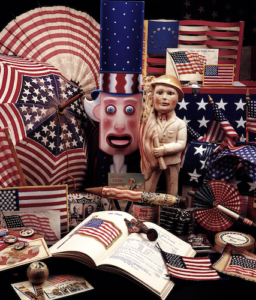 September 11, 2001 disrupted so much of our society, our security, our sense of safety. It also changed our relationship with our flag. After 9/11, the flag became ubiquitous—flying in communities, businesses, at events, and “flying” flat as decals everywhere. It has also been co-opted by partisanship. Yet we all remember an earlier time when it was not just about patriotism; it was also a whimsical theme that celebrated Americanism…just an easier way of life for us, perhaps with greater innocence. No one can remind of the imagery of that era like Kit Hinrichs, with his rich collection of amusing and idiosyncratic applications of the stars and stripes.
 Kit Hinrichs served as principal in several design offices in New York and San Francisco and spent 23 years as a partner in the international design consultancy Pentagram, before opening Studio Hinrichs in 2009. His design experience incorporates a wide range of projects, including brand development, promotion, packaging, environmental graphics, editorial and exhibition design. He is also a noted American Flag collector and founder of the Stars & Stripes Foundation.