Author: Webmaster (Page 38 of 96)

Hike Trout Brook Valley Preserve Sep 30, 2021 at 10:00

 TROUT BROOK VALLEY HIKE

      WESTON, CT

          SEPTEMBER 30, 2021

                10:00 AM

On our first hike of the fall, we will return to the Trout Brook Valley Conservation area in Weston, an 1100 acre preserve that is part of the Aspetuck Land Trust, where we last hiked in 2019. Trout Brook Valley classifies their trails  as hard, medium and easy and your DMA hiking team discovered  that on our pre-hike where we tested a “hard” trail and found the description very accurate! We will not be using that trail for our hike of about 3 miles over easy and medium terrain. The preserve is still quite lush and green in September so it will be mostly shady. The trails are well maintained and the trail markings are excellent. There is some traversing of mostly flat rocky areas. This hike should be a great way to start off our fall season!

As always, friends, spouses, etc are welcome to join us. Dogs on a leash are permitted. There will be no lunch after the hike.

We will be using the Bradley Road entrance to the preserve in Weston. On Google maps or Waze enter Trout Brook Valley Preserve or 18 Bradley Road, Weston. The parking lot is not large so car pooling would be a good idea. If you let either of us know you will be joining us, we can arrange pools. The drive takes about 25 minutes from Darien.

Dave McCollum or Bob Plunkett


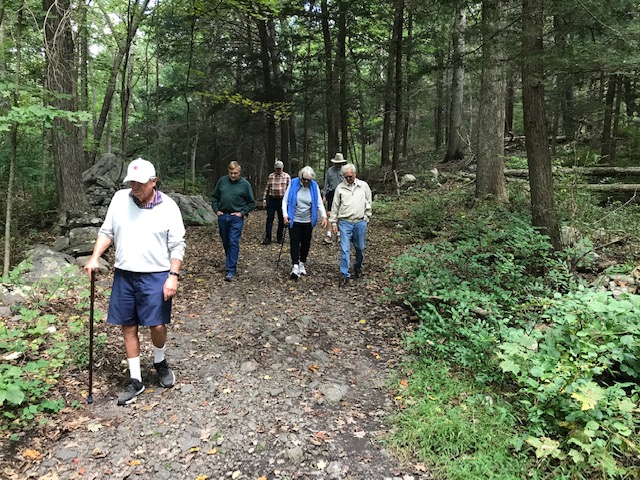
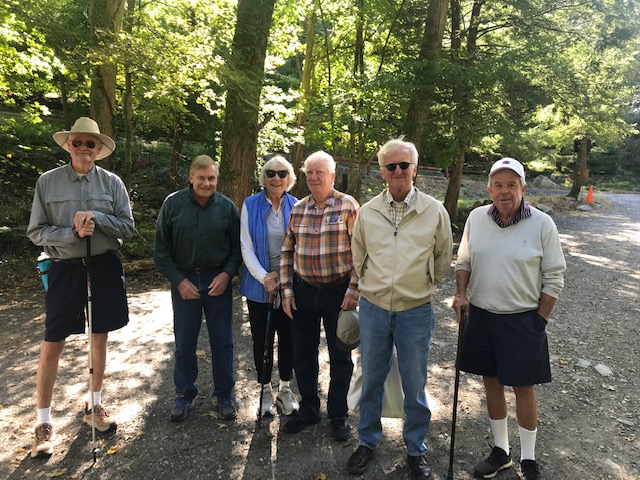
A small but enthusiastic group of seven spent a delightful two hours hiking the Green and Orange Trails at Trout Brook Preserve this morning, a cool and invigorating day to be in such beautiful woods. 

The 730 acre Trout Brook Preserve was purchased in 1999 by the Aspetuck Land Trust from the Bridgeport Hydraulic Company which was planning to sell it to a developer who wanted to construct over one hundred luxury homes and a golf course. The $11.3 million purchase price was raised jointly by the State of Connecticut and Aspetuck. Actor Paul Newman was among the contributors.

The trails we hiked were well maintained and of variable difficulty but nothing our group could not handle. We pretty much had the whole Preserve to ourselves as we saw very few other hikers which contributed to the quiet attractiveness of the trails. We crossed three brooks, one of which must have been Trout Brook, but saw no trout or other fauna other than a worm or two. So much for wild kingdom!

As usual on our hikes, the opportunity to talk to each other was a highlight. 

We hope a larger group of DMAers will join us on our next hike at Devil’s Den in Weston on Monday October 25.


Dave McCollum and Bob Plunkett

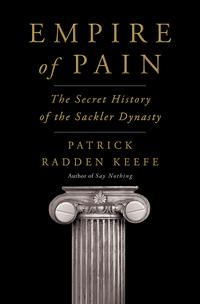
Book Club: Empire of Pain by Patrick Radden Keefe, Oct 13, 2021, 2:00

A grand, devastating portrait of three generations of the Sackler family, famed for their philanthropy, whose fortune was built by Valium and whose reputation was destroyed by OxyContin, by the prize-winning, bestselling author of Say Nothing The Sackler name adorns the walls of many storied institutions–Harvard, the Metropolitan Museum of Art, Oxford, the Louvre. They are one of the richest families in the world, known for their lavish donations to the arts and the sciences. The source of the family fortune was vague, however, until it emerged that the Sacklers were responsible for making and marketing a blockbuster painkiller that was the catalyst for the opioid crisis.

Empire of Pain begins with the story of three doctor brothers, Raymond, Mortimer and the incalculably energetic Arthur, who weathered the poverty of the Great Depression and appalling anti-Semitism. Working at a barbaric mental institution, Arthur saw a better way and conducted groundbreaking research into drug treatments. He also had a genius for marketing, especially for pharmaceuticals, and bought a small ad firm. Arthur devised the marketing for Valium, and built the first great Sackler fortune. He purchased a drug manufacturer, Purdue Frederick, which would be run by Raymond and Mortimer. The brothers began collecting art, and wives, and grand residences in exotic locales. Their children and grandchildren grew up in luxury. Forty years later, Raymond’s son Richard ran the family-owned Purdue.

The template Arthur Sackler created to sell Valium–co-opting doctors, influencing the FDA, downplaying the drug’s addictiveness–was employed to launch a far more potent product: OxyContin. The drug went on to generate some thirty-five billion dollars in revenue, and to launch a public health crisis in which hundreds of thousands would die. This is the saga of three generations of a single family and the mark they would leave on the world, a tale that moves from the bustling streets of early twentieth-century Brooklyn to the seaside palaces of Greenwich, Connecticut, and Cap d’Antibes to the corridors of power in Washington, D.C.

Empire of Pain chronicles the multiple investigations of the Sacklers and their company, and the scorched-earth legal tactics that the family has used to evade accountability. The history of the Sackler dynasty is rife with drama–baroque personal lives; bitter disputes over estates; fistfights in boardrooms; glittering art collections; Machiavellian courtroom maneuvers; and the calculated use of money to burnish reputations and crush the less powerful. Empire of Pain is a masterpiece of narrative reporting and writing, exhaustively documented and ferociously compelling. It is a portrait of the excesses of America’s second Gilded Age, a study of impunity among the super elite and a relentless investigation of the naked greed and indifference to human suffering that built one of the world’s great fortunes.

DMA Golf Outing: Sterling Farms Tuesday, 14 September 2021

Our third 2021 outing is at Sterling Farms, Stamford,

Tuesday 14 September starting at 10:30 AM.

Tee times will be assigned once registration is complete.

To sign up, email Peter Carnes, picarnes@gmail.com.

Provide your handicap to facilitate pairing.

Fee is $46 (includes cart) payable when you arrive.

Confirmation and coordination will be via email during the week prior to play.

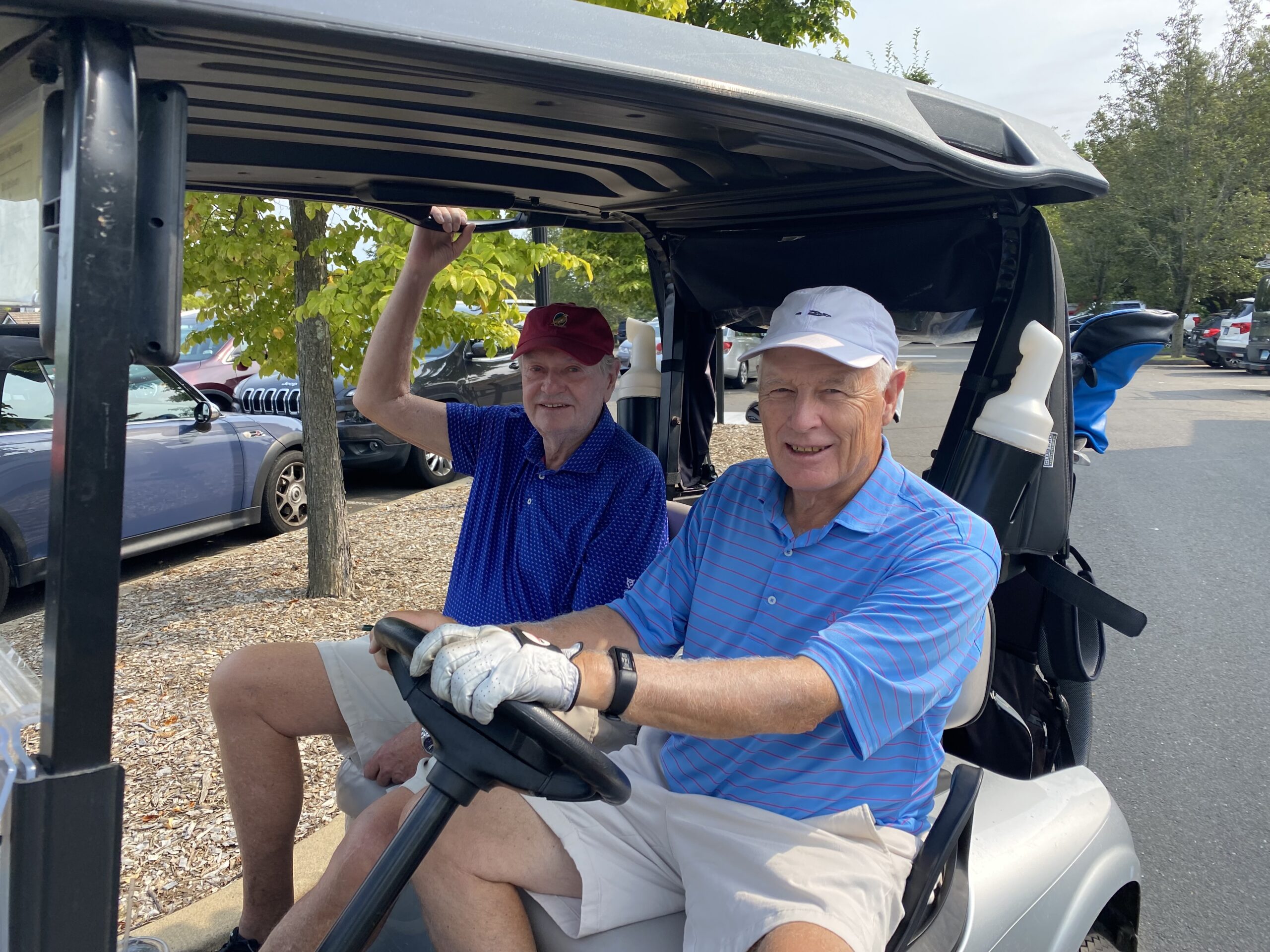
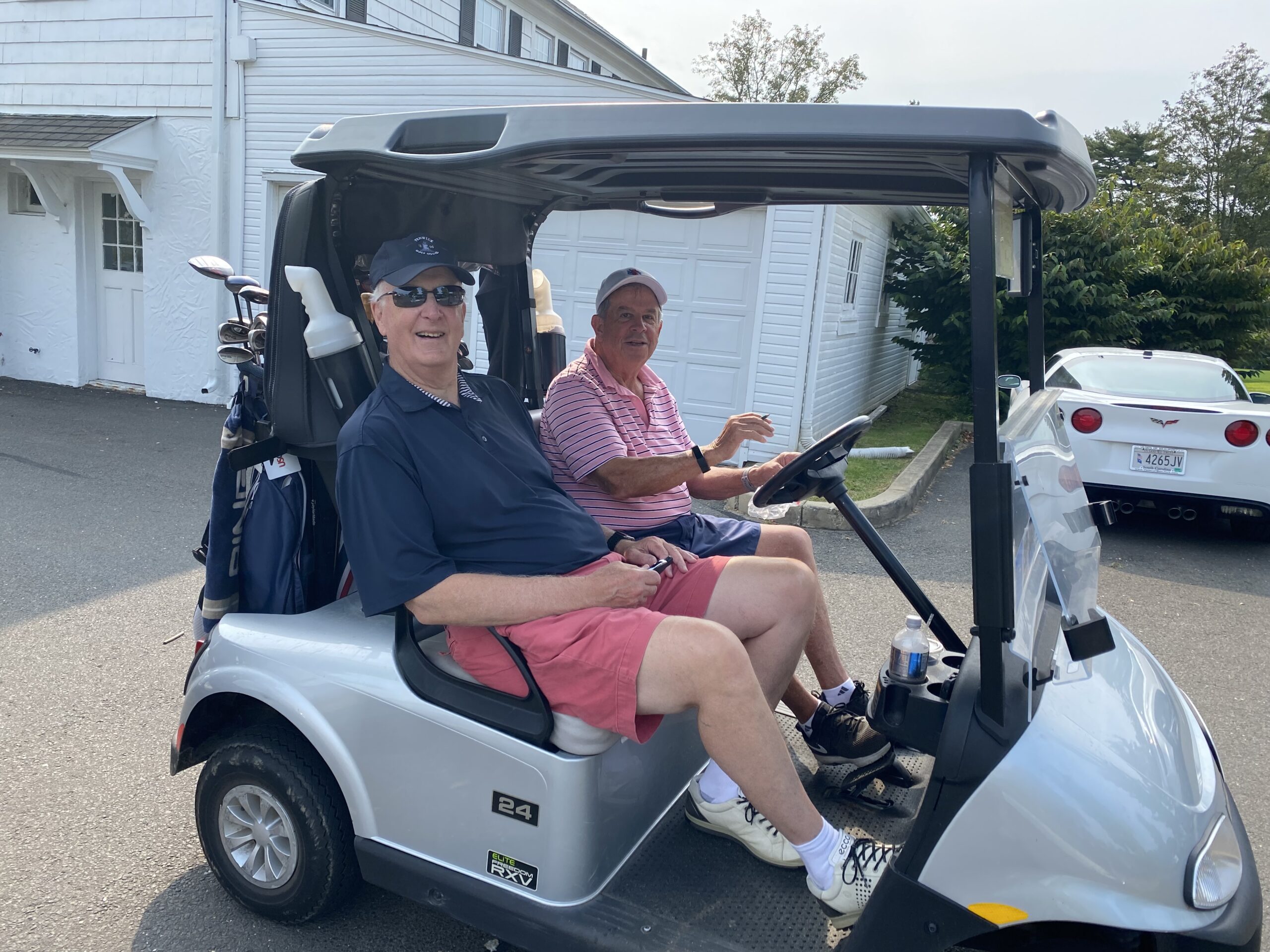
We were blessed with a beautiful day on 14 September at Sterling Farms where 24 members arrived for 18 holes of golf on the Stamford course. Remarkably there were no last-minute cancellations; since the event was oversubscribed, this meant that at least half a dozen members were not able to play.  There were no reports of unusual accomplishments, good or bad, which is probably more attributable to modesty or embarrassment than reality. The course was in excellent condition which is a tribute to their staff to which we are again grateful for their annual hospitality to the DMA.

Peter Carnes


Mike Heitz

Michael George Heitz, 71, died unexpectedly on August 26, 2021 in Darien, CT. He was born on November 14,1949 in Indianapolis, Indiana to George and Helen Crofts Heitz. While his dad pursued a career at Aetna, his family moved frequently, and Mike could claim Indianapolis, Miami, South Bend, Milwaukee, Los Angeles, Peoria, and Simsbury as “home.” He credited his attendance at three different high schools for his ease in all social interactions. It gave him the lifelong skill of making friends.

Mike graduated from the University of Illinois in 1971 as a Certified Public Accountant and began a career in Public Accounting at Haskins and Sells in Hartford. He was then hired by Coopers and Lybrand and moved to New York City, where he spent most of his career. Mike earned his law degree from Fordham School of Law in 1980 while working full time. He became a Partner at Coopers and Lybrand in 1984, then moved to Arthur Andersen where he became a partner in 1991. Mike had a private practice in Tax Law and Accounting, and then joined TIAA-CREF as the Associate General Counsel. He ended his career as the Senior Tax Counsel for Voya Financial, Inc., and retired in 2017.

Mike wanted to provide his family with the stability of growing up in one community and chose Darien in 1991. Through the years he coached Little League teams and was on the Boards of the Darien Art Center and the Darien Nature Center. He cheered all of his children on through soccer, baseball, lacrosse, and hockey games. When he retired, Mike became actively involved in the Darien Men’s Association and the Representative Town Meeting, serving on the Finance Committee. He never missed a meeting.

Mike was perpetually curious and had a keen interest in politics and history. He thought before he spoke or wrote and recognized the power of words. He was a true friend to many and kept in touch with friends from every aspect of his life. He had a wonderful sense of humor and a ready laugh. He enjoyed traveling, meeting new people, and experiencing different cultures. He still did all his own yardwork.

Mike is survived by his wife of 44 years, Nancy Wood Heitz. He was immensely proud of son Matthew, his wife, Ashley, grandsons Harrison and Oliver, of Glen Allen, Virginia, daughter Caitlin Sommer, her husband Lucas and sons Cameron and Benjamin of Lake Oswego, Oregon, and son Nick and his wife, Kelsey, of Darien. He is also survived by his sister, Mary Ann Blanc, her daughter Laura, Laura’s husband, Adam, and son, Hunter.

A Memorial Service will be held at St. Luke’s Episcopal Church on Tuesday August 31, 2021 at 3:30 PM. In lieu of flowers, donations can be made to Person to Person, 1864 Post Road, Darien, CT.

DMA GOLF OUTING: COUNTRY CLUB of DARIEN, THURSDAY, AUGUST 26, 2021

The DMA golf season began at Oak Hills in July with 32 DMA members participating in a wonderful golf outing. The golf course was in great shape, everyone enjoyed the camaraderie, and there were no rain delays. Golf results remain privileged information.

The next golf outing of the season will be held at the Country Club of Darien at 9:00 AM on Thursday, August 26th. A buffet lunch will be served after play is completed. Cost for non CCD members will be $115 for golf and cart; the buffet will be $25.  Please email Peter Carnes at picarnes@gmail.com  if you wish to play. Make sure to include your email address and handicap for communications and pairing purposes.

We look forward to another great turnout of DMA golfers at CCD in August.

Peter

Bruce Kirby

Bruce Kirby, a Canadian-born journalist, Olympic sailor and self-taught naval architect whose design for a lightweight fiberglass dinghy, originally sketched on a piece of yellow legal paper, changed the face of sailing, died on Monday at his home in the village of Rowayton in Norwalk, Conn. He was 92.

His wife, Margo Kirby, confirmed his death.

Dinghy racing in North America and Europe in the late 1960s revolved around the International 14, a lightweight, 14-foot, two-person craft, and by then Mr. Kirby had carved out a niche for himself moonlighting as a designer in the 14 sailing class, spinning off variations on the original design that would have the dinghy planing and skipping across the water’s surface. His day job was as editor of the sailing magazine One-Design & Offshore Yachtsman in Chicago.

He had also won renown racing 14s and was a three-time Olympian for Canada, though without winning a medal.

One day in 1969 he received a phone call from a friend, Ian Bruce, an industrial designer and boating enthusiast in Montreal who as a side job had been building complex wooden hulls to Mr. Kirby’s I-14 designs and selling them. But with little margin in that business, he was looking for a new small-boat design — an easy-to-build, fiberglass sailboat that a solo sailor could race and that would help keep his I-14 business rolling.

Grabbing a yellow legal pad, Mr. Kirby promptly drew one up, envisioning a lightweight fiberglass hull, just under 14 feet long. It would eventually be christened the Laser and become a worldwide phenomenon.

“When Ian called him in 1969, Bruce was doodling,” said Peter Bjorn, a former partner in Performance Sailcraft, the first manufacturer of the Laser. “Ian lofted it,” he added, referring to the drawing of final plans, “in the fall of 1970, and they tweaked it. There was snow on the ground when they finally put the molds together. Bruce came and sailed it. And that was it.”

The boat was rigged up for the 1971 New York Boat Show with a sticker price of $595 (about $3,780 today). Before the doors closed, 144 were sold.

“All of a sudden,” Mr. Bjorn said, “there was something that wasn’t quite a toy — they took a bit to sail — and you could take money straight out of your pocket to buy it and throw it on the roof of your car.”

Coming in colors like orange, yellow, light blue and British racing green, the boat was an instant sensation. Its streamlined simplicity — with a teak tiller and a sail whose sleeve slid over an aluminum mast — made the Laser as basic in design as the Windsurfer and the Hobie Cat catamaran, both of which had arrived on the beach boat scene around the same time. What made the Laser different from them, however, was that it could be ideal both for cruising around with friends and for performance racing by a single sailor.

“It was a boat you could control with your body,” said Peter Commette, winner of the first Laser world championships, in 1974.

More than 250,000 of the boats have been built worldwide since 1970, making Mr. Kirby’s creation one of the most influential sailboat designs of all time. The Laser, now called the ILCA, for the International Laser Class Association, is used for men’s and women’s single-handed events in the Olympics.

Mr. Kirby came to call his original legal pad drawing the “million dollar doodle.” The royalties he received allowed him to leave his day job, launching him into an eclectic boat-design career that touched every corner of the sport, from the America’s Cup to junior sailing to cruising craft for shallow estuaries, and established him as one of the world’s pre-eminent boat designers.

Bruce Robert William Kirby was born on Jan. 2, 1929, in Ottawa into a nautical family with membership in the Brittania Boating Club in Ottawa (a grandfather was a club commodore). His father, David Patee Kirby, was in the building supply business. His mother, Eileen (Bruce) Kirby traced her lineage to Scottish kings, according to family lore. His paternal great-grandfather was Adm. Henry W. Bruce (1792-1863), a noted commander in the Royal Navy who was said to have participated in the War of 1812 early in his career.

He followed in his father’s wake, racing small boats on the Ottawa River during Canada’s fleeting summers and devouring copies of Yachting magazine in the winter. The best small-boat sailors of the time raced International 14s, two-person boats, each usually built in the home or garage according to design specifications. Mr. Kirby began to travel and rake in trophies in the class.

If his first love was sailing, his second was journalism. A lung ailment kept him out of college, and through his father’s connections he became, at 20, a reporter for The Ottawa Journal for $25 a week (the equivalent of about $290 in Canadian money today).

His knowledge of sailing brought him reporting stints from an ocean sailing yacht in Europe. Moving to The Montreal Star, he joined its copy desk but also covered the America’s Cup. He headed for Chicago to become editor of One-Design & Offshore Yachtsman in 1965.

Never far from sailing, Mr. Kirby qualified for the 1956 Olympics, in Melbourne, Australia, in the single-handed Finn class. He went on to sail in the 1964 Games (in Tokyo) in the same class and in the 1968 games (centered in Mexico City) in the two-person Star class.

He worked out his designs using intuition and from reading Norman Skene’s “Elements of Yacht Design.” His I-14 designs were steppingstones to the Laser, which in turn opened doors, bringing him a host of design commissions, including one for a yacht named Runaway, Canada’s 1981 entry in the Admiral’s Cup international competition. Runaway put him on a global stage.

Then came Canada I, the 1983 Canadian entry for the America’s Cup, and its design lifted Kirby’s reputation to new heights.

Though Canada I made the semifinals, the Canadians were no match for the Australians, who went on to break the longest winning streak in sports history — 132 years — by defeating the Americans that year for the cup.

Kirby designed another Cup boat, the Canada II, for the 1987 series. He also produced a total of 63 innovative and popular sailboat designs, including the 23-foot Sonar keelboat, which he created for the Noroton Yacht Club in Darien, Conn., where he was a commodore. The Sonar has been sailed on every continent and is used in the Paralympic Games.

His Laser was selected for the men’s single-handed sailing event for the 1996 Olympics and for the women’s single-handed event in 2008.

“For me the big thing I love about the Laser is the simplicity of design,” Sarah Douglas, a Canadian representative in this year’s Tokyo Olympics, said in a phone interview from Japan. “I grew up in Barbados. It’s the most accessible boat. If the Laser wasn’t in the Games, I don’t know how smaller nations can compete in sailing.”

Kirby, who became a naturalized American citizen, lived along the Five Mile River in Rowayton for 45 years, designing in his basement. He and Mr. Bruce were awarded the Order of Canada for their contributions to sailing, and Mr. Kirby was inducted into the National Sailing Hall of Fame in 2012.

In addition to his wife, he is survived by two daughters, Kelly Kirby and Janice Duffy, and two granddaughters.

“Physically he was quite compromised,” Margo Kirby, his wife, said. “He blamed it on hiking for years on small boats. He said he’d do it all over again.”

Book Club: The Quiet Americans: Four CIA Spies AT The Dawn Of The Cold War – A Tragedy In Three Acts by Scott Anderson, September 8, 2021

A probing history of the CIA’s evolving role from the outset of the Cold War into the 1960s, viewed through the exploits of four American spies. On the heels of Germany’s defeat in World War II, European leaders and intelligence agents were shifting focus to the Soviet Union’s dominance over Eastern Europe and threatening pursuit of influence in Asia. Under a recently sworn-in President Harry Truman, the American government was slower to gauge early. signals but eventually responded with often disastrous covert tactics. Anderson delivers a complex, massively scaled narrative, balancing prodigious research with riveting storytelling skills. He tracks the careers of four agents. In the Philippines, Edward Lansdale was instrumental in combatting the Hukbalahap uprising, lining up Ramon Magsaysay, the secretary of defense, to become president in 1954. Peter Sichel, a German Jew whose family escaped the Nazis, ran the CIA’s Berlin office for more than a decade. Former naval officer Michael Burke headed the paramilitary operations in Albania and elsewhere. Frank Wisner, the CIA’s deputy director of plans, had key roles in the Office of Policy Coordination until its full merging with the CIA in 1950. Though all four men began their careers with the strong desire to defend American freedom, the author
engagingly demonstrates how their efforts were undermined by politically motivated power grabs within the
U.S. government; poorly planned covert operations; and duplicitous scheming by the likes of J. Edgar Hoover
and Sen. Joseph McCarthy, who were espousing anti-communist rhetoric to advance their own careers. “By
the end of Eisenhower’s second term,” writes Anderson, “the geographical spread of governments that his
administration had undertaken to overthrow or otherwise subvert suggested an almost purposeful design, as if
it sought to alienate the citizenry of most every region and subregion of the globe.” Over the course of the
narrative, the author amply shows how the CIA was increasingly pushed to function as an instrument of
politically charged ambitions.
An engrossing history of the early days of the CIA.

Howard “Tom” Thompson passed away on May 29, 2021

Howard “Tom” Thompson passed away on May 29. He was 89 years old.


Born in Oak Park, Illinois, Tom spent his childhood years in New Canaan and ultimately raised his family in Darien. After graduating from Middlebury College in 1953, Tom served in the United States Navy. Tom married Ann Hilton in 1958. Together they raised two children. In business, he enjoyed a successful career as an advertising executive, including vice-president for Benton & Bowles Advertising Agency.


During his 63 years in Darien, he served as Treasurer of Noroton Presbyterian Church, Chairman of the Darien Red Cross, and President of The Darien Senior Men’s Association (2002-2003). Tom volunteered for the Stamford-based Meals on Wheels organization.

 
Tom enjoyed time with his family on numerous vacations in the Caribbean and summers in Plymouth, MA and Cape Cod. He was an avid New York Yankees fan and also cheered for the Patriots, as his granddaughter is a New England Patriots cheerleader.

In addition to his wife, Ann, Tom is survived by his two daughters, Cynthia Thompson Daniska (Michael) of Bethel, CT and Betsy Thompson of Darien. Tom is also survived by two grandchildren, Scott Daniska and Lauren Daniska, both of whom reside in the Boston area.

A private family memorial will take place in Plymouth, MA in August. In lieu of flowers, donations can be made in Tom’s memory to Fidelco Guide Dog Foundation, 27 Cannon Road, Wilton, CT 06897.

Wander Roosevelt Memorial on Roosevelt Island, June 23, 2021

Joe Spain and David Mace will lead the Happy Wanderers in their final outing of the spring/summer season on Wednesday, June 23, the first trip to Manhattan on Metro North since the fall of 2019! The group will be leaving the Darien station on the 8:33 AM express to Grand Central (8:37 AM out of Noroton Heights); masks are required on Metro North. You should buy your tickets for the train at the machines on the Darien  or Noroton train platforms. A Metro Card will be needed for the Tram to Roosevelt Island. If you don’t have a Card, you can buy your train ticket from the machines with one Metro Card ride included.  The group will congregate at the information booth on the main floor upon arrival in Grand Central. The walking destination is the 59th St. Tram to  Roosevelt Island, and then to the Four Freedoms Roosevelt Park at the south end of the Island. From there, the group will take the East River ferry to 34th Street, and have lunch. We then will walk back to Grand Central, with a short stop at the Morgan Library, and an afternoon train back to Darien. Please get in touch with Joe (203-554-4201) or David (203-505-9693) if you would like to join this excursion.

Jayme Stevenson, “Darien’s Accomplishments and Future,” December 15, 2021

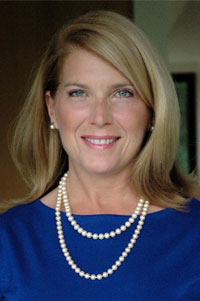
Jayme Stevenson is well known to our members as Darien’s First Selectman from 2011 to 2021 (she chose not to run for re-election this year). She was twice elected by her bi-partisan peers to serve as Chairman of the 18-town Western Connecticut Council of Governments. Jayme served as Chairman of the Connecticut Interlocal Risk Management Agency and First Vice-Chair of the Connecticut Conference of Municipalities. She has been married to her husband John for 34 years and they have five children and two grandchildren. Jayme has a B.S. degree in Telecommunication and Business Management from Arizona State University, Walter Cronkite School of Communication, and at one point worked for Standard & Poor’s Corporation as Vice President, Asset-Backed Finance

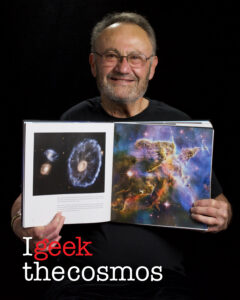
Marty Yellin, The Hubble Telescope, December 8, 2021

Marty Yellin received a Bachelors and Masters degree in Electrical Engineering from CCNY.  In 1965 he joined Perkin-Elmer in Wilton, Ct. and they helped support his doctorate in Bio Medical Engineering at NYU applying engineering solutions to medical issues. At Perkin Elmer he became involved with a Top Secret program to design and build the largest spy satellite ever to be flown in space. In his last 10 years at Perkin Elmer he helped design and manage the Hubble Space Telescope which has been the most productive space instrument ever built. After retirement in 1998 he resumed taking courses at NYU in the fields of genetics and cell biology.

Video Presentation


« Older posts Newer posts »