Author: Webmaster (Page 43 of 97)

Book Club: The Code Breaker by Walter Isaacson, May 12, 2021

THE CODE BREAKER
JENNIFER DOUDNA, GENE EDITING, AND THE FUTURE OF THE HUMAN RACE
BY WALTER ISAACSON ‧

A magisterial biography of the co-discoverer of what has been called the greatest advance in biology since the discovery of DNA.

For the first third of Isaacson’s latest winner, the author focuses on the life and career of Jennifer Doudna (b. 1964). Raised by academic parents who encouraged her fascination with science, she flourished in college and went on to earn a doctorate in biological chemistry and molecular pharmacology from Harvard. After fellowships and postdoc programs at the University of Colorado and Yale, she joined the faculty at the University of California in 2002. In 2006, she learned about CRISPR, a system of identical repeated DNA sequences in bacteria copied from certain viruses. Others had discovered that this was a defense mechanism—CRISPR DNA generates enzymes that chop up the DNA of the infecting virus. With collaborators, she discovered how CRISPR operates and invented a much simpler technique for cutting DNA and editing genes. Although known since the 1970s, “genetic engineering” was a complex, tedious process. CRISPR made it much simpler. Formally accepted by the editors of Science in 2012, the co-authored paper galvanized the scientific establishment and led to a torrent of awards, culminating in the 2020 Nobel Prize in chemistry. At this point, Isaacson steps back, keeping Doudna as the central character but describing the rush to apply gene editing to altering life and curing diseases, the intense debate over its morality, and the often shameful quarrels over credit and patents. A diligent historian and researcher, Isaacson lucidly explains CRISPR and refuses to pass it off as a far-fetched magic show. Some scientific concepts (nuclear fission, evolution) are easy to grasp but not CRISPR. Using charts, analogies, and repeated warnings for readers to pay attention, the author describes a massively complicated operation in which humans can program heredity. Those familiar with college-level biology will have a better time, but nobody will regret the reading experience.

A vital book about the next big thing in science—and yet another top-notch biography from Isaacson.


Relevant story about using mRNA to make the Pfizer and Moderna vaccines:

https://www.nytimes.com/2021/04/08/health/coronavirus-mrna-kariko.html?searchResultPosition=1

Side read courtesy of Bert.  https://interestingengineering.com/crispr-breakthrough-scientists-can-now-turn-genes-on-and-off-at-whim

Tom Igoe’s notes:  Notes on Code Breaker by Walter Isaacson from Tom Igoe


Current Affairs: Jim Phillips – Economic Outlook March 18, 2021

CA Host: Bob Baker

Presenter: Jim Phillips

Biden’s American Rescue Plan-Discussion Topics

What will the likely impact be for unemployment from the passage the ARP? 

The US will see improved economic growth in 2021 over 2020.  How much of the growth will be the result of the Covid relief bill?   major or minor impact?

What has been the effect on the size of the workforce due to added amounts to unemployment payments?  Has the workforce been reduced permanently?The bill includes more generous subsidies for health care under the ACA. Childcare tax benefits are for two years. Is it expected they will be made permanent, and at what cost?  

Certain business sectors most burdened by the pandemic are restaurants, travel, entertainment. What is the outlook for the recovery in these sectors?

The ARP contains $10 billion for infrastructure, an almost insignificant amount. Can we expect infrastructure proposals this year for a major amount?

What is the outlook for more regulation? Incentives for climate change? How will it be paid for?

What are expectations for tax hikes on corporate and personal income? Who will be targeted?

Will raising the corporate taxes from 21% to a likely 28% derail the recovery?

What is the likelihood of making cannabis legal at the Federal level under Biden?


2021 Economic Outlook under Biden Administration

2021 Global Economic Outlook _ Morgan Stanley 2_21

2021 stock outlook _ Fidelity

Economic outlook for 2021 _ Fidelity

Blackstone

Biden’s China Policy

Unemployment

Stimulus

First 100 days

Tax Hikes

https://www.nytimes.com/2021/03/01/business/infrastructure-biden-stimulus.html?searchResultPosition=1

https://www.cnn.com/2021/03/04/politics/senate-stimulus-package-what-to-expect-guide/index.html


Book Club: Washington Black by Esi Edugyan, April 14, 2021, 2:00


WASHINGTON BLACK

High adventure fraught with cliffhanger twists marks this runaway-slave narrative, which leaps, sails, and soars from Caribbean cane fields to the fringes of the frozen Arctic and across a whole ocean.

It’s 1830 on the island of Barbados, and a 12-year-old slave named George Washington Black wakes up every hot morning to cruelties administered to him and other black men, women, and children toiling on a sugar plantation owned by the coldblooded Erasmus Wilde. Christopher, one of Erasmus’ brothers, is a flamboyant oddball with insatiable curiosity toward scientific matters and enlightened views on social progress. Upon first encountering young Wash, Christopher, also known as Titch, insists on acquiring him from his brother as his personal valet and research assistant. Neither Erasmus nor Wash is pleased by this transaction, and one of the Wildes’ cousins, the dour, mysterious Philip, is baffled by it. But then Philip kills himself in Wash’s presence, and Christopher, knowing the boy will be unjustly blamed and executed for the death, activates his hot air balloon, the Cloud-cutter, to carry both himself and Wash northward into a turbulent storm. So begins one of the most unconventional escapes from slavery ever chronicled as Wash and Titch lose their balloon but are carried the rest of the way to America by a ship co-captained by German-born twins of wildly differing temperaments. Once in Norfolk, Virginia, they meet with a sexton with a scientific interest in dead tissue and a moral interest in ferrying other runaway slaves through the Underground Railroad. Rather than join them on their journey, Wash continues to travel with Titch for a reunion with the Wildes’ father, an Arctic explorer, north of Canada. Their odyssey takes even more unexpected turns, and soon Wash finds himself alone and adrift in the unfamiliar world as “a disfigured black boy with a scientific turn of mind…running, always running from the dimmest of shadows.” Canadian novelist Edugyan (Half-Blood Blues, 2012, etc.) displays as much ingenuity and resourcefulness as her main characters in spinning this yarn, and the reader’s expectations are upended almost as often as her hero’s.

Bob Riith

Robert A. “Bob” Riith, OFS, 83, husband of the late Patricia E. Riith of Darien, passed away Tuesday, February 9, 2021, peacefully at home.

Born November 2, 1937, to Engelbert J. and Frances M. Riith, Bob, raised in Greenwich, CT, was a longtime resident of Darien, CT.  Mr. Riith attended Greenwich High School, and served in the Army Reserves. Bob was Sewer Superintendent for the Town of Darien for over 30-years. Bob was an enthusiastic volunteer, serving as a firefighter with the NHFD, Assistant Scoutmaster with Troop 53, and involved in Darien youth athletics.

Bob was a member of St. Thomas More Church in Darien. He was a Third Order Franciscan, and a Member of the Holy Spirit Fraternity in Fairfield. Bob served in the Masons, Shriners, and Knights of Columbus organizations. Bob is survived by his daughter Frances, and sons Robert A. Jr., and Michael. Additionally, Bob is survived by his three sisters, Barbara Gleason, Kathleen Duffy, and Karen Landers. He is also survived by his seven grandchildren, a great granddaughter, nieces and nephews.

A Mass of Christian Burial will be celebrated this Tuesday at 10:30AM in St. Thomas More Church in Darien. Attendance is limited. Please e-mail: BobRiith37@gmail.com to attend in person. The Mass is available online at www.stmdarienct.org For more information visit www.collins-funeral.com

Memorial donations may be made to Shriners Hospitals for Children, www.shrinershospitalsforchildren.org. Arrangements are in the care of Collins Funeral Home, Norwalk, CT. Please visit www.collinsfh.com/obituaries for the full obituary and to leave condolences.

Hike Waveny Park – Thursday, March 25, 2021

HIKING WAVENY PARK

    NEW CANAAN, CT

THURSDAY MARCH 25

    10 AM

Waveny Park in New Canaan is a 300 acre complex of athletic fields, extensive woodlands and numerous structures that was originally the Lapham Estate. Also on the park grounds are New Canaan High School and Waveny Life Care Network. It is a remarkable resource for New Canaan and surrounding towns.

We plan to meet at 10:00 AM in the first parking lot on the right after entering from South Avenue. This lot faces the large lawn used mostly for soccer. We will hike most of the woodland and parkland trails over a distance of 2.5 miles. The trails are wide and flat although the climb back to the parking lot from South Avenue is a little steep in spots. Be forewarned the wind up on the soccer field can be brutal but once in the woods no problem. Layer up if it is cold!

As always on our hikes guests are welcome and Waveny allows dogs on a leash. This venue should be another where it will be easy to keep distanced but have the opportunity to talk to each other in person, something we have missed during the pandemic.

The entrance to Waveny is at 677 South Avenue (Route 124) in New Canaan. There is ample parking.


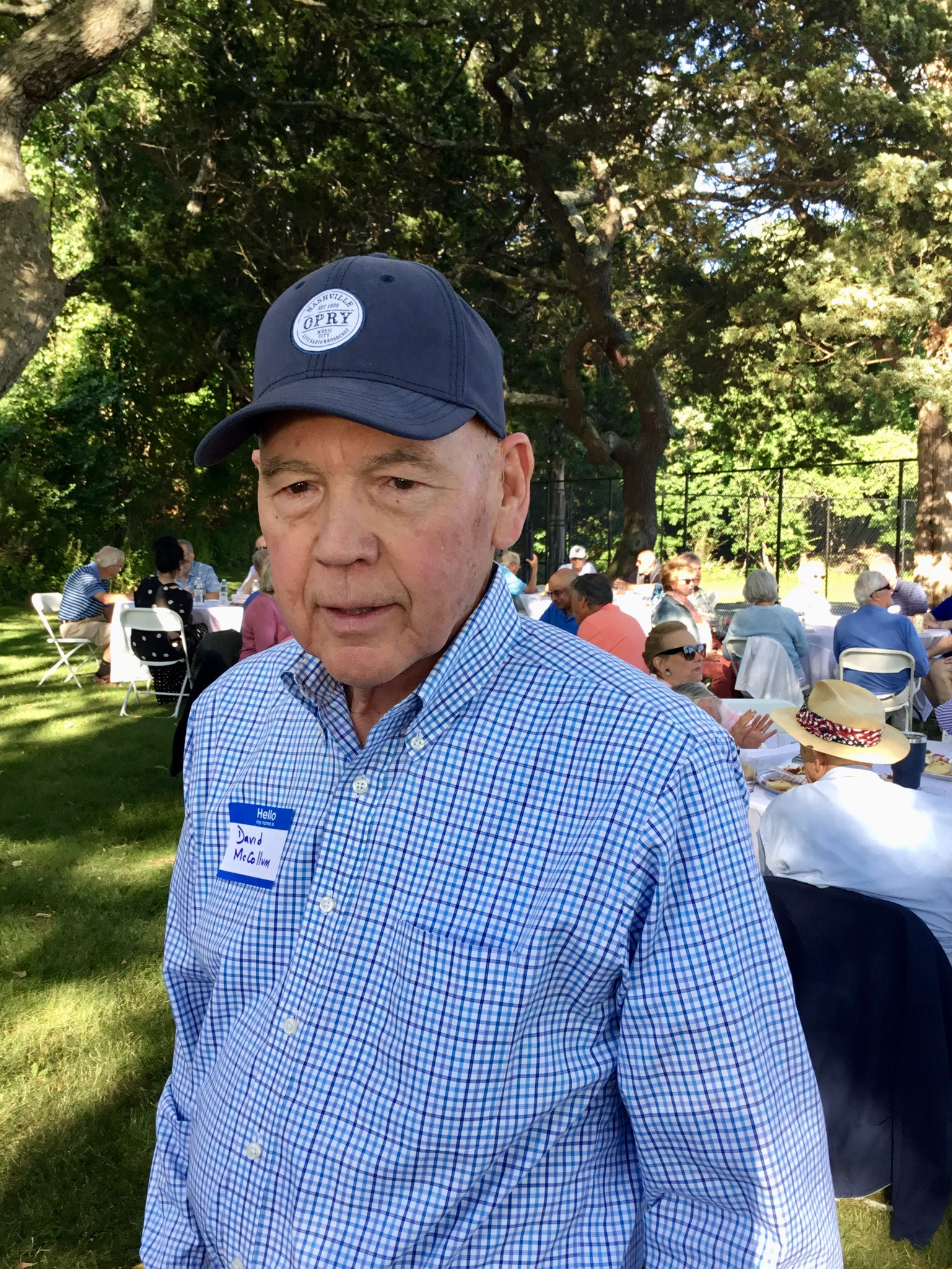
CONTACTS: Dave McCollum and Bob Plunkett 
Trip report:

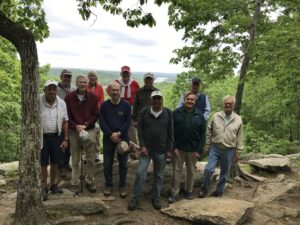
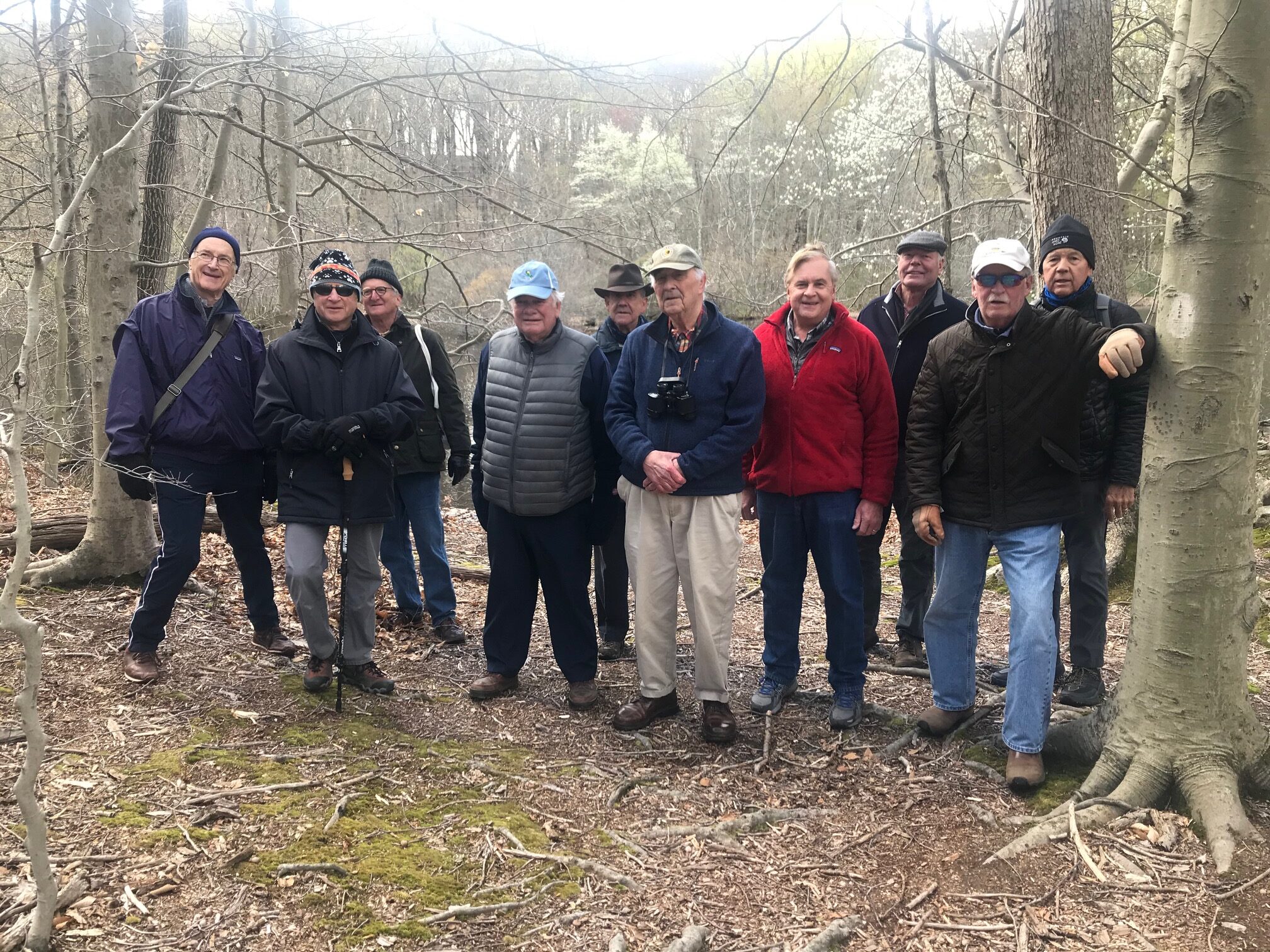
Our first hike of spring took place in magnificent Waveny Park in New
Canaan on a cloudy but pleasant morning. A group of 12 DMAers and
guests plus two dogs enjoyed the well groomed trails and the chance to
meet face to face rather than over Zoom.

We hiked a total of 2.5 miles in a little more than an hour over mostly flat
terrain on the former Lapham Estate, now owned by the Town of New
Canaan. The trails are mostly through woods but closely border the Merritt
Parkway for a relatively noisy stretch! Once away from the traffic, all was
serene again.

As has been our practice since the start of the Pandemic, no lunch was
scheduled after the hike.


Book Club: Unsinkable by James Sullivan, March 10, 2021


UNSINKABLE

FIVE MEN AND THE INDOMITABLE RUN OF THE USS PLUNKETT

The captivating story of a World War II destroyer that saw plenty of action.

While conducting research on the Plunkett, which was “all over the place, intersecting with the greatest events and personages of the war,” Sullivan discovered that several crew members were still alive, so he interviewed nonagenarian veterans, as well as their children and grandchildren, in addition to his diligent combing of archives, journals, and ship’s logs. The result is a vivid portrait of the sailors, wives, girlfriends, and families and their world, in which the Plunkett’s battles often seem like interludes. As is typical in war, tedium was the norm, excitement came at rare intervals, and one horrendous incident ensured the ship’s place in history. Launched in 1940, the Plunkett was one of 514 destroyers that fought WWII; 71 were lost, the most of any ship. Even before war broke out, the Plunkett escorted convoys to Britain across the North Atlantic. In November 1942, it accompanied a massive fleet and army that crossed to North Africa during Operation Torch. In July 1943, the Allies invaded Sicily, and the Luftwaffe sank many Allied ships—but not the Plunkett, which also narrowly escaped damage during the invasion of the Italian mainland at Salerno. Matters changed on Jan. 24, 1944 in the sea off Anzio, where a swarm of attackers seemed to target the Plunkett. Countless bombs missed, but one struck, causing terrible damage and killing 53 men. Sullivan delivers a gripping account of what followed as the men fought the fires, rescued survivors, retrieved bodies and body parts, and limped into harbor. After three months of repairs in the U.S., the ship returned to Europe to serve again. Sullivan has done his homework, and readers will enjoy his generous digressions into biography, courtship, shore-leave horseplay, shipboard politics, and a postwar summary.

An outstanding addition to the still-active genre of WWII histories focusing on a single unit, ship, or bomber.

Hike Rowayton, Friday, January 15, 2021

“HIKING” ROWAYTON

FRIDAY JANUARY 15, 2021

      9:00 AM

                 MEET AT ROWAYTON MARKET*

Please join us for a three mile tour of the village of Rowayton.

We will start out from the Rowayton Market at 9:00 AM and hike around most of the perimeter of Rowayton. Lot’s of water views and interesting architecture and history. While there will be some modest hills, for the most part the hike will be relatively flat over paved surfaces. It can be windy so layer up!

Guests and dogs on a leash are welcome. Should be fun!


*THERE IS PLENTY OF PARKING IN THE LOTS ACROSS THE STREET FROM THE MARKET


Contacts:

Dave McCollum and Bob Plunkett

 

HIKING ROWAYTON
JANUARY 15, 2021

Led by David McCollum and Bob Plunkett, a hearty group of 20 including
several guests participated in a walking tour of the coastal village of
Rowayton on a cool and windy Friday morning.
Our route started at the Rowayton Market and proceeded south along
Rowayton Avenue to the end and then around Pine Point and Nearwater
Lane to South Beach. DMA member Peter Tombros, a Bell Island resident,
joined us to get us access to the Rocky Point promontory surrounded on
three sides by the Sound. Normally a great place to see Manhattan, but the
misty weather blocked our view.
After a windy and cold stop for sightseeing,, we walked the length of Bell
Island over the stone bridge to the Rowayton Yacht Club. At that point, we
split into two groups, one taking the Sammis Street shortcut back to the
Market, and the remainder continued up Bluff Avenue and then down
Wilson back to the Market. About one and three quarters hours for the
longer walk.
A good start to what we hope is a series of winter walks over local venues.


Dr. Griffith Mann, “Medieval/Modern: John D. Rockefeller, Jr. and the Creation of The Cloisters,” May 26, 2021

The Metropolitan Museum of Art possesses the finest, most comprehensive collection of Medieval and Byzantine art in the western hemisphere. It is held in two locations: the galleries of the Met’s main building on 5th Avenue and The Met Cloisters in Fort Tryon Park. John D. Rockefeller, Jr. (1874-1960) provided funds that enabled The Metropolitan Museum of Art to purchase the Cloisters museum and its collections from George Grey Barnard in 1925.  Dr. C. Griffith Mann will discuss the role played by Rockefeller in the development of the Cloisters.

Dr. Mann was appointed The Metropolitan Museum of Art’s Michel David-Weill Curator in Charge of the Department of Medieval Art and the Met Cloisters in September, 2013. In this role, he is responsible for the medieval collections and curatorial staff in the Met’s main building, and for directing the staff and operations of the Met Cloisters, the branch of the Metropolitan Museum dedicated to the art and architecture of medieval Europe. Dr. Mann received his B.A. in art history and history from Williams College, and his Ph.D. in medieval art from The Johns Hopkins University. A specialist in the arts of late medieval Italy, he has published on civic patronage, painting, and devotion in Tuscany. As a curator, Dr. Mann has worked on exhibitions on the medieval cult of relics, the art and archaeology of medieval Novgorod, and French manuscript illumination of the 13th century. He formerly served as the Chief Curator and Deputy Director at The Cleveland Museum of Art, where he helped to lead the museum’s reinstallation, acquisition, and exhibition programs, and as medieval curator and Director of the Curatorial Division at The Walters Art Museum, where he worked on exhibitions and the permanent collection.

Arranged by Bryan Hooper

Bryan’s notes on the talk:

Dr. C. Griffith Mann spoke to the DMA for the third time in the past twelve months about the history of the Met Cloisters museum in Manhattan, concentrating his narrative on the role played by John D. Rockefeller, Jr. in the development of the museum.

The medieval art at the Metropolitan Museum of Art was initially gifted mainly by J.P. Morgan, and The Cloister’s collection was established by sculptor George Grey Barnard, a friend of Rodin, on a property in Manhattan overlooking the Hudson. Barnard was introduced to Rockefeller by William Bosworth, an architect who had designed a house for Rockefeller’s father and had commissioned Barnard to design some sculptured pieces for the grounds. Barnard, eternally in debt, sold his collection of European architectural artefacts to John D. Rockefeller, Jr., and the collection was donated to the Met in 1925. Rockefeller was involved in a wide range of philanthropic ventures, having become president of the Rockefeller Foundation in 1913, and in 1930 he offered to donate and develop land at Fort Tryon to house the collection. Bosworth hired architect Charles Collens in 1933 to design the Cloisters buildings and a four acre park on the land surrounding it. Development commenced in 1935, and the grand opening was in May 1938. The influence of Rockefeller persists to this day, as the endowment created by the foundation for the museum enabled the Cloisters to manage and survive the financial problems created by the Covid virus.

Griff Mann’s presentation contains illustrations of some of the beautiful objects housed in the Cloisters collection, including parts of the seven Unicorn Tapestries: be prepared for a future talk highlighting that famous collection. See the video at: https://youtu.be/NXigtpSYDAg.


« Older posts Newer posts »