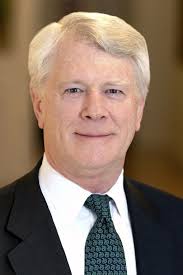
Ed Hynes, CFA was born and raised in Wilton, CT. He attended Wilton High School where he played both football and lacrosse. In 1977 Ed graduated from The George Washington University in Washington D.C. with a B.A. in Political Science. He subsequently spent most of his career in financial services. As an equity analyst, institutional salesperson and trader he worked with some of the premier investment banking firms in many of the world’s leading financial centers including New York, Tokyo, London, Chicago and San Francisco. In 2001 Ed became a Chartered Financial Analyst (CFA) charter holder, and is currently a Financial Advisor with Merrill Lynch in Westport, CT. He lives in Norwalk.
Ed first became interested in the Revolutionary War as a child when he learned his neighbor’s house was partially burned by the British during the Danbury Raid in 1777. He and his wife are fascinated by history and have visited many important battlefields both here and abroad. Ed has spoken to the DMA twice before, first in 2013 on the Battle of Ridgefield, and the second time in October, 2019, about the War on Long Island Sound.
Arranged by Gary Banks
Bryan Hooper’s notes on the talk:
Ed Hynes gave us a brief history of the War of 1812, leading into the origins of our national anthem, The Star-Spangled Banner.
The 1812 war was essentially due to a continuation of the grievances remaining from the Revolutionary War, and was started by a dispute over trade conditions. While the British had apparently agreed to a compromise on the problem, the lack of rapid communication facilities, such as a telegraph (invented 30 years too late), prevented the terms from being sent to the US in time to stop war being declared in June of 1812. It stretched over three years, and was notable for major naval victories by the Americans in the first year, the failure to take Canada in 1814, the inability of the British to win the Battle of Baltimore, and their defeat by the Americans at New Orleans in February 1815 – although the peace treaty had been signed on Christmas Eve, 1814! While the result of the war was officially a draw, it led to a period of American national unity, known as the Era of Good Feelings.
The back story of the national anthem started after the British had burned Washington in late August 1814, and then turned their attention to Baltimore, with the hope of consolidating their gains in the Chesapeake area. Major General Ross, in command of the British land forces, had been offered use of the house of Dr. William Beanes as his headquarters in Upper Marlboro, Maryland. However, during the campaign, British deserters who had looted local farms were arrested by Beanes, so Ross in retaliation had him arrested. (Ross was later killed by a sniper at the Battle of North Point before the Battle of Baltimore.) President Madison arranged for Francis Scott Key, a Georgetown lawyer, to deal with the British commanders in Baltimore for Beanes’s release. Those talks took place on board a British warship in the harbor in early September, and Key successfully negotiated for Beanes to be freed, citing the medical help the doctor had provided to wounded British prisoners. Key and his colleagues in the team were detained on board the British ship when the battle began on September 12th, and raged around them. He observed the bombs bursting in air over Fort McHenry, and in the morning of the next day saw the flag, spangled with fifteen stars, still flying over the fort’s ramparts. He wrote the poem the next day, and it was published the following week. Set to the music of John Stafford Smith – an English composer – it became popular as a patriotic song, being adopted for ceremonial events by the US Navy in 1889. The song was approved in 1916 by President Wilson to be played on military and other appropriate occasions, and finally became the national anthem following Congressional action and signature by President Hoover in March 1931.
Slides used in the presentation: Ed Hynes War of 1812 12-7-20
Video of Ed’s presentation: https://youtu.be/XEmuLSZjw0Y
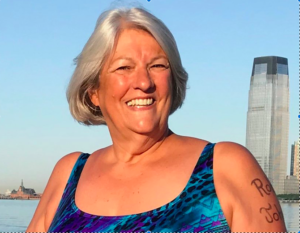 Patty Gallant-Charette, a 69 year-old woman from Maine has swum vast distances across the world’s oceans, in particular the waters of “Oceans Seven,” the most treacherous and turbulent ocean channels in the world. Oceans Seven was devised in 2008 as the swimming equivalent of the Seven Summits mountaineering challenge (see Robert Whitby 8/26/20). It includes the North Channel, the Cook Strait, the Molokaʻi Channel, the English Channel, the Catalina Channel, the Tsugaru Strait and the Straits of Gibraltar. She has managed to complete all of these save for the Cook Strait, which she has attempted twice, almost made it the last time, and is in line to try it again in the next few years. Aside from these waters, she has swum across many lakes of the world including Lake Tahoe, Loch Ness, Lake Ontario and Lake Windermere.
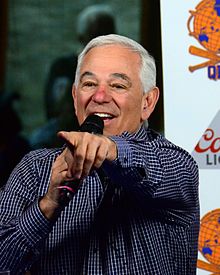

 David Pogue will talk about the subject covered in his upcoming book, “How to Prepare for Climate Change.“ He notes that “the number of people who believe that the climate is not changing are dwindling, and it’s currently about 12% of Americans. Twice that number believe that aliens walk among us. There may still be people who believe that the changing climate is not human-caused, or maybe you believe it is human-caused, or that it’s a natural cycle—but either way, you still need to prepare!”
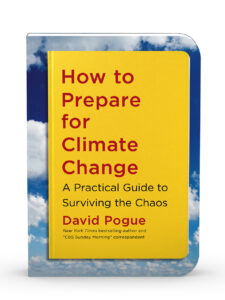 David is a technologist, columnist, entertainer and television reporter. From 2000 to 2013, he was the New York Times weekly tech columnist. After a five-year detour to Yahoo Finance, he now writes for the Times, WIRED, and OneZero on Medium. He’s a five-time Emmy winner for his stories on “CBS Sunday Morning,” a New York Times bestselling author, and a host of 20 science specials on “NOVA” on PBS. David is one of the world’s best-selling “how-to” authors, with more than 100 titles and 3 million copies in print. They include seven books in the “For Dummies” series, his Pogue’s Basics series of tips and shortcuts, and the Missing Manual series of computer books. David graduated summa cum laude from Yale in 1985 with distinction in music, and he spent ten years conducting and arranging Broadway musicals in New York. He has won a Loeb Award for journalism, and an honorary doctorate in music. He has been profiled on “48 Hours” and “60 Minutes,” and is regularly featured on “CBS Sunday Morning.”



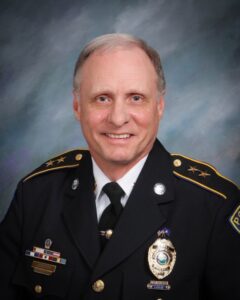

 Mark Nunan was born in Cork, Ireland, in 1953. At an early age, he moved to Homewood and then Hoover, Alabama. In 1971, he graduated from Indian Springs High School, where he was editor of the school newspaper and literary magazine, member of the Student Judiciary group and played in the soccer team. Mark graduated from the University of Alabama in 1976. He continued his education at Stanford University, where he was awarded a master’s in 1979 and a Ph.D. in 1983. During that same period, he was a George Lurcy Fellow at L’École normale supérieure and at the University of Paris-Sorbonne in Paris as part of his Ph.D. program. He was a member of Pi Kappa Phi academic honor society and participated in medical research in one of the largest blood pressure and cardiovascular disease research studies in the United States.