Author: Webmaster (Page 52 of 97)

Thomas Madden, Regional Economic Growth, June 10, 2020

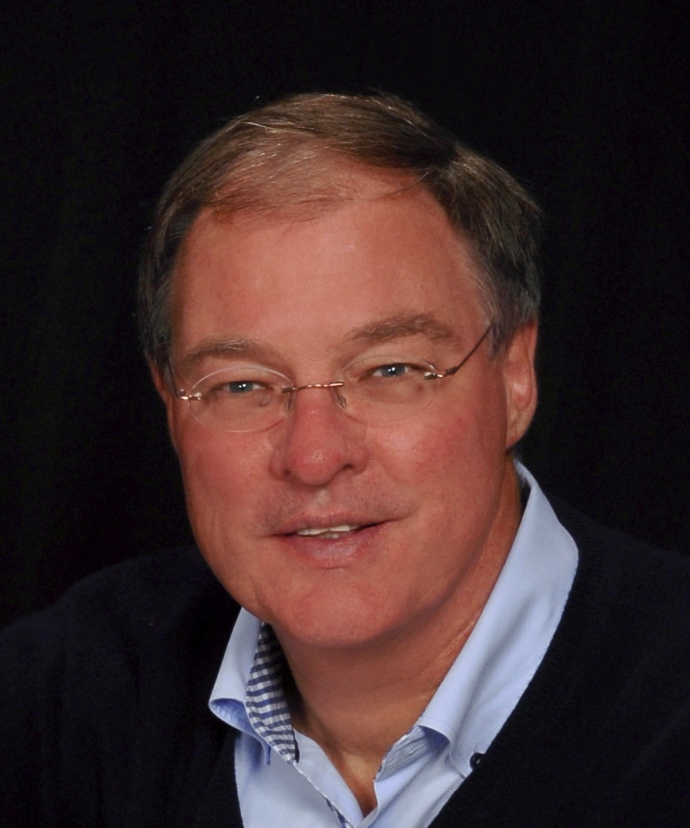
Thomas Madden will speak to us about the robust economic health of Stamford and the surrounding towns.  He brings a portfolio of facts to support his message – education, transportation, corporate moves, incomes, occupancy rates, … A good news story when we often focus on the negative.
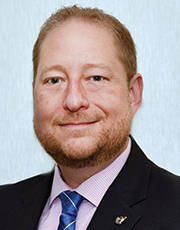
Thomas Madden: Director of Economic Development, City of Stamford

Mr. Madden was appointed Director of Economic Development for the City of Stamford, CT in June 2014. Previously, he held the position of Commissioner of the Department of Community Development and Conservation for the Town of Greenburgh, NY. Prior, he has worked for the Westchester County Planning Department, Maricopa County Department of Transportation and several private consulting firms.

Thomas has been instrumental in the development of new environment standards including the adoption of Green Building code for new site development, revisions to the Energy Star code and a Smart Growth Development Study.

Mr. Madden was a steering committee member for Westchester County’s Central Park Avenue Bus Rapid Transit Study, Greenburgh Comprehensive Plan update and a member of the two Stakeholders’ Advisory Working Groups for the Tappan Zee Bridge/I-287 Environmental Review. Thomas co-chairied, a seven county planning consortium to develop a Regional Sustainability Plan that tied into the Mid-Hudson Regional Economic Development Council’s 2011 Strategic Plan.

Thomas is a member of the American Planning Association and the American Institute of Certified Planners.

Mr. Madden graduated from the University of Victoria with a BA in geography (Urban Studies) and attended Dalhousie University’s Masters of Urban and Rural Planning Program, where he was awarded the Harry Kitz Park Development Scholarship for Park Design and the Mobil Oil Canada Scholarship for Impact and Design Studies for his graduate thesis on the potential for eco-industrial development in Cape Breton, Nova Scotia. In his spare time, he enjoys coaching youth hockey and is a Director for the Terry Fox Run for Cancer Research in NYC, raising more than 2 million dollars for cancer research.

Here are his slides: Tom Madden Presentation

Arranged by Gary Banks and Bryan Hooper

Bryan’s notes from the talk:

Thomas Madden, Director of Economic Development for the City of Stamford, remains upbeat about growth prospects for businesses in the area despite – and maybe partly due to – the impact of the novel corona virus. While unemployment in the Greater Stamford area is currently 11% compared with 3% pre-covid, the employment situation has begun to improve since late-April, and there is optimism that the implementation of the various recovery phases will prove successful in restoring the economy – always provided that people take the advice of the Governor and follow safety guidelines. Stamford has taken remedial action to assist residents living in area where there have been spikes in viral cases by promoting safe practices and providing appropriate information and equipment.

In the longer term, Thomas stated his opinion that the impact of the virus will continue to encourage some CEOs to move out of the immediate New York City area and migrate to places like Fairfield County, which has a highly educated, tech-savvy workforce, good housing, transportation facilities and cultural amenities. He also made it clear that his target prospects to entice to Stamford are not firms currently within Connecticut.

While the Stamford office vacancy rate is relatively high at 27% and more space is being developed, he firmly believes that workers, especially the young, will want to return to offices, so demand will increase.  In terms of the return to normalcy, Madden stressed that we are still in the process of running a marathon, but approaching the mid-way mark: stabilization has to occur before we can enjoy a full recovery.
Pieter Van Dijk, CEO Van Dyk Recycling Solutions, June 3, 2020

Recycling is important to us both ecologically and economically.   A well designed and operated solution will:

  • Enable the maximum number of products to be recycled thus avoiding land fills;
  • Be easy for residents to participate in the program; and
  • Economically convert recycle streams into valuable materials.

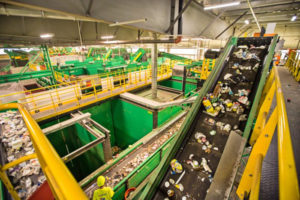
The result being the town gets paid for recycling waste vs. paying to haul away waste. Van Dyk Recycling Solutions designed the facility that City Carting uses to process Darien’s single stream recycling. Van DyK Recycling Solutions, is a world leader in designing and supporting MRF (Material Recovery Facilities) with over 200 sites.  Besides residential recycling his company provided solution for composting, commercial waste, waste-to-energy, and more.  In his talk Pieter Van Dijk, CEO, will cover:

  1. the changing global market for recyclables – specifically China.
  2. the engineering challenges of handling the variety of materials, including single stream, in a recycling program and converting them into usable product.
  3. issues specific to Darien and surrounding towns that use the local facility –  including educating the public to be active and responsible participants in the process.

Pieter Eenkema van Dijk grew up in the Netherlands where he received a Masters degree in Economics at Groningen University in the Netherlands and an MBA from Insead Business School at Fontainebleau in France.

In 1984, he founded Van Dyk Baler Corp. in North America and is the company’s current president. Now Van Dyk Recycling Solutions, the company has distribution rights in the United States and Canada for the industry’s best manufacturers, including Bollegraaf Recycling Solutions, Lubo Systems, and TOMRA sorting solutions.

He is located at the Van Dyk headquarters in Norwalk, CT with regional offices in Los Angeles, Chicago, and Houston.

Here is his slide presentation:  DMA VAN DYK Presentation

Time lapse of building the facility at Santa Barbara:  Santa Barbara

Arranged by Alec Wiggin and Cliff Van Voorhees

Bryan Hooper’s notes from the talk:

There’s an old Yorkshire expression that says ‘where there’s muck there’s brass,’ which in essence means that you can make money out of other people’s garbage.  Our speaker last week, Pieter van Dijk, of Van Dyk Recycling Solutions illustrated the truth of that saying with a densely packed, detailed description of the history of the recycling industry and his company’s leading position within it. He described the origins of modern recycling processes which started back in the 80s for residential waste, and developed further from two-stream (one for paper, one for plastic, glass and metal containers) into the current more efficient one-stream process using big bins. He highlighted the problems caused by plastic bags which clog the processing machines and asked us to keep them out of our blue bins to avoid contaminating the good products. The growth of the business was driven by demand for paper products for pulping by China and the recycling of metal containers, both ferrous and aluminum. The recent cessation of purchases by China depressed demand so much that average prices received by recyclers for their material dropped from $110 per ton in 2005 to $21 today.  With costs increasing from $40 to $45, payments to cities  such as the $25 per ton to Stamford are no longer viable; margins have dropped from $45 to a negative $24, resulting in charges to cities to compensate. Van Dyk develops processes and systems at their facility in Norwalk, and supplies plants to recyclers in North America. We have been invited by Pieter van Dijk to view his plant once the virus allows, and we have posted his slide presentation with videos on the DMA website.


Griffith Mann, “Medieval Matters: Curating the Middle Ages at The Metropolitan Museum of Art”, May 27, 2020

The Metropolitan Museum of Art possesses the finest, most comprehensive collection of Medieval and Byzantine art in the western hemisphere. It is held in two locations: the galleries of the Met’s main building on 5th Avenue and The Met Cloisters in Fort Tryon Park. This talk will explore the history of these two collections, and consider a selection of outstanding works of art that bring the medieval period compellingly to life.  Dr. Mann will focus on works of art in the collection with a connection to plague, and look at some objects before and after the Black Death.

Dr. C. Griffith Mann was appointed The Metropolitan Museum of Art’s Michel David-Weill Curator in Charge of the Department of Medieval Art and the Met Cloisters in September, 2103. In this role, he is responsible for the medieval collections and curatorial staff in the Met’s main building, and for directing the staff and operations of the Met Cloisters, the branch of the Metropolitan Museum dedicated to the art and architecture of medieval Europe. Dr. Mann received his B.A. in art history and history from Williams College, and his Ph.D. in medieval art from The Johns Hopkins University. A specialist in the arts of late medieval Italy, he has published on civic patronage, painting, and devotion in Tuscany. As a curator, Dr. Mann has worked on exhibitions on the medieval cult of relics, the art and archaeology of medieval Novgorod, and French manuscript illumination of the 13th century. Dr. Mann formerly served as the Chief Curator and Deputy Director at The Cleveland Museum of Art, where he helped to lead the museum’s reinstallation, acquisition, and exhibition programs, and as medieval curator and Director of the Curatorial Division at The Walters Art Museum, where he worked on exhibitions and the permanent collection.

Arranged by Gary Banks

Bryan Hooper’s notes from the talk:

Dr. Griffith Mann, the Curator in Charge of the Department of Medieval Art and the Met Cloisters, last week described the origins of the medieval art and architecture collection at the Metropolitan Museum of Art, and took us to Tuscany to highlight the development of art in the time of the Black Death in the 14th century. The medieval art at the Met was initially gifted mainly by J.P. Morgan, and The Cloister’s collection was established by sculptor George Grey Barnard, a friend of Rodin, on a property overlooking the Hudson. This was acquired by John D. Rockefeller, Jr., who donated it to the Met in 1925, and built a new museum set up as a monastic cloister containing gardens designed by Frederick Law Olmsted, Jr. Dr. Mann concentrated his review of art during the plague years on the cities of Massa, Siena and San Gimignano, which were on the pilgrim trail from Pisa south to the Holy Land. The Black Death struck all sectors of society (sounds familiar) from nobles to peasants. The art of the time, particularly in frescoes in the duomos, the Italian cathedrals, addressed the subject in detail: the mainly illiterate population found stories in art that they could not access easily in any other way. Dr. Mann has more to tell on the Met and the medieval collection, and mentioned J.P. Morgan as a potential subject for a future talk to the DMA.

Thomas Wolf & Brianna Cea, Brennan Center for Justice, “The 2020 Census,” May 20, 2020

Efforts to get out the count for the 2020 Census are moving forward in the face of severe headwinds, from the coronavirus pandemic to confidentiality concerns to the lingering effects of the citizenship question. Getting the count right is crucial: the census will determine the distribution of political power and trillions of federal funds for the next decade. Census specialists from the Brennan Center will join us to describe the challenges facing this decade’s count and how to surmount them.

Thomas (Tom) Wolf is counsel with the Brennan Center’s Democracy Program, where he focuses on the census and redistricting.

An experienced constitutional lawyer and strategist, Wolf advises civil rights, immigrant rights, and good government groups on litigation strategy and legal policy. He also leads amicus campaigns and authors amicus briefs for lawsuits in federal and state courts throughout the country, including high-profile cases before the United States Supreme Court.

Wolf’s articles, op-eds, and commentary on the census, redistricting, and other legal issues have appeared in major media outlets nationwide and globally. He routinely speaks and lectures on law and policy at leading universities, law schools, and public policy schools.

Prior to joining the Brennan Center, Wolf was a member of the Supreme Court and appellate group at Mayer Brown LLP. He began his legal career as a clerk for Senior Judge Guido Calabresi of the United States Court of Appeals for the Second Circuit.

Wolf received his JD from Yale Law School. He also holds advanced degrees in political thought and intellectual history from the University of Cambridge and urban development planning from the Bartlett faculty of University College London, which he attended as a Marshall Scholar. He graduated summa cum laude with an AB in history from Harvard College.


Brianna Cea is a research and program associate in the Democracy Program, where she focuses on the census and redistricting. Cea’s work has been featured in the Los Angeles TimesNew York TimesAtlantic, and other outlets. Cea is also the cofounder and CEO of Generation Vote, a millennial outreach and mobilization project.

Prior to joining the Brennan Center, Cea interned with the New York Governor’s Office of Storm Recovery, the New York Governor’s Tenant Protection Unit, and the Office of Broome County Executive Jason Garnar. She also served as the Roosevelt Institute Regional Coordinator for the Lower Northeast region.

Cea graduated summa cum laude with a BA in political science and philosophy, politics and law from Binghamton University, where her honors work focused on democratic theory, political philosophy, and democratic governance. At Binghamton, Cea founded the Roosevelt Institute at Binghamton University, the Broome County Student Board of Advisors, and served as a Newman Civic Fellow.

Arranged by Gary Banks

Here are their slides:  Darien’s Men Brennan ppt_5.19.20_public

Dr. Daniel Ksepka, Bruce Museum, “Flight of the World’s Largest Bird”, May 13, 2020, 10:00

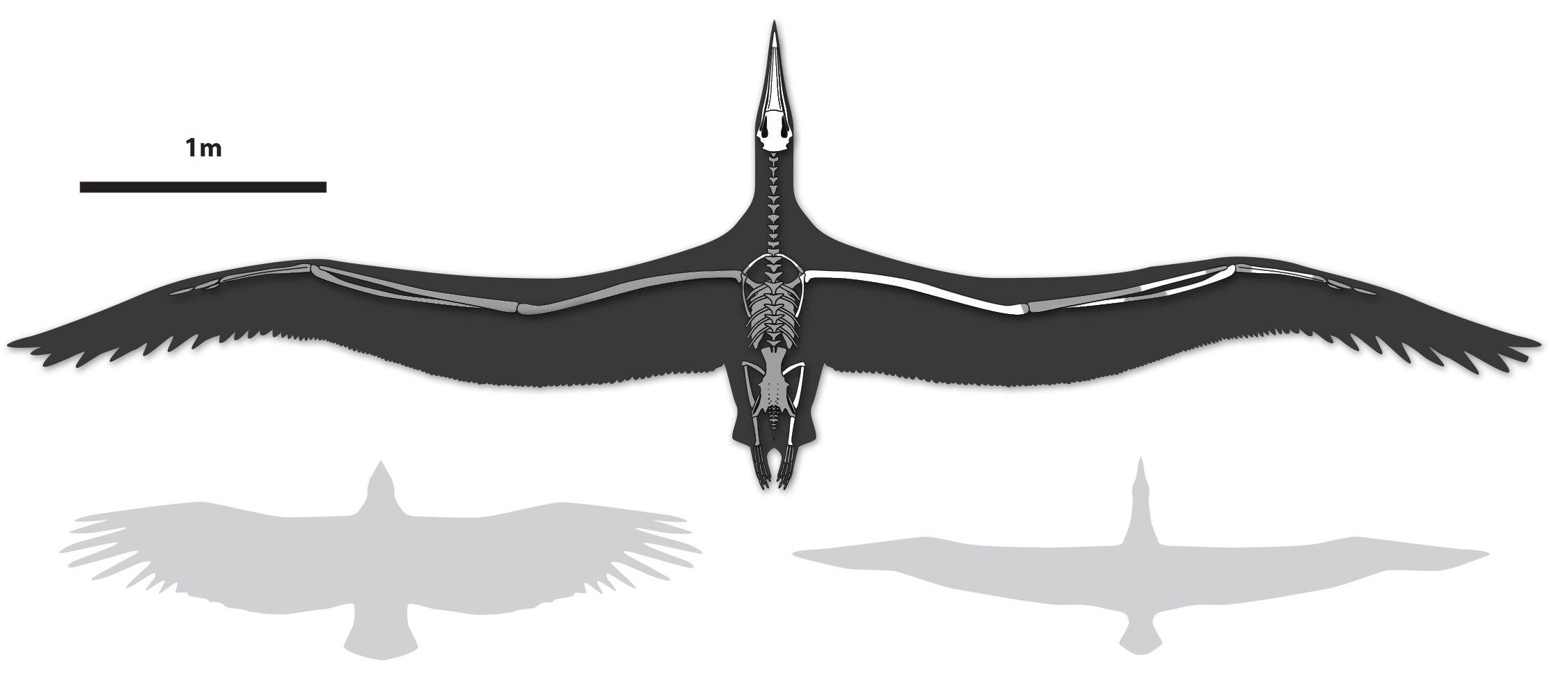
Dr. Ksepka’s topic, “Flight of the World’s Largest Bird” will detail the discovery, reconstruction and computer modeling of flight  style in Pelagornis sandersi, an extinct bird he described in 2014.  This species had a wing span of approximately 20 feet, making it the largest flying bird that ever lived.  He studied the fossil, unearthed in Charleston SC, while he was a fellow at NESCent (a research center on Duke campus) in NC.

There is a life-size model of the bird in the Bruce Museum’s rotunda at the moment, on loan from the Smithsonian.

To get an idea how large this bird was, compare the drawing below to California Condor, below left, and the Wandering Albatross, below right. 


Dr. Daniel T. Ksepka, Ph.D., Curator Bruce Museum

Museums are my home, and I am broadly interested in building natural history collections, museum-based outreach and education, and presenting compelling topics in exhibitions.  My research centers on the evolution of birds, with particular interests in phylogeny, divergence dating, and the transition to wing-propelled diving in penguins.


Current Research Projects

  • Modeling the flight patterns of the largest flying bird ever to have lived, Pelagornis sandersi.
  • Reconstructing patterns of brain size expansion in dinosaurs and birds. This project was initiated during a Catalysis Meeting funded by NESCent (NSF EF 0905606) titled “A Deeper Look into the Avian Brian: Using Modern Imaging to Unlock Ancient Endocasts”, with Amy Balanoff and N. Adam Smith.
  • Inferring phylogeny and patterns of morphological change in the best group of birds: penguins!This research is currently funded by NSF award DEB: 1556615 “Collaborative Research: Advancing Bayesian Phylogenetic Methods for Synthesizing Paleontological and Neontological Data” with Tracy Heath and Rob Meredith.
  • Assembling a full species level tree for all 10,000+ species of birds. As a paleontologist I am particularly interested in using fossil data to accurately reconstruct the timing of the modern bird radiation in order to better understand how events like extinctions, climate change, and plate tectonic events influenced avian evolution.This research is currently funded by NSF award DEB 1655736 “All Birds: A Time-scaled Avian Tree from Integrated Phylogenomic and Fossil Data” with Brian Smith, F. Keith Barker, Edward Braun, Robb Brumfield, Terry Chesser, Brant Faircloth, Rebecca Kimball.

Education

  • PhD, Columbia University (2007)
  • MS, Columbia University (2005)
  • BS, Rutgers University (2002)

Arranged by Robin & Charles Salmans

Here is his presentation: Pelagornis

Dr. Ksepka recommended these two sites:

https://www.newbrucescience.org

https://www.undertheskinexhibition.com

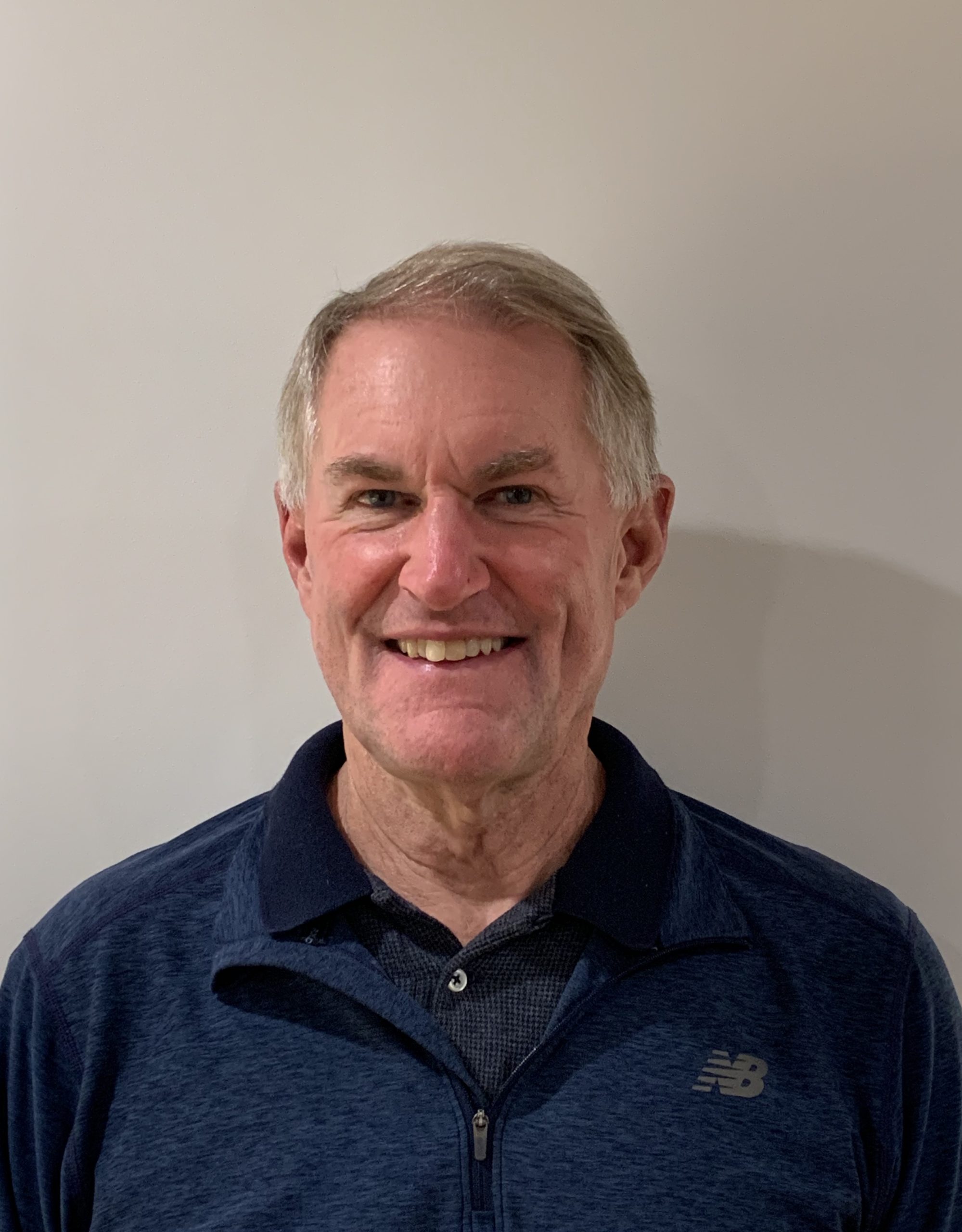
Schoff, Linc

Lincoln Schoff was born in Bryn Mawr, Pennsylvania in 1950 and grew up in Philadelphia. He graduated from Germantown Academy in Philadelphia in 1968, and from Amherst College in 1972 with a B.A. in political science. At Amherst, he played football and was an active member of the Delta Upsilon fraternity. In 1977, Linc graduated from Wharton with an MBA and started a corporate banking career in Boston with The First National Bank of Boston, where he worked for 10 years before being transferred to Stamford, CT and buying his current home in Darien in 1987. Linc continued his banking career thru the industry’s various mergers, concluding a 13 year stint with Bank of America with his retirement in April 2020.

Linc and his wife of 41 years Meredith have three children that went thru the Darien school system from start to finish, all of whom live and work in the metro NY area, plus three grandchildren living in Rowayton, CT. Linc is a past member of the Middlesex Club and the Silvermine Golf Club and a past elder of Noroton Presbyterian Church. He enjoys golf, tennis, bicycling, travel and spending time with his family.

Sponsored by Ed Sweeney

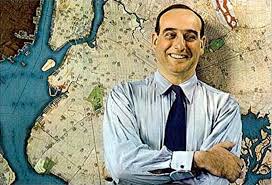
Mark Nunan: Robert Moses – Master Builder – Political Master of New York, May 6, 2020

Moses built an empire and lived like an emperor. He was held in fear – his dossiers could disgorge the dark secrets of anyone who opposed him. He was, he claimed, above politics, above deals; and through decade after decade, the newspapers and the public believed.

Meanwhile, he was developing his public authorities into a fourth branch of government known as “Triborough” – a government whose records were closed to the public, whose policies and plans were decided not by voters or elected officials but solely by Moses – an immense economic force directing pressure on labor unions, on banks, on all the city’s political and economic institutions, and on the press, and on the Church. He doled out millions of dollars’ worth of legal fees, insurance commissions, lucrative contracts on the basis of who could best pay him back in the only coin he coveted: power. He dominated the politics and politicians of his time – without ever having been elected to any office. He was, in essence, above our democratic system.

Robert Moses held power in the state for 44 years, through the governorships of Smith, Roosevelt, Lehman, Dewey, Harriman, and Rockefeller, and in the city for 34 years, through the mayoralties of La Guardia, O’Dwyer, Impellitteri, Wagner, and Lindsay. He personally conceived and carried through public works costing $27 billion – he was undoubtedly America’s greatest builder.


Mark Nunan was born in Cork, Ireland, in 1953. At an early age, he moved to Homewood and then Hoover, Ala. He graduated from Indian Springs High School in 1971, where he was editor of the school newspaper and literary magazine, member of the Student Judiciary group and member of the soccer team. Mark graduated from the University of Alabama in 1976. He continued his education at Stanford University, where he was awarded a master’s in 1979 and a Ph.D. in 1983. During that same period, he was a George Lurcy Fellow at L’ENS normale supérieure and at the University of Paris-Sorbonne in Paris as part of his Ph.D. program. He was a member of Pi Kappa Phi academic honor society and participated in medical research in one of the largest blood pressure and cardiovascular disease research studies in the United States. Mark started his career with COS, Inc in 1982 in Palo Alto, Calif., and then transferred to Paris and New York City in 1980, where he retired as a senior vice president in 2018. COS is a private firm that provides business and economic development services, assisting companies and governments in researching, developing and implementing new business expansion opportunities, mainly in North America and Europe. Mark and his partner Isabelle live in Darien and have one son and a daughter-in-law and two grandsons living in Europe. He belongs to the Stanford Alumni Association, A-Ulm: Association des Anciens Eleves de I’Ecole normale supérieure and Phi Kappa Phi. His leisure activities include reading, investing, walking, hiking, travel, music and spectator sports; specifically, soccer and college football. Sponsored by Tom Haack


Slide presentation: DMA_RMOSES_MARKNUNAN_Final

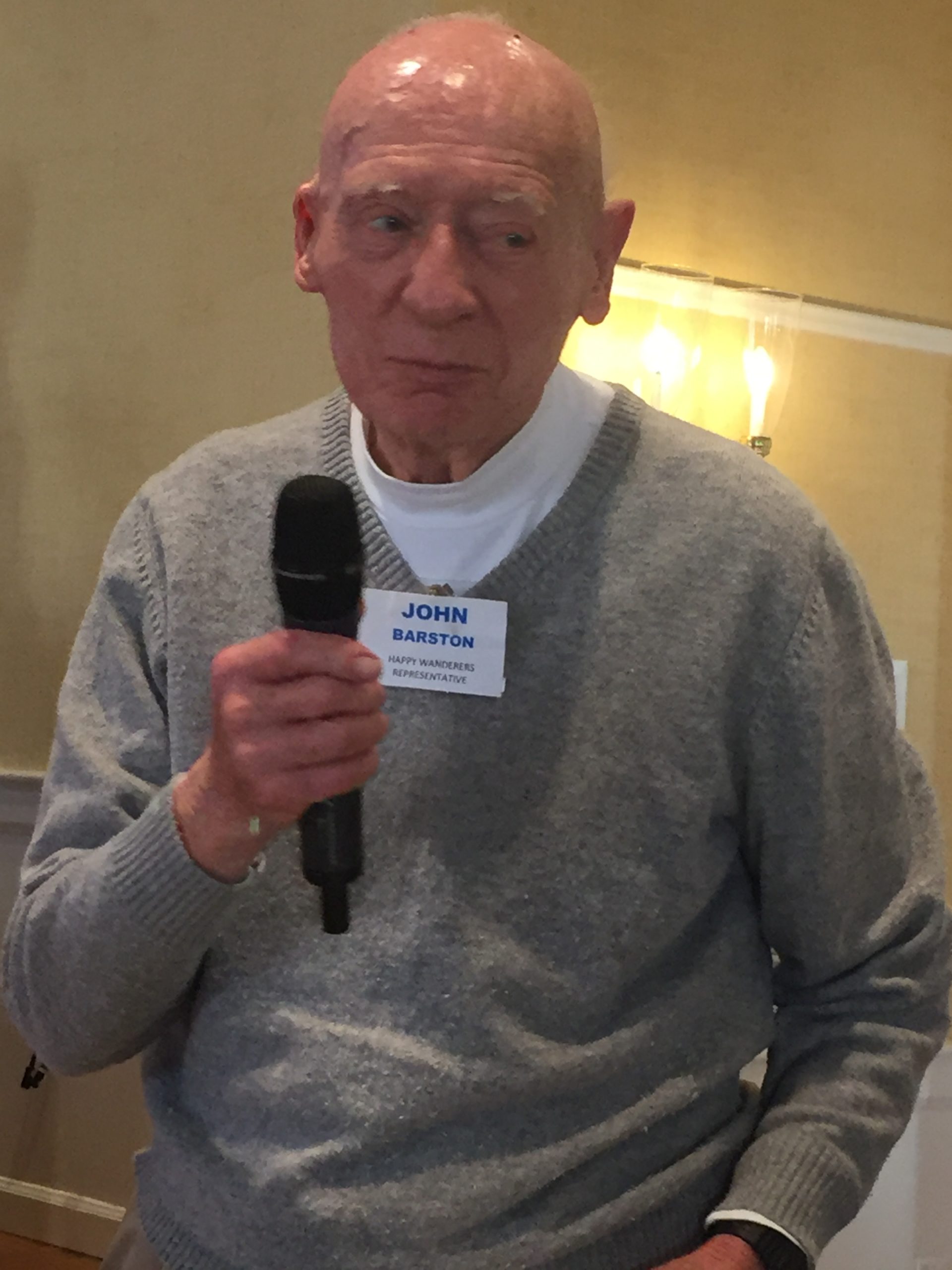
John Barston

John J. Barston, a resident of Darien, CT, passed away on April 8 at the age of 97.
Born on May 5, 1922, on Elizabeth Street on the Lower East Side of Manhattan, John grew up
in Woodhaven, Queens. After graduating from Franklin K. Lane High School, he was employed
by the Inland Marine Department of Fireman’s Fund Insurance Company while attending New
York University at night. During World War II John was in the United States Army, 3188th
Signal Service Battalion, for forty months (1942-1946), predominantly stationed in France and
Germany. After returning home John continued his education, under the GI Bill of Rights,
returning to New York University and was ultimately awarded Bachelor of Laws and Master of
Laws degrees from Brooklyn Law School.
After admission to the New York State Bar Association in 1951, John co-founded the
independent law firm Barston, Wolynetz & Steck in New York that served the local immigrant
community on the Lower East Side. He was labor counsel for Associated Transport in NY, the
largest trucking company east of the Mississippi. John then became General Counsel of The
Trans-Lease Group, a privately held company in Westwood, MA.
John was founding Corporate Secretary and Director of the Ukrainian Museum and Library in
Stamford, CT, and a longtime member of the Count Team at St. Thomas More Church in
Darien where he was a parishioner for twenty-two years. He was most passionate about
leading the Darien Men’s Association “Wanderers” for eighteen years, organizing and leading
walking expeditions to unique neighborhoods in New York City, which always included a visit
to a historical local tavern.
John had a life-long love of sports, whether coaching his sons’ Little League teams, watching
from the sidelines at his grandchildren’s games, or running the annual March Madness
tournament pool.
John was preceded in death by his parents, John Berezowski and Pauline Warchol
Berezowski, his sister Mary, and brother Michael. A family man, John is survived by his loving
wife Geraldine of sixty-six years and their three sons and their wives John (Jay) and Liliana of
Naples, FL, Daniel and Nancy of Auburn, MA and Michael and Diane of Darien, CT, as well as six
grandchildren, Claudia, Kate, Matthew, Nicole, Peter, and Stephen.
A memorial mass will be held in the fall. In lieu of flowers please consider a donation to At
Home In Darien www.athomeindarien.org

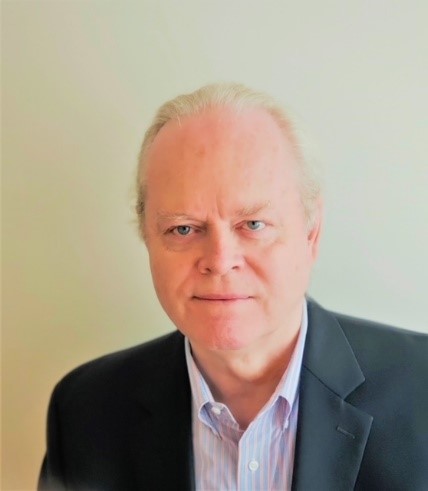
Peter Igoe, Nuclear Submarine Operations, April 29, 2020, 10:00

Peter Igoe – Nuclear Submarine Operations

At our regular Zoom meeting on Wednesday, April 29, Peter Igoe (Tom Igoe’s brother) will lead a discussion on US nuclear submarine operations in the ’60s. This period was a tense time when our country and Russia were engaged as fierce competitors below the surface of the Atlantic.

Peter, who served as a Naval officer on two nuclear boats in that era, will describe operation of the main elements of the submarine’s nuclear propulsion system (including design and management of the reactor on board), the central role of Admiral Hyman Rickover in the development and oversight of strict nuclear safety standards for the US sub fleet, the command structure on board ship, the rules of engagement for a nuclear missile launch, and key advances in nuclear submarine technology that have taken place since the decade of the’60s.

**************

Peter was born in St. Louis, MO, in the summer of ’42. He attended college at Yale and was accepted into the US Navy “Regular” ROTC program. Peter graduated in 1964 from Yale with an AB in economics and was commissioned as an Ensign in the Regular Navy with a 5-year active duty commitment. He was immediately accepted into the US Navy nuclear submarine program and, after 18 months of training, served on two boats, the USS John Adams, SSBN 620 (5 Polaris patrols), and the USS Haddo, SSN 603 (special operations).

Following his service in the Navy, Peter obtained an MBA in finance from Stamford and went to work for Xerox, becoming Senior Vice President and CFO of Xerox Publications/Field Publications. Thereafter, he held the position of VP, Worldwide Operations, for Rodale Press.

Peter is married, with 3 children, 5 grandchildren and an 8-week old yellow lab who arrives home on May 2. He and his wife Ruth reside in Amelia Island, FL, and have a summer place on Beaver Island, in northern Lake Michigan.

Here is his presentation: Submarine Igoe

Book Club: The Splendid and the Vile by Eric Larsen, June 10, 2020, 12:00

The #1 New York Times bestselling author of The Devil in the White City and Dead Wake delivers a fresh and compelling portrait of Winston Churchill and London during the Blitz On Winston Churchill’s first day as prime minister, Hitler invaded Holland and Belgium. Poland and Czechoslovakia had already fallen, and the Dunkirk evacuation was just two weeks away. For the next twelve months, Hitler would wage a relentless bombing campaign, killing 45,000 Britons. It was up to Churchill to hold the country together and persuade President Franklin Roosevelt that Britain was a worthy ally-and willing to fight to the end. In The Splendid and the Vile, Erik Larson shows, in cinematic detail, how Churchill taught the British people “the art of being fearless.” It is a story of political brinkmanship, but it’s also an intimate domestic drama set against the backdrop of Churchill’s prime-ministerial country home, Chequers; his wartime retreat, Ditchley, where he and his entourage go when the moon is brightest and the bombing threat is highest; and of course 10 Downing Street in London. Drawing on diaries, original archival documents, and once-secret intelligence reports-some released only recently-Larson provides a new lens on London’s darkest year through the day-to-day experience of Churchill and his family: his wife, Clementine; their youngest daughter, Mary, who chafes against her parents’ wartime protectiveness; their son, Randolph, and his beautiful, unhappy wife, Pamela; Pamela’s illicit lover, a dashing American emissary; and the cadre of close advisers who comprised Churchill’s “Secret Circle,” including his lovestruck private secretary, John Colville; newspaper baron Lord Beaverbrook; and the Rasputin-like Frederick Lindemann. The Splendid and the Vile takes readers out of today’s political dysfunction and back to a time of true leadership, when-in the face of unrelenting horror-Churchill’s eloquence, courage, and perseverance bound a country, and a family, together.

Charles Salmans on The Splendid and the Vile

Tom Igoe on The Splendid and the Vile

« Older posts Newer posts »

© 2026

Theme by Anders NorenUp ↑