Author: Webmaster (Page 59 of 97)
KIRKUS REVIEW
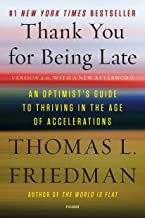
The celebrated New York Times columnist diagnoses this unprecedented historical moment and suggests strategies for “resilience and propulsion” that will help us adapt.
“Are things just getting too damned fast?” Friedman (Hot, Flat, and Crowded: Why We Need a Green Revolution—and How It Can Renew America, 2008, etc.) cites 2007 as the year we reached a technological inflection point. Combined with increasingly fast-paced globalization (financial goods and services, information, ideas, innovation) and the subsequent speedy shocks to our planet’s natural system (climate change, biodiversity loss, deforestation, geochemical flows), we’ve entered an “age of accelerations” that promises to transform “almost every aspect of modern life.” The three-time Pulitzer winner puts his familiar methodology—extensive travel, thorough reporting, interviews with the high-placed movers and shakers, conversations with the lowly moved and shaken—to especially good use here, beginning with a wonderfully Friedman-esque encounter with a parking attendant during which he explains the philosophy and technique underlying his columns and books. The author closes with a return to his Minnesota hometown to reconnect with and explore some effective habits of democratic citizenship. In between, he discusses topics as varied as how garbage cans got smart, how the exponential growth in computational power has resulted in a “supernova” of creative energy, how the computer Watson won Jeopardy, and how, without owning a single property, Airbnb rents out more rooms than all the major hotel chains combined. To meet these and other dizzying accelerations, Friedman advises developing a “dynamic stability,” and he prescribes nothing less than a redesign of our workplaces, politics, geopolitics, ethics, and communities. Drawing lessons from Mother Nature about adaptability, sustainability, and interdependence, he never underestimates the challenges ahead. However, he’s optimistic about our chances as he seeks out these strategies in action, ranging from how AT&T trains its workers to how Tunisia survived the Arab Spring to how chickens can alleviate African poverty.
Required reading for a generation that’s “going to be asked to dance in a hurricane.”
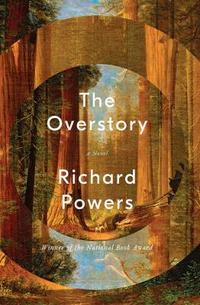
Powers’ (Orfeo, 2014, etc.) 12th novel is a masterpiece of operatic proportions, involving nine central characters and more than half a century of American life.
In this work, Powers takes on the subject of nature, or our relationship to nature, as filtered through the lens of environmental activism, although at its heart the book is after more existential concerns. As is the case with much of Powers’ fiction, it takes shape slowly—first in a pastiche of narratives establishing the characters (a psychologist, an undergraduate who died briefly but was revived, a paraplegic computer game designer, a homeless vet), and then in the kaleidoscopic ways these individuals come together and break apart. “We all travel the Milky Way together, trees and men,” Powers writes, quoting the naturalist John Muir. “In every walk with nature one receives far more than he seeks.” The idea is important because what Powers means to explore is a sense of how we become who we are, individually and collectively, and our responsibility to the planet and to ourselves. Nick, for instance, continues a project begun by his grandfather to take repeated photographs of a single chestnut tree, “one a month for seventy-six years.” Pat, a visionary botanist, discovers how trees communicate with one another only to be discredited and then, a generation later, reaffirmed. What links the characters is survival—the survival of both trees and human beings. The bulk of the action unfolds during the timber wars of the late 1990s, as the characters coalesce on the Pacific coast to save old-growth sequoia from logging concerns. For Powers, however, political or environmental activism becomes a filter through which to consider the connectedness of all things—not only the human lives he portrays in often painfully intricate dimensions, but also the biosphere, both virtual and natural. “The world starts here,” Powers insists. “This is the merest beginning. Life can do anything. You have no idea.”
A magnificent achievement: a novel that is, by turns, both optimistic and fatalistic, idealistic without being naïve.

TUESDAY NOVEMBER 19, 2019
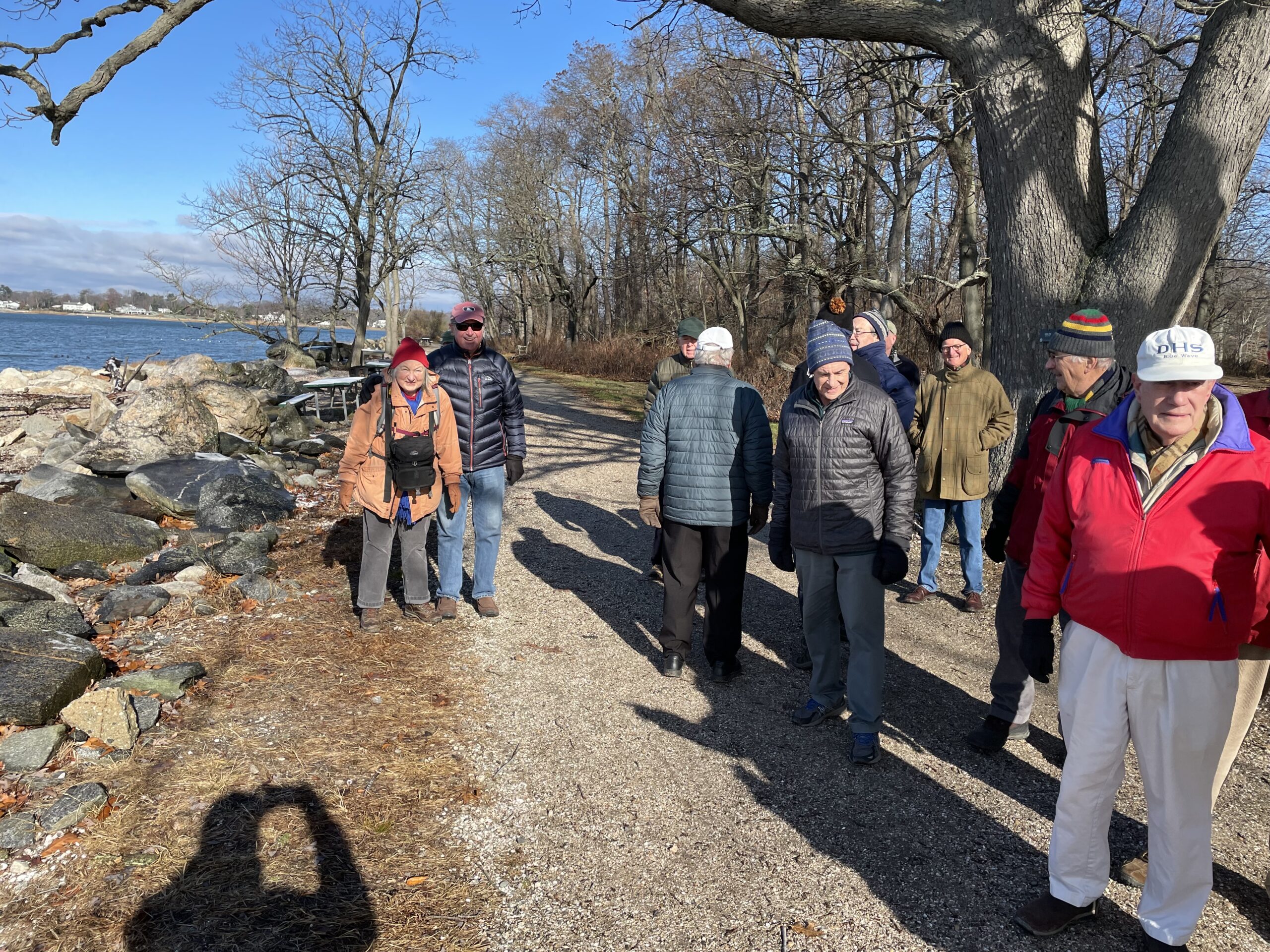
HIKING POMERANCE/MONTGOMERY PINETUM PARK
GREENWICH 10:00 AM
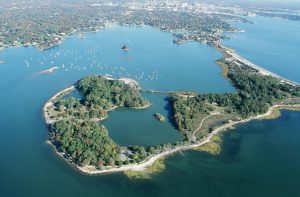
This 100 acre property is now owned by the town of Greenwich but was originally the estate of Ernest Seaton and later the home of financier Maurice Wertheim. The estate house was demolished by the town after falling into disrepair but the stone walls remain. Mr. Seaton is credited with starting a boys group called “The League of Woodcraft Indians” which evolved into the Boy Scouts. Wertheim’s daughter, Barbara Tuchman, lived on the property and wrote the Pulitzer Prize winning book “The Guns of August” there.
This hike is really more of a walk in the woods as the trails are wide, relatively flat and well maintained. It is a very scenic property with mature trees, rock outcroppings and moving water in addition to the historical features. As the property is relatively small, our hike will take approximately 2 hours after which we will enjoy an optional lunch at Louie’s Restaurant (136 River Road Ext.) nearby in Cos Cob.
DIRECTIONS: On Google Maps, enter Montgomery Pinetum on Bible Street in Cos Cob. There is another entrance to the park but parking there is limited. Go to the Bible Street entrance. We will gather in front of the Greenhouse building at 10:00 AM.
Take I-95 south to Exit 5 and stay in left lane on the ramp to turn left at the light onto US 1 south. Proceed .8 miles across the Mianus River Bridge and turn right into Nassau Street and then a quick left onto Valley Road. After .2 miles turn right into Orchard Street and then a quick right onto Bible Street. Drive .8 miles to a left turn into Montgomery-Pinetum Park. 15-20 minutes from Darien with average traffic.
Contact: David McCollum
The Darien Men’s Association will again be checking the lights in the holiday wreaths and replacing broken bulbs with new ones. Last year 192 lights were changed.
We will be meeting behind town hall on Thursday November 7th at 9 am.
Coffee and Donuts are provided.
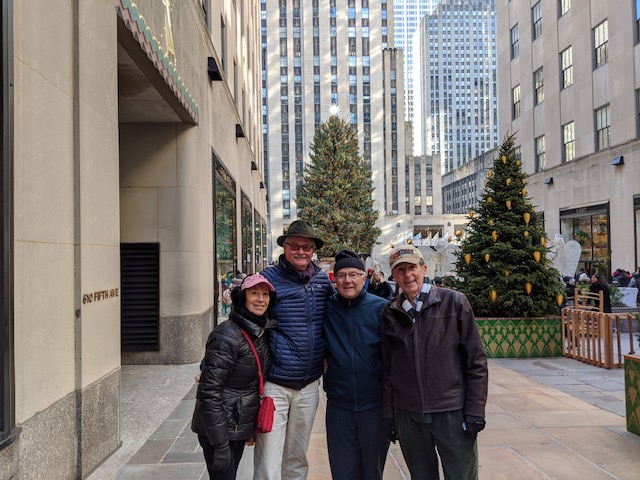
On November 14 (Thurs) we will go to Flushing Queens. We will take the 8:34 train from Darien, 8:37 from Noroton Heights and regroup at the information booth in GCT. We will walk the sites of the 1939 and 1964 Worlds Fairs. We will tour the area of Arthur Ashe Stadium. Finally, we will visit the Queens Museum which has an extraordinary diorama of New York City. After lunch we will return.
Your guides: David Mace and Joe Spain
Dr. Foster Hirsch has been a Professor of Cinema at Brooklyn College for over 40 years. He is also a cultural historian who seems to know every movie made during the 1940s and 50s.
He will talk first about the House Un-American Activities Committee’s hunt for “subversive activities” in Hollywood, then showed clips from two movies — High Noon and On The Waterfront — to illustrate opposing responses to HUAC, in the face of what we would call today a culture war.
The blacklist’s bookend years were 1947 and 1960. HUAC had begun its hearings before WWII. Then, in 1947 it subpoenaed 41 screenwriters, directors and producers. Most were “friendly witnesses.” But a few, the Hollywood Ten, acknowledged their Communist pasts, but refused to testify or name any other Communists.
The “moguls” who ran the town immediately stopped hiring these men. As was their wont, the studio executives gave in to outside political forces.
The period came to an end in 1960 when Otto Preminger gave writer Dalton Trumbo, one of the ten, on-screen credit for Exodus — after he had written some 30 screen plays under assumed names, among them Oscar winners Roman Holiday and The Brave One.
High Noon is a 1952 film written by Carl Foreman and starring Gary Cooper. Foreman was called to testify while the film was being made. He was deemed an “uncooperative witness,” and knew he would be blacklisted.
“He wrote his own history into the movie” — Marshal Will Kane was about to be pursued by a gang led by a man he had jailed. He asked townspeople to help him defeat this evil. No one stepped up.
“Foreman identified with Will Kane, a lone figure being hounded by the congressional committee.” The movie also “reflects larger issues of human nature, including how self-interest governs us.”
When he asked for help, Stanley Kramer, the movie’s producer and his business partner, rejected him. The studio rejected him. He had no place to go, and left for Britain after the film was released.
The second movie, On The Waterfront, released in 1954, represents a completely different point of view. It was written by Budd Schulberg and directed by Elia Kazan. Both were Communists in the 30s but had become disillusioned because they thought the party represented a “seditious infiltration of American values.”
Kazan appeared before HUAC in January, 1952. He was “completely transparent” about his own Party membership, but named no other names. In a second appearance, after being told his employment would be terminated if he did not name others, he did so. And for this “he was vilified for the rest of his life.”
Yet he thrived. In fact, Hirsch commented, he was “probably the greatest director of actors in history.”
On The Waterfront is a defense of truth telling. Brando’s character, Terry Malloy, is called to a congressional hearing staged to look just like a HUAC interrogation. He told the truth about union corruption, suffered for being co-operative, but was ultimately redeemed by his friends.
No easy choices. In one movie the “witness” refuses to implicate his friends and has no choice but to leave. In the other, he does, and, in the end, wins back his job.
Hirsch closed by asking what would any one of us have done were we called before the committee? Would we have taken a principled stand? And how do we judge those who were forced to testify?
Summary taken from the Westport Y’s Men
A graduate of Stanford University, Hirsch received his M.F.A, M.A. and PhD. Degrees from Columbia University and joined the Brooklyn College (CUNY) Department of English in 1967. He moved into Brooklyn College’s newly-formed Film Department in 1973 and has been there ever since.
Hirsch was a key pioneer in film noir studies, publishing his Dark Side of the Screen in 1981. (An expanded update of this seminal book appeared in 2008.) He’d also shown a marked interest in widescreen cinema with his Hollywood Epic (1979), and over the course of the next decade he began an examination of key facets of mid-century theater and cinema, beginning with his analytical biography of the Group Theater, A Method to their Madness (1984).
After a “flash forward” to neo-noir in Detours and Lost Highways (1997), Hirsch has returned to a series of works examining the various manifestations of midcentury film, with a particular emphasis on the 1950s. During this time his talents as an interviewer began to put him in demand by film festivals and actors alike, who came to trust his low-key, respectful approach and his attention to detail.
As a result, Hirsch has been traveling the globe over the past decade as a lecturer and interviewer, with stopovers in New York, Chicago, Los Angeles, San Francisco, Fort Lauderdale, Tel Aviv, London, and Rome.
Hirsch’s fascination with colorful directors resulted in an acclaimed biography of Otto Preminger in 2008. Subtitled The Man Who Would Be King, it is a sprawling look at the bombastic Viennese expatriate who cast a large shadow over film from the 1940s to the 1960s, mastering film noir, social drama, and historical epic, while doing some of his most interesting work in Cinemascope.
When he is not conducting interviews or presiding over packed classes at Brooklyn College, Hirsch is working on what figures to be his magnum opus, a sprawling study of 1950s film in all its manifestations—but with a singular nod to the widescreen films he grew to love as a young moviegoer.
Arranged by Gary Banks
No video as youtube flagged the meeting video as containing copyright material. It included a clip of “On the Waterfront” . Too bad.