Author: Webmaster (Page 7 of 97)

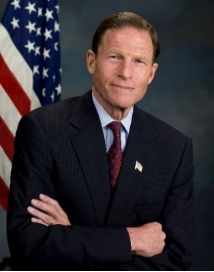
U.S. Sen. Richard Blumenthal,
“An Update from Washington”
Jan. 21, 2026

Sen. Richard Blumenthal will discuss relevant current topics, including Ukraine, AI, veterans, the economy, workforce development, tariffs and manufacturing. Sen. Blumenthal served as a U.S. attorney for Connecticut from 1977–1981. He then served in the Connecticut House of Representatives from 1984–1987 and the Connecticut State Senate from 1987–1990. From 1991–2011, he served as Connecticut’s attorney general for an unprecedented five terms.

Sen. Blumenthal was sworn in to represent Connecticut in the U.S. Senate in 2011. Having been re-elected in 2016 and 2022, he is serving his third term. He is a member of the U.S. Senate’s Committee on the Judiciary, Committee on Homeland Security & Governmental Affairs, Committee on Armed Services, Committee on Veterans’ Affairs and the Special Committee on Aging. He has built a longtime advocacy for consumers by holding companies accountable for the safety of their products and is working to bring Connecticut’s transportation systems and infrastructure into the 21st century. Working with Connecticut’s congressional delegation, he has secured billions of dollars of federal funding to improve rail safety, promote climate resiliency, and protect Long Island Sound and Connecticut’s rivers and streams.

His father, who fled Nazi Germany at age 18, and mother, who left Nebraska’s farmland to become a social worker, raised Sen. Blumenthal with a deep dedication to public service, a duty to give back by helping others and a bedrock belief in hard work. Those values carried him through his childhood and his education at Harvard College and Yale Law School. At Harvard, he was editorial chairman of The Harvard Crimson and achieved Phi Beta Kappa and magna cum laude recognition. In law school, he was editor-in-chief of the Yale Law Review. He also worked as assistant to Daniel Patrick Moynihan when he was assistant to the President of the United States.

After graduating from law school in 1973, Sen. Blumenthal clerked for then U.S. District Judge Jon Newman and then for U.S. Supreme Court Justice Harry A. Blackmun. Sen. Blumenthal then transitioned to lead the staff of Connecticut’s U.S. Sen. Abraham A. Ribicoff as an administrative assistant (a position now known as chief of staff).

Arranged by Bob Fiske

Video Presentation 

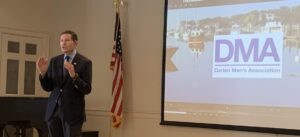
Summary of Presentation by Senator Blumenthal on 1/21/26

Senator Blumenthal thanked the group for the invitation to speak and reflected on his early years in public service. He paid tribute to Bob Fiske, a long-time DMA member who passed away last year. Bob and Blumenthal had been good friends. Bob had served as U.S. Attorney for the Southern District of New York, and Blumenthal praised him as having been a great source of help to Blumenthal when he served as U.S. Attorney for Connecticut. Blumenthal pointed out that Fiske had emphasized the importance of cooperation among local, state, and federal law enforcement, and Blumenthal criticized what he describes as a breakdown in that relationship in Minneapolis, arguing that effective prosecutions require the trust and knowledge of the local community held by local police.

Addressing the possibility of a federal shutdown when the current Continuing Resolution expires at the end of January, Blumenthal said that he does not expect one because shutdowns have no winners and Congress has enough time to finish its appropriations before the Continuing Resolution expires. He pivoted to cost-of-living concerns about which he has heard from constituents he has visited throughout Connecticut, particularly electricity, food, and healthcare costs. He argued that continuing to subsidize health insurance coverage makes sense because it encourages preventive care and avoids the more expensive alternative of uninsured people relying on Emergency Room care at hospitals.

Speaking as ranking member on the Senate’s Veterans Affairs Committee, he said the VA has lost 30,000 staff, harming access to care, and he has held oversight hearings and created a report on this issue on that agency. On national security, he called for strong defense funding, especially submarines built in Connecticut, and expressed concern about China’s growing naval capacity. He has strongly supported aid to Ukraine, recounting his multiple visits there, and argued that U.S. support is essential to protecting American security and stopping Putin from seeking to restore Russia to the size of the former U.S.S.R. Blumenthal stressed the benefits of bipartisanship, citing his work on AI policy and the “Kids Online Safety Act” which passed the Senate overwhelmingly but stalled in the House amid Big Tech lobbying. He reminded members about a practical concern regarding USPS postmark practices, informing us that the USPS has acknowledged that due to recent process changes, postmarks are no longer a reliable indicator of the date a letter is mailed — important for time-sensitive filings.

In Q&A, he was asked for his view about imposing age limits for holding high public office. He replied that elections serve as the main “limit.” Reflecting on astory about Supreme Court Justice William Douglas suffering a stroke when Blumenthal was clerking for another Justice, noting that Douglas had to be persuaded to resign even though he had been hospitalized and had been unable to perform his duties, Blumenthal conceded that age limits might make sense for some senior roles. He added wryly that such limits would be difficult to enact because every office holder wants to hold office forever. On immigration, he endorsed comprehensive reform — border security plus an earned path to citizenship — and condemned demonization of immigrants, describing naturalization ceremonies as a powerful reminder of American ideals, including his own family’s immigrant story.

Pressed about President Trump and Ukraine, he refused to speculate about the President’s psychology but admitted to being baffled by President Trump’s posture because he believes that strength through allied relationships is needed to maintain peace. Asked about ICE and protests, he asserted that ICE agents have acted recklessly. He called for higher training and enforcement standards, and stated that excluding local police is a serious mistake. He also stressed that protests must remain peaceful.

Asked about America’s economic resilience and sufficiency of manufacturing capacity, he noted his support for current industrial policy in critical areas like semiconductors and tied supply-chain vulnerability to lessons learned during the COVID period. He also warned about market concentration. As an example of his concern, he asserted that consolidation and private equity ownership of fire truck manufacturers have led to higher prices, delays in delivery dates and reduced ability for purchasers to customize.

Asked how the U.S. can restore civil discourse, he replied that it starts with individual responsibility and leaders modeling restraint. On the issue of whether the U.S. should acquire Greenland, he argued the U.S. can pursue resources and security interests through investment and partnership rather than “bullying,” and he closed by emphasizing that alliances — especially NATO — are essential in a world of rising threats. He ended on a note of optimism, expressing confidence in American strength and civic engagement.

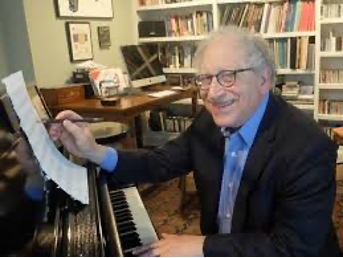
Orin Grossman, Ph.D.
“George Gershwin: One of America’s Greatest Composers”
Jan. 14, 2026

George Gershwin (1898–1937) is one of America’s greatest composers and a true rarity. He was at home in many different musical worlds, from Broadway and Hollywood musicals to opera and symphonic works with his compositions spanning jazz, popular and classical music. Among his best-known works are “Rhapsody in Blue,” “Swanee,” “An American in Paris,” “Porgy and Bess,” “Embraceable You,” “I Got Rhythm,” “Summertime” and “Of Thee I Sing.”

The 1920s, in particular, saw the establishment of a new American spirit on Broadway. Inspired by Jerome Kern’s shows in the late teens, a new, young group of American composers and lyricists threw off the European trappings of former shows and created the concept of the ‘American Musical’. Brassy and irreverent, these shows featured such composers and lyricists as George Gershwin and his brother Ira Gershwin, Rogers and Hart, Jerome Kern, Dorothy Fields, Irving Berlin and Cole Porter. Many of their songs and lyrics remain a part of our American heritage today, a century later.

Dr. Orin Grossman is renowned internationally for his knowledge of music. He has been closely associated with the music of George Gershwin, lecturing and performing concerts of his music to critical praise around the world, including performances in Florence, Cairo, and St. Petersburg. Dr. Grossman was also chosen to play for the New York City Mayor’s Awards of Honor for Arts and Culture. He graduated magma cum laude in music from Harvard College and continued his studies at Yale University, earning a Ph.D. in music. Dr. Grossman became assistant professor of fine arts at Fairfield University in 1975 and dean of its College of Arts and Sciences in 1991. He was then appointed to be the university’s academic vice president in 1999. In 2009, he returned to teaching as professor of visual and performing arts.

Orin’s presentation will include live unique piano performances, which will use Gershwin’s own piano arrangements — arrangements that Gershwin created to give the public a sense of how he played his own songs at private parties.

Video Presentation

Summary of Dr. Orin Grossman’s DMA Presentation on January 14, 2026

Dr. Grossman explored why George Gershwin remains one of America’s most important composers, not only for his famous concert works like “Rhapsody in Blue”, “An American in Paris”, and “Porgy and Bess,” but also for the popular songs that became the backbone of the great American songbook. Grossman described Gershwin as uniquely at home in multiple musical worlds — Broadway, jazz, popular song and classical composition — and emphasized how his melodies have lasted for a century because they combine sophistication with emotional directness.

Grossman traced Gershwin’s early life in New York as a lower-middle-class kid who dropped out of school as a teenager, took odd jobs in the music business and pursued music with relentless drive. Grossman noted that although many people assume Gershwin was mostly self-taught, he had formal musical training as well as a deep curiosity that pushed him to develop his own style. His breakthrough came with Swanee,” which Gershwin wrote when he was about age 20, and which was made famous by entertainer Al Jolson. Grossman placed the song in the context of the blackface/minstrel tradition, explaining how that world shaped early American entertainment and how Gershwin later became embarrassed that his career began there.

A key point of the talk was how Gershwin’s songs remain popular because performance styles changed. Early recordings from the 1920s often sound stiff to modern ears because singers had to keep a strict beat for dancing. With the rise of the microphone and more advanced recording techniques, artists like Bing Crosby, Louis Armstrong and, later, Frank Sinatra developed conversational phrasing — slightly ahead of or behind the beat — that made songs feel like spoken poetry. Grossman demonstrated this with “The Man I Love,” contrasting an early recording with a later, smoother interpretation.

Grossman also highlighted Gershwin’s extraordinary productivity, especially in 1924, in which he wrote songs for the George White Scandals, which were popular Broadway revues modeled after the Ziegfield Follies, and premiered “Rhapsody in Blue.” He also produced a major Broadway hit that year with his brother Ira. In closing, Dr. Grossman performed “Summertime” on the piano, noting Gershwin’s admiration for Duke Ellington and his insistence that “Porgy and Bess” be performed only by black artists. In Q&A, Grossman explained that Gershwin respected both popular and classical music.  Grossman noted that Gershwin may have shown greater personal ambition with respect to classical compositions but surmised that this may have been because Gershwin was unique among popular composers in being able to excel in both traditions.

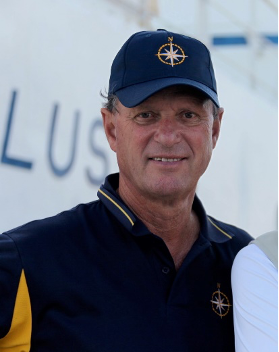
Robert D. Ballard, Ph.D., CEO and Founder, Ocean Exploration Trust
“What We’ve Learned In 50 Years Under the Sea”
Jan. 7, 2026

Dr. Robert Ballard is one of the world’s most famous oceanographers. He is best known for his 1985 discovery of the legendary RMS Titanic, which captured the world’s attention. Dr. Ballard also has succeeded in tracking down numerous other significant shipwrecks, including the German battleship Bismarck, the lost fleet at Guadalcanal, the U.S. aircraft carrier Yorktown (sunk in the World War II Battle of Midway) and John F. Kennedy’s boat, PT-109.

While those discoveries have captured the imagination of the global public, Dr. Ballard believes his most important discoveries were, in fact, of hydrothermal vents and “black smokers” in the Galapagos Rift and East Pacific Rise in 1977 and 1979, along with their exotic life forms living off the energy of the earth through a process called chemosynthesis. Fifty years ago, the deep sea was terra incognito. We knew next to nothing about what lay underneath the waters that cover 70% of the earth’s surface. Fifty years later, in vast areas supposedly devoid of life, scientists found large ecosystems teeming with life, including non-photosynthetic life forms that biologists thought were impossible.

His discoveries also include sunken remains of ships along ancient trade routes in the Mediterranean Sea; two ancient Phoenician ships off Israel, the oldest shipwrecks ever found in deep water; and four 1,500-year-old wooden ships, one almost perfectly preserved in the Black Sea. Dr. Ballard’s Black Sea project seeks evidence of a great flood that may have struck the region thousands of years ago.

Arranged by David Earle

Video of Presentation 

Summary of Robert Ballard’s Presentation to DMA on 1/7/26

Robert D. Ballard, Ph.D., one of the world’s most famous oceanographers, reflected on his young life which was shaped by curiosity and a lifelong fascination with exploration. Born in Kansas and raised amid the aerospace world of Southern California, he fell in love with the ocean after his family moved to San Diego. A childhood viewing of 20,000 Leagues Under the Sea ignited his dream of becoming “Captain Nemo,” a dream that evolved into oceanography and undersea exploration.

Ballard’s career became a rare fusion of science and military service. Trained initially as an Army officer during the Vietnam War era, he was later transferred to the Navy and assigned to the Woods Hole Oceanographic Institution, where he worked on deep-submergence submarines, often in classified operations. This dual background led him to study the ocean floor as complex terrain, revealing the immense scale of mid-ocean ridges and helping confirm plate tectonics as a unifying theory of Earth science.

He is best known for his discovery of the RMS Titanic in 1985, which immediately captured the world’s attention. He also has succeeded in finding numerous other important shipwrecks, including the German battleship Bismarck, the lost fleet at Guadalcanal, the U.S. aircraft carrier Yorktown (sunk in the World War II Battle of Midway), and John F. Kennedy’s boat, PT-109.

While those discoveries of historic ships have fueled the imagination of the global public, Ballard believes that his most important discoveries were of hydrothermal vents — “black smokers,” which caused the rewriting of geology, chemistry and biology textbooks. These vents have proven to be a key mechanism for cycling the ocean’s chemistry throughout the Earth. They are part of ecosystems powered not by sunlight and photosynthesis, but rather by chemosynthesis in waters that are not penetrated by sunlight. The discovery reshaped ideas about the origin of life on Earth and strengthened the case that life could exist elsewhere in the universe, though Ballard emphasized there is “no Planet B” in our solar system or any other on which humanity can live meaningfully.

Seeking to escape the physical limits of human diving, Ballard pioneered tele-presence exploration: robotic vehicles, real-time data and global expert networks that allow scientists to explore the undersea world remotely. This technology enabled both open scientific discovery and secret Cold War missions, including the classified work that ultimately led to the discovery of the RMS Titanic. That success sparked decades of underwater archaeology, from World War II wrecks to exquisitely preserved ancient ships in the oxygen-limited Black Sea.

Ballard expressed deep concern about artificial intelligence, particularly in military contexts, calling it transformative but dangerous if uncontrolled. Regarding climate change, he stressed evidence over ideology, noting risks to our planet deriving from a warming climate, methane release, and intensified storms. He also outlined a vision for a “blue economy,” which would include carefully targeted deep-sea mining and ocean-based food systems that minimize environmental harm. Throughout, Ballard framed his work as being in service to future generations, urging curiosity, courage and responsibility in an increasingly uncertain world.


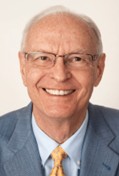
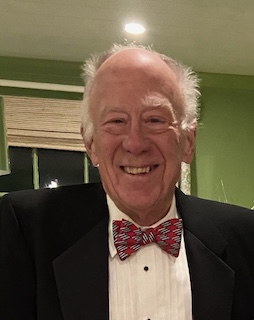
Smith, Donn

Donn Smith was raised in Hamden, Conn., and graduated from Yale University Phi Beta Kappa in 1967 with a B.A. in English.  His professional career was spent in publishing.  Following management positions at Time Inc., Newsweek, and Harvard Business Review, he joined a Greenwich-based multi-title newsletter publisher.  In 2001 he formed his own consulting business providing copy and creative services to a number of leading magazine and book publishers.

He has been a Darien resident for the past thirty-three years.  He served two terms on the Darien RTM and has volunteered at P2P and St. John Church. Current volunteer activities include serving as Archivist for The Mather Homestead Foundation and Genealogist for the Society of the Descendants of the Founders of Hartford.

Donn is married to Mary Ellen Quirk, who grew up in Darien and whom he was lucky enough to meet in New York City in 1978.   They have one daughter, Sarah, who followed her mother’s path through Darien schools, and her father’s through Yale and subsequently received her J.D. from Michigan Law.

He is a member of the Roger Sherman Branch of the SAR, St. John Church, the Darien YMCA, the Tokeneke Club, and the Yale Club of New York City.

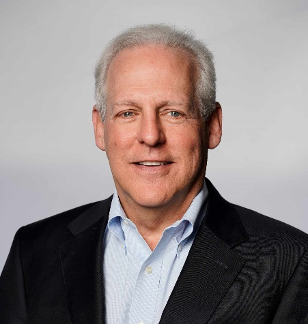
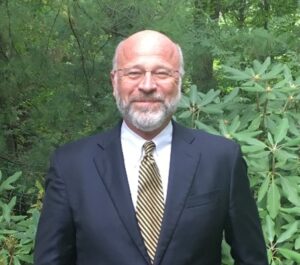
Ritch, Glenn

Glenn Ritch was raised in Greenwich, where his family has lived for more than eight generations. His great grandfather Heneri Ritch sold his farm in Stamford and moved to Greenwich in 1687. Glenn’s parents were both working people; while they helped with the cost of college, Glenn needed to work while attending school. He was fortunate to secure a position as caretaker on a large private estate in North Stamford, not far from his home. While his ambitions were to pursue a career in business, the experience of working on the estate would ultimately lead to his lifelong career in commercial real estate.

After graduating from Pace University with a B.B.A. and a major in marketing, he began working in sales. Glenn has worked for the estate owners for more than 30 years and still looks after one of their children in a minor way. After several successful years in sales, Glenn realized that he was not satisfied. He searched for a career that paralleled the work he did on the estate, which brought him to commercial property management. After returning to school, completing a certification in property management from New York University and securing a real estate broker license, he embarked on a 45-year career in commercial property management.

Glenn very much enjoyed his work, as it gave him a broad spectrum of skills and a variety of challenges to navigate. He managed multiple properties with responsibility for operations, budgeting, leasing and construction. He mastered the skills to help negotiate property sales and leases and other contracts, which sometimes led to him being accused of being a lawyer. He worked for CBRE Group, Hines Interests Limited Partnership, Galbreath, Lasalle Investment Management and, for the last 12 years of his career, The Ashforth Company. He retired in March 2025 and looks forward to pursuing his passions for travel and outdoor sports, including hunting, fishing and boating. He is also passionate about cooking and entertaining. Most important, he enjoys spending time with family and friends.

Glenn has lived in Darien for about 12 years. Influenced by his parents, He believes it is important to give back to the community. Toward that end, he serves as board president of Middlesex Commons and was just re-elected for a third term on the Darien Board of Assessment Appeals.


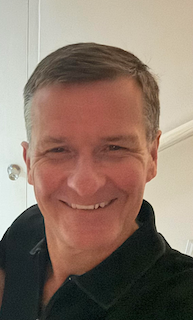
Spear, Bill

William (Bill) Spear grew up in southern Colorado and graduated from the University of Colorado in 1968. Soon after, Uncle Sam required his service, so he was “requested” to join the Army. He was commissioned as a second lieutenant in the Army Corps of Engineers and served at several bases in the United States and two years in Southeast Asia. After the Army, he was hired by Pitney Bowes in Stamford. Most of Bill’s civilian career was in corporate real estate with Pitney Bowes, Citicorp and Philips Real Estate.

He and his wife have resided in Darien for the last 35 years. Their son and daughter-in-law and three grandkids also live in Darien. Bill is an enthusiastic golfer and looks forward to meeting and playing with fellow golfers at the DMA.

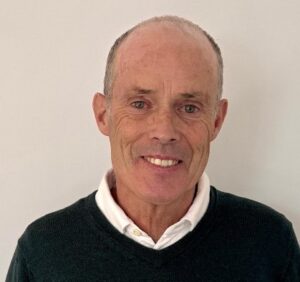
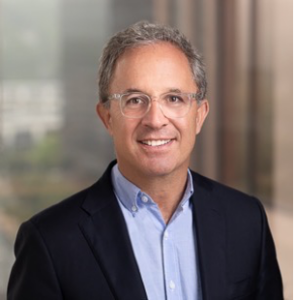
Gruppo, Steve

Stephen (Steve) Gruppo was born in East Orange, N.J. When he was five years old, his parents moved their family of six children to Buenos Aires, Argentina, then to Sao Paulo, Brazil. When he was a teenager, his family settled in Greenwich, where he met his future wife Allison. Steve and Alli have lived in Darien since 1990, where they raised their son Will and daughter Emy. They currently split their time between Darien and Edgartown, Mass.

Steve graduated from Greenwich High School in 1977 and received a B.A. in economics from Hobart College in 1981. He kicked off his career in the credit training program at Chase Manhattan Bank, which was his introduction to a career in risk management in banking, investment banking, capital markets and asset management. He was employed by Chase, Kidder Peabody, CS First Boston, Lehman Brothers and financial services firm TIAA. Steve retired from full time work in 2018, following 10 years as the chief risk officer and Executive Committee member at TIAA. He has remained engaged in board work, investments and advisory assignments.

Steve’s interests include travel, reading, cooking and spending quality time with family, including his toddler grandchild. He likes to stay active playing golf, tennis (really, any sport with a racquet or paddle), biking and skiing. He is a member of the Country Club of Darien and the Boathouse and Field Club in Edgartown.

Trompeter, Chris

Chris Trompeter was born in Rochester, N.Y., and grew up in the Rochester and Syracuse suburbs. He earned a B.A. degree from St. Lawrence University in 1978 with a double major in economics and government and a chartered financial analyst designation in 1985.

His career was in the asset management industry as an equity analyst and portfolio manager, beginning at Bankers Trust Company and then Citibank and Brundage, Story & Rose. In 2000, Chris and two colleagues founded Tradition Capital Management, a registered investment advisor focused on equity and fixed income separately managed accounts, which were merged into Cary Street Partners in 2019. He retired from Cary Street Partners in October 2025.

Chris moved to Darien from Manhattan with his wife Rosie and son Dan in 1997. Rosie is an active member of the Darien Community Association Greenhouse Group, avid pickleball player and yoga enthusiast. Their son Dan works for a private equity firm in Manhattan. Chris coached flag and tackle football, basketball, baseball and lacrosse in Darien. His personal athletic interests are currently centered on tennis and paddle.

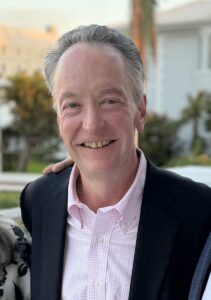
Baker, Jay

Jay Baker grew up in Darien. He attended Darien High School (class of 1969) and returned to town later in his life. He graduated from Ohio Wesleyan University and received his M.B.A. from Pace University.

He has worked for more than 40 years in the financial services sector, with a specialty in exchange traded funds (ETF). He was involved in the development and marketing of the first ETF, the SPDR S&P 500 ETF Trust. He continued his ETF career at Spear, Leeds & Kellogg and Goldman Sachs. In 2011, he co-founded Exchange Traded Concepts, a white label ETF provider that helps clients create, launch and manage ETFs.

Jay lives in Darien with his wife Robin. They are parents of two adult children. He is an active follower of financial markets and enjoys playing pickleball and golf in his free time.

Nolte, Reed

Reed Nolte was primarily raised in Bloomfield Hills, Michigan and has resided in Darien since 1985.  He graduated from Denison University with a degree in economics in 1977 and received an M.B.A. from the University of Chicago Booth School of Business in 1979.  He retired in 2020 after a forty-year career in corporate financial management, including over two decades working for Rupert Murdoch’s News Corporation and 21st Century Fox.

He and his wife Leslie raised three children in Darien. All three having attended the Darien public school system and were active members of Post 53.  His older daughter lives in Huntsville, Ala., with her husband and seven-month-old son, and Reed’s other daughter and son live in New York City.

Reed and family spend a fair amount of the summer on Martha’s Vineyard, where Reed enjoys his passion of saltwater fly fishing as well as hiking and biking.  Other interests include traveling, skiing, cooking, and staying abreast of financial and political news.  He is a member of the The Country Club of Darien, the Darien Boat Club, and the Ocean Club of Florida in Ocean Ridge, Florida.

Tweedy, Jim

Jim Tweedy grew up on Nearwater Lane in Darien with his parents and three brothers in the house he lives in today. He attended Hindley and Mather Junior High in Darien and graduated from The Taft School in 1973. He graduated from Colorado College in 1978 and Columbia Business School in 1981. In 1987, Jim and a partner purchased a manufacturing business in Milford, Conn., which they operated for 35 years.

In 1985, Jim married Meg McGoldrick, who grew up in Darien and graduated from Darien High School in 1975. They raised two boys in Darien who attended Hindley and Middlesex Middle School and who currently live and work in New York City.

Jim likes to play tennis, paddle tennis, golf, pickleball and guitar. He also likes to ski and boat. He is a member of the Tokeneke Club, the Silvermine Golf Club and the Darien Boat Club.


Current Affairs: Innovation in the Age of AI, Nov 19, 2025 NEW DATE

Current Affairs for November: Innovation in the Age of AI
The Current Affairs group will meet on Wednesday, November 19 at 2PM in the Lillian Gade Room at the DCA and on Zoom. NOTE THAT THIS IS A DATE CHANGE!! If you have not received the Zoom link, please contact Barry at silver.barry@gmail.com or Doug at dbernacchi@gmail.com.
We are pleased to have our friend Art Baron lead the discussion covering the dramatic acceleration of innovation to create value across industry, government and society. It will also touch on risks and governance. This is a topic we all think about, and we look forward to a lively discussion! Here are some pre-reading suggestions that Art has been kind enough to assemble:
Industry AI Investment (AI Generated) 

(File Attached)

AI Won’t Just Cut Costs, It Will Reinvent the Customer Experience
How Americans View AI and Its Impact on People and Society
$2 trillion in new revenue needed to fund AI’s scaling trend – Bain & Company’s 6th annual Global Technology Report
« Older posts Newer posts »

© 2026

Theme by Anders NorenUp ↑