Author: Webmaster (Page 72 of 99)

Current Affairs. Brexit. February 21, 2019

Discussion leader: Bryan Hooper

Opening Notes:

BREXIT: Why should we care?


At a seminar I attended in the UK many years ago each participant was asked to consider the future of their industry or professional group.  When it was his turn to make his forecast, a lawyer stood up and declared that “the legal profession has no future, but it has a long and glorious past stretching in front of it.”  Some might say the same about the United Kingdom of Great Britain and Northern Ireland as it wrestles with the problems created by the vote in June, 2016, to exit the European Union. 


To help answer the question in the title above it might be helpful to have an understanding of some of the history of the UK, the development of the EU, and how the UK came to be in its current situation – if the situation ever becomes clear, that is.


  1. The United Kingdom (UK)


Great Britain was created by the English annexing Wales in 1535 and 1542 and forming a union with Scotland in 1707.  The kingdom of Ireland was added in 1801, and Northern Ireland was formed in 1922 when what became Eire seceded from the kingdom and established an independent country.  The combination of Great Britain and Northern Ireland is the United Kingdom.  All four countries elect members to the UK parliament that sits in Westminster, London, and, in addition, Wales, Scotland and Northern Ireland each has a separate devolved parliament.  The total population of the UK is 66 million, with England at 55.6, Scotland 5.4, Wales 3.1 and Northern Ireland 1.9 million.  Gross domestic product of the UK is the fifth largest in the world at an estimated $2.8 trillion in 2018 out of a world total of $84.8 trillion.  To put this in perspective, the US GDP was $20.5, China $13.5, Japan $5.1 and Germany $4.0 trillion.


  1. The European Union (EU)


It is ironic in today’s discombobulated Brexit climate that in 1946 Winston Churchill, a Conservative statesman, was one of the early advocates of a United States of Europe.  The EU traces its origin to the formation of the European Coal and Steel Community created during the recovery from World War II by the Treaty of Paris in 1951.  The subsequent Treaty of Rome in 1957 led to the establishment of the European Economic Community comprising six countries: West Germany, France, Italy and the Benelux nations.  The UK eventually joined the EEC in 1973 having been rebuffed initially by the French in 1963. 

In 1975 the UK held its first ever nationwide referendum, and it concerned staying in the EEC.  The government recommended the UK should remain in the group, and the electorate voted 67% in favor on a 64% turnout.  In 1993 the Maastricht Treaty came into effect for the 12 countries of the EEC.  That treaty established the EU together with European citizenship, it ensured the free movement of people, goods, services and capital within the market, and enabled the enaction of legislation covering justice, home affairs and trade policies.  It also laid the foundation for the common currency, the euro: the EU now has 28 member countries and 19 of them use the euro.  The population of the EU is 513 million and GDP in 2018 was estimated at $18.8 trillion, approximately 22% of the world’s GDP, compared with the US share of 24%.


  1. The Brexit Referendum


(a) The political timeline

David Cameron, leader of the Conservative Party, won an unexpected victory over the Labour Party in the UK general election in 2010.  The Conservatives did not, however, gain sufficient votes to form a clear majority and they allied with the Liberal Democratic Party to form a coalition government with Cameron as Prime Minister.

-2-


Animosity in the UK toward the EU had gradually increased since the terms of the Maastricht Treaty were enforced in 1993, and the Treaty of Lisbon exacerbated the situation when it was implemented in December, 2009.  This gave increasing power to the EU parliament and also fueled the anti-immigrant feelings in the UK which had been developing and strengthening as the EU expanded its number of member countries and assigned more power to the European Parliament in Brussels.  During and after the world financial crisis in 2008 the resentment intensified with many in the UK objecting to immigrants taking away jobs from the UK population and some allegedly living off the UK by taking advantage of social welfare handouts.  Further dislike of the EU was fostered by the crisis in the Eurozone creating economic uncertainty, and the rise of terrorism that was also blamed on immigrant factions.  Pressure built up to fix the UK economy and react to the growing power arrogated by the EU.  

Cameron called a general election in 2015 during which he promised another referendum on staying in the EU.  The conservatives won enough seats this time to form a majority government (over 326) without the assistance of another party.  In the table below are shown the seats won in 2015 compared with 2010 and also the percentage of the vote won by the main parties:


Party

Members of

Parliament

Share of MPs

(%)

Share of Votes

(%)


2010                        2015

 2010                           2015

 2010                             2015

Conservative

 306                          330

  47.1                            50.8

  36.1                              36.8

Labour

 258                          232

  39.7                            35.7

  29.0                              30.4

Scottish National

     6                            56

    0.9                              8.6

    1.7                                4.7

Liberal Democrats

   57                              8

    8.8                              1.2

  23.0                                7.9

Democratic Unionist

     8                              8

    1.2                              1.2

    0.6                                0.6

UK Independence

     0                              1

    0.0                              0.2

    3.1                              12.6

Speaker

     1                              1

    0.2                              0.2

    0.2                                0.2

Other

   14                           14

    2.1                              2.1

    6.3                                6.8

Total

 650                         650

100.0                         100.0

100.0                           100.0


Note in 2015 the growth of the Scottish National Party (SNP), the decline of the Liberal Democrats, and the share of the vote won by the UK Independence Party (UKIP): 

  • The electorate in Scotland had rejected separating from the UK in a referendum held in September, 2014, voting 55% to stay, with a very high turnout of 85%. However, the whole process of the independence plebiscite stirred nationalist sentiment and that carried over to the UK general election in 2015 as the SNP won 56 of the 59 available seats in Scotland.
  • The Liberal Democrats paid the price for being in coalition with the Conservative Party in the last government, losing 49 of the 57 seats they held previously.
  • The Democrat Unionist Party (DUP) retained 8 of the 18 seats available in Northern Ireland.
  • Labour won 25 of 40 seats in Wales.
  • The Conservative Party took 316 of 533 seats in England.
  • In 2014 UKIP candidates took 27% of the vote in the UK for the European Parliament, ending up with 24 out of the 73 seats assigned to the UK, and greater than the seats won by either of the two major UK parties. In the 2015 UK general election UKIP picked up only one seat, but their 13% share of the total vote was a signal of what was to come in 2016.


-3-


(b) The fateful vote

Prime Minister David Cameron and his government passed the Enabling Act in February, 2016, authorizing the referendum to be held for remaining or leaving the EU, and announced the date of June 23, 2016, for it to occur. 

The government threw its support behind the Remain camp, but Cameron allowed Conservative Party members of parliament (MPs) and members of his Cabinet to make their own decisions on which side to support.  Seven cabinet members joined the Leave faction.  Boris Johnson, former Mayor of London and an MP, plus Michael Gove, Secretary of State for Justice, together with UKIP leader, Nigel Farage, spearheaded the Leave side.  Arguments for Remain were that the UK would risk prosperity, jeopardize national security, lose jobs, delay investment in the UK, and lose influence in world affairs if they left.  The Leave group argued that the EU had a deficit of democracy, it undermined national sovereignty and prevented the UK from making better trade deals.  Leaving would give control of immigration back to the UK and save billions of pounds in membership fees.  The Leave group appeared to take better advantage of social media than the Remain team, spreading the memes that emphasized the potential danger of immigration from Turkey if it became a member, and also trumpeting that leaving the EU would free up £350 million a week ($24 billion annually) to be spent on the UK National Health Service.  Neither of these messages were countered effectively by the Remain side.

The results of the referendum surprised everyone – to say the least.  The overall vote in the UK to leave the EU was 52% versus 48% to remain, and the turnout was 72% of the electorate (compared with a 64% turnout in 1975 when 67% to remain in the EEC).  On a country basis, England voted to leave by 53.4%, and Wales at 52.5% also voted to leave.  In England only Greater London voted to remain, while all other regions opted to leave.  Scotland at 62.0% and Northern Ireland at 55.8% voted to remain in the EU.

Prime Minister Cameron announced his resignation the next day and Theresa May, the Home Secretary, took over on July 13, 2016.  May was one of the ministers who had supported the Remain campaign.  On March 29, 2017, the UK government invoked Article 50 of the Treaty on European Union to leave the EU by March 29, 2019, and so began the process of planning and negotiating terms of the withdrawal.


(c) The 2017 election

On April 18, 2017, Theresa May called for a general election in order to strengthen her hand in negotiations with the EU, and set the date for June 8th.  Strong support for her government diminished considerably by the time the election occurred, and the Conservative Party lost 13 seats. They ended up 9 short of an overall majority, but continued in power as a minority government with the backing of the 10 votes of the DUP from Northern Ireland.


Party

Members of

Parliament


2015                        2017

Conservative

 330                           317                         

Labour

 232                           262                         

Scottish National

   56                             35

Liberal Democrats

     8                             12

Democratic Unionist

     8                             10

UK Independence

     1                               0

Speaker

     1                               1

Other

   14                             13

Total

 650                           650


-4-


 (d) The draft agreement and the options

May then proceeded to negotiate with the EU with a view to avoid permanent membership of the single market or the customs union and to repeal membership of the EU.  In July 2018, the PM’s cabinet agreed to the Chequers plan which outlined the proposals made by the UK government, and in November, 2018, the draft Agreement on the Withdrawal of the United Kingdom from the European Union as developed between the UK and EU was published – all 585 pages.

The proposal allows for the UK to transition out of the EU over the period March 29, 2019 to December 31, 2020.  In the interim, it will remain in the customs union, continue to pay into the EU budget and apply EU laws while negotiating further with the EU on new trade deals.  The UK will have no representation in making decisions in the EU during the transition.  In case no agreement is reached by the end of 2020 there is a backstop agreement that says the UK will remain in a customs union with the EU, thus avoiding the necessity of setting up a hard border with customs checks between Northern Ireland and Eire, which would avert a potential conflict in this previously troubled area.  This part of the agreement is difficult for Brexit supporters to accept. They have consistently argued that Britain must be able to exit any UK customs union with the EU as and when it wants so as to be able to pursue free-trade deals around the world.  The DUP objects to the backstop since it treats Northern Ireland differently from the rest of the UK and could promote a renewal of talk and action on reunification of Ireland and leaving the UK.

The draft agreement was submitted by the UK government for approval to parliament on January 15, 2019, and went down to defeat by 432 votes to 202, an extraordinary and record margin of 230 for a government loss.  Nonetheless, the Prime Minister survived a vote of no confidence the next day by 19 votes.  Non-binding amendments were then approved by parliament on January 29 that rejected a no-deal Brexit and authorized the Prime Minister to return for talks with the EU to alter the Irish backstop to allow for alternative arrangements. 

The EU negotiators have already stated there will be no changes made to the draft agreement, but meetings are continuing, and Prime Minister May will present revised proposals to parliament later in February.


(e) What will happen?

There are several possibilities:

  • The chaotic solution nobody wants is that a hard Brexit occurs on 3/29/19 with no agreement in place.
  • The UK and EU come to a new arrangement over the Irish backstop, and a more amicable divorce is agreed between the two participants.
  • The UK decides to have another referendum if parliament votes for it. Additionally, Scotland has the right to vote for independence in a second referendum once Brexit terms are decided, and might subsequently apply for membership of the EU.
  • The decision is deferred for a few months, although that could create problems since there are elections in May for the EU parliament and the UK theoretically would still have to vote to fill their EU seats.


  1. Why should we care?


An open question, and one for discussion at our meeting on February 21, 2019.

To get everyone started on their reading of the subject of Brexit I would suggest the article on the Conversation website:  https://theconversation.com/whats-the-deal-or-no-deal-with-brexit-heres-everything-explained-110024

Another excellent source is the BBC news website: https://www.bbc.com/news  

to find “All you need to know about Brexit.”  Enter Brexit in the search box to see a summary of the situation and links to give you greater insight into several subjects.

For those of you interested in delving into more background go into Wikipedia and search for the individual articles on the United Kingdom, the European Union, and Brexit.  More data regarding the EU can be found on their website, Europa.eu 

https://www.nytimes.com/2019/01/17/opinion/sunday/brexit-ireland-empire.html


Ed Mulock passes away Dec 3, 2018

Edwin McCord Mulock, III of Darien, died at home December 3, 2018. Born April 14, 1938 in Detroit, Michigan, he was the son of Edwin McCord Mulock Jr. and Harriett (Knight) Mulock.

Ed is survived by his wife of fifty-four years Neville Rodgers Mulock, his children Lyndsay Drew and Luke Mulock and two grandchildren. He is also survived by his brother Bruce Mulock.

As a resident of Darien since 1973, Ed was active in the community. Starting out as a co-president of the Hindley School Parents Association and Sunday school teacher at St. Luke’s Parish, he also served as President of the Board of the Noroton Bay Property Owners Association, and enjoyed his stint as “King of the Bay” in their opening day parade.

He developed the first computer system for Person-to-Person and served there as a Van Man. He continued to move furniture in and out of clients’ and donors’ homes until he was 80. He became a member of the Darien Men’s Association and served on the Social Committee, offered to be their Computer Activity representative at the Darien Senior Center and partook in their Happy Wanderers outings.

Ed attended Hackley School in Tarrytown. He went on to Princeton University and attended reunions, football games and P-rades the rest of his life. He spent a summer at UC Berkeley studying German and attended the University of Virginia for graduate school. Rather than beginning his career as an economist as planned, Ed began with three days of training from IBM at Avon Products and spent his entire career in computer systems development and information services management. Ed also received an MBA from Adelphi University after three years while commuting with a professor on Metro-North. He became a founding member of the Advanced Technology Group at Bristol-Myers Squibb in New York where he was employed for over thirty years. After retirement, he became a consultant for Hoffman-La Roche Pharmaceuticals.

Ed loved to travel. He met his wife in the lobby of a hotel in Miami while getting ready to embark on a windjammer cruise to the Bahamas in 1963. His more adventurous travels included camping trips navigating Volkswagon Pop Top campers through Holland, Belgium, Germany, and Austria when his children were young.

He was an avid sailor and loved sailing more than any other activity. He was lucky and grateful to his many friends at Noroton Yacht Club who asked him to be their foredeck man for decades. He also discovered he liked having others skipper cruises in the Caribbean, Europe and Africa and across the Atlantic. He loved jumping from the pilings at Noroton Bay at high tide and body surfing wherever the surf swelled enough.

He was a true music enthusiast with his tastes ranging from atonal Charles Ives to zydeco, to Norah Jones to jazz to classical. His favorite, however, always remained Bach for whom he forever tweaked his speakers to find just the right acoustics. He will be remembered by all who knew him for his big smile.

A memorial service will be held at Saint Luke’s Parish. In lieu of flowers, donations may be made in Ed’s memory to Person-to-Person, 1864 Post Road, Darien, CT 06820 or a charity special to the donor. Edward Lawrence Funeral Home, 2119 Post Road, Darien, handled arrangements.

A service will be held Friday, December 28th, 2:00 p.m., St Luke’s.

Dinner & Hockey, Saturday, January 26, 2019

DINNER AND HOCKEY

When: Saturday, January 26, 2019

Where: Dinner at Ralph & Rich’s at 5:00 pm followed by Bridgeport Sound Tigers game vs. Lehigh Valley Phantoms at 7:00 pm

Details:

• Restaurant is at 815 Main Street-just two short blocks from the Arena

• Carpool-free parking behind the restaurant (park towards the back of the

lot) Sign up sheet at the next DMA meeting-December 12th

Group size limited to 20—first come, first served

• Checks payable to DMA-early payment please as we have to give the

restaurant a deposit . Cost–$60 per person—which includes a center ice ticket to the game

Dinner Menu:

• Choice of glass of house red or white wine or soft drink

• Mesclun field greens/gorgonzola on the side for those who wish

Choice of three entre options: salmon marsala, veal parmesan or chicken francaise—with swirled mashed potato and vegetable

Dessert: cookies and pastry tray

• Coffee or tea

Current Affairs: Is Social Media Good For Democracy? January 17, 2019

Discussion leader: Jim Phillips

Intelligence Squared Debate   https://www.intelligencesquaredus.org/debates/social-media-good-democracy-0

Hard Questions: What Effect Does Social Media Have on Democracy?https://newsroom.fb.com/news/2018/01/effect-social-media-democracy/

Facebook Says Social Media Can Be Negative For Democracy  https://www.npr.org/sections/thetwo-way/2018/01/22/579732762/facebook-says-social-media-can-be-negative-for-democracy

Guest Post: Is Social Media Good or Bad for Democracy?https://newsroom.fb.com/news/2018/01/vromen-democracy/

Without Transparency, Democracy Dies In The Darkness Of Social Media  https://www.forbes.com/sites/kalevleetaru/2018/01/25/without-transparency-democracy-dies-in-the-darkness-of-social-media/#41017c4a7221

Why social media may not be so good for democracyhttps://theconversation.com/why-social-media-may-not-be-so-good-for-democracy-86285


Book Club: Leonardo Da Vinci by Walter Isaacson, March 13, 2019

He was history’s most creative genius. What secrets can he teach us? The author of the acclaimed bestsellers Steve Jobs, Einstein, and Benjamin Franklin brings Leonardo da Vinci to life in this exciting new biography. Based on thousands of pages from Leonardo’s astonishing notebooks and new discoveries about his life and work, Walter Isaacson weaves a narrative that connects his art to his science. He shows how Leonardo’s genius was based on skills we can improve in ourselves, such as passionate curiosity, careful observation, and an imagination so playful that it flirted with fantasy. He produced the two most famous paintings in history, The Last Supper and the Mona Lisa. But in his own mind, he was just as much a man of science and technology. With a passion that sometimes became obsessive, he pursued innovative studies of anatomy, fossils, birds, the heart, flying machines, botany, geology, and weaponry. His ability to stand at the crossroads of the humanities and the sciences, made iconic by his drawing of Vitruvian Man, made him history’s most creative genius.

Book Club. I Was Told to Come Alone : My Journey Behind the Lines of Jihad by Souad Mekhennet, February 13 2019

The journalist who broke the “Jihadi John” story draws on her personal experience to bridge the gap between the Muslim world and the West and explain the rise of Islamic radicalism Souad Mekhennet has lived her entire life between worlds. The daughter of a Turkish mother and a Moroccan father, she was born and educated in Germany and has worked for several American newspapers. Since the 9/11 attacks she has reported stories among the most dangerous members of her religion; when she is told to come alone to an interview, she never knows what awaits at her destination. In this compelling and evocative book, Mekhennet seeks to answer the question, “What is in the minds of these young jihadists, and how can we understand and defuse it?” She has unique and exclusive access into the world of jihad and sometimes her reporting has put her life in danger. We accompany her from Germany to the heart of the Muslim world — from the Middle East to North Africa, from Sunni Pakistan to Shia Iran, and the Turkish/ Syrian border region where ISIS is a daily presence. She then returns to Europe, first in London, where she uncovers the identity of the notorious ISIS executioner “Jihadi John,” and then in Paris and Brussels, where terror has come to the heart of Western civilization. Too often we find ourselves unable to see the human stories behind the headlines, and so Mekhennet – with a foot in many different camps – is the ideal guide to take us where no Western reporter can go. Her story is a journey that changes her life and will have a deep impact on us as well

Baldwin, Barry

Barry Baldwin was born in Manila, Philippines, in 1949 and attended the American School there through ninth grade. He graduated from The Lawrenceville School in 1967. He received a B.S. in chemistry from Seton Hall University in 1973 and his M.B.A. from Arizona State University (ASU) in 1975. At ASU, he also received his master’s degree in international management from Thunderbird School of Global Management. Barry started his career with Survey & Marketing Services in Honolulu in 1975. In 1977, he relocated to Stamford with Olin Chemicals on international business development and continued with Mobil Oil and Cresap, McCormick & Paget doing management consulting in the energy industry for oil and gas companies and utilities. Barry and his wife Vicki of 39 years live in Darien and have three children and one grandchild. He belongs to the Darien Boat Club, the Tokeneke Club and the Darien RTM. His hobbies and interests include sailing, golf and tennis. He also is interested in investing and history. Sponsored by Mike Heitz

Wilder Baker

Obituary: Wilder D. Baker Jr.

Wilder D. Baker Jr.
Wilder D. Baker Jr.

Wilder D. Baker Jr. — December 4, 1931-November 22, 2018

Wilder D. Baker Jr. of Darien, CT, passed away on November 22, 2018 after a long struggle with Idiopathic Pulmonary Fibrosis.

Wilder was born December 4, 1931, in Washington, DC, the only child of Naval officer Wilder D. Baker and Cora Barry Baker, the daughter of a Washington correspondent. Due to his father’s obligations in the Navy, the family moved many times during Wilder’s childhood which spanned World War II.  Most especially in his memory were Hawaii, Coronado, CA and London, but which included the Brooklyn Navy Yard, Washington, DC, Norfolk, and two years in New Haven when his father was head of the ROTC at Yale.

Wilder graduated from Andover Academy, class of ’49 and Yale, class of ’53. His career in advertising led him to become CEO of Warwick, Baker, O’Neill. His outgoing, generous personality was ideal for helping his clients find the right voice for their products. Although he started in advertising during the Mad Men Era, he was focused on a very forward thinking management style. He was ahead of his time in hiring diversity, and promoting women to executive positions. He was an excellent mentor to his executives, wanting only the best for his firm and his clients. This philosophy made him a remarkable executive.

Wilder was affiliated with the Ad Club of New York, the Four A’s, and the AAF. After retiring, Wilder was on the Board of the Hyde School in the Bronx, and was an active member of the Talmadge Hill Church in Darien, most recently serving on the committee to choose a new minister. He was an avid sports enthusiast throughout his life, playing tennis, paddle tennis and golf all year round.

Wilder is survived by his wife, Vanda, two daughters, Brooke (husband Richard) and Dana (husband David), and their mother Dorothy Baker. He has three stepchildren, Magaret Epprecht (husband David), Thomas McGlade, and Katherine Stowe (husband Spurgeon). He loved his nine grandchildren deeply, Noa, Crea, Milo, Tyler, Kylie, Liza, Andrew, Hugh and George. He will be greatly missed.

A Memorial Service will be held on December 8 at 10 AM at the Talmadge Hill Church on Hollow Tree Ridge Road in Darien. In lieu of flowers, donations can be made to the Wilder Baker Relief Fund at the Hyde Bronx School, Bronx, NY.

ALL DONATIONS SHOULD BE FORWARDED TO:
HYDE LEADERSHIP CHARTER SCHOOL
730 BRYANT AVE.
BRONX, NY 10474
ATTN: DEVELOPMENT DEPARTMENT

Duncan, Ian

Ian Duncan was born in Edinburgh, Scotland, in 1931. He grew up in Edinburgh and graduated from Royal High School. He attended Edinburgh University (required for chartered accountancy (CA)). He was awarded the Gold Medal in Mercantile Law at Edinburgh University and qualified as a CA in 1954. At the university, he was the school champion in tennis for three years and singles champion at Abercorn Tennis Club from 1949 to 1950. Ian started work in 1949, working for chartered accountants in Edinburgh, advanced to senior accountant in 1957 and then spent from 1958 to 1974 as works accountant for ICI on various projects in England, Asia, Africa and Mexico. From 1981 to 1988, Ian was president of GOHMI, a New York management company involved in company takeovers. He retired temporarily in 1988 until he was persuaded to return to the United Kingdom and join the board of Guinness (later changed to Diageo), where he was both managing director and chief financial officer until he reached the mandatory retirement age of 62 in 1999. Ian and his wife Marjorie Anne live in Darien and recently celebrated their diamond wedding anniversary. They have three sons and eight grandchildren all living in the area. Ian belongs to the Country Club of Darien. In the United Kingdom, he continues to belong to the Ashridge Golf Club, the Berkhamsted Tennis and Squash Club and the Hertfordshire County Lawn Tennis Association. His hobbies and interests include tennis, paddle tennis, golf, and family and friends. Sponsored by Jim Kelly

Schroeder, Walter (Chip)

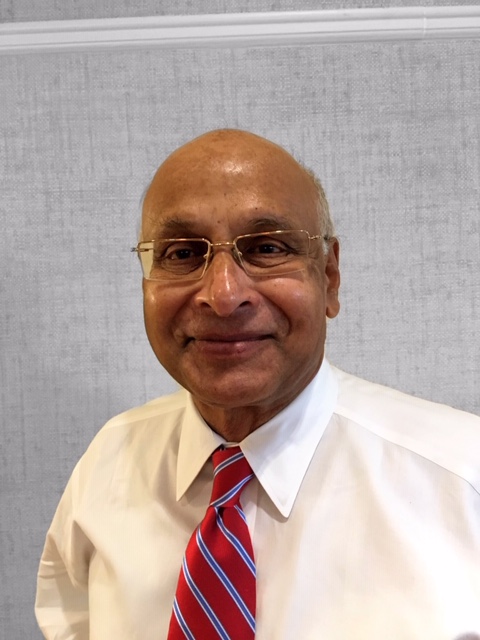
Walter (Chip) Schroeder was born in Bennington, Vt., in 1948. He grew up in Williamstown, Mass., and graduated from Greylock Regional High School in 1966. He graduated from Massachusetts Institute of Technology (MIT) with an undergraduate degree in 1970 and a master’s degree in 1972. At MIT, he was president of his fraternity and captain of the ski team. Chip has a 40+ year background in energy and energy-related finance. He was principal energy analyst for the Subcommittee on Energy and Power for the U.S. House of Representatives and ran the Office of Regulatory Analysis at the Federal Energy Regulatory Commission. In the early ‘80s, he was president of a major interstate pipeline group in Chicago, later joining Goldman Sachs’ Corporate Finance unit, focusing on regulated energy companies. In 1996, he founded Proton Energy Systems, a hydrogen and fuel cell company and led the company to an initial public offering. He was honored in 2005, being named Entrepreneur of the Year by Connecticut’s venture investing group, Connecticut Innovations, Inc. Chip and his wife Susan live in Darien and have two sons and a granddaughter. He is a member of Wee Burn Country Club and Paradise Valley Country Club. His hobbies include golf, skiing, music and bridge. Sponsored by Spike Reed

Zaino, Frank

Frank Zaino was born on Long Island, N.Y., in 1944. He grew up in Westbury and graduated from Chaminade High School in 1962, where he was active in intramural sports, cheerleading, prom committee and the yearbook. He graduated from Fairfield University with a B.A. in history.  Frank then went on to Georgetown University School of Dentistry and graduated in 1970. After that, he spent two years as a captain in the U.S. Army Dental Corp. In 1972, he set up his own dental practice in Fairfield, where he worked for 44 years before retiring and turning the practice over to his son-in-law. Frank and his wife Dale-Beth live in Fairfield. They have one daughter, three sons and 11 grandchildren. He is active in the Fairfield University Alumni Association and in coaching youth basketball and lacrosse. He belongs to the Bridgeport Dental Association, Connecticut State Dental Association, American Dental Association and International College of Dentistry. He enjoys golf at the Brooklawn Country Club and also history, travel and yard work. Sponsored by Bob Hughes

« Older posts Newer posts »

© 2026

Theme by Anders NorenUp ↑