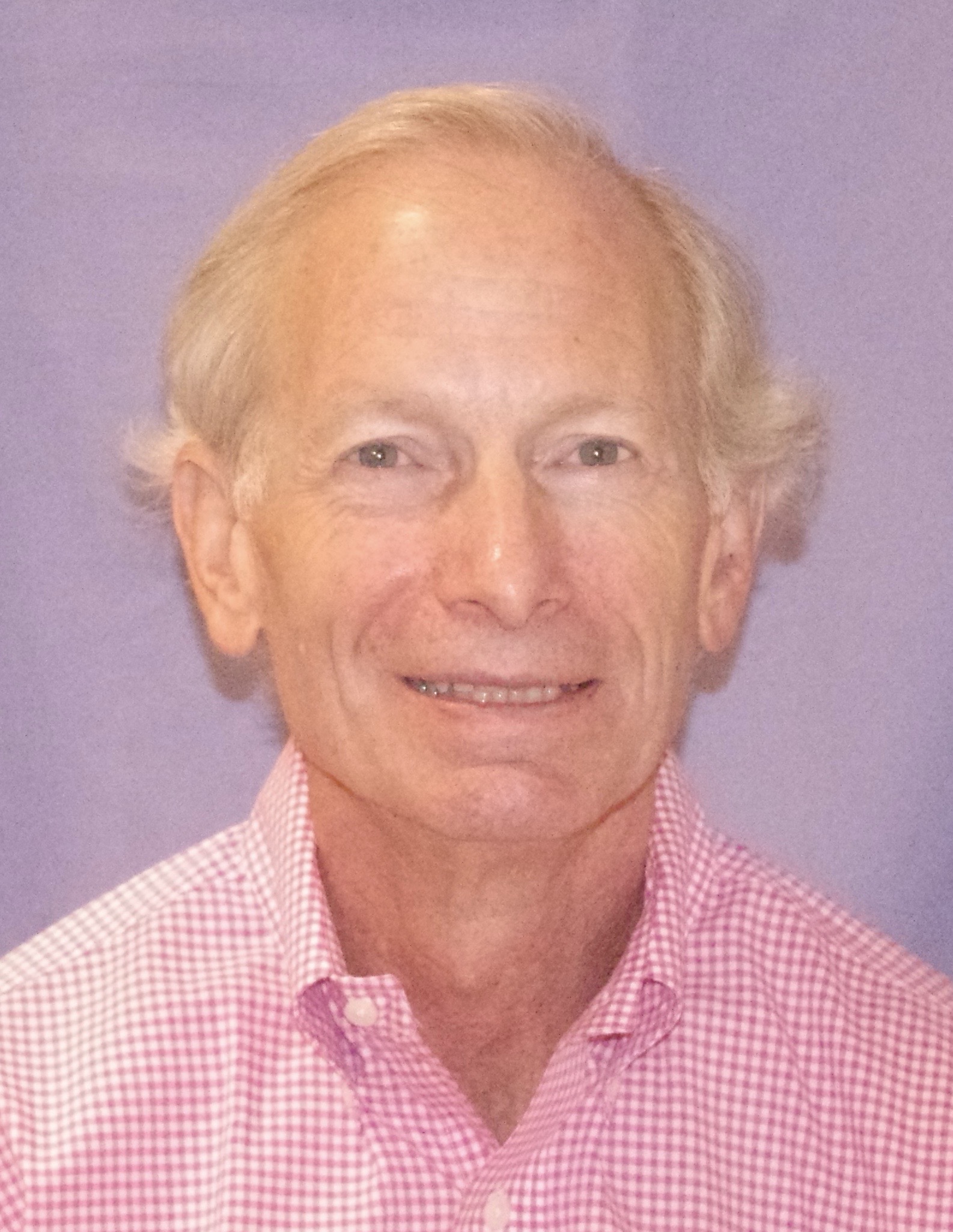
 Frank DeLeo was born in Mt. Vernon, N.Y., in 1952 and grew up in Greenwich. He graduated from Greenwich High School in 1970, where he was active in baseball, student government, the service club, chorus and the youth church organization. He graduated from the University of Connecticut in 1974 with a B.A. in psychology. He was a University Scholar, invited to Phi Beta Kappa and Phi Kappa Phi, and was active in intramural sports. He graduated from the Wharton School, University of Pennsylvania, in 1976 with an M.B.A. in marketing and was awarded the Colgate-Palmolive Fellow Degree with Distinction. In 1976, he began working at General Foods in White Plains involved with product management. He continued in product and brand management marketing and product development for companies in consumer provider businesses such as Clairol, Cadbury Schweppes, Bath & Body Works, Eddie Bauer and Hallmark Cards until retiring in 2018. Frank and his wife Patti of 44 years live in West Norwalk and have three children and six grandchildren living nearby. He is an enthusiastic supporter of the Yankees, Giants, Knicks and Rangers, as well as both the UConn men’s and women’s basketball teams. His hobbies include golf, tennis, reading, crossword puzzles, guitar playing, water sports, skiing, and family water destinations for vacations (Nantucket, the Caribbean and Florida). Sponsored by Gerrit Lydecker.
Author: Webmaster (Page 74 of 97)
 Born September 1935 in Chicago, Jim grew up in Highland Park, IL. He graduated from DePauw University in 1957 with a BA in Economics-including a semester @ American U. seeing the government in action. He was on the Golf Team and was a member of Phi Gamma Delta fraternity.
His work experience began with Union Carbide selling their consumer products in TX and Midwest, followed by a stint as a Media Buyer and Account Exec at Leo Burnett, ad agency in Chicago.
He spent the next 32 years in Broadcasting Advertising sales with Katz and Blair Television in their Chicago offices transferring to Blair’s New York office in 1971. He held various sales management positions at Blair retiring in 1995 as Sr. VP new business. During those years he had major interaction with most every major US network and television station group that provided an opportunity to be successfully involved in the TV station brokerage business as President-Television of Kepper, Tupper and Company of CT from 1995-2017. He also is managing trustee of a family farm in Sullivan Co. IN since 2004.
Jim married his wife Elizabeth (Betsy) Phelps, also from Highland Park IL, in October 1958-they are looking forward to celebrating their 65th anniversary next month.
The family moved to Darien in 1971 and he and Betsy have remained in town since then. Their two daughters and their families now reside in Cohasset, MA and Cumberland Foreside, ME. Their son and his wife live in Manhattan. All 3 went to Darien schools thru High school. They have 5 grandchildren-2 boys and 3 girls and a 1-1/2 year old great grandson. The 3 eldest are through college and working, the youngest granddaughter is a junior in college. Their other grandson is successfully involved in a special needs program in the Portland ME area.
Besides enjoying the golf, special events, investment group and other programs DMA offers, Jim is a member of Noroton Presbyterian Church, Woodway Country Club, various area senior golf, tennis and paddle groups. Other interests include volunteering, fitness, jazz and being an ardent sports fan-still heavily tilted to rooting for his favorite Chicago teams.
 David Mace was born in Springfield, Massachusetts, and is a graduate of Amherst College, 1960 and the University of Virginia Law School, 1964. He began practicing law in New York City with the firm of Cadwalader, Wickersham and Taft. In 1966 he joined Irving Trust Company as General Counsel. Mr. Mace was elected President of Irving Trust in 1984 and retired from the bank in 1990 following the merger with Bank of New York.
After retiring from Irving, Mr. Mace became Chairman of Pacific Fruit, Inc., a holding company for the Luis Noboa family (Guayaquil, Ecuador) companies, which include shipping, banking, insurance and the banana export business under the Bonita label. Mr. Mace left Pacific Fruit in 1996 to join Northern Trust Company of Connecticut. He retired from Northern in 2003 as Chairman and CEO.
Mr. Mace is an Emeritus Trustee of Princeton Theological Seminary where he served as Chairman of the Board from 2001-2005. He was a director of the Overseas Ministries Study Center in New Haven, Ct. from 2005-2010. He is Founder and Chairman of the Fairfield County Microinvestors Council, a group of Christian families in Connecticut who have worked in collaboration with World Vision and Vision Fund International on microlending projects in Ecuador, Chile, Dominican Republic, El Salvador and Senegal. Mr. Mace was one of the original directors of Vision Fund beginning in 2004 and was elected Chairman of VFI in 2010. He retired as a Vision Fund Director in November 2013.
Mr. Mace is married to Rosemary Hull. They are the parents of three adult children and six grandchildren living in London, England, Wilton, CT and New York City. The Maces belong to the Noroton Presbyterian Church in Darien, CT where they were married in 1961.
 Bryan Hooper was born in 1941 in Newcastle-upon-Tyne and brought up in London, England. He attended Christ’s Hospital school and then the Royal College of Science at Imperial College of Science and Technology, London University, graduating in 1963 with BSc and ARCS degrees.
He joined Imperial Chemical Industries in Harrogate, Yorkshire, in the fibres marketing department and was transferred to Celanese Corporation in Charlotte, North Carolina, in 1974 as a strategic planning director for Fiber Industries Inc. In 1978 Bryan moved to New York to become planning director for Celanese Fibers Marketing and then director of International Marketing before leaving in 1986. He established his own strategic planning and development consultancy before joining McAlinden Associates in New York in 1997 to coach and consult in communication skills, a job which involved him in programs with clients around the world. He retired at the end of 2015.
Bryan and his wife were married in 1964 after Carol also graduated from Imperial College. They have lived in Rowayton since 1997 and have two daughters, three grandchildren and two grand-dogs. Bryan’s interests include theater, film, crosswords and the hopeless cause of supporting Newcastle United of the UK soccer Premier League.
 Tom was born and raised in Philadelphia where he attended the William Penn Charter School.
After graduating from Trinity College in Hartford and Columbia Business School, he embarked on a 35 year career in the advertising business. He spent 28 of those years with Saatchi & Saatchi including stints as a Managing Partner at Saatchi & Saatchi New York and as President of Saatchi & Saatchi Consumer Healthcare. For five years he was President of William Douglas McAdams, an independent healthcare ad agency. He was also an EVP at BBDO in New York. Among the highlights of his career, Tom led the communications team that helped Tylenol recover from the tampering incidents in the 1980s which recovery became a paradigm “crisis management” case history at the Harvard Business School. He served on the Board of CHPA (Consumer Healthcare Products Association) and was a Director of the National Center for Health Education.
Tom and his wife, Winifred, moved to Darien in 1978 where they raised three great kids (a son and two daughters). He has one granddaughter and one grandson. He is a member of the Country Club of Darien where he served on its Board and Executive Committee for six years.
Tom is an avid golfer and enthusiastic sports fan who maintains his life-long allegiances to those Philadelphia teams. He and Winifred love to travel and have taken many trips both in the U.S. and abroad.
 Tom Haack was born September 5, 1945 in Sanford. Maine but grew up through high school in Wisconsin. He graduated from Williams College in 1967 with a B.A degree, cum laude and with honors in economics. After serving as a LTJG on an LST homeported in San Diego, Tom graduated from the Stanford University Business School in 1972 with his M.B.A. He started his career in investment banking at Merrill Lynch in New York, but he left in 1974 to take a position in the banking department of Lazard where his career spanned 48 1/2 years at that firm until his retirement on June 30, 2023. As a General Partner and Managing Director of Lazard since 1983, Tom’s portfolio of activity included assignments in corporate finance involving mergers and acquisitions, financial restructurings and bankruptcies, capital markets operations, and international finance.
Tom and his wife Olga, who was a Stanford undergraduate, met at the outset of Business School and were married in 1971. Tom and Olga have lived in Darien since 1975 and have two daughters and two grandchildren.
Tom has been a long time member of Woodway and has served on that Board of Governors as well as numerous committees. He has also served as an Elder at Noroton Presbyterian Church. Current board seats include being a director of the private Lazard company and the Hollenbeck Club in Litchfield, CT. In his spare time Tom enjoys trout fishing, hunting turkey and deer, and golf.
 Charles was born in Washington, D.C., and raised in Kansas. He spent his career in corporate public relations in New York and London, first with the p.r. firm of Burson-Marsteller and subsequently for 30 years representing banks including Bankers Trust, JP Morgan Chase (and predecessor Chemical Bank), as well as Bank of America (and predecessor Fleet Bank). His final ten years were with Marsh & McLennan subsidiary Mercer in charge of global corporate communications.
Charles graduated from Northwestern University and received an M.B.A. in finance from Columbia University Graduate School of Business.
He was president of the DMA in 2022-2023.
He married a Darien girl, Robin Wakeman, and they have three married sons in Chicago, Pittsburgh, and outside Boston, and eight grandchildren.

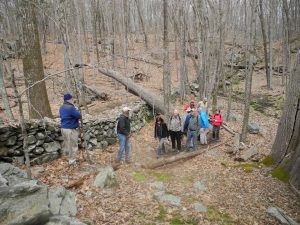
Hiking Zofnass Family Preserve in Pound Ridge on Thursday, Oct 18, 2018 The Zofnass Family Preserve in Pound Ridge is a 150 acre property owned by the Westchester Land Trust. At this time of the year it is a lush green. There are about 8 miles of trails over a rustic terrain. We will be hiking a loop of about 3 miles, which should be completed in about 2-2 ½ hours. This hike is not for beginners. The trail is
quite rugged with several ups and downs. You do need stamina and a sense of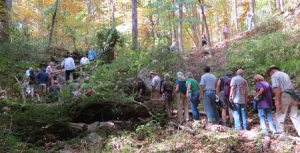 balance. Experienced hikers will find this hike in the rustic wilderness most enjoyable.
Due to limited parking space at the trailhead we will meet at 9.30 am at the Long Ridge Tavern located at 2635 Long Ridge Road, Stamford and car pool from there. Take Exit 34 off the Merritt Parkway and head north on Long Ridge Road for about 3.8 miles till you come to the Tavern on the right ( a red building just before the the blinking traffic light.)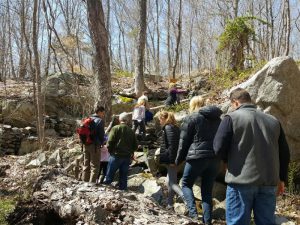
From the Long Ridge Tavern the ride to the trailhead , located at 245 Upper Shad Road is about 5-8 minutes. We expect to start hiking by 9.45 am and finish by about 12.15
pm. Its a beautiful time of the year and the hike should be a rewarding experience.
Lunch will follow at the Long Ridge Tavern for those interested, about 12.30 pm.
We welcome participation from spouses.
Dogs on leash are allowed.
Contact for this hike: Sunil Saksena 203-561-8601 ssaksena44@gmail.com
Picture from this year’s hike.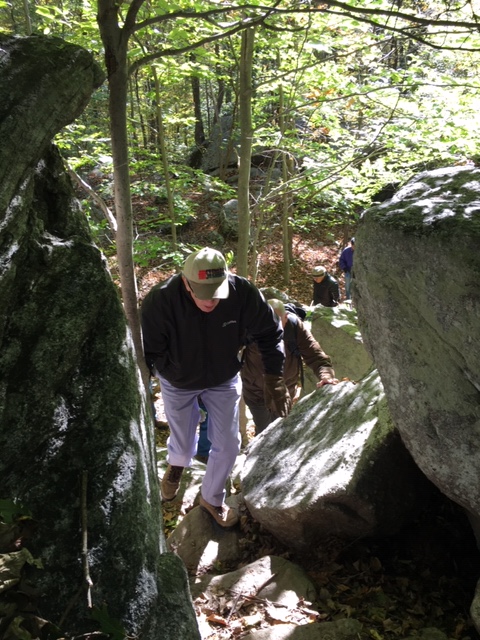
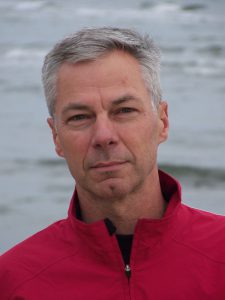 Richard Hyman will be sharing stories and photographs about his time working for the famed Captain Jacques-Yves Cousteau.
Richard was a professional diver and photographer for Cousteau. He worked his way up the ladder, first driving a supply truck from L.A. to the Canadian wilderness and there building a cabin with Cree Indians for the Cousteau team to winter in and film Beavers of the North Country. A year later, as a deck hand aboard Calypso, they filmed The Incredible Migration of the Spiny Lobsters in Mexico, before sailing south to Belize, where they filmed the spawning of thousands of grouper, The Fish that Swallowed Jonah. Singer songwriter John Denver paid a visit and performed a televised concert on Calypso’s foredeck. On Richard’s final expedition he graduated to diver and photographer, where en route to Venezuela, he experienced treacherous deep dives on the wreck of the USS Monitor off North Carolina, skeletons inside wrecks off Martinique, and the death of Jacques Cousteau’s son, Philippe.
Richard is a PADI-certified Aquanaut, a member of the Marine Biology Hall of Fame, and a Trustee of the Fabien Cousteau Ocean Learning Center.
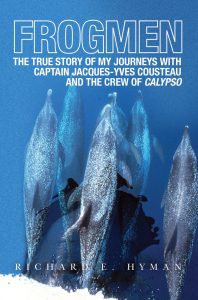 Stories about life aboard Calypso and Cousteau, once one of the most recognized names in the world, should interest most everybody, particularly adventurers, Denver fans, divers, environmentalists, photographers, travel buffs, and videographers.
www.richardehyman.com
richardehyman@gmail.com
Mobile 203-456-4271
As a kid, I spent as much time as possible under water. Cousteau was my hero. Here is a video that is sure to be an earworm as you enjoy this talk. Gary
https://www.youtube.com/watch?v=35x_rwyBh-8
Aye Calypso the places you’ve been to
The things that you’ve shown us
The stories you tell
Aye Calypso, I sing to your spirit
The men who have served you so long and so well
(We’ll avoid the yodeling part.)
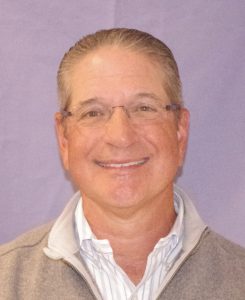 John Kirkman was born in Pasadena, Calif., and grew up in Darien. He graduated from Darien High School in 1973, where he was active in track, bowling and basketball and enjoyed hiking and camping. He graduated from Bethany College in 1977 with an M.S. in economics and was active in track and bowling. John worked for various banks in Fairfield County from 1977 to 1994, when he joined a firm in Stamford as a financial consultant and worked there until retirement in 2017. John and his wife Marion live in Rowayton and have a son and a daughter. John belongs to the Silvermine Golf Club, PGA National and Roton Point Club. For recreation, he enjoys golf and travel. Sponsored by Kevin Davidson
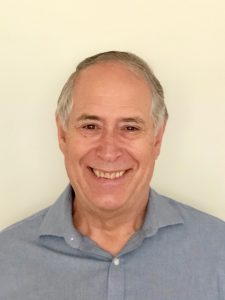 Rolf Obin was born in Mount Kisco, N.Y., in 1952 and grew up in Centerport, N.Y. He graduated from Harborfields High School in 1970, where he was active in football and basketball. Rolf graduated from New York Institute of Technology with a degree in communications and has a certificate in project management. He started work with Phillips-Van Heusen Corporation in 1972, working in sales administration for textiles and apparel, leaving in 1986 as general manager/designer dress shirts. He currently is working in the Topsville Division of Jaclyn, Inc. as planning and replenishment manager. Rolf and his wife Christina live in Darien and have one daughter who lives in Brooklyn. He belongs to the Darien Boat Club and the Darien YMCA and serves on the Darien RTM. His hobbies include sea kayaking, gardening, woodworking, music, exercise, performing and visual arts, and town and state issues. Sponsored by John Podkowsky
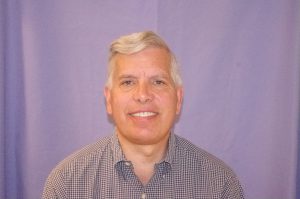 Frank Maturo was born in New Haven in 1958 and grew up in West Haven. He graduated from Notre Dame-West High School in 1976, where he was All-State in basketball. He graduated from Yale University in 1980 with a B.S. degree and was All-Ivy 2ndteam in basketball for two years. He graduated from the Wharton School at the University of Pennsylvania in 1984 with an M.B.A. in finance. Frank started his career with Salomon Brothers in Boston and New York in Equity Capital Markets working on initial public offerings. He moved to Merrill Lynch and Bank of America Merrill Lynch in 1999, where he became Co-head of America’s ECM. In 2015, Frank moved to UBS as Vice Chairman of Global Equity Markets and from 2018 to the present is Chairman of ICR Capital based in Norwalk. Frank and his wife Carrie have two sons living nearby. He belongs to Noroton Yacht Club, Yale Club of NYC, and Yale Basketball Association. In his free time, Frank enjoys playing tennis and collecting rare books, stamps and coins. Sponsored by Sandy McDonald