
Author: Webmaster (Page 83 of 96)
Save the date. Tom Brayton
Discussion leader: Jim Phillips
Just because we can extend life, should we? The U.S. is expected to spend $2.8 trillion on health care in 2012. Medicare alone will cost taxpayers $590 billion, with over 25% going toward patients in their last year of life. If health care is a scarce resource, limited by its availability and our ability to pay for it, should government step in to ration care, deciding whose life is worth saving? In other words, how much is an extra month of life worth?
For The Motion
The U.S. spends more on health care than any other industrial nation—in 2012 we are expected to spend $2.8 trillion. We cannot afford our health care system and expensive end-of-life care costs are a major contributor to this problem.
Rationing means getting better value for the trillions we spend every year.
Rationing already happens. Medicare decides what it will reimburse, private insurance decides what they will cover, and individuals go without care and medicine every day when they can’t afford it.
We must ration based on cost-effectiveness, not on an individual’s ability to pay.
If we spent less on those who, with or without treatment, have only a few months left to live, we would be better able to help those who may have decades.
Against The Motion
The government should not have the power to determine who lives, who dies, and who gets treatment based on calculations of quality and quantity of life.
Health care costs can be reined in without rationing care.
Targeting “end-of-life” care specifically would result in very little cost savings.
Rationing care will lead us down a moral slippery slope. How many years of life is enough? Who is productive and worthy, and who is not?
https://www.intelligencesquaredus.org/debates/ration-end-life-care
In 1994, Oregon voters passed the Death with Dignity Act, which legalized physician-assisted suicide for the terminally ill. Since then, it has become legal in 4 more states, including New Mexico, where the state court ruling that it is constitutional is under appeal. Is it, in the words of the American Medical Association’s code of ethics, “fundamentally incompatible with the physician’s role as healer”? Will these laws lead to a slippery slope, where the vulnerable are pressured to choose death and human life is devalued? Or do we need to recognize everyone’s basic right to autonomy, the right to end pain and suffering, and the right to choose to die with dignity?
For The Motion
The right to die as one chooses—and to decide when life is no longer worth living—is integral to human freedom, liberty, and personal autonomy. Neither the government, nor religious institutions, should impose their own conceptions of morality upon individuals who are not harming others.
As an option in end-of-life care, aid in dying would allow terminally ill, mentally competent individuals to retain dignity and bodily integrity in the face of insurmountable pain and suffering.
In places where assisted suicide is legal—namely, Oregon and the Netherlands—there is no evidence that the law is being abused, that vulnerable populations are being targeted, or that patients are being coerced by doctors and/or their families to choose death.
If physician-assisted suicide remains illegal, lesser and more dangerous alternatives—shooting oneself, enlisting doctors or family to break the law, DIY suicide—will spread in its place.
Against The Motion
If assisted suicide is legalized, we will be led down a slippery slope towards pervasive medical killing, endangering vulnerable populations—disabled, elderly, minority, or poor—whose lives are seen as a burden on society.
If pain is treated effectively, there is no need to treat the patient as if the patient were the “problem to be eliminated.”
Starting with the Hippocratic Oath, medical professional codes prohibit killing, holding the intrinsic value of human life and dignity above all other ethical principles. Assisted suicide erodes the doctor-patient relationship and has grave potential for misuse and abuse.
Many physicians do not want to have God-like power over others, and they should not be pressured, against their own convictions, to assist in a patient’s suicide.
https://www.intelligencesquaredus.org/debates/legalize-assisted-suicide
As people approach the end of their lives, they and their families commonly face tasks and decisions that include a broad array of choices ranging from simple to extremely complex. They may be practical, psychosocial, spiritual, legal, existential, or medical in nature.
http://www.apa.org/topics/death/end-of-life.aspx
End-Of-Life Policy Solutions: A Cautionary Note
https://www.healthaffairs.org/do/10.1377/hblog20170710.060992/full/
Ethical Issues Surrounding End-of-Life Care: A Narrative Review
https://www.ncbi.nlm.nih.gov/pmc/articles/PMC4934577/
How to Curb the High Cost of Caregiving
https://www.barrons.com/articles/how-to-curb-the-high-cost-of-caregiving-1521253021
HOW TO ENROLL IN VETERANS HEALTH INSURANCE (TRICARE)
http://www.dummies.com/personal-finance/veterans-benefits/how-to-enroll-in-veterans-health-insurance-tricare/
How to grow old in your own home
https://www.fidelity.com/insights/retirement/aging-in-place
Paying for Care
https://www.nia.nih.gov/health/paying-care
Problems and Solutions in End-of-Life Healthcare
http://www.healthleadersmedia.com/leadership/problems-and-solutions-end-life-healthcare#
https://www.wsj.com/articles/how-to-talk-with-your-dying-loved-one-1523891127
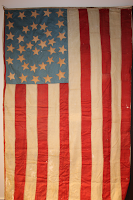 The Darien Historical Society’s current exhibit is called “Long May She Wave” — the chronological evolution of our Flag. It features a number of genuine historic flags, plus many more replica flags from the pre-Revolutionary War era to modern times.
The Society has invited the DMA for a free Curator’s Tour for Thursday, February 8 at 7:30 p.m. It includes the major flag exhibit and two smaller exhibits (flag photos and Historic War-Time Darien Love Letters). The tour is open to members of the Darien Men’s Association and their significant others.
The “stars” of the show are the Society’s antique flags, but there is also a timeline presentation included that highlights the key historical events in Darien as the Flag evolved.
There is also have a mini-exhibit of a local man’s collection of flag art photographs. After 9-11, this became his passion and he has exhibited and traveled all over the country in search of people celebrating the red, white and blue.
In the house museum, we have in addition a collection of Revolutionary War-era love letters written to a woman who lived in Middlesex Parish.
See more info at the Society’s WEB Site: darienhistorical.org
Joe Spain
Discussion leader: David Mace
Here is a good overview piece from the Pew Research Center on refugees
http://www.pewresearch.org/fact-tank/2017/01/30/key-facts-about-refugees-to-the-u-s/
IQ2 Debate:
Since the Syrian Civil War began in 2011, more than 4 million Syrians have fled the country, creating the greatest refugee crisis since World War II. Most have fled to Turkey, Lebanon, and Jordan, but many have risked death to reach Europe and the possibility of a better life. Unlike Europe and Syria’s neighbors, the United States has had the advantage of picking and choosing from afar, taking in just over 2,000 Syrian refugees since the war’s start. The Obama administration has pledged to take another 10,000 in 2016, but there are some who suggest that we are falling well below the number that we can and should accept. What are our moral obligations, and what are the cultural, economic, and security issues that must be taken into account? Should the U.S. let in 100,000 Syrian refugees?
https://www.intelligencesquaredus.org/debates/us-should-let-100000-syrian-refugees
Fact sheet supporting the debate:
https://dariendma.org//wp-content/uploads/Refugee-Facts-Oct-2015-FINAL.pdf
And a rebuttal to the fact sheet:
https://cis.org/Report/FactChecking-Fact-Sheet-Refugee-Resettlement
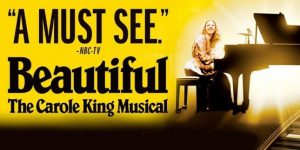 “Beautiful, The Carole King Musical,” tells the inspiring true story of King’s remarkable rise to stardom, from being part of a hit songwriting team with her husband Gerry Goffin to becoming one of the most successful solo acts in popular music history. Along the way, she made more than beautiful music — she wrote the soundtrack to a generation.
Featuring a stunning array of beloved songs, including “I Feel The Earth Move,” “One Fine Day,” “(You Make Me Feel Like) A Natural Woman,” “You’ve Got A Friend” and the title song, “Beautiful.”
Friday, March 9, 2018
11:45 a.m.
Lunch at the Union League Cafe.
Three-course meal in a private room.
2-4 p.m.
New Haven Schubert Theater, one block from lunch.
$110 per person
Includes lunch and show tickets. Drinks extra.
Tickets very limited and are on a first-come, first-paid basis.
Transportation to New Haven is by car and ridesharing. Parking is available at the theater, 247 College Street, New Haven.
For information, contact:
Tom Brayton, tfbraryton@gmail.com
Chris Snyder, csnydereco@gmail.com
 William Frederick McClelland, Jr., a Darien resident since 1958, died on January 7, 2018, at home. He was 92.
Born December 16, 1925, in Bronxville, New York, he was the son of William Frederick McClelland and Mary Louise Mickel McClelland. His sister, Marjorie, and his wife of 54 years, Katherine “Kay” Hickman McClelland, predeceased him.
Bill graduated from Scarsdale High School, won a scholarship to the Massachusetts Institute of Technology and went on to become a pioneer in the computer industry.
He joined IBM in New York City, where they were developing a digital computer called the SSEC, which covered the street floor of IBM’s Madison Avenue building. This was just prior to the birth of the stored program computer that became the basis of the computer revolution.
He was one of the developers of IBM’s first stored program computer, the 701, and wrote some of its first computer programs.
During his career he assisted other technology pioneers at Oak Ridge, Los Alamos National Laboratories and the Rand Corporation in the use of the computer.
After retiring from IBM, he joined his wife’s company, the Darien Travel Center, and traveled extensively.
Bill was an advocate for MIT and its initiatives in Artificial Intelligence and Brain and Cognitive Sciences in support of graduate students in the School of Science, and was a founding member of MIT’s Champions of the Brain Fellows.
He served on the Planning and Zoning Committee, the RTM, the Darien Information Technology Committee, and was a strong supporter of the Darien Library.
He was a member of the Tokeneke Club and the Darien Men’s Association. He was known for his quick wit and intellectual curiosity, and led the weekly Contemporary Issues discussion group at the Darien Senior Center until just a few weeks before his
death.
Bill is survived by his three children, William McClelland III, Frances McClelland Brady, and James McClelland, and his long-time companion, Lynne Lippincott.
A private family remembrance was held at his home.
Memorial contributions may be made to the Darien Library.
 Rocco A. Evola, a resident of Darien, CT, passed away on Sunday, January 7, 2018 at home in Darien. Born on June 29, 1919 in Flushing, NY, he was the son of the late Rocco Gaetano and Maria Smania Evola. He was 98.
Before serving with the U. S. Army Corp during World War II, Rocco attended Pratt Institute. He received a B.S. degree in drafting and architecture from New York University. He taught drafting and other subjects at Thomas Edison High School in Jamaica, NY for over 30 years. After retirement, he opened and operated RAE’s Antiques and Clocks in Flushing, NY for many years. He enjoyed helping with the Darien Boy Scouts annual tag sale.
His hobbies were clock repairing and wood working. He was a member of Watch and Clock Associations, a past member of the Darien Senior Center, the Darien Senior Men’s Association and ROMEO’s (Retired Old Men Eating Out).
Rocco is survived by his two children, Kevin F. Evola of Melbourne Beach, FL and Maura J. Evola and her husband, Ed Jonker, of Darien. He is survived by two grandchildren, Scott Jonker, a student at Erasmus University, Rotterdam, the Netherlands, John Jonker, a student at Union College and his girlfriend Abi Marin, also a student at Union College. He was predeceased by his beloved wife Frances Evola.
Rocco is also survived by his siblings Julia Leskinen of Flushing, NY; Phillip Evola of Tryon, NC; Terry Catalano also of Tryon, NC; and Lawrence Evola of Buffalo, NY. He was predeceased by siblings Katie Stonehill, Louis Evola, Connie Evola, Tony Evola, John Evola, Rose Murphy, Helen Fetzer and Anna Evola.
He loved the family’s two dogs Lily and Vincent, both Cavalier King Charles Spaniels. He really liked spending time with the family, especially his grandsons, a glass of red wine with dinner and still approving Maura’s clock and collectable purchases.
The family will receive friends at the Edward Lawrence Funeral Home, 2119 Post Road, Darien on Friday, January 12, 2018 from 5:00 to 8:00 PM. A Mass of Christian Burial will be held at St. John R.C. Church, 1986 Post Road, Darien on Saturday, January 13, 2018 at 9:30 AM.
In lieu of flowers, memorial donations may be made to Sisters of the Blessed Sacrament, 1663 Bristol Pike, Bensalem, PA 19020.
To send flowers or a remembrance gift to the family of Rocco Evola, please visit our Tribute Store.
 Wednesday, February 28, 2018
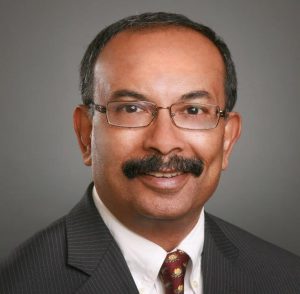
Arun Nandi, M.D., FACEP, chairman of the Department of Emergency Medicine at Stamford Hospital, will talk about emergency care services. As part of the hospital’s recent expansion, Dr. Nandi ensured the smooth and safe transfer of services to the new emergency room that expanded to 52,000 square feet from 19,000 square feet. Dr. Nandi also is responsible for the Immediate Care Center at 32 Strawberry Hill in Stamford and the Stamford Health Urgent Care Centers at 497 Westport Ave., Norwalk, and 2001 West Main St., Stamford. Prior to coming to Stamford, he was chairman of Emergency Medicine & Observation Services at Columbia Memorial Hospital and director of Emergency Medical Services at Columbia County EMS & Disaster Response in Hudson, N.Y. He also served as director and chairman of the Emergency Department at St. Mary’s Hospital in Amsterdam, N.Y. Dr. Nandi received his medical degree from Jawaharlal Institute of Postgraduate Medical Education and Research at Madras University, where he also completed a residency in general surgery. In addition, he completed two fellowships, one in general surgery at Royal College of Surgeons of Edinburgh and the other in burns, trauma and reconstruction at Royal College of Surgeons of London. He completed research in wound healing at Stony Brook University and his residency in emergency medicine at Albert Einstein College of Medicine at Jacobi and Montefiore hospitals in the Bronx. He is active in international emergency medicine and is a visiting professor at Jawaharlal. He is fluent in Hindi, Urdu, Bengali, Tamil and basic Spanish.
Arranged by Alex Garnett
Video: https://youtu.be/dJunbql7MV4
Wednesday, February 21, 2018
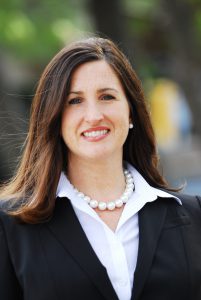 Michelle Beltrano and Karen Goersch will lead a practical discussion on common pitfalls and current opportunities in estate and financial planning. The objective is to ensure such plans accomplish the intended goals. Michelle will talk about myths and surprises about estate planning documents. She also will explain how to start the conversation of estate planning with loved ones. Finally, she will cover the cost of settling an estate in Connecticut and what to expect from the probate process. Michelle lives in New Canaan with her family and is principal and founder of Beltrano Law, a boutique firm located in Greenwich. Her practice areas include estate planning, elder law, special needs, probate matters and estate administration. Michelle represents individuals and families who are dealing with complex matters, including Medicaid eligibility and applications, long-term care planning, will contests and trust administration. As an attorney and nurse, Michelle has unique insight into her clients’ situations and provides individualized, concierge services.
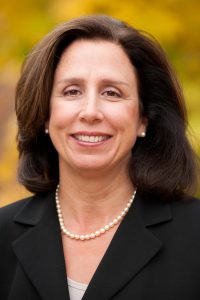 Karen Goersch will provide several tips to help ensure that clients effectively implement their estate plans and meet financial goals, such as the titling of assets, beneficiary review and gifting strategies. She also will discuss selecting which assets to deplete first, considering future estate and income tax implications. She will show how to use insurance as a tax-planning strategy to potentially eliminate the IRS as one of the biggest beneficiaries. She is a financial advisor with Ameriprise Financial in its Westport office and holds several professional designations, including CPA. She works with a team of professionals to develop personalized financial plans and investment solutions, helping clients simplify complex issues, often with a focus on tax minimization and efficiency. Karen moved to Rowayton a year ago after living in Darien with her husband and twins for more than 20 years.
Arranged by John Wolcott
Video: https://youtu.be/TBAmRYLOqyI
 Wednesday, February 14, 2018
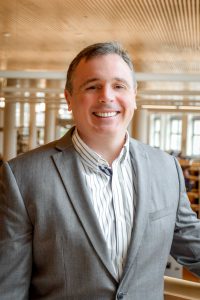
Joseph A. Williams will talk about his latest book, The Sunken Gold: A Story of World War I Espionage and the Greatest Treasure Salvage in History. In 1917, the “HMS Laurentic,” with 44 tons of Allied gold on board and bound for the United States, was sunk by German mines off the coast of Ireland. The struggle to recover the treasure by Royal Navy divers and their spy work of breaking into sunken U-boats for secret documents helped win the war. Today, there is still gold in the wreck waiting to be discovered. Unfortunately, no gold will be present at his talk, but attendees will be treated to a thrilling tale of determination, persistence and patriotism. A librarian, archivist and historian, Joseph received a bachelor’s degree in political science and history at SUNY Geneseo and a master’s degree in American history from Queens College. For six years, he was head of collections and assistant director of the State University of New York Maritime College’s Stephen B. Luce Library, which specializes in nautical research. His first book, Four Years Before the Mast, is a history of the Maritime College, the nation’s oldest maritime training school. His second book, Seventeen Fathoms Deep, is an action-packed narrative of the 1927 submarine S-4 disaster. He is deputy director of the Greenwich Library. He lives with his wife and two children in Ridgefield.
Arranged by John Wolcott
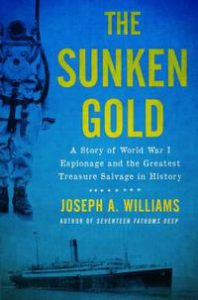 On January 25, 1917, HMS Laurentic struck two German mines off the coast of Ireland and sank. The ship was carrying 44 tons of gold bullion to the still-neutral United States via Canada in order to finance the war effort for Britain and its allies. Britain desperately needed that sunken treasure, but any salvage had to be secret since the British government dared not alert the Germans to the presence of the gold. Lieutenant Commander Guybon Damant was the most qualified officer to head the risky mission. Wild gales battered the wreck into the shape of an accordion, turning the operation into a multiyear struggle of man versus nature. As the war raged on, Damant was called off the salvage to lead a team of covert divers to investigate and search through the contents of recently sunk U-boats for ciphers, minefield schematics, and other secrets. The information they obtained, once in the hands of British intelligence, proved critical toward Allied efforts to defeat the U-boats and win the war. But Damant had become obsessed with completing his long-deferred mission. His team struggled for five more years as it became apparent that the work could only be accomplished by muscle, grit, and persistence. Using newly discovered sources, author Joseph A. Williams provides the first full-length account of the quest for the Laurentic?s gold. More than an incredible story about undersea diving adventure, The Sunken Gold is a story of human persistence, bravery, and patriotism
Video: https://youtu.be/5-7i7Tdh6-M
We dnesday, February 7, 2018
Jayme Stevenson, first selectman of the Town of Darien, will present “The State of the Town.”
Jayme’s update will include a review of town operations and the outlook for changes in the near future. She has been first selectman since 2011 and has been a member of the Board of Selectmen since 2009. Jayme recently was elected chairman of the Western Connecticut Council of Governments and served as vice chairman beginning in 2015. She also recently was named to the board of directors of the Connecticut Conference of Municipalities and to that organization’s municipal risk insurance agency known as the Connecticut Interlocal Risk Management Agency. Jayme has served on a variety of Darien nonprofit boards, including The Depot, the Darien Nature Center and the First Congregational Church Nursery School. She also was chairman of the Parent Teachers Organization for Royle Elementary School and Darien High School. She has been a member of the board of The Center for Sexual Assault Crisis Counseling and Education since 2016. Jayme and her husband have lived in Darien for 26 years and have five children. Her husband grew up in Darien and is a graduate of Darien High School.
Arranged by John Wolcott
Video: https://youtu.be/OVWwulnmijY