Author: Webmaster (Page 83 of 97)

Patrick Houlihan,
State of Play: Major League Baseball in 2018,
Wednesday, April 25, 2018

Wednesday, April 25, 2018

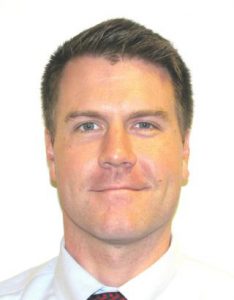
Patrick Houlihan will speak on the “State of Play: Major League baseball in 2018,” including the current state of the game and recent changes plus trends on and off the field. He is vice president and deputy general counsel in the Labor Relations Department in the Office of the Commissioner of Baseball in New York. Patrick represents the Commissioner’s Office and the 30 major league clubs in all matters involving the Major League Baseball Players Association that is the labor union representing all 40-man roster players. Patrick’s work focuses on player discipline; representative of the Commissioner’s Office and Clubs in grievance hearings; salary arbitration; player pension and welfare benefits; revenue sharing; player health and safety; drug testing; and other matters involving the interpretation and application of the collective bargaining agreement or the Major League Rules.

Before joining the Commissioner’s Office in September 2012, Patrick spent seven years as an associate with the law firm of Williams & Connolly, LLP in Washington, D.C. Patrick also was previously an adjunct professor at his alma mater, Georgetown University Law Center, where he taught a sports law course for several years.

Arranged by John Schlachtenhaufen

Damian Rossney and Billy Seales,
Hudson Link for Higher Education in Prison,
Wednesday, April 18, 2018

Wednesday, April 18, 2018
Hudson Link, a privately funded non-profit corporation, organizes college degree programs in six New York State prisons. Several years ago, Sean Pica, Executive Director of this amazing program, came to give us an overview of the organization, its successes and its challenges, and his own experience in the prison education system. His presentation was followed by a very successful clothing drive for recently released program graduates.

www.hudsonlink.org


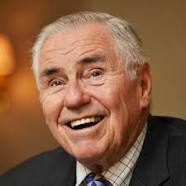
On April 18, we will hear from two Hudson Link representatives, Damian Rossney and Billy Seales. While incarcerated, both of these men earned college degrees. Billy, in fact, earned three! They will give us an update on Hudson Link’s expansion since Sean was with us, with particular focus on new initiatives designed to assist program alumni when they come home from prison.


Damian runs Hudson Link’s recently launched New Beginnings Program, which will offer Hudson Link graduates transitional housing and other assistance vital to a successful re-entry into society. Billy has been home for just 11 months and will share his very recent experience dealing with the challenges faced by all returning from prison – even those returning with a college degree.


Their talk will be followed up with another clothing drive. As you can imagine, for someone who has been wearing prison greens for years, proper civilian clothing is a must and is sorely needed. (New York, which is not atypical, gives a released inmate only $40 and a bus ticket home.) This year’s drive will take place on Wednesday, May 2. Just bring those gently worn items (suits, ties, shirts, pants, sweaters, coats, etc.) that’s been clogging up your closet to the DCA parking lot before our meeting on May 2; a Hudson Link van will be waiting to take it to the Hudson Link office in Ossining, where it will be Ossining office where it will change someone’s life. It will be much appreciated!


Video: https://youtu.be/9kXEX0UADyY

Ambassador Donald Gregg,
Korea,
Wednesday, April 11, 2018

Wednesday, April 11, 2018
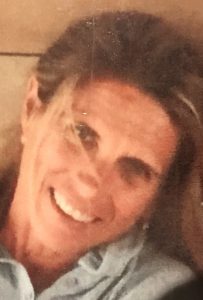
Ambassador Donald Gregg will speak on the current administration’s challenges due to today’s situation on the Korean peninsula, its impact on neighboring U.S. allies in the Asia Pacific region and what policy options exist for the Trump administration. Donald will share his thinking on the world situation through the lens of his unique background as a top diplomat and intelligence operative.

He graduated from Williams College in 1951 and joined the CIA, where, over the next quarter century, he was assigned to East Asian countries. He was seconded to the National Security Council staff in 1979, where he was in charge of intelligence activities and Asian policy affairs. Upon his retirement from the CIA, he was awarded the Distinguished Intelligence Medal. In 1982, Gregg was asked to be national security advisor by Vice President George W. Bush, and, over six years, traveled to 65 countries. He also served as a professorial lecturer at Georgetown University, teaching a graduate level workshop entitled Force and Diplomacy. In 1989, Gregg began service as the U.S. Ambassador to South Korea. He retired from his 43-year government career in 1993.

Today, he is chairman of the Pacific Century Institute in Los Angeles and chairman emeritus of The Korea Society of New York City. He is actively working to establish normal relations with North Korea and has visited the country six times.

Arranged by Tom Lom

Video: https://youtu.be/iCsFYLdMLLk

Heather Pech,
Life on the Run,
Wednesday, April 4, 2018

Wednesday, April 4, 2018
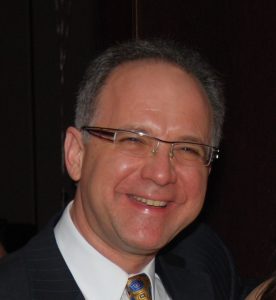
Heather Pech will speak of her experiences running marathons, particularly the recent Boston Marathon, where she won her 55-59 age bracket. Her time was better than 698 other runners in her category. She also will discuss the increased performance by American runners in international competitions and the responsibilities and satisfaction of coaching a group of Darien middle school kids who want to run – they call themselves The Blazers.

After graduation from the University of Minnesota and the Wood Tobe Coburn School, she entered the fashion retail field. Initially, she was with Ralph Lauren and Calvin Klein. She then joined Jones Apparel Group, culminating in serving as CEO of its Polo Jeans Company and then 9 West. She finished her business career as CEO of Nanette Lepore, a $120 million contemporary fashion designer with multiple locations here and in the U.K.

Heather was born and raised in Darien and still lives here with her three daughters. She continues to be an active runner, clocking 80 to 90 miles a week.

Arranged by Wilder Baker


Update: Heather won her age group again in 2018 Boston Marathon with a time of 3:10:15.

Video: https://youtu.be/XWB4Jjjhu_w

Andy Bramante,
Peak Performance in Teaching Science,
Wednesday, March 28, 2018

Wednesday, March 28, 2018

Andy Bramante, a science teacher at Greenwich High School, will talk about what’s behind the incredible success of his students and how he motivates them to peak performance. Over the last 10 years, more than 30 of Andy’s students have competed in the Intel Science and Engineering Fairs, won six First Place, three Best of Category and two Grand Prize awards. Earlier this year, two of his students were semifinalists in the International Google Science Fair. One won the Grand Prize for designing a low- cost portable test for ebola and received a scholarship of $50,000. Last year, six students were selected as the Regeneron Science Talent Scholars, and two won a $100,000 scholarship. Andy received an M.S. degree in Chemistry from Fordham. Before joining Greenwich High School in 2005, he had an 18-year career as an engineer/scientist in industry and worked for several companies, including Hitachi Instruments and Perkin-Elmer. Throughout this period, he taught chemistry at the college level at Baruch and Sacred Heart universities.

Arranged by Sunil Saksena

Video: https://youtu.be/sMTps6rh5NI

Kevin Peraino,
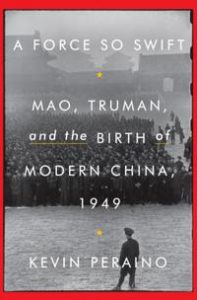
A Force So Swift: Mao, Truman and the Birth of Modern China, 1949,
Wednesday, May 23, 2018

Kevin Peraino will discuss the Truman administration’s response to the fall of Nationalist China and the triumph of Mao Zedong’s Communist forces in 1949 – an extraordinary political revolution that continues to shape East Asian politics to this day. Drawing on Chinese and Russian sources, as well as recently declassified CIA documents, he tells the story of this remarkable year through the eyes of key players, including Mao, Truman, Secretary of State Acheson, Congressman Walter Judd and Madame Chiang Kai-shek.

In the opening months of 1949, Truman found himself faced with a looming diplomatic catastrophe. Through the spring and summer, Mao’s Communist armies fanned out across mainland China, annihilating the rival troops of America’s one-time ally Chiang Kai-shek and taking control of Beijing, Shanghai and other major cities. As Truman and his aides scrambled to formulate a response, they were forced to contend not only with Mao but with unrelenting political enemies at home. Over the course of the year, Mao fashioned a new revolutionary government in Beijing that laid the foundation for the China we know today, while Chiang Kai-shek would flee to the island sanctuary of Taiwan.  These events transformed American foreign policy – leading ultimately to decades of friction with Communist China, a long-standing U.S. commitment to Taiwan, and the subsequent wars in Korea and Vietnam.
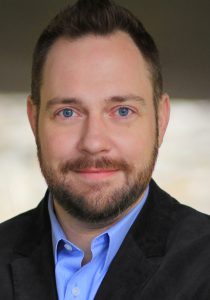
Kevin is a veteran foreign correspondent who has reported from around the world. A senior writer and bureau chief at Newsweek for a decade, he was a finalist for the Livingston Award for foreign reporting and part of a team that won the National Magazine Award in 2004. He is the author of “Lincoln in the World: The Making of a Statesman and the Dawn of American Power.” His latest book is titled A Force So Swift: Mao, Truman and the Birth of Modern China, 1949.
Arranged by John Schlachtenhaufen


Video of his presentation: https://www.youtube.com/watch?v=yO_Qu_gJaVA

Moritz von Stuelpnagel,
What it takes to make a Broadway hit ,
Wednesday, March 14, 2018

Moritz von Stuelpnagel will discuss how a passion and an idea – against all odds – became a Broadway show and will explain what it takes to make a hit. Along the way, he’ll touch on how the feast or famine economics and the cut-throat politics of the industry work from the inside.

Moritz, a Broadway theatre director, originally hails from Darien and Greenwich. Today, he is an award winning, internationally recognized theatre director based in New York City. His recent Broadway revival of Noel Coward’s “Present Laughter” garnered three Tony Award nominations. He guided Robert Askins’ play “Hand of God” to success, starting Off-Off Broadway to Off-Broadway to the play’s Broadway debut, where it received five Tony nominations. Before arriving on Broadway, the play earned a Lortel Award and a nomination for a Joseph A. Callaway Stage Directors and Choreographers Award. He also directed “Hand of God” in London’s West End, receiving an Olivier nomination for Best New Comedy.

Other recent Off-Broadway productions include “Teenage Dick,” Public Theater; “Important Hats of the Twentieth Century,” Lincoln Center Theatre; “Bike America,” Ma-Yi Theater; “Love Song of the  Albanian Sous Chef,” Ensemble Studio Theater; “Trevor,” Lesser America; “Mel & El: Show & Tell,” Ars Nova; “The Roosevelt Cousins Thoroughly Sauced,” Ensemble Studio Theatre; “Spacebar,” Studio 42; and “My Base and Scurvy Heart,” Studio 42. His work has been seen in other venues such as the Alliance Theatre, Williamstown Theatre Festival, the Huntington Theatre and many others. As a sometimes producer, he is the former artistic director of Studio 43, New York’s producer of “introducible” plays.

He is a graduate of the Greenwich public schools and holds a B.F.A. in theatre
studies from Boston University and an M.F.A. in direction from Rutgers University.

Arranged by Bert von Stuelpnagel

Video: https://youtu.be/efvfGkUjaDs

Book Club: Paris in the Present Tense by Mark Helprin, June 13, 2018

Note we’ll meet on summer hours – 9:00 Mather Center.
The magnificent new novel by the gifted, singular #1 New York Times bestselling author of Winter’s Tale and A Soldier of the Great War Mark Helprin’s powerful, rapturous new novel is set in a present-day Paris caught between violent unrest and its well-known, inescapable glories. Seventy-four-year-old Jules Lacour?a ma?tre at Paris-Sorbonne, cellist, widower, veteran of the war in Algeria, and child of the Holocaust?must find a balance between his strong obligations to the past and the attractions and beauties of life and love in the present. In the midst of what should be an effulgent time of life?days bright with music, family, rowing on the Seine?Jules is confronted headlong and all at once by a series of challenges to his principles, livelihood, and home, forcing him to grapple with his complex past and find a way forward. He risks fraud to save his terminally ill infant grandson, matches wits with a renegade insurance investigator, is drawn into an act of savage violence, and falls deeply, excitingly in love with a young cellist a third his age. Against the backdrop of an exquisite and knowing vision of Paris and the way it can uniquely shape a life, he forges a denouement that is staggering in its humanity, elegance, and truth. In the intoxicating beauty of its prose and emotional amplitude of its storytelling, Mark Helprin’s Paris in the Present Tense is a soaring achievement, a deep, dizzying look at a life through the purifying lenses of art and memory

Happy Wanderers Staten Island, March 20, 2018

Happy Wanderers Staten Island
Joe Spain will lead the Happy Wanderers on their kick off trip this season on Tuesday, March 20 with a trip to Staten Island. Plans are to take the subway from Grand Central Station to the ferry terminal at the tip of Manhattan and then across the
lower harbor to New York’s southernmost borough. The walk will include a tour of several historic districts and a ride on the Islands transit system.


Report on Happy Wandering to
Staten Island

Following is a report by Joe Spain about the Happy Wanderers’ trip to Staten Island this past Tuesday that he had planned to deliver at our Wednesday meeting.

This account also may be of interest to any member who has never been on a wandering.

Tuesday, we boarded the 8:36 a.m. train from Darien. David Mace and Sunil Saksena jumped on at Norton Heights a few minutes later.

At Grand Central, we checked at the Information Booth for others who might have been on other cars of our train or who had come to Grand Central to rendezvous with us.

No one else appeared so we took the Lexington Avenue Express downtown to Bowling Green and walked a block to the ferry terminal.

We boarded the 10:30 a.m. ferry, the Samuel I. Newhouse, and were strolling out of the St. George Terminal on Staten Island at about 11 a.m.

We walked south toward the Government Center District, noting that several statues were there, including one of General Barrett in the Barrett Triangle. We passed by Borough Hall and the Richmond County Court House.

We took our libation break at Steiny’s Pub on Hyatt Street. From there, we walked the historic St. George’s, St. John’s Avenue and Stapleton districts.

Our walk was punctuated by the arrival of spring at 12:15 p.m. and ended at the Stapleton station of the Staten Island Railway, where, given the blustery weather, we decided to choose a restaurant close to that rail line for our luncheon stop. We proceeded by rail to the southern tip of the Island, along the Arthur Kill Channel that runs between Staten Island and New Jersey. We had a fine Italian meal at Angelina’s.

After lunch, we observed the local vistas, including the Outerbridge Crossing over the channel. We then boarded the railway for our trip back north and right into the St. George Terminal.

We took the next ferry and were graced with the photography services of a most pleasant European acupuncturist, who took our photo along the starboard side of the Andrew J. Barbieri, with, we hoped, Lady Liberty in the background.

Back in Manhattan, we boarded the Lexington Avenue subway for Grand Central and were able to make the 5:34 p.m. train for Noroton Heights and Darien.

As a side point, I should mention that the two ferries we took, while not close to being full, are the two largest in the city’s fleet.

Moreover, these two ferries, of 1981 vintage, are the two largest passenger-capacity vessels in the world, each capable of carrying 6,000 people.

Current Affairs: End of Life Care – Issues and Policies, May 17, 2018

Discussion leader: Jim Phillips
Just because we can extend life, should we? The U.S. is expected to spend $2.8 trillion on health care in 2012. Medicare alone will cost taxpayers $590 billion, with over 25% going toward patients in their last year of life. If health care is a scarce resource, limited by its availability and our ability to pay for it, should government step in to ration care, deciding whose life is worth saving? In other words, how much is an extra month of life worth?

For The Motion
The U.S. spends more on health care than any other industrial nation—in 2012 we are expected to spend $2.8 trillion. We cannot afford our health care system and expensive end-of-life care costs are a major contributor to this problem.
Rationing means getting better value for the trillions we spend every year.
Rationing already happens. Medicare decides what it will reimburse, private insurance decides what they will cover, and individuals go without care and medicine every day when they can’t afford it.
We must ration based on cost-effectiveness, not on an individual’s ability to pay.
If we spent less on those who, with or without treatment, have only a few months left to live, we would be better able to help those who may have decades.
Against The Motion
The government should not have the power to determine who lives, who dies, and who gets treatment based on calculations of quality and quantity of life.
Health care costs can be reined in without rationing care.
Targeting “end-of-life” care specifically would result in very little cost savings.
Rationing care will lead us down a moral slippery slope. How many years of life is enough? Who is productive and worthy, and who is not?

https://www.intelligencesquaredus.org/debates/ration-end-life-care

In 1994, Oregon voters passed the Death with Dignity Act, which legalized physician-assisted suicide for the terminally ill. Since then, it has become legal in 4 more states, including New Mexico, where the state court ruling that it is constitutional is under appeal. Is it, in the words of the American Medical Association’s code of ethics, “fundamentally incompatible with the physician’s role as healer”? Will these laws lead to a slippery slope, where the vulnerable are pressured to choose death and human life is devalued? Or do we need to recognize everyone’s basic right to autonomy, the right to end pain and suffering, and the right to choose to die with dignity?

For The Motion
The right to die as one chooses—and to decide when life is no longer worth living—is integral to human freedom, liberty, and personal autonomy. Neither the government, nor religious institutions, should impose their own conceptions of morality upon individuals who are not harming others.
As an option in end-of-life care, aid in dying would allow terminally ill, mentally competent individuals to retain dignity and bodily integrity in the face of insurmountable pain and suffering.
In places where assisted suicide is legal—namely, Oregon and the Netherlands—there is no evidence that the law is being abused, that vulnerable populations are being targeted, or that patients are being coerced by doctors and/or their families to choose death.
If physician-assisted suicide remains illegal, lesser and more dangerous alternatives—shooting oneself, enlisting doctors or family to break the law, DIY suicide—will spread in its place.
Against The Motion
If assisted suicide is legalized, we will be led down a slippery slope towards pervasive medical killing, endangering vulnerable populations—disabled, elderly, minority, or poor—whose lives are seen as a burden on society.
If pain is treated effectively, there is no need to treat the patient as if the patient were the “problem to be eliminated.”
Starting with the Hippocratic Oath, medical professional codes prohibit killing, holding the intrinsic value of human life and dignity above all other ethical principles. Assisted suicide erodes the doctor-patient relationship and has grave potential for misuse and abuse.
Many physicians do not want to have God-like power over others, and they should not be pressured, against their own convictions, to assist in a patient’s suicide.
https://www.intelligencesquaredus.org/debates/legalize-assisted-suicide


As people approach the end of their lives, they and their families commonly face tasks and decisions that include a broad array of choices ranging from simple to extremely complex. They may be practical, psychosocial, spiritual, legal, existential, or medical in nature.

http://www.apa.org/topics/death/end-of-life.aspx

End-Of-Life Policy Solutions: A Cautionary Note
https://www.healthaffairs.org/do/10.1377/hblog20170710.060992/full/

Ethical Issues Surrounding End-of-Life Care: A Narrative Review
https://www.ncbi.nlm.nih.gov/pmc/articles/PMC4934577/

How to Curb the High Cost of Caregiving
https://www.barrons.com/articles/how-to-curb-the-high-cost-of-caregiving-1521253021

HOW TO ENROLL IN VETERANS HEALTH INSURANCE (TRICARE)
http://www.dummies.com/personal-finance/veterans-benefits/how-to-enroll-in-veterans-health-insurance-tricare/

How to grow old in your own home
https://www.fidelity.com/insights/retirement/aging-in-place

Paying for Care
https://www.nia.nih.gov/health/paying-care

Problems and Solutions in End-of-Life Healthcare
http://www.healthleadersmedia.com/leadership/problems-and-solutions-end-life-healthcare#

https://www.wsj.com/articles/how-to-talk-with-your-dying-loved-one-1523891127

« Older posts Newer posts »