
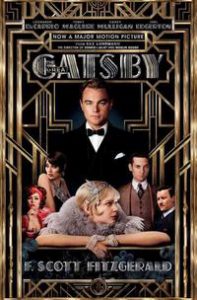
 The mysterious Jay Gatsby uses his fabulous wealth to create an enchanted world fit for his former love, Daisy Buchanan, now married to Tom. Daisy, though, is a romanticised figment of his own imagination, and the extraordinary world that he creates is equally illusory. He gives lavish, legendary parties where the guests and gate-crashers enjoy free-flowing champagne and cocktails and carefree hospitality. But a more sinister reality begins to break through, as idealized romantic figures prove to have human frailties and selfish motivations, and the grandiose world of Gatsby’s creation crumbles and disillusion turns to tragedy.
From wikipedia:
https://en.wikipedia.org/wiki/The_Great_Gatsby
From Vanity Fair:
https://www.vanityfair.com/news/2000/05/hitchens200005
From The New Yorker
Why “The Great Gatsby” Endures
Richard Brody
Imagine the character of James Gatz, North Dakota boy of big dreams and limited prospects, as he could have been written by a big-shouldered writer whose lifelong specialty, perhaps his most distinctive literary merit, was the depiction of natural energy yoked to ambition, put into action, and embodied in worldly accomplishment—Theodore Dreiser. His trio of novels from 1912 through 1915—“The Financier” and its sequel, “The Titan,” both about the rise, fall, and rise of the Philadelphia broker and philanderer Frank Cowperwood; and “The ‘Genius’,” about Eugene Witla’s rise from raw boy to artist and immoralist—skirt the sentimental mode of the bildungsroman to get into the tough, sinewy details of power and its mighty clashes. The very transformation of the seventeen-year-old Gatz into Gatsby, “in the service of a vast, vulgar, and meretricious beauty,” would have been a big story—the mere connection of the prodigal farm boy’s mercantile impulses and precocious aesthetic visions would have filled a chapter or two. And his five years of work “in a vague personal capacity” for the crude potentate Dan Cody, for whom “he was in turn steward, mate, skipper, secretary, and even jailor,” could have been a third of a big book: “He was left with his singularly appropriate education; the vague contour of Jay Gatsby had filled out to the substantiality of a man.”
The chronology of Gatsby’s subsequent backstory invites more invention: as a poor officer stationed in Louisville in 1917, Gatsby met and loved Daisy Fay. He shipped out in 1918, and, while he was away at war, Daisy met the wealthy Tom Buchanan, married him in June, 1919, and gave birth to their daughter, Pammy, in April, 1920. Meanwhile, Gatsby “did extraordinarily well in the war. He was a captain before he went to the front and following the Argonne battles he got his majority and the command of the divisional machine guns.” Fitzgerald, who had been in the Army but never saw active duty, doesn’t make much of Gatsby’s combat experiences, which would have made for another few chapters of grim and gruesome knowledge.
Gatsby, returning stateside after five months in a program at Oxford reserved for American officers, spent three years doing the things that made him fabulously wealthy—bootlegging, maybe some gambling, maybe some shady financial dealings, maybe some oil business—and doing it apparently by design, in the hope of impressing and wooing Daisy. That’s the business part, and the intersection of an entrepreneur’s wiles and a gangster’s ruthlessness—two realms of bold, precise, intrepid maneuvering—would make for another meaty third of a book. By the time Daisy Buchanan reëntered the picture, she would already have been receding from it, because it’s inconceivable that such a Dreiserian hero—a fiercely self-willed yet violently circumstance-buffeted man who employed his enormous vital energy in such a wide and tough range of activities—could win his fabulous East Egg mansion while suffering no greater scar on his soul than the rejection of a débutante whom he had “taken… under false pretenses” of being her social equal.
Of course, Dreiser was an intensely sexual but unromantic novelist, whose view of society was essentially biological; he understood the human varieties of animal energy to be the force of change—to be what makes life interesting, even beautiful. For Dreiser, the physical rendering of mental and visceral forces—even when the result is appalling—is the very definition of beauty. That’s just the opposite of Fitzgerald’s interest, which was in social life and its poetic implications—its poetic failings—and in the contrast between the imperatives of the world and the vast dreams and inner visions that reality can never rival, despite mad and desperate attempts to realize them.
Dreiser was fascinated by effort; Fitzgerald thought of money as manna that falls upon the chosen whose very sense of grace carries them breezily through life. That’s why Gatsby remains a cipher in the book. For Fitzgerald, it sufficed that Gatsby was rich, the “how” of it the work of a destiny that marked his brow and to which the entire world was compelled to pay homage and to yield. Daisy’s failure to yield to it thoroughly—and Gatsby’s own gracelessly pathetic exertion on its behalf—are the cankers that burn through the story and turn it tragic, though Fitzgerald always elevates the shattered romantic perfection of nature’s true aristocrats and heroes.
Fitzgerald’s mythologizing of the social whirl, his casting of American types as archetypes, his framing of psychology as destiny, of style as divine grace, captured its moment. He offered glamour along with compassion and consolation, a sense of sad magic along with the expansive glow of romance. It took a few decades for “The Great Gatsby” to take root because it awaited another age of postwar prosperity—albeit one that was growing a conscience, a sense of self-doubt, of introspection and guilt that a noirish 1949 adaptation of “Gatsby” shows. The novel was adapted again in 1974, when a shambling era in thrall to the natural self began to rummage through the past in search of style.
And it’s back now, in another glittering age of incommensurable inequality, where, as my colleague George Packer recently wrote, “The fetish that surrounds Google Glass or the Dow average grows ever more hysterical as the economic status of the majority of Americans remains flat.” “Gatsby” exults in the grand, lustrous brightness, in the irresistible allure and cavalier freedom of wealth, even as it reveals its reckless—or overmeditated—menace. But it doesn’t lionize the exertion itself, which, in the wrong hands, runs the risk of veering into a Randroid hymn to supposedly self-made captains of industry. “The Great Gatsby” is, above all, a novel of conspicuous consumption—not even of appetite but of the ineluctable connection between wealth and spectacle. The central story of that storied age is slender, sleek, and graceful, neither depicting effort nor bearing its marks.
Long before the novel found its enduring place in American letters, it was already a movie, one made by a character of real-life myth of whom Fitzgerald wrote in one of his final stories. “Citizen Kane” is richer in the spirit of true expansiveness and dubious grandeur, of exorbitant pomp, mad desire, and incurable need than any direct adaptation of the book has been; it wouldn’t have taken more than a few tweaks to turn the young Orson Welles, playing the young Charles Foster Kane, into the cinema’s ultimate and definitive Gatsby.
I’m impatient to see Leonardo DiCaprio’s version; his own deflective opacity was at its most effective in another elusive role, that of Frank Abagnale, Jr., in Steven Spielberg’s “Catch Me if You Can.” And Pammy Buchanan would be nearly ninety-three. Perhaps Baz Luhrmann persuaded Olivia de Havilland or Joan Fontaine to make a return in an epilogue that would bring the novel briefly into the present day. I’ll report back.
The “Fresh Air” book critic investigates the enduring power of The Great Gatsby — “The Great American Novel we all think we’ve read, but really haven’t.” Conceived nearly a century ago by a man who died believing himself a failure, it’s now a revered classic and a rite of passage in the reading lives of millions. But how well do we really know The Great Gatsby? As Maureen Corrigan, Gatsby lover extraordinaire, points out, while Fitzgerald’s masterpiece may be one of the most popular novels in America, many of us first read it when we were too young to fully comprehend its power. Offering a fresh perspective on what makes Gatsby great-and utterly unusual-So We Read On takes us into archives, high school classrooms, and even out onto the Long Island Sound to explore the novel’s hidden depths, a journey whose revelations include Gatsby’s surprising debt to hard-boiled crime fiction, its rocky path to recognition as a “classic,” and its profound commentaries on the national themes of race, class, and gender. With rigor, wit, and infectious enthusiasm, Corrigan inspires us to re-experience the greatness of Gatsby and cuts to the heart of why we are, as a culture, “borne back ceaselessly” into its thrall. Along the way, she spins a new and fascinating story of her own
 Soon to be a major motion picture starring Chris Hemsworth, Cillian Murphy, Ben Wishaw, and Brendan Gleeson, and directed by Ron Howard.The ordeal of the whaleship Essex was an event as mythic in the nineteenth century as the sinking of the Titanic was in the twentieth. In 1819, the Essex left Nantucket for the South Pacific with twenty crew members aboard. In the middle of the South Pacific the ship was rammed and sunk by an angry sperm whale. The crew drifted for more than ninety days in three tiny whaleboats, succumbing to weather, hunger, disease, and ultimately turning to drastic measures in the fight for survival. Nathaniel Philbrick uses little-known documents-including a long-lost account written by the ship’s cabin boy-and penetrating details about whaling and the Nantucket community to reveal the chilling events surrounding this epic maritime disaster. An intense and mesmerizing listen, In the Heart of the Sea is a monumental work of history forever placing the Essex tragedy in the American historical canon.
 Side read: Moby Dick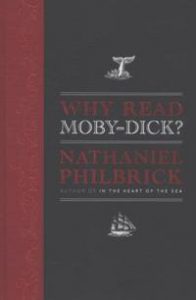
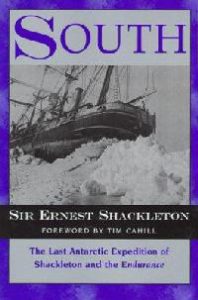 This is one of the most perilous adventure tales ever. Unbelievable – but true. I understand that business schools use it to teach crisis management. Gary
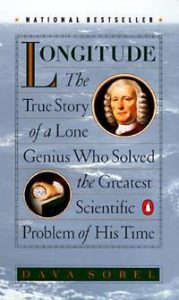 The Essex sailors knew their Latitude but not their Longitude. This is a short, interesting book on the subject. Anyone alive in the eighteenth century would have known that “the longitude problem” was the thorniest scientific dilemma of the day-and had been for centuries. Lacking the ability to measure their longitude, sailors throughout the great ages of exploration had been literally lost at sea as soon as they lost sight of land. Thousands of lives and the increasing fortunes of nations hung on a resolution. One man, John Harrison, in complete opposition to the scientific community, dared to imagine a mechanical solution-a clock that would keep precise time at sea, something no clock had ever been able to do on land. Longitude is the dramatic human story of an epic scientific quest and of Harrison’s forty-year obsession with building his perfect timekeeper, known today as the chronometer. Full of heroism and chicanery, it is also a fascinating brief history of astronomy, navigation, and clockmaking, and opens a new window on our world.
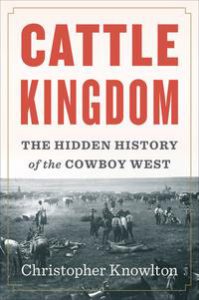 A revolutionary new appraisal of the Old West and the America it made
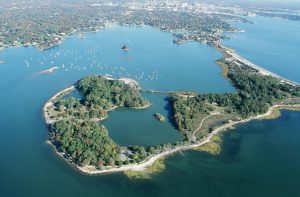 We will be walking Greenwich Point Park on Friday December 8 at 10.30 am. Note that this is half an hour later than our usual start time of 10.00 am.
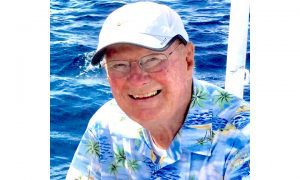 Paul E. Harmeier, a retired chemical engineer, of Darien, CT and Barbados, West Indies, died peacefully on October 24th, his 87th birthday, after a brief illness, with family members at his side. His wife, Shealeagh, predeceased him in 2012.
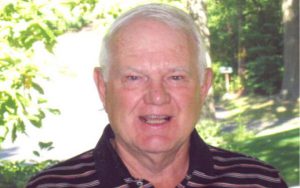 Hilary Peter Don
 We will be hiking at Saxon Woods Park in Scarsdale, NY on Friday Nov 17 at 10 am. This is a 700 acre county park and contains an 18 hole golf course, tennis courts, a huge swimming pool, soccer fields and several miles of hiking trails in the woods. We will be hiking the part of the
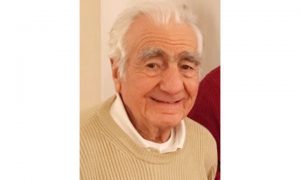 Edward Carabillo, 90, of Darien and Misquamicut, RI, husband of the late Nancy (Berry) Carabillo, died Sunday October 15, 2017 in a motor vehicle accident.
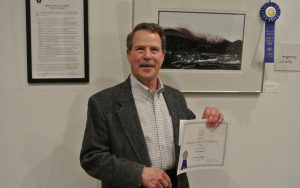 Dave Pressler, Connecticut photographer, artist and designer, shares a dynamic presentation, “Australia, All Over – Down Under,” documented during his adventures on that continent. Recorded through his visual awareness are Australia’s dramatic land and water forms, wildlife, unique botanicals, ancient aboriginal rock art, creative architecture and some humorous items from contemporary culture. His core message is “learning to look in order to see,” encouraging people of all ages and backgrounds to become visually conscious of the world around them. So bring an open mind … and don’t forget to come with your eyes wide open. Dave holds a degree in industrial design from Rhode Island School of Design, where he studied with the famed photographer Harry Callahan. Dave has exhibited widely in Fairfield and Westchester counties and judged numerous photography competitions, including the Westport Y’s Men’s Senior Center’s Annual Photography Expo. He is a member of the Connecticut Association of Photographers, as well as a former board member of the Norwalk Camera Club. He is currently vice president of ART/PLACE Gallery in Fairfield; founder and
 Wednesday, December 6, 2017
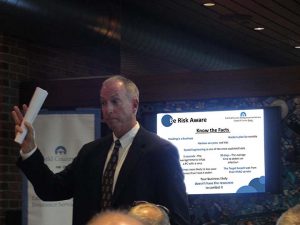 Don McGran will talk about personal cybersecurity, identity theft, scams and frauds, as well as personal crime prevention and safety. The presentation is based on what is presently occurring in the greater Darien area. His law enforcement career, coupled with private bank security experience, enables him to provide audiences with the most timely and current information possible. Don has presented more than 100 times to groups of various ages, income brackets and walks of life throughout Fairfield County. He is a 30-year-veteran of the Ridgefield Police Department, retiring in 2011 as a major. Don is a graduate of Western Connecticut State University with a bachelor of science in justice and law administration and has completed graduate studies at Western Connecticut State University, the University of New Haven and the University of Virginia. He is a graduate of the FBI National Academy Session 189 and has been employed as security advisor for Fairfield County Bank for the past six years.