 Wednesday, October 25, 2017
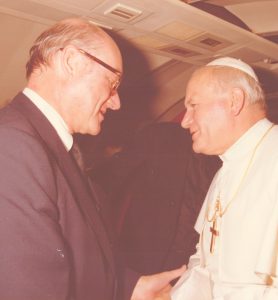
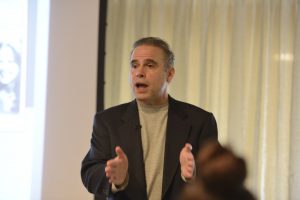
Ed Myers, former president and chief executive officer of Transworld Airlines Inc. (TWA), was described “… as a man who, above anything else, knows a thing or two about money and about running an airline” in an article published by The New York Times in 1985. Ed’s talk will focus on his years with TWA, from 1968 until his retirement in 1985. An event that left a significant impression on him was meeting Pope John Paul II when TWA provided air service to the Pope during his visit to the United States in 1979. The title of Ed’s talk is “The Pope and Me.” Ed began his career in 1953 with the hotel accounting firm of Harris, Kerr, Forster & Co. In 1968, he went to work for Eastern Airlines as assistant treasurer and in 1968 joined TWA in the same position, becoming senior vice president for finance in 1971. He then was named president and chief executive officer of the airline in 1975, retiring in 1985. From there, he went to Hilton International Hotels as president and chief executive officer until 1988. In addition to his business career, Ed served as a board member and trustee of a number of organizations, including the Air Transportation Association, National Public Radio, Rollins College and Bradley International Airport. He served on the Reagan Presidential Transportation Transition Team in 1981. In Darien, he served on the Library board and the Red Cross and was a member of the Literacy Volunteers. He is an avid golfer and is a member of the Union League Club and the Sky Club in New York City. He also enjoys playing bridge. During the Korean War, he was a First Lieutenant in the U.S. Army Field Artillery.
Arranged by Alex Garnett
Video: https://youtu.be/rxomdjCli5s
Sadly, Ed passed away shortly after his talk.
Carl Edwin Meyer Jr. died peacefully on November 4th in Norwalk Hospital, with his wife Ruth by his side. He was 89-years-old and lived in New Canaan, CT.
Born in Flushing, NY on August 6, 1928, he was the son of the late Carl E. and Eunice Taylor Meyer.
He graduated from Amherst College in 1950 with a major in history. Following college, he served in the U.S. Army Reserves as a First Lieutenant, Field Artillery from 1950 to 1952.
He began his professional career at Harris, Kerr Foster & Co. in 1953 and attended New York University night school earning an MBA in 1957. He was a certified Public Accountant in the State of New York. In 1965 he joined Eastern Airlines as Assistant Treasurer. In 1968 he joined Trans World Airlines (TWA) as Assistant Treasurer and was promoted to Senior Vice President of Finance in 1971. In 1975 he was promoted to President and Chief Executive Officer of TWA and he skillfully guided the airlines for the next 10 years. Under his leadership, TWA was granted the honor to serve as the U.S. Carrier for Pope John Paul II’s pilgrimage to America in 1979. From 1980 thru 1984, he set the example for the airline industry with the institution of a 50% airfare discount program for military service personnel traveling at their own expense while on leave or pass. This discount earned the airline the Outstanding Civilian Service Award from the Department of the Army. In 1985 he became President and Chief Executive Officer of Hilton International serving until his retirement in 1988. Throughout his career he served on numerous corporate, government, and public boards. Notable among these were B.F. Goodrich, the Regan Presidential Transportation Transitional Team, the National and International Airline Transportation Association and National Public Radio of Washington D.C.
In retirement, he served on a number of local organizations, including as a trustee of the Darien Public Library, President of the Darien Red Cross, Board member of Literacy Volunteers, and as a volunteer at Greenwich Hospital.
His greatest passion in life was spending time with his family, his friends, and many pets at home in New Canaan, CT or Southold, NY. He was a warm, compassionate, and loving father and grandfather who was always available to listen and offer advice. Throughout life he loved golf and was an avid bridge player, a member of the Senior Men’s Club of New Canaan and the Congregational Church of New Canaan.
He is survived by his wife of 60 years, the former Ruth Leslie Oddy, two sons and their wives, Jeffrey S. and Lois Meyer of Darien, CT and William D. and Amy Meyer of White Heath, IL, two brothers, John D. Meyer of Dataw Island SC and James S. Meyer of East Haddam, CT, and four granddaughters, Caroline K. Meyer, Allison S. Meyer, Mallory M. Meyer and Kendall A.L. Meyer of Darien, CT.
In lieu of flowers, donations may be sent to the North Fork Animal Welfare League, PO Box 297, Southold, NY, 11971 and Strays & Others, PO Box 473, New Canaan, CT 06820 or any animal shelters of your personal choosing.
Services will be held at the Congregational Church of New Canaan, 23 Park Street on Saturday, November 25, 2017, at 11:00 A.M.

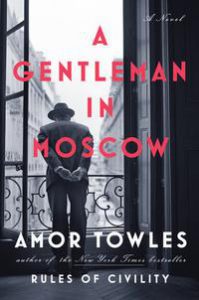 A New York Times bestseller “The same gorgeous, layered richness that marked Towles’ debut, Rules of Civility, shapes [A Gentleman in Moscow]” – Entertainment Weekly “Elegant… as lavishly filigreed as a Fabergé egg” – O, the Oprah Magazine He can’t leave his hotel. You won’t want to. From the New York Times bestselling author of Rules of Civility—a transporting novel about a man who is ordered to spend the rest of his life inside a luxury hotel In 1922, Count Alexander Rostov is deemed an unrepentant aristocrat by a Bolshevik tribunal, and is sentenced to house arrest in the Metropol, a grand hotel across the street from the Kremlin. Rostov, an indomitable man of erudition and wit, has never worked a day in his life, and must now live in an attic room while some of the most tumultuous decades in Russian history are unfolding outside the hotel’s doors. Unexpectedly, his reduced circumstances provide him entry into a much larger world of emotional discovery. Brimming with humor, a glittering cast of characters, and one beautifully rendered scene after another, this singular novel casts a spell as it relates the count’s endeavor to gain a deeper understanding of what it means to be a man of purpose. “And the intrigue! … [A Gentleman in Moscow] is laced with sparkling threads (they will tie up) and tokens (they will matter): special keys, secret compartments, gold coins, vials of coveted liquid, old-fashioned pistols, duels and scars, hidden assignations (discreet and smoky), stolen passports, a ruby necklace, mysterious letters on elegant hotel stationery… a luscious stage set, backdrop for a downright Casablanca-like drama.” – The San Francisco Chronicle From the Hardcover edition
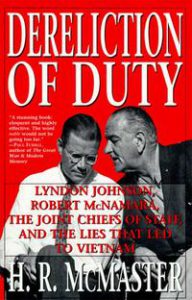 From respected Lieutenant General and Trump Administration National Security Adviser H. R. McMaster, an authoritative, highly critical analysis of the arrogance, deception, and controversial decisions at the highest level of government that led to America’s involvement in the Vietnam War. “The war in Vietnam was not lost in the field, nor was it lost on the front pages of the New York Times or the college campuses. It was lost in Washington, D.C.” —H. R. McMaster (from the Conclusion) Dereliction Of Duty is a stunning analysis of how and why the United States became involved in an all-out and disastrous war in Southeast Asia. Fully and convincingly researched, based on transcripts and personal accounts of crucial meetings, confrontations and decisions, it is the only book that fully re-creates what happened and why. McMaster pinpoints the policies and decisions that got the United States into the morass and reveals who made these decisions and the motives behind them, disproving the published theories of other historians and excuses of the participants. A page-turning narrative, Dereliction Of Duty focuses on a fascinating cast of characters: President Lyndon Johnson, Robert McNamara, General Maxwell Taylor, McGeorge Bundy and other top aides who deliberately deceived the Joint Chiefs of Staff, the U.S. Congress and the American public. McMaster’s only book, Dereliction of Duty is an explosive and authoritative new look at the controversy concerning the United States involvement in Vietnam
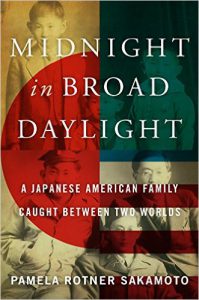 Meticulously researched and beautifully written, the true story of a Japanese American family that found itself on opposite sides during World War II—an epic tale of family, separation, divided loyalties, love, reconciliation, loss, and redemption—this is a riveting chronicle of U.S.–Japan relations and the Japanese experience in America.
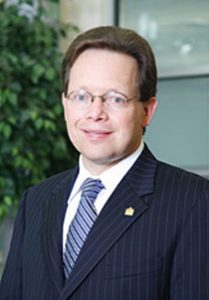 Wednesday, October 18, 2017
 Wednesday, October 11, 2017
 Wednesday, October 4, 2017
 Wednesday, September 27, 2017
 Wednesday, September 20, 2017
 Wednesday, September 13, 2017
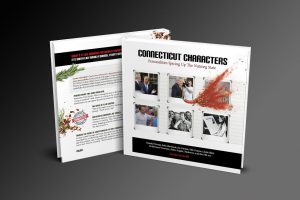
 Lennie Grimaldi is an award-winning journalist whose work has appeared in hundreds of newspapers and magazines including The New York Times, TV Guide, Yankee Magazine and Connecticut Magazine.