 Dr. C. Griffith Mann will present a talk entitled “Unicorns and Heroes: John D. Rockefeller, Jr. and Tapestries at The Met Cloisters,” an in-depth look at the Unicorn Tapestries and the Heroes Tapestries. The Unicorn Tapestries are among the most beautiful and complex works of art from the late Middle Ages that survive. Luxuriously woven in fine wool and silk with silver and gilded threads, the tapestries vividly depict scenes associated with a hunt for the elusive, magical unicorn. The Heroes Tapestries, representing the Hebrew heroes (Joshua and David), the Christian hero (King Arthur), and the pagan heroes (Alexander the Great and Julius Caesar), are thought to have been made around 1400. Once part of a larger ensemble featuring Nine Heroes, these remarkable tapestries are among the earliest large-scale tapestries to survive from a moment when these ensembles were part of princely collections, and are currently being conserved at the Met.
By way of background, the Metropolitan Museum of Art possesses the finest, most comprehensive collection of Medieval and Byzantine art in the western hemisphere. It is held in two locations: the galleries of the Met’s main building on 5th Avenue and The Met Cloisters in Fort Tryon Park. This talk will explore the history of these two unique sets of tapestries on view at the Cloisters.
Dr. Mann was appointed The Metropolitan Museum of Art’s Michel David-Weill Curator in Charge of the Department of Medieval Art and the Met Cloisters in September 2013. In this role, he is responsible for the medieval collections and curatorial staff in the Met’s main building, and for directing the staff and operations of the Met Cloisters, the branch of the Metropolitan Museum dedicated to the art and architecture of medieval Europe. Dr. Mann received his B.A. in art history and history from Williams College, and his Ph.D. in medieval art from The Johns Hopkins University. A specialist in the arts of late medieval Italy, he has published on civic patronage, painting, and devotion in Tuscany. As a curator, Dr. Mann has worked on exhibitions on the medieval cult of relics, the art and archaeology of medieval Novgorod, and French manuscript illumination of the 13th century.
Arranged by Tom Igoe
 Dr. Frank Bartolomeo, Senior Clinical Advisor, Adolescent Services, at Silver Hill Hospital in New Canaan, will speak to us on the mental health crisis facing adolescents in America today. As we have seen in recent years, there has been a serious increase in depression and anxiety among adolescents and young adults, viewed from virtually all measures. A high percentage of college students are burdened with anxieties that interfere with their daily functioning. The number of visits by children and young adults to emergency rooms for suicidal ideation has increased significantly. And rates of depression have gone up dramatically.
 DMA member Jim Cameron, long-time commuter advocate and newspaper commentator, will speak to us on Connecticut’s transportation future: Will riders ever return to commuter rail? Who will pay to keep the trains running when Federal money is gone? Where will money be found to repair our highways? How will new residential/workplace trends affect Connecticut’s economy? Jim will explore the options in an engaging, thought-provoking workshop with plenty of time to hear your ideas and answer your questions.
 DMA member Ted Helms will speak with our group about the startling demise of Venezuela in his presentation entitled “Venezuela – A Failed State: Story of the Road to Destruction.” As Ted observes, it is not widely understood or appreciated just how rich and developed Venezuela was, including the wealth of its resource base, and the abject condition in which it currently finds itself. Large numbers of people, representing 25% of its population, have fled the country in desperation, with entire families walking as far as Chile or the United States, literally to escape starvation. Today, Venezuela is arguably a failed state with no foreseeable possibility of returning to its prosperous and democratic past. Based on his first-hand experience, Ted will highlight the root causes of Venezuela’s road to ruin, and why, under any plausible scenario, its future remains bleak.
 Mark Contreras, the President and Chief Executive Officer of Connecticut Public and a member of the board of Public Broadcasting Service (PBS), will speak to us on the role of public television in the State of Connecticut.
 David Genovese, who leads Baywater Properties, a privately held commercial real estate company serving Fairfield and Westchester Counties, will provide us with an update on the progress of the Corbin District Project, a major undertaking involving the development of a series of new buildings, shops, residential facilities and public community spaces in the heart of Darien that will forever transform and enliven the character of our Town.
 DMA member and past president Sunil Saksena will speak to our group on the presidential election of 1876. That election was marred by claims of fraud, voter intimidation, arbitrarily changed vote counts and multiple sets of “certified” electoral college votes. It was followed by 4 months of chaotic negotiations and backroom compromises involving Congressional committees, Supreme Court Justices and campaign representatives. Finally, just 2 days before Inauguration Day, Republican Rutherford B. Hayes was declared the winner by 1 electoral vote over Democrat Samuel J. Tilden, who won the popular vote by a huge margin.
 Vanessa Maczko is a Partner in Wiggin and Dana’s Private Client Services Department in the Greenwich, CT office. She will brief our group on important recent developments in federal and Connecticut trusts and estates laws that affect estate planning, wills and trusts, distribution of assets to beneficiaries and charitable giving.
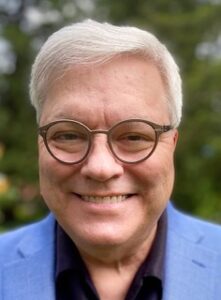 John Lindback will speak with our group on the topic of elections administration, voter registration and the possibilities of voter fraud. John first entered the field of elections administration in 1995 and has made it his personal goal for the past 27 years to make voter registration and voting work better for both voters and election officials.
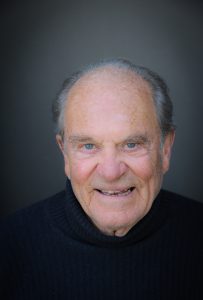 DMA member Flemming Heilmann will discuss his recently released translation of Halfdan Lefevre’s book entitled The Men in Denmark’s Freedom Council. This seminal work, first published in Danish in 1945, is the story of Denmark’s resistance leaders, their underground movement during Nazi occupation and how they coordinated the nation’s freedom fighters to mount military confrontation of the enemy. Their 11-member Freedom Council went on to form a government-in-waiting in anticipation of liberation to run the country pending restoration of democratic elections. Each member’s family background and career are vividly depicted. Lefevre, from the start of World War II, had documented the genesis and evolution of the resistance movement and its struggle against Nazi occupation since April 1940. He was the recording scribe for the underground Freedom Council and author of illegal leaflets and news communiques distributed by the resistance. His scholarly account offers details of the German invasion, the government’s quick surrender, and then the emergence of the resistance movement, which led to the establishment of the crucial Freedom Council. Flemming has carefully translated this book into English so a broader audience can appreciate the sacrifices these brave men made for their country.
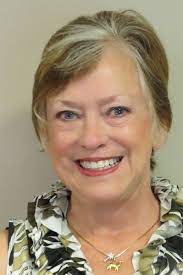 Bobbi Phelps Chapman will speak to us on her latest book, Darien Waters, which describes historical facts and dramatic details of the ‘40s, ‘50s and early ‘60s. In her narrative of growing up in Darien, she writes of wealth, secrets, schemes, and intrigue in our beautiful waterside town.
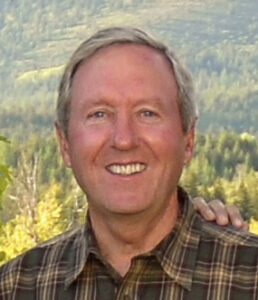 Jonathan Olmsted will speak to us about the life and work of Frederick Law Olmsted (1822 – 1903). This year marks the 200th anniversary of the birth of the man known as the “Father of American Landscape Architecture.” He and his family firm were arguably the most influential landscape architects in the United States with over 500 commissions that included 100 public parks, 200 private estates, and 40 campuses for colleges and secondary schools. These include Central Park in New York (1857), the Buffalo Park System (1868), the Boston Park System (1870), the United States Capitol (1874), the Chicago World’s Fair (1893) and the Biltmore Estate (1895) in Asheville, North Carolina.