Category: Speaker Announcements (Page 16 of 30)

Speaker programs at Wednesday DMA Meetings

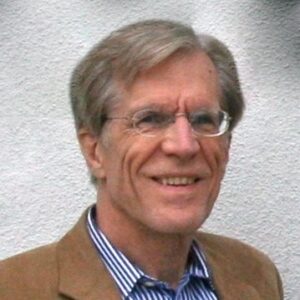
Ric Grefé, “Design Thinking: Encouraging Innovation in Business Strategy,” April 21, 2021

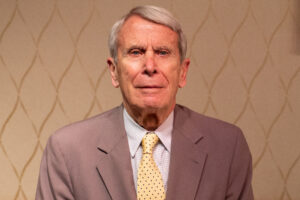
Ric Grefé, until recently the Design Thinker in Residence at Williams College, works at the intersection of business, society and creativity, applying the craft and optimism of human-centered design to the intractable challenges we face today.

Ric is director emeritus of AIGA, the professional association for design, which he led for 20 years. Prior to AIGA he served in naval intelligence in Asia; he was a journalist with AP and Time, and had his own consulting firm in urban design and public policy. He also led legislative strategy and strategic planning for public television and radio in Washington, DC. RIc has an undergraduate degree from Dartmouth and an MBA from Stanford. Currently, he serves as board chair of Britain’s Royal Society of Arts in the US. He is just down-right curious, so it’s hard to list a finite set of interests.

Ric is married to Karen Vogel, who is an artist and landscape designer (and formerly very active in the DCA Greenhouse). Their two grown children both graduated from Darien High School. They have lived in Darien for 25 years.

Arranged by Bryan Hooper

Bryan’s notes on the talk:

Ric Grefé, DMA member, talked about the application of design thinking in encouraging innovation in business strategies. He noted that business moved from being essentially production-driven to a more consumer-oriented approach as the information revolution developed in the 90s, and consequently refocused thinking from mass production to mass customization, concentrating on designing a product that real people want. Techniques for solving problems have been developed in line with this shift towards identifying and supplying products to meet the consumers’ needs. Providing quick answers based on past successes began to give way to slowing down the strategic planning process and involving a broader range of participants with varying experiences to determine more creative outcomes and innovative solutions. This brainstorming approach depends on being human-centered, collaborative, and utilizing divergent thinking, followed by producing prototype solutions, testing and iteration of the process. The novel technique concentrated initially on manufacturing product development, but has grown to being applied to services and organization strategy. Ric cited success in the use of design thinking in fields as varied as the approach to soldiering in Afghanistan to the redesign of ballots and steps in the election process for the Federal Election Commission.

Lack of time prevented Ric from diving deeper into his subject in terms of methodology and detailed examples, but a visit to the Williams College website will put more flesh on the subject. Go to the site listed below and click on the Resources listing at the top of the home page that comes up: williams.edu/designthinking. Additionally, Ric’s talk and slides can be found on our website at: https://youtu.be/7_-twb-6ywo.

Jeff Bergner, “A Divided Congress,” April 14, 2021


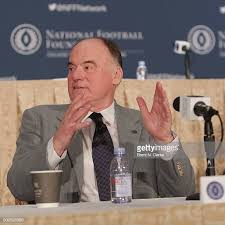
Jeff Bergner is the author of The Vanishing Congress: Reflections on Politics in Washington. He formerly served as chief of staff for Senator Richard Lugar, staff director of the Senate Foreign Relations Committee, and Assistant Secretary of State for Condoleezza Rice. Jeff founded and ran a successful Washington, DC, lobbying/ government relations firm and has served on policy advisory committees for several presidential candidates.

He received his B.A. degree from Carleton College, and M.A. and Ph.D degrees in political philosophy from Princeton University. He has taught at the University of Pennsylvania, Georgetown University, and Christopher Newport University, and currently teaches as an adjunct lecturer in the Batten School of Public Policy at the University of Virginia.

Jeff speaks and writes widely on political issues, and is the author or editor of five previous books and numerous scholarly articles. His opinion pieces have appeared in the Washington Post, the Chicago Tribune and the Wall Street Journal, and his occasional articles for the Virginian-Pilot are circulated nationally by the Tribune Syndicate.

Arranged by Harry McLachlin

Bryan Hooper’s notes on the talk:

Jeff Bergner, spoke to us from Virginia about his experiences working with Congress, and shared his views on how to improve its efficacy. He stated that opinion polls which measure the popularity of various institutions show the current favorable view of Congress now stands at a mere 13%, lower than the majority of other entities polled, although he noted most of us have a much more positive view of our own individual representatives and senators. In examining the reasons for the overall lack of popularity, Jeff identified several areas where Congress has problems operationally: for instance, there were approximately 12,000 bills introduced in the last Congress – the highest in history – and only 2% were enacted. He attributed the large number of bills put forward as driven by individual members’ attempts mainly to demonstrate a position on issues to their constituents, both locally and nationally, to enhance their own reputations. He noted also that Congress has increasingly allowed the executive branch of government to manage many important topics, such as immigration, healthcare, war powers and fiscal matters. In essence, he concludes, Congress is not working as intended. He attributes this not to the lack of talented people who serve – he believes they are in the main high caliber – but rather to the increasing polarization of opinions over this current century. He noted that history indicates that when one party is the majority then gridlock does not occur and action happens, but there have been nine times in the past eleven elections when either the house or the senate or the presidency has changed hands and prevented one party dominating affairs.

The prospects for bipartisanship remain dim. Jeff averred that there are four areas that needed reform to ameliorate the situation.

First, fix the budget process. The budget act of 1974 established procedures to follow to meet deadlines to produce an approved budget on time for the start of the next fiscal year in October. Failure to meet those deadlines is common as the entities involved in each step of the process inevitably cannot resolve differences. In particular, he laid blame on the Authorizing Committees who are meant to establish a basis for operating programs and provide guidance to the Appropriations Committees regarding the appropriate levels of funding for programs. Many draft bills sent to the twelve Appropriations Committees frequently do not receive approval, with the notable exceptions of military budgets and congressional expenditures (no president ever withholds their funds!). The process inevitably ends up with the budget being bundled into continuing resolutions as a series of short-term bills that may need to be re-visited and resurrected every few months.

The excess number of staff involved in Congress, about 10,000 for 535 members, is the second driver of stasis. Staff numbers drive the bills and the process: perhaps 20% fewer might lead to a 20% improvement in results.

The third item he highlighted was the filibuster with respect to pending bills. Jeff made the point that bills can pass the senate on a simple majority, but reaching that point is made difficult by the rules that at least 60 votes are needed to cut off debate, so a filibuster can prevent bills being advanced to the point of even having a debate with amendments considered. Jeff argued that the filibuster should be changed so that only a simple majority vote should be required on a motion to proceed to consideration of a bill.

Finally, he noted that, consistent with his views, the filibuster rules have been amended by both sides for nominees required to be confirmed by the Senate, including nominations for Supreme Court justices, allowing nominations to proceed to closure upon a majority vote.

Jeff’s talk and the resultant interesting series of questions can be viewed by clicking on the following link: https://youtu.be/hiQwUSOJLBE.


Ken Coe, “Nature Conservation in Africa,” April 7, 2021

Ken Coe was born in Seoul, Korea, in 1964.  He moved to the U.S. when he was eleven, spending his formative years in Southern California.  He attended UCLA as an undergraduate, then later, The Wharton School of The University of Pennsylvania, for his graduate degree.  He next spent nearly thirty years in investment banking and investment management in New York and Connecticut.  In 1989, he caught the “travel bug” to Africa, and he has been to the continent on no fewer than 38 occasions (spanning 12 countries).  He has been involved with The Nature Conservancy, serving as a trustee for its Africa Program.  An avid photographer and naturalist, he is in the process of working on a few different book and internet projects focused on his experience in Africa.  Ken lives with his wife Karla in Darien and has two young adult children who are presently living outside of CT.

Arranged by Bryan Hooper

Bryan’s notes on the talk:

DMA member Ken Coe, spoke about conserving wildlife in Africa. He made the point that lions and elephants – the two species we all tend to link to conservation in Africa – can survive in most of the fifteen biomes (ecological communities) in Africa, apart from the Sahara desert, and they both are actually ubiquitous, but dangerous, and need a lot of space. Ken gave the example of a tagged lion, CATaM1, that ranged in Zimbabwe in a circle 125 miles in diameter; he pointed out that there is no national park wider than 50 miles, so to accommodate wildlife there is a need to link up the major wilderness areas to increase accessible space. This has become increasingly difficult over the years because of competition for land from a rapidly growing human population. In 1950 the population of Africa was around 150 million, and it now stands at 1.36 billion, an almost tenfold increase in seventy years.

Ken illustrated his talk with photographs of various animals from several of the biomes to show their diversity, from mountain gorillas in Ethiopia’s Afrotropical area to springboks and meerkat in the Highveld and wildebeest in the Somali-Maasai region, before leading us in more detail through the challenges facing the conservation process.

Historically, conservation was initiated by the descendants of the European colonial powers, and followed through more recently by Americans, and an increasing number of Africans. At first, emphasis was on protecting the animals, and punishing infringements of the law with fines meted out to local populations for breaking the strict rules laid down for the parks: poor people were pushed out of their lands and central authorities took control of the revenue stream emerging from the parks. Inevitably, poverty and desperation resulted in poaching along with resentment of the system. Fortunately, the emphasis has been transformed over recent years to creating partnerships in responsibility with local communities to manage land resources to maintain wilderness areas and share in the wealth created from ecotourism, trophy hunting, forestry and fishing management, as well as limited ranching and game cropping. Ken noted that over the past 20-30 years this approach to managing common-pool resources has been successfully implemented in several countries, including Namibia, Botswana, Kenya and South Africa.

A video of Ken’s presentation can be found at: https://youtu.be/NDtmFdElkGw.

Professor Robert Thorson, UConn, “Stone Walls of Connecticut,” March 31, 2021

Robert Thorson is a professor and interim Head of geosciences at the University of Connecticut. Thor graduated from college in 1973 and left for Alaska to train as an exploration geologist. After earning an MS degree from the University of Alaska in 1975, he worked as a full-time geologist for the U.S. Geological Survey until 1979. He earned a PhD from the University of Washington in 1979, and in 1984, moved to New England to join the faculty of the University of Connecticut in the Department of Geology & Geophysics. During his first twenty years at UConn, his appointment was with the Department of Geology & Geophysics, where he ran a grant-funded research lab with graduate students, and where his undergraduate teaching responsibilities included glacial geology, surface processes, dinosaurs, and introductory geology.

Thor’s academic career took an unexpected turn in 2002 with the publication of his first book on signature landforms:  Stone by Stone: The Magnificent History in New England’s Stone Walls. This nonfiction bestseller won the Connecticut Book Award. In addition to writing books, Thor has contributed many newspaper articles on science policy, environment, and education. His third book on stone walls, Exploring Stone Walls published in 2005, was the first-ever field guide to the phenomenon. Additionally, he has published two scholarly books on Henry David Thoreau for Harvard University Press. His last book, The Guide to Walden Pond, published by Houghton Mifflin Harcourt in 2018, is the first guide to this international shrine, a place visited more than half a million times each year.

Arranged by Bryan Hooper

Bryan’s notes on the talk:

Professor Robert Thorson spoke about a subject he has studied and written about for many years, the stone walls of New England.  Gary Banks found his book, “Stone by Stone,” on the Amazon website, and the notes accompanying it are reproduced below since they cover the essence of the talk given to us by Thor:

“There once may have been 250,000 miles of stone walls in America’s Northeast, stretching farther than the distance to the moon. They took three billion man-hours to build. And, even though most are crumbling today, they contain a magnificent scientific and cultural story―about the geothermal forces that formed their stones, the tectonic movements that brought them to the surface, the glacial tide that broke them apart, the earth that held them for so long, and about the humans who built them.
Stone walls tell nothing less than the story of how New England was formed, and in Robert Thorson’s hands they live and breathe. “The stone wall is the key that links the natural history and human history of New England,” Thorson writes. Millions of years ago, New England’s stones belonged to ancient mountains thrust up by prehistoric collisions between continents. During the Ice Age, pieces were cleaved off by glaciers and deposited―often hundreds of miles away―when the glaciers melted. Buried again over centuries by forest and soil buildup, the stones gradually worked their way back to the surface, only to become impediments to the farmers cultivating the land in the eighteenth century, who piled them into “linear landfills,” a place to hold the stones. Usually, the biggest investment on a farm, often exceeding that of the land and buildings combined, stone walls became a defining element of the Northeast’s landscape, and a symbol of the shift to an agricultural economy.
Stone walls layer time like Russian dolls, their smallest elements reflecting the longest spans, and Thorson urges us to study them, for each stone has its own story. Linking geological history to the early American experience, Stone by Stone presents a fascinating picture of the land the Pilgrims settled, allowing us to see and understand it with new eyes.”

The recording of Professor Thorson’s talk can be found at: https://youtu.be/KKpODRT5pTg.

Dr. Una Ryan, “Science as the Foundation for Sound Business Investments,” March 24, 2021

Dr. Una Ryan has extensive experience leading public, private and non-profit companies, and will be speaking to us about the role of science as the foundation for making sound investments. She is a limited partner at Breakout Ventures and at Lionheart Ventures. Una focuses on women-led ventures as Managing Director of Golden Seeds, and as a partner in Astia Angel. She has a portfolio of approximately 35 early-stage companies in the San Francisco Bay Area and Boston, and currently serves on the boards of Cortexyme, RenovoRx , and Elemental Machines. She was Chair of The Bay Area BioEconomy Initiative, an industry organization committed to fostering innovation and collaboration in the Bay Area, and was formerly on the board of BIO, BayBio and Chair of MassBio. Una also serves on the Boards of Cambridge in America and Bristol University US Foundation.

Dr. Ryan was President and CEO of Diagnostics for All, Inc. (DFA), developing inexpensive diagnostics for the developing world, President and CEO of Waltham Technologies Inc., a cleantech company, and President and CEO of AVANT Immunotherapeutics, Inc, now Celldex, developing vaccines and immunotherapeutics for infectious diseases and cancer.  At AVANT, Una oversaw four mergers and, after completing the merger with Celldex, became a serial entrepreneur and investor. Continuing a career of translating science to successful businesses, she is also translating science to art, and founded ULUX to bring new perspectives on science to the art world.

Dr. Ryan holds a Ph.D. from Cambridge University and BS degrees from Bristol University. She received an Honorary D.Sc. from Bristol University in 2009. Her academic career included Professorships of Medicine at University of Miami, Washington University, St Louis and Boston University. She held the titles of Howard Hughes Investigator, Established Investigator of the American Heart Association and NIH MERIT Awardee. She has received numerous awards including the Albert Einstein Award (2007) for outstanding achievement in the life sciences, the Cartier Award (2009) and World Economic Forum Tech Pioneer (2011). In 2002 Her Majesty Queen Elizabeth II awarded Dr. Ryan the Order of the British Empire (OBE).

Arranged by Flemming Heilmann

Bryan Hooper’s notes on the talk:

Dr. Una Ryan led us through her fascinating life story, encompassing survival in escaping from Singapore during WWII, a relatively genteel upbringing in Oxford, England, and an extremely successful career involving academia, business and art. The electron microscope binds these last three phases together.

Early in 1942, Una departed Singapore with her mother on a ship that was later torpedoed. They both survived that experience as well as being refugees for 18 months, but eventually arrived in England where they went to Oxford to live with an aunt. Being raised among the intelligentsia of the colleges exposed Una to academia and she graduated from Bristol University before entering Cambridge to study for her PhD. She remembered several incidents growing up that led to her interest in biology, and increased her understanding of, and interest in, diseases and cures – including the discovery that her grandfather, when surgeon general to the British Army in India, had inoculated a number of hill people against smallpox. Some refused the needle, but he discovered three years afterward that those who had been vaccinated survived another smallpox outbreak that had occurred later. Una’s thesis subject at Cambridge involved attempting to understand the mechanism of color changes in stick insects: access to an electron microscope allowed for detailed examination of cells and led to revelations concerning the inner workings of life. It also helped her develop an appreciation of the incredible artistic beauty of the body.

After Cambridge, Una joined the department of medicine at the University of Miami in the Howard Hughes Medical Institute, eventually becoming professor. She researched the blood/air interaction in the lungs, and applied to the National Institutes of Health for a grant for her research; along with the grant came funding for, what else, but an electron microscope. In the process of her work, she isolated the substance controlling blood pressure within the lung cells, angiotensin-converting enzyme, or ACE; understanding that process subsequently resulted in Bristol Meyers Squibb and Merck developing ACE inhibitors to control high blood pressure – an $80 billion business today.

Una still wanted to be involved in going beyond research to fulfill the task of finding cures, so she left academia for the corporate world, joining Monsanto as Director of Health Sciences. She managed research efforts involving five divisions, and learned the usefulness of growth by acquisition. However, she felt the need to be in a smaller operation and then joined an immunotherapy company in Boston, eventually becoming CEO and developing vaccines that to a large extent met her objectives of manufacturing products that were needle-free, temperature stable, single dose and low-cost to produce and buy. After completing a merger of her company with Celldex in 2008, Una became a serial entrepreneur and investor to continue her career of translating science to successful businesses, and also in translating science to art to bring new perspectives on science to the art world.

You can read about the latter venture and see examples of her art on her website at http://www.uluxart.com. Not surprisingly, you will find that her art creations involve images based on – what else? – electron microscope photographs. Here are two of her compositions:

Tree of Life, Blue.  Ribosomal clusters with image of Australian river delta as seen from space.  The composition represents the two most essential elements of life: protein and water.

Habitat, 2016.  Lung tissue entwined with Sundarbans mangrove forest.


The video of her talk includes a most interesting Q&A session, and can be viewed on: https://youtu.be/cQTaiTXo-q4.

Ronnie Maher, “NicaPhoto: From photography in Norwalk to working with disadvantaged children in Nicaragua,” March 17, 2021

Ronnie Ellen Maher, Founder and Executive Director of NicaPhoto, is a professional and fine art photographer. Born in Brooklyn, and raised in Norwalk, Connecticut, Ronnie spent more than ten years teaching photography to disadvantaged or “at-risk” youth in various community programs throughout Norwalk, and later in Nicaragua. Ronnie first visited Norwalk’s Sister City, Nagarote, in Nicaragua in 2005 as a volunteer, teaching photography to youth. NicaPhoto was born shortly afterward as a series of photography and writing workshops for youth. For the next 4 years, while working as a professional photographer and teaching in various Norwalk community programs, Ronnie traveled to Nicaragua, teaching photography and connecting youth in the two communities. In 2010, Ronnie redesigned NicaPhoto to be a comprehensive, holistic after school program including education, art and personal development, and since then has been spending most of her time in Nicaragua.

Ronnie has a Liberal Arts Degree from UCONN with a BA in Communications and a minor in Psychology. Prior to studying photography at Maine Media Arts, she worked as a rate analyst and later as a junior level Treaty Underwriter at GenRe. Although it was not a straight path, if you asked her, she would say that everything she has done in her life has helped prepare her for the work she does today.

Arranged by Mike McFadden

Bryan Hooper’s notes on the talk:

Ronnie Ellen Maher, spoke to us from Nicaragua about the programs run by NicaPhoto, the non-governmental organization she founded and runs for disadvantaged children in the city of Nagarote.

Ronnie discovered her interest in photography in high school in Norwalk, where she was raised, and developed that further at Maine Media Workshops. In between working for financial services company, Gen Re, she pursued her hobby, which eventually became a second career. Working in Norwalk as a professional photographer led to Ronnie teaching photography to disadvantaged youths after school in a curriculum designed to stimulate and encourage interest in education, art and personal development. In the course of that program, she made her first visit to Nicaragua in 2005 to lead workshops on photography to children in Norwalk’s sister city, Nagarote.

NicaPhoto was founded in 2010 with a mission to empower disadvantaged children and their families living in the poorest barrios of Nicaragua, allowing them to reach their full potential, and in doing so, to break the cycle of extreme poverty. NicaPhoto started with 12 students and 3 staff as a formal comprehensive after-school project, with subjects covered including photography, tutoring in Math and Spanish, and a healthy hot lunch. The latter was particularly important since Nicaragua is one of the poorest countries in Latin America, with approximately 32% of the population living below the poverty line, and many Nicaraguans struggle daily to obtain sufficient food for their families.

Over the past ten years the curriculum has evolved to cover a wide range of activities including visual arts, dance and chorus, as well as martial arts to encourage discipline and self-esteem, and organic gardening. The garden was made reality once the organization bought a one-acre lot in 2015 and developed it over the next four years along with buildings to house the teaching activities. Waste palettes from a local cement factory provided wood for shop classes, resulting in the production of furniture for the classrooms and fencing for the site. They survived the economic problems of 2018 and have coped with the Covid-19 pandemic with good hygiene practices, taking classes to students, and working closely with parents and their children over the four months they shut down. They even bought a sewing machine to make masks to protect against disseminating the virus, and they introduced dance classes given by U.S. college students via Zoom. They gave computer classes, managed to continue training staff, as well as tutor students, and are about to introduce an aquaponics program to expand their education of food self-sufficiency. In terms of numbers, they now have 150 students and 12 full-time staff.

To learn more about NicaPhoto visit their website, www.nicaphoto.org, and to view Ronnie’s presentation and slide pack, click on the following links:

Presentation Video: https://youtu.be/1WyZQQmJDJ8

Presentation slides: https://dariendma.org/wp-content/uploads/NICAPHOTO-2.0.1-FINAL-3-16-21.pdf


Frank Nothaft, “The Housing and Mortgage Outlook for the Nation and our Area,” March 10, 2021

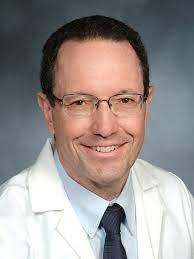
Dr. Frank Nothaft is chief economist for CoreLogic, America’s largest provider of advanced property and ownership information, analytics and data-enabled services. He leads the economics team responsible for analysis, commentary and forecasting in global real estate, insurance and mortgage markets. Before joining CoreLogic Frank served in a variety of leadership positions at Freddie Mac. Prior to Freddie Mac, Frank was an economist with the Board of Governors of the Federal Reserve System in the mortgage and consumer finance section and served as assistant to Governor Henry C. Wallich.

Frank has served as president of the American Real Estate and Urban Economics Association, Board member of the National Association for Business Economics (NABE) and the Financial Management Association, Advisory Board member of the Real Estate Research Institute, Editorial Board member of the Journal of Real Estate Finance and Economics, and is a Weimer School Fellow of the Homer Hoyt Institute.  He received the NABE Outlook Award for having the most accurate macroeconomic forecast for 2018.

Frank graduated from New York University with a B.A. in mathematics and computer science, and holds a Ph.D. in economics from Columbia University.

Arranged by Geoff Rezek

Bryan Hooper’s notes on the talk:

Dr. Frank Nothaft, the chief economist at CoreLogic, a business-to-business firm specializing in providing analysis and solutions for the property market, reviewed the events of the past pandemic year and forecast the upcoming economic outlook for the country.

He noted that 2020 at a negative 3.5% saw the largest drop in GDP since 1946, a time when the country was adjusting from a wartime economic standing back toward peacetime operations. The current $1.9 trillion recovery bill should help boost growth in 2021 to around 4.8%, the biggest gain since 1984. Along with this growth should come a recovery from unemployment, which stood at 6.2% in February. The Federal Reserve is mandated by Congress to maximize employment and maintain price stability, and a return to a “full employment” level of 4.0 to 4.5% unemployment is considered feasible by the fourth quarter of 2022. While the stimulus package is also provoking concerns about inflation, Dr. Nothaft stressed that the central bank is looking at an inflation rate that has averaged only 1.8% since 2000, and the current target of 2% is achievable by fourth quarter 2022 given the intention to maintain the federal funds rate between zero and 0.25%.

Mortgage rates averaged 4.1% from 2010 through 2019, and currently stand at 3.0%, with growth to 3.5% predicted for 2022. Dr. Nothaft suggested that anyone with a rate above 4% should move to refinance. In terms of market demand for houses, He noted that the largest population demographic is in the 28-30 year old millenniums; with 33 the median age for first time house buyers there is impetus developing for increased demand. Millennials and the following generation Z are forecast to increase household formations in the US by over 12 million between 2018 and 2023, offsetting the decline in older age groups for a total increase of 6.3 million over the period. The situation in Connecticut for these younger groups is very different however: the millennial population is down by 30,000 over the past ten years. Housing demand is high and prices are, too, deterring all but the wealthier part of that generation from buying in-state. In terms of home sales overall in the US, 2020 was the best year since 2006 , and 2021 is looking to be better. This has been driven by low rates for the younger generation and a move to more space for the older generation X as the work from home movement developed over the year. The demand should be maintained even as the pandemic recedes with as many as 25% of workers remaining home-based. That will impact home equity, which increased an average of 4.8% from 2010 to 2020 in the country, but only 0.7% in Fairfield County: the forecast is for US growth of 7.9% in 2021 and 3.2% in 2022, but a greater rate of 9.7% and 4.4% for Fairfield County.

The slide pack and a video of Dr. Nothaft’s presentation can be accessed via the links below:

Presentation video: https://youtu.be/bDdY3cObbKw

Presentation slides: Darien Mens Assn 3-10-21 Nothaft


Scott Kuhner, “Sailing around the World: Part II,” March 3, 2021

Scott Kuhner will be taking up from the point where he left off in his presentation on February 3rd – somewhere in Indonesia, relating the tale of how he and Kitty, his wife, completed their first circumnavigation of the globe in four years after setting off in 1971.

Six weeks after Scott met Kitty in the late 1960s, he proposed, and four months later they were married. She was up for adventure, so they took their honeymoon on a 22ft sailboat with a Porta Potty and sailed her from Westport to Martha’s Vineyard and back. Scott talked Kitty into buying a 30ft Allied Seawind Ketch, and two years later they quit their jobs and went sailing around the world. Scott was a securities analyst for EF Hutton and his boss could not believe he was going to leave his well-paying job.

They returned to Rowayton, bought a house and started a family. When their two sons were 9 and 11, Scott and Kitty decided to show them there is more to the world than just Connecticut. They bought a Valiant 40, named her Tamure, took the boys out of school, loaded them on the boat, and spent another four years sailing around the world. The boys were home-schooled, and when they got back, went into their normal class at Brian McMahon in Norwalk. Both graduated in the top 5% of their class and went on to an Ivy League college.

After each world tour, Scott was immediately offered great jobs back on Wall Street. Two years after he returned from the second trip, he was offered the position of running the New York office of a Brazilian Investment Bank, and spent the first six months living in Sao Paulo. Soon after he turned 60 the bank was bought out by a European company, Scott was awarded a big bonus, and retired.

Arranged by Bryan Hooper

Bryan’s notes on the talk:

Scott Kuhner, together with his wife Kitty, resumed the tale of their first sailing global navigation some 50 years ago from where they left us at the end of February’s talk – on the beautiful island of Bali. Leaving behind the rice paddies, the Hindu temples and the incredibly friendly and curious children they encountered, they then sailed to Christmas Island and on to Cocos Keeling Islands, an Australian Territory, before setting off across the Indian Ocean for Mauritius.

There were ten other boats about to sail across the ocean at that time, and the Kuhners had come to know their crews as friends in their travels. They became close to one  couple in particular whom they had first encountered in St. Thomas, and who were now on the last leg of their journey back home to South Africa. After battling mostly strong winds for the 17 days and 2400 miles to Mauritius the Kuhners spent time relaxing there, enabling Kitty to indulge in some horse-riding on the beach and solo sailing for the first time ever, before setting off for Durban, taking another 14 days and covering 1600 miles. Keeping radio contact with their South African friends, they learnt of bad weather and managed to prepare for the oncoming storm with winds blowing at up to 70 mph. It seems that despite what nature threw at them, Scott and Kitty also managed to find good time to recuperate and to explore the better part of nature through visiting local areas of interest – in Durban this was a game reserve with zebra, giraffes and monkeys.

Their onward journey involved stops in Cape Town, St. Helena in the South Atlantic, Fernando Island off Brazil, and finally to complete the circumnavigation, St. Thomas. And this is where the story really begins! On their journey back home toward New York they evaded the hazards of a waterspout before succumbing to the perils of a hurricane. Falling off the crest of a wave they hit the trough, went upside down and righted, but blew off the main hatch and took on tremendous quantities of water. Fortunately for Scott he had available what he described as “the most efficient bilge pump in the world: a frightened woman with a bucket.” Having recovered from the fright, they reached New York harbor and thus ended the voyage of the Bebinka.

That, incidentally, is the name of the book written by Scott and Kitty about their four years traveling the world. You can learn more from the book, and can watch the two parts of the talk on the links listed below:

Part I : https://youtu.be/USvhGtHrEE8

Part II : https://youtu.be/-xydPlMgrKk.


John Hamilton, “The Opioid Epidemic worsens during the Pandemic: An Update,” February 24, 2021


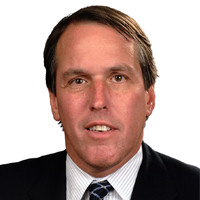
John Hamilton will speak on the field of addiction treatment and prevention. He is nationally recognized as an expert in this field. He brings three decades of experience to his role as president and CEO of Liberation Programs and also chairs the Advisory Board for the Connecticut Department of Mental Health and Addiction Services and serves on the Governor’s Alcohol and Drug Policy Council. Previously, John was chief clinical outreach officer at Mountainside Treatment Center, a nationally acclaimed drug rehabilitation center with locations in New York and Connecticut. He served as CIO of Recovery Network of Programs, a nonprofit behavioral health agency serving the Greater Bridgeport Community. John is past chair of the Dissemination Committee for the National Institute for Drug Abuse Clinical Trials Network, past chair of the Community Treatment Providers Caucus, past president of the Southwest Connecticut Mental Health Board, past president of the New England Association of Drug Court Professionals and co-founder of the Greenwich Father’s Forum. In 2013, John was a recipient of the American Association for the Treatment of Opioid Dependence Nyswander-Dole Award for his contributions to the field of addiction treatment.

Arranged by John Bassler

Bryan Hooper’s notes on the talk:

 John Hamilton spoke to us about developments in the drug business which have exacerbated the already tragic number of deaths by overdose, and of the way his programs are helping addicts to recover and re-integrate themselves into a more stable and productive life.

Last year in Connecticut there was an increase of at least 13% in deaths by overdose confirmed, and that could rise to 17% once all cases under investigation are resolved; that number is comparable to the previous year-on-year increase. There was a change in the drug of choice three years ago from oxycontin and similar products toward heroin as the latter became increasingly purer – 91% vs. 10% thirty years ago – but alternative more powerful opioids, such as fentanyl, have been growing in use over the past two years, and this is the epidemic we are now facing. A further concerning development has been the introduction of xylazine, used originally as a veterinary product, being combined with fentanyl to produce an even more powerful drug. Deaths involving fentanyl now comprise at least 85% of the annual total.

John went into an analysis of the reasons for doing drugs, and indicated that research showed many use drugs to make them feel good, and to share those feelings and sensations and to connect; but, this behavior does not tend to end in addiction. Those who become addicted take drugs essentially to feel better, to help overcome anxiety, worry or depression, and to withdraw from others and become disconnected. In the past year the advent of the pandemic has resulted in more separation for the majority of people and this in turn has increased the pressures on those already under stress.

Treatment therefore involves efforts to reconnect addicts to society with behavioral therapies and recovery support services, in conjunction with providing medication and detoxification programs.

John described the operations of Liberty Programs to provide this assistance: the agency has sites in Greenwich, Stamford, Norwalk and Bridgeport and served more than 2,400 individuals in their last fiscal year. You can learn more about the organization by visiting their website at liberationprograms.org, and you can watch the video of John Hamilton’s presentation at: https://youtu.be/2XGrhb6Bke0.


Robin Hayes, “How JetBlue and the Airline Industry are Confronting the Challenges of Covid-19 ,” February 17, 2021

Robin Hayes is chief executive officer of JetBlue Airways Corp., which encompasses JetBlue – New York’s Hometown Airline® – as well as subsidiaries JetBlue Technology Ventures and JetBlue Travel Products. He joined JetBlue in 2008 and served as the company’s executive vice president and chief commercial officer until becoming president of the airline in January 2014. In February 2015 he was appointed as JetBlue’s third chief executive officer.

Prior to joining JetBlue, Robin was executive vice president for the Americas at British Airways. Over the span of a wide-ranging 19-year career with BA, he also served as area general manager for Europe, Latin America and the Caribbean.

He serves on the board of governors of the International Air Transport Association (IATA) and the Wings Club as well as the board of directors at Airlines for America (A4A) and Make-A-Wish Connecticut.

Robin is a graduate in Electrical and Electronic Engineering from the University of Bath in the United Kingdom. He received a BSc and Master’s in Engineering from the university.

Arranged by Bert von Stuelpnagel

Bryan Hooper’s notes on the talk:

Robin Hayes, CEO of JetBlue Airways Corporation, spoke to us via Zoom from Key West in sunny Florida, where he had flown following the recent inauguration of JetBlue flights to that airport from New York. He recounted how almost a year ago during a meeting in London with their major aircraft supplier, Airbus, they spoke about the problem of a virus coming from China, and a week later began to feel the impact of Covid-19 on their bookings. By early April last year, 95% of bookings had been canceled and talks had been held at the White House to discuss aid for the airline industry to face the consequences of the spread of the virus. JetBlue resolved there were two main areas to focus on in meeting the challenges posed by Covid-19. Their priority was to ensure safe operations for the benefit of crew and passengers by applying appropriate precautions, such as insisting on passengers wearing masks, and using ultraviolet cleaning machines to thoroughly cleanse and disinfect the cabins. The second area of concentration was to secure financing capability to provide sufficient cashflow to weather the effects of the pandemic. Currently, the airline is flying with a sharply reduced number of flights and a lower load factor, resulting in a reduction of 60-65% from normal. During the subsequent session taking questions from the audience, Robin covered a wide variety of subjects, including plans for buying more airplanes from Airbus, including the A220-300 to replace their existing fleet of Embraer 190 aircraft, and the extended range A321 series of planes for transatlantic routes. It will be interesting to hear from Robin again next year to receive an update on the recovery from the effects of the virus on the airline industry.

Georgia Hunter, “We were the Lucky Ones,” February 10, 2021

When Georgia Hunter was 15 years old, she discovered that she came from a family of Holocaust survivors. Years later, she embarked on a journey of intensive research, determined to unearth and record her family’s remarkable story. The result is the New York Times bestseller, We Were the Lucky Ones, a gripping saga that follows the Kurc family as brothers, sisters, parents, and children scatter across continents at the start of the Second World War, determined to survive, and to reunite. Georgia will present an illustrated backstory about her decade-long quest to put her family’s history to paper, revealing the extraordinary discoveries she made along the way—about her ancestors, her own identity, and the resilience of the human spirit.

We Were the Lucky Ones is Georgia’s first book and spent over four months on the New York Times bestseller list. It has been translated into 16 languages, and selected as a top pick by Harper’s Bazaar, the New York PostPeople Magazine, and Audible. It won the fiction category for the 2018 Connecticut Book Award and has been optioned for a television limited series.

Georgia has loved to write since she was a child, growing up in rural Massachusetts. Her debut publication was an op-ed written at age 10 for the Attleboro Sun Chronicle. She graduated with distinction from the University of Virginia in 2000, and has lived in Atlanta and Seattle where she’s worked as a brand strategist and as a freelance copywriter in the field of adventure travel. She now lives in Rowayton, CT, with her husband and two sons.

Arranged by Bob McGroarty

Bryan Hooper’s notes on the talk:

Georgia Hunter took us through her nine-year journey researching the history of her Polish-born grandfather and his five siblings who scattered around the world as WWII began. Her grandfather never talked about his experiences to Georgia, but after his death in 1995 she was sufficiently intrigued and curious to want to learn more from her grandmother about their story, and ultimately embarked on an exploratory journey to discover the fate of the dispersed Kurc family that culminated in the writing of her book, “We Were the Lucky Ones,” published in 2017.

There are no better words to describe Georgia’s quest than those she ascribed to the survivors themselves about their own lives, that the story is one of courage, perseverance and love. Her travels and the culmination of her efforts are better described in her book than these few brief notes, but you should watch the video of her presentation at: https://youtu.be/eLA0H-n8BnI. In particular, note the reminiscences of some of our own DMA family, and you will appreciate the emotions that Georgia’s talk evoked, and resolve to read the book to determine the ending.


Scott Kuhner, “Sailing Around the World: Part I,” February 3, 2021

Six weeks after Scott Kuhner met Kitty in the late 1960s, he proposed, and four months later they were married. She was up for adventure, so they took their honeymoon on a 22ft sailboat with a Porta Potty and sailed her from Westport to Martha’s Vineyard and back. Scott talked Kitty into buying a 30ft Allied Seawind Ketch, and two years later in 1971, they quit their jobs and spent 4 years sailing around the world. Scott was a securities analyst for EF Hutton and his boss could not believe he was going to leave his well-paying job.

They returned to Rowayton, bought a house and started a family. When their two sons were 9 and 11, Scott and Kitty decided to show them there is more to the world than just Connecticut. They bought a Valiant 40, named her Tamure, took the boys out of school, loaded them on the boat, and spent another four years sailing around the world. The boys were home-schooled, and when they got back, went into their normal class at Brian McMahon in Norwalk. Both graduated in the top 5% of their class and went on to an Ivy League college.

After each world tour, Scott was immediately offered great jobs back on Wall Street. Two years after he returned from the second trip, he was offered the position of running the New York office of a Brazilian Investment Bank, and spent the first six months living in Sao Paulo. Soon after he turned 60 the bank was bought out by a European company, Scott was awarded a big bonus, and retired.

Arranged by Bryan Hooper

Bryan’s notes on the talk:

 Scott Kuhner took us most of the way around the world when he described the time he and his wife, Kitty, embarked on their first circumnavigation 50 years ago. It turned out to be a tale of improvisation, adaptability, and a large dose of courage and perseverance. Some highlights follow:

• Scott persuaded Kitty to read Around the World in Wanderer III by the British sailor, Eric Hiscock, which recounts the Hiscocks’ first around the world sail in the 50s, so as to sow the seeds for the Kuhners’ trip later in 1971.

• In the early ‘70s there was no GPS available for navigational use by civilians, and Scott was forced to rely on using a sextant together with an accurate timepiece (kudos to Rolex). After sailing for 12 days and 1400 miles toward the Virgin Islands he announced to Kitty in the middle of the ocean that they were about to arrive within a couple of hours at St. Thomas: land loomed up one hour later, amid much relief for Kitty that the captain was such an accurate navigator.

• Leaving the Galapagos Islands off Ecuador, they sailed 3000 miles in 22 days, putting a severe strain on their ability to keep clothes clean as they had to conserve water. The solution they came up with gave new meaning to the term “bareboating.”

• In Fiji they met up with Kitty’s parents, and lived a life of relative luxury for a week, bathing and eating dinner in the hotel. That came to a rude end with the arrival of an extremely powerful hurricane packing winds of almost 200 mph. Discretion being the better part of valor, they sailed to New Zealand to skirt the rest of the hurricane season.

• Maintenance was the key task there, and they took the opportunity to change the main mast, and accomplish various other chores: coincidentally, also moored at the port was Eric Hiscock – the original inspiration for the trip!

• After they explored New Zealand by hitchhiking their way on both islands, Kitty found a job in Sydney, Australia, leaving Scott to decide how he would find someone to help him sail to Australia. Fortunately, his father came to the rescue as crew mate and cook (which was not without its problems in rough seas encountered in the Tasman Sea!).

• Scott also worked as a financial analyst in Sydney before wanderlust took over again, and they sailed up Australia’s eastern coast and to Bali in Indonesia.

There was insufficient time to finish the presentation: we’re less than half-way around the world, and we intend to run a Part II on March 3rd. Scott and Kitty wrote a book chronicling their adventures, called The Voyage of Bebinka, where you can catch up on the details of the trip, and you can see the video recording of the presentation at: https://youtu.be/USvhGtHrEE8.


« Older posts Newer posts »