John Hess and Art Baron will lead the discussion.
John Hess will present the macro outlook and Art Baron will discuss Keysight Technologies (KEYS), an interesting play on 5G deployment.
 THE RUSSIAN JOB by Douglas Smith |
Kirkus Reviews
The hair-raising account of a great humanitarian act in which the United States provided vital assistance to the Soviet Union. Historian and translator Smith (Rasputin: Faith, Power, and the Twilight of the Romanovs, 2016) reminds readers that World War I and civil war devastated Russian agriculture because the fighting armies lived off the land. By 1920, the Bolsheviks had largely won, but the government continued to forcibly extract grain from the peasants. Then the rains stopped. At first, Lenin “welcomed the famine, since he believed it would destroy the people’s faith in God and the tsar. Revolution, not charity, would save the peasants, he said.” By the summer, faced with mass starvation and violence, he changed his mind. Many philanthropists and international charities responded to pleas for help, but only one organization had the immense resources required: the American Relief Administration, led by Herbert Hoover, who had already impressed the world with his relief of mass starvation in Belgium and northern France during WWI and then again in Europe after the armistice. A successful businessman, Hoover employed the same talents to organize a vast enterprise led by loyal underlings who oversaw the distribution chain, from docks to warehouses to transportation to the soup kitchens. A few Soviet leaders were congenial, but most believed that the ARA was a nefarious capitalist plot. Secret police harassed the Americans and arrested Russian employees but sometimes, unpredictably, helped by cutting through red tape. Local officials were usually grateful. Infrastructure, housing, sanitation, and disease were terrible, far worse than in Europe. In an often agonizing but necessary book, the author includes letters and anecdotes by participants as well as often horrific photographs, all of which tell a grim story. Starving people do not overthrow governments, so it’s unlikely American aid saved the Soviet Union, but it was a magnificent achievement—and Smith adeptly navigates all elements of the story. Except for Hoover biographers, American scholars pay little attention to this episode; it quickly vanished from Russian history. Although the catastrophic Russian famine and American relief efforts are not completely forgotten,
this expert account deserves a large readership.
8:30am, Lilian Gade Room at the DCA.
Cliff van Voorhees and Carolyn Bayne will discuss the challenges of recycling in Darien.
Introductory slide show.
Examples of what should and should not be in single stream recycling:
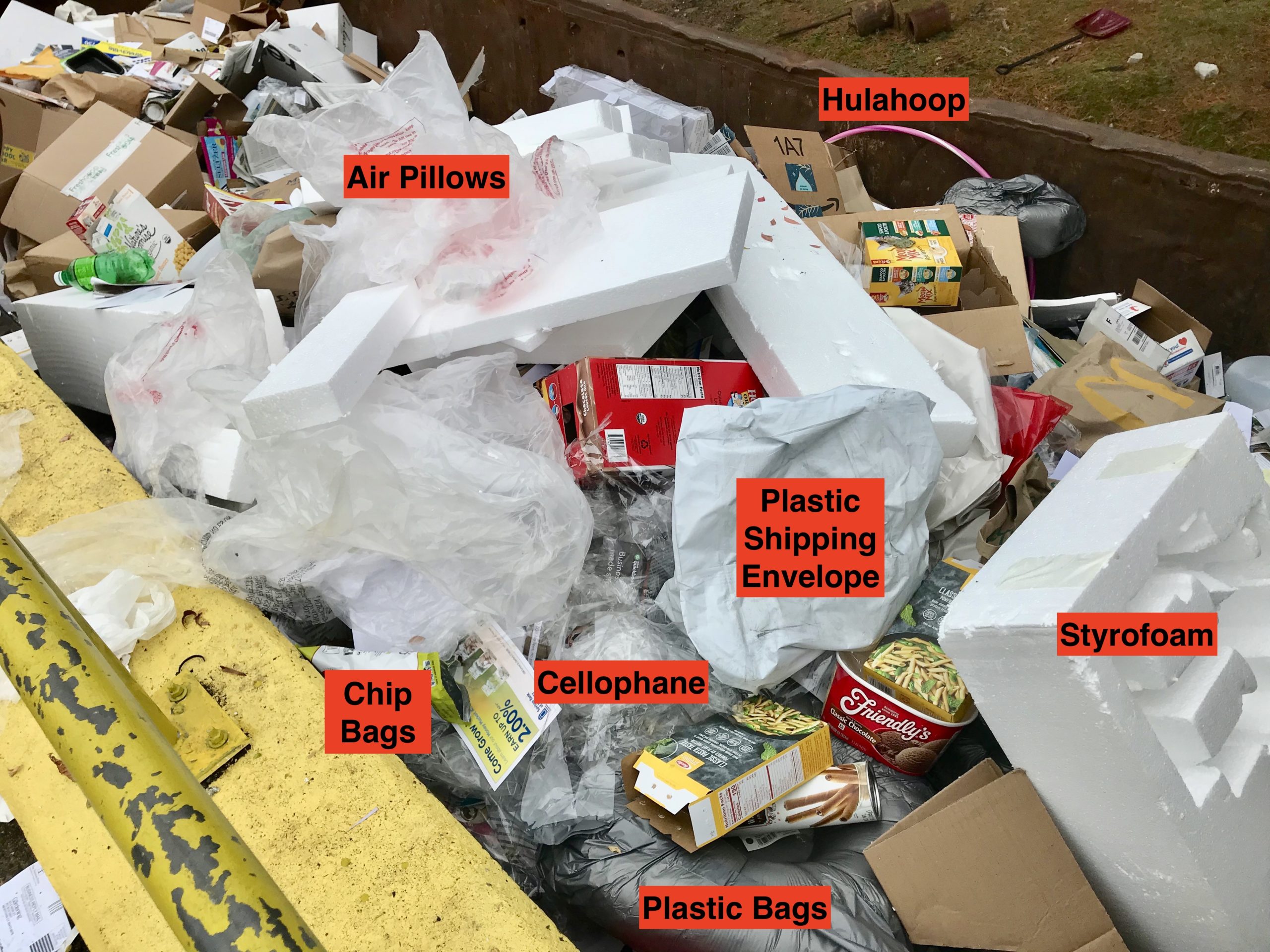
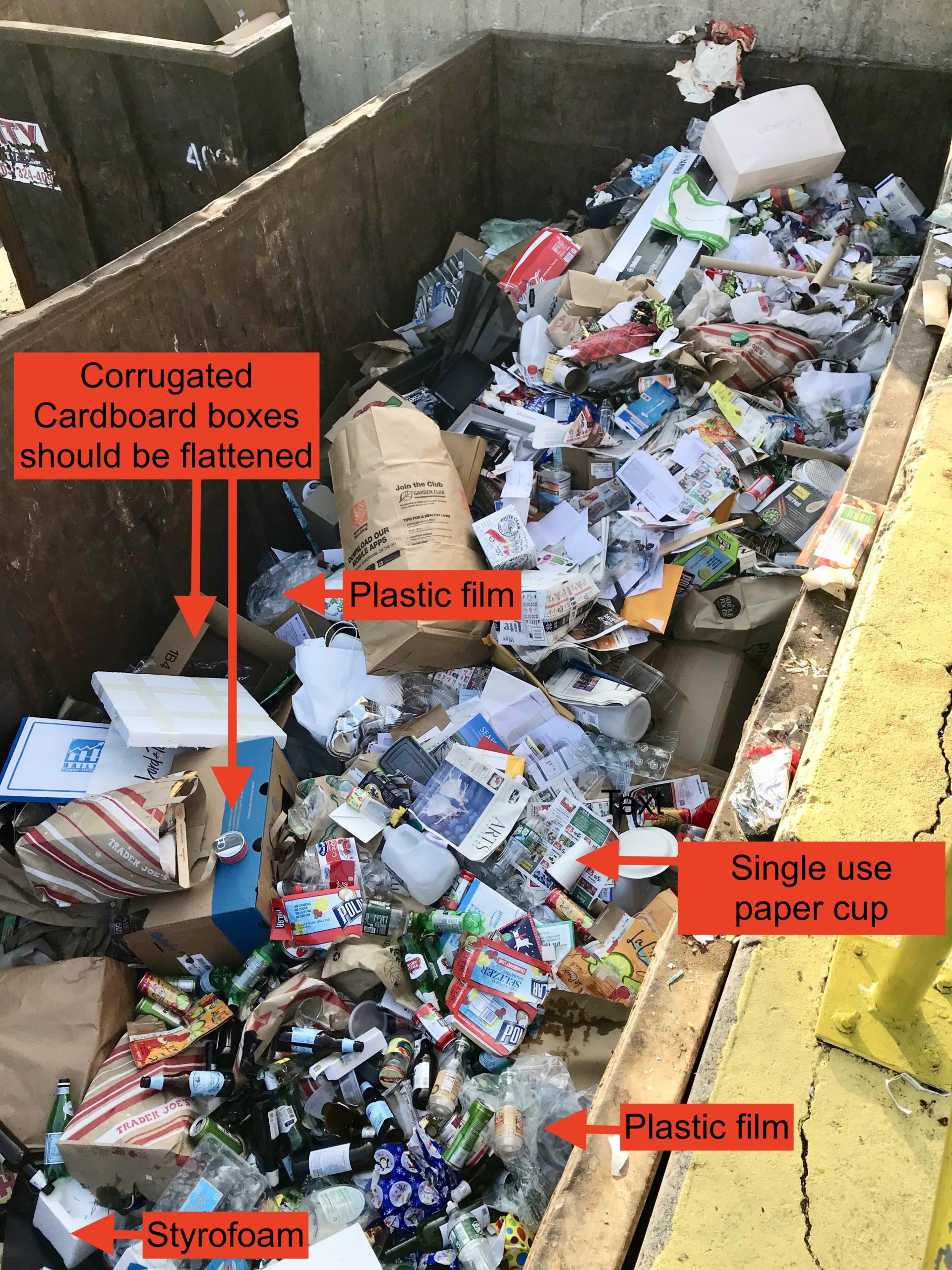
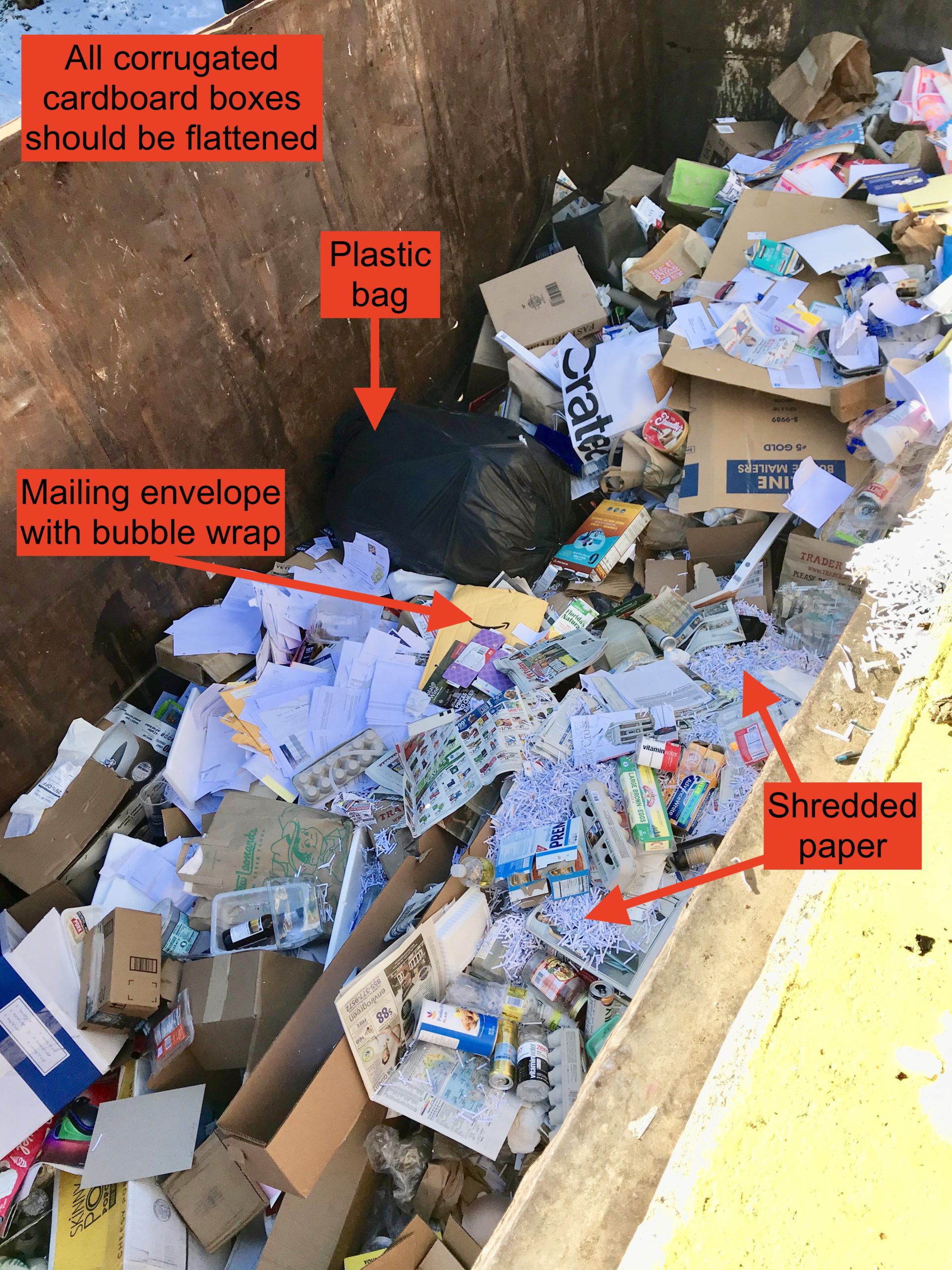
Click below to see what’s allowed and not allowed in Darien Single Stream. Just because it isn’t listed here, doesn’t mean it can’t be recycled – there are separate areas for paint, lightbulbs, batteries, electronics, tires, appliances, food waste, metal, large plastic, yard waste, mattresses, clothes, corrugated, plastic bags, construction debris, … And the Swap Shop is a way to recycle usable stuff. (Or gain more clutter you don’t really want.) You can also pick up shredded mulch, leaf compost, and sometimes food compost.
2019_Darien_Single_Stream_Recycling_(Full_List)
A tour of City Carting Recycling Center. (hover over picture to stop scrolling)

The haulers separate trash from SSR, even though many people seem to think they do not. I believe they do for two main reasons:
It’s also worth noting that the haulers are only required to recycle what goes in the blue bin (ie our SSR list); many of the other items we recycle (ie batteries, light bulbs, e-waste, paint, etc.) must be brought to our facility. We ALWAYS recommend that residents who employ a hauler also get a dump sticker so that they can recycle these additional materials; their permits are priced much lower to account for the fact that they are primarily bringing recyclables and not regular household trash. Note that Seniors can get a free permit.
CT’s problem with waste from “Hartford Current:”
https://www.courant.com/news/connecticut/hc-news-ct-outofstate-trash-disposal-20191228-hprk52k2hjbzlj7xz2lztug74q-story.html
Economics and Science of Recycling from “Popular Mechanics” (note date is 2008 before China’s ban on imports):
https://www.popularmechanics.com/science/environment/a3752/4291566/
Problems with Recycling in Asia from the “Financial Times:”
https://www.ft.com/content/360e2524-d71a-11e8-a854-33d6f82e62f8
Micro-plastics and their effects on humans from “The Conversation:”
https://theconversation.com/we-are-guinea-pigs-in-a-worldwide-experiment-on-microplastics-97514
Recycling facts from Recycle Across America:
https://www.recycleacrossamerica.org/recycling-facts
CT’s Policies from the CT Mirror.
https://ctmirror.org/2020/02/17/is-connecticuts-outdated-recycling-system-in-line-for-an-overhaul/?utm_source=Connecticut+Mirror+Mailing+List&utm_campaign=b6d6010e90-DAILY_BRIEFING_MORNING&utm_medium=email&utm_term=0_571d22f8e4-b6d6010e90-68155097
Please join my meeting from your computer, tablet or smartphone.
https://www.gotomeet.me/
Business Roundtable—Purpose of a Corporation
Pre- August 2019 Maximize Shareholder Value
Corporate Responsibility per Milton Friedman
1970 essay- Maximize Returns to Shareholder
Friedman’s thesis: Corporations are not to make contributions for
“social causes”, shareholders can choose what to give.
Further- Corporations are to obey all laws and regulations.
If corporations make “contributions”, the directors must
conclude such donations create good will and enhance sales.
Current example: Orvis gives 5% of pretax profits for “environmental
causes”. (Could they give 15%?
Comments from Harvard Law School Forum
Re: Business Roundtable Statement on Corporate Mission
Corporate Directors have a fiduciary duty to act in shareholder interest
Thus, decisions not in shareholder interest are illegal
Actions taken by directors will be presumed to be in shareholder interest or they would not be taken.
Directors must adhere to the law so that new Legislative mandates may promote or presume to benefit other stakeholders, but at a cost to shareholders.
Overall question: To what extent do we desire the government to impose
rules that will decrease business profits in order to strive for other benefits
What does the Business Roundtable expect or hope to change with revised statement of purpose?
Former “purpose”: “Maximize shareholder Value”
New “purpose”: “Act to benefit all stakeholders”
Stakeholders: customers, employees, suppliers, communities, and shareholders
Possible intentions:
Change corporate reporting on selective topics?
Motivate investments into areas not directly in shareholder interest?
Motivate shareholder resolutions on new corporate action
Bring about new government rules on business actions
Potential areas of Government mandates: ESG
(Environment, Social, Government)
Action regarding global warming;
Other environment improvement measures
Reduction of income inequality
Increase diversity in management personnel
Impose unnecessary costs for named investments
Establish more “days off” for employees
From the WSJ. Financial Advisers Turn to ESG, Warily – WSJ
IEA warns oil companies doing nothing on emissions is not an option
https://eresearch.fidelity.com/eresearch/goto/evaluate/news/basicNewsStory.jhtml?symbols=XOM&storyid=202001191929RTRSNEWSCOMBINED_KBN1ZJ005-OUSBS_1
Capitalism, Alone’ Review: Inclined Toward Inequality
Capitalism Alone
https://lucidmanager.org/milton-friedman-corporate-social-responsibility/
https://corpgov.law.harvard.edu/2019/09/26/analysis-of-the-business-roundtable-statement/
https://www.coursehero.com/file/8478280/Purpose-of-the-Corporation/
The Davos Crowd Embraces Big Global Government – WSJ
Rain date, June 4, 2020
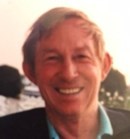
William Olin Gray
After a long battle with Alzheimer’s disease, William Olin Gray passed away December 22, 2019. The Darien resident was 89 years old.
Mr. Gray was born November 7, 1930 to Grace Lansingh Freeman Gray and Hiram Ligget Gray. He grew up in Riverside, CT with his older brother Peter Lansingh Gray and younger sister Nancy Gray Schaeffer, both of whom passed away in 2018. After graduating from the Pomfret School in 1948, Mr. Gray attended Yale University and then the University of Michigan, receiving a Bachelor of Science in Mechanical Engineering at Yale and another Bachelor of Science in Naval Architecture at Michigan, where he studied under Harry Benford.
After winning the youth nationals at the age of fifteen, Mr. Gray had enormous success as a competitive ocean racer. As the navigator of two of the Carina yachts owned by Richard Nye, Mr. Gray won many blue water races, including the trans-Atlantic race to Sweden in 1955 the Bermuda Races of 1952 and 1956, and the Fastnet Races of 1955 and 1957. Mr. Gray was also the tactician of the Weatherly during her 1958 America’s Cup campaign. Mr. Gray was proud of the fact that he visited seven foreign countries by boat before ever flying internationally.
After an honorable discharge from the United States Navy, where he served as a Lieutenant Junior Grade on the USS Courtney, Mr. Gray began his career as a naval architect at the Quincy Yards of Bethlehem Steel in Quincy, Massachusetts. Mr. Gray soon thereafter transferred to Esso Corporation, predecessor to Exxon Mobile, where he eventually became responsible for the corporation’s world wide petroleum fleet. Following the discovery of the Prudhoe Bay Oil Field on the North Slope of Alaska in 1968, Mr. Gray played a prominent role in converting an existing oil tanker, the SS Manhattan, into the world’s first ice breaking oil tanker, in an effort to determine if it was economically feasible to transport petroleum through Canada’s Northwest Passage. Mr. Gray then oversaw tanker safety and intergovernmental relations for the corporation, working diligently with the Coast Guard and various international agencies to improve ship and waterway safety. Mr. Gray held four patents from his work in naval architecture.
A self-taught trombonist and lifelong jazz enthusiast, Mr. Gray founded two Dixieland jazz bands during his lifetime. The first, The Great Atlantic Jazz Band, was so successful that he was eventually replaced by a more experienced musician. Undaunted, Mr. Gray founded The Constitution Jazz Band, which played regularly throughout Connecticut at bars, weddings and festivals and ultimately released two CDs of traditional Dixieland jazz.
Mr. Gray served as a trustee of the Webb Institute and in 2002 received the Emory S. “Jerry” Land Medal for outstanding accomplishments in the Maritime field. Mr. Gray was a member of Saint Luke’s Church of Darien, CT, the Cruising Club of America, the Society of Naval Architects and Maritime Engineers, the Connecticut Maritime Association, the Royal Ocean Racing Club, the Yale Club, Mory’s, the Tokeneke Club, and the Woodway Country Club. Mr. Gray is survived by his wife, Faith Cook Gray, his daughter Elizabeth Porter Gray of Guilford, CT, his son Andrew Wallace Gray of Baltimore, MD, his step-daughter Anne Pragoff Paterno of Chester, VT and his step-daughter Julia Pragoff Grant of Beverly Hills, CA. His daughter, Susan Gray Arana, predeceased him in 2016. Mr. Gray loved being Grampy to his thirteen grandchildren and one great-grandchild.
The family wishes to thank the wonderful caregivers at Waveny Lifecare in New Canaan, CT.
A funeral will be held at Saint Luke’s Church in Darien, CT, at 11:00 a.m. on Saturday, January 25, 2020. Donations may be made in his name to the () or The Seaman’s Church Institute (https://seamenschurch.org/).
© 2026 Darien Mens Association
Theme by Anders Noren — Up ↑