U.S. aircraft carriers are often called “The Tip of the Spear” because they enhance America’s ability to project military power anywhere across the globe. The key to the carriers are their fighter planes.
Despite threats from hypersonic missiles and drones, a carrier task force can maneuver on the open ocean, move fast and carry massive firepower. The ability to project military power from aircraft carriers in whatever theater is necessary is critical to projecting U.S. global power. It also has a number of other advantgages, such as not having to rely on foreign nation approval, not requiring foreign host bases and permitting independent U.S. military strategy, all of which may be invaluable during a crisis. Carriers are essential for a U.S. global presence, deterrence and rapid response.
Fighter jets on U.S. aircraft carriers are specialized, state-of-the art planes flown by highly trained Naval aviators. Navy pilots don’t have the luxury of landing on JFK’s 13,000-foot-long runway; the carrier deck is only 300 feet. Our speaker, Gunnar Edelstein, has exciting videos so DMA members can experience what it’s like to land on a carrier at 150 knots on a constantly moving centerline with the carrier sailing at 15 knots, navigating a nine degree landing angle-of-attack with possibly heaving decks and/or crosswinds due to rough seas, while undergoing a crushing G-force when landing and then stopping on a dime.
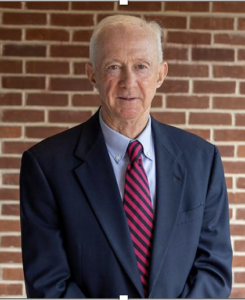
Gunnar graduated from the Wilbraham & Monson Academy in Wilbraham, Mass., and received a B.S. degree in biology and chemistry from Ohio Wesleyan University in 1972. He then joined the U.S. Navy officer flight training program in Pensacola, Fla., and later served as a fighter/attack pilot for eight years. Gunnar graduated first in his class while earning Distinguished Naval Graduate honors and went on to complete two WestPac carrier cruises aboard the USS Kitty Hawk and the USS Constellation, in addition to a tour as an instructor in the Navy’s Advanced Jet Training Command.
Gunnar was hired by American Airlines in 1979 and then laid off a year later. He then worked as a sales engineer for Air Products & Chemicals, while also serving in the Massachusetts Air National Guard, flying the brand new A-10 Thunderbolt. He rejoined American Airlines in 1984 and had a 27-year flying career there, principally flying B-727s until he retired from flying in 2011.
Gunnar is currently in residential sales with Berkshire Hathaway Home Services in Darien. He was president of the Darien Board of Realtors, served on the board of Noroton Yacht Club, was past Commander of the Darien Sail & Power Squadron and is a member of Silvermine Golf Club. Gunnar and his wife Sarah have lived in Darien for 39 years and have a son, Jeff, who is a U.S. Army combat infantryman.
Summary
The provided file is an AI generated transcript of a presentation by Gunnar Edelstein, a former Navy fighter pilot, who discussed the complexities and intensity of aircraft carrier operations. Gunnar served for eight years and completed cruises on the USS Kitty Hawk and USS Constellation, gave us a firsthand sense of what it is like to operate at the “tip of the spear” of American military power.
The Role of Aircraft Carriers
Gunnar explained that aircraft carriers are primary instruments of U.S. foreign policy, allowing the president to project massive firepower and military presence anywhere globally without relying on foreign bases or host nation approval. These nuclear-powered vessels move quickly and serve as a versatile “heavy equipment” force for deterrence and rapid response. A standard Carrier Task Force typically includes the carrier itself, guided-missile destroyers and cruisers, supply ships, and at least one or two nuclear submarines.
Launch Operations
The process of taking off from a carrier is described as “being shot out of a gun”. Because a carrier deck offers only about 300 feet for takeoff—compared to over 2,000 feet on land—pilots must use a catapult system. An airplane taxies onto the catapult and is held back by a holdback fitting while a launch bar connects the nose gear to the catapult’s shuttle. When the pilot applies full power and the launch officer signals, the shuttle pulls forward, launching a 60,000-pound aircraft from 0 to 150 mph in just two seconds.
Landing: The “Trap”
Landing on a moving, heaving deck is the definitive skill of a naval aviator. Pilots must catch one of three or four arresting wires with a tailhook—a successful landing known as a “trap”. Gunnar emphasized a three-part “scan” that pilots must process continuously during the final approach:
- Meatball: A visual lens system that indicates if the pilot is on the correct glide slope.
- Lineup: Maintaining the centerline on a deck that is angled 9 degrees and constantly moving away from the pilot.
- Angle of Attack: Managing airspeed to achieve maximum lift with minimum drag, aiming for “donut” airspeed.
Gunnar noted that hitting a centered “meatball” usually results in catching the number 3 wire, which is the ideal target. The entire landing area is remarkably small; while the ship is 1,000 feet long, the actual target area for the hook is less than 30 feet. Pilots must also work quickly after landing to clear the area, as another aircraft is often only 40 seconds behind them.