
Month: June 2020 (Page 1 of 2)
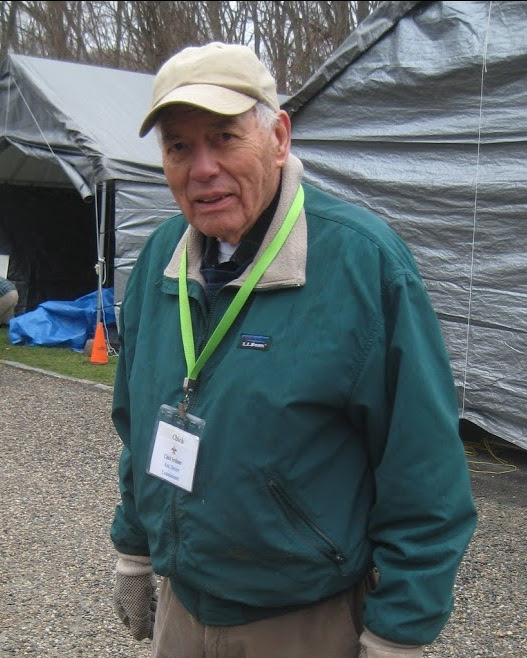
Host: Bob Baker
Discussion Leader: Charles Salmans
Main topics are:
Covid infection and death rates
Latest data and possibility of “waves” this fall and next year, as in 1918
Tradeoff between economy and quarantines
Unemployment rates and issues of income replacement
Especially hard hit — hospitality and travel, small business
K-12 Schools, colleges and universities
Only the Federal government can print money; constraints on state and local budgets
Nations (and states) that have tightened after loosening (Australia, New Zealand, California, Florida)
Challenge of testing and contract tracing
Vaccine timetable
Vaccines under development
Challenge of final approvals
Manufacturing challenge to meet worldwide demand
Vaccine roll-out and priorities?
– Health care workers
– Elderly/Nursing Homes
– Other priority job categories (Police/fire, Food industry workers, Teachers)
Articles:
Covid treatment
Covid Discussion Links Aug 2020 copy
Wall Street Journal: Lockdowns punish the economy. Months into the Covid-19 pandemic, evidence points to ways to slow the spread of the coronavirus at much lower economic cost.
New York Times: “Why are US Cases Falling? Restrictions are Working.” Charts on nationwide cases, on four states where cases have declined from their peak (Florida, Arizona, Louisiana and South Carolina), and “Where the US falls among the 10 countries with the worst outbreaks.”
Effective reproduction rate: https://rt.live/
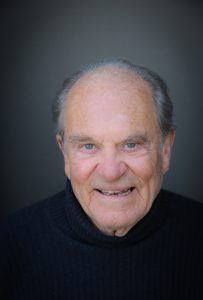
Flemming Heilmann was born 1936 in Malaya of Danish parents, spending his early childhood there until the threat of Japanese invasion forced an evacuation to Australia in 1941. Joined later by his father who escaped Singapore as she fell, the family spent World War II as refugees. As soon as the war ended in Europe, but before the Japanese capitulation, the family traveled home to Denmark on a troopship evading kamikaze attacks in the Pacific.
Flemming’s school education spanned Australia, Denmark – where he sank deep cultural roots – and formative years in the United Kingdom before he graduated from Cambridge with a law degree. During this period he spent time in British colonial Malaya during the communist uprising before its independence, in Swaziland under British rule, and in South Africa while apartheid laws were being put into place. During the post war recovery, Flemming developed an appreciation of America’s role in the rehabilitation of war torn Europe and an understanding of the mighty US economic engine driving economic, technological and social progress in the world. A 40-year executive career in industry took him back to South Africa for 17 years and on to the USA in the mid-1970s with stints in Europe and Canada. Flemming lives with his wife Judy in Rowayton, has four sons, a daughter and nine grandsons.

Flemming is a member of the DMA, and last spoke to us in early 2019, when he discussed his book, Odyssey Uncharted, a memoir of his World War II childhood and subsequent worldwide education. In his latest book, The Unacceptable Face, he relates his encounters with apartheid, socialism and iterations of capitalism on three continents during a career challenged by corporate and national politics. Some foes are engaged, others sidestepped. Immersion in disparate cultures spawns evolving beliefs and priorities, not always politically correct, just as traditional preconceptions are debunked.
Arranged by Bryan Hooper
Bryan’s notes on the talk:
Flemming Heilmann recounted to us highlights from his second memoir, The Unforgettable Face, which picks up from his first book, Odyssey Uncharted, with Flemming as a recently graduated Cambridge law student about to take up a position as a market research clerk in the South African subsidiary of the British firm, Metal Box Company, in 1959. He arrived in the country during the heyday of apartheid, the institutionalized racial segregation policy introduced by South Africa in 1948, and he experienced at first hand the problems involved in managing a company under conditions totally alien to those experienced in the UK in terms of labor relations.
He also managed to meet and began to understand the nascent opposition to the government as he was introduced to Helen Suzman, the solitary member of parliament for the Progressive party for 13 years, and also Arthur Goldreich and Harold Wolpe. The latter two owned Lilieleafs Farm, which served as the secret headquarters of the SA Communist Party, and who clandestinely encouraged the opposition African National Congress, which included the future President, Nelson Mandela, as one of its members. It was at an upscale dinner party held at the farm that Flemming and his fellow guests were served dinner by immaculately dressed waiters, one of whom happened to be Nelson Mandela. The government cracked down on the illegal farm operation in 1962 and subsequently jailed Mandela until 1990. Goldreich and Wolpe ended up in police detainment, but escaped dressed as Franciscan monks and made their way to Swaziland and eventual freedom.
Flemming was gradually promoted through the ranks of Metal Box, eventually becoming Managing Director and CEO in 1970, and ensured during his time in charge that employees were treated to a decent wage, and were given education and training opportunities that amounted to an additional 75% of costs above the wage bill. Nevertheless, Metal Box became a victim, amongst other companies, of an intense press exposé led by a UK journalist. In turn, this became the focus of a British parliamentary inquiry necessitating the provision of much data and Flemming’s being a witness at the subsequent hearings in Westminster, England. The allegations that his company were underpaying workers by 30% were repudiated and Flemming and his colleagues left the hearing to applause from the press.
Flemming moved on from South Africa to join Continental Can in the US at their Rowayton headquarters. Assignment to Europe to manage their German and Dutch manufacturing acquisitions gave Flemming a lesson in the socialistic operations prevailing in manufacturing at that time, but he managed to turn around the numbers and become profitable. Unfortunately, he was fired from his position for, as he says, speaking his mind, but moved on, still within the packaging industry, ending up in Canada as the President and CEO of a leveraged buyout firm in Toronto. Flemming is a great admirer of LBOs in general, but allows that there are excesses that can arise (hear his interesting anecdote on this subject during the talk on the video link on the website).
The next phase of his life drew Flemming into volunteer and charitable work in the US with several organizations associated with Denmark, including the Olympics and the Paralympics, and he is especially proud of his work with the Jacob Rees Neighborhood Settlement in New York, whose mission emphasizes self-help for immigrant populations and realistic goal-setting and accomplishments. He is more than pleased that 88% of participants in their programs graduated from high school compared with the average population at 48%.
Finally, Flemming talked briefly and passionately about two of his hobby-horses, public education for one, and inequality for another. Clearly, he believes that the future of the country depends on the establishment of a strong middle class, necessitating fair and equal access provision to education and training.
More details of Flemming’s fascinating life can be found in his book, The Unacceptable Face, and the video is on the website at https://youtu.be/xxgsLRYEXz0.
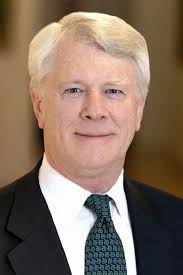
Ed Hynes, CFA was born and raised in Wilton, CT. He attended Wilton High School where he played both football and lacrosse. In 1977 Ed graduated from The George Washington University in Washington D.C. with a B.A. in Political Science. He subsequently spent most of his career in financial services. As an equity analyst, institutional salesperson and trader he worked with some of the premier investment banking firms in many of the world’s leading financial centers including New York, Tokyo, London, Chicago and San Francisco. In 2001 Ed became a Chartered Financial Analyst (CFA) charter holder, and is currently a Financial Advisor with Merrill Lynch in Westport, CT. He lives in Norwalk.
Ed first became interested in the Revolutionary War as a child when he learned his neighbor’s house was partially burned by the British during the Danbury Raid in 1777. He and his wife are fascinated by history and have visited many important battlefields both here and abroad. Ed has spoken to the DMA twice before, first in 2013 on the Battle of Ridgefield, and the second time in October, 2019, about the War on Long Island Sound.
Arranged by Gary Banks
Bryan Hooper’s notes on the talk:
Ed Hynes gave us a brief history of the War of 1812, leading into the origins of our national anthem, The Star-Spangled Banner.
The 1812 war was essentially due to a continuation of the grievances remaining from the Revolutionary War, and was started by a dispute over trade conditions. While the British had apparently agreed to a compromise on the problem, the lack of rapid communication facilities, such as a telegraph (invented 30 years too late), prevented the terms from being sent to the US in time to stop war being declared in June of 1812. It stretched over three years, and was notable for major naval victories by the Americans in the first year, the failure to take Canada in 1814, the inability of the British to win the Battle of Baltimore, and their defeat by the Americans at New Orleans in February 1815 – although the peace treaty had been signed on Christmas Eve, 1814! While the result of the war was officially a draw, it led to a period of American national unity, known as the Era of Good Feelings.
The back story of the national anthem started after the British had burned Washington in late August 1814, and then turned their attention to Baltimore, with the hope of consolidating their gains in the Chesapeake area. Major General Ross, in command of the British land forces, had been offered use of the house of Dr. William Beanes as his headquarters in Upper Marlboro, Maryland. However, during the campaign, British deserters who had looted local farms were arrested by Beanes, so Ross in retaliation had him arrested. (Ross was later killed by a sniper at the Battle of North Point before the Battle of Baltimore.) President Madison arranged for Francis Scott Key, a Georgetown lawyer, to deal with the British commanders in Baltimore for Beanes’s release. Those talks took place on board a British warship in the harbor in early September, and Key successfully negotiated for Beanes to be freed, citing the medical help the doctor had provided to wounded British prisoners. Key and his colleagues in the team were detained on board the British ship when the battle began on September 12th, and raged around them. He observed the bombs bursting in air over Fort McHenry, and in the morning of the next day saw the flag, spangled with fifteen stars, still flying over the fort’s ramparts. He wrote the poem the next day, and it was published the following week. Set to the music of John Stafford Smith – an English composer – it became popular as a patriotic song, being adopted for ceremonial events by the US Navy in 1889. The song was approved in 1916 by President Wilson to be played on military and other appropriate occasions, and finally became the national anthem following Congressional action and signature by President Hoover in March 1931.
Slides used in the presentation: Ed Hynes War of 1812 12-7-20
Video of Ed’s presentation: https://youtu.be/XEmuLSZjw0Y
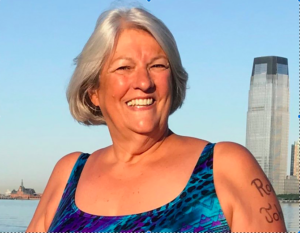 Patty Gallant-Charette, a 69 year-old woman from Maine has swum vast distances across the world’s oceans, in particular the waters of “Oceans Seven,” the most treacherous and turbulent ocean channels in the world. Oceans Seven was devised in 2008 as the swimming equivalent of the Seven Summits mountaineering challenge (see Robert Whitby 8/26/20). It includes the North Channel, the Cook Strait, the Molokaʻi Channel, the English Channel, the Catalina Channel, the Tsugaru Strait and the Straits of Gibraltar. She has managed to complete all of these save for the Cook Strait, which she has attempted twice, almost made it the last time, and is in line to try it again in the next few years. Aside from these waters, she has swum across many lakes of the world including Lake Tahoe, Loch Ness, Lake Ontario and Lake Windermere.
Patty’s swimming feats have received world-wide attention, and last November, she was inducted into the International Marathon Swimming Hall of Fame. She holds six Guinness World Records (Guinness only recognizes iconic locations):
- In 2017, oldest woman to swim the English Channel (21 miles) at age 67
- In 2018, oldest person to complete the Triple Crown of Open Water swimming: English Channel (21 miles), Catalina (21 miles) and the circuit around Manhattan Island (28 miles) at age 67
- Oldest person to swim the North Channel (21 miles), Ireland to Scotland at age 66
- Oldest woman to swim the North Channel (21 miles) age 66
- Oldest person to swim Loch Ness (22 miles) in Scotland age 67
- Oldest person to complete the Triple Crown of Lake Monster Swims (Lake Tahoe 21 miles, Loch Ness 22 miles, Lake Memphremagog 22 miles) age 67.
Arranged by Tom Igoe
Bryan Hooper’s notes on the talk:
Pat Gallant-Charette came across initially as a mild-mannered, very pleasant, caring grandmother from Maine, but under the guidance of a well-prepared and gently questioning Tom Igoe, Pat revealed the steel in the backbone of her character that supports the incredible accomplishments this former nurse has achieved in long-distance swimming around the world. She currently holds six world records for marathon swimming.
Some 23 years ago, the tragic early death at 34 of one of Pat’s brothers prompted her son, Tom, to commemorate his uncle’s memory by participating in the annual Peaks to Portland swim in Maine. Pat told her son she would like to enter that race, too, but was too old at 46 to contemplate the training regimen required to even attempt the effort. Tom responded with what has become Pat’s mantra ever since: “Ma, you can if you try!” And try she did. Pat trained for a year before competing and succeeding in swimming the 2.4 miles involved, and promptly decided she had enjoyed it so much she would carry on training and entered the race again the following year. From there it was a short step (stroke?) to swimming a lake in Maine that was twice the distance, and by the time she was in her fifties Pat was swimming in events that took 7 hours to complete.
To train for these marathons required starting small and building up stamina and strength by swimming one to two hours most days, and making a major swim of three to four hours every 2-3 weeks. To prepare for coping with the low temperatures encountered in particular locales, e.g., the English Channel, she takes ice baths to develop tolerance. Additionally, as part of her team’s effort and preparation for events, they learn and practice techniques for treating hypothermia, and for dealing with jellyfish stings.
Further effort was needed by Pat to overcome her fear of ocean swimming which arose from an incident in her childhood when a rising tide forced two of her brothers and Pat to swim to shore from their clamming area on a sandbar. On the way to shore one brother saw a fin and cried “shark!” Pat panicked and flailed, before the actual creature – a seal – surfaced before her and she recovered sufficient composure and strength to make it to safety. Since then, she always practices in shallow waters, and has to psych herself whenever she enters an ocean event.
Pat has conquered six of the seven major ocean straits in the world, but has yet to finish the swim across the Cook Strait in New Zealand. Cold water temperatures around 52°-54° are encountered along with extremely tricky currents. To improve her performance, Pat is focusing on losing weight and developing a better swimming stroke to enhance her speed. The Covid-19 pandemic has resulted in New Zealand suspending international competitive events so she will be unable to try again for perhaps another two to three years. We wish her well in the endeavor.
There were a number of video clips used during the actual session involving swimming around Manhattan and across the English Channel, and they can be seen on the link given below. Of particular interest is the brief video from a photo shoot for the swimwear manufacturer, Swimsuits for All, which includes Pat together with Brooke Shields and other models. Finally, look especially for the point in the Q&A session (around 66 minutes in) when Pat casually dropped into her answer the fact that she swam for as long as 24 hours when swimming Lake Ontario. The look of astonishment and amazement on the face of her questioner is also one for the record books.
Click here for a video of her presentation: https://youtu.be/MN5bu0Ez1ek
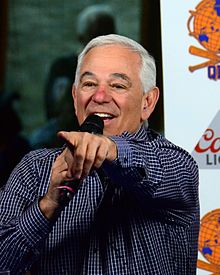
Robert John Valentine, nicknamed “Bobby V”, is a former American professional baseball player and manager. Valentine played for the Los Angeles Dodgers (1969, 1971–72), California Angels (1973–1975), New York Mets (1977–78), and Seattle Mariners (1979) in Major League Baseball. He managed the Texas Rangers (1985–1992), the New York Mets (1996–2002), and the Boston Red Sox (2012) of MLB, as well as the Chiba Lotte Marines of Nippon Professional Baseball (1995, 2004–2009). Valentine has also served as the Director of Public Safety & Health for the city of Stamford, and an analyst for ESPN Sunday Night Baseball. Since 1980, Valentine has owned and operated Bobby V’s Restaurant & Sports Bar, a sports bar that is located in his hometown of Stamford. He has been the athletic director at Sacred Heart University since July 2013. Sacred Heart opened a $21.8-million fitness facility called the Bobby Valentine Health and Recreation Center last year. Valentine helped to found the Mickey Lione, Jr., Scholarship Fund, which awards scholarships to Stamford sophomores who excel off the field and exemplify the values that Lione instilled in his athletes and students. Valentine was named the Eastern College Athletic Conference administrator of the year in 2018, and has received numerous awards both for his athletic successes and philanthropy.
Arranged by Bryan Hooper
Bryan’s summary of the talk:
Bobby Valentine took us through a peripatetic journey of his memories, stopping off at numerous points to reminisce on highlights from an incredibly full and fascinating life, and then engaged in a lively and entertaining discussion session with our members.
Items of note from his talk were:
- His grandparents arrived in America possessing the grand sum of $12.22.
- He was the only three-year, all-state football player ever named in Connecticut.
- The first manager he worked for in baseball was Tommy Lasorda of the LA Dodgers.
- His first restaurant was opened in Stamford 40 years ago on the site of the former Stagecoach Café.
- Bobby V was the grand marshal of the Columbus Day parade in New York in 2001.
- He was the first non-Japanese to manage a major baseball team in Japan.
- Sacred Heart University honored him by naming their new fitness center after him in 2019.
- His production company is producing a film from the book “The Greatest Beer Run Ever.”
He attributed his success to “hard work plus good luck,” and “doing the right thing for the right reason.”
Bobby V’s presentation and discussion attracted one participant shy of one hundred on our Zoom feed, and provoked the most strongly positive reactions from members we have seen since the Covid crisis began:
“Great time well spent!”
“One of best ever!”
“Bobby V certainly gave a great presentation, is a wonderful speaker (and showman!).”
“Today’s meeting was particularly a fun time with Bobby V.”
“Excellent talk today.”
“So nice to have 90 minutes during which I could simply enjoy stories about his interesting life.”
“Thanks for getting Bobby Valentine for today’s DMA presentation. He was just terrific!”
Video of presentation: https://youtu.be/ChUPi4FtY3Q
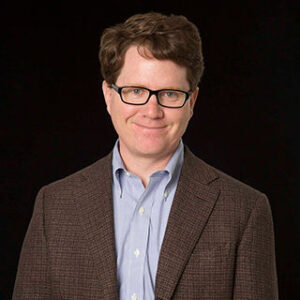
The Metropolitan Museum of Art possesses the finest, most comprehensive collection of Medieval and Byzantine art in the western hemisphere. It is held in two locations: the galleries of the Met’s main building on 5th Avenue and The Met Cloisters in Fort Tryon Park. Dr. C. Griffith Mann will discuss the history of the collection and the role played by J.P. Morgan in its development.
Dr. Mann was appointed The Metropolitan Museum of Art’s Michel David-Weill Curator in Charge of the Department of Medieval Art and the Met Cloisters in September, 2013. In this role, he is responsible for the medieval collections and curatorial staff in the Met’s main building, and for directing the staff and operations of the Met Cloisters, the branch of the Metropolitan Museum dedicated to the art and architecture of medieval Europe. Dr. Mann received his B.A. in art history and history from Williams College, and his Ph.D. in medieval art from The Johns Hopkins University. A specialist in the arts of late medieval Italy, he has published on civic patronage, painting, and devotion in Tuscany. As a curator, Dr. Mann has worked on exhibitions on the medieval cult of relics, the art and archaeology of medieval Novgorod, and French manuscript illumination of the 13th century. He formerly served as the Chief Curator and Deputy Director at The Cleveland Museum of Art, where he helped to lead the museum’s reinstallation, acquisition, and exhibition programs, and as medieval curator and Director of the Curatorial Division at The Walters Art Museum, where he worked on exhibitions and the permanent collection.
Arranged by Bryan Hooper
Bryan’s summary of the talk:
Dr. Griffith Mann returned to the DMA’s virtual podium to relate the story of J.P. Morgan’s important role in the development of the Metropolitan Museum of Art, and illustrated his narrative with selected items from the Met’s collection of medieval art.
From the end of the Civil War in 1865 there was increasing interest by civic and business leaders in fulfilling a vision of the United States as having cultural centers on a par with the best in Europe, and to display original artwork from past and present civilizations. Philanthropists began work on establishing museums around the country in cities including Boston, Philadelphia, Washington, D.C., and, of course, New York, where the Met was founded in 1870, and opened in 1872. Morgan became a trustee in 1889 and was elected President in 1904. In that position, he spearheaded the growth of the Met’s extensive building expansion, which was initiated in 1907 and completed in 1926, as well as setting high professional standards for the museum staff to establish a reputation for expertise and competence in the growing enterprise.
As an art collector, he focused his efforts on following in the footsteps of royal collectors in Europe to concentrate on building his collection by buying items that were not only rare, but also high in quality. His preference in collecting was on objects rather than paintings, although they were not excluded. A major interest for Morgan was archaeological research, particularly in Egyptology, forming the basis of the Met’s current collection for the field, and also in manuscripts and early books, which led to the establishment of the Morgan Library. While he tended to concentrate on individual purchases of interesting objects, Morgan was not averse to buying collections – a French purchase was so large that the Met built a new wing for it! Some of his amassed art works were stored in London at one of his residences, as well as being on display at the Victoria & Albert museum in South Kensington. This was necessitated by heavy import taxes in place until 1909, which deterred shipment to the US, and consequently retarded the growth of the Met’s ability to display more objects.
When Morgan died in 1913, his will stipulated that his executors should “…render the objects permanently available for the instruction and pleasure of the American people…” However, there were no specifics defined, and it was left to Jack Morgan, his son, to ensure the will was carried out. The collection was shown at the Met in its entirety in 1916, and then dispersed to various destinations. In 1917, Jack Morgan gave the museum over 7000 objects, many of which became the foundation of the medieval collection at the Metropolitan Museum of Art.
Apart from visiting the Cloisters to view some of the art bequeathed by J.P. Morgan, you can also see other artworks from the collection that were donated to the Wadsworth Atheneum in Hartford, the city where Morgan was born and buried. The video recording of the presentation by Dr. Mann is posted below, where you will enjoy his ability to tell and show an intriguing story to such good effect.
Video of presentation: https://youtu.be/3bN8stiMyOM
 David Pogue will talk about the subject covered in his upcoming book, “How to Prepare for Climate Change.“ He notes that “the number of people who believe that the climate is not changing are dwindling, and it’s currently about 12% of Americans. Twice that number believe that aliens walk among us. There may still be people who believe that the changing climate is not human-caused, or maybe you believe it is human-caused, or that it’s a natural cycle—but either way, you still need to prepare!”
 David is a technologist, columnist, entertainer and television reporter. From 2000 to 2013, he was the New York Times weekly tech columnist. After a five-year detour to Yahoo Finance, he now writes for the Times, WIRED, and OneZero on Medium. He’s a five-time Emmy winner for his stories on “CBS Sunday Morning,” a New York Times bestselling author, and a host of 20 science specials on “NOVA” on PBS. David is one of the world’s best-selling “how-to” authors, with more than 100 titles and 3 million copies in print. They include seven books in the “For Dummies” series, his Pogue’s Basics series of tips and shortcuts, and the Missing Manual series of computer books. David graduated summa cum laude from Yale in 1985 with distinction in music, and he spent ten years conducting and arranging Broadway musicals in New York. He has won a Loeb Award for journalism, and an honorary doctorate in music. He has been profiled on “48 Hours” and “60 Minutes,” and is regularly featured on “CBS Sunday Morning.”
Arranged by Bryan Hooper
Bryan’s summary of the talk:
David Pogue led us through the background of the subject of climate change and described some of his ideas on how individuals can prepare to cope with the dislocating changes that are projected to occur.
Carbon dioxide levels in the atmosphere have fluctuated over the millennia, generally ranging from 180 to 280 parts per million, but have steadily risen over the past 150 years since the advent of the industrial revolution to a peak around 420 ppm. Accompanying that growth has been an increase in global mean temperature, which in turn has fueled changes in weather related phenomena, resulting in increased numbers of hurricanes, floods and wildfires, with consequent loss of life, property damage and other results, such as flooded farmland preventing the planting of crops.
David shared some of his ideas on how we should be preparing for the projected difficulties that will need to be faced:
- His first point concerned where to live. Sea levels are rising and threatening coastal dwellings: Miami is number one on the list of cities that will feel the main impact of inundation, and the projected regional outlook is resulting in the devaluation of Florida real estate. Water shortages are also a key concern in some areas – for example, the Hoover Dam is only one third full due to sustained drought. All things considered, his suggestion is to head above the 42nd parallel to the Great Lakes region. Relocation areas to consider are Cleveland, Madison, Burlington and Buffalo.
- Secondly, he considered where to invest. Reducing atmospheric carbon levels has spurred the development of renewable energy sources, such as solar and wind-power. Renewables energy production overtook coal-sourced energy output in 2020, and solar is now cheaper per watt than coal. Solar costs have fallen from $80 to 20¢ per watt since 1976. However, with the Chinese dominating the solar market there is little investment opportunity in that direction, and the recommendation is to invest in utilities supplying energy, as well as in water companies, farm equipment producers and in suppliers of components for electric vehicles.
- The third point he discussed is how to insure. Most independent flood insurance ended in 1992 as insurers withdrew from the business due to major losses from Hurricane Andrew, and FEMA now provides 95% of flood insurance through the National Flood Insurance Program. It is $25 billion in debt. A new scheme to be introduced in 2021 has been proposed to raise rates on lower-lying properties, and lower them on properties at higher elevations to reflect real risk. Implementation is scheduled for October 2021: watch this space…
- The fourth point he made is to be prepared. The advice covered an emergency “Go Bag” with food, flashlights and other survival necessities; preparation for emergency water sourcing; a power generator; hand-cranked device chargers; tick and mosquito deterrent; having a plan to keep in touch with your family and friends; owning a tactical flashlight to discourage the bad guys.
- Finally, David suggested we should hope. US gas emissions are declining due to using natural gas instead of coal. While the Federal government might take a hands-off approach, a number of cities are taking their own initiatives toward promulgating renewable energy resources. 250 global companies have committed to 100% use of renewables.
The video of the presentation can be accessed from the link blow, and to learn more detail about David Pogue’s ideas on the topic you can read his new book, “How to Prepare for Climate Change,“ which will be published in January 2021.
Video of presentation: https://youtu.be/7sZ2qdPOprI
Mark Albertson will trace the history of air power as seen through the United States Army, from the establishment of the Union Army Balloon Corps in 1861 to the founding of the United States Air Force in 1947.
Mark is the historical research editor at Army Aviation magazine, and the historian for the Army Aviation Association of America. He has authored several books, including “On History: A Treatise,” and is finishing “Volume 1, Sky Soldiers: The Saga of Army Aviation.“ An avid speaker, he travels Connecticut presenting a variety of historical topics and current events. He teaches as an adjunct at Norwalk Community College for the Extended Studies Program and for the Lifetime Learners Institute. This will be his eleventh presentation to the DMA.
Arranged by Bryan Hooper
Bryan’s summary of the talk:
Mark Albertson, the historian for the Army Aviation Association, related the story of the development of the use of aircraft in the US military, starting with observation balloons in 1861, and moving up to the formation of the United States Air Force in 1947.
The French Montgolfier brothers built the first manned flying balloons and demonstrated them over Paris in 1783. The following year, after observing one of the balloons flying, the prescient Benjamin Franklin opined that it would be impossible to defend against an attack of steerable balloons. He suggested that an invading force of 5000 balloons, two men in each, would cost about as much as one ship of the line, and would pose a far greater threat. Subsequent development of the balloon for military use was undertaken by the Europeans, however, and they were used as observation posts by the French in 1794 in a battle against Austrian and Dutch forces.
The first major-scale use of balloons by the US military occurred during the Civil War when the United States Balloon Corps was formed and organized by Thaddeus Lowe, who used his own balloon, the “Enterprise,” to test fly and attempt communicating via telegraph. In June 1861, Lowe transmitted the first message from air to ground, and President Lincoln at the White House was one of the recipients. Later that year a coal barge based on the Potomac was modified to carry equipment to generate hydrogen gas from iron filings and sulfuric acid, and in turn to feed the gas to balloons used to observe Confederate troop movements: thus, we witness the creation of the aircraft carrier. Two years later, Graf von Zeppelin had his first flight experience in a Union balloon, and then went on to develop his own aircraft in Germany, but the US interest in further balloon development waned.
In 1907, the US Army formed the Aeronautical Division of the Signal Corps and concentrated on developing powered airplanes with the Wright Brothers for reconnaissance purposes in support of ground forces. Ben Foulois of Washington, Connecticut, was one of the pioneer pilots flying the Wright Brothers Type A. He saw action over Mexico in 1916 as an aerial spotter assisting in the search for Pancho Villa’s forces. Foulois served in Europe as Chief of Air Service, American Expeditionary Forces, during WWI, and eventually became Chief of the Air Corps. He retired in 1935 having seen attitudes toward the air service change from regarding it as an arm of the Signals Corps acting in a supporting role, to a recognition that this service should transition to become part of strategic offensive operations.
The US Army Air Corps became the US Army Air Force in 1941, and together with the RAF delivered 2.7 million tons of bombs during WWII – a far cry from the first 18 pound bomb load of hand grenades dropped on Libya by an Italian pilot from a balloon in 1911. Finally, the service became the US Air Force in 1947. Its history since then will have to await at least talk number twelve from Mark.
Video link to his presentation: https://youtu.be/mGJF3NAYUSk
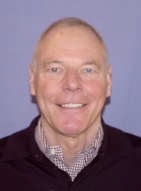
Bert von Stuelpnagel was born in Freiburg, Germany, on March 6, 1950 and graduated from Bad Toelz High School in 1969. After military service and training in banking he worked in the financial industry during his entire career, including 35 years at the New York Branch of BayernLB, a German public sector bank. He retired in 2015 from his last position at that bank as Executive Vice President U.S. Capital Markets. He holds a Master in Political Sciences from State University of Bavaria, and an M.B.A. in Finance from Pace University. Bert has lived in Darien with his wife Lisa since 1984. They have three children, two of whom graduated from Darien High School. Bert is currently serving on the Darien RTM and its Finance and Budget Committee, and on the Darien RTC as its treasurer, and on the Andrew Shaw Memorial Trust, also as treasurer.
Arranged by Bryan Hooper
Bryan’s summary of the talk:
Bert von Stuelpnagel recounted the ascent of Hitler and the several unsuccessful plots against him. Bert spoke with an intimate knowledge gained from research into his family background as he is related to Colonel Claus von Stauffenberg, who placed the bomb designed to kill Hitler in July, 1944, and to General Karl-Heinrich von Stuelpnagel, who was instrumental in the short-lived success of the subsequent uprising in Paris.
In 1932 the Nazi party led by Hitler gained only 33% of votes in the November national election, but due to the inability of the other parties to create a coalition, President Hindenberg was persuaded to appoint Hitler as Chancellor in early 1933. After Hindenberg’s death the following year, Hitler became Der Fuehrer, effectively establishing himself as dictator. He created an alliance with the army and rewarded the generals by enlarging and re-arming their forces. In 1938 he declared himself War Minister and re-organized the chain of command, replacing the leadership. Several generals concocted a plot to overthrow Hitler in that year, but it fell apart after the appeasement by Neville Chamberlain with the signing of the Munich Agreement in late September. World War II followed in September, 1939.
The plotters persisted as the war was waged, and in 1943 a group of 21 officers from the Infantry Regiment in Potsdam developed a variation of the Valkyrie Plan, which was originally devised by Hitler to ensure the continuity of government in case of a putsch against Nazi leadership from forces within Germany. The original Valkyrie contemplated a breakdown of government due to allied bombing or an uprising of parts of the forced labor force of 7 million. In an emergency, prepared orders would be issued to the Reserve Army to maintain law and order within the German territory. Under the plotters’ revision of Valkyrie, the mobilized Reserve Army was to arrest local SS and Nazi bosses to complete the putsch.
The first attempt at executing the plan was on March 13, 1943, when two bombs placed on Hitler’s plane failed to detonate due to the low temperatures encountered in the hold. (The bombs were retrieved for later use on July 20, 1944.) A second effort on March 21st was aborted when Hitler left an exhibition earlier than expected, and there was another attempt cancelled in the fall that year. Colonel von Stauffenberg resolved to carry out an assassination attempt at the Wolf’s Lair, Hitler’s headquarters for the Eastern Front. He had to pass on two dates in July before seizing the opportunity on July 20th. The bomb was left in a briefcase in the conference room under the table close to Hitler, but the briefcase was moved by one of the generals. Von Stauffenberg had set the detonator and left the room, taking a car to the airport to fly to Berlin, when the bomb exploded. It killed four people and severely wounded another nine. Hitler survived with singed trousers and a perforated eardrum – and hosted a meeting with Mussolini that afternoon! Von Stauffenberg was arrested in Berlin, court-martialed, found guilty, and executed just after midnight on the next day.
General Karl-Heinrich von Stuelpnagel, the High Commander of Occupied France in Paris, had attempted to recruit Field Marshal Rommel to the rebel cause on July 7th, 1944, but Rommel was injured in a strafing attack ten days later and replaced by Field Marshal von Kluge. On July 20th, after being apprised of the supposed death of Hitler, von Stuelpnagel followed through on the Valkyrie Plan and arrested 1200 SD (security forces), Gestapo and SS personnel. Von Kluge refused to go along with the plan, ordered the release of the prisoners, and von Stuelpnagel then went by car to Berlin. On the way he attempted suicide, but failed and was turned in to the authorities. He was tortured, tried, and executed on August 30th. Rommel’s fate was little better: he was allowed to commit suicide via poison pill and died on October 14, 1944. Altogether, 7000 were arrested in connection with the coup attempt, and 5000 were executed.
In the five years from the start of the war until July 1944, 2.8 million Germans died, and in the 9 months from July until the end of hostilities in Europe, another 4.8 million died. Of the total of 60 million people killed in the European theater of operations, it is estimated that 30 million died after that July.
Slides used in the presentation: Presentation Stauffenberg Putsch October 20 2020
Video of the presentation: https://youtu.be/iV28yBh7iVA

Professor Charles Yarish received his Ph.D. from Rutgers University in 1976 and then joined the faculty at the University of Connecticut where he is in the Department of Ecology & Evolutionary Biology and The Department of Marine Sciences. He has also been an adjunct Professor of Marine Sciences at the State University of New York at Stony Brook, visiting Scientist at the Biologische Anstalt Helgoland, Germany, a visiting Professor of Marine Biology at the University of Groningen, The Netherlands, and a Guest Professor at Shanghai Fisheries University, China. He has served with many organizations including the International Executive Service Corps’ Aquacultural Project (Kenya), the Organizing Committee & the Executive Secretariat for the Vth International Phycological Congress, Qingdao, China, and as a member of the RCN for the US National Science Foundation genome project on Porphyra. Professor Yarish has been an invited participant in many international invited symposia and meetings in Canada, Chile, Cuba, Germany, Ireland, Japan, People’s Republic of China, Mexico, Portugal, South Africa, South Korea, Spain, The Netherlands and the USA, which have dealt with the ecophysiology, biogeography and aquaculture of seaweeds. At UCONN, he developed an internationally known Seaweed Marine Biotechnology Laboratory for seaweed R&D. He is intimately involved in the development of the global seaweed aquaculture industry and in particular in the USA. He has published extensively, and edited several books. In addition to receiving a number of awards over the course of his career, in 2019 Professor Yarish received the Phycological Society of America’s Award of Excellence for his sustained scholarly contributions in, and impact on, the field of phycology over his career.
Arranged by Bryan Hooper
Bryan’s summary of the talk:
Professor Charles Yarish of UConn educated and enlightened members with his talk on the ecological and economic benefits of seaweed, and the development of the aquaculture industry both globally and locally.
Worldwide, the industry produces 66 billion pounds of product, representing around $11 billion in value. The market has grown at an average annual rate of 8% since 1970, with Asian countries leading the growth driven by a shortage of agricultural land. China represents 48% of world production, with the US virtually nowhere. Main uses for seaweed products include food, animal feed, fertilizers and biomass for fuels. A major extracted class is phycocolloids such as alginates, carrageenans and agars, products that are used, for example, in texturizing, thickening, and emulsifying, as well as a range of medical uses, including antivirals and anti-fungal agents. The US imports almost 16 million pounds of dry seaweed and produces another 85-95,000 pounds via aquaculture and wild-grown. Prices for derived products range from 50¢ a pound for commodity colloids up to $2,000 for specialties for pharmaceutical uses.
Professor Yarish has been working on developing the growth of kelp in Long Island Sound for over thirty years, coping with the obstacles raised by environmental regulations, license requirements and recreational needs. He explained that seaweed farming requires no fresh water or fertilizer, helps reduce carbon dioxide and nitrogen levels, and complements the shellfish industry. Two key products are grown, gracilaria (red seaweed) in the summer months and saccharine (sugar kelp) as a winter crop.
There are currently three open water seaweed farms in the Sound, in the Bronx, Branford and Fairfield. Across the country, from a zero base ten years ago, there are now over 70 farms, with most centered in Maine, Connecticut and Alaska. The industry is considered an opportunity for workforce growth, and the Algae Technology Educational Consortium was established to promote this initiative. The potential for development of biomass as an energy resource has been recognized by the Advanced Research Projects Agency – Energy of the Department of Energy through funding research on microalgae to examine scalable, cost competitive and sustainable biomass production.
Projects being worked on by Professor Yarish include:
- Mechanized production and harvesting of tropical seaweeds in the Gulf of Mexico and the Caribbean Sea
- Scalability of coastal/offshore production in Alaska and Connecticut to grow sugar kelp
- Selective breeding technologies for scalable offshore farming to increase productivity 10-20% per generation
- The further development at UConn of kelp breeding technology
However, perhaps the greatest global benefit from current seaweed research projects might come from studies underway between Penn State and UConn on the use of the macroalgae Asparagopsis in cattle feed. It has been demonstrated to reduce methane emissions from cows by up to 99% in some cases, and if widely applicable and adopted could lead to a major reduction of this carbon pollution source.
Presentation video: https://youtu.be/jFnVv3aXD3s