Month: October 2020 (Page 1 of 2)

Hike Sherwood Island State Park, Friday, Dec 11, 2020

Contact Dave McCollum or Bob Plunkett

“HIKING” SHERWOOD ISLAND STATE PARK

SHERWOOD ISLAND CONNECTOR

              WESTPORT, CT

      FRIDAY DECEMBER 11, 2020 AT 10:00

We will be walking about 3 miles through Sherwood Island State Park on mostly hard and gravel paths. Very little up and down. We will meet in the Pavilion parking lot at 10:00 AM. The Park hugs the Sound shoreline and is often quite windy. Dogs are permitted on a leash and, as always, bring anyone with you who would enjoy a one hour plus walk in a beautiful setting. NO LUNCH after.

HISTORY

Sherwood Island State Park is the oldest state park in Connecticut dating to 1914. The island itself was first settled by Daniel Sherwood in1787 where he built a grist mill. Over the next 70 years the land was farmed by many others but around 1860 the property became known as “Sherwood’s Island”

After the Connecticut State Park Commission was formed in 1911 the search for suitable shorefront property to buy was on. The first piece of the existing park was purchased in 1914 making this the oldest state park. The park officially opened in 1932 but not until 1950 did the Army Corps of Engineers build the jetties and extend the beaches. The Pavilion opened in 1959 and a 911 Memorial was added in 2002.

DIRECTIONS

This one is easy! Take Exit 18 off I-95 (Sherwood Island connector) and turn right towards the Sound. The road goes directly into the Park. Keep straight onto the wide roundabout and take the exit marked “Pavilion Parking”. We’ll meet at the front of that lot up towards the Pavilion.


Recap of hike:

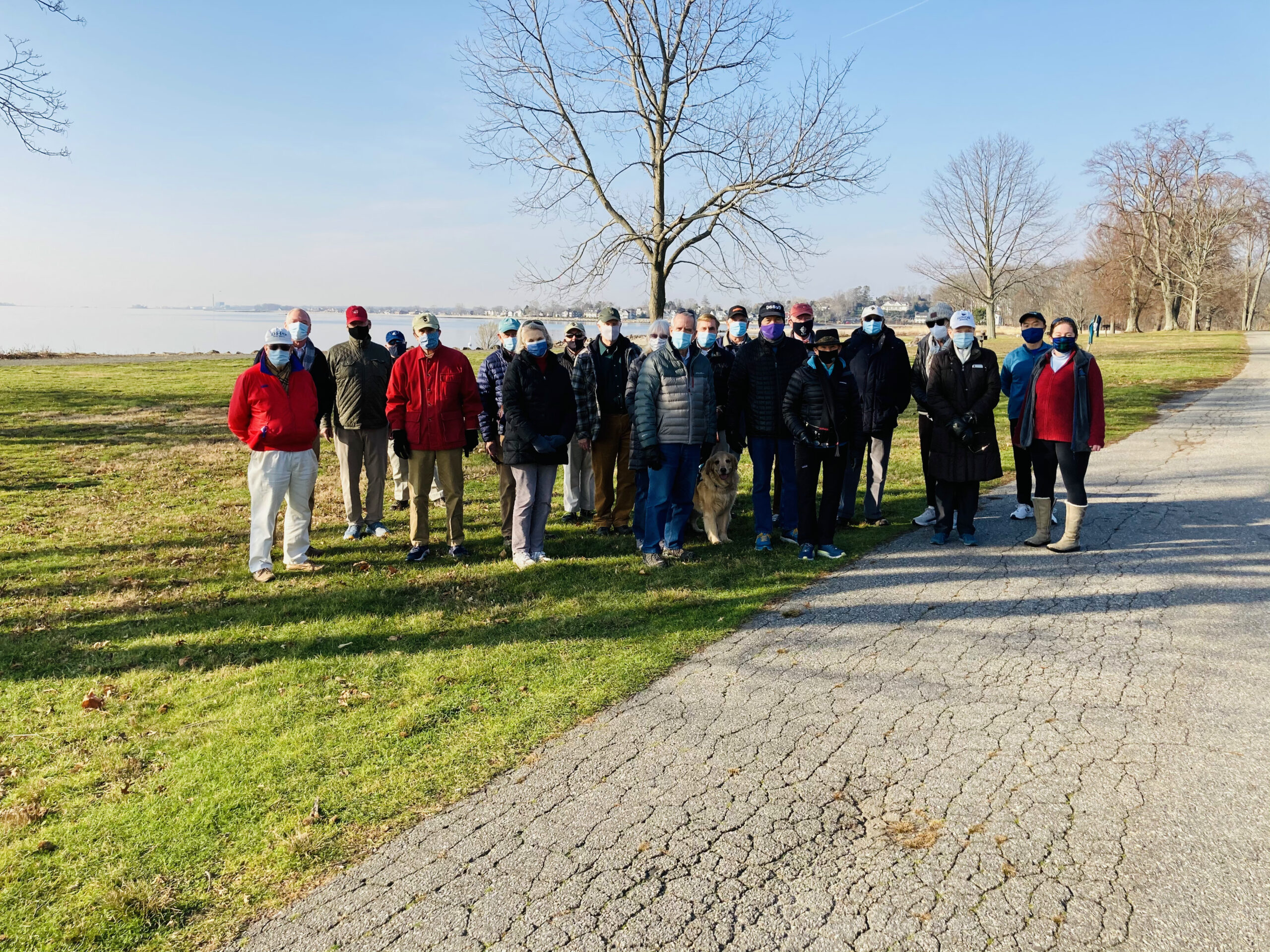
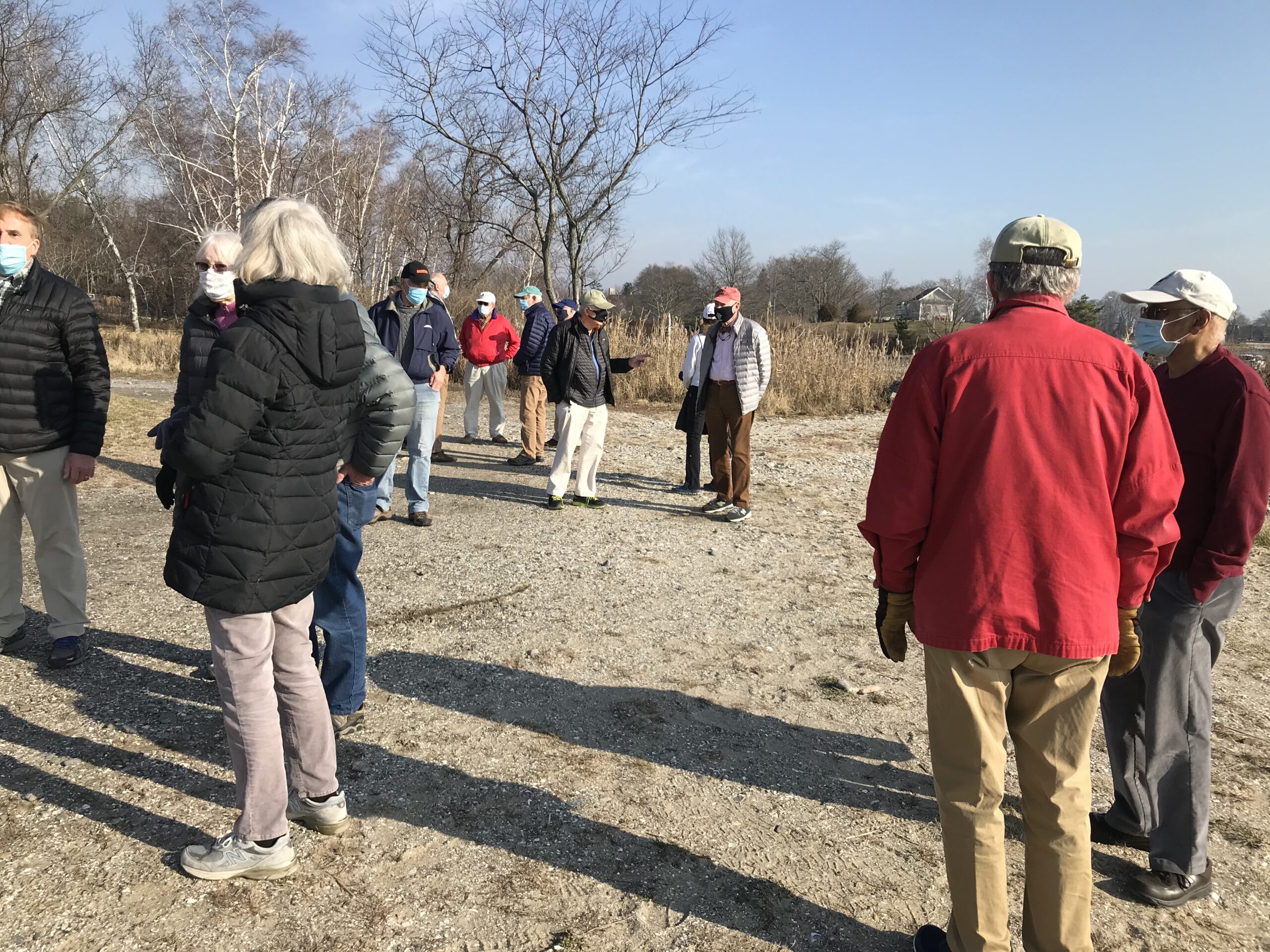
A near record 22 DMA members, spouses and friends spent a wonderful hour and 45 minutes touring the perimeter of Sherwood Island on mostly flat and hard surface trails. The weather was magnificent as was the opportunity for hikers to see and talk to each other (even through our masks) rather than on Zoom. The easy terrain and wide paths made conversation possible and we took advantage of it by taking nearly two hours to walk three miles!

Sherwood Island, the oldest state park in Connecticut, covers 234 acres of mostly open shoreline but has a substantial wooded area as well. A beautiful feature of the park is the Connecticut 911 Memorial sited on a point with a direct view down towards New York City. The names of all Connecticut residents who died from that attack are memorialized on stones embedded on the monument. From that point we walked ¾ of a mile along East Beach to the end of the park at New Creek and then back to our starting point.

A thoroughly enjoyable day and a great way for us to get together outside during this pandemic. We will explore further walks over the winter.

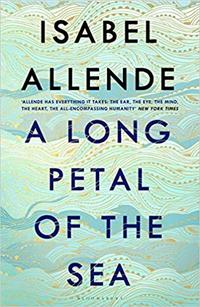
Book Club: A Long Petal of the Sea by Isabel Allende, Dec 9, 2020 @ 2:00


A LONG PETAL OF THE SEA
BY ISABEL ALLENDE ; TRANSLATED BY NICK CAISTOR & AMANDA HOPKINSON

Two refugees from the Spanish Civil War cross the Atlantic Ocean to Chile and a half-century of political and personal upheavals.

We meet Victor Dalmau and Roser Bruguera in 1938 as it is becoming increasingly clear that the Republican cause they support is doomed. When they reunite in France as penniless refugees, Roser has survived a harrowing flight across the Pyrenees while heavily pregnant and given birth to the son of Victor’s brother Guillem, killed at the Battle of the Ebro. Victor, evacuated with the wounded he was tending in a makeshift hospital, learns of a ship outfitted by poet Pablo Neruda to take exiles to a new life in Chile, but he and Roser must marry in order to gain a berth. Allende (In the Midst of Winter, 2017, etc.) expertly sets up this forced intimacy between two very different people: Resolute, realistic Roser never looks back and doggedly pursues a musical career in Chile while Victor, despite being fast-tracked into medical school by socialist politician Salvador Allende (a relative of the author’s), remains melancholy and nostalgic for his homeland. Their platonic affection deepens into physical love and lasting commitment in an episodic narrative that reaches a catastrophic climax with the 1973 coup overthrowing Chile’s democratically elected government. For Victor and Roser, this is a painful reminder of their losses in Spain and the start of new suffering. The wealthy, conservative del Solar family provides a counterpoint to the idealistic Dalmaus; snobbish, right-wing patriarch Isidro and his hysterically religious wife, Laura, verge on caricature, but Allende paints more nuanced portraits of eldest son Felipe, who smooths the refugees’ early days in Chile, and daughter Ofelia, whose brief affair with Victor has lasting consequences. Allende tends to describe emotions and events rather than delve into them, and she paints the historical backdrop in very broad strokes, but she is an engaging storyteller. A touching close in 1994 brings one more surprise and unexpected hope for the future to 80-year-old Victor.

A trifle facile, but this decades-spanning drama is readable and engrossing throughout.

Wander the Danbury Raid, Tuesday, Oct 27, 2020

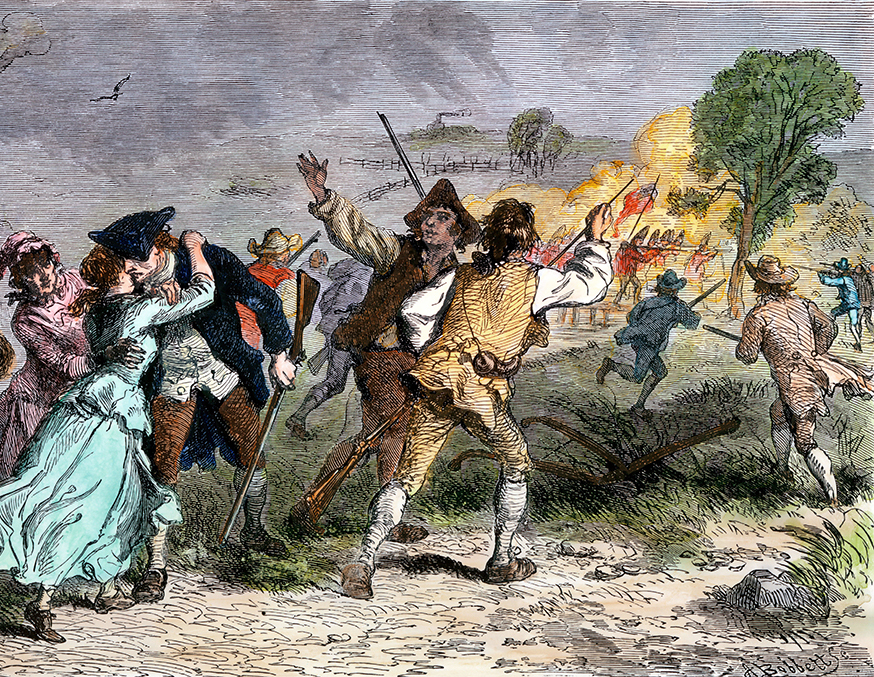
BB3GGJ Minutemen leaving for the Battle of Concord Massachusetts 1775

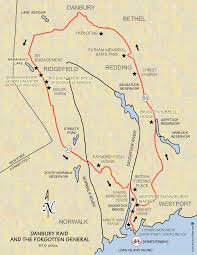
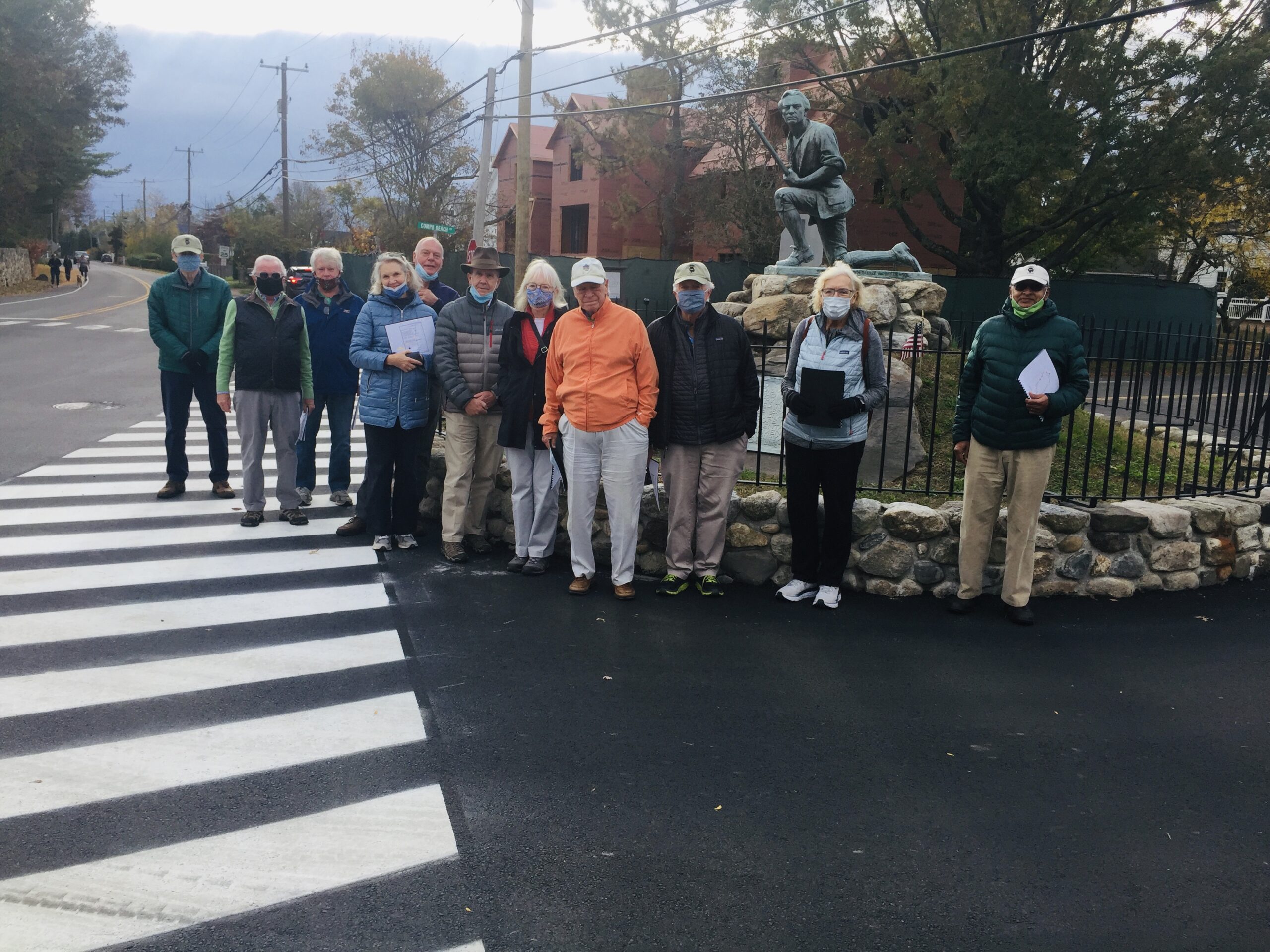
Our Westport–Ridgefield Wandering will take place on this coming Tuesday, October 27. Our walking focus will be the Danbury Raid, a military incursion of the British that took place in April 1777, during the Revolutionary War.

We will drive to Westport and meet there at 9:30 AM on the 27th at the main Compo Beach Parking Lot.  The shortest and most direct route is to go on I-95N toward New Haven and get off at Exit 17. There go straight at the end of the exit ramp and through the railroad station neighborhood, over the old girder bridge, and then to South Compo Road and onto Compo Beach Road. When I made a trial run the other day, it took about 14 minutes after I entered at Exit 11.

The street address of the entrance to Compo Beach Park is 80 Compo Beach Road. There turn south into the park, past the gate house, which is closed for the season, and continue to the south end of the parking lot, adjacent to two large decorative black metal canons on the south end of the beach. There we will meet our guide, Edward Hynes, and will park and assemble for the beginning of our Wandering. There are public restrooms in the park.

After about an hour and a half walk in Westport, we will end up back at the beach parking lot, from which we will drive north to Ridgefield, following, at least in part, the general route that the invaders followed on their way toward Danbury. The second part of our tour will be centered in Ridgefield and will focus on the actions taken by the Connecticut based militias to attack, harass and deter the British forces as they marched north to their objective: the Continentals’ supply depots in Danbury. After walking through some of the parks and locations of the Battle of Ridgefield, we will have access to some picnic tables there to eat the sandwiches you need to bring.  There are no restaurants nearby.  You may also choose to return to Darien if you prefer.  Below is a list of our wanderers.  If you want to pair with somebody to drive please make your own arrangements.

Finally, please bring a mask, which is required in the parks.  I am assuming we can take off the mask when we do our walking.

If you have questions, you can reach me on my cell phone at 203-554-4201.  Below is the list of wanderers.

Looking forward to seeing you all on Tuesday. Happy Wandering!


Wander Jamaica Bay Wildlife Refuge, Nov 5, 2020

Your hosts: David Mace & Joe Spain

Mark Shakley and I  just returned from a visit to the Jamaica Bay Wildlife Refuge  This is a spectacular venue in Queens (900 acres) looking toward the Rockaways and back to the Verrazano Bridge.  We walked the 1.7 mile loop around West Pond. Along the way we met a number of birders with cameras and telescopes.  We saw a multitude of bird species including several Osprey platforms built by the National Parks Service. Jamaica Bay is part of the Gateway Recreation Area under the National Parks.   We will have a Wandering to Jamaica Bay on Thursday November 5. It is a one hour drive from Darien.  We will take sandwiches and eat on picnic tables at the Visitors Center. Mark your calendar for November 5. If you are interested please email David Mace.
https://npplan.com/parks-by-state/new-york-national-parks/gateway-national-recreation-area-park-at-a-glance/gateway-national-recreation-area-hiking-trails/gateway-national-recreation-area-hiking-at-jamaica-bay-wildlife-refuge/gateway-national-recreation-area-west-pond-trail-at-jamaica-bay-wildlife-refuge/

Hike Leon Levy Preserve, Oct 22, 2020

HIKING THE LEON LEVY PRESERVE

SOUTH SALEM, NY

  THURSDAY OCTOBER 22, 2020

9:30 AM


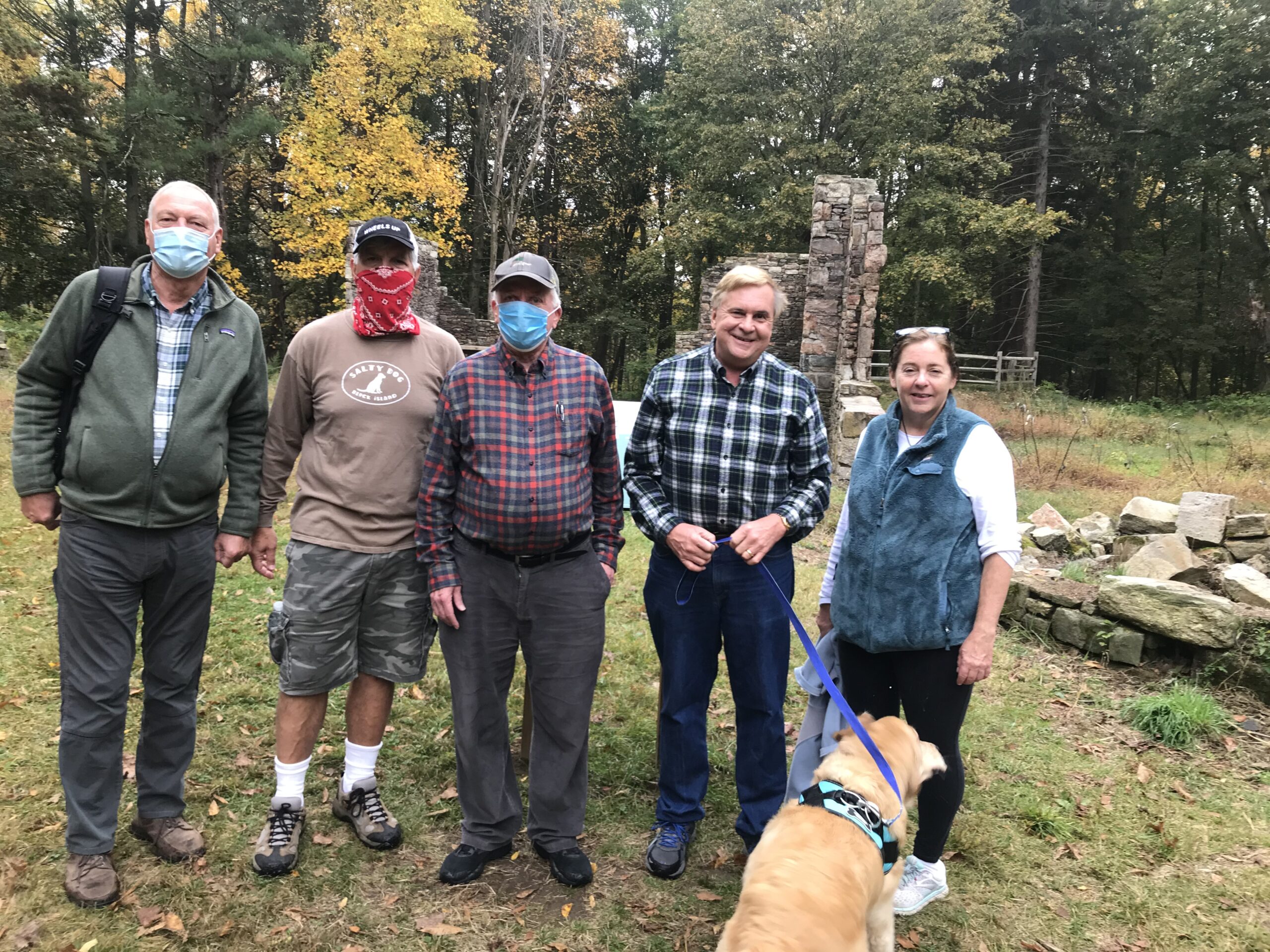
 The Leon Levy Preserve, formerly the Bell property, was purchased by the Town of Lewisboro in 2005. It is 383 acres of forest and wetland located in the watersheds of both New York City and Stamford. The preserve has an extensive, well marked, trail system, the ruins of the Black mansion (1899-1979) and other outbuildings. The scenery at this time of year is spectacular and the Preserve encompasses an impressive gorge and numerous large rock outcroppings. 

The hike of about 3+ miles (2 hours) we will take features mostly wide and well maintained trails which range from easy to moderate levels of difficulty. This hike should appeal to hikers of all levels of experience. As always, we welcome spouses, friends and dogs on a leash. No lunch.


DIRECTIONS:

The actual address of the Preserve is 2-50 Smith Ridge Road (Route 123) but Google 45 Smith Ridge Road in South Salem, NY which is a private house on the right side of the road. Just beyond that address is a sign for the Preserve on the left side indicating a left turn into the parking lot. The location is well up Rt 123 into NY State past Vista but short of Rt 35. There is ample parking.


Contacts:

Dave McCollum and Bob Plunkett

Bob Plunkett

Professor Robert Thorson, UConn, “Stone Walls of Connecticut,” March 31, 2021

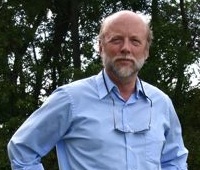
Robert Thorson is a professor and interim Head of geosciences at the University of Connecticut. Thor graduated from college in 1973 and left for Alaska to train as an exploration geologist. After earning an MS degree from the University of Alaska in 1975, he worked as a full-time geologist for the U.S. Geological Survey until 1979. He earned a PhD from the University of Washington in 1979, and in 1984, moved to New England to join the faculty of the University of Connecticut in the Department of Geology & Geophysics. During his first twenty years at UConn, his appointment was with the Department of Geology & Geophysics, where he ran a grant-funded research lab with graduate students, and where his undergraduate teaching responsibilities included glacial geology, surface processes, dinosaurs, and introductory geology.

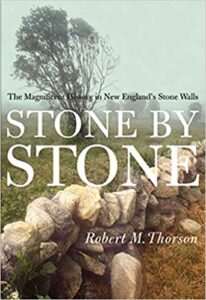
Thor’s academic career took an unexpected turn in 2002 with the publication of his first book on signature landforms:  Stone by Stone: The Magnificent History in New England’s Stone Walls. This nonfiction bestseller won the Connecticut Book Award. In addition to writing books, Thor has contributed many newspaper articles on science policy, environment, and education. His third book on stone walls, Exploring Stone Walls published in 2005, was the first-ever field guide to the phenomenon. Additionally, he has published two scholarly books on Henry David Thoreau for Harvard University Press. His last book, The Guide to Walden Pond, published by Houghton Mifflin Harcourt in 2018, is the first guide to this international shrine, a place visited more than half a million times each year.

Arranged by Bryan Hooper

Bryan’s notes on the talk:

Professor Robert Thorson spoke about a subject he has studied and written about for many years, the stone walls of New England.  Gary Banks found his book, “Stone by Stone,” on the Amazon website, and the notes accompanying it are reproduced below since they cover the essence of the talk given to us by Thor:

“There once may have been 250,000 miles of stone walls in America’s Northeast, stretching farther than the distance to the moon. They took three billion man-hours to build. And, even though most are crumbling today, they contain a magnificent scientific and cultural story―about the geothermal forces that formed their stones, the tectonic movements that brought them to the surface, the glacial tide that broke them apart, the earth that held them for so long, and about the humans who built them.
Stone walls tell nothing less than the story of how New England was formed, and in Robert Thorson’s hands they live and breathe. “The stone wall is the key that links the natural history and human history of New England,” Thorson writes. Millions of years ago, New England’s stones belonged to ancient mountains thrust up by prehistoric collisions between continents. During the Ice Age, pieces were cleaved off by glaciers and deposited―often hundreds of miles away―when the glaciers melted. Buried again over centuries by forest and soil buildup, the stones gradually worked their way back to the surface, only to become impediments to the farmers cultivating the land in the eighteenth century, who piled them into “linear landfills,” a place to hold the stones. Usually, the biggest investment on a farm, often exceeding that of the land and buildings combined, stone walls became a defining element of the Northeast’s landscape, and a symbol of the shift to an agricultural economy.
Stone walls layer time like Russian dolls, their smallest elements reflecting the longest spans, and Thorson urges us to study them, for each stone has its own story. Linking geological history to the early American experience, Stone by Stone presents a fascinating picture of the land the Pilgrims settled, allowing us to see and understand it with new eyes.”

The recording of Professor Thorson’s talk can be found at: https://youtu.be/KKpODRT5pTg.

Dr. Una Ryan, “Science as the Foundation for Sound Business Investments,” March 24, 2021

Dr. Una Ryan has extensive experience leading public, private and non-profit companies, and will be speaking to us about the role of science as the foundation for making sound investments. She is a limited partner at Breakout Ventures and at Lionheart Ventures. Una focuses on women-led ventures as Managing Director of Golden Seeds, and as a partner in Astia Angel. She has a portfolio of approximately 35 early-stage companies in the San Francisco Bay Area and Boston, and currently serves on the boards of Cortexyme, RenovoRx , and Elemental Machines. She was Chair of The Bay Area BioEconomy Initiative, an industry organization committed to fostering innovation and collaboration in the Bay Area, and was formerly on the board of BIO, BayBio and Chair of MassBio. Una also serves on the Boards of Cambridge in America and Bristol University US Foundation.

Dr. Ryan was President and CEO of Diagnostics for All, Inc. (DFA), developing inexpensive diagnostics for the developing world, President and CEO of Waltham Technologies Inc., a cleantech company, and President and CEO of AVANT Immunotherapeutics, Inc, now Celldex, developing vaccines and immunotherapeutics for infectious diseases and cancer.  At AVANT, Una oversaw four mergers and, after completing the merger with Celldex, became a serial entrepreneur and investor. Continuing a career of translating science to successful businesses, she is also translating science to art, and founded ULUX to bring new perspectives on science to the art world.

Dr. Ryan holds a Ph.D. from Cambridge University and BS degrees from Bristol University. She received an Honorary D.Sc. from Bristol University in 2009. Her academic career included Professorships of Medicine at University of Miami, Washington University, St Louis and Boston University. She held the titles of Howard Hughes Investigator, Established Investigator of the American Heart Association and NIH MERIT Awardee. She has received numerous awards including the Albert Einstein Award (2007) for outstanding achievement in the life sciences, the Cartier Award (2009) and World Economic Forum Tech Pioneer (2011). In 2002 Her Majesty Queen Elizabeth II awarded Dr. Ryan the Order of the British Empire (OBE).

Arranged by Flemming Heilmann

Bryan Hooper’s notes on the talk:

Dr. Una Ryan led us through her fascinating life story, encompassing survival in escaping from Singapore during WWII, a relatively genteel upbringing in Oxford, England, and an extremely successful career involving academia, business and art. The electron microscope binds these last three phases together.

Early in 1942, Una departed Singapore with her mother on a ship that was later torpedoed. They both survived that experience as well as being refugees for 18 months, but eventually arrived in England where they went to Oxford to live with an aunt. Being raised among the intelligentsia of the colleges exposed Una to academia and she graduated from Bristol University before entering Cambridge to study for her PhD. She remembered several incidents growing up that led to her interest in biology, and increased her understanding of, and interest in, diseases and cures – including the discovery that her grandfather, when surgeon general to the British Army in India, had inoculated a number of hill people against smallpox. Some refused the needle, but he discovered three years afterward that those who had been vaccinated survived another smallpox outbreak that had occurred later. Una’s thesis subject at Cambridge involved attempting to understand the mechanism of color changes in stick insects: access to an electron microscope allowed for detailed examination of cells and led to revelations concerning the inner workings of life. It also helped her develop an appreciation of the incredible artistic beauty of the body.

After Cambridge, Una joined the department of medicine at the University of Miami in the Howard Hughes Medical Institute, eventually becoming professor. She researched the blood/air interaction in the lungs, and applied to the National Institutes of Health for a grant for her research; along with the grant came funding for, what else, but an electron microscope. In the process of her work, she isolated the substance controlling blood pressure within the lung cells, angiotensin-converting enzyme, or ACE; understanding that process subsequently resulted in Bristol Meyers Squibb and Merck developing ACE inhibitors to control high blood pressure – an $80 billion business today.

Una still wanted to be involved in going beyond research to fulfill the task of finding cures, so she left academia for the corporate world, joining Monsanto as Director of Health Sciences. She managed research efforts involving five divisions, and learned the usefulness of growth by acquisition. However, she felt the need to be in a smaller operation and then joined an immunotherapy company in Boston, eventually becoming CEO and developing vaccines that to a large extent met her objectives of manufacturing products that were needle-free, temperature stable, single dose and low-cost to produce and buy. After completing a merger of her company with Celldex in 2008, Una became a serial entrepreneur and investor to continue her career of translating science to successful businesses, and also in translating science to art to bring new perspectives on science to the art world.

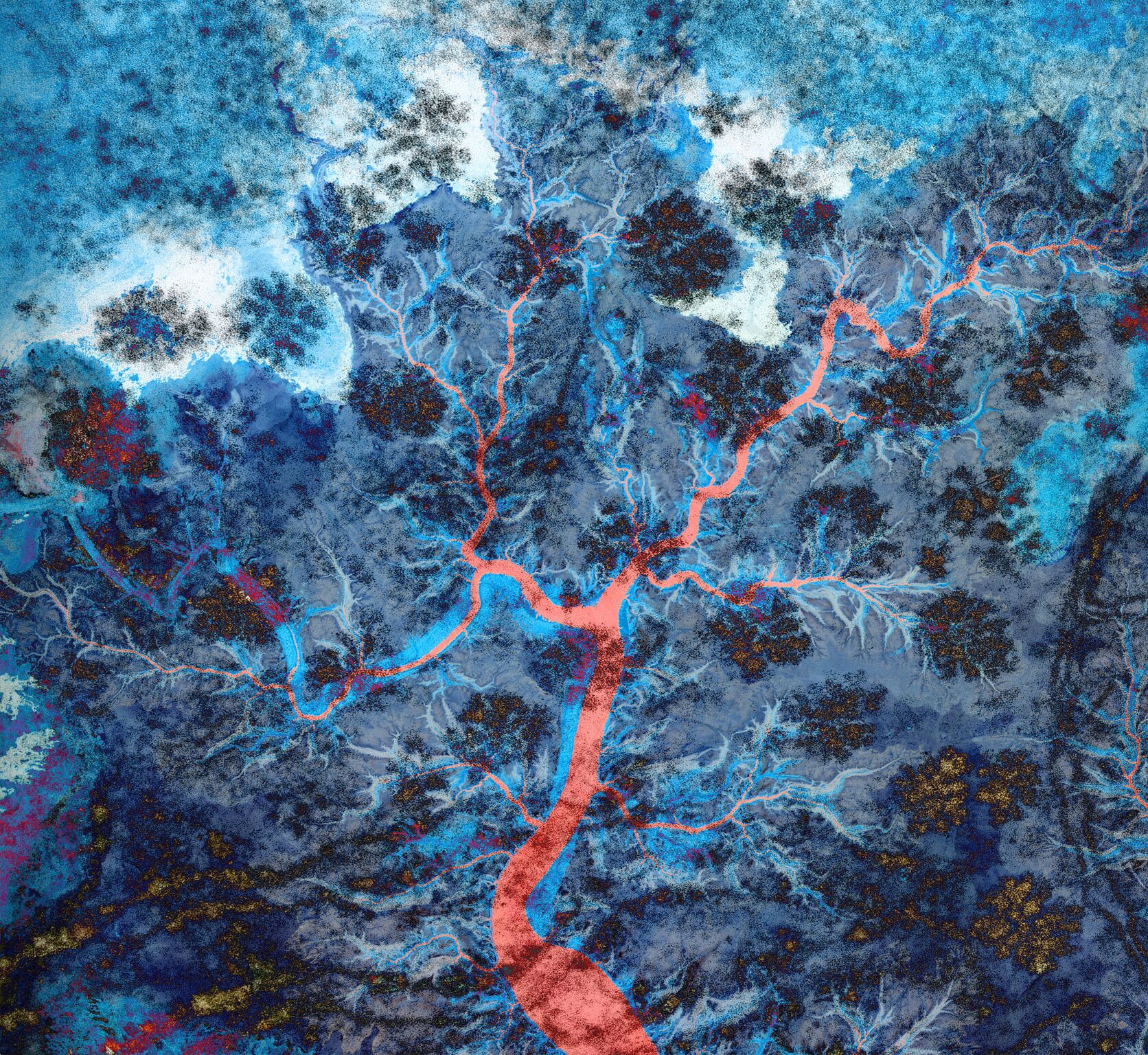
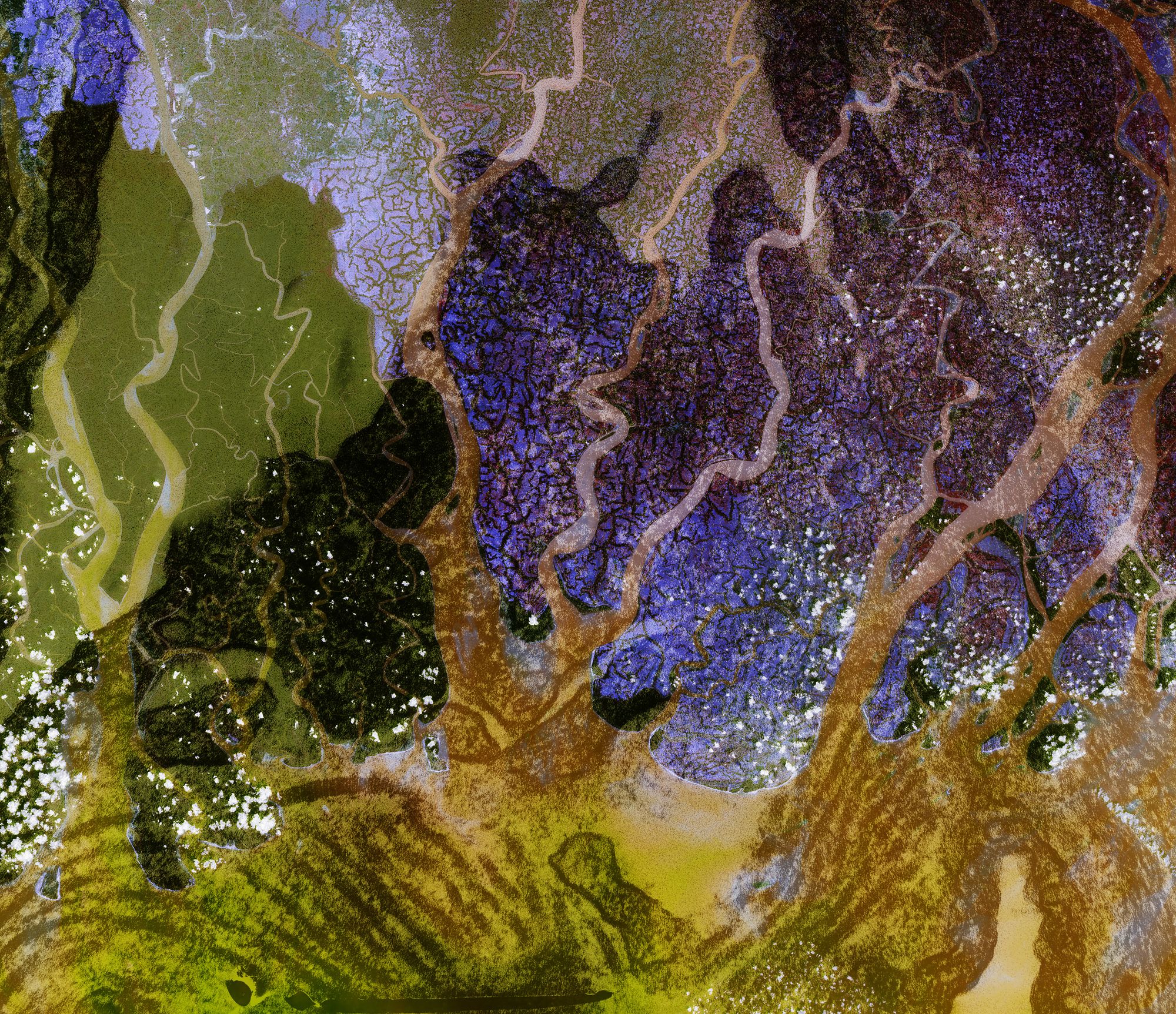
You can read about the latter venture and see examples of her art on her website at http://www.uluxart.com. Not surprisingly, you will find that her art creations involve images based on – what else? – electron microscope photographs. Here are two of her compositions:

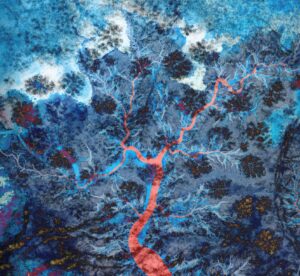
Tree of Life, Blue.  Ribosomal clusters with image of Australian river delta as seen from space.  The composition represents the two most essential elements of life: protein and water.
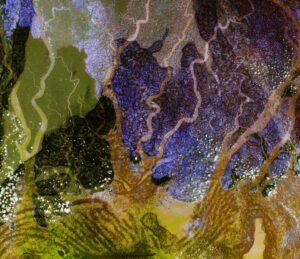
Habitat, 2016.  Lung tissue entwined with Sundarbans mangrove forest.


The video of her talk includes a most interesting Q&A session, and can be viewed on: https://youtu.be/cQTaiTXo-q4.

Ronnie Maher, “NicaPhoto: From photography in Norwalk to working with disadvantaged children in Nicaragua,” March 17, 2021

Ronnie Ellen Maher, Founder and Executive Director of NicaPhoto, is a professional and fine art photographer. Born in Brooklyn, and raised in Norwalk, Connecticut, Ronnie spent more than ten years teaching photography to disadvantaged or “at-risk” youth in various community programs throughout Norwalk, and later in Nicaragua. Ronnie first visited Norwalk’s Sister City, Nagarote, in Nicaragua in 2005 as a volunteer, teaching photography to youth. NicaPhoto was born shortly afterward as a series of photography and writing workshops for youth. For the next 4 years, while working as a professional photographer and teaching in various Norwalk community programs, Ronnie traveled to Nicaragua, teaching photography and connecting youth in the two communities. In 2010, Ronnie redesigned NicaPhoto to be a comprehensive, holistic after school program including education, art and personal development, and since then has been spending most of her time in Nicaragua.

Ronnie has a Liberal Arts Degree from UCONN with a BA in Communications and a minor in Psychology. Prior to studying photography at Maine Media Arts, she worked as a rate analyst and later as a junior level Treaty Underwriter at GenRe. Although it was not a straight path, if you asked her, she would say that everything she has done in her life has helped prepare her for the work she does today.

Arranged by Mike McFadden

Bryan Hooper’s notes on the talk:

Ronnie Ellen Maher, spoke to us from Nicaragua about the programs run by NicaPhoto, the non-governmental organization she founded and runs for disadvantaged children in the city of Nagarote.

Ronnie discovered her interest in photography in high school in Norwalk, where she was raised, and developed that further at Maine Media Workshops. In between working for financial services company, Gen Re, she pursued her hobby, which eventually became a second career. Working in Norwalk as a professional photographer led to Ronnie teaching photography to disadvantaged youths after school in a curriculum designed to stimulate and encourage interest in education, art and personal development. In the course of that program, she made her first visit to Nicaragua in 2005 to lead workshops on photography to children in Norwalk’s sister city, Nagarote.

NicaPhoto was founded in 2010 with a mission to empower disadvantaged children and their families living in the poorest barrios of Nicaragua, allowing them to reach their full potential, and in doing so, to break the cycle of extreme poverty. NicaPhoto started with 12 students and 3 staff as a formal comprehensive after-school project, with subjects covered including photography, tutoring in Math and Spanish, and a healthy hot lunch. The latter was particularly important since Nicaragua is one of the poorest countries in Latin America, with approximately 32% of the population living below the poverty line, and many Nicaraguans struggle daily to obtain sufficient food for their families.

Over the past ten years the curriculum has evolved to cover a wide range of activities including visual arts, dance and chorus, as well as martial arts to encourage discipline and self-esteem, and organic gardening. The garden was made reality once the organization bought a one-acre lot in 2015 and developed it over the next four years along with buildings to house the teaching activities. Waste palettes from a local cement factory provided wood for shop classes, resulting in the production of furniture for the classrooms and fencing for the site. They survived the economic problems of 2018 and have coped with the Covid-19 pandemic with good hygiene practices, taking classes to students, and working closely with parents and their children over the four months they shut down. They even bought a sewing machine to make masks to protect against disseminating the virus, and they introduced dance classes given by U.S. college students via Zoom. They gave computer classes, managed to continue training staff, as well as tutor students, and are about to introduce an aquaponics program to expand their education of food self-sufficiency. In terms of numbers, they now have 150 students and 12 full-time staff.

To learn more about NicaPhoto visit their website, www.nicaphoto.org, and to view Ronnie’s presentation and slide pack, click on the following links:

Presentation Video: https://youtu.be/1WyZQQmJDJ8

Presentation slides: https://dariendma.org/wp-content/uploads/NICAPHOTO-2.0.1-FINAL-3-16-21.pdf


« Older posts