 The U.S. Navy’s first submarine, commissioned in 1900, had a displacement of 75 tons and was powered by a gasoline engine having about the same power as a 1965 Volkswagen Bug. The latest submarines have displacements of up to 21,000 tons and are powered by nuclear plants large enough to supply the needs of a small city.
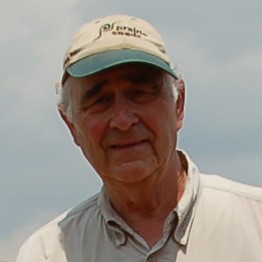
DMA member John Parker will walk us through submarine history over the past 123 years, touching on people, places, and events as well as changes in design and mission. During the journey he will highlight the role of Connecticut’s two (yes, two) submarine shipyards, and he will provide insights into the early days of the nuclear submarine program.
A native of Cleveland, John has a bachelor of science degree in mechanical engineering from Case Institute of Technology. He also has a masters degree in mechanical engineering from the University of Connecticut, an MBA from New York University, and graduated from the Naval Reactors Nuclear Engineering School.
After graduating from Case in 1956, John was employed by General Dynamics Electric Boat where he was involved with the design, construction and testing of three advanced submarine power plants. He spent three years at the National Reactor Testing Station in Idaho Falls, Idaho. After leaving Electric Boat in 1969, he spent the remainder of his career in commercial engineering and financial management, including three years as Technical Director of Universal Oil Products’ Air Correction Division located in Darien.
Active in the American Society of Mechanical Engineers throughout his professional career, John was the 2000-2001 President of ASME, and Chair of the American Association of Engineering Societies in 2002.
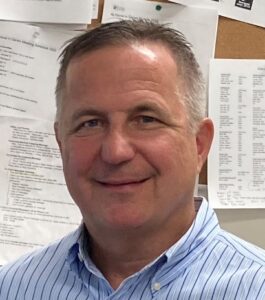 Chris Jones, Executive Director with At Home In Darien, will speak with us about the unique services provided by this local non-profit organization, and its ongoing mission to help Darien’s seniors live independently, comfortably and with dignity in their own homes and the community for as long as possible. COVID-19 has affected everyone – perhaps nobody more than seniors who are especially susceptible to longer-term health issues resulting from isolation and loneliness. At Home In Darien, which often flies below the radar for many town residents, offers a variety of services designed to support seniors and foster an intergenerational community.
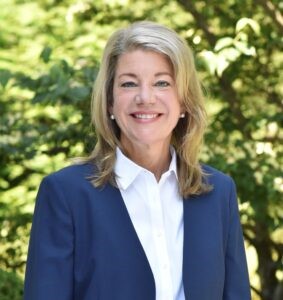 Darien’s first selectman Monica McNally will speak with us on “The State of the Town.” Monica was elected to her position in November 2021. Previously, for eight years, she was an elected member of the RTM, and for the last three years chaired the RTM public works committee, which led to a ban on single-use plastic bags. She most recently served on the Town’s board of selectmen.
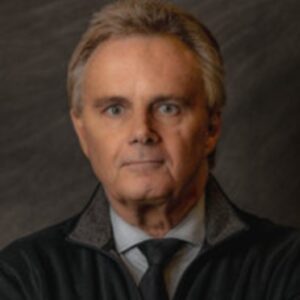 How inevitable is physical decline in old age? Are we destined to become frail and helpless? Frank McGinnis, fitness trainer, counters this scenario and advances the idea that by maintaining muscle mass we can avoid or retard many of the symptoms we associate with old age, such as loss of balance, limited mobility, and weakness. He will discuss the critical role of muscle mass in aging and how to sustain it through strength training.


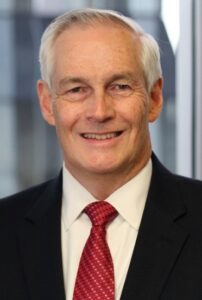 Structural engineer Jon Magnusson will speak with our group about the people, airplanes, and the buildings of the WTC attack. At the time of the attack, Jon was the Chairman and CEO of Skilling Ward Magnusson Barkshire, a Seattle-based structural engineering firm that is a successor to the firm that performed the structural engineering for the WTC in the 1960’s. An expert in high-rise buildings, he served on the American Society of Civil Engineers/Federal Emergency Management Agency Building Performance Assessment Team that studied the event in the months immediately following the attack. Knowledge of the structure of the towers may help people to understand the ultimate events of that day.
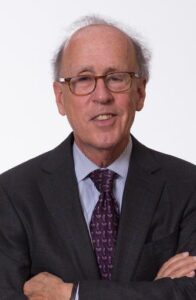 Steve Roach will discuss the evolving relationship between the United States and the Peoples Republic of China. He is a senior fellow at Yale’s Jackson Institute of Global Affairs and has authored the recently published book entitled Accidental Conflict – America, China and the Class of False Narratives.
 Mark Albertson, who is well known to DMA members as an entertaining and informative speaker and historian, will talk about the current Russo-Ukrainian War, a conflict that goes beyond the parochial confines of Putin seeking a greater Russia. It is round 3,855 in a progression that started in 1763 and is often called “The Great Game.” Today, the Great Game features the United States, Europe, Russia, China, India, and Japan.
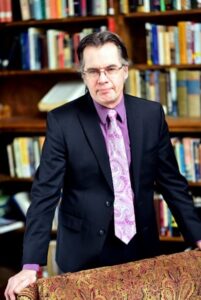 World War I not only caused death and destruction to those fighting; the War’s effect on culture and thinking were catastrophic. The War marked an end to an era and, to many, the end of one of the great periods of European civilization. Psychology, culture, philosophy – all of these took dramatic turns as a result of the War. Professor Hamish’s talk will discuss the War and its ending at the Versailles Peace Conference, as well as its after-effects in the cultural, economic, and political spheres, which would ultimately result in the outbreak of global war only 20 years after the close of the “War to End All Wars.”