Month: July 2023 (Page 4 of 4)

Michael Curran, “The French and Indian War: A Prelude to the American Revolution”, Sep 27, 2023 at 10:00

The French and Indian War: The Role of Native Americans as a Prelude to the American Revolution

Michael Curran will present an overview of the various French and Indian wars of the 17th and 18th century with a focus on the final war which started in 1755 at the Battle of the Monongahela and ended in 1760 with the capture of Montreal. He will provide context on the conflicts highlighting the role of Native Americans including their key role in initiating and expanding the final conflict. The French and Indian War was a critical prelude to the American Revolution and influenced the colonists politically and militarily. As such it should be a better-known part of our shared understanding of America’s founding moments.


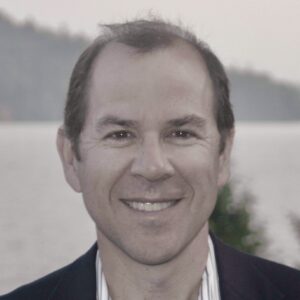
Michael Curran is a retired management consultant with 35 years of consulting and financial industry experience. His areas of focus included board of directors and executive management advisory work, strategic compensation design projects, and regulatory issues related to the interaction between risk and incentive pay. His clients included all the major US, Canadian, European, and Japanese banks and investment banks as well as leading private equity firms and hedge funds.

Upon retirement in 2016, Michael enrolled in and earned a masters degree with honors from the University of Buckingham. His thesis was on the role of Native Americans in the French & Indian War. Subsequently, he wrote a history of the various conflicts between the French, British, and Native tribal groupings as well as an historical novel focused on one of the leading French commanders.

He has held Board positions in several philanthropic organizations including: ABC of New Canaan, Regis HS, St. Joseph’s University, and Cornell University. He is a graduate of Cornell University’s School of Industrial & Labor Relations. A Bronx native, he has lived in Connecticut since 1981 and spends summers on Cape Cod.


Speaker Summary

Mike Curran provided a lively and informative overview of the history of European exploration and settlements in North America and their relationships with Native Americans leading up to the French & Indian Wars and, ultimately, the role this history and experience had on the subsequent Revolutionary War.

He started with an historical timeline of the varied expeditions to North America by many European countries motivated primarily by opportunities for financial benefits related to trading opportunities. An interesting point was that many/most of the explorations were funded and conducted on behalf of nations other than that of the explorer. Mike also showed the numerous Native American tribes and their territories in what was primarily the northeast, mid-west, mid-Atlantic and southern areas of what is now the United States, as well as into Canada. Another interesting fact – most of the tribal names were derogatory terms used by their enemies to describe them, not the names the tribes called themselves.

Mike then went into a detailed discussion of several of the wars that occurred and about the French and British settlers.  He talked about what motivated each nation (the French wanted trade while the British also wanted territory), how that influenced their relationships with the Indians (largely allied with the French), and the relative military strengths of each and how the French & Indian War played out as a result. He closed with a discussion of the lessons learned from these wars and how they helped embolden and prepare the U.S. colonies to take on the British during the Revolutionary War, and why the French was an ally to the U.S during that war.

An expansionary Q&A followed that provided additional information and perspectives on key battles and aspects of the Revolutionary War, including an interesting perspective on the strengths and weaknesses of George Washington as a military leader.
Video Presentation

Leon Krolikowski, “Darien School Safety and Security”, Sep 20, 2023 at 10:00


Darien School Safety and Security

Darien Public Schools Director of Security, Leon Krolikowski, will discuss how the Darien School District is embracing best practices in school safety and security. The talk will include discussions about the district’s armed school security officers (SSOs), campus monitors, training, accreditation, best practices, and related initiatives that will enhance the district’s safety and security.


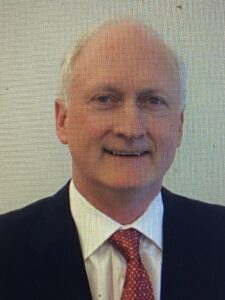
Leon Krolikowski has been the Darien Public Schools Director of Security since January 9, 2023. Before coming to Darien, Leon was a member of the New Canaan Police Department for over 34 years. Before becoming Chief in June 2013, he served in many different Department roles and ranks of increasing responsibility.

While working full-time, Leon earned an M.B.A., a law degree, completed an executive education course at the Harvard Kennedy School of Government, and began coursework towards a Ph.D. He is admitted to practice law in the States of Connecticut and New York, Connecticut Federal Court, the United States Court of Appeals for the Armed Forces, and the United States Tax Court. Leon is a graduate of the F.B.I. National Academy in Quantico, Virginia, and he is a Marine Corps Infantry Combat Veteran.

Leon has lived in New Canaan for over 32 years. He has been married to his wife, Anna, for 29 years and has three children, Morgan, Kelsey, and Ryan.


Speaker Summary

Darien School Security Director Leon Krolikowsi provided a comprehensive review of the history, current program, and some of the future initiatives for the Darien Public School Security Program. He explained that the focus is on prevention and mitigation to minimize risk and the likelihood of issues and emergencies requiring a response by his team, while ensuring they are trained and prepared should the need arise.

Leon talked about the roles of the 3 groups currently providing support and safety at the Darien schools: Campus Monitors, School Resource Officers at Darien High School and Middlesex Middle School (active uniformed members of the Darien Police Department) and the armed elementary school SSO’s (School Safety Officers, all retired former police officers). He then detailed the screening, hiring and training of the SSO’s, their specific roles and responsibilities and their day-to-day activities and reporting relationships within the schools.

He also talked to the importance of the SSO’s as it relates to response time in the unlikely case of an incident in a school and how an on-site officer dramatically reduces the risk by discouraging would-be attackers and/or shortening the response time from a few/several minutes to as little as seconds. He shared notable examples from across the country and how depending primarily on outside resources like the local police department resulted in response times of as long as 77 minutes or, in even the best case, 6 minutes. In all cases there was a loss of lives and substantial injuries that having a trained officer committed to action on-site might have reduced.

Leon also explained the ongoing work being done through desktop planning and exercises to better prepare the SSO’s and school staff to handle a broad range of scenarios and talked about testing and development of new approaches and technologies to improve school safety and reduce risk. He also talked about Darien being the first K-12 public school system in the country to be pursuing the highest level of safety accreditation.

His presentation was followed by a short Q&A.  His most emphatic answer was to the question of whether arming teachers to deal with potential emergencies was a good idea.  His response was “No. No. No.” due to the risks of someone having a gun without the experience and training to truly know when to use it.

The clear takeaway of Leon’s talk was Darien’s commitment and progress towards offering a best-in-class school safety program to protect the town’s most valuable asset – its children.

Video Presentation

Ted Aldrich, “The Decision Around Dropping the Atomic Bombs on Japan”, Sep 13, 2023 at 10:00

It’s Complicated:  The Decision Around Dropping the Atomic Bombs on Japan.
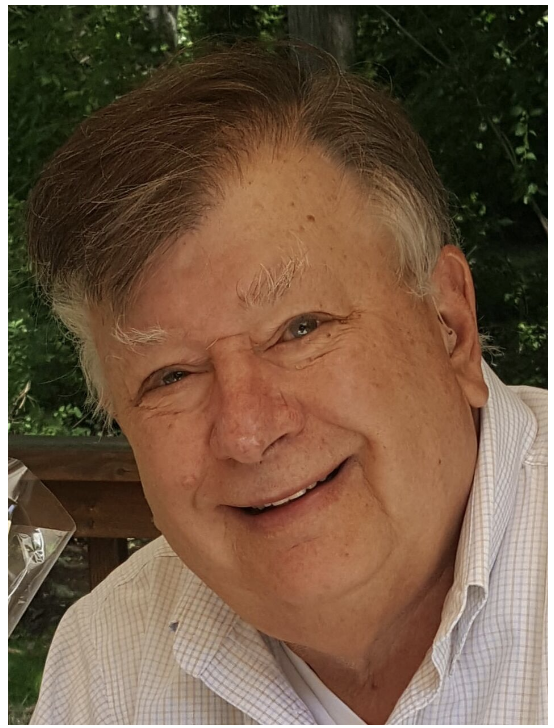
Ted Aldrich will be speaking about all the factors that went into the decision by President Harry Truman to drop atomic bombs on Japan in August 1945 and, to a lesser extent, about some of the key figures who influenced the decision. In his 2022 book, The Partnership, Aldrich devoted a chapter to the discussions that took place between members of the High Command about how to end the war in Japan. Since publication of his book last year, he has been invited twice by Colgate University to lecture to a class studying all aspects of the atomic bomb. This past spring, Aldrich served on a panel with historian Evan Thomas and journalist/author Barbara Slavin at the Stimson Center in Washington D.C. which was devoted to addressing the reasons for using the atomic bomb on Japan.

DMA members can expect to hear about all the misconceptions regarding the decision that have emerged over the years since Hiroshima and Nagasaki. He will attempt to take the audience back in time to July 1945 and firmly in the shoes of those saddled with the terrific responsibility of ending a War that had already killed approximately 420,000 Americans and wounded another 670,000.


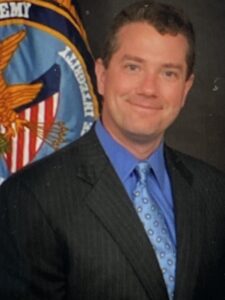
Edward “Ted” Aldrich was born and raised in Rowayton, Connecticut. He attended Colgate University majoring in economics and political science before receiving an MBA in finance from Boston College. He then began a career in banking with UBS in New York.  He spent thirteen years with UBS working in New York, Zurich, and London specializing principally in commodities. Aldrich held senior positions at Deutsche Bank and Fortis before launching a trade and commodity finance business at Mizuho Bank, a business he ran for eleven years. Aldrich currently works as the head of corporate development for Auramet Trading, one of the world’s largest physical precious metals merchants in the world.

Aldrich’s love of history began on the day he entered the 2nd grade at Rowayton Elementary School and saw portraits of all the U.S. presidents on the wall of his classroom. Since that day one of his primary hobbies has been the study of history. Today, he has a library of nearly 700 books, most of which he read during his thirty plus years of commuting by train back and forth from Connecticut to Manhattan. His first book, The Partnership: George Marshall, Henry Stimson, and the Extraordinary Collaboration that Won World War II (published last year) was written on his commute over a seven-year period (Aldrich spoke to the DMA about The Partnership last May and is still on a book tour).

Aldrich and his wife Susan Scull Aldrich (a Darien native and daughter of DMA member Pete Scull) have lived in Westport since 1999 where they raised three sons. Along with history, Aldrich’s main interests are soccer (he played four years at Colgate and still plays in a Westport men’s league), piano, and gardening (his wife is a prominent landscape designer who designs landscapes from Greenwich to Fairfield).

Speaker arranged by Charles Salmans


Speaker Summary

Ted Aldrich provided a compelling review of the background, issues and factors that went into the decision to drop 2 atomic bombs on Japan in August 1945 that ultimately led to surrender by Japan. He took us through the timeline for both the development of the bomb and the rapid progression from the formation of a committee in May 1945 to decide what to do once the bomb was finalized until the bombs were dropped on August 6 and 9, 1945.

Noteworthy was the fact that President Truman didn’t even know the bomb project existed when he was sworn in on April 12, 1945, yet the decision was made to drop the bomb 3 months later. Ted took us through the steps that occurred between these dates, the key players in the process (with a focus on Henry Stimson and George Marshall, the subjects of Ted’s book, “The Partnership”), and the factors that led to the decision to use the atomic bomb.  While there were many factors (some quite ancillary), the greatest of these was: the need to put an end to the war; the belief that more US (and, ultimately, Japanese) lives would be saved by a rapid end to the war;  and, that anything short of showing the Japanese the destruction they would endure in the face of this new weapon would not bring about an end to the war based on Japan’s until-that-point’s demonstration that they would never surrender despite the losses that they had already endured. To prove his point, Ted shared that, even after the second bomb was dropped on Nagasaki, there was a 3-3 deadlock among Japanese leaders as to whether they should surrender.

All-in-all, an insightful, engaging presentation and Q&A on what was one of the most critical, and afterwards controversial, decisions in the history of warfare. Ted also made the clear point that, at the time, there was actually little controversy and broad support for the decision to drop the bombs and that, in his opinion, it was the right decision and likely saved millions of US and Japanese lives despite the loss of life from the bombs.


Video Presentation 

Bob Heussler, “The Voices of NY Sports”, Sep 6, 2023 at 10:00

The Voices of New York Sports, a Brief History

From Marty Glickman to Marv Albert, from Bill Mazer to Mike and the Mad Dog, the New York sports scene has been narrated, discussed and debated by some of the most talented and compelling personalities in the history of sportscasting. We’ll explore their stories and some of the memorable New York sports moments that they helped bring to life.


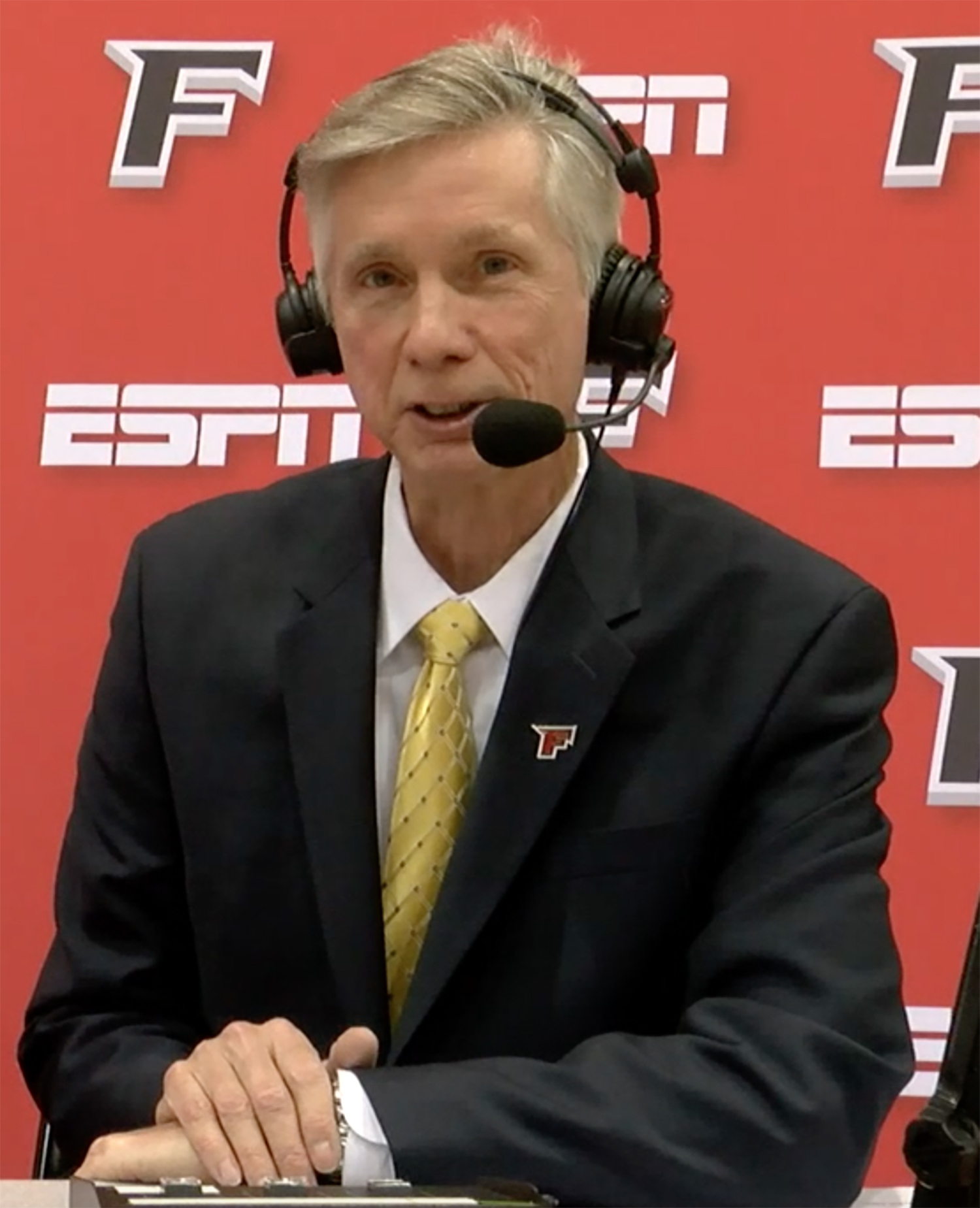
Bob Heussler is a veteran radio and television sportscaster with over 35-years of experience working in New York and Connecticut. He was an update anchor for the country’s first all-sports radio station – New York City’s WFAN – for 30 years and remains with the station on a part-time basis. Heussler has a long association with the Fairfield University men’s basketball program as their radio and television play-by-play announcer, recently completing his 35th season with the Stags. Heussler was the radio and television play-by-play announcer of the WNBA’S Connecticut Sun for 17 years, beginning with their inaugural season in 2003.   He remains a back-up play-by-play radio announcer for the NBA’s Brooklyn Nets. Heussler was a sportscaster for the Connecticut Radio Network for over 15 years, serving as the radio play-by-play announcer for UConn basketball and football and providing coverage of the Pilot Pen Tennis tournament and PGA Greater Hartford Open. He is a former network anchor for ESPN Radio and remains an anchor with the CBS Sports Radio Network on a part-time basis. Heussler is a former sports director at WICC in Bridgeport, has been an instructor of student broadcasters at Yale and Fairfield and was the longtime director of public relations at Milford Jai-Alai. A graduate of the University of Bridgeport, Heussler currently resides in Stamford.


Speaker Summary

Long-time sports announcer Bob Heussler took us through a tour of the history of the development and evolution of sports radio, with a focus on the New York sports market and its biggest and, in his opinion, best broadcasters and personalities.

A life-long Mets fan, Bob got his passion for radio from his mother and turned it into a career that encompassed announcing games for college and professional sports teams in the New York area as well as providing sports updates on the original sports talk radio station, WFAN, including a stint with the revolutionary team of Mike & The Mad Dog.

Bob started with a history of how the print medium dominated sports reporting before radio became a primary vehicle for sports coverage. He talked about early radio pioneers and how they influenced those who came after them and notable broadcasters who have been associated with New York sports teams. He shared the progression from sports announcers to sports personalities to broadcast teams. Bob paid special homage to 2 of the stars of NY sportscasting, Marty Glickman and Marv Albert, and what made them special and how they influenced the next generation of NY sports voices. To emphasize his points, Bob shared audio clips of famous moments in New York sports history and of key voices of sports in New York.

Bob then talked about the rise of “sports talk” radio, including some of the early stars in New York who had programs on radio stations that also provided news, music, etc.  He then detailed how WFAN created 24-hour sports radio despite initial poor performance and how it was saved thanks to Don Imus and the creation of the legendary team of Mike Francesa and Chris Russo (Mike and the Mad Dog) who redefined sports talk radio and became the blueprint for so many other radio and TV talk shows that are about sports debates and “hot takes”.  He also noted that they have been imitated but never matched.

Bob shared his personal list of New York’s five most impactful sportscasters: Marv Albert, Mike and the Mad Dog, Marty Glickman, Mel Allen, and Bill Mazer. He then closed with a few thoughts on some other New York sports voices that were important and needed to be acknowledged.

An engaging Q&A session followed including suggestions of other great voices in other markets and how current trends (e.g., corporate sponsorships and sports betting) have impacted the state of current sports broadcasting.

Newer posts »