Month: March 2026 (Page 1 of 2)

Brass Quintet of the Norwalk Symphony Orchestra on Tuesday, April 14th, 2026 at St. Luke’s Church in Darien 

The Social Events Committee is pleased to announce the 6th annual evening of dinner and musical entertainment provided by the Brass Quintet of the Norwalk Symphony Orchestra on Tuesday, April 14th, at St. Luke’s Church in Darien (specifically, the auxiliary building behind the church).

Doors will open at 6:15 with cocktails and hors d’oeuvres, followed by a buffet dinner at 6:45. The concert will begin at 7:15 with a repertoire of old favorites from years past, including a brief explanation of their historical context.

Due to the popularity of this event in past years we expect this event will be sold out, so please sign up early.

Cost is $70.00 per person, guests are welcome.

Please R.S.V.P. to Jerry Crowley at (203) 247-4675 or by email; jerrycrowley4@gmail.com.

A sign-up sheet will also be available at the DMA weekly meetings.

Payment may be made by cash or check payable to DMA.

If paying by mail, please send your check to:

Darien Men’s Association

c/o the Darien Community Association

274 Middlesex Road, Darien, CT 06820

Attention: Jerry Crowley


Wander Manresa Island, April 23, 2026

Thursday, April 23rd, at 10:30 a.m. at Manresa Island in Norwalk

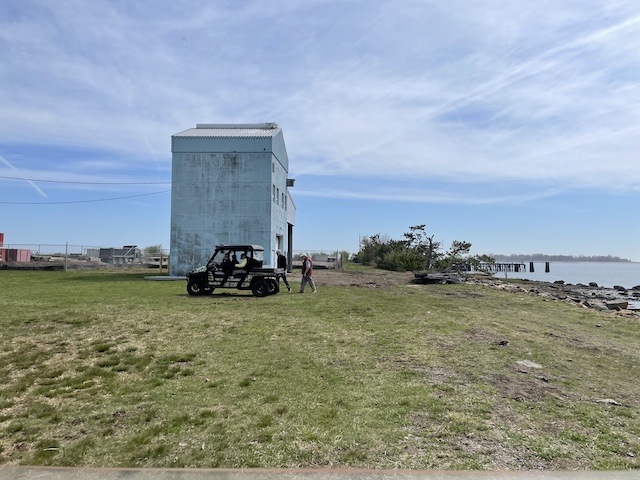
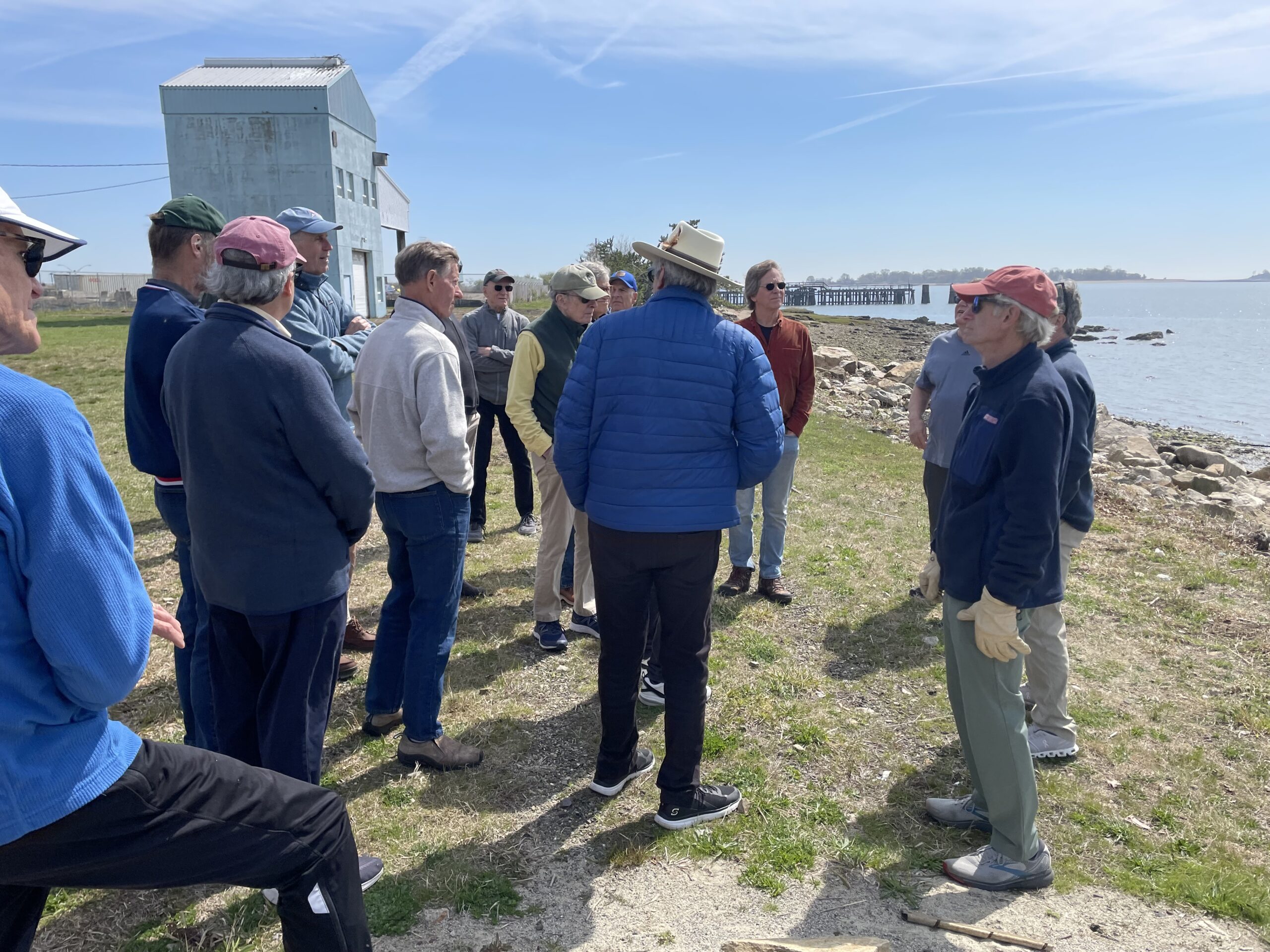
On Thursday, April 23rd, the Wanderers will drive to Manresa Island in Norwalk and enjoy a guided tour of the interior of the former Norwalk Harbor Station power plant and a wandering on the property outside the power plant and along the waterfront.

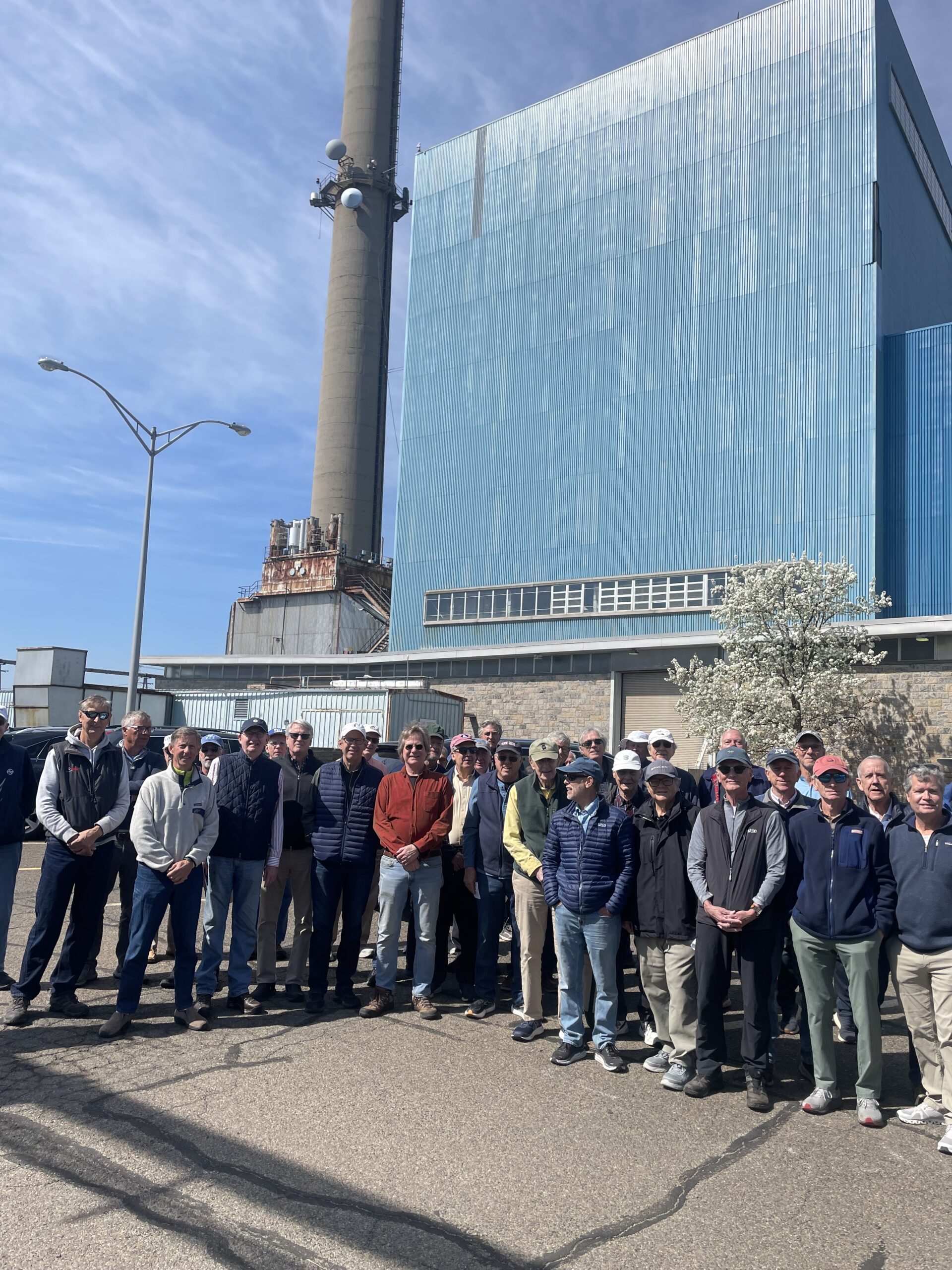
This 125- acre property is in the process of being revitalized and transformed into what will be one of the Northeast’s most creative public parks — called Manresa Wilds — which is thanks to the generosity of Austin and Allison McChord.  The first phase of the project, including walking trails and other amenities, is expected to open next year.  This tour will include inspecting the main building’s enormous interior spaces which will be redesigned into exciting interior spaces, one of which is as large as Grand Central Station.  Details regarding the scope of the project were presented by Austin McChord at the DMA meeting on March 25rd.

The tour of the interior of the power plant will include viewing much of the plant’s huge original machinery and equipment on different levels of the plant and walking on metal stair-ways some of which are steep.  Wanderers will have the option of remaining on a lower level in the plant during part of the tour.   While half of the Wanderers will tour the interior of the power plant for 45 minutes, the other half of the Wanderers will wander, including riding on ATV’s (golf carts), for 45 minutes on the property outside the power plant and along the waterfront.  Then, the Wanderers that toured the interior of the power plant will wander on the property outside the power plant for 45 minutes and the Wanderers that wandered on the property outside the power plant will tour the interior of the power plant for 45 minutes.  Based upon the 10:30 am start time for the tour and wandering, these activities will end at approximately 12:00 noon at which time the Wanderers will drive to have lunch at the Silver Star Diner at 210 Connecticut Avenue in Norwalk at approximately 12:30 p.m.

Anyone interested in participating in this tour and wandering should sign-up in advance at a DMA meeting in April.  The size of our group has been limited by Manresa to 48 participants so, if interested, please sign up as soon as possible.   Due to the anticipated popularity of this tour and wandering and the group size limitation, we unfortunately are not able to include the spouses of DMA members in this tour and wandering.  Wanderers will be required by Manresa to sign a waiver of liability form prior to visiting the property.   The waiver of liability form can be reviewed and needs to be signed electronically prior to this tour and wandering at the following email address: (https://app.hellosign.com/home/reusableLink?guid=2sMQ8vcR&in_person=1)

We will rendezvous at the DCA parking lot at 9:45 a.m. and then drive to the property as a caravan group. Those interested in car- pooling from Darien should plan to park their cars in the rear of the parking lot at the DCA.  We will depart from the DCA parking lot by 10:00 a.m.  and arrive at the power plant on Manresa Island by 10:25 a.m. as the tour and wandering will start promptly at 10:30 a.m.

If you don’t elect to rendezvous with the group at the DCA parking lot, you can use the Google Map address of “Manresa Island, Norwalk, CT” or set your WAZE, Google Maps or other GPS to “1 Longshore Avenue, Norwalk, CT” to get there.  If you don’t use WAZE,  Google Maps or other GPS, the easiest way to drive to Manresa Island is to take State Route 136 beginning on Tokeneke Road in  Darien and staying on Route 136 through Rowayton and South Norwalk until making a right turn onto Woodward Avenue (which becomes Longshore Avenue) and then making a right turn onto Manresa Island Avenue (don’t turn right into the “Village Creek” private association).  The entrance to Norwalk’s Manresa Island is located on the right side of Longshore Avenue where Longshore Avenue intersects Manresa Island Avenue.  After making a right turn onto Manresa Island Avenue, there is a security gate at the entrance to Manresa Island where car occupants must check in before driving down Manresa Island Avenue and parking in a parking lot adjacent to the power plant.

Contact:  Chet Cobb, Harry Bergen, Doug Bora or Robin Hogen.

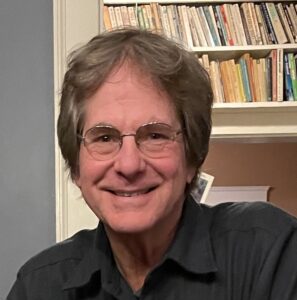
Ralph White
“Getting Out of Saigon: How a 27-Year-Old Banker Saved 113 Vietnamese Civilians”
April 29, 2026

Saigon fell on April 30, 51 years ago from tomorrow. Saigon was once called the Paris of the Orient on the eve of its cataclysmic destruction. This is a captivating true story of author Ralph White’s successful effort to save nearly the entire staff of the Saigon branch of Chase Manhattan Bank and their families before the city fell to the North Vietnamese Army.

In April 1975, White was asked by his boss to transfer from the Bangkok branch of the bank to the Saigon branch.  He was tasked with closing the branch, if and when, it appeared that Saigon would fall to the North Vietnamese Army to ensure the safety of the senior Vietnamese employees. But when he arrived, he realized the situation in Saigon was far more perilous than he had imagined.  Senior staff members there urged him to evacuate the entire staff and their families, which was more than he was authorized to do. He quickly realized that no one would be safe when the city fell, and it was no longer a question of whether to evacuate, but how. “Getting Out of Saigon” is an edge-of-your-seat story of a city on the eve of its destruction and the colorful characters who responded differently to impending doom. It’s a remarkable account of one man’s question to save innocent lives.

During Ralph White’s career in corporate finance spanned the 1970s, 1980s and 1990s when he worked for Chase Manhattan Bank and later for American Express and Sumitomo Bank.  His assignments included Vietnam, Thailand, Hong Kong, Japan and New York.  He is a graduate of Columbia University’s School of Business Administration. After 9/11, Ralph traded his corporate finance career for public service and writing. He founded and served for 10 years as the president of the Columbia Fiction Foundry, a writing workshop for alumni of Columbia University.

Charles Salmans
“Building the B-24 Bomber in WWII”
Wednesday, April 22, 2026

Greg Steinmetz was scheduled to speak, but due to an injury cannot appear. We are fortunate to have DMA member and former president Charles Salmans step into the breach with a talk on a timely subject. [Editor’s note:  This subject seems related to the October 29, 2025, presentation by Carleen Lyden Walker, “Revitalizing the U.S. Maritime Industry – A National Necessity.”]

America was largely isolationist before World War II and had to pivot to a wartime economy with rapid industrial development at a never-before-seen pace. DMA member Charles Salmans will discuss the fascinating story of quickly building up American industrial might against an existential foe.

Aircraft production in the 1930s, in particular, was only a cottage industry where only one aircraft was manufactured at a time. But with war raging in Europe – even before the attack on Pearl Harbor – America knew it needed to build up its military power and become the ‘Arsenal of Democracy’ to defend European freedom.

In 1940, Ford Motor Company was asked by the federal government to completely switch its business from building cars to mass production of the B-24 bomber, among other things. At the time, Henry Ford was an isolationist and wanted to turn down the government’s request, but his son Edsel fortunately persuaded him to agree. When factory construction started in 1941, it became an enormous undertaking, affecting 42,000 employees who switched from making cars to planes. Ford’s plant at Willow Run in Michigan was the largest in the world and the effort was one of America’s unparalleled success stories because a B-24 was able to roll off the production line every 55 minutes.

This presentation is an inspiring and instructive story because American manufacturing has atrophied, and the Ukraine and Iran wars have revealed shortages of defenses against missiles and drones. As a result, the Pentagon is concerned about the depletion and difficulty of replacing key weapons needed in war as it is now fought. This is a timely topic since The New York Times reported on April 18, 2026, that it was in conversations with Ford and General Motors to gauge whether the auto industry can help the military to acquire vehicles, munitions and other hardware more quickly and at lower costs.

Charles was formerly president of Corporate PR Advisors LLC, director of global public relations of Mercer, senior vice president of corporate communications at Bank of America (and predecessors Fleet Bank and Quick & Reilly), senior vice president and managing director of JP Morgan Chase (and predecessor Chemical Bank) and account supervisor at Burson-Marsteller Public Relations. He graduated from Northwestern University and received a Master of Business Administration degree from Columbia University.

Video of the Presentation

Kostya Kennedy
“The Ride: Paul Revere and the Night that Saved America”
April 15, 2026

Paul Revere’s historic ride occurred a year before the signing of the Declaration of Independence on April 18, 1775.  The presentation by Kostya Kennedy is timed to be a few days in April, just before the date of the ride and a few months before the 250th anniversary of America’s founding on July 4th.

Kostya will discuss Paul Revere’s heroic ride. adding little-known aspects of the story Americans have heard since childhood but hardly understand. The Boston-based silversmith, engraver and patriot set out on a borrowed horse to perform a dangerous but crucial mission: to alert American colonists of advancing British troops that sought to crush the nascent revolt. Revere was not the only rider that night, and indeed, he had completed at least 18 previous rides across New England and other colonies, disseminating intelligence about British movements. But this ride was like no other, and its consequences in the months and years to come — as the American Revolution morphed from isolated skirmishes to a full-fledged war — became one of our most important founding legends.

Kostya will present a dramatic new narrative of the events of April 18 and 19, 1775, which reveals that Revere’s ride was more complex than it is usually portrayed — a loosely coordinated series of rides by numerous men, near-disaster, capture by British forces and finally success. While Revere was central to the ride and its plotting, Kennedy reveals the other men (and, perhaps, a woman with information about the movement of British forces) who helped to set in motion the events that would lead to America’s independence.

Kostya is editor in chief of Premium Publishing at People Inc., which is the nation’s largest digital and print publisher.  He oversees special editions of People, LIFE, TIME, Real Simple, Eating Well, Health, Investopedia and other brands. The editions embrace a range of topics, including pop culture, health and wellness, food, lifestyle, music and sports.  He is a former assistant managing editor and senior writer at Sports Illustrated and staff writer at Newsday, and he has written for numerous other outlets, including The New York Times, TIME, and The New Yorker.  Along with 2025’s The Ride: Paul Revere and the Night that Saved America, he is the author of True: The Four Seasons of Jackie Robinson, as well as the New York Times bestsellers 56: Joe DiMaggio and the Last Magic Number in Sports and Pete Rose: An American Dilemma. All three books won the CASEY Award for Best Baseball Book of the Year.

Kostya graduated with honors as a philosophy major from SUNY/Stony Brook University and earned an M.S. from Columbia University’s Graduate School of Journalism, from which he received a Pulitzer Fellowship.  He has taught at Columbia University and at New York University and lives in Westchester County, N.Y.

Video Presentation

Summary

Kostya Kennedy gave a lively and deeply researched presentation showing that Paul Revere’s famous ride was far more complicated, dangerous and important than the simple legend many Americans learned in school. With the 250th anniversary of the nation approaching, Kennedy used the moment to make the story feel immediate, reminding listeners that history was shaped by real people making risky choices under great uncertainty.

He portrayed Revere not as a larger-than-life folk hero, but as a skilled and disciplined Boston silversmith, engraver, messenger and organizer who had earned the trust of the patriot leadership. Revere was already a seasoned express rider before his famous ride, carrying urgent intelligence across long distances and delivering it accurately from memory, since written documents could be dangerous if captured. Kennedy explained that Revere’s connections through the Old North Church, the Green Dragon Tavern and Boston’s revolutionary circles helped prepare him for the role he would play on that historic night of April 18-19, 1775.

The ride itself, Kostya emphasized, was not a solo act. Revere had to cross the Charles River under the threat of a British warship and patrols on land, secure a horse in Charlestown, and spread the alarm carefully through towns where patriots and loyalists lived side by side. William Dawes and Samuel Prescott also played critical parts in separate rides that night, and many other riders also carried the warning outward through the countryside. That broader communications network, more than any single rider, enabled the colonial militia to mobilize in growing numbers and confront British troops at Lexington and Concord and on the British retreat to Boston.

Kostya also explored how Revere’s fame was later magnified by Henry Wadsworth Longfellow’s poem, which turned Revere into an enduring national symbol while simplifying the true story. Yet Kostya’s central point was that the real history needed little embellishment. The events of that night were full of contingency, courage and near misses. Revere’s ride was not inevitable, and its success was not guaranteed. Precisely because so much could have gone wrong, Kostya argued, it remains one of the most compelling and important episodes in America’s founding story.

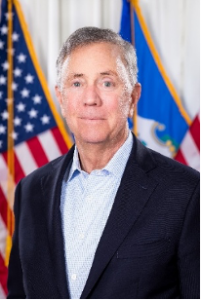
Governor Ned Lamont
“The Challenges and Opportunities to Growing Connecticut’s Economy”
Wednesday, April 8, 2026

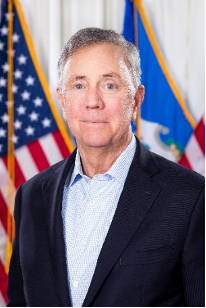
Governor Ned Lamont will address the challenges and opportunities in growing Connecticut’s economy and how they relate to the Town of Darien in a conversation with DMA member and First Selectman Jon Zagrodzky.

Sworn in as Connecticut’s 89th Governor in 2019, Lamont began his second term in 2023 and is seeking re-election in 2026.  A former business entrepreneur, he founded Campus Televideo, which grew to serve over 400 college campuses and one million students nationwide.  He previously ran for U.S. Senate in 2006, served on the Greenwich Board of Selectmen and Board of Estimate and Taxation, and chaired the State Investment Advisory Council overseeing the state pension fund.

As Governor, Lamont has signed the largest income tax cut in state history, boosted investments in workforce development, education, and the environment, and partnered with businesses to drive job creation and growth.  He highlights record employment, rising business starts, and more graduates staying in Connecticut.

Yet significant hurdles remain: Connecticut faces the nation’s most constrained housing market (needing ~133,000 more units), ranks 4th highest in all-in taxes, has the 4th highest electricity costs, and is the 11th most expensive state to live in.  The state’s housing shortage is widely seen as the biggest barrier to economic growth.

In November 2025, Lamont signed House Bill 8002, An Act Concerning Housing Growth – a compromise following his veto of a broader bill (HB 5002) earlier that year.  The law incentivizes municipalities (including suburban towns like Darien) to adopt housing growth plans, eases certain zoning barriers, and promotes more affordable units through regional planning rather than strict mandates.  Supporters view it as a vital step toward addressing the crisis; critics worry it increases state oversight and threatens local community character.

A graduate of Phillips Exeter Academy (where he was president of the student newspaper), Harvard College (B.A.), and Yale University (M.B.A.), Lamont has also taught entrepreneurship at Harding High School in Bridgeport and serves as an adjunct professor of political science and philosophy at Central Connecticut State University.

Arranged by Jon Zagrodzky.

Video Presentation 

Summary:

Governor Ned Lamont’s appearance before the DMA took the form of a broad conversation with Darien’s First Selectman, Jon Zagrodzky, about Connecticut’s future, grounded in the concerns about housing, transportation, energy, workforce preparation and the cost of government.

Speaking as both a governor and former businessman, Lamont told us that housing remains one of the state’s most pressing economic issues because employers repeatedly ask whether workers can afford to live in the state. He stressed that while Connecticut needs more housing, he believes that towns should retain substantial control over where and how it is built, and he praised Darien for planning growth proactively rather than reacting after developers arrive.

The discussion then widened to infrastructure and traffic, especially in Fairfield County, where denser development causes concern about worsening congestion. Lamont acknowledged those concerns but said specific targeted highway improvements, faster rail service and transit-oriented housing can help reduce pressure on the roads. On energy, he was blunt: Connecticut does not have enough electricity and has long paid some of the highest power prices in the country. He defended the state’s decision to preserve the Millstone Nuclear Power Plant in Waterford, which supplies a large share of Connecticut’s electricity, and said expanded nuclear generation must remain part of the long-term answer despite its cost and political difficulty.

Lamont also focused on workforce development. He argued that Connecticut’s competitive edge is the quality of its workforce but said the state must do more to connect students to internships, apprenticeships, technical education and practical career pathways that lead directly to jobs. He agreed that “work readiness” matters as much as technical skill, noting that employers need dependable workers who can meet professional expectations.

On the broader economy, Lamont said Connecticut has made progress by shifting from a mindset centered mainly on dividing resources to one more focused on growth, partnership with business and getting results. He cited balanced budgets, state pension fund improvement and efforts to control health care costs as unfinished but important work behind his decision to seek a third term.
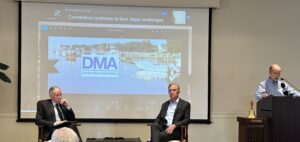
DMA First Vice President Doug Bora introduces First Selectman Jon Zagrodzky and Governor Ned Lamont at the April 9 DMA meeting.
Wander Roosevelt Island, March 26, 2026

Thursday, March 26th, at 8:36 a.m. at Darien Metro-North Station or 8:39 a.m. at Noroton Heights Metro-North Station

Next Thursday the Wanderers will travel to Roosevelt Island in Manhattan. We will take the Metro North train to Grand Central that leaves the Darien train station at 8:36 a.m. and the Noroton Heights train at 8:39 a.m. As usual, we will gather at the Information Booth on the main floor of Grand Central and proceed together by Subway and Tramway to Roosevelt Island.

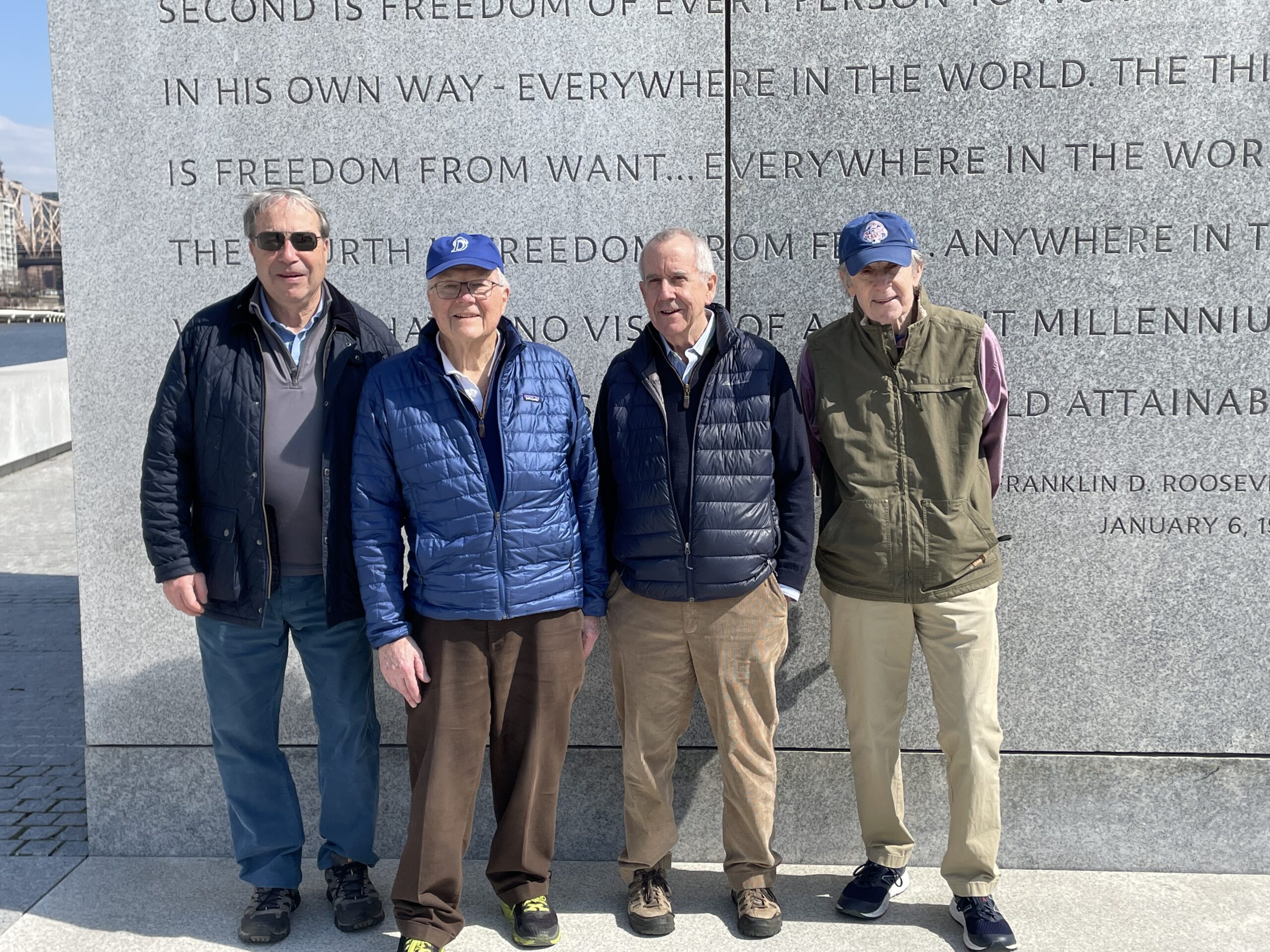
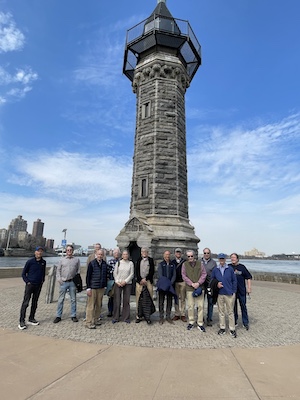
After enjoying the overhead views of the East River and Roosevelt Island from the Tramway, we will wander three or so miles around Roosevelt Island and enjoy its unique views of New York City.    Our Wandering will take us to the Franklin D. Roosevelt Four Freedoms Park at the southern end of the island, past three modern Cornell Tech Center buildings – the Bloomberg Center, the Tata Innovation Center and the House – that have attracted students, professors and technology research to the island, and past historic structures including the Smallpox Hospital ruins, the Strecker Memorial Laboratory, the Blackwell House, and if time permits, the Octagon Tower and the Lighthouse.

The Wanderers plan to have lunch at Granny Annie’s Bar & Kitchen at 425 Main Street on Roosevelt Island.  After lunch, we will complete our Wandering and enjoy a few more vistas from Roosevelt Island before returning to Grand Central and home via the Subway and Metro-North.

Contact:  Chet Cobb  or Harry Bergen

Current Affairs for March 19, 2026: Is the US Ready for the Next War?

Is the US Ready for the Next War – New Yorker

Highly recommended also is a more recent article focusing on Ukraine, the epicenter of the new drone warfare: Drones Now Rule the Battlefield in the Ukraine-Russia War – The New York Times
Filkins focuses quite a bit on US drone technology company Anduril, which got a critical close-up in the Wall Street Journal last fall (gift link – no paywall):
A detailing of some of the stumbles as the US tries to get ahead of the trend (gift link – no paywall): https://www.wsj.com/politics/national-security/pentagon-ai-weapons-delay-0f560d7e?st=EtFi9k&reflink=desktopwebshare_permalink


Hike Rockwood Hall, March 12, 2026

This one’s a stunner. On Thursday, March 12, our adventurous group will explore the grounds of Rockwood Hall, the one-time estate of William Rockefeller, brother to John D. Located in Mount Pleasant, N.Y., the site affords sweeping views of the Hudson River, Tappan Zee Bridge and the Palisades. These vistas are breathtaking. It is worth a moment to access Wikipedia, which recounts a storied history of the property. At arrival, we will jointly decide whether a clockwise or counterclockwise direction is preferable for negotiating this loop’s 500-foot grade change. (Hale and Hearty, right?)


For those wishing to carpool, we will meet in the DCA parking lot at 9:30 a.m. Travel time is a plump 40 minutes. For those choosing to go directly, there is ample parking opposite the trail head. This lot, however, comes up quickly on your left, just as Phelps Way crosses Rockwood Road. So, be vigilant! Dogs on leash are permitted. 


Suggestions for a nearby lunch spot are welcome.

Please RSVP to Alec Wiggin at alec@aared.com if you are interested.
« Older posts