 Saigon fell on April 30, 51 years ago from the date of this presentation. Saigon was once called the Paris of the Orient on the eve of its cataclysmic destruction. This is a captivating true story of author Ralph White’s successful effort to save nearly the entire staff of the Saigon branch of Chase Manhattan Bank and their families before the city fell to the North Vietnamese Army.
In April 1975, White was asked by his boss to transfer from the Bangkok branch of the bank to the Saigon branch. He was tasked with closing the branch, if and when, it appeared that Saigon would fall to the North Vietnamese Army to ensure the safety of the senior Vietnamese employees. But when he arrived, he realized the situation in Saigon was far more perilous than he had imagined. Senior staff members there urged him to evacuate the entire staff and their families, which was more than he was authorized to do. He quickly realized that no one would be safe when the city fell, and it was no longer a question of whether to evacuate, but how. His book, Getting Out of Saigon – How a 27-Year-Old-American Banker Saved 113 Vietnamese Civilians, is an edge-of-your-seat story of a city on the eve of its destruction and the colorful characters who responded differently to impending doom. It’s a remarkable account of one man’s question to save innocent lives.
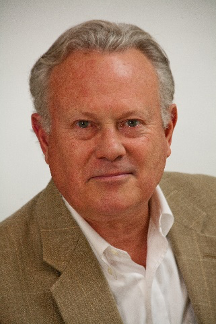
During Ralph White’s career in corporate finance spanned the 1970s, 1980s and 1990s when he worked for Chase Manhattan Bank and later for American Express and Sumitomo Bank. His assignments included Vietnam, Thailand, Hong Kong, Japan and New York. He is a graduate of Columbia University’s School of Business Administration. After 9/11, Ralph traded his corporate finance career for public service and writing. He founded and served for 10 years as the president of the Columbia Fiction Foundry, a writing workshop for alumni of Columbia University.
Summary
Ralph White regaled the DMA with his remarkable account of how, as a 27-year-old Chase Manhattan banker, with minimal training and experience in banking and none in evacuation missions, he helped save 113 Vietnamese employees and family members as Saigon collapsed in April 1975. His presentation summarized, and in some ways supplemented, his book, Getting Out of Saigon: How a 27-Year-Old Banker Saved 113 Vietnamese Civilians.
Sent from Bangkok to Saigon with little experience and no real plan, Ralph arrived to find the city near panic. The North Vietnamese Army was closing in; the South Vietnamese government required Vietnamese citizens to present exit visas (think “transit papers” in the movie Casablanca); and the American Embassy seemed paralyzed by Ambassador Graham Martin’s refusal to accept reality. Ralph’s assignment was to close Chase’s Saigon branch and protect a few senior employees, but he soon felt morally responsible for many more.
With $25,000 in cash, a concealed revolver and growing desperation, Ralph searched for a way out. He considered flying a DC-3 himself but abandoned the idea when the plane left the airfield before he could use it. Eventually, by discovering an unofficial evacuation process at Tan Son Nhut Air Base, he managed to get Chase employees and their families on buses, through a restricted gate and into the evacuation system. At one point, he legally “adopted” all 113 people so they could leave as his dependents.
They flew out on a military aircraft, first to Clark Air Base in the Philippines, then to Guam, Camp Pendleton and finally New York, where Chase Manhattan helped resettle them. Ralph later lost contact with most of them, but decades afterward, while preparing his book, he searched Vietnamese-American communities and reconnected with many families. In a moving twist, he learned that the children on the book’s cover — chosen randomly from Getty Images—were actually among the very children he had rescued.
Ralph ended by saying he felt blessed: blessed to have been chosen, blessed by the help he received, blessed that the mission succeeded and blessed to reconnect with the people he still calls “my family.”