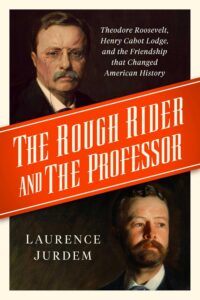
 Theodore Roosevelt was a uniquely gifted figure. While he employed his abilities to rise from an unknown New York legislator to become the youngest man ever to assume the presidency in 1901, that rapid success would not have occurred without the assistance of the powerful New Englander, Senator Henry Cabot Lodge. Lodge helped Teddy get every job he ever had, including that of being president.
Eight years older than Roosevelt, from a prominent Massachusetts family, Lodge was one of the most calculating, combative politicians of his age. From 1884–1919, Lodge and Roosevelt encouraged one another to mine the greatness that lay within each of them. As both men climbed the ladders of power, Lodge focused on dominating the political landscape of Massachusetts while serving as the future president’s confidant and mentor. That included advising Roosevelt on political strategy while helping him obtain positions in government that would eventually lead to the White House.
Henry Cabot Lodge earned four degrees from Harvard, was a widely published historian and a powerful U.S. senator who served from 1893–1924. His close friendship with Roosevelt began in 1884 and lasted their entire lifetimes, even surviving Roosevelt’s bolt from the Republican Party in 1912.
 Despite the love and respect that existed between the two men, their relationship eventually came under strain. Following Roosevelt’s ascension to what would become a muscular presidency, his desire to expand the social safety net clashed with his friend’s more conservative, partisan point of view. Those tensions finally culminated in 1912, when Lodge’s refusal to support the former president’s independent bid for a third term led to a political breakup that was repaired only by each man’s distaste for the policies of Woodrow Wilson and his Treaty of Versailles. Despite their political disagreements, Theodore Roosevelt and Henry Cabot Lodge remained devoted friends until the Rough Rider took his final breath in 1919.
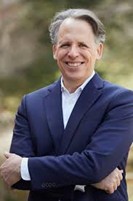
Laurence Jurdem, Ph.D., is a Visiting Assistant Professor of History at Fairfield University. He is the author of Paving the Way for Reagan: The Influence of Conservative Media on U.S. Foreign Policy and The Rough Rider and The Professor: Theodore Roosevelt, Henry Cabot Lodge and the Friendship that Changed American History. His newest book, 41: George H.W. Bush and the End of the American Establishment, is scheduled for release in 2026. A frequent writer on American politics, Laurence’s articles have appeared in The New York Times, The Washington Post, and the San Francisco Chronicle. He lives in Darien.
Summary
Historian and Fairfield University professor Laurence Jurdem, Ph.D. discussed the extraordinary friendship between Theodore Roosevelt and Henry Cabot Lodge, a relationship he believes helped shape modern American history. Drawing from his book The Rough Rider and the Professor, Jurdem described how Lodge served as Roosevelt’s mentor, confidant and political sponsor for more than three decades. According to Jurdem, Lodge played a critical role in helping Roosevelt secure nearly every major position he held before becoming president.
The two men shared remarkably similar backgrounds. Both grew up in affluent families, were deeply influenced by strong fathers who died when they were young, and embraced a lifelong commitment to public service, intellectual inquiry and vigorous physical activity. They admired history, loved the outdoors and believed in what Roosevelt later called “the strenuous life” — a philosophy of action, engagement and personal challenge. These shared values created a bond that was both personal and political.
A defining moment in their friendship came after the contentious Republican Convention of 1884. Both men suffered political setbacks and public criticism, yet they refused to retreat from public life. Their resilience strengthened their friendship, and Lodge worked tirelessly to bring Roosevelt back into national politics, helping launch the career that ultimately led to the White House.
Jurdem also emphasized that great friendships can endure significant disagreements. As president, Roosevelt increasingly embraced progressive reforms and a more activist federal government, while Lodge remained a traditional conservative Republican. Their political differences widened dramatically during the 1912 presidential election, when Roosevelt bolted the Republican Party and ran as the Progressive (“Bull Moose”) candidate. The resulting conflict strained their friendship and placed them on opposite sides of one of the most consequential elections in American history.
Despite these disagreements, their personal loyalty ultimately survived. Family ties, mutual respect and years of shared experiences proved stronger than political differences. Jurdem concluded that the Roosevelt-Lodge relationship illustrates the enduring power of friendship, resilience and civil engagement — qualities that remain relevant today.
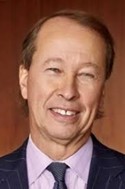
 A bee colony is a superorganism. Inside a hive, tens of thousands of bees function as one living system. At the center is the queen, whose sole job is to lay eggs — up to 2,000 a day in peak season. Prominent beekeeper Bill Hesbach will discuss the mystery and beauty of bee flight, the queen’s mating flight and the process of fertilization. She mates with multiple drones (males) in midair — typically 10 to 20 — in rapid succession. Each drone dies immediately after mating, a biological sacrifice to pass on his genetics. (Humans would be arrested for trying this!)
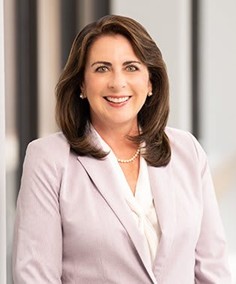 Kathleen Silard will discuss the business rationale of why an independent hospital serves its communities better than a large roll-up conglomerate chain. Stamford Health has two especially important characteristics: (1) it provides innovative and strategic partnerships to better serve its communities along with world-class organizations such as Hospital for Special Surgery (HSS), Dana-Farber/Brigham Cancer Center and Columbia University Irving Medical Center; and (2) it is one of the few profitable hospitals in the region.
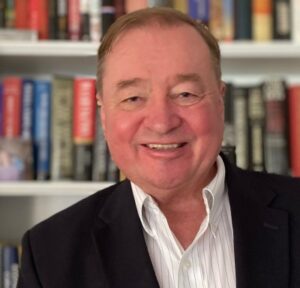 Mark Wright has lived in the Noroton Bay area of (Darien since 1997. He received a B.A. degree from Northwestern University and an M.B.A. from Vanderbilt University.
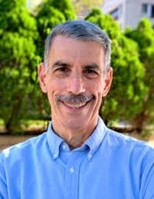 If you think the war in Iran is critical to America’s national interests, think also about Taiwan. The Economist has called the Taiwan Strait “the most dangerous place on earth.” Its judgement was based not only on the intense volatility in the region — a volatility underscored by China’s increasingly assertive military posture in and around the Taiwan Strait — but also on Taiwan’s immense importance to the global economy. Taiwan has the 22nd largest GDP in the world, manufactures 90% of cutting-edge semi-conductors, has 50% of the world’s container traffic passing through the Taiwan Straits and lies perilously close to the center of China’s powerful economy (the distance to the Chinese mainland is about the same as the distance between Darien and Hartford). The war in Iran might be a precursor to what could happen due to China’s intentions regarding Taiwan.
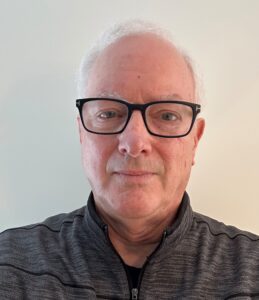 Colin Dunne spent most of his childhood just a few miles down I-95 in Rye, N.Y. Immediately upon graduating from Williams College in 1977, he tried out life as a teacher and coach at Saint Andrew’s School, a boarding school in Delaware. However, it did not take long for him to move back north to New York City, where he pursued an M.B.A. at New York University at night while working in economic and financial research during the day. Eventually, he took research, trading and risk management stints at Becker Paribas, J.P. Morgan, Credit Suisse and post-crisis AIG.
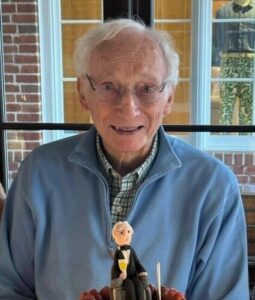 Peter Louis Anker (born May 14, 1935) passed away at his home in Darien on February 23, surrounded by family. As his name suggests, Peter was a strong and sturdy support for all who knew him. For his family, he was a warm, loving and supportive rock on which multiple generations grew and prospered. Professionally, his wise counsel and advice in the metals and mining industry helped build one of America’s premier investment banks.
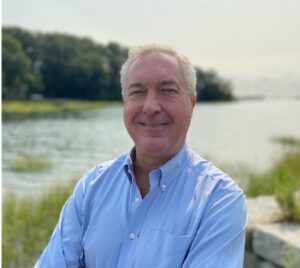 Gil Kernan is an executive and entrepreneur with a track record of building and leading financially disciplined, growth-oriented organizations. He brings deep experience in governance, risk management and strategic execution across corporate, nonprofit and family enterprises.
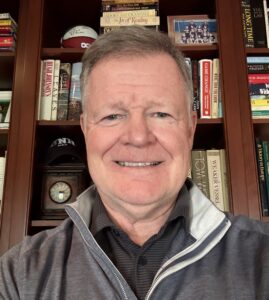 Jim Sullivan and his wife Michelle have lived in Darien for 35 years. They raised three sons, all of whom attended Darien public schools. Two of their sons are married and Jim and Michelle have two grandchildren, with another due in August. Their third son is single and lives in Palo Alto, Calif.