
One of the basic premises of the Bystander Initiative is that there is an entire systemic framework around sexual and other abuse, which Guiora has labelled the ecosystem. Guiora’s work focuses on bystanders – individuals who witness the crime – and enablers – individuals and institutions who are in positions to prevent the crime but do not do so. He has previously written books about bystander and enabler complicity in the Holocaust and in sexual abuse in USA Gymnastics and other athletic programs.
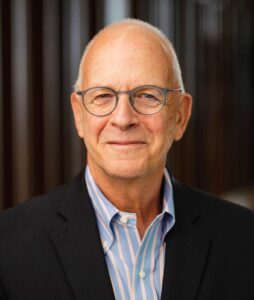 Amos N. Guiora is Professor of Law at the S.J. Quinney College of Law, the University of Utah. He is a Distinguished Fellow at The Consortium for the Research and Study of Holocaust and the Law at Chicago-Kent College of Law, and a Distinguished Fellow and Counselor at the International Center for Conflict Resolution, Katz School of Business, University of Pittsburgh. Professor Guiora is on the Board of the Lauren McClusky Foundation.
For the past 10 years Guiora has been researching-writing-lecturing on the question of bystanders (originally in the Holocaust) resulting in his books, The Crime of Complicity: The Bystander in the Holocaust and Armies of Enablers:Survivor Stories of Complicity and Betrayal in Sexual Assaults.
Professor Guiora’s most recent article, Holding Enablers of Child Sexual Abuse Accountable: The Case of Jeremy Bell, addresses the role of enablers in sexual assault of children.
Professor Guiora Directs the SJ Quinney College of Law Bystander Initiative, a publicly funded student-staffed initiative.
Professor Guiora has an A.B. in history from Kenyon College, a J.D. from Case Western Reserve University School of Law, and a Ph.D. from Leiden University.
Summary
Responsibility of Bystanders and Enablers in Cases of Abuse
In a powerful and deeply personal presentation, Professor Amos Guiora of the University of Utah’s S.J. Quinney College of Law offered a searing indictment of societal inaction in the face of abuse, focusing not only on perpetrators but especially on the enablers and bystanders who fail to intervene. Drawing on his extensive legal scholarship, military service, and personal family history as the child of Holocaust survivors, Guiora made the case that it is no longer enough to spotlight abusers—we must also hold accountable the institutions and individuals who allow abuse to continue.
Guiora leads the Bystander Initiative, a donor-funded, student-staffed effort that researches the legal and moral responsibilities of those who witness or know of abuse but do not act. His work gained national and international attention through two books: The Crime of Complicity: The Bystander in the Holocaust and Armies of Enablers: Survivor Stories of Complicity and Betrayal in Sexual Assault. In both, he analyzes how systemic silence and protection of institutions over individuals perpetuate cycles of abuse.
Guiora shared wrenching survivor testimonies from high-profile abuse cases involving USA Gymnastics doctor Larry Nassar, Ohio State physician Richard Strauss, and others. In each, the perpetrators were enabled by coaches, administrators, and institutional cultures that prioritized reputation and funding over the safety of children. Survivors like Tiffany Thomas and Maddie Larson described the pain not just of the abuse itself, but of the betrayal by those who could have stopped it and didn’t.
Guiora’s own obsession with this topic is rooted in his family’s Holocaust history. His mother survived in hiding in Budapest, his father endured two death marches. Guiora grew up in a household where the Holocaust was never discussed, and it wasn’t until his adult years that he began exploring the topic. The revelation that bystanders played a pivotal role in his parents’ trauma inspired his academic journey to explore the legal responsibility of witnesses to atrocities.
His central argument is bold: bystanders and enablers should be held criminally accountable. In Utah, he helped pass legislation making it a misdemeanor not to dial 911 when witnessing a child or elderly person in danger—a minimal but crucial step. His advocacy is now expanding to other states and countries, although legislation criminalizing enablers—those in authority who fail to act—is more complex and faces greater resistance.
Guiora distinguishes between bystanders (those physically present and passive) and enablers (those in institutional positions who protect perpetrators by prioritizing their institutions over victims). Enablers, he argues, are often more dangerous. They betray trust not through ignorance, but by making deliberate choices to shield institutions at the cost of human life and dignity.
He referenced the tragic case of Jeremy Bell, a 12-year-old murdered in 1997 by a teacher with a long record of sexual misconduct. School administrators had received repeated warnings over decades but took no action. Thanks to private detective Dan Barber, the case was eventually solved—but the enablers faced no consequences.
Guiora also addressed the issue of racial bias in reporting abuse, citing a poignant moment during a lecture at UVA when a Black audience member challenged the presumption that calling 911 is always safe or helpful, particularly for people of color. Guiora acknowledged the validity of this concern and worked with Utah legislators and civil rights groups to refine the law accordingly.
Throughout his talk, Guiora returned to the idea that legal accountability—not just moral reflection—is essential to changing behavior. While education and awareness are necessary, they are insufficient without laws that demand action and penalize failure.
His work is ongoing, and his message urgent: whether in schools, sports teams, religious institutions, or governments, we must stop protecting systems at the expense of the vulnerable. “All roads,” he said, “lead to the enabler.”
Guiora concluded by offering his email to attendees, encouraging further dialogue, and urging everyone to move beyond sympathy toward accountability. As he put it, “Sympathy is useless when someone is choking. You have to act.”
More on the Bystander Initiative
To follow up with Professor Guiora: amos.guiora@law.utah.edu
Learn more about contributing to the Bystander Initiative’s work.
Additional information on the Bystander Initiative:
 Nancy joined Person to Person in June of 2019, bringing expertise and experience in food insecurity, anti-poverty, and women’s and children’s issues. Prior to joining P2P, Nancy served for seven years as the Executive Director at Neighbor to Neighbor, a Greenwich-based organization dedicated to providing food and clothing to low-income families and children, and prior to that, practiced employment litigation with Baker McKenzie in NYC.
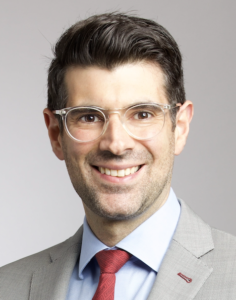 Connecticut, as we all know, is actually a wonderful place to live and raise a family. Yet only half of Connecticut residents said they were proud of the state in a recent survey, even though 73% felt it was a good place to live. Part of the challenge is that Connecticut has not defined itself around its resources and attributes; there are few who can describe what’s wonderful about our state and those in Fairfield County might see it merely as a suburb of New York. Governor Lamont is determined to change that so that people know better what makes Connecticut special.
 Aaron Cooper has dedicated his career to pre-k through grade 9 independent school education. He has been a teacher, coach, advisor, and administrator for the last 22 years. Aaron Cooper joined New Canaan Country School in July 2018.
 Juliet Cain is a cofounder of the Darien Pollinator Pathway with Deepika Saksena. The DPP seeks, through events and publications as well as through advocacy at the state and local levels, to help eliminate the use of pesticides in our yards and public spaces and to restore pollinator populations with native plantings. As former Chair of the Darien Beautification Commission, Juliet spearheaded the native plantings on the slopes at the Darien Town Hall.
 Even while veterans are often welcomed home from combat tours as heroes, they also may encounter long term neglect in health care, disorientation and PTSD, and even homelessness. This presentation will address these challenges, their scale, their conditions, and programs that seek to address them.
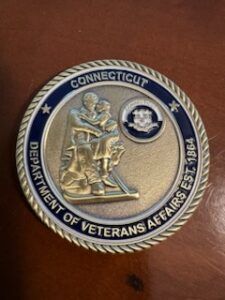 Welch closed by returning to the local history. He spoke about the statue originally placed in Darien, now relocated to Rocky Hill, depicting a Civil War officer comforting a young girl—symbolizing the enduring costs of service and the need to care for veterans and their families.
 Dr. Joseph W. Polisi was president of the Juilliard School for 34 years from 1984-2018 and is now president emeritus and chief China officer of the School. Through his experiences at Juilliard and Lincoln Center, Polisi creates in his book a complex tableau which traces the idealistic and determined efforts by John D. Rockefeller, 3rd and his colleagues to create a unique environment where the most prominent performing arts institutions in New York City would be brought together at a venue named Lincoln Center for the Performing Arts.
 Upon stepping down from his role as president of Juilliard, Polish became Chief China Officer, supervising the overall development of The Tianjin Juilliard School in Tianjin, China. Opened in fall 2020, Tianjin Juilliard offers audition-based programs on pre-college and graduate levels. The graduate school program is taught in English and offers a USA-accredited master’s degree from The Juilliard School. There are also public programs for adult learning and instrumental training, as well as an innovative learning environment, Juilliard Imagination, featuring interactive exhibitions for adults and children.
  Andrew Traub has been a board member of the Harvard Business School Club of Connecticut for 13 years. He has worked on forty projects in social services, education and the arts. Andrew has been board president and chaired several subcommittees. Andrew, a third-generation retailer, worked in this industry for over 40 years as a C level executive of retail and wholesale companies and a consultancy in retail strategy and international brand development. He has been a keynote speaker in both the US and China. Andrew and his wife, Lois, who is a retired attorney, live in Stamford; they have three daughters who live in Arlington, Virginia; Croton on Hudson, NY; and Los Angeles; and four grandchildren.

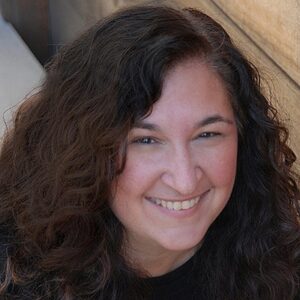 Helene Stapinski is the nationally bestselling author of three memoirs: Five-Finger Discount, Murder in Matera, andBaby Plays Around. She writes regularly for The New York Times; her work has also appeared in The Washington Post,New York,Travel & Leisure, and dozens of other publications. She teaches at New York University and lives in Brooklyn. Helene was the principal author to support Bonnie’s research.
 Annelise Osborne is chief business officer at Kadena, a blockchain technology company, where she is focused on upgrading finance. Annelise has over 20 years of experience in finance, credit, real estate, family office, risk, structuring, governance, and digital assets. She was previously head of institutional for Arca Labs, working with companies to drive blockchain innovation through strategic partnerships and advisory services as well as COO of Propellr LLC, company that creates a platform for digitally held assets. Annelise spent 12 years at Moody’s Investor Service running teams in structured finance. She is a thought leader, board advisor, university lecturer and author. Her book, From Hoodies to Suits: Innovating Digital Assets in Traditional Finance, hit shelves in June 2024. Annelise holds an M.B.A. from Columbia Business School and a B.A. in Economics from The College of William and Mary.
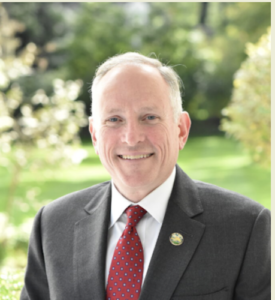 DMA member and Darien First Selectman Jon Zagrodzky will provide an update on Darien town government including overall strategy, Great Island, new commercial developments, flooding investments and the FY 2025 budget process. Jon plans to leave ample time for Q&A and promises that no topic is off limits!
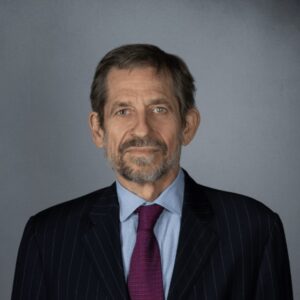 Thomas E. Graham is a distinguished fellow at the Council on Foreign Relations. His book, Getting Russia Right, was published in September, 2023. He is a cofounder of Yale University’s Russian, East European, and Eurasian studies program and sits on its faculty steering committee. He is also a research fellow at Yale’s MacMillan Center. He has been a lecturer in global affairs and political science since 2011, teaching courses on U.S.-Russian relations and Russian foreign policy, as well as cybersecurity and counterterrorism. Graham was special assistant to the president and senior director for Russia on the National Security Council staff from 2004 to 2007, during which he managed a White House-Kremlin strategic dialogue. He was director for Russian affairs on the staff from 2002 to 2004.