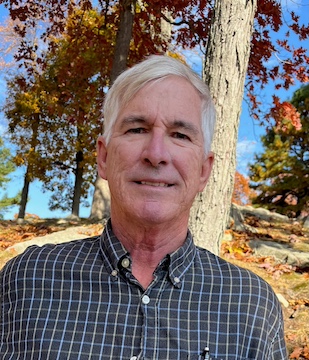
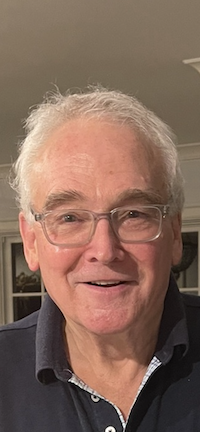
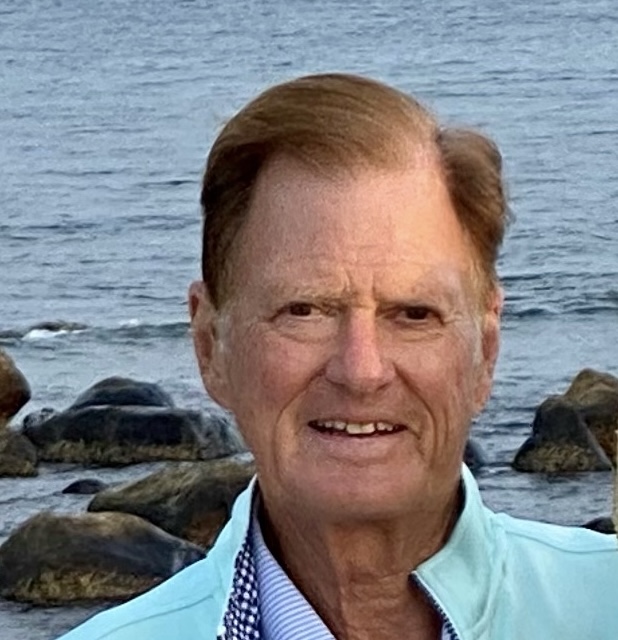
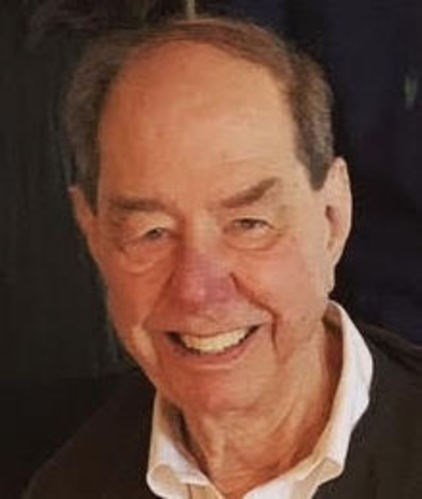
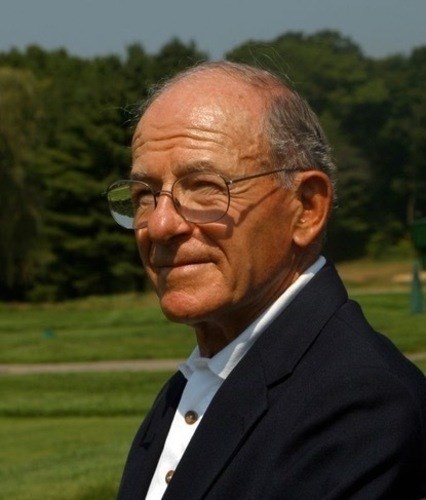
Jim Himes represents Connecticut’s 4th District in the United States House of Representatives where he is serving his eighth term. He serves as Ranking Member of the House Permanent Select Committee on Intelligence, and on the House Financial Services Committee.
Jim grew up as the child of a single working mom in a small town. As a member of Congress, Jim works hard to provide all American children the same opportunities he had to succeed: access to a first-rate public school, affordable and effective health care, a decent and safe home, and a supportive community.
Born in Lima, Peru in 1966 to American parents, he spent the early years of his childhood in Peru and Colombia while his father worked for the Ford Foundation and UNICEF. As an American abroad, Jim grew up fluent in both Spanish and English and was raised with an awareness of the unique position of the United States in the world. At the age of ten, Jim moved with his mother and sisters to the United States.
Jim graduated from Hopewell Valley Central High School and then attended Harvard University. After completing his undergraduate work, Jim earned a Rhodes Scholarship, which enabled him to attend Oxford University in England where he continued his studies of Latin America, including research in El Salvador.
Prior to his service in Congress, Jim ran the New York City branch of The Enterprise Community Partners, a nonprofit dedicated to addressing the unique challenges of urban poverty. Jim’s team led the way in financing the construction of thousands of affordable housing units in the greater New York metropolitan region, often using new green technologies to achieve energy efficiency and reduce utility costs.
Jim’s experience at Enterprise spurred his involvement in politics. Putting his expertise in affordable housing to work, Jim served as a Commissioner of the Greenwich Housing Authority, ultimately chairing the board and leading it through a much-needed program of reforms. Jim went on to become an elected member of his town’s finance board, setting tax and budget policy for Greenwich. Jim has also served as Chair of his local Democratic Town Committee, organizing others in the community to become more active in the political process.
Jim began his professional career at Goldman Sachs & Co. where he worked his way up to Vice President over the course of a 12-year career. He worked extensively in Latin America and headed the bank’s telecommunications technology group there. Jim and his wife Mary live in Greenwich (with not frequent enough visits from their daughters Emma and Linley).
Summary
Himes Defends Democracy, Critiques Both Parties in Wide-Ranging Talk
At a packed event hosted by the Darien Men’s Association, Congressman Jim Himes delivered a sweeping, often unsparing assessment of America’s political and institutional health—criticizing both Donald Trump’s Republican Party and his own Democrats, while expressing cautious optimism that democratic norms are holding.
Himes, now in his ninth term representing Connecticut’s 4th District, opened with a reflection on America’s political evolution. He noted the shift in once reliably Republican towns like Darien, New Canaan, and Greenwich toward the Democratic column—a change he attributes to rising education levels and discomfort with MAGA populism.
“There are lots of reasons to be worried,” Himes said, citing threats to democratic norms, attacks on immigrants, and hostility toward academic and scientific institutions. But he pushed back on the notion that the U.S. is already in constitutional crisis, praising the judiciary for consistently restraining executive overreach. “The courts have held,” he said, referencing over 240 decisions that have blocked controversial policies.
Himes, who serves as the ranking Democrat on the House Intelligence Committee, reserved sharp criticism for the Trump administration’s tariff policy. He argued that tariffs have worsened inflation and misunderstood basic economics. “Trump sees tariffs as a tax on China,” Himes said, “but that’s not how tariffs work.” While he predicted short-term pain—higher prices for cars and consumer goods—he called tariffs a “self-correcting” problem due to inevitable backlash from consumers and markets.
Even as he criticized the former president, Himes had tough words for Democrats. He said voters’ top complaint isn’t about “wokeness” or spending—it’s that Democrats appear incapable of delivering results. He pointed to the failure to build a single electric vehicle charging station in Connecticut after the passage of the Inflation Reduction Act. “People aren’t stupid,” he said. “They see that.”
He praised a new “abundance movement” emerging in Democratic circles, which seeks to streamline infrastructure approvals and deliver tangible benefits faster. As one example, he cited a small long-delayed bridge replacement project in Greenwich that has taken eight years to begin, when the Empire State building was completed in just over a year.
Turning to foreign policy, Himes was blunt: “Most of our biggest mistakes since the 1960s have been mistakes of idealism.” He critiqued America’s overreach in Vietnam, Iraq, and Afghanistan, praising President Biden’s instinct to avoid new military entanglements. While he acknowledged the administration’s failures in handling Ukraine aid early in the war, he warned against full U.S. withdrawal. “If Putin comes away from this thinking it was worth it, we should brace for what comes next,” he said.
On national security, Himes criticized reports that a Qatari-donated plane might be used for presidential travel, calling it a “terrible idea” from a security standpoint, given the role Air Force One plays in providing a secure base from which a president must lead in some emergencies. It will likely have to be taken down to its rivets to rebuild as a secure and effective communications center. He also addressed the “Signal Gate” scandal, in which sensitive communications were conducted over unsecured channels. These lapses, he said, show what happens “when you put responsible people in a clown-like environment.”
During a Q&A session, Himes fielded pointed questions from a self-described MAGA Republican in the audience, who expressed concern about Connecticut’s taxes, energy prices, and population trends. Himes responded by noting economic growth in Fairfield County, but acknowledged broader state challenges. He tied high energy prices to limited natural gas infrastructure and called for modernizing Connecticut’s grid and transit systems.
He also drew a hard line on constitutional issues. “You can disagree with me on taxes and immigration,” he said. “But the Constitution isn’t optional. We don’t get to suspend it because someone is unpopular.”
Asked who leads the Democratic Party today, Himes admitted “we don’t have a figurehead.” He predicted Democrats would likely retake the House in 2026 but warned that the current leadership vacuum is demoralizing to activists.
In a closing question, Himes was asked whether the so-called “big, beautiful” Trump-backed tax bill could hurt the U.S. credit rating. He said the legislation would add $3 trillion to the deficit over 10 years and noted growing market concerns. “There may come a point,” he said, “when the capital markets finally say, ‘enough.’”
Despite his many critiques, Himes ended on a cautiously hopeful note. While he acknowledged deep polarization and rising acceptance of political violence, he expressed faith that institutions—and voters—still have the power to restore balance.
“I don’t think we’ve crossed the line,” he said. “And I don’t think we will.”
Local author Tim Manners will give a special talk about his book, Schoolboy: The Untold Journey of a Yankees Hero (University of Nebraska Press). Manners, who was a recent guest speaker at the Baseball Hall of Fame in Cooperstown, N.Y., co-authored the book with Waite “Schoolboy” Hoyt, using a trove of records and writings from Hoyt, who passed away in 1984. Hoyt’s improbable baseball journey began when the 1915 New York Giants signed him as a high school junior, for no pay and a five-dollar bonus. After nearly having both his hands amputated and cavorting with men twice his age in the hardscrabble Minor Leagues, he somehow ended up as the best pitcher for the New York Yankees and teammate with such legends as Babe Ruth and Lou Gehrig. You don’t have to be a fan of baseball to be fascinated by Hoyt’s astonishing life story!
Tim Manners is a writer, communications consultant and baseball fan. A magna cum laude graduate of Tufts University with a BA in history, he is a former FM-radio disc jockey, publicist and magazine publisher. Currently an essay specialist with The Manners Group, he is co-author of “Schoolboy: The Untold Journey of a Yankees Hero” (2024) with baseball great Waite Hoyt (University of Nebraska Press) and “Relevance: Making Stuff That Matters” (2008), published by Penguin/Portfolio.
Amos N. Guiora is Professor of Law at the S.J. Quinney College of Law, the University of Utah. He is a Distinguished Fellow at The Consortium for the Research and Study of Holocaust and the Law at Chicago-Kent College of Law, and a Distinguished Fellow and Counselor at the International Center for Conflict Resolution, Katz School of Business, University of Pittsburgh. Professor Guiora is on the Board of the Lauren McClusky Foundation.
Connecticut, as we all know, is actually a wonderful place to live and raise a family. Yet only half of Connecticut residents said they were proud of the state in a recent survey, even though 73% felt it was a good place to live. Part of the challenge is that Connecticut has not defined itself around its resources and attributes; there are few who can describe what’s wonderful about our state and those in Fairfield County might see it merely as a suburb of New York. Governor Lamont is determined to change that so that people know better what makes Connecticut special.
Aaron Cooper has dedicated his career to pre-k through grade 9 independent school education. He has been a teacher, coach, advisor, and administrator for the last 22 years. Aaron Cooper joined New Canaan Country School in July 2018.
Juliet Cain is a cofounder of the Darien Pollinator Pathway with Deepika Saksena. The DPP seeks, through events and publications as well as through advocacy at the state and local levels, to help eliminate the use of pesticides in our yards and public spaces and to restore pollinator populations with native plantings. As former Chair of the Darien Beautification Commission, Juliet spearheaded the native plantings on the slopes at the Darien Town Hall.
Even while veterans are often welcomed home from combat tours as heroes, they also may encounter long term neglect in health care, disorientation and PTSD, and even homelessness. This presentation will address these challenges, their scale, their conditions, and programs that seek to address them.
Welch closed by returning to the local history. He spoke about the statue originally placed in Darien, now relocated to Rocky Hill, depicting a Civil War officer comforting a young girl—symbolizing the enduring costs of service and the need to care for veterans and their families.
Dr. Joseph W. Polisi was president of the Juilliard School for 34 years from 1984-2018 and is now president emeritus and chief China officer of the School. Through his experiences at Juilliard and Lincoln Center, Polisi creates in his book a complex tableau which traces the idealistic and determined efforts by John D. Rockefeller, 3rd and his colleagues to create a unique environment where the most prominent performing arts institutions in New York City would be brought together at a venue named Lincoln Center for the Performing Arts.
Upon stepping down from his role as president of Juilliard, Polish became Chief China Officer, supervising the overall development of The Tianjin Juilliard School in Tianjin, China. Opened in fall 2020, Tianjin Juilliard offers audition-based programs on pre-college and graduate levels. The graduate school program is taught in English and offers a USA-accredited master’s degree from The Juilliard School. There are also public programs for adult learning and instrumental training, as well as an innovative learning environment, Juilliard Imagination, featuring interactive exhibitions for adults and children.
Andrew Traub has been a board member of the Harvard Business School Club of Connecticut for 13 years. He has worked on forty projects in social services, education and the arts. Andrew has been board president and chaired several subcommittees. Andrew, a third-generation retailer, worked in this industry for over 40 years as a C level executive of retail and wholesale companies and a consultancy in retail strategy and international brand development. He has been a keynote speaker in both the US and China. Andrew and his wife, Lois, who is a retired attorney, live in Stamford; they have three daughters who live in Arlington, Virginia; Croton on Hudson, NY; and Los Angeles; and four grandchildren.

Helene Stapinski is the nationally bestselling author of three memoirs: Five-Finger Discount, Murder in Matera, andBaby Plays Around. She writes regularly for The New York Times; her work has also appeared in The Washington Post,New York,Travel & Leisure, and dozens of other publications. She teaches at New York University and lives in Brooklyn. Helene was the principal author to support Bonnie’s research.