Author: Webmaster (Page 17 of 97)
 In announcing Erin’s appointment last August as executive director of the DCA, the board described Erin as a seasoned executive with over 25 years of experience in the development of business and brand strategies, digital and communication plans, and integrated campaigns for some of the world’s most recognized and most well-loved brands. Those brands included Nike, ESPN, American Express and Pepsi. She has brought her vision and experience to bear on revitalizing the DCA for a new era.
Summary: Erin Noonan on the history of the Darien Community Association
Erin Noonan, Executive Director of the Darien Community Association (DCA), offered an engaging and heartfelt presentation chronicling the DCA’s 100+ year history—and its evolving role as a cornerstone of community life in Darien.
The presentation marked the final DMA speaker of the season, capping a year of close collaboration between the two organizations. With 90 of DMA members now also members of the DCA, both groups underscored the deepening ties and mutual reinforcement of missions: fostering service, connection, and civic participation in Darien.
A Century of Service
Noonan opened her remarks with a stroll through a 2002 presentation originally created for the DMA, tracing DCA’s origins to 1923 as the Darien Improvement Association (DIA). Initially focused on beautifying public highways and organizing community Christmas trees, the group’s civic ambitions quickly expanded.
Through the decades, the DCA initiated numerous town firsts:
- Opened the thrift shop in 1931 during the Great Depression
- Launched the first story times at the library
- Helped form the Darien Land Trust, the Depot youth center, and Weed Beach improvements
- Sponsored milk programs, bridge lessons, health clinics, and vocational guidance
- Pioneered local audiobooks for the blind in the 1960s
- Built community gathering spaces, including the Garden Wing in 1966
In 1949, the DCA acquired the historic Meadowlands estate, which still serves as its headquarters.
Present-Day Impact
Now nearly two years into her tenure, Noonan has helped revitalize the DCA through expanded programs, strategic planning, and a complete renovation of the Meadowlands building—transformed into a showhouse thanks to local designers and a media partnership with Connecticut Cottages & Gardens.
The DCA currently hosts over 90 annual events, drawing more than 3,000 attendees and offering a wide array of programs—from Mardi Gras brunches to bee sanctuary demos. A key partner in town life, the DCA receives no funding from the Town or State, relying instead on:
- Thrift shop sales
- Membership dues
- Event tickets
- Private rentals
- Donations to its annual appeal
Scholarships & Sustainability
One of the DCA’s proudest contributions is its scholarship program, which has awarded more than $2 million to over 1,400 students. In 2024 alone, the organization gave $75,000 to 39 recipients, including both graduating seniors and returning college students.
That effort is funded through donations from local businesses like Palmer’s and Ring’s End, and is administered by DCA volunteers—an operation described as “tedious but deeply rewarding.”
The thrift shop remains a major pillar of revenue and community engagement. Stocked by both passive (resident drop-offs) and active (estate sale sourcing) donations, it thrives thanks to a devoted team of 50+ volunteers. Women’s clothing, housewares, and small tech gadgets are top sellers. Paperbacks? Not so much.
Volunteerism & Membership Growth
Volunteers are, in Noonan’s words, the DCA’s “lifeblood.” Recruiting them remains a challenge in an era of dual-working-parent households, but once engaged, retention is high. Many find their way into volunteerism through events or thrift shop work and stay for the camaraderie and purpose.
That sense of connection has helped membership soar—doubling in one year and growing another 20% in the next. Noonan credited strategic storytelling, community partnerships, and visible impact for attracting new families and reengaging past members.
“Choose Community”
Noonan concluded with a quote from former Surgeon General Dr. Vivek Murthy: “Choose community.” Her message: in an age of disconnection, the DCA offers not just a place—but a purpose—for coming together.
“This is your building,” Noonan told the audience. “You’ve helped shape its history. And we’re inviting you to shape its future.”
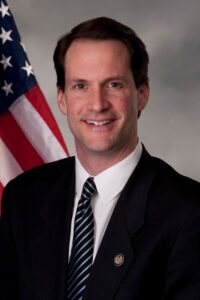 Jim Himes represents Connecticut’s 4th District in the United States House of Representatives where he is serving his eighth term. He serves as Ranking Member of the House Permanent Select Committee on Intelligence, and on the House Financial Services Committee.
Jim grew up as the child of a single working mom in a small town. As a member of Congress, Jim works hard to provide all American children the same opportunities he had to succeed: access to a first-rate public school, affordable and effective health care, a decent and safe home, and a supportive community.
Born in Lima, Peru in 1966 to American parents, he spent the early years of his childhood in Peru and Colombia while his father worked for the Ford Foundation and UNICEF. As an American abroad, Jim grew up fluent in both Spanish and English and was raised with an awareness of the unique position of the United States in the world. At the age of ten, Jim moved with his mother and sisters to the United States.
Jim graduated from Hopewell Valley Central High School and then attended Harvard University. After completing his undergraduate work, Jim earned a Rhodes Scholarship, which enabled him to attend Oxford University in England where he continued his studies of Latin America, including research in El Salvador.
Prior to his service in Congress, Jim ran the New York City branch of The Enterprise Community Partners, a nonprofit dedicated to addressing the unique challenges of urban poverty. Jim’s team led the way in financing the construction of thousands of affordable housing units in the greater New York metropolitan region, often using new green technologies to achieve energy efficiency and reduce utility costs.
Jim’s experience at Enterprise spurred his involvement in politics. Putting his expertise in affordable housing to work, Jim served as a Commissioner of the Greenwich Housing Authority, ultimately chairing the board and leading it through a much-needed program of reforms. Jim went on to become an elected member of his town’s finance board, setting tax and budget policy for Greenwich. Jim has also served as Chair of his local Democratic Town Committee, organizing others in the community to become more active in the political process.
Jim began his professional career at Goldman Sachs & Co. where he worked his way up to Vice President over the course of a 12-year career. He worked extensively in Latin America and headed the bank’s telecommunications technology group there. Jim and his wife Mary live in Greenwich (with not frequent enough visits from their daughters Emma and Linley).
Summary
Himes Defends Democracy, Critiques Both Parties in Wide-Ranging Talk
At a packed event hosted by the Darien Men’s Association, Congressman Jim Himes delivered a sweeping, often unsparing assessment of America’s political and institutional health—criticizing both Donald Trump’s Republican Party and his own Democrats, while expressing cautious optimism that democratic norms are holding.
Himes, now in his ninth term representing Connecticut’s 4th District, opened with a reflection on America’s political evolution. He noted the shift in once reliably Republican towns like Darien, New Canaan, and Greenwich toward the Democratic column—a change he attributes to rising education levels and discomfort with MAGA populism.
“There are lots of reasons to be worried,” Himes said, citing threats to democratic norms, attacks on immigrants, and hostility toward academic and scientific institutions. But he pushed back on the notion that the U.S. is already in constitutional crisis, praising the judiciary for consistently restraining executive overreach. “The courts have held,” he said, referencing over 240 decisions that have blocked controversial policies.
Himes, who serves as the ranking Democrat on the House Intelligence Committee, reserved sharp criticism for the Trump administration’s tariff policy. He argued that tariffs have worsened inflation and misunderstood basic economics. “Trump sees tariffs as a tax on China,” Himes said, “but that’s not how tariffs work.” While he predicted short-term pain—higher prices for cars and consumer goods—he called tariffs a “self-correcting” problem due to inevitable backlash from consumers and markets.
Even as he criticized the former president, Himes had tough words for Democrats. He said voters’ top complaint isn’t about “wokeness” or spending—it’s that Democrats appear incapable of delivering results. He pointed to the failure to build a single electric vehicle charging station in Connecticut after the passage of the Inflation Reduction Act. “People aren’t stupid,” he said. “They see that.”
He praised a new “abundance movement” emerging in Democratic circles, which seeks to streamline infrastructure approvals and deliver tangible benefits faster. As one example, he cited a small long-delayed bridge replacement project in Greenwich that has taken eight years to begin, when the Empire State building was completed in just over a year.
Turning to foreign policy, Himes was blunt: “Most of our biggest mistakes since the 1960s have been mistakes of idealism.” He critiqued America’s overreach in Vietnam, Iraq, and Afghanistan, praising President Biden’s instinct to avoid new military entanglements. While he acknowledged the administration’s failures in handling Ukraine aid early in the war, he warned against full U.S. withdrawal. “If Putin comes away from this thinking it was worth it, we should brace for what comes next,” he said.
On national security, Himes criticized reports that a Qatari-donated plane might be used for presidential travel, calling it a “terrible idea” from a security standpoint, given the role Air Force One plays in providing a secure base from which a president must lead in some emergencies. It will likely have to be taken down to its rivets to rebuild as a secure and effective communications center. He also addressed the “Signal Gate” scandal, in which sensitive communications were conducted over unsecured channels. These lapses, he said, show what happens “when you put responsible people in a clown-like environment.”
During a Q&A session, Himes fielded pointed questions from a self-described MAGA Republican in the audience, who expressed concern about Connecticut’s taxes, energy prices, and population trends. Himes responded by noting economic growth in Fairfield County, but acknowledged broader state challenges. He tied high energy prices to limited natural gas infrastructure and called for modernizing Connecticut’s grid and transit systems.
He also drew a hard line on constitutional issues. “You can disagree with me on taxes and immigration,” he said. “But the Constitution isn’t optional. We don’t get to suspend it because someone is unpopular.”
Asked who leads the Democratic Party today, Himes admitted “we don’t have a figurehead.” He predicted Democrats would likely retake the House in 2026 but warned that the current leadership vacuum is demoralizing to activists.
In a closing question, Himes was asked whether the so-called “big, beautiful” Trump-backed tax bill could hurt the U.S. credit rating. He said the legislation would add $3 trillion to the deficit over 10 years and noted growing market concerns. “There may come a point,” he said, “when the capital markets finally say, ‘enough.’”
Despite his many critiques, Himes ended on a cautiously hopeful note. While he acknowledged deep polarization and rising acceptance of political violence, he expressed faith that institutions—and voters—still have the power to restore balance.
“I don’t think we’ve crossed the line,” he said. “And I don’t think we will.”

Bruce Putterman is CT Mirror’s publisher and CEO, responsible for the strategic direction of the organization, revenue generation, product innovation, reader engagement, and all business operations.
Before joining CT Mirror in 2017 Bruce owned and operated a West Hartford-based consulting practice for 16 years, providing strategic planning and marketing services to more than 50 nonprofit organizations, advocacy groups, public agencies, private equity firms, and other for-profit clients. His interest in journalism dates back to his college years when he worked in commercial radio and TV news. Bruce served as an elected member of the West Hartford Board of Education from 2003 through 2015, including three years as chair of the board.
He has a Bachelor of Arts in History and an M.B.A. in Marketing from Cornell University.
Summary
Bruce Putterman on Why Local Journalism Still Matters in Connecticut
Bruce Putterman, publisher and CEO of The Connecticut Mirror, visited Darien to share a compelling case for the importance of state and local journalism in an era when many communities are becoming “news poor.” Speaking to a local audience, Putterman offered an inside look at how the Mirror has grown into a statewide digital news force—and why its mission to inform and hold government accountable is more crucial than ever.
Founded in 2010 as a response to deep layoffs at the Hartford Courant, especially within its State Capitol press corps, the Connecticut Mirror now boasts 23 journalists, up from just 9 when Putterman spoke to the same group pre-COVID. That growth, he said, is not accidental. A pivotal $1 million grant from the American Journalism Project in 2019 enabled the Mirror to invest in revenue-generating staff and long-term sustainability—allowing it to thrive while other local outlets, like the Darien Times, have withered.
The Mirror operates as a nonprofit, nonpartisan, digital-only outlet focused on public policy, government, and politics. While it avoids daily breaking news, it offers in-depth coverage on topics like the state budget, criminal justice reform, education,and housing. It’s free to readers, funded 90% by philanthropy—from $5 donors to six-figure contributors—and about 5% each from advocacy ads and licensing fees paid by publications like the Hartford Courant.
One of the most critical roles the Mirror plays, Putterman emphasized, is investigative journalism from a non-partisan perspective. He cited a recent Republican press conference where posters illustrating alleged corruption in the Lamont administration drew two-thirds of their stories from the Mirror’s reporting. “That shows we’re doing our job,” Putterman said. “Depending on who you ask, we’re seen as either too liberal or too aggressive toward Democrats. That’s a sign we’re striking the right balance.”
Still, challenges abound. Putterman described a state in which “news deserts” may be rare, but “news poverty” is rampant. Since 2008, Connecticut has lost 65% of its newspaper newsroom jobs. Many towns lack any regular media scrutiny. First Selectman Jon Zagrodzky noted during the event that in his year and a half in office, he’s met only one reporter—and has filled the information gap through direct-to-public video updates with Darien TV79.
Putterman acknowledged this dynamic, sharing that the Mirror is beginning to hire “community engagement reporters” in cities like Bridgeport and Hartford—both poor and undercovered areas—to connect statewide policy with real-life impact. He’s also open to new models, including partnerships with “hyperlocal” digital outlets like Nancy on Norwalk and training citizen journalists through national initiatives like the Documenters program.
He fielded several questions about expanding coverage to include business and healthcare systems. Putterman said they’ve made progress, having hired an economic development reporter who was recently promoted to editor, but admitted there’s more to do. “We should be looking at broader forces shaping the Fairfield County economy,” he said, including the regional transformation of healthcare providers like Stamford Hospital.
Artificial intelligence, he clarified, is not used to write any articles but has been useful in scraping and cleaning disorganized public data sets—particularly from state agencies still reliant on inconsistent PDF formats. “There’s always a human being at the end of any AI process,” he said. However, he noted that AI might someday help spot local reporting trends by scanning transcribed meeting minutes from Connecticut’s 169 municipalities.
Audience members pressed Putterman on whether he could see a path toward more consistent regional coverage, especially in Fairfield County, where many residents feel overlooked by Hartford-centric reporting. Putterman agreed that the Mirror must do more to diversify both its geographic sourcing and its audience, which currently skews older, white, and affluent. He noted their own survey showed the lowest satisfaction with regional coverage came from readers in Fairfield County.
“The gravitational pull of New York is strong here,” he said. “But we all live in Connecticut. We should understand what’s happening across the state.”
He also tackled questions about misinformation and disinformation. Connecticut, he said, doesn’t face the same level of coordinated disinformation campaigns seen in other states. However, trust in national media remains low, while local and state outlets still benefit from community credibility. That trust is critical to preserving the civic function journalism serves.
Asked to describe his vision for local news in Connecticut, Putterman painted a modest but hopeful picture. “We’re not looking to grow aggressively right now. We need to digest the growth we’ve had and make our systems stronger,” he said. But long term, he envisions the Mirror acting as a kind of “portal” for trusted local journalism around the state, potentially linking to partner content alongside their own reporting.
As the event ended, Putterman reminded attendees of one core idea: state and local government decisions shape residents’ lives as much—if not more—than what happens in Washington. “And yet,” he said, “no one’s paying attention. That’s why we’re here.”
Arranged by Charles Salmans
 Local author Tim Manners will give a special talk about his book, Schoolboy: The Untold Journey of a Yankees Hero (University of Nebraska Press). Manners, who was a recent guest speaker at the Baseball Hall of Fame in Cooperstown, N.Y., co-authored the book with Waite “Schoolboy” Hoyt, using a trove of records and writings from Hoyt, who passed away in 1984. Hoyt’s improbable baseball journey began when the 1915 New York Giants signed him as a high school junior, for no pay and a five-dollar bonus. After nearly having both his hands amputated and cavorting with men twice his age in the hardscrabble Minor Leagues, he somehow ended up as the best pitcher for the New York Yankees and teammate with such legends as Babe Ruth and Lou Gehrig. You don’t have to be a fan of baseball to be fascinated by Hoyt’s astonishing life story!
 Tim Manners is a writer, communications consultant and baseball fan. A magna cum laude graduate of Tufts University with a BA in history, he is a former FM-radio disc jockey, publicist and magazine publisher. Currently an essay specialist with The Manners Group, he is co-author of “Schoolboy: The Untold Journey of a Yankees Hero” (2024) with baseball great Waite Hoyt (University of Nebraska Press) and “Relevance: Making Stuff That Matters” (2008), published by Penguin/Portfolio.
Arranged by Frank DeLeo
Summary: “Schoolboy” The Life of Waite Hoyt, Yankees Hero and Forgotten Icon
Tim Manners, author and communications consultant, shared the story behind Schoolboy, a memoir he co-authored based on Hall of Fame pitcher Waite Hoyt’s personal papers. Hoyt, once the ace of the legendary 1927 Yankees, lived a life far richer and more complex than most fans knew.
Origins of the Memoir
Anders met Hoyt’s son, Chris, decades ago and only years later learned of Chris’s famous father. When Chris gifted him eight boxes of Hoyt’s writings—including unfinished memoirs, interviews, and letters—Anders unearthed a firsthand account of Hoyt’s life, ultimately crafting a memoir in Hoyt’s own voice.
Early Life and Baseball Beginnings
Born in Brooklyn, Hoyt grew up near Ebbets Field. At 15, he was signed by the New York Giants after impressing them while pitching for batting practice as a high school ballplayer. Despite the excitement, he was sent to the grueling minor leagues where he endured poverty, violence, and exploitation—experiences that deeply shaped him.
Breakthrough with the Red Sox and Yankees
Hoyt’s major league break came with the Red Sox, where he was ironically brought in to replace Babe Ruth in the pitching rotation. He later joined Ruth again on the Yankees, though their relationship was rocky—including a two-year cold war and a dugout fistfight. They eventually reconciled.
Pitching Stardom
Hoyt became the dominant pitcher on the Yankees during the 1920s, with standout performances in the 1921 and 1927 seasons. In World Series play, he held a 1.89 ERA, cementing his reputation as a “money pitcher.” Manager Miller Huggins admired him, but Hoyt’s penchant for vaudeville in the off season and drinking occasionally jeopardized his career.
Life Beyond the Mound
Outside baseball, Hoyt was a vaudeville performer who earned three times his Yankees salary on stage. He had friendships with stars like Mae West and the Marx Brothers and even crossed paths with Al Capone.
A Complicated Family Life
Hoyt married twice, fathered children in both marriages, and astonishingly went 40 years without seeing his wife or children from his first marriage. His family only reunited decades later, following the publication of Schoolboy, which helped bridge that divide.
Radio Stardom in Cincinnati
After retiring from baseball, Hoyt became the beloved voice of the Cincinnati Reds. Known for his storytelling and warmth, he drew larger audiences during rain delays than during games. Despite a public battle with alcoholism in 1945, his sponsor and fans stood by him, a testament to his character and storytelling charm.
Later Years and Unexpected Talents
Hoyt also became a painter in retirement, selling numerous works. He was friends with famed Mexican artist Diego Rivera, who gifted him a painting—Flower Sellers—that was auctioned decades later (the day of his DMA presentation). Hoyt was inducted into the Hall of Fame in 1969, but even then confessed he sometimes wished he’d been a journalist instead.
Legacy and Reflection
Hoyt’s story—of fame, failure, redemption, and resilience—had been largely forgotten, but Schoolboy brought his legacy back to life. Through it, a fragmented family found healing, and fans rediscovered the man behind the stats. Hoyt was a rare figure: a pitcher, performer, broadcaster, artist, and complex human being whose voice still resonates today.
One of the basic premises of the Bystander Initiative is that there is an entire systemic framework around sexual and other abuse, which Guiora has labelled the ecosystem. Guiora’s work focuses on bystanders – individuals who witness the crime – and enablers – individuals and institutions who are in positions to prevent the crime but do not do so. He has previously written books about bystander and enabler complicity in the Holocaust and in sexual abuse in USA Gymnastics and other athletic programs.
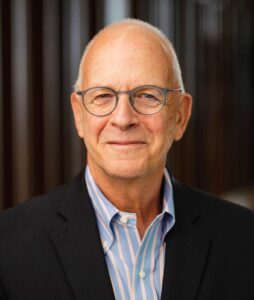 Amos N. Guiora is Professor of Law at the S.J. Quinney College of Law, the University of Utah. He is a Distinguished Fellow at The Consortium for the Research and Study of Holocaust and the Law at Chicago-Kent College of Law, and a Distinguished Fellow and Counselor at the International Center for Conflict Resolution, Katz School of Business, University of Pittsburgh. Professor Guiora is on the Board of the Lauren McClusky Foundation.
For the past 10 years Guiora has been researching-writing-lecturing on the question of bystanders (originally in the Holocaust) resulting in his books, The Crime of Complicity: The Bystander in the Holocaust and Armies of Enablers:Survivor Stories of Complicity and Betrayal in Sexual Assaults.
Professor Guiora’s most recent article, Holding Enablers of Child Sexual Abuse Accountable: The Case of Jeremy Bell, addresses the role of enablers in sexual assault of children.
Professor Guiora Directs the SJ Quinney College of Law Bystander Initiative, a publicly funded student-staffed initiative.
Professor Guiora has an A.B. in history from Kenyon College, a J.D. from Case Western Reserve University School of Law, and a Ph.D. from Leiden University.
Summary
Responsibility of Bystanders and Enablers in Cases of Abuse
In a powerful and deeply personal presentation, Professor Amos Guiora of the University of Utah’s S.J. Quinney College of Law offered a searing indictment of societal inaction in the face of abuse, focusing not only on perpetrators but especially on the enablers and bystanders who fail to intervene. Drawing on his extensive legal scholarship, military service, and personal family history as the child of Holocaust survivors, Guiora made the case that it is no longer enough to spotlight abusers—we must also hold accountable the institutions and individuals who allow abuse to continue.
Guiora leads the Bystander Initiative, a donor-funded, student-staffed effort that researches the legal and moral responsibilities of those who witness or know of abuse but do not act. His work gained national and international attention through two books: The Crime of Complicity: The Bystander in the Holocaust and Armies of Enablers: Survivor Stories of Complicity and Betrayal in Sexual Assault. In both, he analyzes how systemic silence and protection of institutions over individuals perpetuate cycles of abuse.
Guiora shared wrenching survivor testimonies from high-profile abuse cases involving USA Gymnastics doctor Larry Nassar, Ohio State physician Richard Strauss, and others. In each, the perpetrators were enabled by coaches, administrators, and institutional cultures that prioritized reputation and funding over the safety of children. Survivors like Tiffany Thomas and Maddie Larson described the pain not just of the abuse itself, but of the betrayal by those who could have stopped it and didn’t.
Guiora’s own obsession with this topic is rooted in his family’s Holocaust history. His mother survived in hiding in Budapest, his father endured two death marches. Guiora grew up in a household where the Holocaust was never discussed, and it wasn’t until his adult years that he began exploring the topic. The revelation that bystanders played a pivotal role in his parents’ trauma inspired his academic journey to explore the legal responsibility of witnesses to atrocities.
His central argument is bold: bystanders and enablers should be held criminally accountable. In Utah, he helped pass legislation making it a misdemeanor not to dial 911 when witnessing a child or elderly person in danger—a minimal but crucial step. His advocacy is now expanding to other states and countries, although legislation criminalizing enablers—those in authority who fail to act—is more complex and faces greater resistance.
Guiora distinguishes between bystanders (those physically present and passive) and enablers (those in institutional positions who protect perpetrators by prioritizing their institutions over victims). Enablers, he argues, are often more dangerous. They betray trust not through ignorance, but by making deliberate choices to shield institutions at the cost of human life and dignity.
He referenced the tragic case of Jeremy Bell, a 12-year-old murdered in 1997 by a teacher with a long record of sexual misconduct. School administrators had received repeated warnings over decades but took no action. Thanks to private detective Dan Barber, the case was eventually solved—but the enablers faced no consequences.
Guiora also addressed the issue of racial bias in reporting abuse, citing a poignant moment during a lecture at UVA when a Black audience member challenged the presumption that calling 911 is always safe or helpful, particularly for people of color. Guiora acknowledged the validity of this concern and worked with Utah legislators and civil rights groups to refine the law accordingly.
Throughout his talk, Guiora returned to the idea that legal accountability—not just moral reflection—is essential to changing behavior. While education and awareness are necessary, they are insufficient without laws that demand action and penalize failure.
His work is ongoing, and his message urgent: whether in schools, sports teams, religious institutions, or governments, we must stop protecting systems at the expense of the vulnerable. “All roads,” he said, “lead to the enabler.”
Guiora concluded by offering his email to attendees, encouraging further dialogue, and urging everyone to move beyond sympathy toward accountability. As he put it, “Sympathy is useless when someone is choking. You have to act.”
More on the Bystander Initiative
To follow up with Professor Guiora: amos.guiora@law.utah.edu
Learn more about contributing to the Bystander Initiative’s work.
Additional information on the Bystander Initiative:
Person to Person
Person to Person (P2P) supports families and individuals as they move toward stability with healthy food, clothing, housing assistance, and a path to economic opportunity.
Each person P2P has the opportunity to serve has a unique story. Whether it’s a single mother struggling to work enough hours to provide for herself and her children, an elderly man living alone on disability, or a young family looking for guidance to navigate housing expenses in Fairfield County, each person has a unique reason for calling on P2P and P2P is there to serve them all, no questions asked.
Nancy Coughlin, CEO, Person to Person
 Nancy joined Person to Person in June of 2019, bringing expertise and experience in food insecurity, anti-poverty, and women’s and children’s issues. Prior to joining P2P, Nancy served for seven years as the Executive Director at Neighbor to Neighbor, a Greenwich-based organization dedicated to providing food and clothing to low-income families and children, and prior to that, practiced employment litigation with Baker McKenzie in NYC.
Nancy received a BA in psychology from the University of New Hampshire, and a J.D. from the Suffolk University Law School.
Arranged by Alex Garnett
Summary
The Heart of Help: Nancy Coughlin on Building Stability Through Compassion and Action
It’s not every day you hear a speaker who makes statistics feel personal. But that’s exactly what Nancy Coughlin, CEO of Person-to-Person (P2P), accomplished in her recent talk. With warmth, clarity, and a call to action, she walked us through the stark realities of economic hardship in Fairfield County—and how her organization is helping people move toward stability—one meal, one rent check, and one conversation at a time.
Founded in 1968 after the assassination of Dr. Martin Luther King Jr., Person-to-Person was born out of a vision of justice and reconciliation. Today, it’s one of Connecticut’s most impactful social service organizations. Coughlin, who came to P2P in 2019, brings a unique blend of legal expertise, nonprofit leadership, and grassroots empathy. She isn’t just running a program—she’s reframing how we think about poverty and potential.
What’s changed since P2P’s early days? A lot. Today’s challenges are steep: Fairfield County has the second-highest income inequality in the nation, and in towns like Stamford and Norwalk, up to 60% of kids qualify for free or reduced lunch. As Coughlin put it, “The people we serve are often working, but they simply can’t keep up.”
So what does P2P do?
They meet people where they are—literally. Whether through mobile food pantries, home deliveries, or on-site caseworkers, they reach deep into communities with food, clothing, emergency financial assistance, and longer-term coaching programs. Their four food pantries (including two mobile) now distribute enough groceries for over 2.5 million meals a year—more than double what they managed pre-pandemic.
But Coughlin stressed that this isn’t just about charity—it’s about systems. She pointed to housing costs as the single biggest driver of need, with over 50% of renters in the area spending more than a third of their income just to stay housed. “Rent eats first,” she said, and that leaves little for food, transportation, or health care.
She also highlighted how federal safety net programs have been slashed just as demand is rising again. The loss of expanded SNAP benefits, the child tax credit, and rent assistance—programs that briefly cut child poverty to historic lows during the pandemic—has led to a resurgence of hunger and homelessness. “Poverty is back on the rise,” she warned.
Still, there’s hope—and it shows up in the form of volunteers, donors, and creative problem-solvers. With over 3,000 volunteers, P2P leans into community support. Their programs are bilingual, tailored, and responsive—from financial coaching to job training to car seats for new parents. “Support” is the operative word in P2P’s mission, and Coughlin made it clear: they’re not here to “rescue” people—they’re here to walk with them.
As one audience member noted, “This is a real model for community service.” And it is. But it’s also a model for what’s possible when we stop asking, “What’s wrong with them?” and start asking, “What systems can we fix together?”
Coughlin ended her talk with a message we all needed to hear: “Every child deserves to grow up and reach their full potential. Our job is to make sure they can.”
 Connecticut, as we all know, is actually a wonderful place to live and raise a family. Yet only half of Connecticut residents said they were proud of the state in a recent survey, even though 73% felt it was a good place to live. Part of the challenge is that Connecticut has not defined itself around its resources and attributes; there are few who can describe what’s wonderful about our state and those in Fairfield County might see it merely as a suburb of New York. Governor Lamont is determined to change that so that people know better what makes Connecticut special.
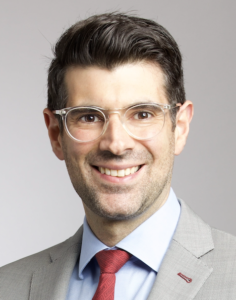
Anthony M. Anthony is an executive marketing and communications professional currently serving as the Chief Marketing Officer (CMO) for the State of Connecticut. As the first CMO, he oversees the newly created Office of Statewide Marketing and Tourism, working tirelessly to shape and promote a compelling narrative about Connecticut as an exceptional place to live, work, and play.
Previously, Anthony served as the Special Advisor and Communications Director to Governor Ned Lamont, where his storytelling skills and strategic guidance contributed to Governor Lamont’s high approval ratings.
Anthony’s expertise was built over the years in the private sector as a creative director and strategist at boutique brand communications agencies in New York City guiding Fortune 500 brands across the tech, media, consumer packaged goods, hospitality, and healthcare sectors.
Summary
Reimagining Connecticut: How the State’s First Chief Marketing Officer is Telling a New Story
What do you think of when someone says “Connecticut”? For many, the answer is fuzzy—maybe a reference to its historic nickname “The Constitution State,” or perhaps just a quiet nod to its proximity to New York or Boston. But as Anthony Anthony—yes, that’s his real name—sees it, that’s exactly the problem.
Appointed in 2023 as Connecticut’s first Chief Marketing Officer, Anthony is on a mission to give the state something it has long lacked: a clearly defined identity. He made a compelling case for why marketing isn’t just about tourism or PR—it’s about state pride, economic growth, and shaping the future.
From Middle Child to Main Character
Anthony quickly realized that Connecticut suffers from what he calls a “middle child syndrome.” It’s wedged between cultural giants—New York and Massachusetts—and has struggled to carve out its own distinctive brand.
“It’s a great place to live,” he said, “but a lot of people here can’t explain why.”
Defining the Brand
Anthony merged the previously siloed offices of tourism and workforce marketing into a single, unified Office of Statewide Marketing and Tourism.
The result? A cohesive message built around the phrase: “Connecticut: Make It Here.”
The slogan, he explained, reflects more than just a manufacturing legacy. It’s a call to action for dreamers, builders, innovators, and families. Whether you’re starting a business, writing a novel, or raising a family, Connecticut can be your launchpad.
A New Kind of Marketing Machine
In his first year on the job, Anthony’s team helped drive over 15.4 billion media impressions, up from just over 4 billion the year before. Creative, low-cost campaigns like the Connecticut Christmas Movie Trail, the Oyster Trail, and a push to establish the state as the Pizza Capital of America (trademark pending) brought national attention—and a sense of fun—to the brand.
There’s also a strong business case for investing in marketing. According to industry benchmarks, every dollar Connecticut spends on tourism marketing returns about $8 in economic activity. Anthony’s team is also developing a statewide rewards program—“Made”—to incentivize residents to share their experiences and stories online, turning word-of-mouth into a measurable force.
Data-Driven Optimism
Anthony backed up the storytelling with stats that surprised even the most seasoned locals:
- Connecticut has seen four consecutive years of population growth, outperforming national and regional trends.
- The state’s GDP and job growth in key metros like Hartford, New Haven, and Fairfield County have exceeded expectations.
- Net promoter scores—a measure of how likely residents are to recommend the state—have jumped by over 100% in categories like work, live, and visit.
He acknowledged challenges, of course—cost of living, traffic congestion, and estate taxes chief among them—but stressed that these aren’t insurmountable. In fact, he said, they’re already being addressed through fiscal stability, infrastructure investment, and targeted tax relief.
Not Just a Campaign—A Community
Anthony emphasized that branding isn’t about spin—it’s about storytelling, culture, and shared values. “We’re not just marketing a state,” he said. “We’re building a sense of belonging.” That’s why the campaign is increasingly tapping into local stories: from shellfish farmers in Stonington to chefs in New Haven, to students and CEOs sharing what makes Connecticut work for them.
And the efforts aren’t limited to tourism. The marketing office is collaborating with business development agencies to attract investment from other states and even abroad. As he pointed out, European firms are increasingly eyeing U.S. locations to avoid tariffs—Connecticut, with its skilled workforce and robust infrastructure, is ready to make its case.
Looking Ahead
Upcoming initiatives include:
- The launch of a Connecticut Pizza Trail (voting is open now).
- Support for America 250 celebrations via the state’s popular tourism site.
- A quarterly thought leadership series to connect business, education, and government leaders.
- Expansion of regional flight access, particularly at New Haven’s Tweed Airport.
Anthony closed with a reminder: marketing Connecticut isn’t just his job—it’s everyone’s. Whether you’re a business owner, a town official, or a lifelong resident, he urged people to share their stories, promote their communities, and proudly say what makes the state worth calling home.
“We all have a stake in how this place is perceived,” he said. “If we want people to make it here, we’ve got to show them how.”
Note: Members interested in engaging with Anthony over the marketing program should email him at anthony.anthony@ct.gov.
 Aaron Cooper has dedicated his career to pre-k through grade 9 independent school education. He has been a teacher, coach, advisor, and administrator for the last 22 years. Aaron Cooper joined New Canaan Country School in July 2018.
Aaron earned an Ed.M. in Private School Leadership and an M.A. in Educational Leadership from Teachers College, Columbia University; he received his B.A. in the Growth and Structure of Cities from Haverford College, and a diploma from Groton School.
In a wide-ranging and deeply reflective talk, Aaron Cooper, Head of School at New Canaan Country School (NCCS), presented a compelling case for rethinking education—not just as preparation for tests or college, but as the foundation for a meaningful life in a volatile, uncertain, and often overwhelming world.
Cooper, whose career spans nearly three decades in pre-K through grade 9 education, began by outlining the modern strategic challenge: how to educate children for a world that is no longer just unpredictable, but increasingly brittle, anxious, nonlinear, and incomprehensible. The key, he argues, is to cultivate adaptability, curiosity, resilience, and a sense of purpose in students—not simply fill them with information.
The Deweyan Roots of a Modern School
NCCS was founded in 1916 during a time of educational revolution. Drawing from the philosophies of John Dewey, the school adopted a progressive educational model emphasizing experiential learning, student-centered classrooms, integrated curriculum, and the idea of school as a miniature democracy. These principles still anchor the school today.
“Rather than learning about science, students should act as scientists,” Cooper explained, stressing Dewey’s belief in learning by doing. He detailed six key tenets of Dewey’s philosophy—many still radical in mainstream education today—including the idea that education is not merely preparation for life, but life itself.
Signature Programs that Shape Children and Educators
NCCS’s distinctive programs have positioned it as a leader in shaping both students and teachers:
- Horizons at NCCS, launched in 1964, now educates 400 low-income students annually from Stamford and Norwalk, providing summer and school-year academic enrichment and life experiences. This initiative has expanded to 70+ affiliate programs nationwide.
- The Apprentice Teacher Program, founded in the 1960s, was the first of its kind and has since become a model for independent schools. It offers immersive two-year classroom experience and professional development, pairing new educators with lead teachers.
- In the early 2000s, NCCS collaborated with psychologist Angela Duckworth to pilot the Mission Skills Assessment, measuring non-cognitive traits like resilience and collaboration—now a national tool.
Responding to Today’s Challenges
Cooper believes today’s students face more complex pressures than ever before. To help them thrive, schools must be proactive and grounded in what works:
- Technology: While digital tools like AI can enhance learning, unchecked screen time and social media are damaging, particularly to adolescents. NCCS has implemented a no-phone policy during school hours for the past four years—at students’ own request—and works with families to delay smartphone and social media use.
- Active, Purposeful Learning: From robotics to global affairs presentations, students engage in open-ended, collaborative problem solving that builds intellectual habits and confidence—key ingredients in future readiness.
- Boys in Education: Cooper raised concerns about boys’ engagement in traditional classrooms, noting the national rise in ADHD diagnoses and declining college enrollment among boys. NCCS prioritizes movement, play, and outdoor learning—methods that benefit all children but are especially important for boys’ cognitive and emotional development.
- Foundational Skills: Early childhood education at NCCS now integrates professional support in speech and motor skills directly into classrooms. The COVID-19 pandemic, Cooper said, has made developmental delays more visible—and addressing them proactively is essential.
- Student Voice and Empathy: Through regular public speaking and service opportunities, students learn that their ideas matter. “What you believe and what you say is important,” Cooper said. NCCS encourages students to act generously, think deeply, and question confidently.
The Role of Parents and the Purpose of Education
Throughout the presentation and Q&A, Cooper emphasized the importance of partnership with parents. At NCCS, curriculum conversations are guided by shared values, open dialogue, and a commitment to child-centered growth.
In response to a question about the growing debate over whether education should lead to economic self-sufficiency or democratic engagement, Cooper offered a thoughtful balance: “It’s not so much about redefining the purpose of education,” he said, “but about coming together periodically to define it again.”
Endowment and Access
NCCS’s ability to maintain such an ambitious program is supported by an endowments among pre-K–9 independent schools—approximately $60 million. This allows the school to offer robust financial aid, fund Horizons, and invest in initiatives like expanded outdoor learning spaces.
Final Thoughts
As Cooper noted, “We’ve long said at NCCS that our goal is to develop happy, healthy, and successful 30-year-olds.” His talk reflected a school that takes this mission seriously—by building intellectual foundations, nurturing emotional growth, and empowering children to lead lives of purpose and impact.
In an era of division and digital overwhelm, NCCS is leaning into its progressive legacy—not as nostalgia, but as a blueprint for preparing students to thrive in tomorrow’s complex world.
 Juliet Cain is a cofounder of the Darien Pollinator Pathway with Deepika Saksena. The DPP seeks, through events and publications as well as through advocacy at the state and local levels, to help eliminate the use of pesticides in our yards and public spaces and to restore pollinator populations with native plantings. As former Chair of the Darien Beautification Commission, Juliet spearheaded the native plantings on the slopes at the Darien Town Hall.
Darien Pollinator Pathways is a part of a larger undertaking to create a corridor of adjacent properties—private residences and public spaces—that provide safe habitat for birds, bees, butterflies and other insects. The goal is to make Darien one big pollinator pathway with private, commercial and municipal spaces being pesticide free and hosting native plants. Native plants, as opposed to invasives, are plants that existed before Europeans arrived. These plants will be more resilient, low-maintenance and healthy choices for gardens, and will support native insects and birds—enhancing our natural ecosystems.
Juliet has been a resident of Darien for almost 20 years. Since retiring from the practice of law in New York City, she has focused on environmental issues. She served on the Policy on Resilient Forests for CT’s Future (the PRFCT Future) working group 2021-2022 and on the CT GC3 Climate Smart Agriculture & Forestry working group in 2022. She was Chair of the Conservation Committee of the Garden Club of Darien and Zone Representative for the Conservation Committee of the Garden Club of America 2020-2022. As former Chair of the Darien Beautification Commission, Juliet spearheaded the native plantings on the slopes at the Darien Town Hall. Juliet is also an accredited organic land care professional certified by CT Northeast Organic Farming Association and an Adviser to the Darien Land Trust.
Summary
Rewilding Darien: Juliet Cain’s Inspiring Call to Action for Pollinators and the Planet
At a recent Darien Men’s Association event, environmental advocate Juliet Cain captivated the audience with a dynamic and deeply informative presentation on the critical importance of pollinators, the growing ecological crisis, and how local residents can make a real difference through the Darien Pollinator Pathway. Blending science, policy, humor, and personal stories, Cain outlined a roadmap for restoring biodiversity—starting in our own backyards.
Nature Isn’t Optional—It’s Our Life Support
Opening with a quote from indigenous cultures—where the word for “plant” translates to “those who look after us”—Cain reminded the audience that humans are entirely dependent on nature. Insects, and bees—as pollinators and enablers of plant growth—are essential to our survival. They keep ecosystems functioning, contribute to clean air and water, and pollinate roughly one-third of the crops we eat.
As entomologist E.O. Wilson once put it, insects are “the little things that run the world.” Without them, life on Earth would collapse within weeks. Without humans, on the other hand, the insects would continue to thrive.
A Chain Reaction of Decline
Cain detailed alarming losses in biodiversity:
- 76% decline in flying insects in parts of Europe since the late 1980s.
- 3 billion birds lost in North America since 1970.
- 86 out of 127 butterfly species once common in Darien are now in decline.
- Native bee populations in Connecticut are also down by approximately 50%.
Why? Cain pointed to a few culprits: habitat loss, invasive plant species, climate change, and the pervasive use of harmful pesticides like neonicotinoids.
She also highlighted the staggering environmental cost of our most familiar landscaping feature: the lawn. Turf grass, which supports virtually no biodiversity, consumes 8 billion gallons of water per day in the U.S. and is drenched in over 70 million pounds of pesticides annually.
Native Plants, Native Bees, and New Thinking
Cain emphasized the importance of native plants—species that have evolved over millennia in harmony with local pollinators. For example, native dogwood trees support over 100 species of moths and butterflies, whereas their ornamental counterparts often support none.
She playfully compared Connecticut’s native bees to Wall Street professionals: early-rising, tireless, and effective. By contrast, the non-native honeybee is more of a 9-to-5 commuter. Native bees are better suited to pollinate native plants, many of which can only be pollinated by specific species.
The takeaway? When we plant native, we restore the foundation of the food web and create a ripple effect through the ecosystem—from the soil to the sky.
Pollinator Pathway: A Grassroots Revolution
The Darien Pollinator Pathway is part of a broader 501(c)(3) network that spans over 100 towns across 20 states. It’s a community-driven initiative focused on three pillars:
- Education about the role of pollinators.
- Advocacy for smarter landscaping policies and pesticide reduction.
- Ground-level action: planting native species and removing invasives.
Participants are asked to take a simple pledge: plant at least one native species on their property and avoid synthetic chemicals like herbicides, fungicides, and insecticides.
“We don’t advise on financial disclosures or nature-related dependencies,” Cain joked, referencing recent global sustainability frameworks. “What we do is plant.”
And plant she has. Cain shared her own yard’s transformation—from sterile lawn to buzzing pollinator haven, complete with wildflowers, bees, and even an accidental butterfly-to-the-head guest experience. Her gardens, along with native beds at Darien Town Hall, serve as living examples of ecological restoration in action.
Connecting the Dots: From Backyards to Biodiversity Corridors
The goal of the Pollinator Pathway is to connect isolated pockets of green space with corridors of pollinator-friendly habitat. This is especially important for insects and birds with limited travel range. Cain cited the metallic green sweat bee, which can only fly about 500 feet—a single parking lot or housing development could become an insurmountable barrier.
By creating small pollinator patches, Darien residents can help form an interconnected web that supports both local and migrating species, including monarch butterflies on the Atlantic Flyway.
What You Can Do
Cain concluded with a call to action, urging everyone to rethink their landscaping habits:
- Convert part of your lawn into a native garden.
- Replace turf with clover or long grass paths.
- Support nurseries that grow true native species—not sterile cultivars.
- Avoid pesticides, even if they’re marketed as “safe.”
She recommended resources such as PollinatorPathway.org, native plant nursery Earth Tones, and Planet Wild for landscape design. For DIY gardeners, she pointed to video tutorials from New Directions in the American Landscape.
Even a single plant makes a difference. “Do it for the bees. Do it for the birds. Do it for the air and the water,” she said. “And if nothing else, do it because it will bring you joy.”
 Even while veterans are often welcomed home from combat tours as heroes, they also may encounter long term neglect in health care, disorientation and PTSD, and even homelessness. This presentation will address these challenges, their scale, their conditions, and programs that seek to address them.
Brigadier General, (Ret.), USA, Ronald P. “Ron” Welch is the Connecticut Commissioner of the state’s Department of Veterans Affairs. Ron enlisted in the U.S. Army on April 22, 1978, and served on active duty with the 2 Ranger Battalion of the 75 Ranger Regiment at Fort Lewis Washington. During his active-duty service, he attained the rank of sergeant and completed Basic Airborne School, Ranger School, Jungle Warfare Course, USMC Amphibious Recon Scout Swimmer Course, Jumpmaster Course, Primary Non-Commission Officer Course, USMC Scout Sniper Course, Emergency Medical Technician Course, Special Operations and Tactics Course, and the Pathfinder School. On May 4, 1981, he sustained serious injuries during a line of duty parachute accident. He left active service after completing his tour of duty on October 2, 1982.
He returned home and joined the Connecticut National Guard and eventually attended Officer Candidate School and on August 11, 1984, he was commissioned as a second lieutenant in the infantry. He then served full-time in numerous positions in the Connecticut National Guard’s Infantry units as a rifle platoon leader, company commander, and various staff positions. He was promoted to Colonel on October 1, 2004, and deployed to Afghanistan in support of Operation Enduring Freedom from 2005 to 2006 as a senior American advisor to an Afghan National Army, Infantry Brigade located in Eastern Afghanistan, providing training, advice, and conducting combat operations.
He retired from military service in 2017. Following his retirement, General Welch sought opportunities to provide support for veterans and active-duty service members and families, and he accepted a position as Vice President of Military and Family Services for Veterans Rally Point with Easterseals Capital Region and Eastern Connecticut, a nonprofit organization that provides expanded access to healthcare, education, and employment opportunities for those with disabilities and the veteran population.
Brigadier General Welch is a graduate of Eastern Connecticut State University, where he earned a Bachelor of Arts degree in 1992 and a Master of Science degree in organizational management in 2007. He also earned a Master of Strategic Studies in 2011 from the U.S. Army War College.
He resides in southeastern Connecticut. His oldest son Stephen is a combat veteran with three tours. He is a full-time Physician Assistant for the CT National Guard, previously serving in the ED at Yale, a daughter Katherine is attending Quinnipiac University in the Occupational Therapy master’s program. And his youngest son Ethan is entering his senior year at Pennsylvania State University majoring in Public Health.
Summary
Brigadier General (Ret.) Ron Welch, Commissioner of the Connecticut Department of Veterans Affairs, provided a thoughtful and comprehensivel presentation in Darien, outlining the state’s history, current initiatives, and pressing needs in caring for its veterans.
Welch opened by highlighting Connecticut’s unique role in veterans’ history, noting that the nation’s first veterans’ home and hospital were founded in Darien in 1864 by philanthropist Benjamin Fitch. That legacy lives on today in the Shady Grove cemetary in Darien (the first veterans cemetary in our history) and the Connecticut Veterans Home now in Rocky Hill—a 92-acre campus with 40 buildings, 1.5 miles of tunnels, and a five-star rated healthcare facility. The Rocky Hill campus also includes dormitory housing and family homes for women veterans and their children.
A decorated veteran himself, Welch served with the 75th Ranger Regiment and later as a senior American advisor to the Afghan National Army. After retiring, he led efforts at Veterans Rally Point, helping veterans reintegrate through healthcare access, employment training, and education. His personal connection to public service is reflected in his children’s careers—his son is a flight surgeon with the Connecticut National Guard, his daughter is an occupational therapist, and his youngest is pursuing a Ph.D. in epidemiology.
Welch explained that Connecticut is home to roughly 150,000 veterans, with over 80% over the age of 60. This aging population requires increasing support in healthcare, housing, and advocacy. The DVA’s four core missions include skilled nursing care, residential services, advocacy and assistance, and cemetery and memorial services. The department also supports family housing, with five houses on campus currently occupied by single mothers and their children.
Among the DVA’s top priorities are expanding housing, upgrading electronic medical records, enhancing website accessibility, realigning budgets, and increasing outreach. Welch emphasized the importance of local Municipal Veterans Representatives—trained volunteers who serve as the first point of contact for veterans in their towns, helping them connect to services and benefits.
He also discussed the importance of Connecticut’s certified Veterans Service Officers, who have generated $199 million in direct benefits for veterans. Welch is advocating for more service officers in underserved areas, particularly the northeast and northwest corners of the state.
Cemetery services remain a focus, with Spring Grove Cemetery in Darien long at capacity and a growing need for expanded burial space. While efforts to acquire new land in Middletown were recently blocked, the department is actively seeking alternative sites and already has state bond funding secured for the expansion.
Mental health and suicide prevention were a central theme in Welch’s remarks. Since 9/11, more than 120,000 veterans have died by suicide—double the number of names on the Vietnam Veterans Memorial. Welch emphasized that social isolation, substance abuse, and mental injury are common threads in these tragedies. He urged veterans and their families to reach out for help, referencing the importance of confidential therapy, peer support groups, and strategies such as removing ammunition or using gun locks to reduce impulsive actions. “Suicide is a permanent solution to temporary problems,” he said. And he highlighted the need to distract a troubled veteran for 5-8 seconds when they are considering harming themselves in order to give them time understand the consequences of what they are planning.
Welch shared efforts under the Governors’ Challenge, a national initiative to reduce veteran suicide. He also highlighted new approaches to mental health, including peer meetups and emerging therapies like psychedelic-assisted treatment, which is currently being studied. He stressed the effectiveness of group sessions that blend casual conversation, shared activities, and emotional connection.
While traditional veterans’ organizations such as the VFW and American Legion have seen declining membership, Welch noted that younger veterans are engaging in different ways. Events like Irreverent Warriors hikes and “Hike to Remember” ruck marches offer camaraderie and purpose. These modern gatherings, he said, help veterans reconnect and begin to process their experiences in healthier ways.
In response to an audience question, Welch acknowledged the strong partnership between Connecticut’s state and federal VA systems. He praised the care provided at West Haven and Newington facilities, which are affiliated with Yale and UConn medical programs. Despite national budget uncertainty, he assured attendees that veterans’ healthcare and benefits remain protected.
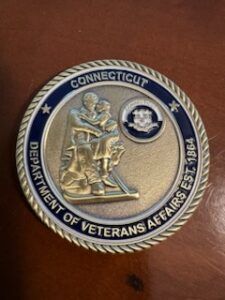 Welch closed by returning to the local history. He spoke about the statue originally placed in Darien, now relocated to Rocky Hill, depicting a Civil War officer comforting a young girl—symbolizing the enduring costs of service and the need to care for veterans and their families.
In presenting a commemorative coin to a local host, Welch thanked the community for its continued support. “We owe our veterans more than words,” he said. “We owe them a life of dignity, opportunity, and care.”
 Dr. Joseph W. Polisi was president of the Juilliard School for 34 years from 1984-2018 and is now president emeritus and chief China officer of the School. Through his experiences at Juilliard and Lincoln Center, Polisi creates in his book a complex tableau which traces the idealistic and determined efforts by John D. Rockefeller, 3rd and his colleagues to create a unique environment where the most prominent performing arts institutions in New York City would be brought together at a venue named Lincoln Center for the Performing Arts.
Through readings and historic photos, Polisi will guide members through the Center’s history from late 1955 to the present day, pointing out the involvement of such artists, architects and politicians as Leonard Bernstein, Beverly Sills, Robert, Moses, Philip Johnson, and many others and reflect on the current status of Lincoln Center as it shifts away from classical programming in favor of genres like pop, hip-hop, social dance, and comedy.
 Upon stepping down from his role as president of Juilliard, Polish became Chief China Officer, supervising the overall development of The Tianjin Juilliard School in Tianjin, China. Opened in fall 2020, Tianjin Juilliard offers audition-based programs on pre-college and graduate levels. The graduate school program is taught in English and offers a USA-accredited master’s degree from The Juilliard School. There are also public programs for adult learning and instrumental training, as well as an innovative learning environment, Juilliard Imagination, featuring interactive exhibitions for adults and children.
Polisi is an accomplished bassoonist who has performed throughout the USA, produced several recordings, and released a solo album of twentieth-century bassoon music for Crystal Records. He has published many scholarly and educational articles and frequently speaks about arts and education. He has authored three books The Artist as Citizen (2005), a collection of articles and speeches concerning the role of performing artists as leaders and communicators of human values; and American Muse: The Life and Times of William Schuman (2008), the first full-length biography of Schuman. Both are published by Amadeus Press. Polisi’s third book, Beacon to the World: A History of Lincoln Center, was published by Yale University Press in June of 2022.
Before Juilliard, Polisi was dean of University of Cincinnati College-Conservatory of Music, dean of faculty at Manhattan School of Music, and executive officer of Yale University School of Music. He holds a Doctor of Musical Arts degree from Yale and holds a bachelor’s degree in political science from the University of Connecticut and a Master of Arts degree in international relations from the Fletcher School of Law and Diplomacy at Tufts University. He has been awarded ten honorary doctorates and is a member of the American Academy of Arts and Sciences.
–Summary
What began as a Cold War-era dream to elevate America’s cultural standing has, over six decades, become one of the most iconic performing arts institutions in the world. Dr. Joseph Polisi, President Emeritus of The Juilliard School and author of Beacon to the World, recounted the complex and colorful history of Lincoln Center in a sweeping presentation that spanned its political inception, architectural misfires, artistic triumphs, and cultural transformations.
At the heart of the story is John D. Rockefeller III, who envisioned Lincoln Center as a “beacon to the world.” In the 1950s, Rockefeller and a group of business leaders began planning a center that would unify opera, dance, theater, and music—a first of its kind—as a means of complementing the US atrength in economics, politics, and the military with global leadership in culture.
The location—16 acres on Manhattan’s Upper West Side—was cleared through Robert Moses’ urban renewal program, displacing thousands in what remains a deeply controversial chapter. Moses, a champion of automobile-centric infrastructure, imagined Lincoln Center as a cultural destination surrounded by parking lots. That vision quickly evolved as the area gentrified and grew around it.
The construction of Lincoln Center was monumental. It cost $185 million (over $2 billion today) and brought together “star” architects like Wallace Harrison (Metropolitan Opera), Philip Johnson (State Theater), and Eero Saarinen (Drama Theater). But it wasn’t always smooth. Philharmonic Hall, now David Geffen Hall, opened in 1962 to acoustic disaster. The Cleveland Orchestra’s George Szell famously told officials to “tear it down.” Over the decades, the hall underwent six costly renovations, culminating in a 2022 overhaul praised for dramatically improved sound and design.
Lincoln Center is home to 11 constituents, including The Juilliard School, New York Philharmonic, Metropolitan Opera, and New York City Ballet. But it has also been a battleground. Artistic rivalries, political wrangling, and high-stakes power plays shaped its development.
Lincoln Center’s public art installations—by the likes of Marc Chagall, Alexander Calder, and Henry Moore—were not without controversy either. Bureaucratic resistance and artistic boldness clashed, especially when Lincoln Kirstein smuggled massive sculptures into the State Theater before they could be vetoed.
Today, the institution faces new challenges. The pandemic disrupted attendance patterns and the digital era has redefined how people engage with classical music. The average age of concertgoers is rising. Lincoln Center Inc., once a major presenter of classical music, has pivoted toward hip-hop, comedy, and social dance in an effort to diversify its audience—a move that has drawn criticism from traditionalists like Polisi, who urged a return to artistic excellence over political trendiness.
Meanwhile, abroad, Polisi has been leading the Tianjin Juilliard School in China, where classical music is booming. With tens of millions of children studying piano, China today mirrors the United States of the 1930s in its enthusiasm for the Western canon—an irony not lost on the former Juilliard president.
Lincoln Center remains a living institution—one that, for all its imperfections and politics, continues to shape and reflect American cultural life. As Polisi concluded, “Art doesn’t have to be expensive or elaborate. It just has to be true.”