Author: Webmaster (Page 48 of 96)

Bert von Stuelpnagel, “German Military Resistance, including the Stauffenberg Putsch,” October 21, 2020

Bert von Stuelpnagel was born in Freiburg, Germany, on March 6, 1950 and graduated from Bad Toelz High School in 1969. After military service and training in banking he worked in the financial industry during his entire career, including 35 years at the New York Branch of BayernLB, a German public sector bank. He retired in 2015 from his last position at that bank as Executive Vice President U.S. Capital Markets. He holds a Master in Political Sciences from State University of Bavaria, and an M.B.A. in Finance from Pace University. Bert has lived in Darien with his wife Lisa since 1984. They have three children, two of whom graduated from Darien High School. Bert is currently serving on the Darien RTM and its Finance and Budget Committee, and on the Darien RTC as its treasurer, and on the Andrew Shaw Memorial Trust, also as treasurer.

Arranged by Bryan Hooper

Bryan’s summary of the talk:

Bert von Stuelpnagel recounted the ascent of Hitler and the several unsuccessful plots against him. Bert spoke with an intimate knowledge gained from research into his family background as he is related to Colonel Claus von Stauffenberg, who placed the bomb designed to kill Hitler in July, 1944, and to General Karl-Heinrich von Stuelpnagel, who was instrumental in the short-lived success of the subsequent uprising in Paris.

In 1932 the Nazi party led by Hitler gained only 33% of votes in the November national election, but due to the inability of the other parties to create a coalition, President Hindenberg was persuaded to appoint Hitler as Chancellor in early 1933. After Hindenberg’s death the following year, Hitler became Der Fuehrer, effectively establishing himself as dictator. He created an alliance with the army and rewarded the generals by enlarging and re-arming their forces. In 1938 he declared himself War Minister and re-organized the chain of command, replacing the leadership. Several generals concocted a plot to overthrow Hitler in that year, but it fell apart after the appeasement by Neville Chamberlain with the signing of the Munich Agreement in late September. World War II followed in September, 1939.

The plotters persisted as the war was waged, and in 1943 a group of 21 officers from the Infantry Regiment in Potsdam developed a variation of the Valkyrie Plan, which was originally devised by Hitler to ensure the continuity of government in case of a putsch against Nazi leadership from forces within Germany. The original Valkyrie contemplated a breakdown of government due to allied bombing or an uprising of parts of the forced labor force of 7 million. In an emergency, prepared orders would be issued to the Reserve Army to maintain law and order within the German territory. Under the plotters’ revision of Valkyrie, the mobilized Reserve Army was to arrest local SS and Nazi bosses to complete the putsch.

The first attempt at executing the plan was on March 13, 1943, when two bombs placed on Hitler’s plane failed to detonate due to the low temperatures encountered in the hold. (The bombs were retrieved for later use on July 20, 1944.) A second effort on March 21st was aborted when Hitler left an exhibition earlier than expected, and there was another attempt cancelled in the fall that year. Colonel von Stauffenberg resolved to carry out an assassination attempt at the Wolf’s Lair, Hitler’s headquarters for the Eastern Front. He had to pass on two dates in July before seizing the opportunity on July 20th. The bomb was left in a briefcase in the conference room under the table close to Hitler, but the briefcase was moved by one of the generals. Von Stauffenberg had set the detonator and left the room, taking a car to the airport to fly to Berlin, when the bomb exploded. It killed four people and severely wounded another nine. Hitler survived with singed trousers and a perforated eardrum – and hosted a meeting with Mussolini that afternoon! Von Stauffenberg was arrested in Berlin, court-martialed, found guilty, and executed just after midnight on the next day.

General Karl-Heinrich von Stuelpnagel, the High Commander of Occupied France in Paris, had attempted to recruit Field Marshal Rommel to the rebel cause on July 7th, 1944, but Rommel was injured in a strafing attack ten days later and replaced by Field Marshal von Kluge. On July 20th, after being apprised of the supposed death of Hitler, von Stuelpnagel followed through on the Valkyrie Plan and arrested 1200 SD (security forces), Gestapo and SS personnel. Von Kluge refused to go along with the plan, ordered the release of the prisoners, and von Stuelpnagel then went by car to Berlin. On the way he attempted suicide, but failed and was turned in to the authorities. He was tortured, tried, and executed on August 30th. Rommel’s fate was little better: he was allowed to commit suicide via poison pill and died on October 14, 1944. Altogether, 7000 were arrested in connection with the coup attempt, and 5000 were executed.

In the five years from the start of the war until July 1944, 2.8 million Germans died, and in the 9 months from July until the end of hostilities in Europe, another 4.8 million died. Of the total of 60 million people killed in the European theater of operations, it is estimated that 30 million died after that July.

Slides used in the presentation:  Presentation Stauffenberg Putsch October 20 2020

Video of the presentation: https://youtu.be/iV28yBh7iVA

Professor Charles Yarish, UCONN, “Developing the US Seaweed Industry,” October 14, 2020

Professor Charles Yarish received his Ph.D. from Rutgers University in 1976 and then joined the faculty at the University of Connecticut where he is in the Department of Ecology & Evolutionary Biology and The Department of Marine Sciences. He has also been an adjunct Professor of Marine Sciences at the State University of New York at Stony Brook, visiting Scientist at the Biologische Anstalt Helgoland, Germany, a visiting Professor of Marine Biology at the University of Groningen, The Netherlands, and a Guest Professor at Shanghai Fisheries University, China. He has served with many organizations including the International Executive Service Corps’ Aquacultural Project (Kenya), the Organizing Committee & the Executive Secretariat for the Vth International Phycological Congress, Qingdao, China, and as a member of the RCN for the US National Science Foundation genome project on Porphyra. Professor Yarish has been an invited participant in many international invited symposia and meetings in Canada, Chile, Cuba, Germany, Ireland, Japan, People’s Republic of China, Mexico, Portugal, South Africa, South Korea, Spain, The Netherlands and the USA, which have dealt with the ecophysiology, biogeography and aquaculture of seaweeds. At UCONN, he developed an internationally known Seaweed Marine Biotechnology Laboratory for seaweed R&D. He is intimately involved in the development of the global seaweed aquaculture industry and in particular in the USA. He has published extensively, and edited several books. In addition to receiving a number of awards over the course of his career, in 2019 Professor Yarish received the Phycological Society of America’s Award of Excellence for his sustained scholarly contributions in, and impact on, the field of phycology over his career.

Arranged by Bryan Hooper

Bryan’s summary of the talk:

Professor Charles Yarish of UConn educated and enlightened members with his talk on the ecological and economic benefits of seaweed, and the development of the aquaculture industry both globally and locally.

Worldwide, the industry produces 66 billion pounds of product, representing around $11 billion in value. The market has grown at an average annual rate of 8% since 1970, with Asian countries leading the growth driven by a shortage of agricultural land. China represents 48% of world production, with the US virtually nowhere. Main uses for seaweed products include food, animal feed, fertilizers and biomass for fuels. A major extracted class is phycocolloids such as alginates, carrageenans and agars, products that are used, for example, in texturizing, thickening, and emulsifying, as well as a range of medical uses, including antivirals and anti-fungal agents. The US imports almost 16 million pounds of dry seaweed and produces another 85-95,000 pounds via aquaculture and wild-grown. Prices for derived products range from 50¢ a pound for commodity colloids up to $2,000 for specialties for pharmaceutical uses.

Professor Yarish has been working on developing the growth of kelp in Long Island Sound for over thirty years, coping with the obstacles raised by environmental regulations, license requirements and recreational needs. He explained that seaweed farming requires no fresh water or fertilizer, helps reduce carbon dioxide and nitrogen levels, and complements the shellfish industry. Two key products are grown, gracilaria (red seaweed) in the summer months and saccharine (sugar kelp) as a winter crop.

There are currently three open water seaweed farms in the Sound, in the Bronx, Branford and Fairfield. Across the country, from a zero base ten years ago, there are now over 70 farms, with most centered in Maine, Connecticut and Alaska. The industry is considered an opportunity for workforce growth, and the Algae Technology Educational Consortium was established to promote this initiative. The potential for development of biomass as an energy resource has been recognized by the Advanced Research Projects Agency – Energy of the Department of Energy through funding research on microalgae to examine scalable, cost competitive and sustainable biomass production.

Projects being worked on by Professor Yarish include:

  • Mechanized production and harvesting of tropical seaweeds in the Gulf of Mexico and the Caribbean Sea
  • Scalability of coastal/offshore production in Alaska and Connecticut to grow sugar kelp
  • Selective breeding technologies for scalable offshore farming to increase productivity 10-20% per generation
  • The further development at UConn of kelp breeding technology

However, perhaps the greatest global benefit from current seaweed research projects might come from studies underway between Penn State and UConn on the use of the macroalgae Asparagopsis in cattle feed. It has been demonstrated to reduce methane emissions from cows by up to 99% in some cases, and if widely applicable and adopted could lead to a major reduction of this carbon pollution source.

Presentation video: https://youtu.be/jFnVv3aXD3s

Donald Anderson, “Policing in the year 2020 and Beyond,” October 7, 2020

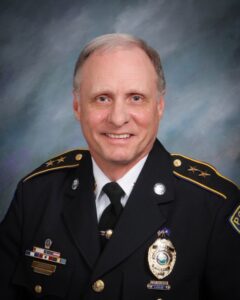
Donald Anderson, Darien’s Chief of Police, will be talking about a subject of current interest, policing in the year 2020 and beyond. Chief Anderson has been a member of the Darien Police Department since 1983. He was promoted to the rank of Sergeant in 1999, Lieutenant in 2000, and to his previous rank of Captain in 2013. Before his promotion to Chief of Police in 2019, he held the position of Captain of the Administrative Services Bureau. He holds a bachelor’s degree in criminal justice from Sacred Heart University and a master’s degree in criminal justice from Iona College. He is also a graduate of the 245th session of the FBI National Academy, is a state-certified Motor Vehicle Accident Investigation Instructor, and also served as a member of the Detective Division and the Specialized Accident Investigation Team.

 Arranged by Bob Fiske

Bryan Hooper’s summary of the talk:

Don Anderson, Darien Chief of Police, joined the force in 1983 and rose through the ranks to become Chief in 2019, following in the footsteps of his father, Bruce Anderson, who was Chief of Police in the years 1988-1993.

Chief Anderson stressed that the Darien Police Department closely follows the guidance from the State of Connecticut regarding training and oversight of officers. Darien also achieves its exemplary record through good hiring policies which ensure the town has professional, competent personnel. He stated that all incidents involving use of force must be reported: last year, Darien had only thirteen cases, and none of them involved “excessive force.” Similarly, officers must report occasions when a taser is pulled out, and no tasers have been used in the past four to five years. All interactions with the public are recorded by a body or a dash-camera for mutual protection of the public and the police, and to maximize transparency.

Moving to the national situation created by concerns about cases of police brutality, Chief Anderson addressed some of the points raised by Campaign Zero in their suggested steps to address policing via the “8 can’t wait” tenets:

  • DPD banned the use of chokeholds and strangleholds 25 years ago, with the caveat that they could be used to defend yourself in extreme situations. For the same length of time, the force has been training officers in cases involving positional asphyxia or excited delirium to cope with “can’t breathe” situations.
  • De-escalation of domestic violence and mental health confrontations are another part of existing training, and the DPD involves professionals in both areas whenever possible.
  • Warning before shooting is already applied, and Chief Anderson emphasized that weapons are to be used only as a last resort.
  • Duty to intervene is also laid down as a standard to apply if officers see a colleague using excessive force, and was enforced in the DPD even before it became part of the recent Connecticut police reform bill.
  • Shooting at moving vehicles is barred by the DPD.
  • Comprehensive reporting is already required by the DPD.

Chief Anderson also commented on the part of the Connecticut legislation that eliminated “qualified immunity” for police officers, and said that it will remove the safety net that police had when resolving incidents effectively through taking rapid action, and could lead to more lawsuits against them. He is hopeful the legislature will modify this part of the bill in the future to avoid the loss of some professionals.

He addressed a number of questions from the membership for 45 minutes, and these can be viewed with the rest of his talk by clicking on the following URL link: https://www.youtube.com/watch?v=jMeIalgfKxQ&feature=youtu.be.

Chief Anderson said that he is “always available to answer any questions or offer follow-up on Darien Police Department operations.” Finally, in light of the increase in car thefts from driveways, he made a plea to his audience to “Lock your car everywhere, every time!”


Current Affairs: Art Baron on Innovation, June 18, 2020, 11:00

Host: Charlie Goodyear

Discussion Leader: Art Baron


DISCUSSION OUTLINE ON INNOVATION 

Current Affairs, June 18, 2020 

AGENDA: 

  • The Science of Innovation 
  • The Digital Age . . . a Multi-Decade Transformation 
  • Winners and Losers . . . Lessons Learned . . . Market Considerations 
  • COVID . . . a Present Day Catalyst 
  • Potential Future Industry Disruptions 

===================================================================== 

  1. The Science of Innovation 

Innovation: The process of translating an idea or invention into a product, service, or business model that creates value for which customers will pay. 

Peter Drucker: “The Discipline of Innovation” HBR, August 2002 https://hbr.org/2002/08/the-discipline-of-innovation Areas of Opportunity: Unexpected Occurrences, Incongruities, Process Needs, Industry & Market Changes, Demographic Changes, Changes in Perception, New Knowledge 

Clayton Christensen: theory of “disruptive innovation”, first introduced in his 1997 book The Innovator’s Dilemma. Key insights: S-curve, market-creating innovations drive growth, (vs sustaining or efficiency innovations), innovations often come from outside the established incumbents. 

Henry Ford: “If I had asked people what they wanted, they would have said faster horses.” Steve Jobs: “You can’t just ask customers what they want and then try to give that to them. 

“Inspiring Innovation”, HBR August 2002 https://hbr.org/2002/08/inspiring-innovation 

Other Key Enablers: Simplicity, Focus, Diversity, Cross-discipline, Innovation Culture, Risk Acceptance . . . overcoming resistance to change 


  1. The Digital Age . . . a Multi-Decade Transformation 
  • Dramatic transformation fueled by, (among other things), Moore’s Law, Metcalfe’s Law 
  • “The Consumerization of IT” 

○ Increasingly, employees had more capabilities at home than at work 

○ Trickle down from consumer market to enterprise market, (much like prior generation trickle down from Military and NASA to private sector) 

  • Adoption rates of digital products accelerating virally. Many digital products have near zero marginal cost. 

○ Time to reach 50 million users 

■ Automobiles, 62 years 

■ Telephone, 50 years 

■ Credit Card, 28 years 

■ Mobile Phones, 12 years 

■ Facebook, 3 years 

■ PokemonGo, 19 days 

  • Brand new product categories, e.g. Streaming content, Smart phones, Virtual Assistants, AI, Social Media 
  • Increasingly Mobile First as the Innovation platform 
  • New Business Models are Transforming Industries 

○ SaaS, Cloud . . . new players, e.g. SalesForce.com, Workday 

○ Sharing Economy . . . Uber, Lyft, Airbnb 

  • Crisis driven change and leadership, e.g. Estonia, cyberattacks, 2007 


  1. Winners and Losers . . . Lessons Learned . . . Market Considerations 
  • Top valued companies as of 3/31/20: Microsoft, Apple, Amazon, Alphabet, Facebook. 

○ Leadership with brand new product & services categories 

  • Why did Microsoft miss the Internet in the mid-90’s, but recover and thrive, while Digital Equipment missed the microcomputer in the 80’s and didn’t 
  • Blackberry vs iPhone . . . dynamics in the marketplace 
  • Industry evolution:. Visacalc and the PC, then Lotus 123, and then Microsoft Excel 
  • Early internet successes, (AOL and Yahoo), superseded by newer ones, (Google and Facebook). 

○ As consumers became more proficient with the Internet, the access advantages of AOL and Yahoo gave way to the continuous innovation of companies like Google and Facebook. 

  • Xerox Parc, (GUI and Mouse), vs Apple 
  • A 19th Century Example: Steel industry leadership shift from U.K. to U.S. with Carnegie Steel’s adoption of Bessemer Steel Process. 
  • Fast Company: The World’s Most Innovative Companies, 2020 and 2019 

https://www.fastcompany.com/most-innovative-companies/2020 

https://www.fastcompany.com/most-innovative-companies/2019 


  1. COVID . . . a Present Day Catalyst 
  • Medical: Vaccines, Therapies, Ventilators, PPE,… 
  • Telehealth: technology available for years, but limited adoption due to business model, (insurance, provider fees) —> current urgency now driving coverage and deployment. Many post-COVID benefits. 
  • Online services 

○ Collaboration and Work from Home 

■ Zoom Video, simplicity vs competition, 20 million to 200m users, fierce competition: Microsoft Teams, Google Meet, Facebook, Apple,… 

■ Consumer apps, e.g. Caribu 

○ eCommerce Delivery, e.g. Amazon, Walmart 

○ Food delivery services, Restaurant services, Supermarket delivery, Instacart 

○ Location services enabling individual tracking, social distancing compliance, temperatures, etc. 

○ Behavior change, e.g. increase in digital banking across populations, Gucci, reducing runway fashion shows 


  1. Potential Future Industry Disruptions 
  • Healthcare 
  • Education, new cost dynamics, pathway for greater equality and opportunity 
  • CyberSecurity 
  • Food Supply, risks, (global hunger, climate change, drought, income security), reduce waste, (e.g. Apeel Sciences), new sources, (e.g. Beyond Meat, milk substitutes), new processes, (e.g. precision agriculture, restaurants delivery, kits, home cooking) 
  • Environment, Efficiency, Energy Transition, Pollution, Advanced Manufacturing, Circular Economy, Hydrogen, EVs 
  • Social/News Trust and Accountability, beginning to see some take action, (Twitter, Zoom), but others resist. Much more is needed given the harmful power of digital media. 
  • Resilience, Markets, Supply Chain, Transportation, Financial Systems, Global/Deglobalization Balance, . . . .

Mark Nunan, Fiorello La Guardia, September 30, 2020

Mark Nunan was born in Cork, Ireland, in 1953. At an early age, he moved to Homewood and then Hoover, Alabama. In 1971, he graduated from Indian Springs High School, where he was editor of the school newspaper and literary magazine, member of the Student Judiciary group and played in the soccer team. Mark graduated from the University of Alabama in 1976. He continued his education at Stanford University, where he was awarded a master’s in 1979 and a Ph.D. in 1983. During that same period, he was a George Lurcy Fellow at L’École normale supérieure and at the University of Paris-Sorbonne in Paris as part of his Ph.D. program. He was a member of Pi Kappa Phi academic honor society and participated in medical research in one of the largest blood pressure and cardiovascular disease research studies in the United States.
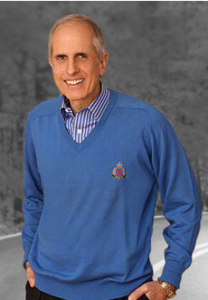

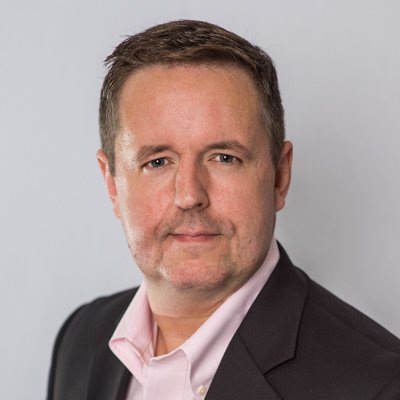
Mark started his career with COS, Inc. in 1982 in Palo Alto, Calif., and then transferred to Paris and New York City in 1980, where he retired as a senior vice president in 2018. COS is a private firm that provides business and economic development services, assisting companies and governments in researching, developing and implementing new business expansion opportunities, mainly in North America and Europe. Mark and his partner Isabelle live in Darien and have one son and a daughter-in-law and two grandsons living in Europe. He belongs to the Stanford Alumni Association, A-Ulm: Association des Anciens Élèves de L’École normale supérieure, and Phi Kappa Phi. His leisure activities include reading, investing, walking, hiking, travel, music and spectator sports – specifically, soccer and college football.

Following his detailed and informative talk earlier this year on Robert Moses, Mark will be speaking about another major influence in the history of the city of New York, Mayor Fiorello La Guardia.

Arranged by Bryan Hooper

Bryan’s summary of the talk:

Mark Nunan described in his meticulous and thoroughly-researched presentation the incredible life and achievements of Fiorello La Guardia. Born in New York City in 1882, La Guardia was a second generation Italian American who was later brought up in Arizona where his father served in the US army. He went back to Trieste with his father in 1898, and worked for the US Consulate in Croatia before returning to New York in 1906, where he became an interpreter at Ellis Island, putting to good use his language skills – he was fluent in German, Italian, Croatian and French. He attended NYU Law School, graduated in 1910, and was admitted to the New York bar the same year.

Following an initial career as a labor lawyer, La Guardia was persuaded to run for Congress and succeeded at the second attempt in 1916. He voted against prohibition, and for the establishment of the military air service. This unbelievably talented man then volunteered to join that service, becoming a major and commanding officer of the American Combat Division in Italy, and followed up by working with the Italians to improve their aircraft manufacturing industry, for which he was recognized and honored by King Victor Emmanuel.

After his time in Italy, La Guardia went for a second act in national politics, becoming a congressman again in 1922, and remaining in Washington until 1933. His major achievements there involved setting up much of the New Deal legislation with the FDR administration, key anti-injunction legislation to provide more even treatment of labor by government, and the successful repeal of prohibition.

His third act involved becoming the 99th mayor of New York. He failed in 1929, but was nominated in preference to Robert Moses as a candidate by the Republicans and the Fusion parties in 1933, and won the election. By the time he took office, his collaboration with FDR’s enablers, Hopkins and Ickes, had snagged for New York 20% of the country’s new jobs created by the Civil Works Administration. La Guardia installed a talented group of commissioners and set about reform projects, including the establishment of the first public housing developments, and pursued the criminal mob with vigor.

One of his popular successes was to win the artichoke war, breaking the mob’s monopoly of the supply and distribution of the vegetable, and enabling retail prices to be slashed by 30 to 40%! He won 72 out of 73 indictments brought against the mob.

Working closely with FDR, he ensured money flowed to support New York infrastructure projects, and developed both La Guardia and Idlewild (now JFK) airports. He won a third term as mayor in 1941, and was also nominated by Roosevelt to head the Office of Civil Defense for the country, splitting his time between New York and Washington.

La Guardia did not run for a fourth term, had a brief stint at the United Nations in 1946 as a director general, and died in 1947. He is buried in Woodlawn Cemetery in the Bronx (a site that was visited this week by the Happy Wanderers).

Mark’s presentation slides chronicle the innumerable accomplishments of this talented, indefatigable and caring man, and they can be found at https://dariendma.org/wp-content/uploads/FINAL-La-Guardia-DMA-Nunan.pdf, and the videotape of the session can be accessed at https://youtu.be/lcmP27mHZGA


Mike Critelli and Lori Swetlin, “Voting by Mail,” September 23, 2020

Michael J. Critelli grew up in Rochester, New York. He graduated from Bishop Kearney High School in 1966 and the University of Wisconsin with a B.A. in political science and communications in 1970, then graduated from Harvard Law School with a J.D. cum laude in 1974.

Prior to joining Pitney Bowes as a Counsel in 1979, Mike was an associate at two Chicago law firms. At Pitney Bowes, he became the Company’s General Counsel in 1988 and added responsibility for its human resources functions in 1990, functions he jointly led until 1993. Mike became the Company’s CEO in 1996 during a period in which the Company and the mailing industry underwent transformational change. Under him, Pitney Bowes was named one of America’s most ethical companies, and was ranked as one of America’s most innovative companies and in the top 200 of patents issued. During his tenure Pitney Bowes exited its office systems and external finance businesses and completed over 80 acquisitions to build strength in software, services and international operations. Through a combination of acquisitions and organic investments, the Company diversified into adjacent “mail stream” market spaces.

Mike was directly engaged in the development, release and marketing of Relia-Vote, Pitney Bowes’ voting-by-mail offering, and advocated its use with election officials in many states. He was awarded one patent on a feature that detected ballot fraud. He also acquired and helped develop a Company business that scanned and recognized handwritten documents and envelopes at high speed.

Between 2001 and 2005, Mike co-led the Mailing Industry Task Force, along with Deputy Postmaster General John Nolan, to enable the U.S. Postal Service to work with the private sector on a variety of initiatives, and was heavily used as an industry spokesperson during the 2001 anthrax bioterrorism incidents. He also chaired the Mailing Industry CEO Council, which was an advocate for comprehensive postal reform, an effort resulting in the passage of the Postal Accountability and Enhancement Act of 2006.

Mike retired from his position as Executive Chairman of Pitney Bowes in 2008. He currently is the CEO and co-founder of MoveFlux Corporation, and is a member of the advisory boards of RAND Health, the TH Chan Harvard School of Public Health, and Wellville, a non-profit focused on getting innovative population health initiatives deployed in five communities. He has been a member of the Board of Eaton Corporation, a leading global power management company, since 1998.

Mike joined the DMA in 2019, and with his wide experience and knowledge of the mailing industry it is appropriate that he will address and discuss one of the major issues being faced in this election season – voting by mail.

Lori Swetlin currently holds a tenured Sales Executive and Consulting position at Bluecrest Inc., formerly the Document Messaging Technologies Division of Pitney Bowes. She will join Mike in discussing some of the newer technology tools she has successfully deployed with cutting-edge election administrators and her work with the  Postal Service on products of particular value for voting-by-mail.

She currently leads BlueCrest nationally in implementing “soup to nuts” processing and tracking of mail pieces and is an expert in vote-by-mail solutions.  During the current Covid-19 pandemic, Lori has been helping municipalities and states implement vote-by-mail systems; acquire necessary equipment and software;  and manage the dynamic political, social, environmental, health, cultural and regulatory environment.

Lori earned her degree from Bowling Green State University.  She resides outside of Akron Ohio with her husband Tom. In her free-time, Lori enjoys traveling, gardening, lake activities, reading and any time with family.

Arranged by Gary Banks and Bryan Hooper

Bryan’s summary of the talk:

Mike Critelli and Lori Swetlin addressed the currently hot topic of voting by mail. What started as a means of enabling Union soldiers to cast a vote in 1864 has grown to the point where the coronavirus pandemic is driving many voters away from voting in person and to considering this alternative. The situation across the United States is complex because access to absentee voting varies by state, with five states having converted 100% to postal voting, some allowing choice, and others insisting on voters affirming why they are unable to vote in person.

Additionally, the rules and processes for managing the election vary by state: in Connecticut, the Secretary of the State sets most of the rules. There are a number of stakeholders involved in the process, including the US Postal Service, stationery manufacturers, equipment vendors and state and local election officials. Key components of the process require establishing voter identification and residential qualification, advising voters of the rules to follow, printing and mailing of ballots, tracking the ballot mailing and returns, verification of signatures, and tabulating the votes. Tracking has been raised as a major concern and the “Intelligent Mail Barcode” has been developed to provide the ability to trace the ballot envelopes at each stage of the mailing pathway. Once signatures have been verified by election officials, counting of the votes is carried out and an end-to-end audit trail is established that complies with the states’ laws and regulations for validating votes.

It all sounds fraught with a potential multitude of problems, but Mike asserted that the systems in place work extremely effectively, if not always with 100% efficiency. For instance, the USPS is presently hampered by the reduction in the number of commercial flights which are the main conduit for transporting mail over 1000 miles, and by a shortage of truck drivers who are responsible for delivering mail on journeys under 1000 miles. His major concern is ballot harvesting, which involves third parties, such as volunteers, state party loyalists, or contract workers outside the Postal Service distributing and/or collecting ballots. He believes ballot harvesting should be banned because:

  • Ballots can be lost in the collection and return process
  • Some voters can be coerced into supporting the ballot harvester’s preferred candidate
  • Harvesting, especially if the harvester directs the voter not to sign the ballot, lends itself to fraud.

For the question and answer session, Mike and Lori were joined by Denise Merrill, Connecticut Secretary of the State, and Susan Gray, a Darien Registrar of Voters, and we are most grateful to them for providing more detailed information specific to Connecticut and Darien.

Mike slides: Voting by Mail Presentation

Video of presentation

Vote by Mail Part 1

Vote by Mail Part 2

Hugh Seaton, “Disrupting Construction: Artificial Intelligence and the Future of Buildings,” September 16, 2020

Hugh Seaton is the General Manager at the Glimpse Group, a virtual reality and augmented reality company based in New York, NY, and a lifelong technology marketer. Prior to Glimpse, Hugh founded and grew Aquinas Learning, an e-learning software company that leveraged virtual reality and artificial intelligence, which he sold to Glimpse in 2019.  Before Aquinas, Hugh – a fluent Mandarin speaker – spent 5 years in Shanghai, was a senior marketing executive with BBDO running Pepsi’s advertising, and founded his first company, specializing in social media. He has also held various senior positions at Sony Electronics, AOL Time Warner, DraftFCB and Havas.

Hugh holds an MBA from Columbia Business School, has been an adjunct professor at NYU, and is the author of the Construction Technology Handbook (Wiley, 2020).

Arranged by Douglas Campbell and Bryan Hooper

Bryan’s summary of the talk:

Hugh Seaton cast some light for us on the arcane subject of artificial intelligence – intelligence demonstrated by machines and applied to a variety of situations to augment human activities. Hugh stressed that the highly advanced computers cannot think like humans and that the tasks AI machines perform are based on the use of vast amounts of data acted upon by algorithms, so it comes down to mathematics. That said, he identified the advances made in AI in recognizing and classifying data, determining patterns, producing designs, managing language functions and carrying out tasks via robotics. Performance of the activities carried out by AI improves as the machines are fed more data, either by experience or from an outside agent. Hugh cited Siri and Alexa as uses of AI that have been improved through experience. Human designers focused on enhancing the applications’ abilities by concentrating on accomplishing fewer tasks more successfully, rather than by a broader brush approach that resulted in a poorer response following the instruction to the machine. He pointed out the difficulties in designing self-driving autos, where significant progress has been made, but not enough to allow the general use of these vehicles on the open road at present: predicting an introduction date is hard since making further progress toward the autonomous auto is exponentially more difficult.

Hugh described the AI experience in the construction industry in maintaining a record of work accomplished throughout the process to assist in planning subsequent building stages, rapidly finding specification documents, and defining realistic schedules. He described a practical example of using AI in the development of machines that can manage the tying together of rebar used for reinforcing concrete, resulting not only in performing the tasks efficiently but also alleviating the problem of labor shortages to carry out this specialized function.

Link to the video of his talk: https://youtu.be/7q0FePlJQqI


Art Gottlieb, “U-Boat War in the Atlantic,” September 9, 2020

Art Gottlieb is a local historian on subjects from political and military history who has frequently given talks to the DMA over the past few years. He was formerly a professional curator of naval history and the Technical Director of Exhibits at the Intrepid Sea-Air-Space Museum in NYC. In these roles, Art worked regularly with veterans of all services towards the creation of exhibits accurately illustrating the history of 20th century warfare.
From 1989 through 1997, Art coordinated with all branches of the armed services and National Guard towards the preservation of historic ships, aircraft and armor from around the world, and has facilitated the recovery of scores of artifacts from warships slated for demolition from reserve fleets.

For the past fifteen years Art has refocused his professional efforts towards reaching out and addressing the growing needs of aging veterans and their families.  He maintains a private practice as a Counselor and Certified Senior Advisor in Norwalk, CT, and offers pro-bono counseling services to soldiers returning from Iraq and Afghanistan.

Art served as an Auxiliary Officer of the United States Coast Guard for 17 years and for 4 years was Commander of Flotilla 7-2, 1st District (Southern Region), Sector Long Island Sound North.

His last talk to the DMA in February was about US Pacific fleet submarines, and this week he will be relating the epic story of the desperate six-year struggle between allied forces and the German navy to control the sea-lanes between America and the British Isles – a battle that, had it been lost, would have profoundly changed the course of World War II.

Arranged by Bryan Hooper

Bryan’s summary of his talk:

Art Gottlieb made his 16th appearance before a DMA audience. The subject was the role played by U-boats in the Battle of the Atlantic during World War II, a battle that lasted the entire length of the war from September, 1939, until May, 1945. The talk highlighted the contrast between the relatively low-tech environment of the submarine and the increasingly effective use of high-tech countermeasures against the deadly raiders. We learnt that the U-boat of that era was essentially a surface attack vessel that could escape detection by its ability to quickly submerge and maneuver under water; that life on board was an endurance test of various stages of wet discomfort; and, that optically-advanced binoculars frequently helped make up for a lack of radar to find and identify targets.

The conquest of France in mid-1940 opened the door for Admiral Karl Dönitz to operate his growing U-boat fleet from five bases with direct access to the Atlantic. As their attacks became increasingly effective, the need for more and better protection for convoys of goods to the UK and USSR became essential. This was achieved through lend-lease arrangements authorized in 1940 which gave the UK use of 50 previously mothballed US destroyers, and the introduction of destroyer escorts once the USA entered the conflict in 1941. Additionally, the use of huff-duff, the quaint name for high-frequency direction finding technology, coupled with the decryption of the Enigma-coded German radio communications with the submarines significantly aided in locating the U-boat wolf packs. The introduction of longer-range air support, improved depth charges, and the hedgehog weapon with its array of mortars added even more effectiveness to the countermeasures, and by late 1943 the battle had turned in favor of the Allies.

The statistics Art provided about the Battle of the Atlantic are sobering:

• 2900 ships were destroyed, totaling 12 million tons of Allied shipping

• 141 escort vessels were sunk

• Almost 800 U-boats were destroyed

• 28,000 U-boat crew members died

• At 75% this was the highest casualty rate of the German armed services.

Video link to Art’s presentation:  https://youtu.be/Mwh61wlXAnQ


Officers & Directors 2023-2024

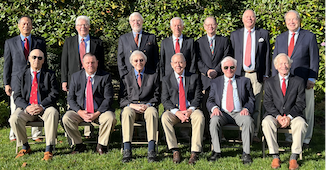
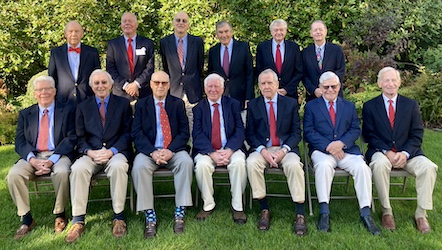
Seated l. to r.: Jan Selkowitz, Social Events; Frank Gallagher, Community Service; Bryan Hooper, Past President; Tom Igoe, President; Charles Salmans, Past President; Frank DeLeo, 1st VP. Standing l. to r.: Dan Lew, Asst. Secretary; Gehr Brown, Treasurer; Ric Grefé, 2nd VP; Art Baron, Membership; Mike Wheeler, Secretary; Bert von Stuelpnagel, Asst. Treasurer; Chet Cobb, Director at Large 1st Term. Not in photo: Doug Campbell, Director at Large 2nd Term; Mark Nunan, Communications.

Officers & Directors 2022-2023

Officers and Directors 2022-2023 

President: Charles Salmans

First Vice President: Tom Igoe

Second Vice President: Dave McCollum

Secretary: Bob McGroarty

Assistant Secretary: Mike Wheeler

Treasurer: Gehr Brown

Assistant Treasurer: Bert von Stuelpnagel


Directors at Large

1st Term: Doug Campbell

2nd Term: John Bassler


Past President Directors

2021-2022: Bryan Hooper

2019-2022: Gary Banks


Committee Chairmen Directors

Community Service: Frank Deleo

Membership & Hospitality: Art Baron

Newsletter & Communications: Mark Nunan

Social Events: Jan Selkowitz

Herm Eckrich passes away, May 9, 2020

Herman Joseph Eckrich, Jr. died on May 9, 2020 holding hands with the person he loved most in the world, his wife Jeanne. Herm and Jeanne were married for 63 years. Thanks to the incredible care that he received from the Edgehill Harbor staff and Hospice, the end was peaceful and comfortable. He never complained while dying of complications from Parkinson’s disease. 

Herm, or Sonny as he was fondly called as a child, was the eldest son of Herman Eckrich, Sr. and Lucy Pauline Eckrich. He grew up in Fort Wayne, IN and spent summers on Lake Wawasee, where he developed a lifelong love of the water.  

Herman graduated from St. Jude Catholic School in Fort Wayne, Georgetown Preparatory School in Washington, D.C., and Villanova University. He served as a Lieutenant JG in the U.S. Navy at the Great Lakes. He then joined the family business, Peter Eckrich and sons, rising to become Group Vice President of Marketing and Sales. He later began a decades-long career in investments in NYC.

In addition to his wife Jeanne, he is survived by his six children: Karen Tyler (Sam, Will, Eric, Eleanor, and great granddaughter Nora), Gary, Jennifer Shannon (Scott and Sarah), Kim Oster (Charlotte and Claire), Teresa (Ben, Madeline, and Louise), and Maureen. He is predeceased by his brother Tom Eckrich, sister Patty Eckrich, and grandson Alex Tyler. Herm’s surviving brother David Eckich continues to share his loving support. 

Herm loved family and the outdoors, especially sailing on the Innisfree, skiing at Bromley mountain, and hiking with Jason, the family golden retriever. He will be remembered fondly by longtime friends at Tokeneke Club and Senior Men’s of Darien. He was loved by all and found the good in everyone. 

A memorial service will be held at a future time. If you would like to make a gift in Herman Eckrich’s honor, please consider the Edgehill Associates Appreciation Fund, 122 Palmers Hill Road, Stamford, CT 06902


« Older posts Newer posts »