
Author: Webmaster (Page 57 of 96)
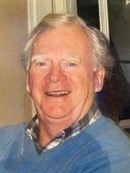
Brian Peoples
William Charles Brian Peoples
04/10/1934 to 11/27/2019 William Charles Brian Peoples, 85, of Darien CT, passed away on November 27, 2019 after a battle with cancer and Parkinson’s Disease.
Brian was born on April 10, 1934 to John and Nancy Peoples on Staten Island NY. After graduating from Staten Island Academy in 1951, he went on to study math at The University of Rochester and received an MBA in Accounting from Rutgers University Business School.
After graduation from college he went into the Army, then attended graduate school and then secured his first job as an accountant for Arthur Anderson, beginning his 38-year career in accounting as a CPA. He was the Managing Partner for Arthur Anderson-New York Metro for 6 years.
In 1946, he met Marguerite (Peggy) Lorey at Staten Island Academy. They wed in 1958, going on to have two children, Brian Jr. and Jeffery Peoples.
After retiring in 1996, Brian spent time with family, grandchildren, playing tennis, golf, and paddle tennis as a member of Wee Burn Country Club. He was on the boards of the Darien Library and the Darien Historical Society.
Brian was predeceased by his brother Dennis Peoples. He is survived by his wife Peggy, his brother John Peoples, his sister Nancy Joyce Benjamin, his two sons Brian and Jeffery, their spouses Priscilla and Liz Peoples, and four grandchildren: Emilie Peoples, Willie Peoples, Katy Peoples, and Charley Peoples.
A Memorial Service will be held at ST Luke’s Episcopal Church at a later date.
In lieu of flowers please send donations to Post 53, the Darien Historical Society or the Darien Public library.
Memorial service January 11th, at St Luke’s Church, at 11:00am.
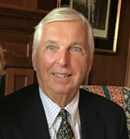
Bill Nolte
William D. Nolte Jr. 09/24/1936 to 12/2/2019 William D. Nolte Jr., a resident of Norwalk, passed away at Norwalk Hospital on Monday, December 2, 2019. Born in New York City on September 24, 1936, he was the son of the late William Devereux Nolte and Margaret Brennan Nolte. William attended Georgetown University and was a graduate of Fordham University. He had a long career in management consulting with Arthur Andersen, Coopers & Lybrand and eventually his own firm. He is survived by his wife Susan F. Nolte, son, William D. Nolte III (Elise) of Westport, CT, daughters Anne E. Nolte (Thomas A. Dippel), of Westport, CT, Kathleen B. Nolte of Tulum, Mexico and one granddaughter Ava Dippel Nolte. He is also survived by a sister Mary Elizabeth Wein (Robert M.) of
Bronxville, NY. A Mass will be held on Friday, December 6, 2019 at 11:30 a.m. at St. Matthew Church, 216 Scribner Ave., Norwalk, CT 06854. Burial will follow at St. John’s Cemetery in Norwalk. In lieu of flowers, prayers for the family would be appreciated.
We meet Monday to discuss the Macro Outllook and 2 sector themes this week: energy savings/renewables and 5G.
Art Baron will present Ansys (ANSS) . Ansys is an engineering simulation software company that enables its customers to test products by simulating multiple concepts before the manufacturing or design process is complete….thus saving energy prior to production.
Jim Phillips will present American Tower (AMT) as a play on 5G. American Tower owns and leases roughly 170,000 cell towers throughout the U.S., Asia, Latin America, Europe, and the Middle East.
Everyone is encouraged to participate if they have particular insight to the companies we are discussing. Often members discuss stocks they own personally and wish added input.
Jim Phillips
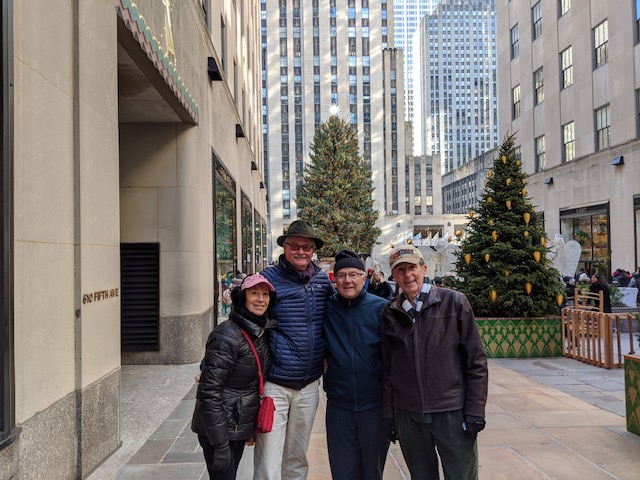
On Dec 12 we will go into Manhattan to see the Christmas decor. We’ll walk down to Herald Sq, then up as far as 59th St to see the storefronts, the Rock Center tree and perhaps a stop at St Patrick’s.
Your guides: David Mace & Joe Spain
“HIKING” GREENWICH POINT PARK
6 TOD’S DRIFTWAY
OLD GREENWICH
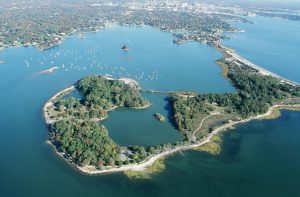
Greenwich Point is a beautiful peninsula surrounded by Long Island Sound and Greenwich Cove. The walking trails are flat and well maintained which is a bonus because the scenery is just spectacular. For half of the hike the skyline of New York is clearly visible and the Greenwich shoreline and magnificent water views complete the circuit. This has always been our most popular hike of about 2.5 miles which should take us no more than one and a half to two hours. An optional lunch will follow at Applausi Osteria Toscana at 199 Sound beach Avenue in Old Greenwich, a hit with past hikers.
DIRECTIONS: GOOGLE GREENWICH POINT
Take Exit 5 off southbound I-95 and make a sharp right onto US 1 north. At the first traffic light make a right onto Sound Beach Avenue. Follow Sound Beach through Old Greenwich for 1.8 miles and turn right onto Shore Road at the T intersection. Shore Road becomes Tods Driftway and enters the park past the guard house. Park in the first lot on the right where we will meet at 10:30. Spouses and guests are invited and dogs on a leash are permitted in the park after December 1.
ATTIRE; It will likely be quite windy and cool on this exposed sprit of land so layer up!
CONTACT: David McCollum
Write up:
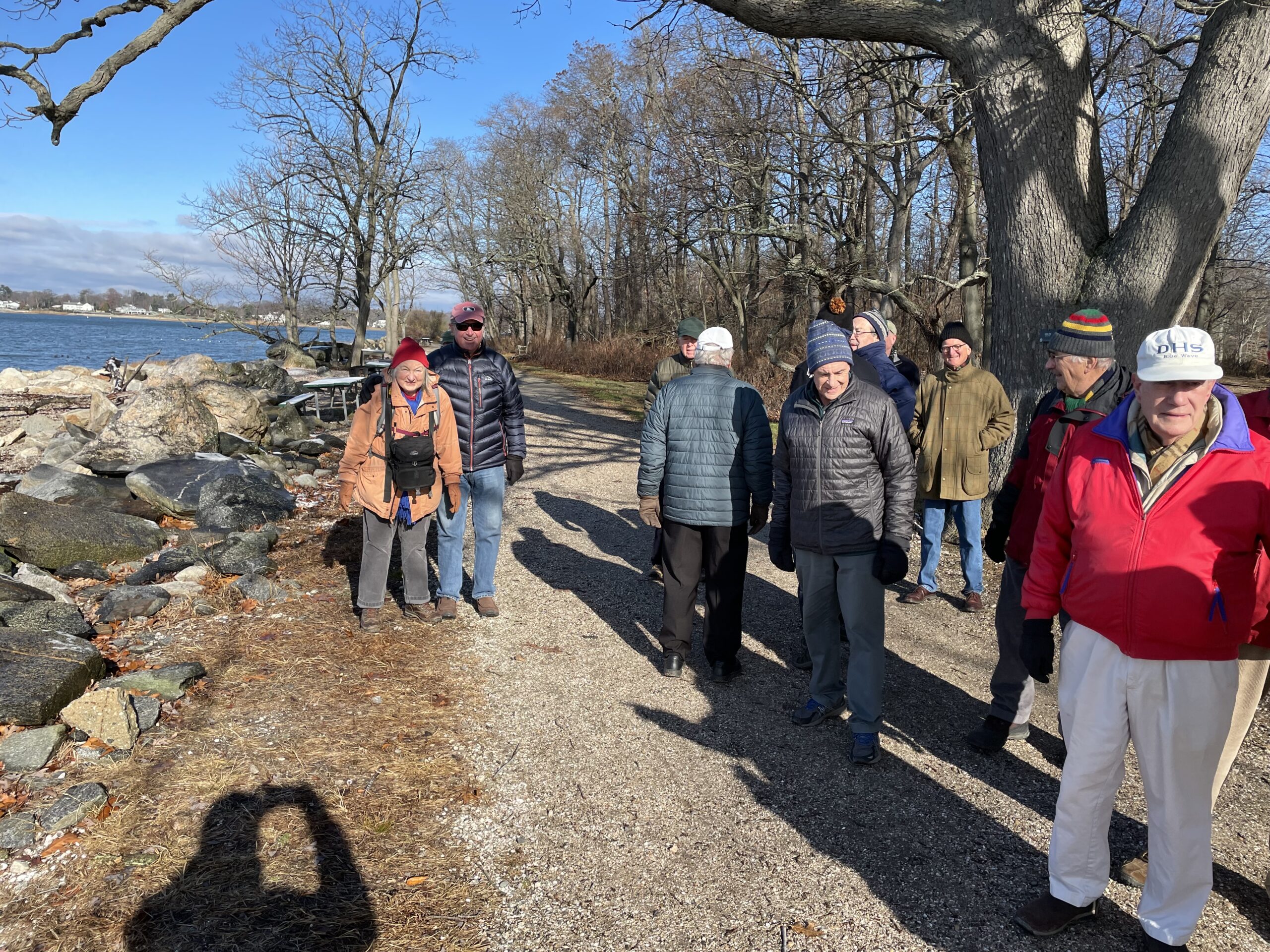 The US Postal Service has nothing on the DMA hikers—“neither rain nor snow…” oh, wait a minute, the day did not turn out badly after all! The overnight snow was still evident at 10:30 in the morning but not a footing issue and the sun came out later on the hike. A good size group of 17 including three spouses walked just short of 3 miles in an hour and a half around the spectacular property. It’s easy to see why Greenwich keeps it pretty much to residents for most of the year!
About half the group stayed on for a delicious lunch at the Beach House Café in Old Greenwich.
Again this hike, as others, give us DMAers a chance to walk and talk in some really nice places!
Next hike—Sherwood Island Park in Westport Thursday, January 12 at 10:00 AM
Dave McCollum
Bob Plunkett
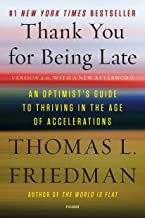 KIRKUS REVIEW
The celebrated New York Times columnist diagnoses this unprecedented historical moment and suggests strategies for “resilience and propulsion” that will help us adapt.
“Are things just getting too damned fast?” Friedman (Hot, Flat, and Crowded: Why We Need a Green Revolution—and How It Can Renew America, 2008, etc.) cites 2007 as the year we reached a technological inflection point. Combined with increasingly fast-paced globalization (financial goods and services, information, ideas, innovation) and the subsequent speedy shocks to our planet’s natural system (climate change, biodiversity loss, deforestation, geochemical flows), we’ve entered an “age of accelerations” that promises to transform “almost every aspect of modern life.” The three-time Pulitzer winner puts his familiar methodology—extensive travel, thorough reporting, interviews with the high-placed movers and shakers, conversations with the lowly moved and shaken—to especially good use here, beginning with a wonderfully Friedman-esque encounter with a parking attendant during which he explains the philosophy and technique underlying his columns and books. The author closes with a return to his Minnesota hometown to reconnect with and explore some effective habits of democratic citizenship. In between, he discusses topics as varied as how garbage cans got smart, how the exponential growth in computational power has resulted in a “supernova” of creative energy, how the computer Watson won Jeopardy, and how, without owning a single property, Airbnb rents out more rooms than all the major hotel chains combined. To meet these and other dizzying accelerations, Friedman advises developing a “dynamic stability,” and he prescribes nothing less than a redesign of our workplaces, politics, geopolitics, ethics, and communities. Drawing lessons from Mother Nature about adaptability, sustainability, and interdependence, he never underestimates the challenges ahead. However, he’s optimistic about our chances as he seeks out these strategies in action, ranging from how AT&T trains its workers to how Tunisia survived the Arab Spring to how chickens can alleviate African poverty.
Required reading for a generation that’s “going to be asked to dance in a hurricane.”
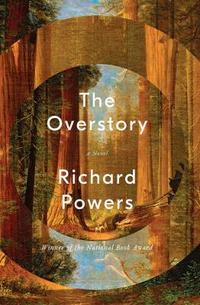 Powers’ (Orfeo, 2014, etc.) 12th novel is a masterpiece of operatic proportions, involving nine central characters and more than half a century of American life.
In this work, Powers takes on the subject of nature, or our relationship to nature, as filtered through the lens of environmental activism, although at its heart the book is after more existential concerns. As is the case with much of Powers’ fiction, it takes shape slowly—first in a pastiche of narratives establishing the characters (a psychologist, an undergraduate who died briefly but was revived, a paraplegic computer game designer, a homeless vet), and then in the kaleidoscopic ways these individuals come together and break apart. “We all travel the Milky Way together, trees and men,” Powers writes, quoting the naturalist John Muir. “In every walk with nature one receives far more than he seeks.” The idea is important because what Powers means to explore is a sense of how we become who we are, individually and collectively, and our responsibility to the planet and to ourselves. Nick, for instance, continues a project begun by his grandfather to take repeated photographs of a single chestnut tree, “one a month for seventy-six years.” Pat, a visionary botanist, discovers how trees communicate with one another only to be discredited and then, a generation later, reaffirmed. What links the characters is survival—the survival of both trees and human beings. The bulk of the action unfolds during the timber wars of the late 1990s, as the characters coalesce on the Pacific coast to save old-growth sequoia from logging concerns. For Powers, however, political or environmental activism becomes a filter through which to consider the connectedness of all things—not only the human lives he portrays in often painfully intricate dimensions, but also the biosphere, both virtual and natural. “The world starts here,” Powers insists. “This is the merest beginning. Life can do anything. You have no idea.”
A magnificent achievement: a novel that is, by turns, both optimistic and fatalistic, idealistic without being naïve.