
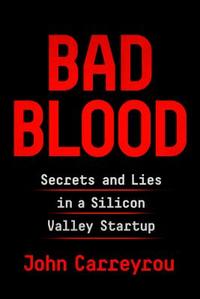
 The full inside story of the breathtaking rise and shocking collapse of Theranos–the Enron of Silicon Valley–by the prize-winning journalist who first broke the story and pursued it to the end in the face of pressure and threats from the CEO and her lawyers. In 2014, Theranos founder and CEO Elizabeth Holmes was widely seen as the female Steve Jobs: a brilliant Stanford dropout whose startup “unicorn” promised to revolutionize the medical industry with a machine that would make blood tests significantly faster and easier. Backed by investors such as Larry Ellison and Tim Draper, Theranos sold shares in an early fundraising round that valued the company at $9 billion, putting Holmes’s worth at an estimated $4.7 billion. There was just one problem: the technology didn’t work. For years, Holmes had been misleading investors, FDA officials, and her own employees. When Carreyrou, working at the Wall Street Journal, got a tip from a former Theranos employee and started asking questions, both Carreyrou and the Journal were threatened with lawsuits. Undaunted, the newspaper ran the first of dozens of Theranos articles in late 2015. By early 2017, the company’s value was zero and Holmes faced potential legal action from the government and her investors. Here is the riveting story of the biggest corporate fraud since Enron, a disturbing cautionary tale set amid the bold promises and gold-rush frenzy of Silicon Valley
Author: Webmaster (Page 72 of 96)
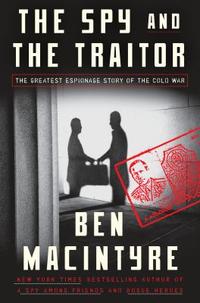 Oleg Gordievsky was a spy like no other. The product of a KGB family and the best Soviet institutions, the savvy Russian eventually saw the lies and terrors of the regime for what they were, a realization that turned him irretrievably toward the West. His career eventually brought him to the highest post in the KGB’s London station-but throughout that time he was secretly working for MI6, the British intelligence service”-
Discussion leader: Charlie Goodyear
Summary :
SINGLE PAYER HEALTHCARE SYSTEMS
USA Healthcare System
-17% of GDP (was 7% in 1971) vs. 9% Canada,10% UK, 10% Germany
-Coverage :
+50% Employer (155 million people, cost $20,000/family, employee pays
$5000)
+14% Medicare (+/- 55 million people)
+12% Medicaid, Veterans, Native Americans (+/- 50 million people)
+ 7% ACA purchased (+/- 20 million people)
+ 8% Emergency Room, Other
+ 9% Uninsured (+/- 30 million people)- 80% US citizens
-Drug costs : $1000/per person/year vs. OECD $500
-Estimated 100-130 million people have “pre-exsisting conditions”
-Life expectancy below OECD countries, Infant mortality higher
-Reasons for higher costs vs OECD countries :
+ Technology and drugs ( eg more MRIs per capita, no drug price controls)
+ Obesity (35% vs 19% OECD) and chronic illnesses (32% of Medicare costs
cover the last two years of life)
+ Much higher administrative costs (4% of GDP), double the staffing vs Canada
-Healthcare costs a major factor in personal bankruptsy( !0 million have bills they can’t
pay )
Canada Healthcare System
-Single payer system covering 100% of the population -no co-pays or deductables
-Doctors and hospitals privately owned and managed within system rules
-Managed by Provincial governments who pay all doctor and hospital charges
-System funded 50/50 with Federal government
-Provinces set prices and proceedures that comply with Federal requirements
-No private insurance allowed except for drugs and dental not covered by System
-Heavy involvement in drug pricing and approval, cost benefit analysis
-Essentially no US type media drug advertising
-Doctors earn about 2/3 of what US doctors earn/year
-Lower availability of medical devices (eg. 75% fewer MRIs per capita than US)
-Open heart and transplant surgery restricted
– Major problems: waiting times for referral to specialists (+/- 16 weeks ), doctor
choice limited, long delays for elective surgery
United Kingdom Healthcare System
-Single payer system covering 100% of the population-no co-pays or deductables
-Doctors are government employees and hospitals are government owned
-Managed by major regional authorities (ie Britain, Wales,Scotland, etc)
-Drug prices controlled by the government, strict cost/benefit analysis. No US
type media drug advertising
-Drug prescriptions cost about $12/ each, free for children.
– No dental coverage for adults
– Doctors earn about 2/3 of what US doctors earn
– Individuals may purchase insurance coverage with doctors in private practice
– Major problems: Long wait times (+/- 10 weeks for general surgery), limited availabiliy
of new(expensive) or experimental treatments, cost/benefit analysis, lack of mental
health services, very long delays for elective surgery
-Per capita costs $4K/year vs US $10K/year
-Many say “Underfunded but not broken “
Germany Healthcare System ( An alternative to “single payer” ??)
-An insurance based system with non profit and for profit insurers
-Covers 90% of population- required participation for all but highest earners
-Funded by 50/50 contribution by employers and employees -15% of earnings
up to about $70K/year (2014 data)
-Private doctors and hospitals but highly regulated
-No deductables and low co-pays -children are free
-Managed by regional authorities via “sickness funds” that are used to control
total costs
– Drug prices are controlled, cost/benefit analysis, no US type public advertising
– Doctors earn about 2/3 of US doctors/year
– Per capita costs less than 1/2 of US
– Surveys indicate significantly higher public satisfaction with the system vs US,
Canada or UK
( The relationship between the insurance companies, doctors, hospitals ,employers,
employees individuals and the regional government bodies is unclear and needs
further analysis and understanding)
Comparisons of Health Care Systems in the United States, Germany and Canada
https://theconversation.com/why-market-competition-has-not-brought-down-health-care-costs-78971
https://theconversation.com/medicare-for-all-could-be-cheaper-than-you-think-81883
The article below on drug cost shows how complicated healthcare is to understand, much less manage. Factors such as age of population, availability of new drugs, the number of insured, etc. all interact.
Still, negotiation is an important factor. The article states that many western countries (all government run healthcare) will only pay for improved outcomes.
But it’s not purely rational. If some exotic drug will save your life, it’s worth a lot to you but maybe not so much to society if it starves other healthcare services. The payers are subject to political pressure from interest groups. Not simple.
The False Promise of ‘Medicare for All’
Cost is only part of the problem. Single-payer systems create long waits and delays on new drugs.
 CHINA AND THE UNITED STATES ARE HEADING TOWARD A WAR NEITHER WANTS. The reason is Thucydides’s Trap, a deadly pattern of structural stress that results when a rising power challenges a ruling one. This phenomenon is as old as history itself. About the Peloponnesian War that devastated ancient Greece, the historian Thucydides explained: “It was the rise of Athens and the fear that this instilled in Sparta that made war inevitable.” Over the past 500 years, these conditions have occurred sixteen times. War broke out in twelve of them. Today, as an unstoppable China approaches an immovable America and both Xi Jinping and Donald Trump promise to make their countries “great again,” the seventeenth case looks grim. Unless China is willing to scale back its ambitions or Washington can accept becoming number two in the Pacific, a trade conflict, cyberattack, or accident at sea could soon escalate into all-out war. In Destined for War, the eminent Harvard scholar Graham Allison explains why Thucydides’s Trap is the best lens for understanding U.S.-China relations in the twenty-first century. Through uncanny historical parallels and war scenarios, he shows how close we are to the unthinkable. Yet, stressing that war is not inevitable, Allison also reveals how clashing powers have kept the peace in the past — and what painful steps the United States and China must take to avoid disaster today.
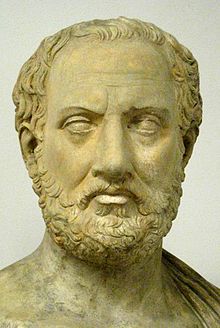 See entry about Thucydides Thucydides
Two pieces shared by Tom Igoe
Graham-Allison-Opinion-in-Weekend-Financial-Times
The-Crisis-in-U.S.-China-Relations-WSJ.pdf
The Truth About the Liberal Order
Dynamic growth of China’s GDP.