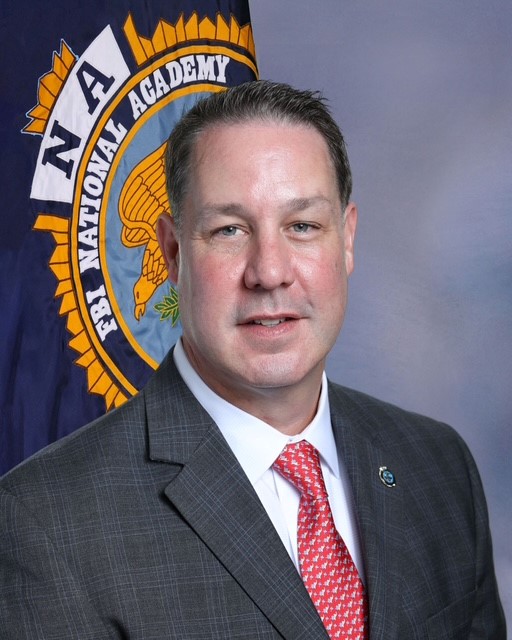
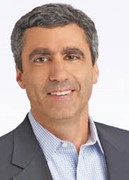
 If you love the Olympics, you’ve watched them exclusively on NBC since 2002 and every Summer Games going back to 1988. A major contributor to that coverage has been Gary Zenkel, who began his Olympic journey with NBC in 1992 and was named president of NBC Olympics in 2005. By the end of an agreement that he spearheaded with the International Olympic Committee (IOC) in March 2025, to extend through 2036 the exclusive U.S. media rights of NBC Universal (NBCU) to the Olympics, Gary will have played a critical role in the coverage of 21 Olympic Games [see the table at the end of this bio].
As president of NBC Olympics, Gary oversees the company’s Olympic business, planning and operations. He works closely with the IOC, U.S. Olympic and Paralympic Committee, the organizing committees for each Olympic Games and NBCU’s distribution partners, stations and external media companies to advance coverage, distribution and marketing. He does all that while navigating a constantly changing media landscape. We believe he’s earned a gold medal for his leadership in providing Olympic coverage in the United States for an astounding number of Games.
In 2024, Gary oversaw the Paris Olympic Games, regarded as one of the most successful in the history of NBCU. The company’s coverage from Paris reached 67 million viewers per day across its broadcast, cable and streaming platforms. Fans streamed 23.5 billion minutes of NBCU’s coverage— which was 40% more than all prior Olympic Summer and Winter Games combined — led by Peacock. NBCU’s coverage of the Paris 2024 Olympic Games topped the 46th Sports Emmy Awards with 10 wins, including Outstanding Live Special – Championship Event.
Since the acquisition of NBCU by Comcast in 2011, Gary has led three successful media rights agreements with the IOC. The first, in 2011, awarded NBCU the rights to the Sochi 2014, Rio 2016, Pyeongchang 2018 and Tokyo 2020 Olympic Games. The second agreement was negotiated in 2014 and granted NBCU the U.S. media rights to all Olympic Games through 2032, making it the longest U.S. media-rights agreement in Olympic history. The third agreement was completed in March 2025 and awarded NBCU the rights to Salt Lake City 2034 and Olympic Games 2036.
Gary was also instrumental in major soccer acquisitions for NBCU, including Telemundo’s exclusive Spanish-language U.S. media rights to FIFA World Cup Soccer from 2015–2026 and NBC Sports’ three-season Premier League acquisition in 2013. He served as executive vice president of NBC Olympics from 2001–2005. From 1997–2001, he was senior vice president for business development and marketing for NBC Olympics. Before that, from 1994–1997, Gary was vice president of NBC Sports and executive assistant to NBC Sports Chairman Dick Ebersol, during which time he played a major role in NBC’s acquisition, contract negotiations and renewals of the Olympics, French Open, Major League Baseball, Notre Dame Football, PGA Tour, U.S. Golf Association championships and Ryder Cup. He joined NBC Sports in 1990 as director of sports contract negotiations. Prior to joining NBC Sports, he was a corporate law associate with Cahill, Gordon & Reindel, a New York City-based law firm.
Gary graduated from the University of Michigan in 1983 and from the Georgetown University Law Center in 1987. He was a two-year letterman on the Wolverines golf team.
[DMA Note: The following table listing the Olympic Games in which Gary Zenkel played a role in broadcasting illustrates the phenomenal chronological and geographical scope of his efforts.]
| 1992 Barcelona | 2006 Torino | 2016 Rio de Janeiro | 2026 Milan Contina |
| 1996 Atlanta | 2008 Beijing | 2018 Pyeongchang | 2028 Los Angeles |
| 2000 Sydney | 2010 Vancouver | 2020 Tokyo | 2030 French Alps |
| 2002 Salt Lake City | 2012 London | 2022 Beijing | 2032 Brisbane |
| 2004 Athens | 2014 Sochi | 2024 Paris | 2034 Salt Lake City |
|
Note: 1994 and 1998 Winter Games were broadcast on CBS. |
|||
Arranged by Mike Wheeler
Summary of Gary Zenkel’s Presentation
Gary Zenkel, longtime president of NBC Olympics, traced his career that began almost by accident. After Georgetown Law School, he was a young attorney in New York when a “celebrity golf” memo for NBC Sports crossed his desk. Discovering that sports media law even existed, he lobbied for a position and joined NBC Sports in 1990, moving into Olympic work by 1992.
In the early days, NBC’s Olympic coverage was built around a single linear TV channel and one dominant revenue model. Over time, as NBC acquired both Summer and Winter Games through 2030 and beyond, the operation expanded into a free-standing Olympic unit with engineers, production, programming, digital teams, and complex relationships with the International Olympic Committee, host country organizing committees, U.S. Olympic authorities and distributors. Gary’s role centered on managing those relationships and the high-risk P&L tied to expensive rights acquisitions and production.
He described a strategic shift when Comcast bought the remaining portion of NBC from General Electric Company. Comcast pushed to fully use streaming rights that had been sitting idle, broadening the distribution story NBC could tell in its 2011 and 2014 long-term broadcast rights deals. Those negotiations, including a secret extension through 2032, reflected a bet that despite cord-cutting and audience fragmentation, the Olympics would remain one of the few events able to assemble massive, valuable audiences across evolving platforms.
Gary recounted NBC’s long internal debate over tape delay versus live coverage. For years, NBC protected prime-time storytelling even when results were known, because casual viewers still tuned in for narrative, context and emotion. Only with the Paris games in 2024 did NBC finally air marquee finals live in the United States during the daytime, while still crafting strong prime-time shows.
He detailed the logistical and creative challenges of host cities, the shift of much of the production process from the host country to NBC’s Stamford facility, and the extraordinary complications of broadcasting the Tokyo and Beijing games with COVID-related conditions such as empty stadiums, harsh health protocols and remote operations. The Paris games marked a triumphant rebound, leveraging iconic venues, strong organizing, celebrity-driven buzz and personalities such as Snoop Dogg to re-energize viewers.
Throughout, Gary explained concerns about to balancing the desire to maintain NBC’s storytelling tradition — deeply researched pieces on athletes’ lives and emotional but varied human stories — against the need to keep younger, short-form oriented audiences engaged with long-form Olympic coverage in the years ahead.
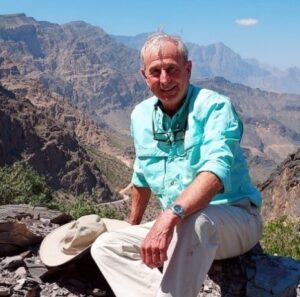
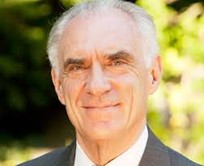 John Blankley has graciously agreed to present to us on November 12.