Discussion Leader: Gary Banks
 The IQ2 Debate is an excellent introduction to the subject. (One debater is Rob Fraley from Monsanto – I used to work with him) Spoiler alert – the Pro GMO side won by 28%.
Genetically modified (GM) foods have been around for decades. Created by modifying the DNA of one organism through the introduction of genes from another, they are developed for a number of different reasons—to fight disease, enhance flavor, resist pests, improve nutrition, survive drought—and are mainly found in our food supply in processed foods using corn, soybeans, and sugar beets, and as feed for farm animals. Across the country and around the world, communities are fighting the cultivation of genetically engineered crops. Are they safe? How do they impact the environment? Can they improve food security? Is the world better off with or without GM food?
For The Motion
- GM crops have been safely in our food system for nearly 20 years. There are currently no known harms or risks to human health.
- GM crops benefit farmers and the environment by increasing crop yields, reducing the use of pesticides, and reducing the need for tillage.
- Food security will be improved through the development of crops that can fight disease, resist pests, improve nutrition, and survive drought.
Against The Motion
- The current regulatory system does not adequately assess the safety of GM crops and we cannot be sure of what the long-term effects of consumption will be.
- The environmental threats include the possibility of cross-breeding with other plants, harm to non-target organisms, and decreased biodiversity.
- The world already grows enough food to feed everyone, but it doesn’t get to the people that are hungry. Genetic engineering moves focus away from public policy solutions.
https://www.intelligencesquaredus.org/debates/genetically-modify-food
Set of Short Articles from Harvard University These are terrific.
Introduction:Words from the editors:
We all have strong opinions about what we eat and how it affects our health, and with such a large portion of land dedicated to growing our food, many are also concerned about the environmental impacts of feeding billions of people. For this reason, the discussion about genetically modified organisms (GMOs) in our food is a highly politicized topic. When we started this project, we had heard a lot about GMO foods, but much of it seemed to come from people with a mission: the agrotech companies and food safety advocates. As scientists, we believe that the best way to really understand an issue is to go back to the primary sources. So we started with a list of questions we had about GMOs, and we asked members of our scientific community to do just that. This Special Edition is a presentation of what we found.
The articles here start from the basics: what foods are genetically modified, and how long have we been doing this? We next look at the GMO foods available now: how does eating GMOs affect organ toxicity and allergies? And what’s the health impact of the pesticides that we use on GMO crops? We also asked about the environmental effects of growing Roundup Ready and Bt crops, and the potential for GMOs to have an unintentional effect on genetic diversity. We looked at legal and policy issues—how does the patenting process affect companies and farmers? How are GMOs regulated in the US and in Europe? How have GMOs changed farming culture? And finally, we took a look at the future of GMOs: How can GMOs help us to fight world hunger and nutritional deficits in the developing world? And what technologies will we see in the next wave of genetically engineered crops?
So, did we find that GMOs are good or bad? The answer is complicated. The overwhelming majority of scientific evidence suggests that eating food with genetically modified DNA has no effect on human health, but there is also ample evidence that some GMOs have negative environmental impacts, such as the creation of superweeds. And while GMOs have not yet been wildly successful in providing solutions to an ever-growing global population and changing climate, there are certainly promising technologies in the works. It seems to us that GMOs have the potential to do great good, but in order for this to happen, research must proceed conscientiously, with consideration of the environmental risks of introducing engineered plants into our farms. But that’s just our opinion—we encourage you to put aside what you think you know about GMOs and read on to develop your own.
August 10, 2015.
GMO’s and our Food – Table of Contents
How to Make a GMO
The Long History of GMO Technology
Challenging Evolution: How GMOs Can Influence Genetic Diversity
Insecticidal Plants
Why Round-Up Ready Crops Have Lost Their Allure
Nothing to Sneeze at: the Allergenicity of GMOs
GMOs and Pesticides: Helpful or Harmful?
Will GMOs Hurt My Body? The Public’s Concerns and How Scientists Have Addressed Them
The Patent Landscape of Genetically Modified Organisms
GMOS IN MY LIFETIME: HOW GENETICALLY MODIFIED CROPS HAVE TRANSFORMED RURAL AMERICA
Same Science, Different Policies: Regulating Genetically Modified Foods in the U.S. and Europe
Not Your Grandfather’s GMOs: An Interview with Dr. Dan Voytas
Epigenetics in Plant Breeding: Hard Science, Soft Tool
Feeding the World One Genetically Modified Tomato at a Time: A Scientific Perspective
Good as Gold: Can Golden Rice and Other Biofortified Crops Prevent Malnutrition?
Glyphosate,
aka Roundup, Wikipedia article about its history and chemistry. Key point – It has low toxicity because glyphosate inhibits the EPSPS enzymes of different species of plants and microbes at different rates. EPSPS is produced only by plants and microbes; the gene coding for it is not in the mammalian genome.
https://en.wikipedia.org/wiki/Glyphosate
Bacillus thuringiensis, aka Bt. A naturally occurring soil bacterium used in organic farming. Some GMO’s, specifically corn, have been engineered to contain specific Bt proteins. Hence, they have built-in insect resistance. It was news to me that only certain strains of Bt have insecticidal properties. Further, that specific proteins can target specific insects. The article describes how they contain a crystalline protein that destroys the digestive tract of the insect.
https://en.wikipedia.org/wiki/Bacillus_thuringiensis
We aren’t as genetically pure human as we’d like to think. Genes move between species both naturally (e.g. virus’s and bacteria to animals) and by targeted genetic engineering. The reason genes can be moved is, at the genetic level, all life has a lot in common.
https://en.wikipedia.org/wiki/Transgene
No-Till Farming and Herbicide Resistant Crops
Widely practiced by farmers and highly recommended by the USDA, no till farming is enabled by GMO’s.
In the spring, weeds will begin to grow on any field. The farmer plows to turn the weeds under –
not to loosen the soil for seeds. There is an undeserved romance about plowing. In fact, it is really bad thing to do to land. Plowing:
- disturbs the remaining roots of last year’s crop holding soil which leads to wind and water erosion.
- destroys the habitat provided by the stubble from last year’s crop.
- disturbs the biome essential to healthy soil.
- takes capital (specifically a powerful tractor), fuel and labor.
- the heavy tractor compacts the soil.
- releases stored carbon into the atmosphere
The farmer then plants the crop. But
- weeds will immediately start to regrow. Some from natural distribution, others from last year’s seeds turned up by the plowing.
- weeds are more aggressive and will choke out the crop.
- at least once, and maybe more, the farmer uses another set of equipment for inter-row harrowing. this works best for fields with deep seeded crops and shallow seeded weeds.
Once the crop is established it will choke out the weeds.
Practicing no-till:
- in the spring, at precisely (remember that word) the right time and in precisely the right quantity the farmer sprays the field with a herbicide – usually glyphosate. Weeds are killed, not just turned under.
- the equipment is much less expensive than that required for plowing.
- stubble residue, stubble roots, and biome are not disturbed.
- the crop is planted using a seed drill. The Indians at Plymouth had it right – a seed drill punches a hole in the ground and drops in the seeds.
But as with a plowed field, weeds will regrow and eventually choke out the crop. The framer can’t use glyphosate again as it will kill both the weeds and the crop. However, if the crop is genetically engineered to tolerate glyphosate the field can be sprayed with glyphosate and only the weeds will be killed. Like with inter-row plowing, once the crop is established, it will choke out the weeds.
https://www.usda.gov/media/blog/2017/11/30/saving-money-time-and-soil-economics-no-till-farming
Regulation
It is important that government regulators thoughtfully oversee GMO’s. They must be scientifically capable as the technology is complex and ever changing. One hopes they are data driven and not pro or con GMO zealots. That isn’t always the case as the European laws were written without the input of their scientists.
FDA
https://www.fda.gov/Food/IngredientsPackagingLabeling/GEPlants/default.htm
USDA
https://www.usda.gov/topics/biotechnology/biotechnology-frequently-asked-questions-faqs
EPA
https://www.epa.gov/regulation-biotechnology-under-tsca-and-fifra/epas-regulation-biotechnology-use-pest-management
WHO
http://www.who.int/foodsafety/areas_work/food-technology/faq-genetically-modified-food/en/
National Academy of Sciences
New technologies in genetic engineering and conventional breeding
are blurring the once clear distinctions between these two cropimprovement
approaches. While recognizing the inherent difficulty
of detecting subtle or long-term effects in health or the environment, the
study committee found no substantiated evidence of a difference in risks
to human health between currently commercialized genetically engineered
(GE) crops and conventionally bred crops, nor did it find conclusive
cause-and-effect evidence of environmental problems from the GE crops.
GE crops have generally had favorable economic outcomes for producers
in early years of adoption, but enduring and widespread gains will depend
on institutional support and access to profitable local and global markets,
especially for resource-poor farmers.
https://www.nap.edu/resource/23395/GE-crops-report-brief.pdf
Cornell Alliance for Science – the GMO debate is over
https://allianceforscience.cornell.edu/blog/mark-lynas/gmo-safety-debate-over
GMO’s Globally
https://www.loc.gov/law/help/restrictions-on-gmos/eu.php
https://gmo.geneticliteracyproject.org/FAQ/where-are-gmos-grown-and-banned/
Also see article in the Harvard series above: Same Science, Different Policies: Regulating Genetically Modified Foods in the U.S. and Europe
Some African countries have barred GMO food aid based, I think, on the notion that if it’s too dangerous for Europeans it must be too dangerous for Africans and African lives are just as valuable as European ones. Set against that is malnutrition in many of these countries and the availability not only of US-raised food aid but also better harvests in Africa. It’s a lively debate:
GMO’s in Africa
Retail
Here’s a report from the buyer at Whole Foods, which is committed to labeling but discusses how difficult it is to ensure transparency. Clearly their Millennial customer base wants to avoid GMO products as noted below.
https://www.aphis.usda.gov/stakeholders/downloads/2015/coexistence/Errol-Schweizer.pdf
Why I don’t buy organic – Forbes
https://www.forbes.com/sites/stevensavage/2016/03/19/why-i-dont-buy-organic-and-why-you-might-want-to-either/#50ac5c5969c3
Why organic food costs more:
https://www.thebalance.com/reasons-organic-food-costs-more-2538165
Organic does not mean healthy:
So Ben & Jerry’s ice cream is good but not necessarily good for you. It non-GMO and uses eggs from cage free chickens. But a half cup contains 160 calories, 45 from fat, and not much else.
https://www.benjerry.com/flavors/pb-dough-moophoria
Retained Identity
Retained Identity (RI) is a system where an agricultural product is tracked from field to the consumer at a detailed level. It supersedes labelling. Already, food must state the country of origin may say “Organic”, “Non-GMO” and “Free Range” though those terms can be fuzzy. Food must state its ingredients but not where those ingredients came from. (Think of the scandals in China.) Food must also state nutritional information. Better than nothing but still superficial.
Already, organic farming requires detailed record keeping of all inputs (fertilizers, pesticides), land maps, and supply chain records.
Food does not have to specify the seed variety or the pesticides that were used to grow it.
Many restaurants, markets and groceries promote “know your local farmer” with pictures of kindly farmers you want to grow your food. At the Stone Barn you can meet the pig or lamb you are about to eat (no thanks). All good.
But some food processing is better done at industrial sites where sanitation, testing and handling is controlled. Even organic farms cannot slaughter their own animals and I worry about local food trucks. And of course not all food can be sourced locally.
Block Chain (Jim – note I finally worked block chain into Current Affairs) is a promising technology to implement Retained Identity – essentially a rigorous lot control system.
Food Security in the Supply Chain
Organic vs. GMO
From the USDA:
https://www.ers.usda.gov/topics/natural-resources-environment/organic-agriculture/organic-market-overview.aspx
https://www.ers.usda.gov/topics/natural-resources-environment/organic-agriculture/
NPR Story – Organic Pesticides: Not An Oxymoron
https://www.npr.org/sections/health-shots/2011/06/18/137249264/organic-pesticides-not-an-oxymoron
From Scientific American:
https://blogs.scientificamerican.com/science-sushi/httpblogsscientificamericancomscience-sushi20110718mythbusting-101-organic-farming-conventional-agriculture/
From Genetic Literacy:
GMO’s Globally https://gmo.geneticliteracyproject.org/FAQ/where-are-gmos-grown-and-banned/
Using GMO’s to produce drugs and other products
From the FDA:
What is a biological product?
Biological products include a wide range of products such as vaccines, blood and blood components, allergenics, somatic cells, gene therapy, tissues, and recombinant therapeutic proteins. Biologics can be composed of sugars, proteins, or nucleic acids or complex combinations of these substances, or may be living entities such as cells and tissues. Biologics are isolated from a variety of natural sources – human, animal, or microorganism – and may be produced by biotechnology methods and other cutting-edge technologies. Gene-based and cellular biologics, for example, often are at the forefront of biomedical research, and may be used to treat a variety of medical conditions for which no other treatments are available.
How do biological products differ from conventional drugs?
In contrast to most drugs that are chemically synthesized and their structure is known, most biologics are complex mixtures that are not easily identified or characterized. Biological products, including those manufactured by biotechnology, tend to be heat sensitive and susceptible to microbial contamination. Therefore, it is necessary to use aseptic principles from initial manufacturing steps, which is also in contrast to most conventional drugs.
Biological products often represent the cutting-edge of biomedical research and, in time, may offer the most effective means to treat a variety of medical illnesses and conditions that presently have no other treatments available.
Below is an article from the NYT’s 1/2/18. A Danish company Novozymes, has discovered enzymes that clean clothes in cold water, in less water, using less chemicals and removes stains better. All good.
To make commercial quantities of the enzyme economically researchers started with an enzyme from soil bacteria in Turkey, and modified it through genetic engineering to make it more closely resemble a substance found in cool seawater.
Next, they found a way to mass produce the enzyme. Novozymes implanted the newly developed product’s DNA into a batch of microbial hosts used to cultivate large volumes of enzymes quickly and at low cost. The enzymes were then “brewed” in large, closely monitored tanks before being sold.
https://www.nytimes.com/2018/01/01/business/energy-environment/climate-change-enzymes-laundry.html?rref=collection%2Fsectioncollection%2Fbusiness&action=click&contentCollection=business®ion=rank&module=package&version=highlights&contentPlacement=1&pgtype=sectionfront&_r=0
Politics, Fake News, Fear, Uncertainty and Doubt
A question from the audience in the IQ2 debate referenced above was wicked. She asked the Con team ” If the the scientific consensus and the regulators say GMO’s are safe, what would it take to change your mind?” Implied answer is they will nver change their mind. The irony is, many of the anti GMO people are exasperated by people who deny human caused climate change in the face of equally strong scientific consensus.
Why People Oppose GMOs Even Though Science Says They Are Safe
https://www.scientificamerican.com/article/why-people-oppose-gmos-even-though-science-says-they-are-safe/
With G.M.O. Policies, Europe Turns Against Science
With G.M.O. Policies, Europe Turns Against Science
General article on agriculture:
https://www.scientificamerican.com/article/3-big-myths-about-modern-agriculture1/
Precision Agriculture – It might be the best way forward
Precision Ag is farming every square meter optimally.
- First the farm is digitally mapped. The soil is tested for nutrients and composition. Streams and lakes are noted.
- When planting season nears weather, temperature, moisture and weeds are monitored.
- On precisely the right day, the farmer begins field management. A Terragator Sprayer has on-board GPS and the capability to distribute 8 channels of product continuously over a field. Digital instructions are downloaded. The mix of pesticides and nutrient can vary so each square meter of land get just what it needs – no more, no less. This helps prevent overuse and pesticide resistance.
- Some products may be restricted to avoid lakes and streams. The sprayer will automatically turn off near those areas and keep a digital record to prove compliance.
- For corn, a Deere seed drill can continuously vary the number and spacing of seed plantings based on digital maps.
- As the crop grows, specific treatments are applied.
- At harvest, a GPS enabled Deere Harvester can continuously measure yield and quality of the harvest. Of course, the results are digitally recorded and added to the farmer’s field database.
Organic farming requires this already though records are not available to consumers.
Precision Agriculture
The genetic genie isn’t going back in the bottle.
- Since life began 3 billion years ago it has depended on natural mutations and selection of the fittest to evolve.
- About 30,000 years ago there were still only natural mutations but man started to influence selection by selecting that goat or barley plant that seemed more desirable.
- For the last 150 years man has found ways to increase the number of mutations through x-Rays, chemicals, and the like. These were random mutations.
- In the last few decades scientists have used more direct techniques to add genes to a cell. These include a shotgun blast of DNA coated gold dust and using viruses to a carry a gene into a cell.
- Very recently CRISPR technology allows the direct editing of DNA without introducing material from other organisms.
- It appears inevitable that genetic engineering will eventually lead to creating new or highly altered life from base molecules. It’s “just” chemistry.
Knowing precise genetic vulnerabilities of disease, weeds and insects enable highly targeted solution with less collateral damage.
Meanwhile natural mutations and selection continues. Bacterial and viruses are evolving rapidly. They aren’t malevolent but the results can be an existential threat to human survival. Consider the Spanish flu, small pox, HIV, bubonic plague, … Since antibiotics were discovered in the 1930’s many bacteria have become resistant. We don’t have good drugs for viruses. It’s an arms race and genetic engineering is a powerful weapon.
Specific to agriculture, there are threats to our food supply. Population growth is straining the agricultural system to produce more and better food. Arable land is limited – and possibly declining due to erosion, climate change and mismanagement. Creating more farm land by clearing forests creates major problems. Disease and pests are an evolving threat.
We would hope that the universities and companies doing genetic engineering will be responsible. In case they aren’t we need even smarter regulators to help them be responsible. The public has an obligation to understand genetic engineering to make informed choices and set thoughtful policy. This is a global issue.
Agriculture – An Integrated Solution
Agriculture is an industry that is ripe for big data. In fact, some companies and organizations are already big data repositories. With onboard GPS and sensors, satellites and sampling data from every square meter of farm land, every day can be captured.
- Soil type, nutrients, and microbiome
- Weed and insect insect problems
- Seed varieties and planting method
- Fertilizer, herbicide and insecticides applied – rate and date
- Plowing, mowing, harrowing and other mechanical treatments
- Irrigation
- Weather – moisture and temperature
- Harvest date(s)
- Yield and attributes of the crop
Collect this data over time to show the effects of crop rotation.
Applying analytics this data will optimize the output of the farm with the least amount of treatment. The data would show certain seed varieties are recommended for this year for this land. The may or may not be genetic engineered.
We recently heard from a speaker that it makes no sense to take drugs for a problem until diet and lifestyle solutions have been fully implemented. Farmers can first attempt to farm using minimally intrusive pest control.
These data sharing programs have all been voluntary to date. However, a case can be made to treat pesticides as pharmaceuticals. That is, even though it is your body you can’t go the drug store and buy an antibiotic. Most wouldn’t know what to buy or the dose. Do-it-yourself medicine is unthinkable. Why is it any different for farm land – even if you own it?
For agriculture a farmer who had a problem would call a crop consultant (doctor) and they would prescribe a certain treatment (drug) and application (dosage). The farmer would take the prescription to the ag supplier (drug store) for fulfillment. There might be a followup to make sure the problem has been solved.
The crop consultant would also police abuse. Pest resistance is caused by overuse. Wrong treatment, wrong rate, wrong timing is wasteful economically and damaging to the environment.
As a homeowner most of us are a county mile from scientific management of our yards. We wouldn’t dream of polluting the Sound but yard run off is a problem. Have you had your soil tested? Exactly what type of fertilizer does your yard need? When you put down crab grass preventer or broadleaf weedkiller do you really need it? Was it done at the right time? Is setting the dial on your spreader at “4” for the whole yard correct? Or was it because Scott’s Turf Builder Plus 2 was on sale at Home Depot and it is “recommended” to apply in early spring? So you have brown spots. Might be grubs so you buy Grub Ex. Despite the label it only works at a certain time and there are many reasons for brow spots.
An article by Robert Fraley whom you saw in the IQ2 debate.
https://monsanto.com/innovations/research-development/articles/farm-innovations/
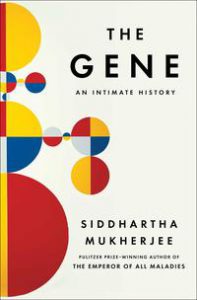 I read this last year. Great book. You’ll need that college biology course to fully understand it. But to truly be informed about GMO’s you need to understand genetics. Gary
From the Pulitzer Prize-winning, bestselling author of The Emperor of All Maladies–a magnificent history of the gene and a response to the defining question of the future: What becomes of being human when we learn to “read” and “write” our own genetic information?The extraordinary Siddhartha Mukherjee has a written a biography of the gene as deft, brilliant, and illuminating as his extraordinarily successful biography of cancer. Weaving science, social history, and personal narrative to tell us the story of one of the most important conceptual breakthroughs of modern times, Mukherjee animates the quest to understand human heredity and its surprising influence on our lives, personalities, identities, fates, and choices. Throughout the narrative, the story of Mukherjee’s own family–with its tragic and bewildering history of mental illness–cuts like a bright, red line, reminding us of the many questions that hang over our ability to translate the science of genetics from the laboratory to the real world. In superb prose and with an instinct for the dramatic scene, he describes the centuries of research and experimentation–from Aristotle and Pythagoras to Mendel and Darwin, from Boveri and Thomas Morgan to Crick, Watson and Rosa Franklin, all the way through the revolutionary twenty-first century innovators who mapped the human genome. As The New Yorker said of The Emperor of All Maladies, “It’s hard to think of many books for a general audience that have rendered any area of modern science and technology with such intelligence, accessibility, and compassion…An extraordinary achievement.” Riveting, revelatory, and magisterial history of a scientific idea coming to life, and an essential preparation for the moral complexity introduced by our ability to create or “write” the human genome, The Gene is a must-read for everyone concerned about the definition and future of humanity. This is the most crucial science of our time, intimately explained by a master.
g

 Wednesday, January 31, 2018
  Wednesday, January 24, 2018
 Margaret Gaffney Benedict, Ph.D., executive director of the Matthew Gaffney Foundation, will discuss her work helping high school and university-level students who are economically disadvantaged obtain an empowering college education. Most students are the first member of their family to attend college. Over the past 20 years, Dr. Benedict’s foundation has helped more than 100 students gain acceptance to top schools on the eastern seaboard. Many receive scholarships covering 75% -100% of their education. Students pay no fee for the Gaffney services. Her talk will include stories of students who now enjoy happy and productive lives. Dr. Benedict is a professional educator, with a doctorate in 16th century English literature from Lehigh University. She has been published in multiple professional journals and has presented her work at international educational symposiums. She is a member of the Independent Educational Consultants Association and the National Association for College Admissions Counseling.
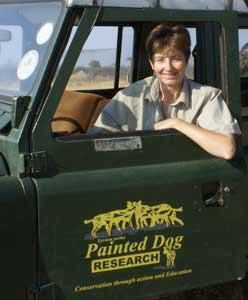 Artist Alison Nicholls will talk about Africa’s painted dogs, one of the world’s most endangered predators. “They are an ancient and highly social species not closely related to any other living canid,” says Alison. “Relentlessly persecuted for decades – even within reserves and national parks – the dogs now are one of the most treasured sightings for tourists on safari, yet they remain highly endangered,” she says. Alison will explain how the dogs got their intriguing name; how they care for sick or injured packmates; where they live and why they are endangered; and how her painted dog artwork raises awareness of the species, as well as funds for their conservation. An artist inspired by Africa, she lived in Botswana and Zimbabwe for several years and periodically returns to sketch in the bush. She also works with African conservation organizations and leads art safaris for Africa Geographic. Alison is a signature member of Artists for Conservation and the Society of Animal Artists and is a member of the Explorers Club and the Salmagundi Club. To see her art and learn more, visit her website at

 Gordon F. Satterley, a resident of Darien since 1976, died on Friday, December 29, 2017. He was 91 years old.
 Mark Albertson, historical research editor at Army Aviation magazine, will talk about “NATO Then and Now.”
 Wayne Karl, the former Chief of the Noroton Heights Fire Department who dedicated his life to community service and raised four sons in the town of Darien, CT, died surrounded by family in Vero Beach, FL on December 19, 2017. He was 82. Mr. Karl was a man entirely without pretense, but over the course of his life he earned some lofty titles: chief, commodore, commissioner, fire marshal, justice of the peace and president.
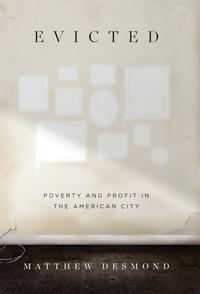 Gary here. I just read this in preparation for our discussion. Gates and Obama have it on their suggested reading list. It is about people at the very bottom. Depressing – extremely difficult to find solutions.
 Taylor Strubinger will lead a walking tour of New York City’s world-famous Christmas trees and department store windows,
 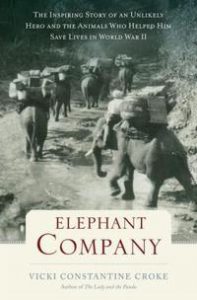 J.H. “Billy” Williams always had an affinity for animals. So, when he responded to job offer with the East India Company to work with logging elephants his family wasn’t surprised, though worried that he had already come back from World War I in one piece, would he be so lucky with India? Not only did he find his calling with the elephants in India, Billy and his elephants became war heroes. At the onset of World War II, Williams formed Elephant Company and was instrumental in defeating the Japanese in Burma and saving refugees, including on his own “Hannibal Trek.” Billy Williams became a media sensation during the war, telling reporters that the elephants did more for him than he was ever able to do for them, but his story has since been forgotten. Part biography, part war story, and part wildlife adventure, Croke delivers an utterly charming narrative and an important, little-known piece of the legacy of World War II.