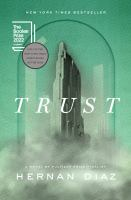
 “An award-winning writer of absorbing, sophisticated fiction delivers a stylish and propulsive novel rooted in early 20th century New York, about wealth and talent, trust and intimacy, truth and perception. In glamorous 1920s New York City, two characters of sophisticated taste come together. One is a legendary Wall Street tycoon; the other, the brilliant daughter of penniless aristocrats. Steeped in affluence and grandeur, their marriage excites gossip and allows a continued ascent — all at a moment when the country is undergoing a great transformation. This is the story at the center of Harold Vanner’s novel Bonds, which everyone in 1938 New York seems to have read. But it isn’t the only version. Provocative, propulsive, and repeatedly surprising, Hernan Diaz’s Trust puts the story of these characters into conversation with the “the truth”-and in tension with the life and perspective of an outsider immersed in the mystery of a competing account. The result is an overarching novel that becomes more exhilarating and profound with each new layer and revelation, engaging the reader in a treasure hunt for the truth that confronts the reality-warping gravitational pull of money, and how power often manipulates facts”–
Category: Activities (Page 15 of 50)
Activities are gatherings that occur on a regular schedule, usually weekly, to enjoy a specific pastime.
The Wanderers first Spring Wandering is upon us. This Thursday March 30 we head to Torrington in the Naugatuck Valley. This area was one of the industrial hubs that helped to create Connecticut’s initial prosperity and is now a modern scenic venue.
Travel to Torrington will be by carpool from the DCA (274 Middlesex Road, Darien) leaving at 8:30 am. Please arrive at the DCA some minutes before. The ride is approximately 75 minutes up Rte. 8 off the Merritt Parkway. All are welcome.
The DMA’s annual spring picnic at Weed Beach is scheduled for Wednesday, June 15 (Thursday, June 16 in the event of inclement weather). A sign-up sheet for the picnic will again be available at this coming Wednesday’s general meeting at the DCA; the cost will be $40 per person. Please contact Alex Garnett if you are willing to assist with the preparations and/or clean-up.
DMA members can also confirm their plans to attend with Jan Selkowitz or Alex Garnett by email. Members should either deliver their checks in person at the DCA or mail them to the Darien Men’s Association, c/o the Darien Community Association, attn.: Marilyn DeMaio, 274 Middlesex Road, Darien, CT 06820 (and email Jan or Alex that you have done so).
Frank DeLeo will have a sign-up sheet at this week’s Wednesday meeting for the Long Island Boat Trip he has organized for May 30. It is limited to 40 people, and the list is filling up fast. Please bring your checkbook and pay when signing up. The fee is $40 per person. We will cruise the Sound along with two docents to help us better understand the Sound’s history and eco-system.
 Date. April 26
Cost. $30.00
Location . St Luke’s Church Darien auxiliary building behind the church
Time. 6.30-9.00
Horsd’oeuvres and beverages will be served at 6.30 and the music will begin at 7.30
Caterer. M Joseph
The event will be lead by 5 musicians from the Norwalk Symphony Orchestra. The theme will be music from well known movies.
We will have a sign up list beginning next Wednesday at the DMA meeting. You can also sign up by contacting Bob McGroaty or Jan Selkowitz.
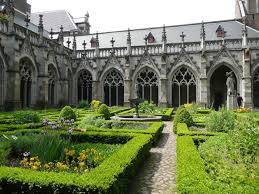 On March 21 we will be going to the Cloisters Museum, which is part of the Metropolitan Museum of Art . The Cloisters is located in upper Manhattan. The museum specializes in European Medieval art and architecture and has views of the Hudson River. It has great tapestries and gardens. We will car pool from the DCA at 9.30 . A docent will meet us at 11.30. After our time at the museum we will have lunch at a nearby restaurant. We currently have a waiting list which usually opens up. The museum cost is $30.00. Please contact John Bassler or Jan Selkowitz if interested.
Our next hike will be on Thursday, March 23 at 10:30 am at Cranbury Park in Norwalk. The park’s expansive 227 acres surround the historic Gallaher Mansion, a classic example of Tudor Revival style of architecture which is on the National Registry. Beyond the great lawn and mansion, Cranbury Park offers a series of meandering and wooded trails and a dog-friendly environment. This hike has a few moderately difficult sections but otherwise has trails that are generally flat and well maintained. The entrance to the park is at 300 Grumman Avenue.
If you have questions or would like additional information, please contact Robert Plunkett.
 Download the form here March_Mad
Fill out your entry and return to Joe Spain or David Mace. Good luck!
On November 30, 2022 Open AI released a user- friendly application called ChatGPT. It
took the world by storm—within 5 days it had 1 million users and within two months that
number had exploded to 100 million. It was the fastest diffusion of a new technology in
history. Known as ”Generative AI” it can generate impressive content on almost any
subject at any level of expertise and answer almost any question with confidence in a
user- friendly way. This technology is sometimes wrong but never in doubt. Its rapid
acceptance by the public has set off an arms race among the big tech companies
(Microsoft, Google, Baidu, Alibaba, Meta) to incorporate this technology into their
products.
As an indication of its expertise and versatility ChatGPT has passed bar exams, medical
school exams and the Wharton MBA final exam.
But it also has problems: it cannot distinguish truth from falsehood, it displays bias and
never reveals its sources. Once these problems are resolved, the impact of this
technology on different kinds of jobs is likely to be enormous, potentially reducing the
marginal cost of labor to zero.
Sunil Saksena will lead a discussion on this emerging technology and whether society is
adequately prepared for this revolution.
To try ChatGPT, click this link and select “Try ChatGPT” to register.
https://openai.com/blog/chatgpt/
Cathie Wood’s (ARK’s) just published research report which includes a section on AI can be downloaded via this link.
https://www.wsj.com/articles/chatgpt-heralds-an-intellectual-revolution-enlightenment-artificial-intelligence-homo-technicus-technology-cognition-morality-philosophy-774331c6?mod=Searchresults_pos1&page=1
https://www.nytimes.com/2022/10/21/podcasts/generative-ai-is-here-who-should-control-it.html?smid=nytcore-ios-share&referringSource=articleShare
Generative A.I. Is Here. Who Should Control It?
Generative A.I. Is Here. Who Should Control It?
https://www.nytimes.com/2020/11/24/science/artificial-intelligence-ai-gpt3.html?smid=nytcore-ios-share&referringSource=articleShare
Meet GPT-3. It Has Learned to Code (and Blog and Argue).
Meet GPT-3. It Has Learned to Code (and Blog and Argue).
https://www.nytimes.com/2023/01/12/technology/microsoft-openai-chatgpt.html?smid=nytcore-ios-share&referringSource=articleShare
Microsoft Bets Big on the Creator of ChatGPT in Race to Dominate A.I.
Microsoft Bets Big on the Creator of ChatGPT in Race to Dominate A.I.
Without Consciousness, AIs Will Be Sociopaths
https://www.nytimes.com/2023/01/15/opinion/ai-chatgpt-lobbying-democracy.html?smid=nytcore-ios-share&referringSource=articleShare
How ChatGPT Hijacks Democracy
https://www.nytimes.com/2023/01/16/technology/chatgpt-artificial-intelligence-universities.html?smid=nytcore-ios-share&referringSource=articleShare
Alarmed by A.I. Chatbots, Universities Start Revamping How They Teach
https://www.axios.com/2023/01/18/chatgpt-ai-health-care-doctors
https://m.youtube.com/watch?v=GYeJC31JcM0
https://www.nytimes.com/2023/02/03/technology/chatgpt-openai-artificial-intelligence.html?smid=nytcore-ios-share&referringSource=articleShare
How ChatGPT Kicked Off an A.I. Arms Race
https://www.nytimes.com/2023/02/08/technology/microsoft-bing-openai-artificial-intelligence.html?smid=nytcore-ios-share&referringSource=articleShare
Bing (Yes, Bing) Just Made Search Interesting Again
https://www.nytimes.com/2023/02/08/technology/ai-chatbots-disinformation.html?smid=nytcore-ios-share&referringSource=articleShare
Disinformation Researchers Raise Alarms About A.I. Chatbots
AI Boom Could Make Google, Microsoft More Powerful
URBAN HIKE
STAMFORD CT
FEBRUARY 23, 2023
10:30 AM
We will meet at 10:30 in the parking lot for Harbor Point on the northwest corner of Washington and Atlantic Streets in Stamford.
(See directions below) The lot is quite large and free.
Our urban tour will take us along the West Branch of the Rippowam River past the many new apartment and office buildings looking across the river mouth at the Crab Shell and Prime Restaurants on the opposite shore. We will continue into Kosciusko Park and walk the perimeter of the park past Shippan on the opposite shore. Leaving the park we will again pass through more of the new construction and have lunch in one of the restaurants there. Our total hike will be about 2.5 miles which should take us a little less than 90 minutes.
DIRECTIONS-Since the parking lot does not have an address, the route to follow is to take I-95 south to Exit 7. Turn left onto Canal Street and then right onto Dock at the first light. Follow Dock to Atlantic and turn left. Straight ahead on Atlantic to Washington. Turn right on Washington then a quick left into the lot.
Guests and dogs on a leash are welcome!
Dave McCollum and Bob Plunkett
Recap:
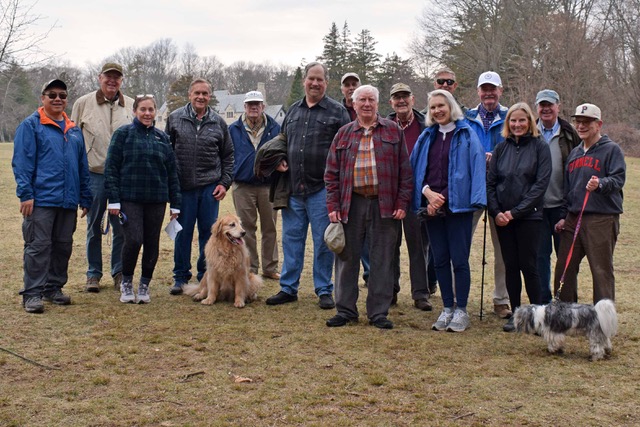
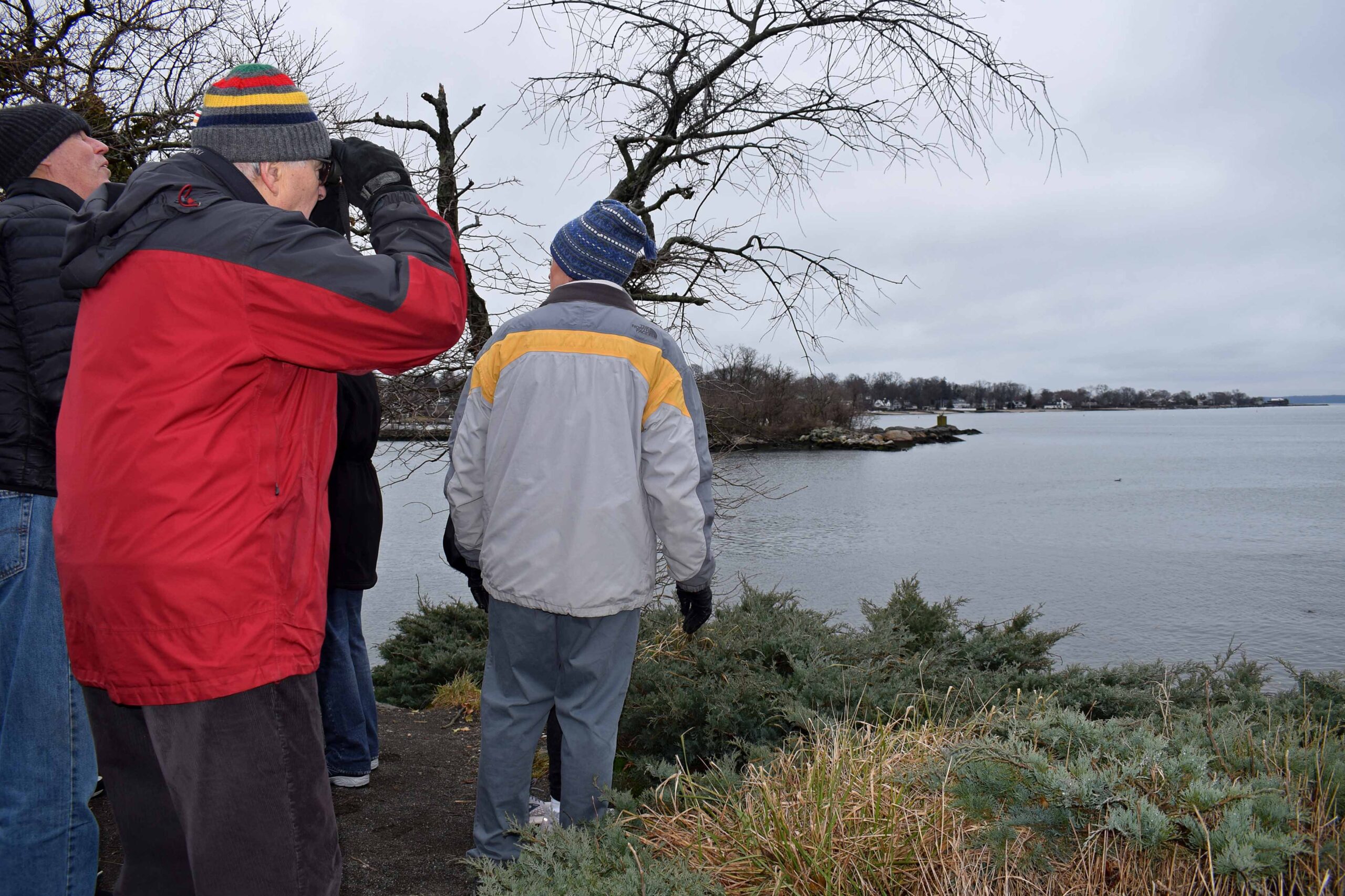
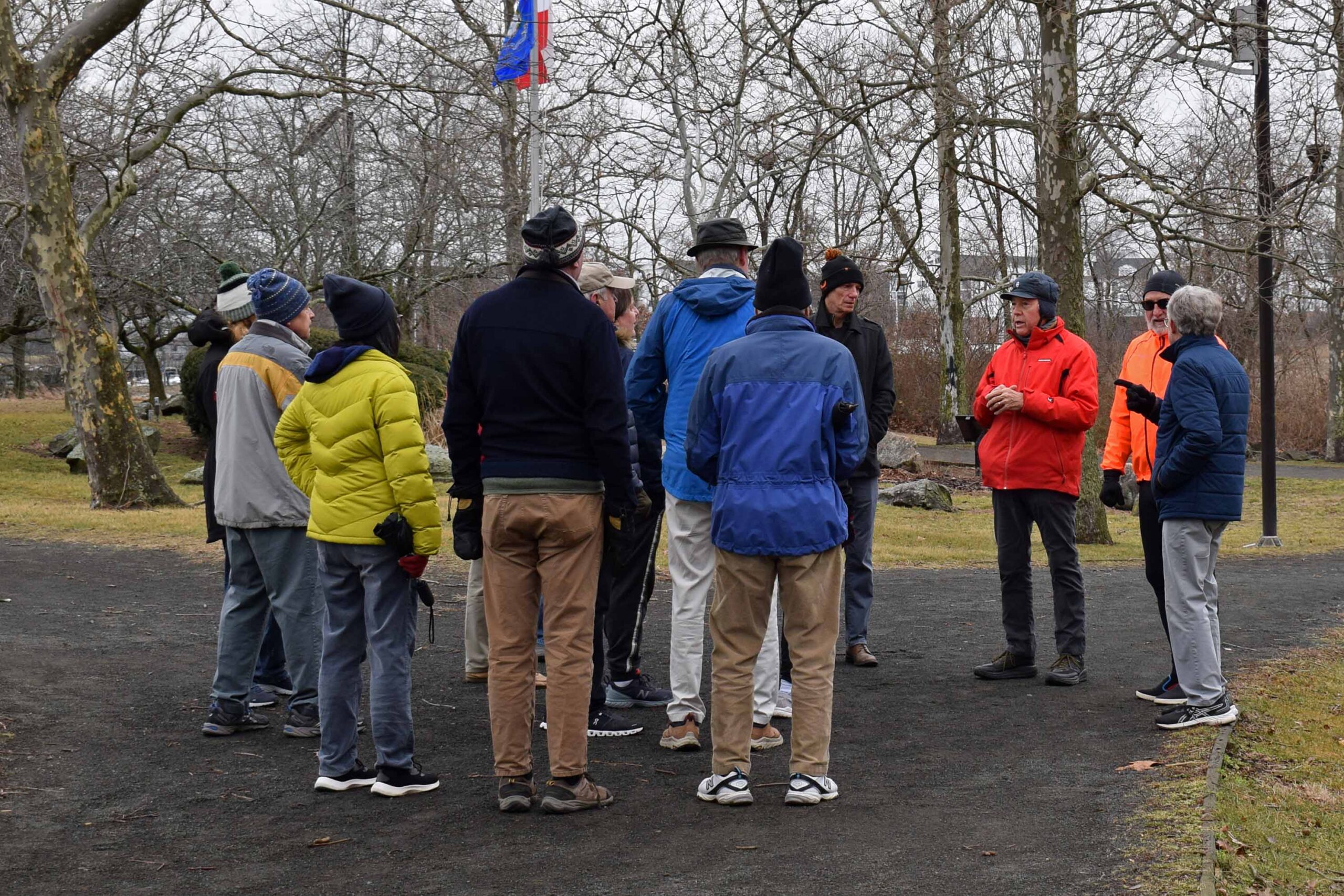
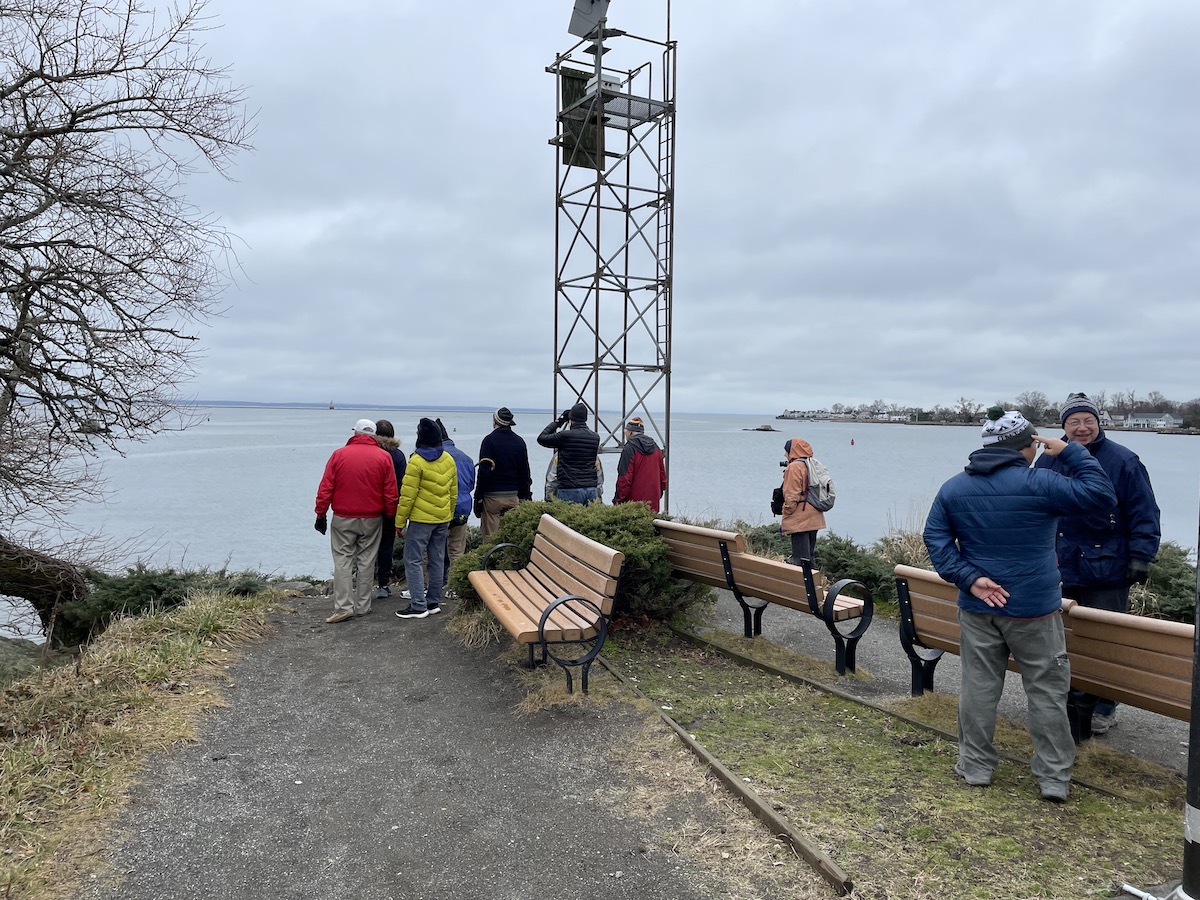
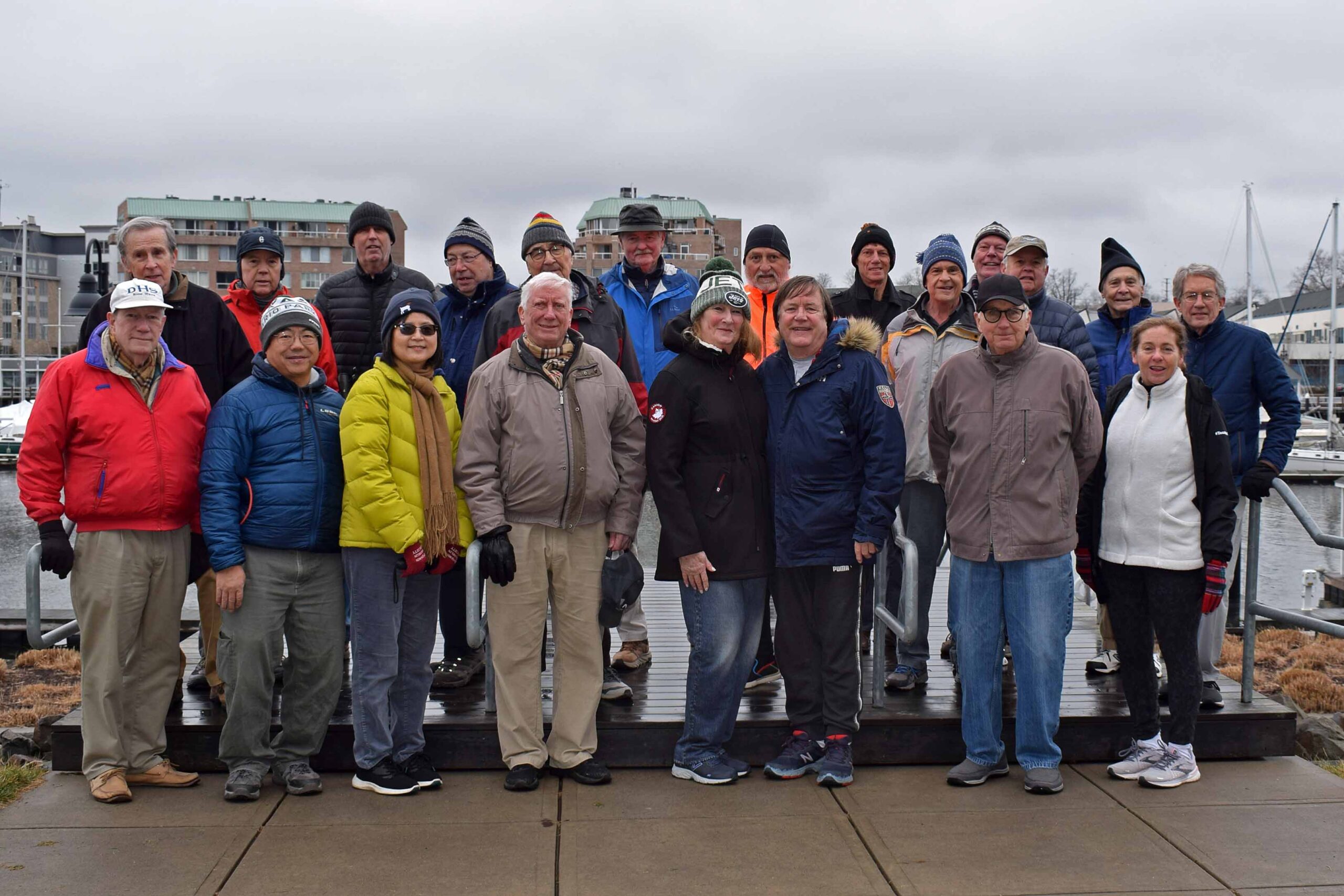
The temperature was 38 degrees and a light mist was falling at 10:30 in the morning but 22 hardy DMAers and guests gathered in the Harbor Point parking lot for a hour and a half walking tour of the new South End. The area bounded by the east and west branches of the Rippowam River (“South End”) in Stamford has been redeveloped over the past several years into an impressive complex of apartments, restaurants, other retail and offices. We toured much of that new area and hiked around Kosciusko Park for a total of 2.2 miles in a little under 1.5 hours.
We paused to pose for Marilyn Parker to take the group photo but otherwise kept walking, talking and looking at the scenery.
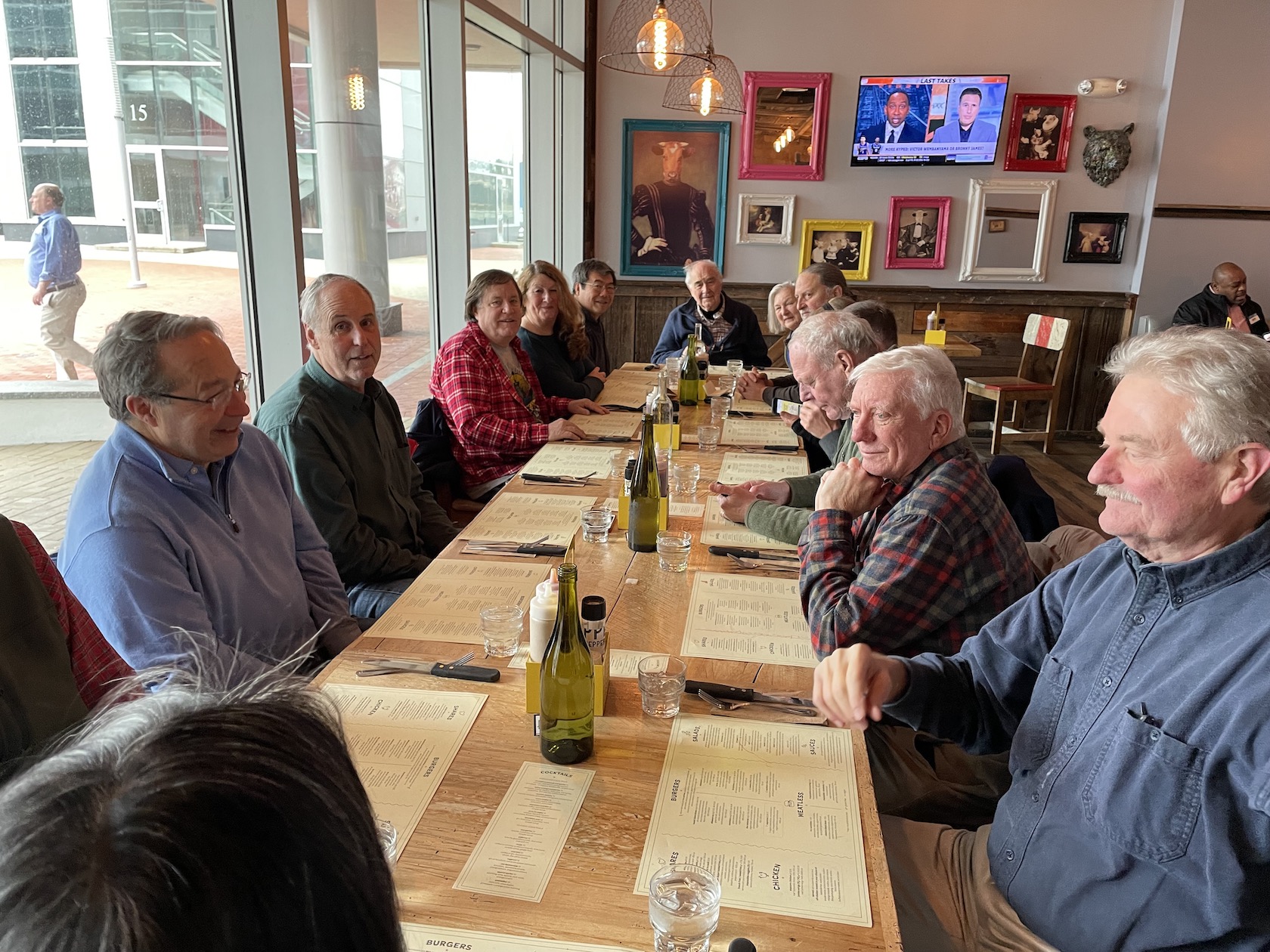
Sixteen hikers stayed on for a burger lunch at Bareburger Restaurant which set up a long table for us. A delightful way to spend a late February morning!
Dave McCollum
Bob Plunkett



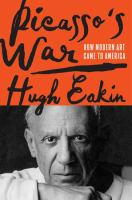 On April 12, we will turn to the world of international art. In January 1939, Pablo Picasso was renowned in Europe but disdained by many in the United States. One year later, Americans across the country were clamoring to see his art. How did the controversial leader of the Paris avant-garde break through to the heart of American culture?
The answer begins a generation earlier, when a renegade Irish American lawyer named John Quinn set out to build the greatest collection of Picassos in existence. His dream of a museum to house them died with him, until it was rediscovered by Alfred H. Barr, Jr., a cultural visionary who, at the age of 27, became the director of New York’s new Museum of Modern Art.
Barr and Quinn’s shared goal would be thwarted in the years to come—by popular hostility, by the Depression, by Parisian intrigues, and by Picasso himself. It would take Hitler’s campaign against Jews and modern art, and Barr’s fraught alliance with Paul Rosenberg, Picasso’s persecuted art dealer, to get Picasso’s most important paintings out of Europe. Mounted in the shadow of war, the groundbreaking exhibition Picasso: Forty Years of His Art would launch Picasso in America, define MoMA as we know it, and shift the focus of the art world from Paris to New York.
Picasso’s War is the never-before-told story about how a single exhibition, a decade in the making, irrevocably changed American taste, and in doing so saved dozens of the twentieth century’s most enduring artworks from the Nazis. Through a deft combination of new scholarship and vivid storytelling, Hugh Eakin shows how two men and their obsession with Picasso changed the art world forever.
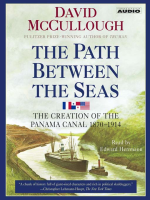 On March 8 at 1:30. we will discuss a first-rate drama of mobilization and diplomacy “not unlike that of war.” When fifteen years of struggle by Suez veteran Ferdinand de Lesseps to build a canal through the Panamanian isthmus collapsed through tropical disease, logistical barriers, and financial disgrace, two Americans managed literally superlative accomplishments: moving billions of cubic yards of dirt, harnessing one of the world’s most savage rivers, developing an unprecedented lock and electrical system, and, not least, defeating the Anopheles mosquito. In an open, vigorous style, author David McCullough contrasts the manic-depressive attitudes of French and American populations and leaders toward the canal with the cool perseverance of his two heroes: the engineer John Stevens, a former common laborer who took charge of the collapsing canal project and realized that the problem was not digging but transportation; and Dr. William Gorges, who conquered malaria and yellow fever in a region where hospital rooms used to literally shake from patients’ chills.
Ironically, it was the often jingoistic “Manifest Destiny” rhetoric and the medical experience of the brutal Spanish-American War that provided Congressional backing and scientific leads for the Panama task. A further twist was the origin of the Panamanian republic which permitted the canal to go through: French adventurer Phillippe Bunau-Varilla executed a coup against Colombia in 1903 for “the greater glory of France,” then, according to McCullough, promptly put the new nation and its treasury under the wardship of the U.S. State Department and the House of Morgan, respectively. Meanwhile, viewing the French example, Congress so feared possible graft in Panama that it threw horrific red tape around the canal project. But Stevens was able to recruit the greatest engineering minds of the period – and the book is able to recapture their breakthroughs.