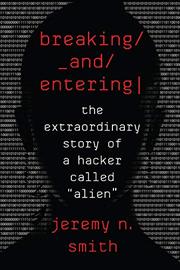
A novelistic tech tale that puts readers on the front lines of cybersecurity.
For all whose lives and connections depend on the internet—nearly everyone—this biography of the pseudonymous “Alien” provides a fast-paced cautionary tale. Smith (Epic Measures: One Doctor. Seven Billion Patients., 2015, etc.) has enough experience as a computer programmer to understand the technicalities of this world, but his storytelling makes it intelligible to general readers; indeed, the narrative is more character-driven than technology-driven. The book requires a few leaps of faith—not only that Alien is who the author says she is, but that she can so vividly recount events and conversations that happened years before she met the author. The story begins with Alien at MIT. Lacking focus and direction, she was drawn to a hacking community in a time when the term could extend from picking locks to taking drugs and didn’t become more focused on technology until computers became more central to society. The hackers often lived more adventurous lives than many students, and Alien experienced plenty of casual sex, drug use, and a few tragic casualties along the way. She graduated from hacking computer systems to helping protect them from hackers at a time when “Corporations from Microsoft and Cisco on down had begun hiring hackers of their own to help defend themselves against other hackers.” Some worked one side of the fence, some worked the other, and some straddled the line and were capable of “going rogue.” Smith goes into great detail to demonstrate how Alien could penetrate the security of whomever was employing her, showing how a real criminal would do it, and makes fearfully clear that there is “no such thing as absolute security in this world, or any definitive and final fixes.” Alien now runs a small hacking company that assists with security for banks, governments, and other organizations.
A page-turning real-life thriller, the sort of book that may leave readers feeling both invigorated and vulnerable.
How one Frenchwoman’s spy network helped win the war against the Nazis.
Marie-Madeleine Fourcade (1909-1989) was raised in a well-to-do French family, but she was extremely independent for her time and refused to comply with the unstated rules of proper feminine behavior. “All her life,” writes Olson (Last Hope Island: Britain, Occupied Europe, and the Brotherhood That Helped Turn the Tide of War, 2017, etc.), “she rebelled against the norms of France’s deeply conservative, patriarchal society.” When she was approached to work with an espionage group to help the Allies before the onset of World War II, she accepted the position with little hesitation. Following this life-changing decision, she became the eventual leader of the group known as “Alliance,” a vast network of spies and radio operators who worked all over France. In a comprehensive, often exciting narrative, the author chronicles the actions of Fourcade and Alliance from 1936 to 1945. Her use of quotes and solid descriptive passages help re-create the tension and anxiety Fourcade and her friends felt as they risked everything to save France. Olson also effectively integrates a thorough history of the role of the Vichy government during this time as well as details on how MI6 and the Allies used the information Alliance collected to change the course of the war. She shares specifics on many of the agents under Fourcade’s control, their daring exploits and escapes, and what happened to those captured by the Germans. With the same attention to detail, Olson writes about Fourcade’s secret lover and her children. Although the text is overlong, the author brings into the spotlight a woman whose courage and endurance helped shape history yet whose full story had not yet been told. “For several decades following the war,” writes the author, “histories of the French resistance, which were written almost exclusively by men, largely ignored the contributions of women.” Olson rectifies that omission.
An engaging, informative addition to World War II history.
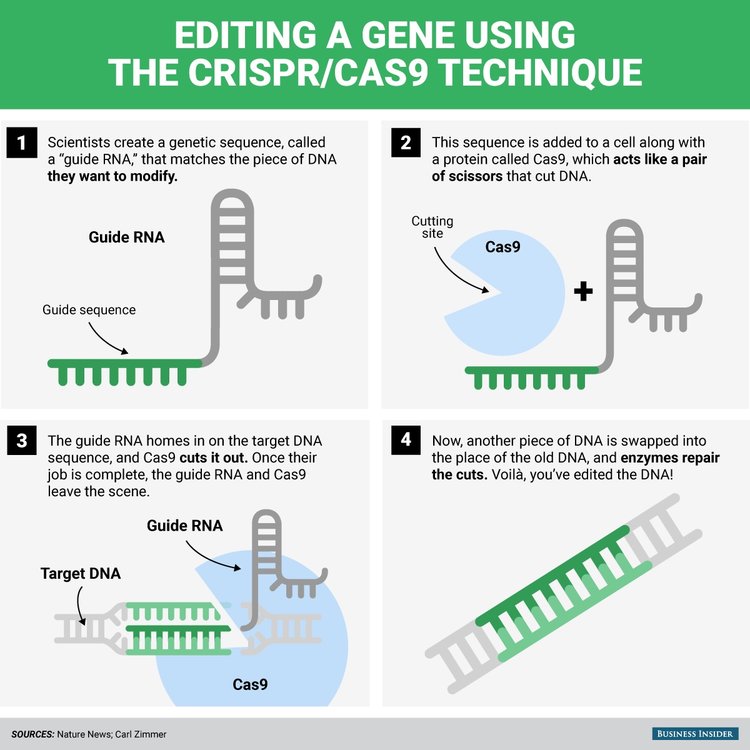
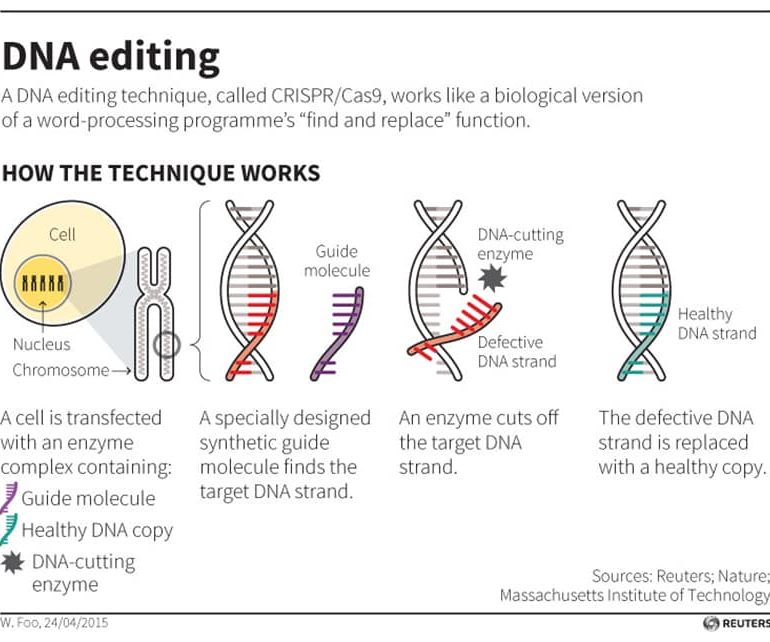
CRISPR is a technique to edit genes. It has been compared to a word processor to edit the genome of any living organism. This capability has the power for breakthrough developments such as biofuels, disease resistant and more nutritious crops, and actually “repairing” a human gene that causes a deadly disease such as sickle cell anemia. But, like nuclear energy, CRISPR can be used for good or bad. Should we “fix” or even “improve” nature? What regulations are called for? Can the genie be put back in the bottle? Jack Fitzgibbons will lead the discussion as we struggle with this promising but challenging technology.
On Tuesday April 16, David Mace will lead our April Wandering.
The Wanderers will take the train on Tuesday morning to Grand Central Terminal — the 8:36 AM train from the Darien station, which is the 8:39 AM from Noroton Heights. Upon arrival, we all shall meet at the Upper Level Information Booth at GCT. Please bring your MetroCard for the subway or select the MetroCard included” option when you purchase your train tickets from the machines on the train station platforms.
We shall go by Subway to the Delancey Street neighborhood of lower Manhattan and from there stroll over the East River via the Williamsburg Bridge to the Williamsburg section of Brooklyn. The tour will proceed past the historic Peter Lugar’s Restaurant and the architecturally acclaimed historic main branch of the Williamsburg Savings Bank, through a portion of Brooklyn’s Hasidic ethnic neighborhood, and past the northern part of the Brooklyn Navy Yard that has been converted into Steiner Studios, the largest motion picture lot outside of Hollywood. Lunch will be at an Italian Restaurant on the riverbank, with broad vistas of lower Manhattan. Then we shall return by ferry to the Wall Street Ferry Terminal,
and thence, via subway, back to Grand Central. We expect to return about 4:00 PM on the MetroNorth train then leaving Grand Central for Darien.
Hiking Devil’s Den Preserve
Tuesday, May 7, 2019, 10.00am
We will be hiking the trails at Devil’s Den Preserve in Weston on Tuesday, May 7, 2019 with a
10 am start. This is the largest nature preserve in SW Connecticut and extremely popular with
hikers.Owned by the Nature Conservancy, its has 1700 acres of woodlands,wetlands,ponds and
streams, and 20 miles of picturesque trails. It is home to 145 species of birds, 20 species of
mammals, and over 400 varieties of trees and wildflowers.
We will be hiking a loop of 4 miles.This trail has a moderate level of difficulty in that there are
places of gradual uphill, but these are usually followed by long stretches of flat trail. You do
need sturdy shoes as the trail is rocky in places.
After the hike, at about 12.30pm, we will head over to the Barn Door Restaurant for lunch. This
restaurant is located at 37 Ethan Allen Hwy (Rt 7), about a 10 minute drive from Devil’s Den.
As usual, we welcome spouses and significant others on our hikes. Newer members of DMA
are encouraged to join us.
Directions
Take Exit 42 off the north-bound Merritt Parkway and at the bottom of exit ramp make a right
turn onto Route 57 North towards Weston. After 3.8 miles, make a left and continue on Rt 57 for
another 1.3 miles. Turn right on Godfrey Road West and drive half a mile. Make left on to Pent
Road which ends in the parking lot for Devil’s Den.
On Google Maps use this destination address : 33 Pent Road, Weston
HIKING BABCOCK PRESERVE in GREENWICH, CT
Thursday March 28, 2019 10AM The Babcock Preserve is a 300 acre tract of forested land in Greenwich, north of the Merritt. It is the largest park in Greenwich and consists of several hiking trails over a relatively easy terrain. It was acquired by the Town of Greenwich in 1972, partially by gift and partially by purchase from the Babcock Family.
The park is very tranquil at this time of the year. We will be hiking approximately 3 ½ miles which should take us till about 12.30pm.. More than half the trail is relatively flat, the rest is a gentle slope
which isn’t very strenuous.
As usual wives are invited and they will find this hike particularly enjoyable.
After the hike we will have lunch( optional) at a nearby restaurant.
Happy Wanderers schedule walk of Lower Manhattan on Tuesday, March 19, 2019
On Tuesday, March 19, The Happy Wanderers will be exploring the area south of City Hall all the way to Bowling Green on the southern tip of Manhattan. This area constitutes the historic core of the colonial city as well as the financial district and has about 40 landmark sites.
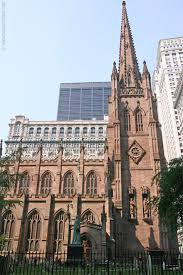
Our meandering will take us past at least 15 of these sites including the US Customs House, Fraunces Tavern, Federal Hall, NYStock Exchange, Trinity Church, St. Paul’s Chapel, Woolworth building, 9/11 Memorial and the Oculus.
If you are interested in joining this first Wandering of 2019 on Tuesday March 19, board the 8.36am train out of Darien or the 8.39am from Noroton Heights bound for Grand Central. On arrival, congregate at the information booth in the center of the Great Hall. From there we will take the subway downtown to begin our exploration. We expect to walk about 4-5 miles, punctuated by the 11 am libation break at the historic Fraunces Tavern and lunch near the 9/11 Memorial. We expect to take the train back to Darien around 3-30 pm.
Meticulously reported, exquisitely written, and grippingly told, Say Nothing is a work of revelation.” –David Grann, #1 New York Times bestselling author of Killers of the Flower Moon From award-winning New Yorker staff writer Patrick Radden Keefe, a stunning, intricate narrative about a notorious killing in Northern Ireland and its devastating repercussions In December 1972, Jean McConville, a thirty-eight-year-old mother of ten, was dragged from her Belfast home by masked intruders, her children clinging to her legs. They never saw her again. Her abduction was one of the most notorious episodes of the vicious conflict known as The Troubles. Everyone in the neighborhood knew the I.R.A. was responsible. But in a climate of fear and paranoia, no one would speak of it. In 2003, five years after an accord brought an uneasy peace to Northern Ireland, a set of human bones was discovered on a beach. McConville’s children knew it was their mother when they were told a blue safety pin was attached to the dress–with so many kids, McConville always kept it handy for diapers or ripped clothes. Patrick Radden Keefe’s mesmerizing book on the bitter conflict in Northern Ireland and its aftermath uses the McConville case as a starting point for the tale of a society wracked by a violent guerrilla war, a war whose consequences have never been reckoned with. The brutal violence seared not only people like the McConville children, but also I.R.A. members embittered by a peace that fell far short of the goal of a united Ireland, and left them wondering whether the killings they committed were not justified acts of war, but simple murders. From radical and impetuous I.R.A. terrorists–or volunteers, depending on which side one was on–such as Dolours Price, who, when she was barely out of her teens, was already planting bombs in London and targeting informers for execution, to the ferocious I.R.A. mastermind known as The Dark, to the spy games and dirty schemes of the British Army, to Gerry Adams, who negotiated the peace and denied his I.R.A. past, betraying his hardcore comrades–Say Nothing conjures a world of passion, betrayal, vengeance, and anguish
Tom igoe has written an excellent critique and background piece:
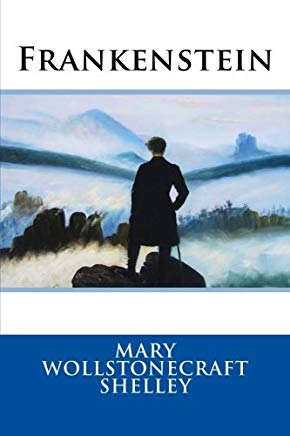
Victor Frankenstein, son of an illustrious Swiss family seems to have everything: wealth, youth, friends and family. He also has a burning desire for knowledge which he aims to satiate by studying at the prestigious Ingolstadt University. However his passion for learning leads him to perform a deed as terrible as it is marvelous. He finds the secret to life itself and builds a man, a towering monster of a man and endows it with life. Horrified and repulsed by his own creation, Frankenstein flies from the university and from anything related to his field of research. Shocked and weakened by his labors and the horror he has endured, Frankenstein becomes an unhappy shadow of his former self. He returns home to find that his creation is sentient, aware of him and has already committed murder. Shunned by all, lonely and abandoned by even its creator, the miserable monster requests him to make a companion for him. Frankenstein refuses to unleash another such fiend upon the human race. A struggle begins between the two: the maker and his fiend- A struggle that can end only in complete destruction of either- A struggle that will reveal the true nature of both. It raises the question: who is the true author of evil, the creator or the creation?
From the great historian of the American Revolution, New York Times-bestselling and Pulitzer-winning Gordon Wood, comes a majestic dual biography of two of America’s most enduringly fascinating figures, whose partnership helped birth a nation, and whose subsequent falling out did much to fix its course.Thomas Jefferson and John Adams could scarcely have come from more different worlds, or been more different in temperament. Jefferson, the optimist with enough faith in the innate goodness of his fellow man to be democracy’s champion, was an aristocratic Southern slaveowner, while Adams, the overachiever from New England’s rising middling classes, painfully aware he was no aristocrat, was a skeptic about popular rule and a defender of a more elitist view of government. They worked closely in the crucible of revolution, crafting the Declaration of Independence and leading, with Franklin, the diplomatic effort that brought France into the fight. But ultimately, their profound differences would lead to a fundamental crisis, in their friendship and in the nation writ large, as they became the figureheads of two entirely new forces, the first American political parties. It was a bitter breach, lasting through the presidential administrations of both men, and beyond. But late in life, something remarkable happened: these two men were nudged into reconciliation. What started as a grudging trickle of correspondence became a great flood, and a friendship was rekindled, over the course of hundreds of letters. In their final years they were the last surviving founding fathers and cherished their role in this mighty young republic as it approached the half century mark in 1826. At last, on the afternoon of July 4th, 50 years to the day after the signing of the Declaration, Adams let out a sigh and said, “At least Jefferson still lives.” He died soon thereafter. In fact, a few hours earlier on that same day, far to the south in his home in Monticello, Jefferson died as well. Arguably no relationship in this country’s history carries as much freight as that of John Adams of Massachusetts and Thomas Jefferson of Virginia. Gordon Wood has more than done justice to these entwined lives and their meaning; he has written a magnificent new addition to America’s collective story
From a preeminent presidential historian comes a groundbreaking and often surprising saga of America’s wartime chief executives Ten years in the research and writing, Presidents of War is a fresh, magisterial, intimate look at a procession of American leaders as they took the nation into conflict and mobilized their country for victory. It brings us into the room as they make the most difficult decisions that face any President, at times sending hundreds of thousands of American men and women to their deaths. From James Madison and the War of 1812 to recent times, we see them struggling with Congress, the courts, the press, their own advisors and antiwar protesters; seeking comfort from their spouses, families and friends; and dropping to their knees in prayer. We come to understand how these Presidents were able to withstand the pressures of war–both physically and emotionally–or were broken by them. Beschloss’s interviews with surviving participants in the drama and his findings in original letters, diaries, once-classified national security documents, and other sources help him to tell this story in a way it has not been told before. Presidents of War combines the sense of being there with the overarching context of two centuries of American history. This important book shows how far we have traveled from the time of our Founders, who tried to constrain presidential power, to our modern day, when a single leader has the potential to launch nuclear weapons that can destroy much of the human race.
Everybody has an opinion – and someone to blame – but in this discussion we’ll dig deep into the data and look for realistic solutions.
You’re gonna need these …
Opening commentary:
CONNECTICUT FISCAL STABILITY AND ECONOMIC GROWTH
Connecticut has been amassing unfunded liabilities for decades and the amount today approaches $100 billion, primarily associated with employee and teacher pensions, and associated other post employment benefits (OPEB). Part of today’s problem is driven by an attempt to more fully fund this exposure.
As we try to understand how we got here, 2 years in recent history have had very significant impact, 1991 and 2008. After a bitter battle, CT enacted an income tax in 1991. The top rate was 4.5%, partially offset by a reduction in sales tax from7.5% to 5%. In 1990, the population was 3.29 million and the general fund expenses were $7.1 Billion.
By 2008, the year the deepest and longest recession in memory began, our population had grown about 7% to 3.5 million, and the State budget had doubled to $14.1 billion. A move to raise the top tax rate to 7.5% from 5% was vetoed and the sales tax was increased slightly to try to balance the budget.
In the last decade, the population remained essentially flat at 3.57 million while the proposed budget for 2020 has grown by nearly 50% to $20.9 billion. In the meantime, CT remains the only State to have lost jobs in that period, and only 10,000 jobs were added last year. In this last(lost) decade our Gross State Product (GSP) has declined 7%, while all surrounding States have seen an increase of from 3 to 7%. Connecticut ranks near bottom in terms of business friendliness. (tax & infrastructure)
The no growth problem is exacerbated by a demographic shift as older, wealthier people who do not tax the infrastructure are replaced by relatively younger, less established people who do. (schools, roads and affordable housing)
The bottom line is that expenses have been growing and are likely to continue to grow faster than revenues, given long term State employee commitments and dismal revenue growth prospects. New revenue sources must be tapped or expenses reduced, or preferably both.
GOVERNOR LAMONT’S 2020-2021 BUDGET PROPOSAL
With decisions made by last year’s legislature, CT faces a $1.5 billion deficit in 2020 and a $2 billion deficit in 2021, (the biennium), and that does not include the $400 million earmarked for transportation infrastructure. Gov. Lamont has submitted a budget that closes these gaps. Key elements of his proposal, which requires legislative approval are the following:
Keep in place those policy items proposed to sunset this year. That produces just under $1 billion in revenue. Key items include maintaining the hospital surcharge and the concomitant Federal reimbursement it brings for a total of almost $800 million. Also, no reduction in corporate income tax, but phase out of gift tax and increased estate tax threshold plan stays.
“Modernize” the sales tax to include many services not currently taxed. No tax on medical or grocery bills. 2020 impact is $292 million; 2021 impact is $505 million.
Combine the State and teacher’s retirement funds, change teacher’s fund growth assumption to match State at 6.9%, and refinance these over 30 years, instead of eliminating unfunded liabilities in 12 years, which was the plan. 2020 impact is$365 million; 2021 impact is $467 million.
Do not transfer $400 million per year out of general fund to the transportation fund, but finance these years from the current surplus. Develop a new revenue source for transportation via tolls on I-95, I-91, I-87 and the Merritt Parkway. Estimated cost for 50 gantries is $5 million each and 5 years before $1 of revenue. Bond this project to level the expense/revenue flows.
Governor Lamont’s proposed budget closes the gap and provides for balance in both years. He has accomplished this without any meaningful expense cuts and with no increase in tax rates, but choosing to tax new elements through broadening the sales tax and tolling major roads. His proposed budget includes a host of items which have minimal financial impact, but which informed citizens should be aware of, including the following:
1) Forced school regionalization to achieve economies of scale. This has been
modified to “encourage voluntary efforts by schools to seek procurement
savings, etc.”
2) A portion of teacher current new pension costs to be charged to Towns, by
formula. 5% of costs for troubled cities; 25% of costs for most Towns;
higher costs for Towns paying teachers over State median wage.
3) State employee and retiree health care prices to be tied to Medicare by
formula; doctors and hospitals to bear cost.
4) State to implement a “debt diet” to limit new bond authorizations.
5) New container deposit. 10 cents per bag; 25 cents per wine/alcohol bottle.
6) Tobacco & e-cig purchase age 21; tax e-cigs for parity with tobacco.
7) Tax of 1.5 cents on sugar sweetened beverages.
8) Increase CT minimum wage in steps to $15/Hr by 1/1/2023.
Unfortunately, with regard to proposed expenses, Connecticut does not employ zero based budgeting. In the governor’s proposal, all adjustments are shown as changes from the prior year, so it is difficult to know where the money is going. Here is the best I can do. Of the $21.2 Billion total, $19.3B is for the General Fund, up $.3B and $1.7 B is for the special transportation fund, up $.4B. The other largest categories are insurance at $105M and the tribal fund at $50M, unchanged.
Within the General Fund, assuming prior year breakout, 33.3%is for personnel, including fringes; 13.5% is for Medicaid grants; 5.5% for teacher’s retirement; 11.5% for education equalization grants; 3% for magnet /pilot schools; 11% for debt service; and 9% for other current expense and equipment. Examined by function, 28% is for education, museums and libraries; 17% is for human services; 10% for health; 8% for correction; 10% for government services, including judicial, protection, conservation and legislative. A very large 26% is for non-functional use.
CONCLUSION/CHALLENGE
Connecticut would have a temporary budget balance for 2020-2021, without trimming expenses or raising tax rates. Instead, new sales taxes on services and highway/congestion tolls would be imposed. However, in future, expenses would continue to rise faster than revenues in all likelihood with current trajectories.
Assuming most session attendees will have read this summary or are otherwise familiar with the issue, I would propose that discussion focus on creative ways to increase revenues, lower expenses and most of all, ways to encourage economic growth.
Next Steps on Implementing the proposed CTDOT Enhancements on the New Canaan Branch Line
New Canaan Study Team Detailed Report on CTDOT Enhancements to the New Canaan Branch Line
Click on this URL HIGHWAY TOLLIING to view the following documents:
CTDOT Study for Implementing Tolls in Connecticut
Debunking the Myths about Highway Tolling
Tolling the Freeway: Congestion Pricing and the Economics of Managing Traffic
Dynamic Tolls for Congestion Control
Click on the following URL to watch a video of Jim Cameron and Joe McGee talking about how Jobs Growth in Connecticut is linked to significant upgrading of Connecticut’s Transportation Infrastructure: https://vimeo.com/258249483
Connecticut’s Commission on Financial Stability and Economic Growth (FSEG)
Robert Patricelli’s Observations on Lamont’s Recommended Budget for FY 2020 – FY 2021
James C. Smith presentation on Stimulating Economic Growth through Private/Public Partnerships
Overview of the Fiscal Stability and Economic Growth (FSEG) Commission
Senate Bill No. 1502 June Special Session, Public Act No. 17-2 Sec.250 established a Commission on Fiscal Stability and Economic Growth which shall develop and recommend policies to achieve state government fiscal stability and promote economic growth and competitiveness within the state. The commission shall study and make recommendations regarding state revenues, tax structures, spending, debt, administrative and organizational actions and related activities, including relevant municipal activities, to (1) achieve consistently balanced and timely budgets that are supportive of the interests of families and businesses and the revitalization of major cities within the state, and (2) materially improve the attractiveness of the state for existing and future businesses and residents.
While the FSEG Commission was disbanded when it submitted their Report on March 1, 2018 it continued to function and on November 28, 2018 a second round of recommendations to curb the state’s multibillion-dollar deficit and jumpstart growth was issued by Patricelli and Smith. They billed the new recommendations as “Report 2.0” at the state Capitol building even though it is no longer operating under the state.
On March 13, 2019 Bob Patricelli and Jim Smith spoke to the Darien Men’s Association about the Connecticut Commission on Fiscal Stability and Economic Growth (FSEG) to the. Bob’s presentation gave his Observations on Governor Lamont’s Budget Proposal and Jim’s presentation gave his ideas on Stimulating Economic Growth through Private/Public Partnership. They also stated that they have been collaborating with Governor Lamont to agree on the best options for addressing Connecticut’s problems.

 KIRKUS REVIEW