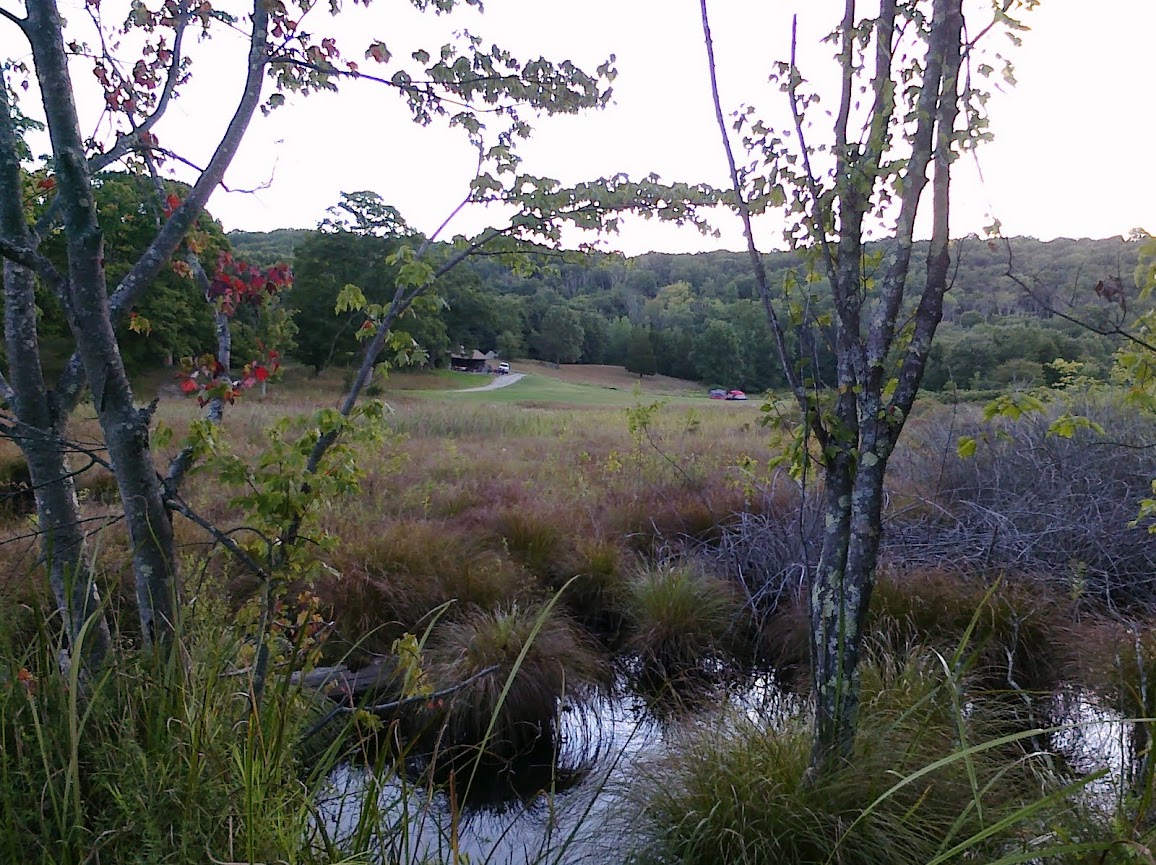
Thanks to Frank Johnson and Bob Smith for theses photos! Bob reports that the fellowship, weather and sunset were outstanding. [camera slideshow=”2013-dma-picnic”]
Category: Activities (Page 45 of 48)
Activities are gatherings that occur on a regular schedule, usually weekly, to enjoy a specific pastime.
The second annual golf tournament between DMA and the Senior Men’s Club of New Canaan (SMNC) was held at the Silvermine Golf Club on Wednesday, June 26th. I am pleased to inform you that DMA atoned for our loss last year and emerged with an 18.5 – 11.5 victory. The Silvermine Cup will now be domiciled in its rightful home at DMA for the next year. Our own Terry Brewer won the Long Drive contest, and hit an amazing shot to also win the Closest to the Pin contest (1’6”).
[camera slideshow=”2013-golf”]
We would not have won the tournament without the active participation of our better golfers. I am particularly grateful to the following members of the 2013 DMA Golf Team:
- Tom Lom
- Chris Filmer
- Fred Conze
- Terry Brewer
- Joe Holmes
- Doug Campbell
- Woody Woodworth
- Ben Briggs
- Austin Schraff
- Kevin Monahan
- Gunnar Edelstein
- Mike Brennan
- Tom Hayne
- Alex Garnett
- Peter Carnes
- George Gilliam
- David Mace
- Bob Baker
- Denny Devere
- Doug Pratt.
Special thanks are due to Alex Garnett and Tom Lom for their invaluable assistance in helping me recruit and organize the DMA Golf Team.
Here are pictures of the DMA Golf Team
and the DMA and SMNC Golf Teams together.
The series now stands at one victory for each team. I fully expect SMNC to field a stronger team next year in an attempt to win back the Silvermine Cup. As a result, we will need all of our best players to answer the call in 2014. The trophy and team members will be introduced at the first DMA meeting in September.
Enjoy the remainder of the summer!
Best regards,
Denny Devere
203-353-1758
The DMA Annual Summer Picnic will be celebrated on August 15, 2013 from 5 pm to 8:30 pm at the Weed Beach picnic area. DMA will provide beer, wine, and soft drinks, as well as eating utensils, plates and cups. Although this event is free, it is a potluck dinner, so please bring one of the following foods:
| Last name begins with | Please bring servings for 8 of |
| A — G | Dessert |
| H — M | Salad, pasta, vegetables, etc. |
| N — Z | Casserole or meat platter |
Please be sure to bring suitable serving pieces for your food dish. For your comfort, bring folding chairs, tables, and insect repellent!
IMPORTANT! Absolutely no glass containers or bottles should be brought. Darien resident attendees should have a valid beach sticker of their vehicles. Non-resident attendees should check-in at the Gate House and advise the guard that they are attending the annual DMA Picnic. Reservations are not required, but are appreciated! Contact Scott Huchason, 203-322-5025 or shutchason@sbcglobal.net to reserve.
[From Amazon.com]
Her name was Henrietta Lacks, but scientists know her as HeLa. She was a poor Southern tobacco farmer who worked the same land as her slave ancestors, yet her cells—taken without her knowledge—became one of the most important tools in medicine. The first “immortal” human cells grown in culture, they are still alive today, though she has been dead for more than sixty years. If you could pile all HeLa cells ever grown onto a scale, they’d weigh more than 50 million metric tons—as much as a hundred Empire State Buildings. HeLa cells were vital for developing the polio vaccine; uncovered secrets of cancer, viruses, and the atom bomb’s effects; helped lead to important advances like in vitro fertilization, cloning, and gene mapping; and have been bought and sold by the billions.
Yet Henrietta Lacks remains virtually unknown, buried in an unmarked grave.
Now Rebecca Skloot takes us on an extraordinary journey, from the “colored” ward of Johns Hopkins Hospital in the 1950s to stark white laboratories with freezers full of HeLa cells; from Henrietta’s small, dying hometown of Clover, Virginia—a land of wooden slave quarters, faith healings, and voodoo—to East Baltimore today, where her children and grandchildren live and struggle with the legacy of her cells.
Henrietta’s family did not learn of her “immortality” until more than twenty years after her death, when scientists investigating HeLa began using her husband and children in research without informed consent. And though the cells had launched a multimillion-dollar industry that sells human biological materials, her family never saw any of the profits. As Rebecca Skloot so brilliantly shows, the story of the Lacks family—past and present—is inextricably connected to the dark history of experimentation on African Americans, the birth of bioethics, and the legal battles over whether we control the stuff we are made of.
Over the decade it took to uncover this story, Rebecca became enmeshed in the lives of the Lacks family—especially Henrietta’s daughter Deborah, who was devastated to learn about her mother’s cells. She was consumed with questions: Had scientists cloned her mother? Did it hurt her when researchers infected her cells with viruses and shot them into space? What happened to her sister, Elsie, who died in a mental institution at the age of fifteen? And if her mother was so important to medicine, why couldn’t her children afford health insurance?
Intimate in feeling, astonishing in scope, and impossible to put down, The Immortal Life of Henrietta Lacks captures the beauty and drama of scientific discovery, as well as its human consequences.
Thanks to Frank Johnson and Bob Smith for these photos!
[camera slideshow=”2013-memorialday”]
Thanks to Frank Johnson for these photos!
[camera slideshow=”2013-Trolley-Frank-Johnson”]
Thanks to Bob Smith for these photos!
[camera slideshow=”2013-trolley-bob-smith”]
This Club was formed to provide the members a way to learn more about genealogy.
Club Members:
Frank Johnson – Activity Leader
Dave Mordy – Activity Leader
Bill Close
Ed Mulock
Pete Kenyon
David Kniffin
Sandy MacDonald
David Mace
Ed Mulock
Tom Reifenheiser
For more information or questions contact one of the following activity leaders:
Frank Johnson at Tel. 203-323-2475 or email at fmj113@sbcglobal.net
Dave Mordy at Tel. 203-966-2276 or email at DMordy2@yahoo.com

The Annual Summer Barbecue and Jazz Festival will be held on Sunday, June 23rd, from 5pm – 9pm at the Country Club of Darien.
The cash bar will opens at 5pm.
Plan on a lively mix of jazz concert and dancing. The music will be provided by the Joe Holmes Dixieland Band, joined at dinner time by jazz singer Nicole Pasternack.
Dinner will be served outside (weather permitting); there will also be some seating indoors.
Our Menu is
Mixed green salad with condimentsCold trilogue pasta saladHamburgers, cheese burgersGrilled chickenItalian sausage and peppersGrilled vegetable platterDessert of sliced watermelon, and assorted cookiesCoffee, tea, iced tea
Wine will be served with the meal.
You can sign up at any Wednesday DMA meeting prior to the event.
If you have any questions, please contact
Bill Winship at 203-655-3530 / williamwinship3@aol.com , or
Peter Hallock at 203-202-9349 /peterbhallock@gmail.com
We look forward to seeing you there!
We want to have a big turnout of DMA members this year.
Be at the Goodwives Shopping Center by 9:30 AM.
(Remember, no cars are allowed to park there except for those that are in the parade).
The parade route is down the Post Road for 1.25 miles. We want to have marchers but if you are unable to walk (march) we will have cars for those who need a ride. The parade starts at 10 AM and will be over by 11 AM.
Spend an hour honoring those who served and gave their lives and also have a good time with fellow members of the DMA.
RIDE THE TROLLEY!
Journey through the Connecticut waterside in an antique suburban trolley. See the old-time equipment used when these rides cost only a nickel.
The Connecticut Trolley Museum has over 70 pieces of rail equipment dating back to 1869. During your visit, you can see historic passenger and freight street “trolley” cars, interurban cars, elevated railway cars, passenger and freight railroad cars, service cars, locomotives, and a variety of other equipment from railways around Connecticut. You will also find examples from Brooklyn, Boston, New Orleans, Milwaukee, Cleveland, Springfield, Lynchburg, Montreal, and even Rio De Janeiro, Brazil.
We’ll LUNCHEON at The Old Lyme Inn where we’ll dine at a quaint but newly renovated New England Inn. Our Menu includes a choice of salmon, chicken or Cobb salad.
Then we’ll tour the Florence Griswold Museum, seeing the world class collections of renowned American impressionists.
We’ll visit the Griswold Home, centerpiece of the LymeArt Colony in the early 1900’s, and wander the gardens and waterfront where the artist-boarders painted “en plein air”.
Boarding our Deluxe Coach: DCA parking lot 8:15AM Departure:8:30 sharp
Contact: Mel Orr 203.655.1605 email morr605560@aol.com
$70. per person
The acclaimed author of The Sweet Hereafter and Rule of the Bone returns with Lost Memory of Skin, a provocative new novel that illuminates the shadowed edges of contemporary American culture with startling and unforgettable results
Suspended in a strangely modern-day version of limbo, the young man at the center of Russell Banks’s uncompromising and morally complex new novel must create a life for himself in the wake of incarceration. Known in his new identity only as the Kid, and on probation after doing time for a liaison with an underage girl, he is shackled to a GPS monitoring device and forbidden to live within 2,500 feet of anywhere children might gather. With nowhere else to go, the Kid takes up residence under a south Florida causeway, in a makeshift encampment with other convicted sex offenders.
Barely beyond childhood himself, the Kid, despite his crime, is in many ways an innocent, trapped by impulses and foolish choices he himself struggles to comprehend. Enter the Professor, a man who has built his own life on secrets and lies. A university sociologist of enormous size and intellect, he finds in the Kid the perfect subject for his research on homelessness and recidivism among convicted sex offenders. The two men forge a tentative partnership, the Kid remaining wary of the Professor’s motives even as he accepts the counsel and financial assistance of the older man.
When the camp beneath the causeway is raided by the police, and later, when a hurricane all but destroys the settlement, the Professor tries to help the Kid in practical matters while trying to teach his young charge new ways of looking at, and understanding, what he has done. But when the Professor’s past resurfaces and threatens to destroy his carefully constructed world, the balance in the two men’s relationship shifts.
Suddenly, the Kid must reconsider everything he has come to believe, and choose what course of action to take when faced with a new kind of moral decision.
Long one of our most acute and insightful novelists, Russell Banks often examines the indistinct boundaries between our intentions and actions. A mature and masterful work of contemporary fiction from one of our most accomplished storytellers, Lost Memory of Skin unfolds in language both powerful and beautifully lyrical, show-casing Banks at his most compelling, his reckless sense of humor and intense empathy at full bore.
The perfect convergence of writer and subject, Lost Memory of Skin probes the zeitgeist of a troubled society where zero tolerance has erased any hope of subtlety and compassion—a society where isolating the offender has perhaps created a new kind of victim.