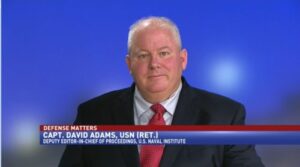
 Captain Dave Adams, USN (ret.), is uniquely qualified to speak on the subject of naval rail guns. Captain Adams was class of 1990 at the University of Texas, Austin, and graduated with a BS in Mechanical Engineering, followed by postgraduate work leading to a masters, with distinction, in strategic planning. In turn, this led to his becoming speechwriter for the Chief of Naval Operations – probably safer than his next tour in Afghanistan, where he commanded the Joint/Interagency Provincial Reconstruction Team. He returned to take command of SSN-763, USS Santa Fe, followed by command of SSGN USS Georgia, a ‘boomer.’ He became Deputy Editor-in-Chief of the Naval Institute’s journal, “Proceedings,” where he made his reputation as a serious long-range geostrategic thinker as well as a critic of some of the Navy’s procedures and plans for future war-fighting.
Dave is currently Director — Navy Museums, Naval History and Heritage Command. He is responsible for the Navy’s ten museums, historic ships and aircraft maintenance.
Arranged by Dick Woods and John Hess
Bryan Hooper’s notes on the talk:
Captain Dave Adams, USN (ret.) made a case that the US military needs to regain its ground as a leader by highlighting as an example the developmental program of the US Naval Rail Gun (NRG), and proposing future required action.
The rail gun is an electromagnetic powered device that accelerates its “bullet,” a sophisticated shell loaded with electronics, to exceptionally high speeds when fired. A chemically-powered gun has a maximum muzzle velocity of 2.1 kps (approximately 4,700 mph), but the potential speed of a projectile fired by a rail gun is up to 18 kps (around 40,000 mph), creating an incredibly destructive hypersonic weapon.
Historically, the rail gun was first worked on by the Norwegians in 1903 and progressed through both world wars up to 1977 when the Australians achieved a speed of 5.9 kps, just over 13,000 mph. Developments by the US took place through the ’80s as part of the SDI, the so-called “Star Wars” program. In the ’90s it became of interest to the Army as a weapons system to be used against Soviet heavily-armored tanks, but proved unworkable in combat situations due to the difficulty of supplying the needed electrical current in a practical way. The obvious platform for this type of weapon was clearly a ship, and the US Navy began their work on the NRG in 1997. Their success in Scotland in 2003 with a 1/8 scale model resulted in a speed of 2 kps (4,500 mph) and funding for further trial work, leading to a one-fourth scale trial that was also successful. Despite proving its cost-effectiveness per nautical mile relative to missiles, $250 vs. $25,000, funding was withheld from the NRG, and instead was concentrated on missile programs to meet Congressional priorities. Many of the missile developments failed despite the sums invested, and programs were canceled in 2008 and 2016. Captain Adams made the point that insufficient funds were spent on NRG to fund success.
His story continued through the trials undertaken by the US Navy from 2005 through 2012 to improve performance of the projectile, develop the pulsed power equipment and make the rails more rugged, and resulted in the experimental gun range being built in 2012, with plans being developed to test the system at sea; however, the program was canceled in 2017. China has subsequently taken the lead in the technology and carried out sea trials on a warship. This has now resulted in renewed interest from the Navy and reinvestment in the program is occurring with sea trials of the NRG system scheduled for later this year.
Captain Adams concluded by stating the fact that a lead we had in technology was squandered for lack of investment, and pleading his case that to regain our edge requires bold political and military decisions to be made across the board.
Video of Captain Adams’ presentation: https://youtu.be/SwJyiYBDOMs
 Kiera Parrott became the Director of Darien Library in September 2020. Prior to that appointment, she was the Reviews and Production Director for Library Journal and School Library Journal, where she oversaw the publication of over 12,000 influential book and media reviews annually. Additionally, she launched and expanded numerous professional development events and training courses for library professionals nationwide. Kiera has been a proud library worker since her teen years, working as a page for the Queensborough Public Library in high school, as a reference assistant at the University of Massachusetts-Amherst during college, and as a senior librarian for the New York Public Library. She previously worked at Darien Library from 2008–2013 as a children’s/collection development librarian and as Head of Children’s Services. She lives in Norwalk with her husband (also a librarian) and their two cats.
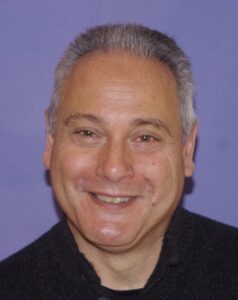
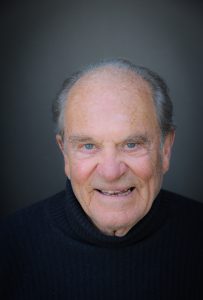

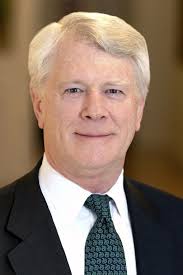
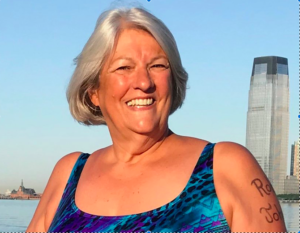 Patty Gallant-Charette, a 69 year-old woman from Maine has swum vast distances across the world’s oceans, in particular the waters of “Oceans Seven,” the most treacherous and turbulent ocean channels in the world. Oceans Seven was devised in 2008 as the swimming equivalent of the Seven Summits mountaineering challenge (see Robert Whitby 8/26/20). It includes the North Channel, the Cook Strait, the Molokaʻi Channel, the English Channel, the Catalina Channel, the Tsugaru Strait and the Straits of Gibraltar. She has managed to complete all of these save for the Cook Strait, which she has attempted twice, almost made it the last time, and is in line to try it again in the next few years. Aside from these waters, she has swum across many lakes of the world including Lake Tahoe, Loch Ness, Lake Ontario and Lake Windermere.
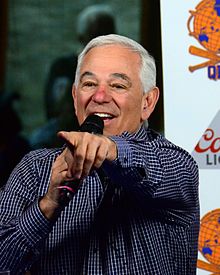
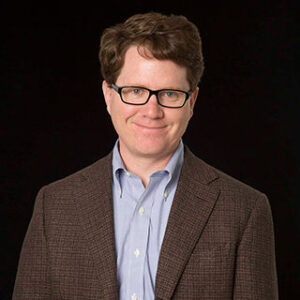
 David Pogue will talk about the subject covered in his upcoming book, “How to Prepare for Climate Change.“ He notes that “the number of people who believe that the climate is not changing are dwindling, and it’s currently about 12% of Americans. Twice that number believe that aliens walk among us. There may still be people who believe that the changing climate is not human-caused, or maybe you believe it is human-caused, or that it’s a natural cycle—but either way, you still need to prepare!”
 David is a technologist, columnist, entertainer and television reporter. From 2000 to 2013, he was the New York Times weekly tech columnist. After a five-year detour to Yahoo Finance, he now writes for the Times, WIRED, and OneZero on Medium. He’s a five-time Emmy winner for his stories on “CBS Sunday Morning,” a New York Times bestselling author, and a host of 20 science specials on “NOVA” on PBS. David is one of the world’s best-selling “how-to” authors, with more than 100 titles and 3 million copies in print. They include seven books in the “For Dummies” series, his Pogue’s Basics series of tips and shortcuts, and the Missing Manual series of computer books. David graduated summa cum laude from Yale in 1985 with distinction in music, and he spent ten years conducting and arranging Broadway musicals in New York. He has won a Loeb Award for journalism, and an honorary doctorate in music. He has been profiled on “48 Hours” and “60 Minutes,” and is regularly featured on “CBS Sunday Morning.”