Category: Speaker Announcements (Page 7 of 30)

Speaker programs at Wednesday DMA Meetings

Robert Dilenschneider, “Power, Influence and Civility,” Sept 18, 2024

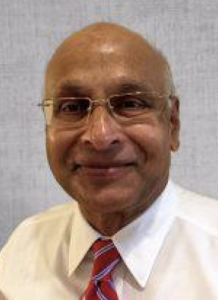
Robert Dilenschneider, a longtime Darien resident and DMA member,  is frequently called upon by the media to provide commentary and strategic public relations insights on major news stories. He has counseled major corporations, professional groups, trade associations and educational institutions, and has assisted clients in dealings with regulatory agencies, labor unions, and consumer groups, among others.Bob formed The Dilenschneider Group in October, 1991. Headquartered in New York and Chicago, the Firm provides strategic advice and counsel to Fortune 500 companies and leading families and individuals around the world, with experience in fields ranging from mergers and acquisitions and crisis communications to marketing, government affairs and international media.
Bob has written a number of books, including this summer’s The Ultimate Guide to Power & Influence: Everything You Need to Know.

Prior to forming his own firm, Bob served as president and chief executive officer of Hill and Knowlton, Inc. from 1986 to 1991, tripling that Firm’s revenues to nearly $200 million and delivering more than $30 million in profit. He was with that organization for nearly 25 years.

He started in public relations in 1967 in New York, shortly after receiving an M.A. in journalism from The Ohio State University, and a B.A. from the University of Notre Dame.

In 2012 The Dilenschneider Group established the Civility in America Lecture Series, which features many of the nation’s leading thinkers from a wide variety of professions and provides a perspective on what must be done to restore civility in our country.

Speaker arranged by Tom Igoe.

Summary

Robert Dilenschneider spoke of the key principles for leadership as the importance of honesty, listening, compromise, and admitting mistakes in leadership. He spoke about the upcoming election, stressing its significance and urging people to vote despite the challenges posed by the candidates. Furthermore, he touched on the global impact of political leaders and emphasizes the need for better leadership, both in the U.S. and internationally.

Bob offered his views on the media, social media’s impact on society, and the importance of effective crisis management. Drawing from his professional experiences, he shared insights into the importance of surrounding oneself with capable teams during crises, admitting mistakes promptly, and learning from them. He drew examples from prominent figures like FDR, Jack Welch, and consumer products such as Tylenol, illustrating the lasting impact of leadership decisions on public trust and organizational success.

In summary, his talk discussed leadership, power, responsibility, and influence in the context of business and politics, with a focus on integrity, decision-making, and the importance of civility in a polarized society.

Video of the Presentation 

Kit Hinrichs, “America’s National Icon: Stars and Stripes,” Sept 11, 2024

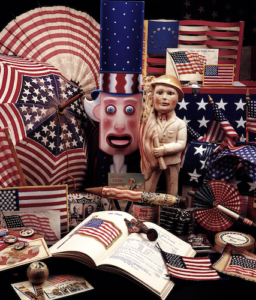
September 11, 2001 disrupted so much of our society, our security, our sense of safety. It also changed our relationship with our flag. After 9/11, the flag became ubiquitous—flying in communities, businesses, at events, and “flying” flat as decals everywhere. It has also been co-opted by partisanship. Yet we all remember an earlier time when it was not just about patriotism; it was also a whimsical theme that celebrated Americanism…just an easier way of life for us, perhaps with greater innocence. No one can remind of the imagery of that era like Kit Hinrichs, with his rich collection of amusing and idiosyncratic applications of the stars and stripes.

From one of the world’s leading graphic designers comes a stunning tribute to America’s most enduring icon-the Stars and Stripes.The Revolutionary Congress resolved in 1777 that “the flag of the United States be 13 stripes, alternate red and white, that the Union be 13 white stars in a blue field representing a new constellation.” Since that time, the American flag has been raised high in wartime triumph and peacetime celebration; burned in fervent protest; sewn lovingly onto quilts, caps, pillows, and bags; appropriated by the commercial sphere to sell goods as varied as cigars, and designer clothing, and rock-and-roll albums; and faithfully honored every 4th of July to celebrate America’s independence. This collection of more than 3,000 Stars and Stripes artifacts ranges from Civil War-era banners and Native American braided moccasins to an early 20th-century “friendship” kimono and original flag art by several of the world’s leading designers.

Kit Hinrichs, noted graphic designer and American flag collector, will give a profusely illustrated talk on America’s national icon—the stars and stripes. His conversation will include facts, myths and legends behind the flag over its nearly 250-year history.  Kit will discuss how this single piece of cloth has enmeshed  itself into our American culture from its 18th century origin until today.

Kit’s assemblage of American memorabilia numbers in the thousands. His only family heirloom, a 36 star handsewn wool flag sewn by his great, great aunt in 1865, is the corner stone of the collection.

In addition to historical flags, the collection now includes Navajo Weavings, Toy Soldiers, Antique Quilts, Political Buttons, Patriotic Posters, Children’s Toys and Games, Anti-war images, Postal Stamps, Tobacciana, Historic Photographs and volumes of pieces of Ephemera.

Kit Hinrichs served as principal in several design offices in New York and San Francisco and spent 23 years as a partner in the international design consultancy Pentagram, before opening Studio Hinrichs in 2009. His design experience incorporates a wide range of projects, including brand development, promotion, packaging, environmental graphics, editorial and exhibition design. He is also a noted American Flag collector and founder of the Stars & Stripes Foundation.
Kit’s work is included in the permanent collections of the Museum of Modern Art, New York, the San Francisco Museum of Modern Art, the Denver Museum of Art, the Los Angeles County Museum of Art and the Letterform Archive. In addition to authoring “Narrative Design,” he has co-authored other books on design .including “Typewise” and “The Pentagram Papers.” He co-founded @issue: The Journal of Business and Design.

Kit has had flag exhibitions in museums across the country, including New York, Louisville, Doylestown,, Reno, Los Angeles and San Francisco. He is an author of “Long May She Wave” A Graphic history of the American Flag. He is in the process of creating a new American flag book for the 250th anniversary of the United States, titled “Broad Stripes/Bright Stars “,

Summary

In this illustrated talk, Kit Hinrichs shared his personal passion for the American flag, discussing its history, myths, and facts. His personal collection includes more than seven thousand flag-related memorabilia, with an early inspiration being a 36-star wool flag sewn by his great-great-aunt in 1865. This vast collection also includes historical flags, Navajo weavings, toy soldiers, and antique quilts. Hinrichs described his joy in exploring the iconography of the American flag.

During the presentation, Hinrichs engaged the audience with a quiz about the American flag’s history and myths. The questions ranged from who designed the American flag (not Betsy Ross, but Francis Hopkinson, for which he was paid two jugs of rum) to the legalities of flag burning (it is both a form of free speech and the official method of retiring a flag). He also touched on how the flag’s design evolved with the addition of new states, and the longest-serving flag design being the 50-star version, in use since 1960.

Hinrichs elaborated on his collection of American memorabilia. Over the years, this passion grew into a substantial collection of over 7,500 items, including flags, postcards, toy soldiers, cookie molds, spoons, and compacts. He highlighted items from significant historical moments, such as World War I fans, patriotic women’s magazines, and stamp cancellations featuring the flag.

The talk moved through various ways the flag has been represented in American culture, from military formations creating “living flags” in the early 20th century to art, product packaging, and propaganda. Hinrichs shared insights into folk art and fine art representations of the flag, with examples from Native American beadwork, Navajo textiles, and Depression-era quilting.

Hinrichs also explored the commercialization of the flag, including its use in advertisements, product branding, and promotional materials. He cited examples of flags on candy boxes, tobacco tins, and advertising banners, showcasing how the flag permeated everyday American life.

In a lighter moment, he shared anecdotes about collecting, including buying entire sets of toy soldiers just to acquire a single flag bearer figure. His collection features over 500 flag bearers, each with unique details that represent different aspects of American history.

The talk ended on the topic of the flag in times of war, particularly its use in propaganda and as a symbol of patriotism. From World War I posters to the iconic image of the flag-raising at Iwo Jima during World War II, Hinrichs illustrated how the flag has been a powerful tool for rallying national pride and support during conflict.

In closing, Hinrichs shared a personal design he created after 9/11, a tribute to the first responders and victims of the tragedy. He left the audience with a deeper appreciation for the multifaceted history of the American flag and its continued significance in American culture.

The event concluded with a brief Q&A session, where Hinrichs addressed questions about flag myths, including the belief that the flag should never touch the ground (which is false, as long as it is not damaged), and confirmed that the U.S. flag is unique in being designed to adapt to the addition of new states. The presentation offered a rich exploration of the American flag’s cultural, historical, and artistic significance.

Video Presentation

Roger Silva,” Physical Therapy: How it can help you!” Sept 4, 2024

Roger Silva is the founder and owner of Live Well PT, LLC, a concierge physical therapy service for the client who wants a private one-on-one wellness program or physical therapy in the comfort of their home.  He is a Licensed Physical Therapist with over 23 years working in homecare, outpatient, and inpatient facilities treating people with neurological and orthopedic impairments.

Roger is the former Director of Clinical Education and Professor at Connecticut State Community College Norwalk’s Physical Therapist Assistant Program. He received his Master and Doctoral degree in Physical Therapy from the University of St. Augustine for Health Sciences.

He is married with 2 children in college and works out of Norwalk. Needless to say he is an active athlete in pickleball and hockey.

Summary

Roger Silva, a licensed physical therapist with over 23 years of experience, delivered an insightful presentation on the importance of physical therapy, especially for older adults. As the founder of Live Well Physical Therapy, a concierge service providing one-on-one therapy sessions at home, Roger focuses on improving quality of life through movement, strength, flexibility, and injury prevention. His talk emphasized the critical role of physical activity in maintaining independence, preventing falls, and reducing the risk of conditions like arthritis and osteoporosis.

Roger explained that physical therapists (PTs) evaluate, diagnose, and create personalized treatment plans to address movement dysfunctions, whether due to orthopedic or neurological issues. He highlighted the benefits of physical therapy, which include restoring mobility, increasing strength, maintaining bone density, and enhancing flexibility. These factors are essential for preventing injuries and maintaining independence in everyday life.

One of the central themes of Roger’s talk was the importance of preventing falls, particularly for older adults. He explained that lower body weakness, vitamin D deficiency, and poor balance contribute to the increased risk of falling. Roger also touched on environmental risks such as slippery floors, uneven surfaces, and poor lighting. He emphasized that regular strength and balance training can significantly reduce the risk of falling and the associated injuries, such as hip fractures and concussions.

In addition to injury prevention, Roger stressed the importance of reducing pain and minimizing the use of medications, particularly opioids. He advocates for addressing the root causes of pain through physical therapy rather than relying on painkillers. Roger encouraged the audience to engage in regular physical activity, even if it’s as simple as walking, stretching, or light resistance training, to maintain cardiovascular health and overall well-being.

He also addressed questions from the audience, offering practical advice on using canes correctly, the role of aggressive physical exercise in cardiovascular health, and the benefits of aquatic therapy for those with conditions like diabetes or arthritis. Roger concluded by reinforcing the importance of staying active, consulting with a PT for personalized exercise plans, and focusing on maintaining balance, strength, and flexibility as the key to enjoying a healthy, independent life

Arranged by Frank DeLeo

Video of Presentation

Nicholas Bellantoni, “Living their enemies; dying their guests”, May 29, 2024 at 10:00


 Possible Revolutionary War Soldier Burials, Ridgefield, CT

In December 2019, the discovery of skeletal remains beneath an early 18th Century house near the site of a pivotal Revolutionary War battle could be the first time in state history that soldiers from the Revolution have had their remains recovered from the field of battle.

Subsequent excavations by the interim state archaeologist, Nick Bellantoni, with assistance from the Friends of the Office of State Archaeology, Inc., and University of Connecticut graduate students, have yielded skeletons of robust adult men lying in a mass grave that appears to be haphazardly dug. The burials are located in the area of the Revolutionary War Battle of Ridgefield (April 27, 1777) and may be associated with the battle.

The current state archaeologist and the state archaeologist emeritus will discuss the Battle of Ridgefield, archaeological excavations, material culture studies and the projected forensic analyses of these potential military burials.


Dr. Nicholas F. Bellantoni serves as the emeritus state archaeologist with the Connecticut State Museum of Natural History at the University of Connecticut. He received his doctorate in anthropology from UConn in 1987 and was shortly thereafter appointed state archaeologist. His duties primarily included the preservation of archaeological sites in the state. He serves as an Adjunct Associate Research Professor in the Department of Anthropology at UConn and resided as former presidents of the Archaeological Society of Connecticut and President of the National Association of State Archeologists.

His research background includes the forensic archaeology and faunal analysis from eastern North America. Nick is the author of two books written for the general public: The Long Journeys Home: The Repatriation of Henry Opukaha’ia and Albert Afraid of Hawk and “And So The Tomb Remained”: Exploring Archaeology and forensic Science Within Connecticut’s Historical Family Mausolea. He has been excavating in Connecticut for almost 40 years.

Speaker suggested by Gary Banks.

Speaker Summary

Nick took us through a fascinating story of an archaeological dig and project he is still currently working on in Ridgefield, CT. In the process, he helped us understand that archaeology is so much more than just digging up old bones and artifacts. It’s an integrated field of study that combines a knowledge of history, several scientific disciplines and technologies, and perseverance that he and those he’s working with are using to turn the discovery of skeletal remains during the renovation of an old home into an investigation of a burial ground from the Revolutionary War in Ridgefield.

Nick opened with a brief explanation of the role of the State Archaeologist and how he became involved in this project after it was determined by the State Police and Medical Examiner that skeletal remains discovered in November 2019 when a dirt cellar floor was being leveled in preparation for further work was not a crime scene. Rather, it was determined the bones were over 100 years old and, therefore, needed to be investigated as a potential archaeological site. Nick noted that, given the location of the bones in Ridgefield and his knowledge of the Revolutionary War in the area, he immediately hypothesized that these remains might be associated with the War. But he also mentioned the importance of not drawing conclusions without the appropriate data to support them – this simply became part of a hypothesis to be explored. In this context, Nick took us through a brief history of the raid on the Danbury arsenal and the Battle of Ridgefield that ensued as the British tried to return to Westport after the raid.

Nick talked about the first step in the analysis of the remains being an initial BioAnthropology Summary of the buried individual including gender, age, size, obvious injuries, etc. to provide insights into who this might be and why they were buried on the site. Based on the findings, including no evidence of obvious injuries or battle artifacts (e.g., musket balls), two hypotheses emerged: Revolutionary War burials or a family burying ground. Shortly thereafter a second and then third and fourth sets of remains were uncovered as part of the excavation of the site by the archaeological team. The somewhat random orientation of the remains and lack of coffin elements lent credence to this being a burial ground for soldiers rather than family members.

Nick talked about some of the technologies they used to explore the larger site including ground-penetrating radar in the yard and basement as well as undertaking diagnostic imaging of the remains to gain further in sights into their identities. He also discussed details about the buttons found and the insights they provided (clearly late 18th century but with no markings referring to military regiments).

Throughout the talk, Nick took us through the process of discovery, exploration, explanation and determination to support or refute hypotheses about what was found.  And he showed a list of a broad range of Biological Anthropology approaches and techniques that are employed as part of the analysis, including a detailed discussion of how isotope analysis from teeth and bones can provide helpful insights into determining the source of the bones.

Nick concluded by noting that the summarized data supports the hypothesis of a Revolutionary War burial ground although it lacks a key missing element since there are no signs of trauma or weaponry. The analysis is on-going with the hope that a final report will be completed by the end of this year. If the hypothesis is proven  that this is a military burial ground, the remains will be reburied with full military honors, something that is uniquely done for U.S. military remains.

Video Presentation 

Leroy Bull, “The Art and Craft of Dowsing”, May 22, 2024 at 10:00


The Art and Craft of Dowsing

Dowsing is a technique for searching for underground water, minerals, or anything invisible by observing the motion of a pointer (traditionally a forked stick) or changes in direction of a pendulum in response to unseen influences. Leroy Bull will take us through the art and craft of dowsing including: how we presently intuit these techniques work; different types of dowsing using information, maps and remote viewing; establishing a signal system so you can understand the answers you get; and more.


Leroy Bull is an international master dowser, author, prior president of the American society of dowsers, (ASD) and the international coordinator for the ASD. Bull served on the ASD board of trustees for 14 years. He has been dowsing for over 68 years on all kinds of targets: water, people, pets, minerals, pipes, wires, time capsules, and more. Leroy has successfully dowsed over 3300 water wells on 4 continents and 4000 earth energy projects. He has taken 12 trips to Japan to find time capsules for schools while on T.V.  Leroy has been in the New York Times three times, in Smithsonian and more recently in Outside magazine.

Speaker suggested and arranged with the help of Ric Grefe.

Speaker Summary

In a narrative style, Leroy took us through dowsing, how it works and several personal experiences where he used dowsing to locate a range of things including water, someone who had drowned (as well as separately locating his boat and motor), a “missing” hiker who had simply gone off for a few days of alone time, several time capsules, wills, and more.  Leroy’s relaxed style and demeanor were reflective of the calm, controlled nature of a good dowser.

Leroy touched on the tools of the trade – elements of “the system” you use. These can include a “Y-rod” of two connected rods made from non-conductive material (e.g., wood, plastic) so they don’t interfere with the energy being emitted by the item being searched for, or a pendulum on a chain. Each tool reacts to the energy of the item being searched for, which has its own frequency that creates the reaction of the rod or pendulum in response to questions being asked about the search being conducted. The Y-rod is either pulled down (“yes”), up (“no”) or has no response when there is no response generated. The pendulum can swing back and forth or sideways as well as rotating 360 degrees.

Leroy spoke to how the process of dowsing is about “feeling” the energy in response to questions. His often-repeated catch phrase for the entire process and how it works was “it’s all out there in the vibes” to describe the energy and how it creates the sensory response to the questions that enables a dowser to find its target. He also showed how this can be done just using detailed maps of locations where the items being sought are located.

Leroy suggested that many/most people, if properly trained and with the right temperament, can learn to dowse. But he cautioned that there may be times when you might wish you hadn’t taken on a project since it could involve delivering bad news to someone who has hired you for a task, such as looking for someone who is missing and when the answer to the question of whether they are still alive is “no”.

Leroy shared stories of how he has used dowsing to find items, people, natural resources and more. He specifically noted that finding water is one of the easier things dowsers do and, in response to a question, indicated he has a 96% success rate in locating water.

Video Presentation 


Jon Zagrodzky, “State of the Town”, May 15, 2024 at 10:00

An Update on Darien Town Government

DMA member and Darien First Selectman Jon Zagrodzky will provide an update on Town government including overall strategy, Great Island, new commercial developments, flooding investments and the FY 2025 budget process. Jon plans to leave ample time for Q&A and promises that no topic is off limits!

Jon E. Zagrodzky serves as First Selectman for the Town of Darien, having been elected to this position on November 7, 2023. Jon’s prior Town roles include: member of the Board of Selectmen; member and chairman of the Board of Finance; member of the Town and Police Pension Board; member of the Public Works Garage and Ox Ridge School Building Committee Board; member and president of the Darien Historical Society.

Until his December 2023 retirement, Jon served as COO and CFO at Rhône Group, LLC, a middle market private equity firm, where he was responsible for finance, operations, human resources, administration, information technology, and business planning. Prior to Rhône, he was CAO and Chief Compliance Officer at Oak Hill Capital Management and before that spent 16 years at McKinsey & Company.

Jon earned a BA in Economics and Romance Languages from Washington & Lee University and an MBA from The Wharton School.  He is a commercial pilot and owns a Piper Seneca III. Jon moved to Darien with his wife, Sara, and their two children, Maggie and Jack, in 2005.

Speaker Summary

In front of one of our largest in-person and on-line audiences of the year, Jon discussed the role of the First Selectman in governing the town, his goals/philosophy as he does his job, and his thoughts on some of the key issues facing the town. After his prepared comments, which were punctuated by his sense of humor and engaging personal style, he took nearly 40 minutes of questions from the DMA audience across a range of issues that were on their minds.

Jon opened with a brief explanation of the Darien government structure, starting with the genesis of the representative town meeting concept of government that led to the creation of selectmen positions to run the meetings. He spoke to the role and powers of the First Selectman in what is a decentralized, dispersed power structure where many of the functions of town government do not fall under the direct control of the selectmen. As a result, his impact is often exercised through his ability to engage and influence those who control key commissions and boards, as well as his ability to impact them based on his right to reject or approve commissioners/board members.

Jon noted that the lens through which he evaluates issues and opportunities is tied to his vision of helping make Darien a place where people will say “only Darien can do that” to elevate and differentiate Darien from other towns. In this context, he spoke to 4 key aspects of his vision that he believes drives this concept:  the schools – over which Jon has no direct control; the town’s assets –both those owned by the town but also those being developed by commercial interests; “Hartford” – Jon’s catch-all for legislative and regulatory elements outside the town that can impact Darien; and, the people – both paid and volunteers that provide the support and services for the town. Jon commented about how volunteerism is such a powerful component of the town’s character. While Jon was very complimentary about the schools and their leadership, the town’s assets and how they are managed, and the people who bring commitment and years of experience to their efforts, he noted that there are opportunities to do a better job connecting/working with “Hartford” and the federal government to work collaboratively versus combatively to meet Darien’s needs. Jon specifically noted that he had been contacted by Senator Chris Murphy’s office and was told that there had been no contact between the Senator and Darien leadership for an extended period of time, something he plans to change.

He also talked briefly about Great Island and his personal goals for the development of the property to address three areas: nature preservation; a municipal asset of some sort (e.g., a pool); and the need for a commercial element. He noted that the Great Island Committee was in the final stage of identifying a consulting resource to help with the planning and development of the property. He also commented that the future long-term cost of developing Great Island could be as great as the acquisition cost.

Jon mentioned that there will be several senior town employees retiring soon and that filling these positions – and finding the right people for key positions, in general – are one of his key priorities. He concluded his prepared comments by reinforcing the importance of involvement and volunteerism, and his willingness to work with and help any groups/organizations that felt his involvement could be beneficial.

In the Q&A session, Jon addressed questions ranging from taxes/the town’s changing tax base, to concerns about speeding/dangerous driving around town, to traffic related to the development projects, to the best approach for affordable housing, and more. In response to several questions, Jon expressed great belief and confidence that the development projects underway in town have been well-planned and that the Darien of the future would deliver on his “only Darien could do this” vision.

Video Presentation 


Steve Wiggins, “Entrepreneurship and Healthcare”, May 8, 2024 at 10:00

The Changing Landscape of Entrepreneurship and Health Care: A Discussion with Steve Wiggins

 In an informal discussion with DMA member Frank Gallagher, healthcare industry entrepreneur and innovator Steve Wiggins will discuss his experience launching 7 start-ups in the 40 years since he first moved to Darien. One of his start-ups grew to rank among the Fortune 500 (Oxford Health Plans) and a recent one was sold in 2022 to CVS in a transaction valued at over $8 billion.  His newest two ventures, based in Norwalk, are building technology that will power the next generation of how health care is paid for and financed. His businesses continue to be at the intersection of technology and healthcare, where he has spent his career.

Steve has served two U.S. Presidents in Healthcare Advisory Roles and has an informed perspective on broader issues facing the nation’s healthcare system. He and Frank look forward to exploring how starting businesses in 2024 differs from 1984, and how the evolution of technology has changed how we launch, fund, manage and evolve businesses in an era that has been re-defined by remote work, artificial intelligence, and the emergence of Web 3.0 business models.


Steve Wiggins is a Minnesota native who started his first enterprise, a non-profit organization, upon graduation from Macalester College in 1978.  Accessible Space has since grown to have over 145 residential facilities in 16 states serving individuals with severe mobility impairments who require 24/7 support services.  Steve moved to Darien in 1984 after graduating from Harvard Business School to take a job at a start-up investment firm called General Atlantic.  He left General Atlantic to start Oxford Health Plans, which went public in 1992 and was sold to United Healthcare in 2004.

Steve was the co-founder of Health Partners, which built multi-specialty physician practices;  and the co-founder of Intelliclaim, which built software used by healthcare payers.  He was the founder and CEO of HealthMarket, a health insurance company serving small employers; and the Founder and CEO of Remedy Partners that built pioneering bundled payment programs for the federal Medicare program.  All were sold to public companies. His latest two ventures, Oxbridge Health and OpenNetworks, are incubating in Norwalk, CT.

Speaker suggested and arranged by Frank Gallagher.

Speaker Summary

In an informal Q&A discussion with Frank Gallagher, Steve told his story of “stumbling” into the healthcare industry after a college friend suffered a traumatic spinal injury. This led to a college honors project that resulted in a job offer and founding a non-profit, Accessible Space, to serve the needs of individuals with severe mobility impairments.

With healthcare now his career direction, Steve earned an MBA to obtain critical business skills and embarked on a long, successful career as a healthcare services entrepreneur and innovator leveraging his intimate knowledge and understanding of healthcare provider, payment, insurance, and regulatory systems to identify key needs and gaps that he could leverage into unfilled business opportunities. Like his college experience that led to Accessible Health, Oxford Health Plans grew out of a project in business school where Steve studied the growth of HMO’s and he saw an opportunity for a different business model/approach that ultimately led to the creation of this Fortune 300 company.

In another example of how understanding the details and inner workings of the services and payments aspects of the industry created a business opportunity, Steve talked about how leveraging data and knowledge about payment systems and bundled payment opportunities around episodes-of-care became the basis for Remedy Partners, another of his highly successful start-ups.

In response to Frank’s questioning, Steve provided an ungarnished view of the pros and cons of American healthcare, why he believes it underdelivers on value for its cost, where it excels and comes up short, and his thoughts on opportunities to improve it. Sadly, he believes the value is getting worse, not better. He talked favorably about the importance of new requirements around cost transparency and opportunities for value-based payment programs to improve the healthcare value proposition. He also compared the U.S to other countries he has done business in and, in general, voiced support for systems that require the patient to pay for a larger portion of the services as a route to improved outcomes and value. Steve noted how trends in consolidation among both providers and payers is increasing costs with little/no evidence of outcome benefits.

Steve commented on the extraordinarily high drug costs in the U.S. versus other countries which, in conjunction with rapidly growing insurance premiums, are major contributors to healthcare costs growing over 2 times the CPI. During the audience Q&A, this led to some good questions about why the U.S pays more for drugs and if/how controlling prices in the U.S might impact the willingness of drug companies to invest in development, with Steve clearly believing that cost limiters would not negatively impact drug development. Steve noted the astonishing fact that the annual price charged for new drugs approved last year was a staggering $323,000 per patient using them.

Due to the healthcare cost challenges to self-funded employers and families, Steve has recently started a new company designed to reduce their costs while still providing access to quality healthcare by leveraging “big data” to arrive at allowances for services and procedures that will save most consumers money while still providing the opportunity for “upgraded” service to those who can afford it/opt to spend more for more costly providers they might prefer.

Steve spoke favorably of Medicare, provided some thoughts on addressing its projected funding shortfall and noted that he has tried on 3 occasions to get the position running CMS – the Medicare and Medicaid management agency.  He said he might give getting the job another shot. He would likely be a great fit given his broad experience innovating in healthcare services, funding and payment systems and approaches.  \

Video Presentation 

Michael Friedman, “The Lost Rock & Roll Negatives”, May 1, 2024 at 10:00

The Lost Rock & Roll Negatives of Michael Friedman and the Stories Behind Them

After 50 years buried at the bottom of a file cabinet, Michael Friedman’s never-before-seen collection of photos from his time in the music industry was discovered by his wife, Donna Vita. This time capsule of the images and behind-the-scenes stories offers a front-row seat to music history. Music Manager and Producer Michael Friedman launched his career in the mid-1960s working with folk, blues, and rock & roll musicians who became legends. As an avid photographer with Pentax camera in hand, he kept a visual record of the artists he worked with and their performances, but he lost track of the negatives before he had a chance to print them. His book, EXPOSED: The Lost Negatives and Untold Stories of Michael Friedman by Michael Friedman and Donna Vita features 200 never-before-published photos of the best musicians of the late 60’s and early 70’s. Among them are Janis Joplin, The Rolling Stones, Mick Jagger, The Band, Levon Helm, Todd Rundgren, Kris Kristofferson, The Paul Butterfield Blues Band, James Cotton, Ian & Sylvia, Johnny Winter, Gordon Lightfoot, Tom Rush, Rita Coolidge, and Albert Grossman. Other stories from inside the music business feature Bob Dylan, Bob Neuwirth, Clive Davis and George Harrison. Many of the photos in this book were featured at exhibitions at the Rock and Roll Hall of Fame in 2019-2020 and California Heritage Museum in 2018. Michael will take us through his photographic history and insider’s stories.


Michael Friedman’s career in the music industry began in the early 60’s while in college at the University of Arizona where he started Borchetta/Friedman Productions & Coastline Records. In 1966 he worked in promotion and publicity for The Mamas and the Papas, Herman’s Hermits, The Turtles, The Hollies, Glen Campbell, and the Bee Gees. He transitioned to management when he signed and produced an unknown band from Philadelphia called Nazz, whose leader was Todd Rundgren.

In 1968 Friedman joined Albert Grossman, one of the most influential personal managers in the music industry. As Grossman’s assistant and later partner he worked with Bob Dylan, The Band, Janis Joplin, The Paul Butterfield Blues Band, Odetta, Ian & Sylvia, Ritchie Havens, Gordon Lightfoot, and Peter, Paul and Mary. In Woodstock Michael helped Grossman create Bearsville Studios and produced some of the first albums for Bearsville Records.

In 1972 Friedman joined Bert Block managing Kris Kristofferson and Rita Coolidge. Friedman later joined Clive Davis as his Executive Assistant and Director of Associated Labels at Arista Records, where he also headed up the formation of Arista’s music video department where he worked with Time-Life Films to release the industry’s first video concerts for both The Kinks and Dionne Warwick.

In addition to music, Friedman’s other interests included antiques and design, and in 1983 he opened Friedman Gallery in Westport with a wide range of antiques including early American, folk art, art deco, native American and western antiques. His book Cowboy Culture; The Last Frontier of American Antiques was published in 1992. Friedman also founded Artafax, a European design store in Westport, the Ash Creek Saloons in Fairfield and Norwalk, and The Goose American Bistro in Darien.

Speaker Summary

Mike regaled us with behind-the-scenes stories from his years in the music industry that gave him a unique perspective on many music stars he got to know on a very personal level. He told the stories through the lens of the candid photographs he took over the years thanks to his access to these stars and the on-and-off-stage moments he shared with them, and how these photos and stories come to life in his book.

Mike began with becoming interested in music when he took up the drums while attending Staples High School in Westport, CT. That led to his first opportunity and exposure to the world of professional music when he sat in for the “incapacitated” drummer for Harvey and the Moonglows, which further fed his passion for music. He jumped forward to starting his first record label while in college and subsequently getting his real start in the industry when he got a job promoting several leading groups and, ultimately, producing Todd Rundgren’s first big hit, “Hello, It’s Me”. The untimely death of the head of the management company he was working for led to an opportunity to work with iconic industry manager Albert Grossman, which connected him with most of the musicians featured in his photos and enabled the relationships and friendships that provided the unfettered access to these stars and their performances that are the subject of these images. Working with Grossman also took him to Woodstock, before and after the ground-breaking music festival there in 1969, and the creation of the Bearsville Studio and Record label.

He shared some extraordinary photos of Janis Joplin, with whom he enjoyed a particularly close personal relationship, and who he described as wonderful, funny and very complicated. A series of these photos were used on her “Keep On Rockin” songbook and this montage is featured in his book. Mike told the story of attending the greatest rock concert he ever saw at Madison Square Garden accompanying Janis who wanted to see a young newcomer to the industry – Tina Turner – who was opening for The Rolling Stones along with BB King. This led to an impromptu invitation by Tina to have Janis join her on-stage to perform together. His picture of the young Turner was stunning. And his pictures of the Stones performing on the tiny, largely unprotected stage gave insight to his unusual access to the talent featured in his book.

Mike then moved on to discuss his relationship with Rita Coolidge and Kris Kristofferson (“the most amazing guy I ever worked with”) and an especially entertaining story of how he and Kris influenced their performance on The Dean Martin Show. As with the others, his stunning behind-the-scenes photos of Kris and Rita helped bring his story to life.

Mike closed with a long, amusing story of a meeting he attended between Bob Dylan and film producer Otto Preminger that led to Dylan duping Preminger into “hosting” a dinner for Dylan and his wife where Preminger was not allowed to attend so Dylan could show his wife some aspects of Preminger’s NY home that he found potentially inspirational for the redesign of their brownstone. No photos were shared but the story was a fitting close to a talk about someone who had a unique inside view of the professional and personal worlds of many music icons of the 60‘s and 70’s.

Video of the Presentation

Dan Kolakowski and Steve Aspden, “The New LaGuardia Airport”, April 24, 2024 at 10:00


Creating the New LaGuardia Airport

“If I took you and blindfolded you and took you to LaGuardia Airport in New York, you’d think, I must be in some third-world country.”  Vice President Biden, Feb 2014.

Well, LaGuardia Airport is now far from the disaster it once was. DMA member Dan Kolakowski and Steve Aspden, construction Project Directors on both Terminal B (Central Terminal) and Terminal C (Delta) at LaGuardia, will be discussing both the design and construction processes from 2016 through today. Why do the terminals function the way they do? How did it all get constructed while keeping the airport functioning with their full flight schedules? What was the impact of COVID on the project?   Those questions and more will be answered in this “The New LaGuardia Airport” presentation.


Steve Aspden is a Global Construction Executive with 44 years’ experience leading the development of major aviation, roadway and infrastructure projects, as well as commercial and hospital projects around the world. Throughout his career, Steve has led as Project Executive on internationally recognized projects including the A1 motorway in Poland, Mater Dei Hospital on Malta, Apple Park (Apple HQ) in Cupertino, CA, The United Nations Headquarters in NYC, LaGuardia Airport Terminal B and LaGuardia Airport Terminal C, accounting for more than $20 billion in project oversight.

Dan Kolakowski received his BS in Civil Engineering from the United States Air Force Academy in Colorado and served out his military commitment in the Civil Engineering Squadron at Loring Air Force Base in Maine. Dan moved to Darien in 1980 working construction projects in NYC over the next 39 years. He was the Project Executive for major construction projects, including the Staten Island Ferry Terminal, Brooklyn Children’s Museum, US Air Terminal at LaGuardia, Terminal One at JFK, all the AirTrain stations at JFK, Howard Beach and Jamaica, most of the new piers and parks in and along the Hudson River for the Hudson River Park Trust, Brooklyn Bridge Park, the complete renovation of the United Nations Headquarters along 1st Avenue, and the new Delta Terminal C at LaGuardia.

Speaker Summary

Dan and Steve told an interesting and informative story about the transformation of LaGuardia Airport from one of the worst airports in America to an award-winning one that is now seen as one of the best through a dramatic rebuild of Terminals B (the Central Terminal) and C (the Delta Terminal). What was possibly most amazing was that this was accomplished while keeping the airport open and providing air service while replacing essentially all the existing structures and roadways. This was especially challenging since LGA has double the passengers per acre than most other large airports putting even greater pressure on moving passengers through a space-compressed facility while construction was on-going.

Dan provided some grounding points around the 4 core airport components — the Headhouse; the Concourse; the Airside; and the Landside — that drive an airport’s design and structure. He then shared an entertaining and insightful video featuring Peter Ruggiero that explained the considerations that drove the design of the new terminals and demonstrated how they were applied to the ultimate design. Throughout it was clear that two key principles of providing more space and enhanced transparency for the traveler were paramount in the design. Peter explained the 3 core terminal design approaches – linear, finger and satellite – and how LGA was once a state-of-the-art finger design that became outdated as the demands of modern air travel and larger aircraft evolved. He then showed how the new design solved these constraints in all areas — check-in, security, amenities/retail space, gate area seating, baggage claim/arrivals, etc.. He explained how the use of elevated structures, including bridges under which aircraft travel to access the runways, together with the extensive use glass, created a larger and more open environment.

Steve and Dan then took us through the incredible logistical challenges that needed to be overcome to bring the new design to life, including the need to eliminate some elements due to cost and insurmountable challenges. The greatest logistical challenge was the need to keep the airport open and operating while building new structures in essentially the same physical space resulting in many short-term solutions for services, including on-going changes to the roadways on the Landside. Steve managed Terminal B construction and took us through the process and steps that resulted in the new satellite terminal design, including the multi-partner funding structure. Dan then took us through the decision by Delta to re-build their terminal which ultimately maintained the finger structure but with more space allowed for larger aircraft, and how both terminals have the flexibility to handle even larger aircraft in the future. Since the Terminal C design, construction and funding was controlled exclusively by Delta, they were able to get the project done more quickly and closer to budget than for Terminal B.

Dan and Steve closed by sharing the original and projected timelines for the project where a 9 year project will be completed in 7.5 years. They noted that some of the time savings came from the impact of COVID on reduced air travel demand which enabled them to shut down some sections of the airport so they could move more quickly with the construction.

Video Presentation

Cliff van Voorhees and Celia Sosa, “Charter Schools”, April 17, 2024 at 10:00

Understanding Charter Schools

DMA member Cliff van Voorhees and LION Charter School CEO Celia Sosa will help us understand Charter Schools, in general, and the how it works at LION, as a specific example. They’ll address general questions like:  do they suck money from public schools; why do unions oppose them; how are they different from district public schools; are they effective; and, should they be encouraged. Then they’ll discuss specific challenges and conflicts faced by LION including: conflicts with other public schools with which they shared a building; teacher and student recruitment; college readiness and applications; impact on the local community; and alumni experience in college. And they’ll answer questions about anything else you might like to ask!


The relevant parts of Cliff van Voorhees’ bio start when he was a student at Columbia Business School. At that time, he became a Big Brother to a 12-year-old boy from Harlem and spent many hours with him over a three-year period. After graduating from Columbia, Cliff went to work for the Interracial Council for Business Opportunity in the Teresa Towers on 125th Street and Seventh Avenue, where he helped minority entrepreneurs raise financing for their businesses. When doing that work, he concluded that what was needed most in the community was better schools. Fast forward through 25 years in international banking with stints in Nigeria and England and four years with Instinet Fixed Income, an electronic broker, he found the opportunity to actually do something to address the lack of educational opportunity in the inner cities of New York. On a fulltime basis, he headed up a team of part time contributors to prepare an 800 page application for a charter to run a public school in the South Bronx. After that 2 year application process, a charter was awarded and Cliff became the school’s COO, tending to facilities, transportation, HR, accounting and finance, fund raising and many other aspects of the school. He retired from Hyde Leadership Charter School after serving in the school for about 6 years.


Celia Sosa serves as the Chief Executive Officer at Leaders In Our Neighborhood (LION) Charter School. She began her work at LION in 2007 as a history teacher, which was followed by 12 years of service as the High School Director. She participated in the Charter Center’s Principal Support Network and was awarded an Emerging Leader Fellowship in 2009. During her time at LION, she has been involved in developing curriculum, chairing the social studies department, and many extracurricular activities. Some of these activities included developing and organizing the Dynamics of Difference Committee, student interview panels, wilderness trips, and coaching the school’s track team.

Before joining LION, Celia worked as a teacher at The Lorge School and The Urban Assembly School of Business for Young Women. At each organization, she took on leadership roles becoming a Director of School Culture and Dean of Students. Additionally, while at Binghamton University, Celia was a co-founder of the local chapter of INCITE! Women of Color Against Violence. She earned a Bachelor of Arts and a Master of Arts in Philosophy from Binghamton University and was awarded the Clifford D. Clark Fellowship for work on her master’s degree. She received a second master’s degree in education with a concentration in adolescent social studies from Pace University. Celia was a 2005 Teach For America corps member.

Speaker Summary

Cliff and Celia made an enlightening presentation on charter schools, in general, and told the story of the creation and success of the LION school as a powerful proof point of the difference an effective charter school can make for its students and school community.

Cliff opened by explaining what charter schools are and how they get established through the state application process. He answered some basic questions regarding their role in public education, impact on public school funding, differences versus other public schools, why there is resistance to them among teacher unions, and their effectiveness. He explained that charter schools are established by state laws that vary by state — they aren’t even allowed in some states. The primary reason for their existence  is to provide public school choice since, contrary to many peoples’ understandings, charter schools are public schools; on the other hand, school voucher programs are about helping pay for private schools. In this context, charter schools do not drain resources from other public schools, they just provide an alternative. And, since these schools must outperform other public schools to keep their charters, they not only improve the education of their students, but they also force other public schools in the area to “raise their game” to compete with the charter schools for students. To this end, Cliff explained that there are many measurements other than test scores that can be used to evaluate whether charter schools are effective at meeting their educational goals, but using standardized tests as a proof-point, New York City charter schools substantially outperform all other NYC schools and the NY state average on these tests.

Cliff spent some time talking about why teachers’ unions oppose charter schools, and, ultimately, why politics and the strength of teacher unions serve to limit the number of charter schools allowed by a state. He discussed some of the benefits charter schools enjoy such as greater freedom to experiment with different teaching and curriculum approaches and generally greater educational and operational autonomy, while working within the approved charter.

Celia then spoke passionately about LION, which is now the largest charter school in NYC and how, despite its location in the Hunts Point section of the South Bronx that was the country’s poorest school district when LION was established, their students thrive and consistently outperform other low-income public schools and public schools, in general. They produce high school graduation rates in excess of 90%, 3 times the bachelor’s degree rates for their graduates versus the national average for low income-based schools, and an 80% graduation rate for students with disabilities. Celia noted that their student population is among the most economically disadvantaged and reflects the overall school population in terms of students with disabilities, multi-lingual households and other measures that might encumber LION’s success rates, but they haven’t.

Celia discussed the broad LION mission of building students of character and the role of family programs, teacher development and alumni support. She discussed how the focus is on creating well-rounded students with a curricula and school experience that includes the arts, sports, academics and service. In discussing alumni support, Celia noted the College Persistence Fund that was founded/strongly supported by former DMA member Wilder Baker to provide on-going support for LION graduates throughout their college careers. She closed by sharing some stories written by graduating seniors that talked to the role LION had had on their lives and some videos of LION graduates who have moved on to successful college experiences. Throughout her comments, Celia made powerful points about how a supportive yet high-expectation and accountability environment that includes the entire school community (students, teachers, family) enables LION’s success despite the challenges of being in a community where crime, drugs and gang wars are commonplace and easy barriers to positive results.

In an emotional closing, Cliff thanked those who helped and supported his efforts to gain approval to create and build LION into what it is today and announced his goal of creating an endowment for the school to further its mission as part of his go-forward work for the school.

Video Presentation

Art Gottlieb, “Understanding and Living with Dementia”, April 10, 2024 at 10:00

Understanding and Living with Dementia

Through improved lifestyles, diet and medical treatment people are living longer than generations past. It is not uncommon for families to contain a member who has been diagnosed with some form of dementia. This talk will cover the major types of this illness and provide strategies for managing dementia and its implications when it impacts your family.


Art Gottlieb received his undergraduate degree in Psychology in 1987 from the State University of New York at Purchase and his Master of Social Work in 1991 from Hunter College in Manhattan. Maintaining licenses as a  Master Social Worker in New York and a Clinical Social Worker in Connecticut, Mr. Gottlieb has additionally earned the credential of Certified Senior Advisor (CSA). A frequent guest speaker at colleges, senior centers and independent living communities throughout Fairfield County, he maintains a private practice of psychotherapy and intergenerational counseling in Milford Connecticut.


Speaker Summary

Employing a storytelling/case study approach based on his own personal and professional experiences as a clinical psychotherapist, Art took us through an educational session on the causes, challenges, and management approaches for dealing with people with dementia. His engaging, personable, and often humorous style helped make a sensitive and potentially uncomfortable topic easier to hear about without undermining the seriousness of it.

Art explained how his work evolved from discovering a niche in local psychotherapy practices and then filling the gap working with seniors and their families and, especially, the needs of men. He reinforced what we have heard before from other speakers: that the less well-developed social networks of men make them especially susceptible to loneliness and fewer social interactions which can exacerbate illnesses like dementia.

Art talked about a “typical” patient situation and the family dynamics that often ensue including tension among children, decisions and reactions to each other and their parent’s condition/needs, and how feelings of guilt (“I need to take care of mom”) can heighten problems rather than help them. He emphasized the notion that doing the right thing for them might mean finding others to provide the help they need including an example of his own mother (who does not have dementia) who needs certain types of help that is better provided by someone other than him despite his knowledge and love for her.

A few key points Art touched on for consideration were: ensuring the patient’s dignity/not talking about them in front of them; “incurable loneliness” as the most common complaint of the elderly; and, the frustration of families looking for the “cure” for something that is incurable. Art drew an interesting analogy about life and aging to ascending and then descending a hill (in this case, “the hill of life”) and the psychological and physiological implications of that.

Art spent some time discussing the two types of dementia and some of the “causes”/precursors to them. The first type is caused by vascular damage, largely strokes (either a single large stroke or a series of smaller ones). He explained how the blockages from the stroke impact the brain, drawing analogies to cardiovascular/coronary heart disease, which is also a risk factor for this type of dementia. The second type involves degenerative brain diseases, of which Alzheimer’s is most common.  These diseases are caused by the breakdown in protective fats in the brain that insulate and protect key brain components. For this type, he mentioned some of the negative contributing factors like diet. But he made a major point to mention that genetics/hereditary is one of the largest factors and nothing can be done about that other than to be aware of your risks, do the things that are best to mitigate/minimize the impact of other contributing factors, and undertake lifestyle activities that work against this disease. To this end, he talked about the importance of physical and mental activity and getting out of the house to do things to help keep the brain active and people socially engaged. He emphasized that the programs he has developed for seniors and facilities he works with focus heavily on doing this.

Finally, Art explained the process and distinction between short- and long-term memory and how/why it manifests itself in people with dementia, sharing an easily relatable example of telling someone with dementia the same thing 10 times and not understanding why they don’t remember it. They lack the mechanism to transfer the information into long-term memory. Yet they remember things that were transferred years ago when this mechanism was still functioning.

An indication of how Art’s talk resonated with the audience was the number of people who came up to the stage to take one of his business cards during and after the Q&A session.

Video Presentation 

Steve Kemper, “Our Man in Tokyo: An American Ambassador and the Countdown to Pearl Harbor”, April 3, 2024 at 10:00

The Ambassador Who Tried to Prevent the Attack on Pearl Harbor In 1931, the Japanese army occupied Manchuria. The following year, Japanese naval officers assassinated the prime minister. Conspiracies flourished and anti-West propaganda campaigns swept Japan. Into this maelstrom stepped Joseph C. Grew, America’s most experienced and talented diplomat. For the next decade, right up to the bombing of Pearl Harbor, Ambassador Grew warned American leaders about the risks posed by Japan’s raging nationalism and militarism, as he also attempted to influence Tokyo’s increasingly erratic and volatile foreign policy. The events that unfolded during Grew’s tenure proved to be pivotal for Japan and for the world.


Freelance journalist Steve Kemper has written four books and many articles for national magazines. His most recent book is Our Man in Tokyo: an American Ambassador and the Countdown to Pearl Harbor (Mariner, 2022), a behind-the-scenes account of the personalities and contending forces in Tokyo during the volatile decade that led to World War II. It recently won the Dillon Book Award from the American Academy of Diplomacy.

Steve grew up in Louisville, Kentucky. After graduating from the University of Detroit, he taught literature and writing at the University of Connecticut while earning a Ph.D. He has taught writing and journalism as an adjunct professor at CUNY Graduate School of Journalism and at Fairfield University. Kemper lives in West Hartford.

Speaker suggested by Charles Salmans and Gary Banks and arranged with the help of Gary Banks.


Speaker Summary

Steve spoke about his book and provided an enlightening view of the activities leading up to the invasion of Pearl Harbor by Japan, a perspective that most people have a limited understanding of, especially relative to our knowledge of the build-up to the war in Europe. His focus was on the role and perspectives of Joseph Grew, the Ambassador to Japan from 1931-1941, with Kemper relying heavily on the personal diaries of Grew to provide an insider’s look into the activities of the time.

Steve started with a brief history of Grew and his service as a career diplomat, serving in 14 posts and being appointed by President Hoover as Ambassador to Japan in 1931 in an effort to stabilize and bring greater harmony to the relationship between the U.S. and Japan. Kemper provided a look into the turmoil in Japan that resulted from a complex and often discordant relationship between the military and political leadership and Japan’s move to a Parliamentary Democracy juxtaposed against an historical leadership approach by the ruling family of the emperor. As a result, Grew dealt with 17 leadership changes in Japan during his tenure there. This was further compounded by the rapid revolution of the Japanese culture as it emerged from a philosophy of closed secrecy to becoming a world power in just 60 years. Japan embraced many aspects of a more open/progressive Western culture which created tension and clashed with the more conservative/traditional view of Japanese culture and values.  This ultimately overflowed into debate, violence and resistance fueled my media that misrepresented the role of the West and the U.S. in fomenting these changes.

While Grew focused on bringing the U.S. and Japan closer together, the rise of political extremism (and distrust among leading power players in the U.S State Department), ultimately undermined his efforts and the hope for peace between the nations. This was exacerbated by Japan’s activities against the civilians and cities in China as well as U.S. resources, forces, property and people in the area during and after the Sino-Japanese War. In fact, Grew counted over 300 instances of “unintentional” acts against the U.S. in the area during the late 1930’s.

Following a brief furlough, Grew returned to Japan in late 1939 just as Nazi Germany began its assault on Europe.  The success of Germany emboldened Japan and their view of their imperial right to control Asia, undermining the U.S. attempts at slowing/managing Japan’s efforts at expansion. Then, in 1941, efforts led by Grew and his Japanese counterpart to reach a peaceful approach to moving forward was thwarted by Secretary of State Hull’s distrust of Japan, leading to Japan moving forward with their alternative plan – an assault on the U.S. Pacific fleet in Pearl Harbor.

Kemper closed with the story of the delayed communication from FDR to Japanese leadership on December 6 that might have stopped the attack the next morning and how Grew was then held as a POW in Japan for 6 months. During this time, he wrote a report regarding what happened and what could have been done differently to avoid this tragedy. The report was rejected (and largely destroyed) when presented by Grew to Hull. Kemper characterized this report as Grew’s answer to the question “what if….”. We’ll never know the answer, but it was Kemper’s perspective that nothing was likely to deter Japan’s actions based on their view of their imperialistic right to control Asia and their willingness to pay whatever price it required.


« Older posts Newer posts »