HBS Community Partners
Harvard Business School Club of Connecticut Community Partners (CP) is a group of HBS alumni who work with Connecticut nonprofits on a pro-bono basis. CP works with about 17 nonprofits each year, largely strategic planning assignments of 3-4 months and staffed by 5-7 volunteers. CP also provides 1-2 scholarships for outstanding nonprofit leaders to the HBS program SPNM (Strategic Perspectives in Non-profit Management), a one week intensive program using the case method for nonprofits taught by HBS professors. CP also awards the Turbo Award of $ 20,000 every other year to a nonprofit who can best leverage this amount. CP will celebrate its 20th anniversary in 2025.
Andrew Traub will discuss the Community Partners organization and three local case studies of clients as a means of introducing the program to DMA members who may be involved with non profits and service agencies that may be good candidates for pro bono consulting assistance or members who may want to contribute. A speaker from Post 53 will discuss their organization as well as CP’s strategic planning project for them. Andrew will also discuss CP work with Darien Community Fund and the Bruce Museum in Greenwich.
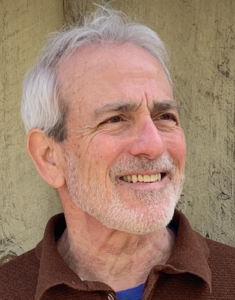
 Andrew Traub has been a board member of the Harvard Business School Club of Connecticut for 13 years. He has worked on forty projects in social services, education and the arts. Andrew has been board president and chaired several subcommittees. Andrew, a third-generation retailer, worked in this industry for over 40 years as a C level executive of retail and wholesale companies and a consultancy in retail strategy and international brand development. He has been a keynote speaker in both the US and China. Andrew and his wife, Lois, who is a retired attorney, live in Stamford; they have three daughters who live in Arlington, Virginia; Croton on Hudson, NY; and Los Angeles; and four grandchildren.
Arranged by Jan Selkowitz and Tom Mullaney
Note: Members interested in discussing engaging with the Community Partners should email Andrew at atraubconsulting@gmail.com.
Summary
Andrew Traub introduced the Harvard Business School Club of Connecticut Community Partners (CP) as a group of HBS alumni who work with Connecticut nonprofits on a pro-bono basis with strategic business consulting. This was an opportunity to encourage the highly experienced DMA members to consider joining them in the volunteer work; and also to encourage those members who serve on non-profit boards to consider the CP for management consulting that could contribute to setting the goals for their community service organizations and evaluating the structure and impact measures for these non-profts.
CP works with about 17 nonprofits each year, largely strategic planning assignments of 3-4 months and staffed by 5-7 volunteers. Traub presented three case studies of their work: the Darien Community Fund, the Bruce Museum, and Post 53. See their annual report of activities over the past year.
Post 53 is a unique, student-led emergency medical service operating in Darien, Connecticut. Unlike traditional EMS services, Post 53 is a volunteer-run organization staffed largely by high school students, who operate under the guidance of experienced adult advisers. For over 50 years, the organization has provided 24/7 emergency medical care to the town—at no cost to patients.
Tom Mullaney, a CP board member and active consultant with the group who helped arrange the presentation, introduced the program with a scenario personal to many in the room:
“Imagine dining out with your spouse when suddenly, you collapse. Within moments, a team of young but highly trained emergency responders arrives, racing against time to save your life. They transport you to the hospital, ensuring you receive the critical care you need. Weeks later, as you recover at home, you receive a letter—not a bill, but a survey asking how they can improve their services.”
Led by Executive Director Joe Larcheveque, Post 53 trains students rigorously, requiring them to become certified Emergency Medical Technicians (EMTs) by their sophomore year. These young professionals respond to medical emergencies throughout town, often encountering high-stakes, life-or-death situations.
The impact of Post 53 was felt firsthand by a surprising number community members in attendance, including residents who credited the organization with saving their lives. One individual recounted surviving cardiac arrest in his driveway thanks to Post 53’s rapid response. Another recalled an emotional moment when a young EMT turned out to be a family friend’s daughter, highlighting the close-knit nature of the Darien community.
The Post 53 program, which receives no direct funding from the town, relies entirely on donations to maintain its fleet of ambulances and support its operations. A major focus of the collaboration with Community Partners was strengthening financial sustainability, ensuring that Post 53 can continue serving Darien’s growing population.
CP’s recommendations included expanding fundraising efforts, rethinking board structure, and evaluating potential municipal funding. The discussion also underscored the resilience and professionalism of Post 53’s student responders, whose experiences often lead to careers in healthcare, public service, and beyond.


 Helene Stapinski is the nationally bestselling author of three memoirs: Five-Finger Discount, Murder in Matera, andBaby Plays Around. She writes regularly for The New York Times; her work has also appeared in The Washington Post,New York,Travel & Leisure, and dozens of other publications. She teaches at New York University and lives in Brooklyn. Helene was the principal author to support Bonnie’s research.
 Annelise Osborne is chief business officer at Kadena, a blockchain technology company, where she is focused on upgrading finance. Annelise has over 20 years of experience in finance, credit, real estate, family office, risk, structuring, governance, and digital assets. She was previously head of institutional for Arca Labs, working with companies to drive blockchain innovation through strategic partnerships and advisory services as well as COO of Propellr LLC, company that creates a platform for digitally held assets. Annelise spent 12 years at Moody’s Investor Service running teams in structured finance. She is a thought leader, board advisor, university lecturer and author. Her book, From Hoodies to Suits: Innovating Digital Assets in Traditional Finance, hit shelves in June 2024. Annelise holds an M.B.A. from Columbia Business School and a B.A. in Economics from The College of William and Mary.
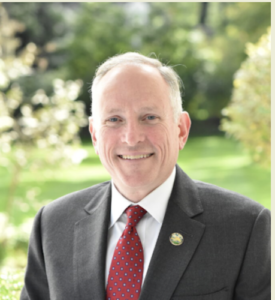 DMA member and Darien First Selectman Jon Zagrodzky will provide an update on Darien town government including overall strategy, Great Island, new commercial developments, flooding investments and the FY 2025 budget process. Jon plans to leave ample time for Q&A and promises that no topic is off limits!
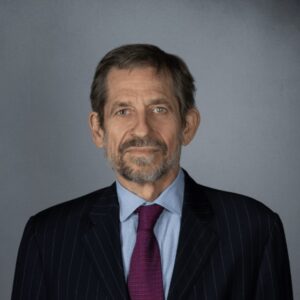 Thomas E. Graham is a distinguished fellow at the Council on Foreign Relations. His book, Getting Russia Right, was published in September, 2023. He is a cofounder of Yale University’s Russian, East European, and Eurasian studies program and sits on its faculty steering committee. He is also a research fellow at Yale’s MacMillan Center. He has been a lecturer in global affairs and political science since 2011, teaching courses on U.S.-Russian relations and Russian foreign policy, as well as cybersecurity and counterterrorism. Graham was special assistant to the president and senior director for Russia on the National Security Council staff from 2004 to 2007, during which he managed a White House-Kremlin strategic dialogue. He was director for Russian affairs on the staff from 2002 to 2004.
 John Sullivan, our American ambassador who was on the diplomatic front lines when Putin invaded Ukraine, will share a behind-the-scenes account of how U.S.-Russia relations hit their nadir
 Ambassador John J. Sullivan, former US deputy secretary of state and former US ambassador to the Russian Federation, is a partner in Mayer Brown’s Washington DC and New York offices and co-lead of the firm’s National Security practice. He is also a Distinguished Scholar at the School of Foreign Service of Georgetown University and a Distinguished Fellow at the School of International and Public Affairs of Columbia University. He serves as a Contributor to CBS News, is quoted frequently in international media as a leading authority on foreign affairs, and has written a book on his experiences as ambassador,
  Mark Nunan, a long time DMA member and prolific convener and presenter, will provide a focus on Slovenia, its history and place historically in Europe and in the geopolitics of the 20th century—the nature of the country, its experience in the world wars, its post-war assimilation by Yugoslavia, and its eventual emergence as an independent nation.
 Ron Darling serves as a game analyst for SportsNet New York (SNY) covering the New York Mets. He is also the lead game analyst for Turner Sports’ (TBS) MLB regular and post-season telecast coverage as well as a studio analyst year-around for MLB Network.
 During his playing days on the diamond, Darling spent nine seasons as a starting pitcher for the New York Mets highlighted by winning the 1986 World Series. During his 13-year career, the Gold Glove winner also played five seasons with the Oakland Athletics after a short stint with the Montreal Expos. He amassed a win-loss record of 136-116 and recorded 1,590 strikeouts with a 3.87 ERA.
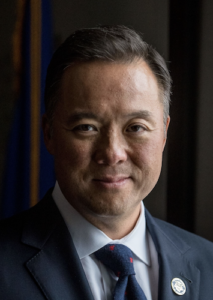 As Congress and the Supreme Court relegate an increasing number of responsibilities and authorities to the states—the core tenet of federalism—it raises questions about states’ capacity to meet these expectations and whether state constitutions provide sufficient guidance within states for direction of state governments’ permitted roles and obligations toward citizens’ rights. Our state attorney general will share his perspective on how states’ can work together on tasks once considered federal and on how human rights in Connecticut can be protected.
 Archaeological investigations throughout the northeastern United States have shown that the region has been occupied by Native Americans since the end of the Ice Age. In Fairfield County, archaeological digs have yielded evidence of this long tenure by these first occupants. Much of this evidence has been found by both professional and avocational archaeologists working in the area. This presentation will discuss the current state of our knowledge about the region’s first peoples and their cultural and technological adaptations to the changing natural environment of the Northeast. Artifacts from local sites investigated by students from the Norwalk Community College Archaeology Certificate Program will also be available for inspection. Attendees are encouraged to bring any Native American artifacts they have found in the area for identification.