
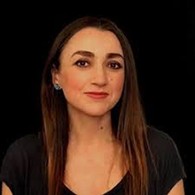
 In three weeks, Russia’s brutal war against Ukraine will be at the four-year point since the beginning of the current invasion, or 12 years as measured from Russia’s Crimean seizure in 2014. The presentation by Dr. Olena Lennon will discuss the mounting questions on how to find a path to end the war.
Some observers believe that Russia’s war effort is based on a strategy of wearing down Ukraine through a brutal campaign of daily bombing and drone attacks against its citizens and energy infrastructure, a war of attrition designed to eventually overpower Ukraine’s military. Olena will update the presentation she gave to the DMA in January 2024, in the early phase of the war. She will take stock of the current battlefield situation, what’s at stake for Ukraine, Europe and the United States, and discuss the prospects for victory by either side or the path forward to peace.
She grew up in a Ukrainian city in the Donetsk region of eastern Ukraine that is approximately the combined size of Darien, Stamford and Norwalk and that has been under Russian control since 2014. She first came to the United States on a Fulbright fellowship in 2004. Upon completion of her master’s degree and an interdisciplinary Ph.D. in educational leadership, international relations and statistics under the Fulbright auspices at the University of Nebraska in 2010, Olena moved back to her native eastern Ukraine. She then moved to Connecticut at the end of 2013, shortly before Russia invaded eastern Ukraine and annexed Crimea.
She is now a practitioner in residence of national security at the University of New Haven, where she teaches courses on the U.S. foreign and defense policy, international relations and comparative politics. Olena is widely recognized for her expertise on Ukraine, Eurasian geopolitics and election observation missions. She was also a scholar at the Woodrow Wilson Center in Washington, D.C. and has dedicated her research to domestic and international politics of Ukraine, as well as Eurasian politics and security.
Olena has been a regular participant in scholarly and media forums related to issues in Ukraine, facilitating informed and objective analyses of the ongoing war. She also serves as an election observer with the Organization for Security and Cooperation in Europe (OSCE) and has completed several election observations missions in the region. Her work has appeared in Foreign Affairs, The National Interest, Demokratizatsiya, Eurasian Geography and Economics, and other outlets.
She will provide a current, in-depth and insightful talk on the state of the war and Ukraine’s challenges and opportunities. Some observers argue that Ukraine has no option but to continue fighting, especially since Moscow has not abandoned its maximalist objective of subjugating the country. Anything short of a Ukrainian victory, they warn, could embolden Russia, increasing risks to NATO and the United States. Her concern is that Ukraine, as the victim of unprovoked Russian aggression, may be left without sufficient U.S. support at a critical moment, enabling Russia not only to defeat Ukraine and remain a long-term threat to Europe, but also to escape accountability for its war crimes, setting a dangerous precedent.
Summary of Presentation by Dr. Olena Lennon on Feb. 4, 2026
Dr. Lennon began her presentation with the fact that Russia’s full-scale invasion is nearing its fourth year and that the broader conflict dates back to Crimea in 2014. As Ukrainian and Russian representatives are currently meeting amid increased Russian bombardment of Ukraine’s energy grid, she observed that negotiations often coincide with military pressure designed to weaken Ukraine’s bargaining position.
Dr. Lennon believes that while the fighting is in Ukraine, the war is larger than a bilateral conflict — Ukraine is the battlefield in a broader struggle involving Russia, the West and China. She said Russia controls about 20% of Ukraine but emphasized this has never been about territory alone; it is about identity, legacy, and imperial ambition, with Russia’s core objective being the elimination of an independent Ukraine. She described Russia’s attrition strategy as increasingly focused on civilians, as evidenced by systematic attacks on power, heat, water, drone swarms designed to exhaust air defenses protecting those resources, and “double tap” strikes on repair crews. Ukraine has adapted with decentralized, improvised air-defense teams, including civilians and disabled soldiers shooting drones from rooftops and windows, along with a rapidly expanding defense-tech sector.
Because Russia has paid heavy military costs while gaining little ground, it has intensified strikes on civilian infrastructure — power, heat, and water — to erode Ukrainian morale and force political concessions. Ukraine has adapted through national mobilization, innovative defense technology and widespread use of drones, creating a new form of “kill-zone” warfare dominated by unmanned systems.
Turning to deterrence, she warned that global nuclear arms constraints are eroding while China’s growing role complicates U.S. strategy. Further, the 15-year-old New Strategic Arms Reduction Treaty (“New START”), which is the only remaining nuclear treaty, expired on February 5, 2026.
Dr. Lennon stressed the West cannot change President Putin’s intent, only degrade his capabilities — especially by tightening enforcement against selling Russia dual-use components feeding its missile production. She added that measures such as constraining the Russian “shadow fleet” help but are insufficient while China and India keep buying discounted Russian oil.
Dr. Lennon expressed skepticism that peace talks would produce a lasting settlement, noting that neither side has achieved its core objectives and that both still believe victory is possible. She doubted a popular uprising in Russia would end the war and said that Europe, though economically far stronger than Russia, lacks unified command and political will. Concluding, she warned that while supporting Ukraine is costly for the West, a Russian victory would be far more dangerous and destabilizing, and that earlier Western indecision helped shape today’s prolonged conflict.