Month: September 2018 (Page 1 of 4)

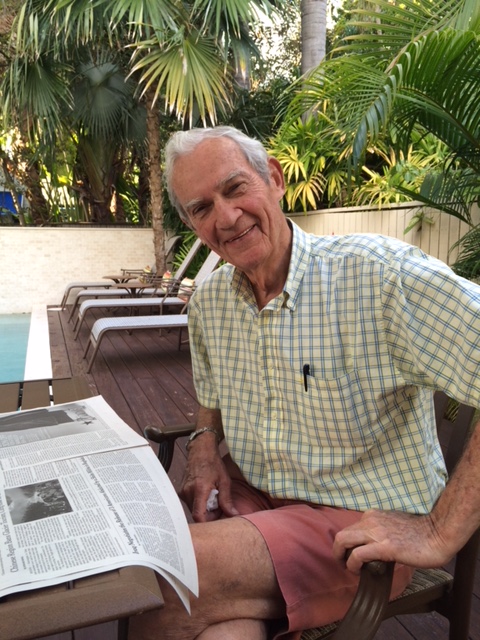
Close, Bill

Bill Close was born in Washington, D.C. in 1931 and grew up in Summit, NJ where he graduated from Summit High School in 1949.   He was captain of the soccer team and ran the high hurdles for the track team. At Princeton, he was Batallion Commander of the NROTC unit his senior year and went on to serve three years in the Navy from 1953-1956 as a deck officer in the USS Warrington, a destroyer based in Newport, RI.  After his naval service he went to Harvard for an MBA and then on to Wall Street with first, Smith Barney and then, in 1962, with E.F. Hutton as a floor partner on the New York Stock Exchange. There he traded for Hutton until 1988 when he changed to a sole proprietorship. Retiring from the Exchange in 1994 he has continued to live in Rowayton and Norwalk up to the present.

Sailing and skiing were the main activities for many years with Bermuda Races and Ski Club trips all a part of the mix along with a fair amount of world travel. He has three sons and a daughter as well as a stepson and stepdaughter. He and his wife, Stephanie have been married for 27 years. They have 12 grandchildren.

He is a member of the New York Yacht Club, the Cruising Club of America and the Sachem’s Head Yacht Club, as well the as the United Church of Rowayton and the Darien Men’s Association.

Life Is Full!!!!!!

Bill Nightingale

William Joslyn Nightingale, 89, known as Bill, passed away after a brave battle with cancer on September 20, 2018. He will be remembered for his positive attitude and unshakeable integrity.

Bill was born on September 16, 1929 in Minneapolis, MN to Willam Isaac Nightingale and Gladys Joslyn Nightingale. He married Carla Carroll of Wayzata, MN in 1957 and in 1966 moved his family to Darien, CT, where he lived for almost 30 years. In 1993, Bill married Deborah Watson and lived in Rowayton, CT before recently relocating to New Canaan.

Bill graduated from Bowdoin College in 1951 and from the Harvard Business School in 1953. He served as a Lieutenant in the U.S. Navy Supply Corps in Port Lyautey, French Morocco from 1954 – 1956.

Bill began his career at General Mills in Minneapolis. After he moved to the New York area, he worked in senior management positions at Booz, Allen and Hamilton, Hanes Corporation, and The Bali Company of New York, NY, where he was President and CEO.

In 1975 he founded Nightingale and Associates LLC, one of the first crisis management and turn-around consulting firms in the U.S. After a long successful run at the helm, he retired in 1995.

After retirement, Bill served on many corporate and charitable boards. He was particularly proud of his service as president of Person to Person.

Bill was a long-standing member of St. Luke’s Episcopal Church in Darien, where he was on the vestry and was senior warden. He was an active member of The Harvard Club, Wee Burn Country Club, and Noroton Yacht Club.

Throughout his life, Bill had many friends. A generous optimist, his glass was always half full. He loved his home in Bridgewater, VT, the Maine coast, skiing and traveling. He was a role model to many and imparted advice with wisdom and humor.

Bill is survived by his wife Deborah of New Canaan; his son Paul Nightingale, and wife, Kate, of Marblehead, MA; daughter Sara Nightingale of Sag Harbor, NY; son William J. Nightingale Jr., and wife, Julie, of Rowayton, CT; and daughter Margot Nightingale, and husband, Henry Personnaz, of Paris, France. He is also survived by his nine grandchildren, his brother Donald Nightingale, and wife, Gerda, of North Oaks, MN, and step-children Ian and Sarah Watson. He was pre-deceased by sister Nancy Jones.

A memorial service celebrating Bill’s life will be held at 11:00 am Thursday, October 4, at St. Luke’s Church, Post Road, Darien, CT.

In lieu of flowers, please send donations in Bill’s memory to Bowdoin College or Person to Person in Darien, CT.

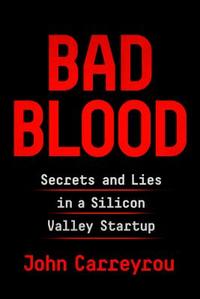
Book Club: Bad Blood : Secrets and Lies in a Silicon Valley Startup John Carreyrou, Jan 9, 2019

The full inside story of the breathtaking rise and shocking collapse of Theranos–the Enron of Silicon Valley–by the prize-winning journalist who first broke the story and pursued it to the end in the face of pressure and threats from the CEO and her lawyers. In 2014, Theranos founder and CEO Elizabeth Holmes was widely seen as the female Steve Jobs: a brilliant Stanford dropout whose startup “unicorn” promised to revolutionize the medical industry with a machine that would make blood tests significantly faster and easier. Backed by investors such as Larry Ellison and Tim Draper, Theranos sold shares in an early fundraising round that valued the company at $9 billion, putting Holmes’s worth at an estimated $4.7 billion. There was just one problem: the technology didn’t work. For years, Holmes had been misleading investors, FDA officials, and her own employees. When Carreyrou, working at the Wall Street Journal, got a tip from a former Theranos employee and started asking questions, both Carreyrou and the Journal were threatened with lawsuits. Undaunted, the newspaper ran the first of dozens of Theranos articles in late 2015. By early 2017, the company’s value was zero and Holmes faced potential legal action from the government and her investors. Here is the riveting story of the biggest corporate fraud since Enron, a disturbing cautionary tale set amid the bold promises and gold-rush frenzy of Silicon Valley

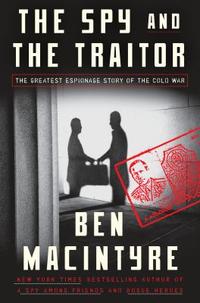
Book Club:The Spy and the Traitor : the Greatest Espionage Story of the Cold War by Ben Macintyre, Dec 12, 2018

Oleg Gordievsky was a spy like no other. The product of a KGB family and the best Soviet institutions, the savvy Russian eventually saw the lies and terrors of the regime for what they were, a realization that turned him irretrievably toward the West. His career eventually brought him to the highest post in the KGB’s London station-but throughout that time he was secretly working for MI6, the British intelligence service”-

Current Affairs: Single Payer Healthcare, Nov 15, 2018

Discussion leader: Charlie Goodyear

Summary :

SINGLE PAYER HEALTHCARE SYSTEMS
USA Healthcare System
-17% of GDP (was 7% in 1971) vs. 9% Canada,10% UK, 10% Germany
-Coverage :
+50% Employer (155 million people, cost $20,000/family, employee pays
$5000)
+14% Medicare (+/- 55 million people)
+12% Medicaid, Veterans, Native Americans (+/- 50 million people)
+ 7% ACA purchased (+/- 20 million people)
+ 8% Emergency Room, Other
+ 9% Uninsured (+/- 30 million people)- 80% US citizens
-Drug costs : $1000/per person/year vs. OECD $500
-Estimated 100-130 million people have “pre-exsisting conditions”
-Life expectancy below OECD countries, Infant mortality higher
-Reasons for higher costs vs OECD countries :
+ Technology and drugs ( eg more MRIs per capita, no drug price controls)
+ Obesity (35% vs 19% OECD) and chronic illnesses (32% of Medicare costs
cover the last two years of life)
+ Much higher administrative costs (4% of GDP), double the staffing vs Canada
-Healthcare costs a major factor in personal bankruptsy( !0 million have bills they can’t
pay )
Canada Healthcare System
-Single payer system covering 100% of the population -no co-pays or deductables
-Doctors and hospitals privately owned and managed within system rules
-Managed by Provincial governments who pay all doctor and hospital charges
-System funded 50/50 with Federal government
-Provinces set prices and proceedures that comply with Federal requirements
-No private insurance allowed except for drugs and dental not covered by System
-Heavy involvement in drug pricing and approval, cost benefit analysis
-Essentially no US type media drug advertising
-Doctors earn about 2/3 of what US doctors earn/year
-Lower availability of medical devices (eg. 75% fewer MRIs per capita than US)
-Open heart and transplant surgery restricted
– Major problems: waiting times for referral to specialists (+/- 16 weeks ), doctor
choice limited, long delays for elective surgery
United Kingdom Healthcare System
-Single payer system covering 100% of the population-no co-pays or deductables
-Doctors are government employees and hospitals are government owned
-Managed by major regional authorities (ie Britain, Wales,Scotland, etc)
-Drug prices controlled by the government, strict cost/benefit analysis. No US
type media drug advertising
-Drug prescriptions cost about $12/ each, free for children.

– No dental coverage for adults
– Doctors earn about 2/3 of what US doctors earn
– Individuals may purchase insurance coverage with doctors in private practice
– Major problems: Long wait times (+/- 10 weeks for general surgery), limited availabiliy
of new(expensive) or experimental treatments, cost/benefit analysis, lack of mental
health services, very long delays for elective surgery
-Per capita costs $4K/year vs US $10K/year
-Many say “Underfunded but not broken “
Germany Healthcare System ( An alternative to “single payer” ??)
-An insurance based system with non profit and for profit insurers
-Covers 90% of population- required participation for all but highest earners
-Funded by 50/50 contribution by employers and employees -15% of earnings
up to about $70K/year (2014 data)
-Private doctors and hospitals but highly regulated
-No deductables and low co-pays -children are free
-Managed by regional authorities via “sickness funds” that are used to control
total costs
– Drug prices are controlled, cost/benefit analysis, no US type public advertising
– Doctors earn about 2/3 of US doctors/year
– Per capita costs less than 1/2 of US
– Surveys indicate significantly higher public satisfaction with the system vs US,
Canada or UK
( The relationship between the insurance companies, doctors, hospitals ,employers,
employees individuals and the regional government bodies is unclear and needs
further analysis and understanding)

Comparisons of Health Care Systems in the United States, Germany and Canada

https://dpeaflcio.org/programs-publications/issue-fact-sheets/the-u-s-health-care-system-an-international-perspective/

https://theconversation.com/why-market-competition-has-not-brought-down-health-care-costs-78971

https://theconversation.com/medicare-for-all-could-be-cheaper-than-you-think-81883

Single Payer Healthcare

Universal Coverage

The article below on drug cost shows how complicated healthcare is to understand, much less manage.  Factors such as age of population, availability of new drugs, the number of insured, etc. all interact.

Still, negotiation is an important factor.  The article states that many western countries (all government run healthcare) will only pay for improved outcomes.
But it’s not purely rational.  If some exotic drug will save your life, it’s worth a lot to you but maybe not so much to society if it starves other healthcare services.  The payers are subject to political pressure from interest groups.  Not simple.

The False Promise of ‘Medicare for All’

Cost is only part of the problem. Single-payer systems create long waits and delays on new drugs.


Wander Roosevelt Island, Astoria Queens, October 2, 2018

Tuesday, October 2, is the first Wandering of the 2018-2019 program year.

The Wanderers will journey to Roosevelt Island in the East River and to Astoria, Queens.

We will take the 8:35am train out of Darien and the 8:38am out of Noroton Heights.  The group will gather in Grand Central Station at the information booth on the upper level.


We will take the subway to the 59th Street station for the Roosevelt Island tram, cross to the Island and walk through Four Freedoms Park and the FDR Memorial sculpture display.


Then, via the East River Ferry, we’ll go to Astoria, Queens.  We will walk by many of the local landmarks associated with the earliest days of the motion picture industry in the United States, through Socrates Sculpture Park and several other sights, and finally have lunch.

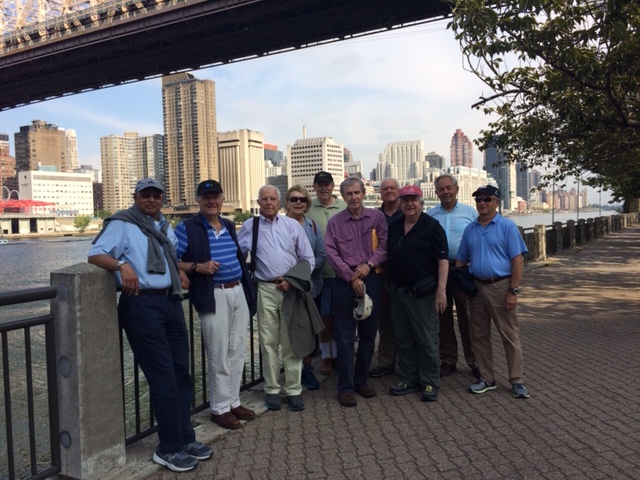
We will return by subway in the afternoon to Grand Central for the train ride home.

If it rains Tuesday, we will not go.  A new date will be announced at our regular weekly meeting the next day,

Contact: Joe Spain

« Older posts