 For over 40 years, Search for Common Ground has been building trust around the world, opening opportunities for collaboration between communities, and creating breakthroughs for peace. Whether global in nature, such as poverty, hunger or the environment, or closer to home, such as family or community relations, we face daily challenges to our abilities to deal with conflict constructively. Using everything from traditional diplomacy and mediation to video games and virtual exchange, we work one step at a time to change the nature of conflict – from a destructive force to a constructive one.
Stepping back from conflict enables and requires trust and provides the foundation for collaboration to solve complex problems. It allows people to look past differences, have difficult conversations, take shared risks, find common ground, and invest in pathways towards a shared future. Search for Common Ground CEO Shamil Idriss will discuss the organization’s principes, techniques and accomplishments—perhaps igniting a recognition in us for other arenas in which polarization can be bridged.
Shamil Idriss is the Chief Executive Officer of Search for Common Ground, the world’s largest dedicated peacebuilding organization. In his current capacity as CEO, and in his previous capacities as President, Chief Operating Officer, and Burundi Country Director, Shamil has led Search’s efforts to end violent conflict in more than 35 countries globally, including some of the most devastating conflict zones in the Middle East and Africa.
Shamil was appointed in 2005 by United Nations Secretary-General Kofi Annan as Deputy Director of the UN Alliance of Civilizations. In this role, he supported high-level political and religious leaders in developing policy recommendations and action plans to improve cross-cultural relations between Western and Muslim-majority countries, before, during, and after the Arab Spring revolutions. From 2004-2005, Shamil worked with the World Economic Forum to establish the Forum’s Council of 100 Leaders.
Shamil is also a pioneer in the use of interactive media technologies for cross-cultural education and collaboration. In 2008-2014, as the CEO of Soliya, he led a coalition to create a market for virtual exchange through partnerships with public and private sector leaders across the United States, the Arab League, and the European Union. This led to the establishment of the J. Christopher Stevens Virtual Exchange Initiative announced by President Barack Obama in February 2015, and the subsequent announcement by the European Commission of their dedicated fund to expand virtual exchange in 2017.
A graduate of Swarthmore College with degrees in Economics and Philosophy.
Summary
Shamil Idriss, CEO of Search for Common Ground, discussed global polarization and conflict resolution through trust-building and understanding.
His organization’s mission is to transform the way the world deals with conflict, away from adversarial approaches and toward cooperative solutions. They believe that conflict is inevitable but violence is not. Conflict is a natural result of human diversity. When we deal with conflict adversarially, it generates polarization and violence. When we collaborate, conflict catalyzes positive change. Their vision is a world where cooperation is the norm—where differences stimulate social progress, rather than precipitate violence.
Global Polarization Landscape
Idriss highlighted that the world has been experiencing unprecedented levels of political polarization since 1900, with societies increasingly viewing opposing groups as existential threats. This polarization is not just a political phenomenon but a global challenge that can potentially lead to destructive conflicts.
Conflict as a Constructive Force
Conflict is natural and inevitable, but violence is not. Idriss uses a powerful metaphor comparing conflict to friction – which can be destructive like an uncontrolled fire or generative as human control of fire has allowed human development and innovation. The key in keeping the flames under control is managing conflict through trust and understanding.
Five Vital Signs of a Healthy Society
Inspired by medical vital signs, Idriss and his organization have developed five critical indicators to assess a society’s resilience.
- Intercommunal Trust: The level of trust across different racial, political, religious, and ideological lines.
- Institutional Trust: Citizens’ trust in governing institutions, media, and service providers.
- Violence Levels: The degree of physical insecurity and potential for escalating violence.
- Agency: People’s sense of ability to improve their circumstances.
- Resources: Understanding what is prioritized in the budget and what is ignored.
Diversity and Trust
Idriss emphasizes that diverse teams can be both the most and least effective, depending on trust. High-performing diverse teams outperform homogeneous groups, but building trust takes more time and effort across different backgrounds. The key is creating an environment where diverse perspectives can be shared openly and respectfully.
Practical Peacebuilding Approach
Search for Common Ground works in 36 countries, employing 850 full-time staff. Their approach includes:
- Facilitating dialogue between conflicting groups
- Creating collaborative platforms
- Establishing cross-cultural educational initiatives
Notable Achievements
- Facilitated meetings between Israeli and Jordanian generals that influenced the 1994 Peace Accord
- Created bilingual, multi-ethnic schools in Macedonia to bridge ethnic divides
- Developed a global framework for understanding and mitigating societal tensions
The organization’s core philosophy is transforming conflict from a destructive force to a constructive one, emphasizing trust-building as the fundamental mechanism for positive change.
Slides: Darien Mens Association – Trends in Global Conflict & Cooperation
 Certainly one of the most prominent topics surrounding politics this year is the influence of social media, with its opportunity to publish every personal opinion without an editor focusing on truth, objectivity, and balance. This is a central them of the academic work of Susan Herbst.
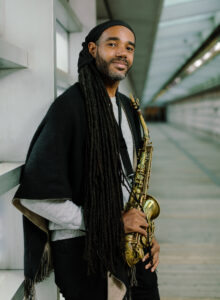 Marcus G. Miller is a distinguished saxophonist, composer, and Music Curator from South Orange, New Jersey, now based in New York City. He began performing professionally in his teens, later graduating from Harvard University in 2008 with a degree in Mathematics. After a stint at Bridgewater Associates, he returned to music, making a name for himself in New York’s jazz scene. Miller has performed at high-profile venues across the world, including the Obama White House, Madison Square Garden, the World Economic Forum at Davos, Carnegie Hall.
 Jim Knox serves as the Curator of Education for Connecticut’s Beardsley Zoo where he directs educational programming and conducts field conservation for this AZA (Association of Zoos and Aquariums) accredited institution. Jim is a graduate of Cornell University where he studied Animal Science and Applied Economics. He has tracked Gray Wolves in Yellowstone National Park, conducted field research on Alaskan Brown Bears, field conservation for Atlantic Salmon, and written for the U.S. Fish and Wildlife Service and for Natural History magazine.
 Carolyn Rinaldi is the Associate Curator of Education at Connecticut’s Beardsley Zoo where she leads Education and Conservation initiatives on and off grounds. Carolyn graduated from the University of Connecticut with a degree in Anthropology and Archaeology. As part of her studies, she travelled around the globe by ship, for three months, studying world cultures. Carolyn has experience as a veterinary technician as well as a birds of prey handler. After having a twenty-year career as a family therapist, Carolyn returned to the world of animals and joined the Connecticut’s Beardsley Zoo team. She directs the Zoo’s AZA Award Winning Teen Volunteer program the Conservation Discovery Corps, and will be leading this year’s 2024 class in a second field expedition in Yellowstone National Park. Carolyn is the host of radio show, Zoonami – Adventures from Connecticut’s Beardsley Zoo on iCRV Radio in Ivoryton, CT. She has had guest spots as a zoologist on Connoisseur Media’s Star 99.9 FM Anna & Raven Show.
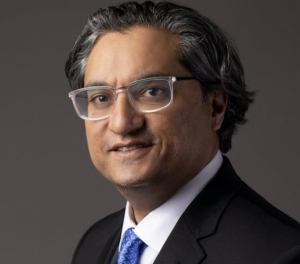 Amit Khanna, MD, is the Regional Director of Colon & Rectal Surgery, Bridgeport Hospital
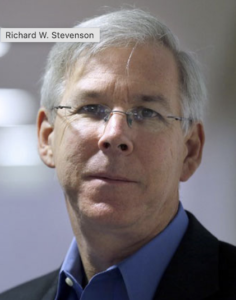 There is little question that the news media have been severely disrupted over the past two decades. New gathering has suffered from a broad loss of faith in institutions, including established media. While social media and the siloing of new sources and their discrete audiences have challenged basic tenets of news gathering, the New York Times has also found ways to enhance the publication of news and its understanding with a comprehensive digital strategy. A former managing editor of the Times suggested the newspapers may be in a slump, but journalism, in all its forms, has never been more robust.
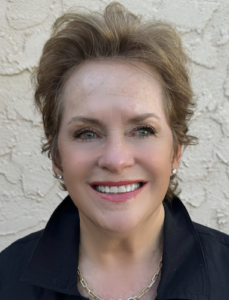 As the daughter of a Pan Am Captain in the 60’s, Lucia Renshaw learned to navigate before she learned to drive. She had a full passport before she had a savings account. And she knew the Pan Am flight schedule better than she knew her class schedules. What she didn’t know was the story about her father’s role in WWII.
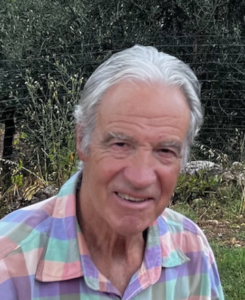 Don Loomis is an active DMA member, having presented recently in the Current Affairs group on Voting Rights and with Mark Nunan on the war in Ukraine.
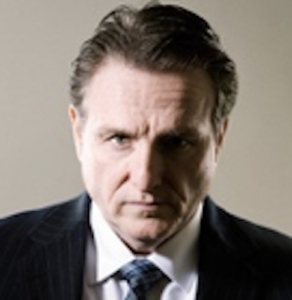 John Odermatt began his career in 1982 where he served as a New York City Housing Police Officer, patrolling public housing developments. John’s promotions with the Housing Authority Police and subsequently the New York City Police Department rise to the rank of Assistant Chief. His assignments include the Executive Officer of the NYPD’s Intelligence Division where he was the coordinator of the 55th United Nations General Assembly, Special Session and responsible for the security and coordination with Federal Agencies of over 300 dignitaries visiting New York City.
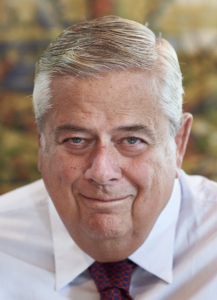 Robert Dilenschneider, a longtime Darien resident and DMA member, is frequently called upon by the media to provide commentary and strategic public relations insights on major news stories. He has counseled major corporations, professional groups, trade associations and educational institutions, and has assisted clients in dealings with regulatory agencies, labor unions, and consumer groups, among others.Bob formed The Dilenschneider Group in October, 1991. Headquartered in New York and Chicago, the Firm provides strategic advice and counsel to Fortune 500 companies and leading families and individuals around the world, with experience in fields ranging from mergers and acquisitions and crisis communications to marketing, government affairs and international media.
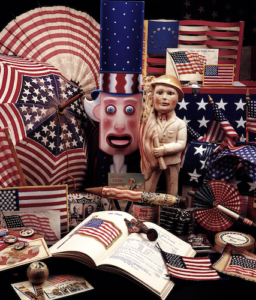 September 11, 2001 disrupted so much of our society, our security, our sense of safety. It also changed our relationship with our flag. After 9/11, the flag became ubiquitous—flying in communities, businesses, at events, and “flying” flat as decals everywhere. It has also been co-opted by partisanship. Yet we all remember an earlier time when it was not just about patriotism; it was also a whimsical theme that celebrated Americanism…just an easier way of life for us, perhaps with greater innocence. No one can remind of the imagery of that era like Kit Hinrichs, with his rich collection of amusing and idiosyncratic applications of the stars and stripes.
 Kit Hinrichs served as principal in several design offices in New York and San Francisco and spent 23 years as a partner in the international design consultancy Pentagram, before opening Studio Hinrichs in 2009. His design experience incorporates a wide range of projects, including brand development, promotion, packaging, environmental graphics, editorial and exhibition design. He is also a noted American Flag collector and founder of the Stars & Stripes Foundation.