
Month: January 2026 (Page 1 of 2)
The Social Events Committee has arranged a lunch and theater outing on Sunday, March 1 in New Canaan. Lunch will be at Lombardi’s (lombardisnc.com), in downtown New Canaan. Following lunch, a short drive to Waveny Park and the Town Players of New Canaan (tpnc.org) theater to watch One Man, Two Guvnors a hilarious farce by Richard Bean, set in swinging 1960s Brighton, England. The play was a major hit, originating at the National Theatre in 2011and transferring to the West End and Broadway, nominated for seven Tony Awards.
The plan is to be seated at Lombardi’s by 11;45. The play will begin at 2:00. The cost for lunch and theater is $100 per person. Guests are welcome. Sign up during the Wednesday general meetings or email Ted Helms (thelms125@gmail.com) or Chuck Andreae (candreae1@gmail.com).
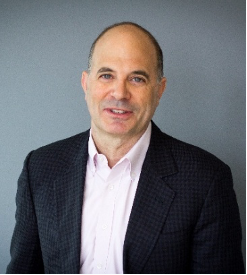 When John F. Kennedy challenged the United States to be the first nation to land a man on the moon by the end of the 1960s, we went for geopolitical reasons during the Cold War to demonstrate America’s preeminence in a global power struggle with the Soviet Union and to prove American “exceptionalism.” Now, 57 years later, the moon is about to be a very busy place, with 84 announced missions through 2030. There are more missions scheduled to land on the moon in the next five years than in the past six decades. This time, we’re going for completely different reasons — not only for adventure and wonder, but also because we want to know whether we can actually live and work on the moon and whether the moon can create its own lunar economy.
The key to developing the moon may be its lunar dirt (or regolith) because it happens to be packed with two valuable elements: silicon and oxygen. Many nations and private companies believe they can make a business out of the regolith with big profits. Silicon in the regolith could be used to make solar panels on the Moon, and many are planning ways to manufacture giant solar panels there by the 2060s or 2070s. Some could be made into huge solar sails, each the size of several football fields, that would be towed to Earth orbit to supply Earth with essentially unlimited electricity with zero climate or carbon impact. Oxygen could be used for breathing, and when combined with hydrogen that could be extracted from lunar ice, it could make rocket fuel for spaceships to travel to Mars and beyond.
Other scientists believe that humans will have the ability to place a telescope on the moon that will be so powerful it could possibly photograph a planet within a close-in solar system (up to about 40 light years away) with the same detail we can now look at Mars. The magic isn’t the moon, but rather that it’s a unique place to do space science — far better than Earth, or even out in space, because the far side is radio silent and because the moon has essentially no atmosphere, giving optical telescopes nearly unlimited resolution. Futurists believe that it might be possible in a few decades to see features on far off planets such as forests, mountaintops, the glistening of light reflecting off oceans or if there are cities, possibly even their lights.
NASA, SpaceX and Blue Origin are planning to send astronauts back to the moon imminently, first with a lunar fly by scheduled for April 2026, and a human landing scheduled for mid-2027. China’s space agency aims to put that nation’s first astronauts on the moon in 2030. India, which first put a lander on the moon in 2023, is designing a mission to return to lunar soil, too. Russia, Japan, South Korea, Italy, the United Arab Emirates are just some of the nations with lunar ambitions. Other missions from a dozen or more private companies are planning robotic missions to the moon.
Charles Fishman is an award-winning reporter and New York Times bestselling author, whose storytelling ranges from his captivating cover story in the September 2025 issue of National Geographic magazine about the future of Moon exploration, titled “The Next Great Moon Rush,” and his most recent book, One Giant Leap: The Impossible Mission that Flew Us to the Moon, a retelling of the race to the Moon in the 1960s that became a New York Times bestseller in its first week.
Charles is also co-author with Oscar-winning Hollywood producer Brian Grazer of the #1 New York Times bestseller, A Curious Mind: The Secret to a Bigger Life, in addition to several other books. He is a three-time winner of the Gerald Loeb Award, the most prestigious prize in business journalism, and lives in Washington, D.C. with his wife, who is also an award-winning journalist.
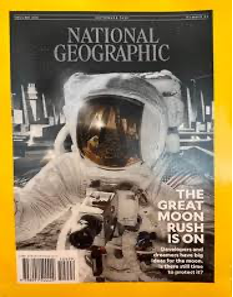
| National Geographic Cover Story
by Charles Fishman (Sept. 2025) |
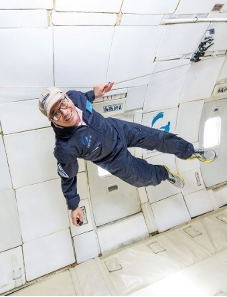
Charles Fishman experienced zero gravity when writing about the Moon |
Summary of Presentation by Charles Fishman on Feb. 18, 2026
In the 1960s, America raced to the Moon for Cold War prestige and proof of American “exceptionalism.” Now, more than half a century later, the Moon is poised to become a crowded destination again — this time driven less by geopolitics than by a new goal: learning whether humans can live and work there, and whether a true lunar economy can emerge. Award-winning journalist and author Charles Fishman framed the moment as a coming “Moon Rush,” with nations and private companies planning a surge of missions through 2030 and beyond.
Fishman began by pulling listeners back into Apollo 11’s dramatic descent. The 13-minute trip from lunar orbit to the surface was calm at first, then spiraled into crisis. Neil Armstrong and Buzz Aldrin discovered their intended landing site was strewn with boulders, forcing Armstrong to take manual control while fuel drained at an alarming rate. Worse, the lunar module’s computer triggered loud alarms repeatedly. Only one expert in Mission Control could decode them quickly enough; he realized the computer was overloaded but cleverly shedding nonessential tasks to keep flying. At one point, the screens went blank for 10 seconds as the computer prioritized flight over display. Armstrong and Aldrin kept working, and the Eagle touched down with seconds of fuel remaining — while Mission Control “started breathing again.”
From there, Fishman explained what’s different today. The Apollo program had no business case — the United States wanted to demonstrate its technological exceptionalism. We stopped going to the Moon because it was too expensive without clear returns. Now, companies are trying to turn lunar dirt (regolith) and water into infrastructure and profit. Regolith is abrasive and hazardous, but it is rich in oxygen and silicon and can be melted into bricks, landing pads, blast walls and even solar cells, potentially enabling on-site power generation. Water — likely trapped as ice mixed into soil in permanently shadowed polar craters — could support astronauts and be split into hydrogen and oxygen for rocket fuel, although extracting it in extreme cold will require advanced robotics.
He ended with a caution: the Moon is unforgiving. Recent private landers have tipped over, and major gaps remain — communications networks, traffic coordination, property and resource rules, and protections for the Moon’s radio-quiet far side. Even so, Fishman believes the space age is accelerating, and the lunar economy is already being assembled on Earth.
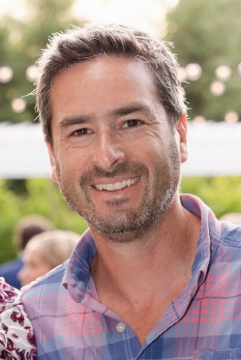 Vineyard vines was founded in 1998 by brothers Ian and Shep Murray, who at the time were in their early 20s, working corporate desk jobs in New York City — and miserable. The brothers started the brand on Martha’s Vineyard with a simple idea: create whimsical neckties to remind those stuck in the boardroom of the good life waiting for them. They used about $8,000 in credit card debt to finance their new business venture and sold their ties out of the back of their Jeep.
Over time, the brothers expanded the brand to offer a wide range of apparel and accessories for men, women and children. vineyard vines was built on the philosophy and slogan, “Every day should feel this good,” which reflects a carefree, nautical spirit rooted in optimism and connection.
Headquartered in Stamford, vineyard vines is family owned and operated and today employs approximately 2,800 people. It has over 100 freestanding vineyard vines stores and sells through more than 600 specialty and department stores worldwide, as well as through seasonal catalogs and online. Doing so, they broke all the rules without even knowing what they were; they approached the apparel business in a different way than conventional retailers at the time because they were more rooted in “brand” than “fashion.” Darien’s Ian Murray will discuss how his brother and he created the company, built its growth and successfully managed it while continuing to keep it privately owned.
As a result of its success, the company has been recognized on Forbes magazine’s list of America’s Best Employers and by Newsweek as one of “America’s Best Midsize Employers” in 2024. The brand has proudly aligned itself with some of the most storied and enduring traditions in American sports, including the Kentucky Derby, the America’s Cup, Fenway Park and the Boston Red Sox, and the Head of the Charles Regatta, each collaboration rooted in heritage, excellence and lasting cultural impact.
Ian and Shep Murray have been recognized by Ernst & Young as “Entrepreneurs of the Year,” were included in Goldman Sachs’s list of the “100 Most Intriguing Entrepreneurs,” and were featured in Inc. magazine’s list of the “500 Fastest Growing Companies.” They have appeared on NBC’s “Today” show, CNN, CNBC and Bloomberg TV. Also, vineyard vines products have been featured in The Wall Street Journal, Vanity Fair, Travel & Leisure, The New York Times, Town & Country, and Rolling Stone.
Philanthropy has always been central to the brand’s identity, with long-standing support of causes including Toys for Tots, the Breast Cancer Research Foundation, autism awareness initiatives and veteran-focused organizations such as Canine for Warriors and Fallen Patriots. Further, vineyard vines is deeply committed to giving back at the local level, supporting community organizations on Martha’s Vineyard and in hometown communities nationwide.
Ian lives in Darien and is an avid musician, angler, boatsman and pilot.
Arranged by Jim Phillips.
Summary of Presentation by Ian Murray on Feb. 11, 2026
Ian Murray, co-founder and chairman of vineyard vines, shared the story of how he and his brother Shep built a small startup into a nationally recognized lifestyle brand rooted in optimism, storytelling and community. In 1998, unhappy in corporate jobs in New York City, the brothers took a leap of faith — using about $8,000 in credit cards, to design colorful, whimsical neckties inspired by the carefree spirit of Martha’s Vineyard. Selling ties out of the back of their Jeep, they promoted a simple philosophy: “Every day should feel this good.”
From the beginning, vineyard vines was less about fashion and more about lifestyle — capturing the best moments of life such as vacations, weddings and time with friends. Ian emphasized that storytelling, personal connection, and authenticity are more powerful than the product itself. Early success came from grassroots selling, word of mouth and creative marketing, including catalogs featuring real customers and the now-iconic whale logo, inspired by their father and the classic pink-and-blue Nantucket style.
Ian described how their upbringing in Greenwich and childhood travel — thanks to their father’s career as a travel writer — exposed them early to branding, hospitality and the tastes of affluent consumers. As the business grew, they expanded beyond ties into broader apparel, developed wholesale relationships, launched early e-commerce and opened retail stores, learning valuable lessons along the way. A major turning point came with a major custom order from AFLAC, which dramatically accelerated growth and validated their model.
The company faced major tests, including the decision to reject private equity investment to preserve independence and the severe challenges of COVID-19. During the pandemic, they prioritized employees, kept their staff paid and strengthened loyalty by supporting teachers and first responders. Ian also noted that culture proved critical when outside leadership briefly shifted the company’s direction, ultimately leading the founders to return to active leadership.
Today, vineyard vines employs almost 3,000 people, operates more than 100 stores and sells through more than 600 specialty and department stores worldwide, as well as seasonal catalogues and online. It continues to evolve while staying grounded in its core principles: make it a great place to work, deliver an exceptional customer experience and drive profitable growth — in that order. Ian concluded that the enduring lesson of their journey is simple: happy employees create happy customers, and success follows.
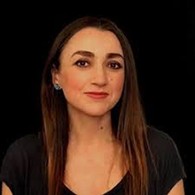 In three weeks, Russia’s brutal war against Ukraine will be at the four-year point since the beginning of the current invasion, or 12 years as measured from Russia’s Crimean seizure in 2014. The presentation by Dr. Olena Lennon will discuss the mounting questions on how to find a path to end the war.
Some observers believe that Russia’s war effort is based on a strategy of wearing down Ukraine through a brutal campaign of daily bombing and drone attacks against its citizens and energy infrastructure, a war of attrition designed to eventually overpower Ukraine’s military. Olena will update the presentation she gave to the DMA in January 2024, in the early phase of the war. She will take stock of the current battlefield situation, what’s at stake for Ukraine, Europe and the United States, and discuss the prospects for victory by either side or the path forward to peace.
She grew up in a Ukrainian city in the Donetsk region of eastern Ukraine that is approximately the combined size of Darien, Stamford and Norwalk and that has been under Russian control since 2014. She first came to the United States on a Fulbright fellowship in 2004. Upon completion of her master’s degree and an interdisciplinary Ph.D. in educational leadership, international relations and statistics under the Fulbright auspices at the University of Nebraska in 2010, Olena moved back to her native eastern Ukraine. She then moved to Connecticut at the end of 2013, shortly before Russia invaded eastern Ukraine and annexed Crimea.
She is now a practitioner in residence of national security at the University of New Haven, where she teaches courses on the U.S. foreign and defense policy, international relations and comparative politics. Olena is widely recognized for her expertise on Ukraine, Eurasian geopolitics and election observation missions. She was also a scholar at the Woodrow Wilson Center in Washington, D.C. and has dedicated her research to domestic and international politics of Ukraine, as well as Eurasian politics and security.
Olena has been a regular participant in scholarly and media forums related to issues in Ukraine, facilitating informed and objective analyses of the ongoing war. She also serves as an election observer with the Organization for Security and Cooperation in Europe (OSCE) and has completed several election observations missions in the region. Her work has appeared in Foreign Affairs, The National Interest, Demokratizatsiya, Eurasian Geography and Economics, and other outlets.
She will provide a current, in-depth and insightful talk on the state of the war and Ukraine’s challenges and opportunities. Some observers argue that Ukraine has no option but to continue fighting, especially since Moscow has not abandoned its maximalist objective of subjugating the country. Anything short of a Ukrainian victory, they warn, could embolden Russia, increasing risks to NATO and the United States. Her concern is that Ukraine, as the victim of unprovoked Russian aggression, may be left without sufficient U.S. support at a critical moment, enabling Russia not only to defeat Ukraine and remain a long-term threat to Europe, but also to escape accountability for its war crimes, setting a dangerous precedent.
Summary of Presentation by Dr. Olena Lennon on Feb. 4, 2026
Dr. Lennon began her presentation with the fact that Russia’s full-scale invasion is nearing its fourth year and that the broader conflict dates back to Crimea in 2014. As Ukrainian and Russian representatives are currently meeting amid increased Russian bombardment of Ukraine’s energy grid, she observed that negotiations often coincide with military pressure designed to weaken Ukraine’s bargaining position.
Dr. Lennon believes that while the fighting is in Ukraine, the war is larger than a bilateral conflict — Ukraine is the battlefield in a broader struggle involving Russia, the West and China. She said Russia controls about 20% of Ukraine but emphasized this has never been about territory alone; it is about identity, legacy, and imperial ambition, with Russia’s core objective being the elimination of an independent Ukraine. She described Russia’s attrition strategy as increasingly focused on civilians, as evidenced by systematic attacks on power, heat, water, drone swarms designed to exhaust air defenses protecting those resources, and “double tap” strikes on repair crews. Ukraine has adapted with decentralized, improvised air-defense teams, including civilians and disabled soldiers shooting drones from rooftops and windows, along with a rapidly expanding defense-tech sector.
Because Russia has paid heavy military costs while gaining little ground, it has intensified strikes on civilian infrastructure — power, heat, and water — to erode Ukrainian morale and force political concessions. Ukraine has adapted through national mobilization, innovative defense technology and widespread use of drones, creating a new form of “kill-zone” warfare dominated by unmanned systems.
Turning to deterrence, she warned that global nuclear arms constraints are eroding while China’s growing role complicates U.S. strategy. Further, the 15-year-old New Strategic Arms Reduction Treaty (“New START”), which is the only remaining nuclear treaty, expired on February 5, 2026.
Dr. Lennon stressed the West cannot change President Putin’s intent, only degrade his capabilities — especially by tightening enforcement against selling Russia dual-use components feeding its missile production. She added that measures such as constraining the Russian “shadow fleet” help but are insufficient while China and India keep buying discounted Russian oil.
Dr. Lennon expressed skepticism that peace talks would produce a lasting settlement, noting that neither side has achieved its core objectives and that both still believe victory is possible. She doubted a popular uprising in Russia would end the war and said that Europe, though economically far stronger than Russia, lacks unified command and political will. Concluding, she warned that while supporting Ukraine is costly for the West, a Russian victory would be far more dangerous and destabilizing, and that earlier Western indecision helped shape today’s prolonged conflict.