Author: webmaster
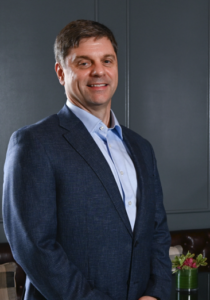
Brian Rolapp will join the DMA in conversation with DMA member Frank Gallagher to discuss the current state of the PGA TOUR and significant changes coming in the years ahead. Few executives have played a larger role in shaping the modern sports landscape than Brian, whose career has been defined by consistent leadership and long-term value creation across several major sports and entertainment institutions. A member of Sports Business Journal’s Forty Under 40: Hall of Fame, Brian was named chief executive officer of the PGA TOUR in June 2025.
Brian joined the PGA TOUR after a 22-year career with the National Football League (NFL), where he most recently served as chief media and business officer. In that role, he was responsible for the league’s commercial businesses, including broadcasting and media rights, NFL Media, sponsorship, advertising sales and consumer products, with NFL contract revenues exceeding an astounding $125 billion during his tenure. He spearheaded some of the largest and most comprehensive arrangements with major corporations in NFL history and led 32 Equity, the entity that makes investments on behalf of the league and its 32 owners.
While at the NFL, Brian oversaw long-term agreements with media partners CBS, ESPN/ABC, NBC, FOX and Amazon for the distribution of NFL games over television and digital platforms. Additionally, he helped devise and implement the next phase of the premium product NFL Sunday Ticket with YouTube after almost 25 years on a satellite service. Rolapp also oversaw other media and licensing negotiations, including contracts with Apple, DraftKings, Electronic Arts, Fanatics, Netflix, Nike, Snapchat, Sony, X and more.
The NFL’s owned and operated businesses, NFL Media and NFL Films, also flourished under Brian’s leadership. Brian drove NFL Network and NFL RedZone distribution deals with the country’s largest television providers and more recently launched NFL+, the NFL’s new direct-to- consumer digital product. He helped NFL Films expand its programming relationships with Netflix, HBO/Max, Amazon and others. He also oversaw the formation of a new joint venture, Skydance Sports, announced in 2022 between Skydance Media, the NFL and NFL Films to create a premier global multi-sports production studio.
As chief executive officer of PGA TOUR, Brian is applying his experience to a sport steeped in history, with an emphasis on creating the best version of the PGA TOUR that reflects the best of sports competition while retaining the elite competitive environment golf fans expect. The PGA TOUR is undergoing a thoughtful evolution under Brian’s direction, honoring the game’s traditions without being overly bound by them.
A key initiative during Brian’s early tenure is the formation of the Future Competition Committee, chaired by 82-time PGA TOUR winner Tiger Woods, which is conducting a comprehensive review of the TOUR’s competitive model with a focus on new business concepts such as parity, scarcity and simplicity. No decisions have been made or finalized, but the committee has reached a consensus on several key topics, including: the importance of predictable, promotable fields that create appointment viewing; opening the season with an iconic event; exploring more opportunities in major metropolitan markets; and heightening competitive consequence by enhancing the meritocratic structure.
In January 2026, Brian also announced the launch of the Returning Member Program, designed to provide an alternative path back to PGA TOUR competition for past members who have achieved the highest accomplishments in the game. The program — which recently welcomed nine-time PGA TOUR winner Brooks Koepka — mandates heavy and appropriate limitations to both tournament access and potential earnings, including a five-year forfeiture of potential equity in the PGA TOUR’s Equity Program.
Before joining the NFL in 2003, Brian served as director of business development for NBC Universal in New York, in which role he was instrumental in NBC’s cable and new media strategies, including NBC’s acquisition of Vivendi Universal Entertainment’s cable assets USA Network, Sci-Fi and Trio. Brian was a member of the media investment banking team at CIBC World Markets prior to joining NBC Universal.
Brian is a graduate of Brigham Young University and Harvard Business School. He and his wife Cindy have been married for nearly 30 years and have four children.
PGA Tour’s New Boss Says Golf Is About to Change — And Faster Than You Think
If you love golf—or even just follow it casually—you’ve probably sensed something is shifting. New formats. New rivalries. And a lot of noise about LIV Golf, TV ratings, and younger fans.
Now we’re hearing directly from the man in charge.
At a recent Darien Community Association talk, PGA Tour CEO Brian Rolapp laid out a clear message: golf isn’t broken—but it is about to evolve.
And maybe faster than anyone expected.
Rolapp, who spent more than two decades helping build the NFL into a $125 billion media powerhouse, didn’t even plan to work in sports. “It just happened,” he admitted. But what drew him to golf was the opportunity: a strong sport with huge upside that hasn’t fully kept up with modern fans.
His core belief is simple—and surprisingly blunt.
“The sports business isn’t that hard,” he said. “If you get the competition right, fans will reward you with their time—and everything else follows.”
So what’s wrong with golf today?
According to Rolapp, three things matter in any successful sport: parity, scarcity, and simplicity. Golf already has one—the hardest one—parity. The difference between the 5th-best and 50th-best golfer is razor thin. That’s why anyone can win on any given weekend.
But the Tour struggles with the other two.
There are too many events that don’t feel important, and the structure can be confusing—even to fans. (Rolapp joked that the FedEx standings are “like the tax code.”)
So what’s coming?
He outlined six big ideas under review:
- A clear, high-profile “opening” to the golf season
- A tighter, more focused schedule (avoiding football season)
- More consistent fields—top players competing more often
- More events in major markets
- A promotion/relegation system (like international soccer)
- A more dramatic postseason, possibly with match play
The goal: make golf easier to follow—and more exciting week to week.
Here’s the surprising part: the sport itself is actually booming.
Participation is up nearly 40% since COVID, with half of that growth coming from people under 35. TV ratings are strong. One recent tournament drew 4.5 million viewers—beating an NBA playoff game.
So why change anything?
Because, as Rolapp sees it, golf hasn’t fully connected that growth to its professional product.
Younger fans are playing the game—but not always watching it.
That’s where new ideas like the indoor, prime-time TGL league come in. It’s faster, looser, and designed to appeal to a different audience.
Rolapp also addressed the elephant in the room: LIV Golf.
Instead of dismissing it, he gave a surprisingly candid take.
“They did the PGA Tour a favor,” he said.
The competition forced golf to rethink itself—something most major sports only do during a crisis.
As for a merger? He’s not focused on it. His priority is simple: make the PGA Tour better.
And if he’s right, that may be enough.
Bottom line: golf isn’t fading—it’s repositioning.
And if Rolapp delivers on even half of these changes, the next few years could reshape the sport in ways we haven’t seen since Tiger Woods first showed up.
U.S. aircraft carriers are often called “The Tip of the Spear” because they enhance America’s ability to project military power anywhere across the globe. The key to the carriers are their fighter planes.
Despite threats from hypersonic missiles and drones, a carrier task force can maneuver on the open ocean, move fast and carry massive firepower. The ability to project military power from aircraft carriers in whatever theater is necessary is critical to projecting U.S. global power. It also has a number of other advantgages, such as not having to rely on foreign nation approval, not requiring foreign host bases and permitting independent U.S. military strategy, all of which may be invaluable during a crisis. Carriers are essential for a U.S. global presence, deterrence and rapid response.
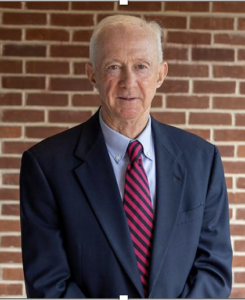
Fighter jets on U.S. aircraft carriers are specialized, state-of-the art planes flown by highly trained Naval aviators. Navy pilots don’t have the luxury of landing on JFK’s 13,000-foot-long runway; the carrier deck is only 300 feet. Our speaker, Gunnar Edelstein, has exciting videos so DMA members can experience what it’s like to land on a carrier at 150 knots on a constantly moving centerline with the carrier sailing at 15 knots, navigating a nine degree landing angle-of-attack with possibly heaving decks and/or crosswinds due to rough seas, while undergoing a crushing G-force when landing and then stopping on a dime.
Gunnar graduated from the Wilbraham & Monson Academy in Wilbraham, Mass., and received a B.S. degree in biology and chemistry from Ohio Wesleyan University in 1972. He then joined the U.S. Navy officer flight training program in Pensacola, Fla., and later served as a fighter/attack pilot for eight years. Gunnar graduated first in his class while earning Distinguished Naval Graduate honors and went on to complete two WestPac carrier cruises aboard the USS Kitty Hawk and the USS Constellation, in addition to a tour as an instructor in the Navy’s Advanced Jet Training Command.
Gunnar was hired by American Airlines in 1979 and then laid off a year later. He then worked as a sales engineer for Air Products & Chemicals, while also serving in the Massachusetts Air National Guard, flying the brand new A-10 Thunderbolt. He rejoined American Airlines in 1984 and had a 27-year flying career there, principally flying B-727s until he retired from flying in 2011.
Gunnar is currently in residential sales with Berkshire Hathaway Home Services in Darien. He was president of the Darien Board of Realtors, served on the board of Noroton Yacht Club, was past Commander of the Darien Sail & Power Squadron and is a member of Silvermine Golf Club. Gunnar and his wife Sarah have lived in Darien for 39 years and have a son, Jeff, who is a U.S. Army combat infantryman.
Summary
The provided file is an AI generated transcript of a presentation by Gunnar Edelstein, a former Navy fighter pilot, who discussed the complexities and intensity of aircraft carrier operations. Gunnar served for eight years and completed cruises on the USS Kitty Hawk and USS Constellation, gave us a firsthand sense of what it is like to operate at the “tip of the spear” of American military power.
The Role of Aircraft Carriers
Gunnar explained that aircraft carriers are primary instruments of U.S. foreign policy, allowing the president to project massive firepower and military presence anywhere globally without relying on foreign bases or host nation approval. These nuclear-powered vessels move quickly and serve as a versatile “heavy equipment” force for deterrence and rapid response. A standard Carrier Task Force typically includes the carrier itself, guided-missile destroyers and cruisers, supply ships, and at least one or two nuclear submarines.
Launch Operations
The process of taking off from a carrier is described as “being shot out of a gun”. Because a carrier deck offers only about 300 feet for takeoff—compared to over 2,000 feet on land—pilots must use a catapult system. An airplane taxies onto the catapult and is held back by a holdback fitting while a launch bar connects the nose gear to the catapult’s shuttle. When the pilot applies full power and the launch officer signals, the shuttle pulls forward, launching a 60,000-pound aircraft from 0 to 150 mph in just two seconds.
Landing: The “Trap”
Landing on a moving, heaving deck is the definitive skill of a naval aviator. Pilots must catch one of three or four arresting wires with a tailhook—a successful landing known as a “trap”. Gunnar emphasized a three-part “scan” that pilots must process continuously during the final approach:
- Meatball: A visual lens system that indicates if the pilot is on the correct glide slope.
- Lineup: Maintaining the centerline on a deck that is angled 9 degrees and constantly moving away from the pilot.
- Angle of Attack: Managing airspeed to achieve maximum lift with minimum drag, aiming for “donut” airspeed.
Gunnar noted that hitting a centered “meatball” usually results in catching the number 3 wire, which is the ideal target. The entire landing area is remarkably small; while the ship is 1,000 feet long, the actual target area for the hook is less than 30 feet. Pilots must also work quickly after landing to clear the area, as another aircraft is often only 40 seconds behind them.