 Motivated by an extraordinary vision and much generosity, Norwalk native Austin McChord and his wife Allison are turning a decommissioned power plant and its magnificent 125-acre waterfront peninsula on Norwalk Harbor into a world-class public park, community hub and nature retreat. Now taking shape, the full transformation is being overseen by Manresa Island Corp., a non-profit established and funded by the McChords in 2024. The park, called “Manresa Wilds,” will be fully funded by private philanthropy, anchored by a landmark foundational gift from the couple with no public funding involved. Multiple elected officials have voiced their support for the project — no wonder, the McChords aren’t asking for a dime. They’re looking to fund the entire $410 million preparation cost themselves and plan to open the park in stages starting in 2027 and continuing from 2032 through 2035. Once fully realized, the park will be one of the most ambitious privately funded public park projects in the nation.
Manresa Wilds will be a publicly accessible park that reconnects the community to a large waterfront property for the first time in nearly 75 years. At twice the size of Darien’s Great Island, and only four miles from the DMA’s meeting location, the park’s sprawling natural spaces will be anchored by the decommissioned plant, which will be revitalized into a vibrant community hub.
Though the property’s new ownership and stewardship is unorthodox, state officials, environmental experts and the McChords themselves say that Manresa Wilds offers lessons that extend beyond the property’s dramatic two miles of waterfront views, rusted machinery and dense birch forest. Many states have been trying for years to shutter some of their filthiest power plants. As part of a group formerly known as the “Sooty Six,” the dirtiest plants in Connecticut, these old gas-fired plants cost taxpayers and corporate owners a king’s ransom to operate. Now they mostly sit idle, and those operating are notorious polluters. Connecticut has almost 900 “brownfield” sites, many of which are relics of the state’s rich manufacturing history. While outmoded power facilities, like all technologies, eventually need to be replaced or repurposed, Manresa Wilds shows that obsolescence is sometimes an opportunity for reinvention. Some observers believe it is a model for how private capital can be used to reimagine coastal resources for the public’s benefit.
Austin McChord, founder and former CEO of Datto, Inc., the first and only “unicorn” company in Connecticut, and his architect wife Allison have a different idea. After purchasing Manresa Island in 2024, the couple hired world-class architects and planners to imagine an unprecedented civic asset in Norwalk. To that end, they will design exciting interior spaces — one as large as Grand Central Station — and acres of wild habitats, beaches and spaces for community gathering, education, and research.
Austin founded the locally based Datto, Inc. in 2007 in his father’s house in Newtown, Conn., when he was still a student at Rochester Institute of Technology. His product provided back-up computer storage capability to the business community in data centers, pairing it with business continuity and disaster recovery to keep businesses up-and-running. Datto provided its customers with an affordable all-in-one hybrid cloud platform with continuity and resilience. In 2013, Austin turned down an enormous buyout offer, but as Datto’s sole stockholder at that time, he disliked the buyer’s plan to dismantle Datto and lay off employees. Instead, he re-capitalized the firm and later sold it for a significantly higher amount.
Arranged by Robin Hogen
[Editor’s Note: “Brownfield” is legally defined as real property where expansion, redevelopment, or reuse may be complicated by the presence or potential presence of a hazardous substance, pollutant, or contaminant. A “unicorn company” is defined as a privately held startup company with a current valuation of 1 billion or more.]
Summary:
Austin McChord’s presentation told the remarkable story of how an abandoned
industrial site on Norwalk Harbor could become one of the most ambitious privately funded public parks in America. A Norwalk native and founder of the Connecticut tech company called Datto, Austin explained how he and his wife Allison first imagined the transformation while kayaking past the decommissioned Manresa power plant. What began as an improbable idea grew into a sweeping philanthropic effort: a 125-acre waterfront peninsula, to be called Manresa Wilds, reborn as a public park, nature preserve, community destination, and learning center.
Austin described the site as far more than an old power plant. It includes nearly two miles of shoreline, salt marshes, birch forest, deep-water berths, beaches and vast industrial interiors unlike anything else in the region. Rather than demolish everything, the plan embraces adaptive reuse. The turbine hall, with its monumental scale, will become a flexible civic gathering space, while the boiler building may one day house an indoor park and a coastal research center, potentially in partnerships with the Maritime Aquarium and Woods Hole Oceanographic Institute. Outdoor plans include a naturalized beach, large lawn, promenade, community pool with high diving platforms, sailing and kayaking access, an expansive playground and major ecological restoration.
A central theme of the talk was that this is not meant to be “Austin and Allison’s Park,” but a place shaped by the wider community. Austin said his team conducted broad public outreach, gathering feedback from residents, students, seniors and neighbors, then incorporated thousands of changes into a master plan. He emphasized values such as public accessibility, ecological renewal, education and creating a model for reimagining obsolete industrial waterfronts.
He also spoke candidly about the challenges: sea-level rise, environmental remediation, traffic, operations and cost. The first 25 acres are expected to open in 2027, with later phases extending into the 2032–2035 period. Austin said the preparatory and safety work alone totals $410 million, all privately funded, and that he and his wife are committed both to completing the park and endowing its long-term upkeep. The result, he suggested, is a once-in-a-generation gift to the public.
 Windsor Hall spent his career in corporate banking and credit risk management. He obtained his B.A. in economics and philosophy from Brandeis University and his M.B.A. from Harvard Business School. His wife Elizabeth was a dance and fitness instructor who taught at the Darien Arts Center and the Darien Senior Center.

 Mark Filanowski was born in Milford, Conn., in 1954, and he was raised there. His mother’s family arrived in Milford 400 years ago, and his father’s parents came from Eastern Europe in the late 1800s to work a farm in Milford that still operates today.
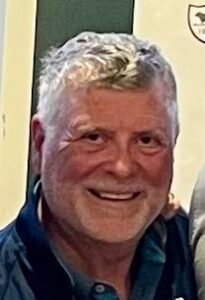 Daniel (Dan) Bumgardner and his wife Patti have lived in Darien since moving here from Manhattan in 1999. Their two children Kelsey (29) and Brendan (26) are proud graduates of Darien High School, where they were active in multiple sports and activities. Dan has been a volunteer coach across Darien Little League softball and baseball, youth soccer and Darien Youth Hockey Association hockey. He has volunteered for the Community Fund and has been on the board of The Country Club of Darien since 2022, for which he currently serves as president. Dan was elected to the Town of Darien’s Board of Finance in 2019 and has served as its vice chairman since 2021.
 Kevin Marks and his wife Susan are proud to have raised their family in Darien and to have called it home for the last 36 years. Born in Evanston, Ill., and raised in Barrington, R.I., Kevin graduated from Plymouth State University in New Hampshire in 1981. He joined Eastman Kodak in New York City and enjoyed a series of progressive sales and sales leadership roles during that period. In 2002, he joined Pitney Bowes as vice president of sales and marketing. He completed his career at BlueCrest, a Pitney Bowes spinoff, as vice president of global production print and strategy. In October 2025, Kevin made the pivot from the workforce and is actively pursuing a new phase of experiences and adventures.
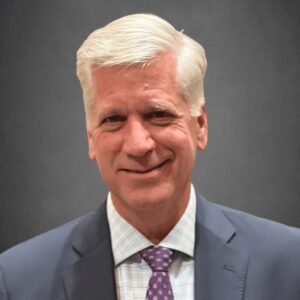 Michael (Mike) Vossler was born in Ann Arbor, Mich., and attended grade school in Cheyenne, Wyo., and Denver, Colo., before settling in the small Lake Michigan town of St. Joseph, Mich. He and his wife Heidi moved to Darien in 2001, where they raised their two children, Hanna (now in Brooklyn) and Henry (now in Raleigh, N.C.).