Author: Webmaster (Page 2 of 97)

Governor Ned Lamont
“The Challenges and Opportunities to Growing Connecticut’s Economy”
Wednesday, April 8, 2026

Governor Ned Lamont will address the challenges and opportunities in growing Connecticut’s economy and how they relate to the Town of Darien in a conversation with DMA member and First Selectman Jon Zagrodzky.

Sworn in as Connecticut’s 89th Governor in 2019, Lamont began his second term in 2023 and is seeking re-election in 2026.  A former business entrepreneur, he founded Campus Televideo, which grew to serve over 400 college campuses and one million students nationwide.  He previously ran for U.S. Senate in 2006, served on the Greenwich Board of Selectmen and Board of Estimate and Taxation, and chaired the State Investment Advisory Council overseeing the state pension fund.

As Governor, Lamont has signed the largest income tax cut in state history, boosted investments in workforce development, education, and the environment, and partnered with businesses to drive job creation and growth.  He highlights record employment, rising business starts, and more graduates staying in Connecticut.

Yet significant hurdles remain: Connecticut faces the nation’s most constrained housing market (needing ~133,000 more units), ranks 4th highest in all-in taxes, has the 4th highest electricity costs, and is the 11th most expensive state to live in.  The state’s housing shortage is widely seen as the biggest barrier to economic growth.

In November 2025, Lamont signed House Bill 8002, An Act Concerning Housing Growth – a compromise following his veto of a broader bill (HB 5002) earlier that year.  The law incentivizes municipalities (including suburban towns like Darien) to adopt housing growth plans, eases certain zoning barriers, and promotes more affordable units through regional planning rather than strict mandates.  Supporters view it as a vital step toward addressing the crisis; critics worry it increases state oversight and threatens local community character.

A graduate of Phillips Exeter Academy (where he was president of the student newspaper), Harvard College (B.A.), and Yale University (M.B.A.), Lamont has also taught entrepreneurship at Harding High School in Bridgeport and serves as an adjunct professor of political science and philosophy at Central Connecticut State University.

Arranged by Jon Zagrodzky.

Video Presentation 

Summary:

Governor Ned Lamont’s appearance before the DMA took the form of a broad conversation with Darien’s First Selectman, Jon Zagrodzky, about Connecticut’s future, grounded in the concerns about housing, transportation, energy, workforce preparation and the cost of government.

Speaking as both a governor and former businessman, Lamont told us that housing remains one of the state’s most pressing economic issues because employers repeatedly ask whether workers can afford to live in the state. He stressed that while Connecticut needs more housing, he believes that towns should retain substantial control over where and how it is built, and he praised Darien for planning growth proactively rather than reacting after developers arrive.

The discussion then widened to infrastructure and traffic, especially in Fairfield County, where denser development causes concern about worsening congestion. Lamont acknowledged those concerns but said specific targeted highway improvements, faster rail service and transit-oriented housing can help reduce pressure on the roads. On energy, he was blunt: Connecticut does not have enough electricity and has long paid some of the highest power prices in the country. He defended the state’s decision to preserve the Millstone Nuclear Power Plant in Waterford, which supplies a large share of Connecticut’s electricity, and said expanded nuclear generation must remain part of the long-term answer despite its cost and political difficulty.

Lamont also focused on workforce development. He argued that Connecticut’s competitive edge is the quality of its workforce but said the state must do more to connect students to internships, apprenticeships, technical education and practical career pathways that lead directly to jobs. He agreed that “work readiness” matters as much as technical skill, noting that employers need dependable workers who can meet professional expectations.

On the broader economy, Lamont said Connecticut has made progress by shifting from a mindset centered mainly on dividing resources to one more focused on growth, partnership with business and getting results. He cited balanced budgets, state pension fund improvement and efforts to control health care costs as unfinished but important work behind his decision to seek a third term.

DMA First Vice President Doug Bora introduces First Selectman Jon Zagrodzky and Governor Ned Lamont at the April 9 DMA meeting.

Wander Roosevelt Island, March 26, 2026

Thursday, March 26th, at 8:36 a.m. at Darien Metro-North Station or 8:39 a.m. at Noroton Heights Metro-North Station

Next Thursday the Wanderers will travel to Roosevelt Island in Manhattan. We will take the Metro North train to Grand Central that leaves the Darien train station at 8:36 a.m. and the Noroton Heights train at 8:39 a.m. As usual, we will gather at the Information Booth on the main floor of Grand Central and proceed together by Subway and Tramway to Roosevelt Island.

After enjoying the overhead views of the East River and Roosevelt Island from the Tramway, we will wander three or so miles around Roosevelt Island and enjoy its unique views of New York City.    Our Wandering will take us to the Franklin D. Roosevelt Four Freedoms Park at the southern end of the island, past three modern Cornell Tech Center buildings – the Bloomberg Center, the Tata Innovation Center and the House – that have attracted students, professors and technology research to the island, and past historic structures including the Smallpox Hospital ruins, the Strecker Memorial Laboratory, the Blackwell House, and if time permits, the Octagon Tower and the Lighthouse.

The Wanderers plan to have lunch at Granny Annie’s Bar & Kitchen at 425 Main Street on Roosevelt Island.  After lunch, we will complete our Wandering and enjoy a few more vistas from Roosevelt Island before returning to Grand Central and home via the Subway and Metro-North.

Contact:  Chet Cobb  or Harry Bergen

Current Affairs for March 19, 2026: Is the US Ready for the Next War?

Is the US Ready for the Next War – New Yorker

Highly recommended also is a more recent article focusing on Ukraine, the epicenter of the new drone warfare: Drones Now Rule the Battlefield in the Ukraine-Russia War – The New York Times
Filkins focuses quite a bit on US drone technology company Anduril, which got a critical close-up in the Wall Street Journal last fall (gift link – no paywall):
A detailing of some of the stumbles as the US tries to get ahead of the trend (gift link – no paywall): https://www.wsj.com/politics/national-security/pentagon-ai-weapons-delay-0f560d7e?st=EtFi9k&reflink=desktopwebshare_permalink


Hike Rockwood Hall, March 12, 2026

This one’s a stunner. On Thursday, March 12, our adventurous group will explore the grounds of Rockwood Hall, the one-time estate of William Rockefeller, brother to John D. Located in Mount Pleasant, N.Y., the site affords sweeping views of the Hudson River, Tappan Zee Bridge and the Palisades. These vistas are breathtaking. It is worth a moment to access Wikipedia, which recounts a storied history of the property. At arrival, we will jointly decide whether a clockwise or counterclockwise direction is preferable for negotiating this loop’s 500-foot grade change. (Hale and Hearty, right?)


For those wishing to carpool, we will meet in the DCA parking lot at 9:30 a.m. Travel time is a plump 40 minutes. For those choosing to go directly, there is ample parking opposite the trail head. This lot, however, comes up quickly on your left, just as Phelps Way crosses Rockwood Road. So, be vigilant! Dogs on leash are permitted. 


Suggestions for a nearby lunch spot are welcome.

Please RSVP to Alec Wiggin at alec@aared.com if you are interested.

Current Affairs for February 19, 2026: What’s Next for Venezuela?

Current Affairs for February 2026: What’s Next for Venezuela?
 
The Current Affairs group will meet on Thursday, February 19 at 2PM in the Lillian Gade Room at the DCA and on Zoom. If you have not received the Zoom link, please contact Barry at silver.barry@gmail.com or Doug at dbernacchi@gmail.com.

Ted Helms will lead a discussion on “What’s Next for Venezuela?”. As most of you know, Ted has deep experience in and with Venezuela, beginning with a 3+ year stint as head tennis pro at the Caracas Country Club, followed later by time in Latin American Banking at Manufacturers Hanover Trust including a post in Venezuela, and finally 8 years as the NY-based financial representative of Petroleos de Venezuela (PDVSA). Ted has done a deep dive on our behalf and this promises to be a fascinating hour about a very timely subject.

The pre-reading package is attached. I hope you will spend a few minutes this weekend going through it. With the situation developing daily, there will probably be new articles of interest popping up between now and Thursday. But please start here.

Book Group: 1929: Inside the Greatest Crash in History–and How It Shattered a Nation by Andrew Ross Sorkin, May 13, 2026

May 2026

1929: Inside the Greatest Crash in History–and How It Shattered a Nation by Andrew Ross Sorkin

 From the bestselling author of Too Big to Fail, “the definitive history of the 2008 banking crisis,”* comes a spellbinding narrative of the most infamous stock market crash in history. With the depth of a classic history and the drama of a thriller, 1929 unravels the greed, blind optimism, and human folly that led to an era-defining collapse—one with ripple effects that still shape our society today.

In 1929, the world watched in shock as the unstoppable Wall Street bull market went into a freefall, wiping out fortunes and igniting a depression that would reshape a generation. But behind the flashing ticker tapes and panicked traders, another drama unfolded—one of visionaries and fraudsters, titans and dreamers, euphoria and ruin.

With unparalleled access to historical records and newly uncovered documents, New York Times bestselling author Andrew Ross Sorkin takes readers inside the chaos of the crash, behind the scenes of a raging battle between Wall Street and Washington and the larger-than-life characters whose ambition and naivete in an endless boom led to disaster. The dizzying highs and brutal lows of this era eerily mirror today’s world—where markets soar, political tensions mount, and the fight over financial influence plays out once again.

This is not just a story about money. 1929 is a tale of power, psychology, and the seductive illusion that “this time is different.” It’s about disregarded alarm bells, financiers who fell from grace, and skeptics who saw the crash coming—only to be dismissed until it was too late.

Hailed as a landmark book, Too Big to Fail reimagined how financial crises are told. Now, with 1929, Sorkin delivers an immersive, electrifying account of the most pivotal market collapse of all time—with lessons that remain as urgent as ever. More than just a history, 1929 is a crucial blueprint for understanding the cycles of speculation, the forces that drive financial upheaval, and the warning signs we ignore at our peril.

Pp 577

Book Group: History Matters By David McCullough, Apr 8, 2026

April 2026

 History Matters By David McCullough

 In this posthumous collection of thought-provoking essays—many never published before—Pulitzer Prize–winning historian and bestselling author David McCullough affirms the value of history, how we can be guided by its lessons, and the enduring legacy of American ideals.

History Matters brings together selected essays by beloved historian David McCullough, some published here for the first time, written at different points over the course of his long career but all focused on the subject of his lifelong the importance of history in understanding our present and future. Edited by McCullough’s daughter, Dorie McCullough Lawson, and his longtime researcher, Michael Hill, History Matters is a tribute to a master historian and offers fresh insights into McCullough’s enduring interests and writing life. The book also features a foreword by Jon Meacham.

McCullough highlights the importance of character in political leaders, with Harry Truman and George Washington serving as exemplars of American values like optimism and determination. He shares his early influences; from the books he cherished in his youth to the people who mentored him. He also pays homage to those who inspired him, such as writer Paul Horgan and painter Thomas Eakins, illustrating the diverse influences on his writing as well as the influence of art.

Rich with McCullough’s signature grace, curiosity, and narrative gifts, these essays offer vital lessons in viewing history through the eyes of its participants, a perspective that McCullough believed was crucial to understanding the present as well as the past. History Matters is testament to McCullough’s legacy as one of the great storytellers of this nation’s history and of the lasting promise of American ideals.

pp 192


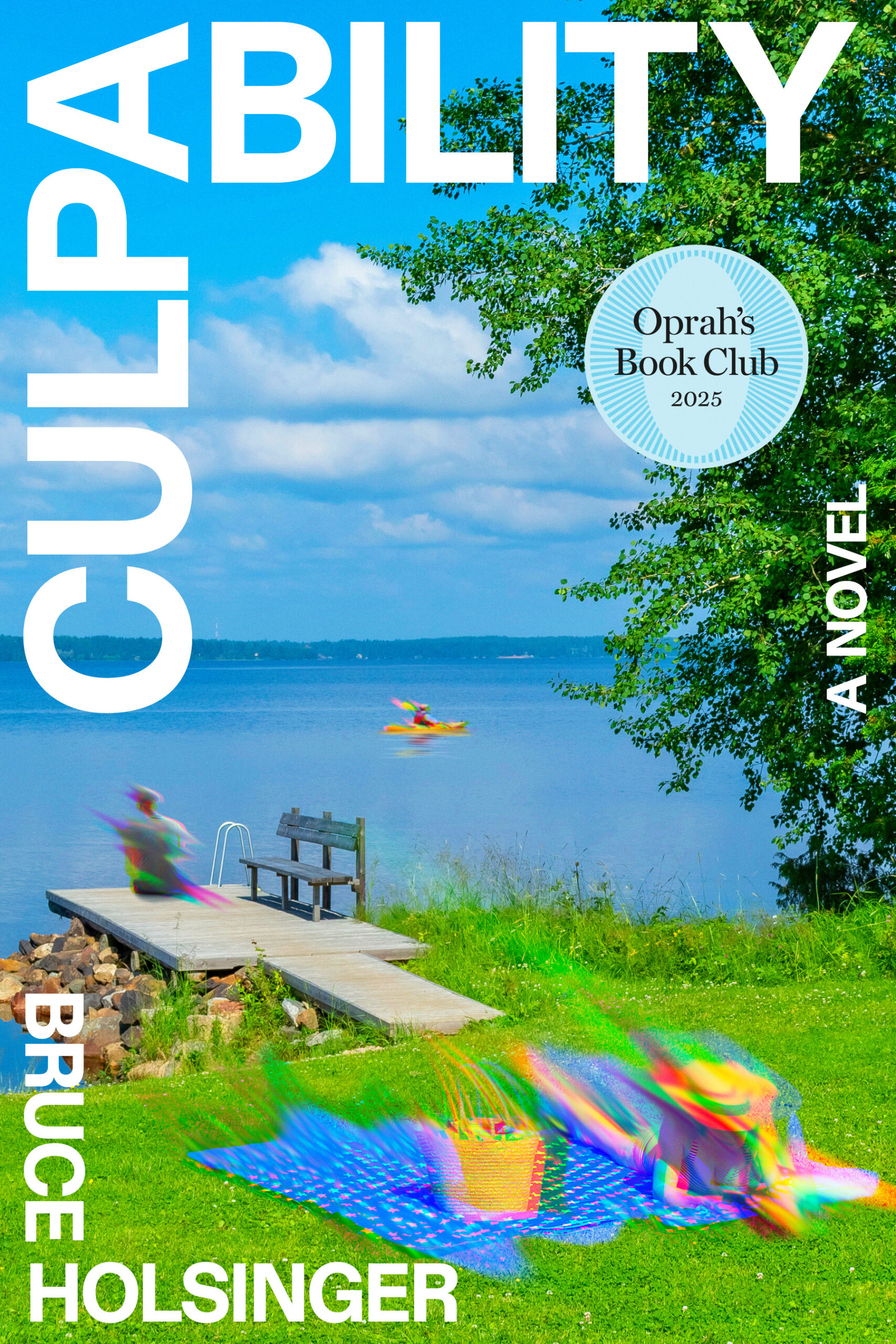
Book Group: “The Pursuit of Liberty: How Hamilton vs. Jefferson Ignited the Lasting Battle over Power in America” by Jeff Rosen, Mar 11, 2026

March 2026

The Pursuit of Liberty: How Hamilton vs. Jefferson Ignited the Lasting Battle over Power in America by Jeff Rosen

A lucid work of political history that affords an intriguing view of the nation both in its founding years and today.

Rosen (law, George Washington Univ.) follows up 2024’s The Pursuit of Happiness with this book on Alexander Hamilton and Thomas Jefferson’s differing views on government and power, which still affect U.S. governance today. The Federalist view, as advocated by Hamilton, favored a strong central government, supported a national bank, promoted industry and trade, and advocated for a loose interpretation of the Constitution. In contrast, Jefferson (Democratic-Republican) prioritized states’ rights; limited the power of the federal government; did not want a national bank, which he believed was unconstitutional; and was in favor of a strict interpretation of the Constitution. These debates were more than simply intellectual, Rosen argues. They helped define and refine the core values of U.S. democracy and contributed to shaping the political landscape of a young nation. Rosen goes on to examine how these two opposing philosophies impacted U.S. history and Supreme Court decisions regarding Southern secession, the fight against enslavement, and the extent of presidential powers and immunity.


VERDICT Well-reasoned and expertly written, this is a critical volume for understanding the enduring conversation about how a nation wishes to be governed.

pp 432

Hike Sherwood Islnd Prk, Feb 12, 2026

As the Bard once famously said, “My Kingdom for a Snowshoe!”

On Thursday, February 12, the Hale and Hardy hikers will traverse the
coastal flatlands at Sherwood Island Park, located just off Exit 18 on
I-95. We will set out to the west from the pavilion lot, circumnavigate
the wooded island, head back along the sandy shore to the creek and then
U-turn back to our cars. This tract logs in at about three miles.

Per usual, for those wishing to carpool, we will meet in the DCA parking
lot at 9:30 a.m. For those choosing to go directly, there is more than
ample parking. According to the website (Sherwood Island State Park |
Connecticut State Parks and Forests), dogs are allowed, as this is
off-season. For those wishing to share a repast following the hike, we
will be dining at The Horseshoe Café at 355 Pequot Avenue in Southport.

This hike might require a “game-time” decision, as the present
accumulation of snow precludes our ability to pull this off. So put the
date on your calendar and stay tuned for updates!

Please RSVP to Alec Wiggin at alec@aared.com if you are interested.

Charles Fishman
“The Great New Moon Race A Half Century After Apollo”
Feb. 18, 2026

When John F. Kennedy challenged the United States to be the first nation to land a man on the moon by the end of the 1960s, we went for geopolitical reasons during the Cold War to demonstrate America’s preeminence in a global power struggle with the Soviet Union and to prove American “exceptionalism.” Now, 57 years later, the moon is about to be a very busy place, with 84 announced missions through 2030. There are more missions scheduled to land on the moon in the next five years than in the past six decades. This time, we’re going for completely different reasons — not only for adventure and wonder, but also because we want to know whether we can actually live and work on the moon and whether the moon can create its own lunar economy.

The key to developing the moon may be its lunar dirt (or regolith) because it happens to be packed with two valuable elements: silicon and oxygen. Many nations and private companies believe they can make a business out of the regolith with big profits. Silicon in the regolith could be used to make solar panels on the Moon, and many are planning ways to manufacture giant solar panels there by the 2060s or 2070s. Some could be made into huge solar sails, each the size of several football fields, that would be towed to Earth orbit to supply Earth with essentially unlimited electricity with zero climate or carbon impact. Oxygen could be used for breathing, and when combined with hydrogen that could be extracted from lunar ice, it could make rocket fuel for spaceships to travel to Mars and beyond.

Other scientists believe that humans will have the ability to place a telescope on the moon that will be so powerful it could possibly photograph a planet within a close-in solar system (up to about 40 light years away) with the same detail we can now look at Mars. The magic isn’t the moon, but rather that it’s a unique place to do space science — far better than Earth, or even out in space, because the far side is radio silent and because the moon has essentially no atmosphere, giving optical telescopes nearly unlimited resolution. Futurists believe that it might be possible in a few decades to see features on far off planets such as forests, mountaintops, the glistening of light reflecting off oceans or if there are cities, possibly even their lights.

NASA, SpaceX and Blue Origin are planning to send astronauts back to the moon imminently, first with a lunar fly by scheduled for April 2026, and a human landing scheduled for mid-2027. China’s space agency aims to put that nation’s first astronauts on the moon in 2030. India, which first put a lander on the moon in 2023, is designing a mission to return to lunar soil, too. Russia, Japan, South Korea, Italy, the United Arab Emirates are just some of the nations with lunar ambitions. Other missions from a dozen or more private companies are planning robotic missions to the moon.

Charles Fishman is an award-winning reporter and New York Times bestselling author, whose storytelling ranges from his captivating cover story in the September 2025 issue of National Geographic magazine about the future of Moon exploration, titled “The Next Great Moon Rush,” and his most recent book, One Giant Leap: The Impossible Mission that Flew Us to the Moon, a retelling of the race to the Moon in the 1960s that became a New York Times bestseller in its first week.

Charles is also co-author with Oscar-winning Hollywood producer Brian Grazer of the #1 New York Times bestseller, A Curious Mind: The Secret to a Bigger Life, in addition to several other books. He is a three-time winner of the Gerald Loeb Award, the most prestigious prize in business journalism, and lives in Washington, D.C. with his wife, who is also an award-winning journalist.


National Geographic Cover Story

by Charles Fishman (Sept. 2025)

Charles Fishman experienced zero gravity when writing about the Moon

Video Presentation 

Summary of Presentation by Charles Fishman on Feb. 18, 2026

In the 1960s, America raced to the Moon for Cold War prestige and proof of American “exceptionalism.” Now, more than half a century later, the Moon is poised to become a crowded destination again — this time driven less by geopolitics than by a new goal: learning whether humans can live and work there, and whether a true lunar economy can emerge. Award-winning journalist and author Charles Fishman framed the moment as a coming “Moon Rush,” with nations and private companies planning a surge of missions through 2030 and beyond.

Fishman began by pulling listeners back into Apollo 11’s dramatic descent. The 13-minute trip from lunar orbit to the surface was calm at first, then spiraled into crisis. Neil Armstrong and Buzz Aldrin discovered their intended landing site was strewn with boulders, forcing Armstrong to take manual control while fuel drained at an alarming rate. Worse, the lunar module’s computer triggered loud alarms repeatedly. Only one expert in Mission Control could decode them quickly enough; he realized the computer was overloaded but cleverly shedding nonessential tasks to keep flying. At one point, the screens went blank for 10 seconds as the computer prioritized flight over display. Armstrong and Aldrin kept working, and the Eagle touched down with seconds of fuel remaining — while Mission Control “started breathing again.”

From there, Fishman explained what’s different today. The Apollo program had no business case — the United States wanted to demonstrate its technological exceptionalism. We stopped going to the Moon because it was too expensive without clear returns. Now, companies are trying to turn lunar dirt (regolith) and water into infrastructure and profit. Regolith is abrasive and hazardous, but it is rich in oxygen and silicon and can be melted into bricks, landing pads, blast walls and even solar cells, potentially enabling on-site power generation. Water — likely trapped as ice mixed into soil in permanently shadowed polar craters — could support astronauts and be split into hydrogen and oxygen for rocket fuel, although extracting it in extreme cold will require advanced robotics.

He ended with a caution: the Moon is unforgiving. Recent private landers have tipped over, and major gaps remain — communications networks, traffic coordination, property and resource rules, and protections for the Moon’s radio-quiet far side. Even so, Fishman believes the space age is accelerating, and the lunar economy is already being assembled on Earth.

Ian Murray, Co-Founder and Chairman, vineyard vines
“The American Dream in Fairfield County Is Alive & Well: Building vineyard vines into an Iconic American Brand”
Feb. 11, 2026

Vineyard vines was founded in 1998 by brothers Ian and Shep Murray, who at the time were in their early 20s, working corporate desk jobs in New York City — and miserable. The brothers started the brand on Martha’s Vineyard with a simple idea: create whimsical neckties to remind those stuck in the boardroom of the good life waiting for them. They used about $8,000 in credit card debt to finance their new business venture and sold their ties out of the back of their Jeep.

Over time, the brothers expanded the brand to offer a wide range of apparel and accessories for men, women and children. vineyard vines was built on the philosophy and slogan, “Every day should feel this good,” which reflects a carefree, nautical spirit rooted in optimism and connection.

Headquartered in Stamford, vineyard vines is family owned and operated and today employs approximately 2,800 people. It has over 100 freestanding vineyard vines stores and sells through more than 600 specialty and department stores worldwide, as well as through seasonal catalogs and online. Doing so, they broke all the rules without even knowing what they were; they approached the apparel business in a different way than conventional retailers at the time because they were more rooted in “brand” than “fashion.” Darien’s Ian Murray will discuss how his brother and he created the company, built its growth and successfully managed it while continuing to keep it privately owned.

As a result of its success, the company has been recognized on Forbes magazine’s list of America’s Best Employers and by Newsweek as one of “America’s Best Midsize Employers” in 2024. The brand has proudly aligned itself with some of the most storied and enduring traditions in American sports, including the Kentucky Derby, the America’s Cup, Fenway Park and the Boston Red Sox, and the Head of the Charles Regatta, each collaboration rooted in heritage, excellence and lasting cultural impact.

Ian and Shep Murray have been recognized by Ernst & Young as “Entrepreneurs of the Year,” were included in Goldman Sachs’s list of the “100 Most Intriguing Entrepreneurs,” and were featured in Inc. magazine’s list of the “500 Fastest Growing Companies.” They have appeared on NBC’s “Today” show, CNN, CNBC and Bloomberg TV. Also, vineyard vines products have been featured in The Wall Street Journal, Vanity Fair, Travel & Leisure, The New York Times, Town & Country, and Rolling Stone.

Philanthropy has always been central to the brand’s identity, with long-standing support of causes including Toys for Tots, the Breast Cancer Research Foundation, autism awareness initiatives and veteran-focused organizations such as Canine for Warriors and Fallen Patriots. Further, vineyard vines is deeply committed to giving back at the local level, supporting community organizations on Martha’s Vineyard and in hometown communities nationwide.

Ian lives in Darien and is an avid musician, angler, boatsman and pilot.

Arranged by Jim Phillips.

Video Presentation

Summary of Presentation by Ian Murray on Feb. 11, 2026

Ian Murray, co-founder and chairman of vineyard vines, shared the story of how he and his brother Shep built a small startup into a nationally recognized lifestyle brand rooted in optimism, storytelling and community. In 1998, unhappy in corporate jobs in New York City, the brothers took a leap of faith — using about $8,000 in credit cards, to design colorful, whimsical neckties inspired by the carefree spirit of Martha’s Vineyard. Selling ties out of the back of their Jeep, they promoted a simple philosophy: “Every day should feel this good.”

From the beginning, vineyard vines was less about fashion and more about lifestyle — capturing the best moments of life such as vacations, weddings and time with friends. Ian emphasized that storytelling, personal connection, and authenticity are more powerful than the product itself. Early success came from grassroots selling, word of mouth and creative marketing, including catalogs featuring real customers and the now-iconic whale logo, inspired by their father and the classic pink-and-blue Nantucket style.

Ian described how their upbringing in Greenwich and childhood travel — thanks to their father’s career as a travel writer — exposed them early to branding, hospitality and the tastes of affluent consumers. As the business grew, they expanded beyond ties into broader apparel, developed wholesale relationships, launched early e-commerce and opened retail stores, learning valuable lessons along the way. A major turning point came with a major custom order from AFLAC, which dramatically accelerated growth and validated their model.

The company faced major tests, including the decision to reject private equity investment to preserve independence and the severe challenges of COVID-19. During the pandemic, they prioritized employees, kept their staff paid and strengthened loyalty by supporting teachers and first responders. Ian also noted that culture proved critical when outside leadership briefly shifted the company’s direction, ultimately leading the founders to return to active leadership.

Today, vineyard vines employs almost 3,000 people, operates more than 100 stores and sells through more than 600 specialty and department stores worldwide, as well as seasonal catalogues and online. It continues to evolve while staying grounded in its core principles: make it a great place to work, deliver an exceptional customer experience and drive profitable growth — in that order. Ian concluded that the enduring lesson of their journey is simple: happy employees create happy customers, and success follows.

« Older posts Newer posts »