Author: Webmaster (Page 3 of 96)

Bill Anderson

William H. (Bill) Anderson passed away peacefully at his home on December 3, 2025, at age 95. Born November 24, 1930, in South Bend, Ind., Bill grew up in a football family. His father, Heartley “Hunk” Anderson, coached at Notre Dame and the Chicago Bears. His mother Marie was a teacher and homemaker. The youngest of three children, he was cherished by sisters Shirley Simpson and Joann Wilcox, both of whom predeceased him.

At Duke University, Bill excelled in track and was an ROTC member. A church supper introduced him to Margaret “Mugsie” Worrell, the love of his life. After graduating cum laude, he enlisted in the U.S. Navy during the Korean War but not before they married in Palm Beach, starting a 67-year union.

Bill spent 26 years at IBM, rising through the ranks and relocating often to support his family. Later, as CIO at Prudential Securities, his leadership earned him a Board seat. He retired after two decades and is remembered for integrity, mentorship and treating his teams like family.

Family was always at the heart of Bill’s life. He and Mugsie, along with their four boys, cherished summers boating and winters skiing. Bill continued to nurture those bonds by hosting countless family gatherings that created shared experiences and lasting memories.

Bill was a man of faith and generosity, devoting his time, talent and resources to every church he served — especially St. John’s in Hingham, Mass., and Saint Luke’s Parish in Darien. He held roles from youth leader to warden to usher, reflecting his deep commitment to his faith community. Bill also championed outreach initiatives, supporting Person to Person in Darien and the Global AIDS Interfaith Alliance. He lived his faith through action and kindness.

Bill was predeceased by Mugsie and his son Mark Worrell Anderson. He is survived by his son William (Oz) and his wife Cindy of Cameron Park, Calif.; his son Jeffrey and his wife Karin of Hingham, Mass.; his son Daniel and his wife Julia of Stamford; and his daughter-in-law Christine of Manchester, N.H. Bill was blessed with 12 grandchildren and eight great grandchildren.

A celebration of life will be held at Saint Luke’s Parish on Saturday, April 18, 2026, at 11 a.m. In lieu of flowers, donations may be made to Person to Person, 1864 Post Road, Darien, CT 06820, or The Episcopal Parish of St. John the Evangelist, 172 Main Street, Hingham, Mass. The family wishes to express its heartfelt gratitude for the love, prayers and support shared during this time. Bill’s life was a gift to all who knew him, and his legacy of kindness, faith and devotion will continue to inspire the family, which invites you to join it in celebrating his remarkable life and in keeping his memory alive through acts of love and generosity.

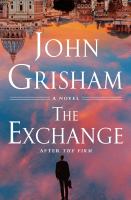
Book Group: The Exchange: After the Firm by John Grisham, Feb 11, 2026

#1 New York Times bestselling author John Grisham delivers high-flying international suspense in a stunning new legal thriller that marks the return of Mitch McDeere, the brilliant hero of The Firm. What became of Mitch and Abby McDeere after they exposed the crimes of Memphis law firm Bendini, Lambert & Locke and fled the country? The answer is in The Exchange, the riveting sequel to The Firm, the blockbuster thriller that launched the career of America’s favorite storyteller. It is now fifteen years later, and Mitch and Abby are living in Manhattan, where Mitch is a partner at the largest law firm in the world. When a mentor in Rome asks him for a favor that will take him far from home, Mitch finds himself at the center of a sinister plot that has worldwide implications–and once again endangers his colleagues, friends, and family. Mitch has become a master at staying one step ahead of his adversaries, but this time there’s nowhere to hide.

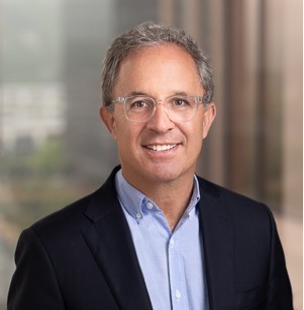
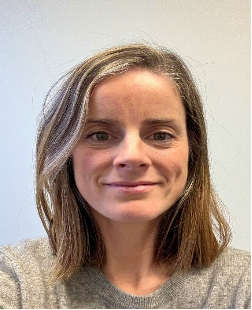
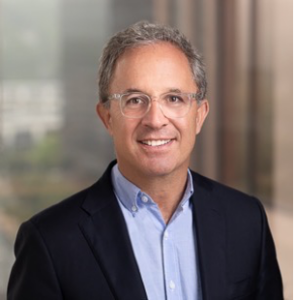
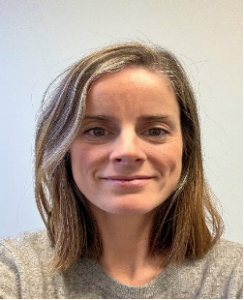
David Genovese and Kate Perez
“The Corbin District: Two Decades to Reset Darien’s Downtown”
Jan. 28, 2026


The Corbin District is the largest real estate development in Darien’s history. Taking shape on almost seven acres of land in the heart of downtown. Its developer Baywater Properties, a privately held commercial real estate company in Fairfield and Westchester Counties, is re-imagining Darien by resetting the town’s shopping, dining, lifestyle, work and entertainment experiences. R. David Genovese, Baywater’s CEO, will provide an update on the development’s progress, completion date and leasing status. He will be joined by Kate Perez, The Corbin District’s project executive.

Baywater launched this exciting transformation of downtown Darien in 2019 with attention to detail and a sharp focus on creating what will be one of the most enjoyable and walkable downtown areas, not just in Darien, but across southwestern Connecticut. The project includes 29 stores, seven restaurants and eateries, three fitness studios, 110,000 square feet of Class A office space, a town green, three public plazas that can be combined for community events, 112 luxury apartment units and 850 new parking spaces. The work has already attracted top culinary talent and purveyors and prominent office space tenants, who are attracted to a one-of-a-kind architectural setting centered around a new town square. Several beautiful outdoor public spaces will activate the area, hosting farmers’ markets, outdoor concerts and various community gatherings.

Our speakers will discuss the project’s cost, leasing status for retail and office tenants who’ve already pre-leased space in the project, the timeline for completion and occupancy for each of the project’s several phases, as well as challenges the development has faced along the way.

Video Presentation 

Summary of Presentation by David Genovese and Kate Perez on 1/28/26

David Genovese and Kate Perez presented an in-depth update on the Corbin District, framing it as a nearly 20-year effort to reset and reimagine downtown Darien. What will emerge is the largest real estate development in the town’s history, built on nearly seven assembled acres after years of complex land acquisitions involving more than a dozen separate properties.

Genovese emphasized that the project was never intended to feel like a single, monolithic development. Instead, the goal was to create a downtown that looks as though it evolved organically over time, with varied architecture, walkable streets and inviting public spaces. The completed district will include 32 retail stores, seven dining establishments, 112 apartments, approximately 110,000 square feet of office space and about 850 parking spaces, supported by a mix of underground, structured and surface parking.

A major theme of the presentation was that the developers focused on community over pure economics. Rather than chasing only national chains or the possible highest rents, Baywater curated tenants through word-of-mouth, prioritizing distinctive businesses and preserving beloved local retailers by phasing construction so that the retailers could relocate within the district. Public gathering spaces — plazas, shared streets and landscaped areas — were intentionally designed to encourage people to linger, socialize and experience downtown without needing to buy something.

The visible transformation work began in 2019 with a big construction push culminating in Phase 1 (completed and 100% leased) and Phase 2 (under construction and almost 85% pre-leased).

Parking: David described parking as Baywater’s #1 challenge. The plan’s 850 spaces have the following characteristics:

  • Large structured garage near the Darien Sport Shop side;
  • 80–85 surface spaces behind the project (near I-95), giving a choice to people who dislike garages;
  • Free parking (unless the town implements paid parking; leases are written to match the town’s rate if that happens); and
  • Strong discouragement of “park-and-ride to NYC” abuse (drivers will be charged if they leave cars all day and take the train).

Baywater emphasized internal streets — Market Street and Penny Lane — including a Dutch concept of a shared street where pedestrians and cars co-exist without car dominance. Penny Lane can be closed May 1 to November 1 each year for pedestrian use and public-space programming.

Retail Leasing: The project has no “for lease” signs on it and no CoStar digital marketing. Leasing has been promoted by word-of-mouth and curated toward “unique” offerings rather than only high-rent national retail chains. Examples mentioned included:

  • High end sushi restaurant;
  • Tatte Bakery (Boston-based café brand);
  • Millie’s (from Nantucket);
  • Corsica Wine Bar (part of Barcelona Restaurant Group);
  • Rhone (men’s athletic wear, locally connected ownership);
  • Barry’s Bootcamp; and
  • Chopt Creative Salad Co.

Baywater deliberately phased construction so that legacy local tenants (e.g., Barrett Bookstore, Toy Box) could relocate within the district rather than disappear for years.

Office Leasing: The office building was positioned by I-95 to act as a sound buffer (rather than having apartments face the highway) and designed so the fifth floor is stepped back to reduce perceived bulk from the plaza. Some tenants include:

  • McKinsey committed to 12,000 square feet (moving from Stamford);
  • Aon took 30,000 square feet;
  • Balance Point Capital (leasing the entire fifth floor)

David said Darien had never seen office rents above $50 per square foot, but their rents have escalated from $60 to $70 to $79 and now $90 per square foot (while also noting construction costs rose dramatically due to pandemic-era inflation and higher interest rates).

Apartment Leasing: Baywater designed units for downsizers “without compromise,” including unusually generous bathroom layouts (e.g., 1 BR units with a bathroom plus a separate powder room). David described the tenant mix as:

  • 10% young couples “trying Darien;”
  • 50% empty nesters;
  • 20–30% people relocating to be near adult children and grandchildren
  • About 10% young families. In that connection, David reported that the impact on schools seems minimal as there are only three school-age children in the first 38 apartment units.

Construction Efforts: Kate Perez detailed the extraordinary engineering behind Phase Two, including construction of a large underground garage anchored below the water table. This required extensive dewatering and the installation of rock anchors drilled into bedrock to prevent the structure from lifting due to groundwater pressure. She described the excavation, precast garage construction, and the ongoing challenge of placing utility lines underground along the Boston Post Road. She detailed the following challenges to construction of the garage:

  • Underground garage slab is 14.5 feet below grade;
  • Water table is eight feet below grade (very high);
  • Construction required 263 rock anchors (four-inch steel bars screwed into bedrock) to keep the slab from “floating” when groundwater rises;
  • A “dewatering system” ran for over1.5 years to lower the water table;
  • Excavation resulted in exporting more than 70,000 cubic yards of material; and
  • Offsite fabrication of pre-cast components.

David also highlighted the Corbin District’s broader impact: attracting Class A office tenants previously unseen in Darien, achieving apartment rents well above expectations, and enhancing downtown’s appeal to young couples, empty nesters and grandparents relocating to be near family — all while adding very few school-age children.

David and Kate presented the Corbin District as a long-term civic investment, shaped by patience, design quality and a belief that a vibrant, walkable downtown strengthens both community life and property values in Darien.

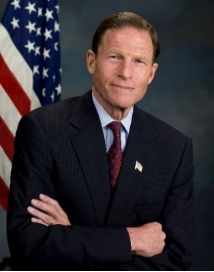
U.S. Sen. Richard Blumenthal,
“An Update from Washington”
Jan. 21, 2026

Sen. Richard Blumenthal will discuss relevant current topics, including Ukraine, AI, veterans, the economy, workforce development, tariffs and manufacturing. Sen. Blumenthal served as a U.S. attorney for Connecticut from 1977–1981. He then served in the Connecticut House of Representatives from 1984–1987 and the Connecticut State Senate from 1987–1990. From 1991–2011, he served as Connecticut’s attorney general for an unprecedented five terms.

Sen. Blumenthal was sworn in to represent Connecticut in the U.S. Senate in 2011. Having been re-elected in 2016 and 2022, he is serving his third term. He is a member of the U.S. Senate’s Committee on the Judiciary, Committee on Homeland Security & Governmental Affairs, Committee on Armed Services, Committee on Veterans’ Affairs and the Special Committee on Aging. He has built a longtime advocacy for consumers by holding companies accountable for the safety of their products and is working to bring Connecticut’s transportation systems and infrastructure into the 21st century. Working with Connecticut’s congressional delegation, he has secured billions of dollars of federal funding to improve rail safety, promote climate resiliency, and protect Long Island Sound and Connecticut’s rivers and streams.

His father, who fled Nazi Germany at age 18, and mother, who left Nebraska’s farmland to become a social worker, raised Sen. Blumenthal with a deep dedication to public service, a duty to give back by helping others and a bedrock belief in hard work. Those values carried him through his childhood and his education at Harvard College and Yale Law School. At Harvard, he was editorial chairman of The Harvard Crimson and achieved Phi Beta Kappa and magna cum laude recognition. In law school, he was editor-in-chief of the Yale Law Review. He also worked as assistant to Daniel Patrick Moynihan when he was assistant to the President of the United States.

After graduating from law school in 1973, Sen. Blumenthal clerked for then U.S. District Judge Jon Newman and then for U.S. Supreme Court Justice Harry A. Blackmun. Sen. Blumenthal then transitioned to lead the staff of Connecticut’s U.S. Sen. Abraham A. Ribicoff as an administrative assistant (a position now known as chief of staff).

Arranged by Bob Fiske

Video Presentation 

Summary of Presentation by Senator Blumenthal on 1/21/26

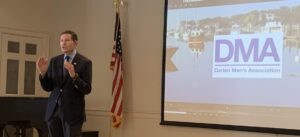
Senator Blumenthal thanked the group for the invitation to speak and reflected on his early years in public service. He paid tribute to Bob Fiske, a long-time DMA member who passed away last year. Bob and Blumenthal had been good friends. Bob had served as U.S. Attorney for the Southern District of New York, and Blumenthal praised him as having been a great source of help to Blumenthal when he served as U.S. Attorney for Connecticut. Blumenthal pointed out that Fiske had emphasized the importance of cooperation among local, state, and federal law enforcement, and Blumenthal criticized what he describes as a breakdown in that relationship in Minneapolis, arguing that effective prosecutions require the trust and knowledge of the local community held by local police.

Addressing the possibility of a federal shutdown when the current Continuing Resolution expires at the end of January, Blumenthal said that he does not expect one because shutdowns have no winners and Congress has enough time to finish its appropriations before the Continuing Resolution expires. He pivoted to cost-of-living concerns about which he has heard from constituents he has visited throughout Connecticut, particularly electricity, food, and healthcare costs. He argued that continuing to subsidize health insurance coverage makes sense because it encourages preventive care and avoids the more expensive alternative of uninsured people relying on Emergency Room care at hospitals.

Speaking as ranking member on the Senate’s Veterans Affairs Committee, he said the VA has lost 30,000 staff, harming access to care, and he has held oversight hearings and created a report on this issue on that agency. On national security, he called for strong defense funding, especially submarines built in Connecticut, and expressed concern about China’s growing naval capacity. He has strongly supported aid to Ukraine, recounting his multiple visits there, and argued that U.S. support is essential to protecting American security and stopping Putin from seeking to restore Russia to the size of the former U.S.S.R. Blumenthal stressed the benefits of bipartisanship, citing his work on AI policy and the “Kids Online Safety Act” which passed the Senate overwhelmingly but stalled in the House amid Big Tech lobbying. He reminded members about a practical concern regarding USPS postmark practices, informing us that the USPS has acknowledged that due to recent process changes, postmarks are no longer a reliable indicator of the date a letter is mailed — important for time-sensitive filings.

In Q&A, he was asked for his view about imposing age limits for holding high public office. He replied that elections serve as the main “limit.” Reflecting on astory about Supreme Court Justice William Douglas suffering a stroke when Blumenthal was clerking for another Justice, noting that Douglas had to be persuaded to resign even though he had been hospitalized and had been unable to perform his duties, Blumenthal conceded that age limits might make sense for some senior roles. He added wryly that such limits would be difficult to enact because every office holder wants to hold office forever. On immigration, he endorsed comprehensive reform — border security plus an earned path to citizenship — and condemned demonization of immigrants, describing naturalization ceremonies as a powerful reminder of American ideals, including his own family’s immigrant story.

Pressed about President Trump and Ukraine, he refused to speculate about the President’s psychology but admitted to being baffled by President Trump’s posture because he believes that strength through allied relationships is needed to maintain peace. Asked about ICE and protests, he asserted that ICE agents have acted recklessly. He called for higher training and enforcement standards, and stated that excluding local police is a serious mistake. He also stressed that protests must remain peaceful.

Asked about America’s economic resilience and sufficiency of manufacturing capacity, he noted his support for current industrial policy in critical areas like semiconductors and tied supply-chain vulnerability to lessons learned during the COVID period. He also warned about market concentration. As an example of his concern, he asserted that consolidation and private equity ownership of fire truck manufacturers have led to higher prices, delays in delivery dates and reduced ability for purchasers to customize.

Asked how the U.S. can restore civil discourse, he replied that it starts with individual responsibility and leaders modeling restraint. On the issue of whether the U.S. should acquire Greenland, he argued the U.S. can pursue resources and security interests through investment and partnership rather than “bullying,” and he closed by emphasizing that alliances — especially NATO — are essential in a world of rising threats. He ended on a note of optimism, expressing confidence in American strength and civic engagement.

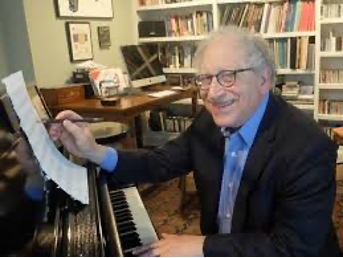
Orin Grossman, Ph.D.
“George Gershwin: One of America’s Greatest Composers”
Jan. 14, 2026

George Gershwin (1898–1937) is one of America’s greatest composers and a true rarity. He was at home in many different musical worlds, from Broadway and Hollywood musicals to opera and symphonic works with his compositions spanning jazz, popular and classical music. Among his best-known works are “Rhapsody in Blue,” “Swanee,” “An American in Paris,” “Porgy and Bess,” “Embraceable You,” “I Got Rhythm,” “Summertime” and “Of Thee I Sing.”

The 1920s, in particular, saw the establishment of a new American spirit on Broadway. Inspired by Jerome Kern’s shows in the late teens, a new, young group of American composers and lyricists threw off the European trappings of former shows and created the concept of the ‘American Musical’. Brassy and irreverent, these shows featured such composers and lyricists as George Gershwin and his brother Ira Gershwin, Rogers and Hart, Jerome Kern, Dorothy Fields, Irving Berlin and Cole Porter. Many of their songs and lyrics remain a part of our American heritage today, a century later.

Dr. Orin Grossman is renowned internationally for his knowledge of music. He has been closely associated with the music of George Gershwin, lecturing and performing concerts of his music to critical praise around the world, including performances in Florence, Cairo, and St. Petersburg. Dr. Grossman was also chosen to play for the New York City Mayor’s Awards of Honor for Arts and Culture. He graduated magma cum laude in music from Harvard College and continued his studies at Yale University, earning a Ph.D. in music. Dr. Grossman became assistant professor of fine arts at Fairfield University in 1975 and dean of its College of Arts and Sciences in 1991. He was then appointed to be the university’s academic vice president in 1999. In 2009, he returned to teaching as professor of visual and performing arts.

Orin’s presentation will include live unique piano performances, which will use Gershwin’s own piano arrangements — arrangements that Gershwin created to give the public a sense of how he played his own songs at private parties.

Video Presentation

Summary of Dr. Orin Grossman’s DMA Presentation on January 14, 2026

Dr. Grossman explored why George Gershwin remains one of America’s most important composers, not only for his famous concert works like “Rhapsody in Blue”, “An American in Paris”, and “Porgy and Bess,” but also for the popular songs that became the backbone of the great American songbook. Grossman described Gershwin as uniquely at home in multiple musical worlds — Broadway, jazz, popular song and classical composition — and emphasized how his melodies have lasted for a century because they combine sophistication with emotional directness.

Grossman traced Gershwin’s early life in New York as a lower-middle-class kid who dropped out of school as a teenager, took odd jobs in the music business and pursued music with relentless drive. Grossman noted that although many people assume Gershwin was mostly self-taught, he had formal musical training as well as a deep curiosity that pushed him to develop his own style. His breakthrough came with Swanee,” which Gershwin wrote when he was about age 20, and which was made famous by entertainer Al Jolson. Grossman placed the song in the context of the blackface/minstrel tradition, explaining how that world shaped early American entertainment and how Gershwin later became embarrassed that his career began there.

A key point of the talk was how Gershwin’s songs remain popular because performance styles changed. Early recordings from the 1920s often sound stiff to modern ears because singers had to keep a strict beat for dancing. With the rise of the microphone and more advanced recording techniques, artists like Bing Crosby, Louis Armstrong and, later, Frank Sinatra developed conversational phrasing — slightly ahead of or behind the beat — that made songs feel like spoken poetry. Grossman demonstrated this with “The Man I Love,” contrasting an early recording with a later, smoother interpretation.

Grossman also highlighted Gershwin’s extraordinary productivity, especially in 1924, in which he wrote songs for the George White Scandals, which were popular Broadway revues modeled after the Ziegfield Follies, and premiered “Rhapsody in Blue.” He also produced a major Broadway hit that year with his brother Ira. In closing, Dr. Grossman performed “Summertime” on the piano, noting Gershwin’s admiration for Duke Ellington and his insistence that “Porgy and Bess” be performed only by black artists. In Q&A, Grossman explained that Gershwin respected both popular and classical music.  Grossman noted that Gershwin may have shown greater personal ambition with respect to classical compositions but surmised that this may have been because Gershwin was unique among popular composers in being able to excel in both traditions.

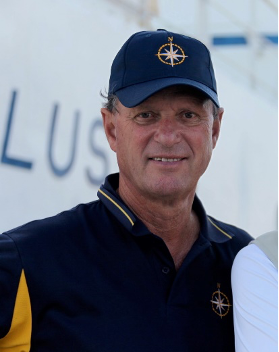
Robert D. Ballard, Ph.D., CEO and Founder, Ocean Exploration Trust
“What We’ve Learned In 50 Years Under the Sea”
Jan. 7, 2026

Dr. Robert Ballard is one of the world’s most famous oceanographers. He is best known for his 1985 discovery of the legendary RMS Titanic, which captured the world’s attention. Dr. Ballard also has succeeded in tracking down numerous other significant shipwrecks, including the German battleship Bismarck, the lost fleet at Guadalcanal, the U.S. aircraft carrier Yorktown (sunk in the World War II Battle of Midway) and John F. Kennedy’s boat, PT-109.

While those discoveries have captured the imagination of the global public, Dr. Ballard believes his most important discoveries were, in fact, of hydrothermal vents and “black smokers” in the Galapagos Rift and East Pacific Rise in 1977 and 1979, along with their exotic life forms living off the energy of the earth through a process called chemosynthesis. Fifty years ago, the deep sea was terra incognito. We knew next to nothing about what lay underneath the waters that cover 70% of the earth’s surface. Fifty years later, in vast areas supposedly devoid of life, scientists found large ecosystems teeming with life, including non-photosynthetic life forms that biologists thought were impossible.

His discoveries also include sunken remains of ships along ancient trade routes in the Mediterranean Sea; two ancient Phoenician ships off Israel, the oldest shipwrecks ever found in deep water; and four 1,500-year-old wooden ships, one almost perfectly preserved in the Black Sea. Dr. Ballard’s Black Sea project seeks evidence of a great flood that may have struck the region thousands of years ago.

Arranged by David Earle

Video of Presentation 

Summary of Robert Ballard’s Presentation to DMA on 1/7/26

Robert D. Ballard, Ph.D., one of the world’s most famous oceanographers, reflected on his young life which was shaped by curiosity and a lifelong fascination with exploration. Born in Kansas and raised amid the aerospace world of Southern California, he fell in love with the ocean after his family moved to San Diego. A childhood viewing of 20,000 Leagues Under the Sea ignited his dream of becoming “Captain Nemo,” a dream that evolved into oceanography and undersea exploration.

Ballard’s career became a rare fusion of science and military service. Trained initially as an Army officer during the Vietnam War era, he was later transferred to the Navy and assigned to the Woods Hole Oceanographic Institution, where he worked on deep-submergence submarines, often in classified operations. This dual background led him to study the ocean floor as complex terrain, revealing the immense scale of mid-ocean ridges and helping confirm plate tectonics as a unifying theory of Earth science.

He is best known for his discovery of the RMS Titanic in 1985, which immediately captured the world’s attention. He also has succeeded in finding numerous other important shipwrecks, including the German battleship Bismarck, the lost fleet at Guadalcanal, the U.S. aircraft carrier Yorktown (sunk in the World War II Battle of Midway), and John F. Kennedy’s boat, PT-109.

While those discoveries of historic ships have fueled the imagination of the global public, Ballard believes that his most important discoveries were of hydrothermal vents — “black smokers,” which caused the rewriting of geology, chemistry and biology textbooks. These vents have proven to be a key mechanism for cycling the ocean’s chemistry throughout the Earth. They are part of ecosystems powered not by sunlight and photosynthesis, but rather by chemosynthesis in waters that are not penetrated by sunlight. The discovery reshaped ideas about the origin of life on Earth and strengthened the case that life could exist elsewhere in the universe, though Ballard emphasized there is “no Planet B” in our solar system or any other on which humanity can live meaningfully.

Seeking to escape the physical limits of human diving, Ballard pioneered tele-presence exploration: robotic vehicles, real-time data and global expert networks that allow scientists to explore the undersea world remotely. This technology enabled both open scientific discovery and secret Cold War missions, including the classified work that ultimately led to the discovery of the RMS Titanic. That success sparked decades of underwater archaeology, from World War II wrecks to exquisitely preserved ancient ships in the oxygen-limited Black Sea.

Ballard expressed deep concern about artificial intelligence, particularly in military contexts, calling it transformative but dangerous if uncontrolled. Regarding climate change, he stressed evidence over ideology, noting risks to our planet deriving from a warming climate, methane release, and intensified storms. He also outlined a vision for a “blue economy,” which would include carefully targeted deep-sea mining and ocean-based food systems that minimize environmental harm. Throughout, Ballard framed his work as being in service to future generations, urging curiosity, courage and responsibility in an increasingly uncertain world.


« Older posts Newer posts »