Author: Webmaster (Page 96 of 97)

Speaker – January 21, 2015
Les de Villiers will speak about his recent visit with the gorillas on both the Rwandan and Ugandan side of the Virunga Mountains

1Two_Silverbacks_Rwanda_R

Two Silverbacks ignoring each other in Rwanda

Having seen most everything Africa has to offer by way of wildlife during numerous safaris, De Villiers undertook this trip see why other seasoned safarists are so smitten with these endangered primates.

After visiting with chimpanzees several times in Tanzania before, he was hardly prepared for what turned out to be a life-changing experience. De Villiers will share his experiences and will show a selection of pictures as well as a short video of his encounters.

Safari consultant Les de Villiers grew up in a farming district in the Great Karoo region of South Africa where he learned to appreciate nature. Horse riding, hunting and playing rugby were rites of passage. His hunting days came to an abrupt end in the seventies when he found his trigger finger trembling with a huge kudu bull in the sight. He fired a shot in the air, sold his rifles and bought a good camera. He has been shooting many meters of film before the advent of digital photography and now enjoys the luxury of picking through gigabytes of material gathered during safari trips.

After a diplomatic career that involved negotiations with decision makers and heads of state in Africa, Europe and the United States he moved to New York in the late seventies to become vice-chairman of a management consulting firm and subsequently established his own company. He runs a publishing firm, specializing in Africa books, and a boutique safari operation.

He has a doctorate in economic history and has written more than a dozen books on economics, politics, conservation and travel.

A self-declared safari addict and enthusiastic conservationist, De Villiers travels to wildlife sanctuaries in Africa several times year for his fix while checking out properties. For several years he has been arranging customized safaris for clients in the United States together with a team of carefully selected associates in Africa.

Arranged by Alex Garnett


Speaker – January 14, 2015
Steve Roach, author of “Unbalanced: the Codependency of the U.S. and China”, will speak about the economic dynamics of the relationship between these two superpowers.

roach_stephenStephen Roach is a Senior Fellow at Yale University’s Jackson Institute of Global Affairs and a senior lecturer at Yale School of Management.

He was formerly chairman of Morgan Stanley Asia and the firm’s chief economist for the bulk of his 30-year career at Morgan Stanley, heading up a highly regarded team of economists around the world.

His current teaching and research program focuses on the impacts of Asia on the broader global economy. At Yale, he has introduced new courses for undergraduates and graduate students on the “The Next China” and “The Lessons of Japan.” His writing and research also addresses globalization, trade policy, the post-crisis policy architecture, and the capital markets implications of global imbalances.

Stephen Roach has long been one of Wall Street’s most influential economists. His work has appeared in academic journals, books, congressional testimony and has been disseminated widely in the international media. Roach’s opinions on the global economy have been known to shape the policy debate from Beijing to Washington.

His most recent book, Unbalanced: The Codependency of America and China (Yale University Press, 2014) lays bare the pitfalls and the opportunities of the current China-U.S. economic relationship.

Prior to joining Morgan Stanley in 1982, Mr. Roach served on the research staff of the Federal Reserve Board and was also a research fellow at the Brookings Institution. He holds a PhD in economics from New York University.

Arranged by Tom Lom

Speaker – January 7, 2015
Jack Cavanaugh, acclaimed author, will speak about his new book, “Mr. Inside and Mr. Outside: World War II, Army’s Undefeated Teams, and College Football’s Greatest Backfield Duo”.

Mr. Inside & Mr. OusideHeisman Trophy winners Glenn Davis and Felix Blanchard—renowned during their playing days at West Point as “Mr. Inside and Mr. Outside”—were the best-known college football players in the country between 1944 and 1946, and Army was the nation’s top-ranked team under legendary coach Red Blaik.

Cavanaugh takes readers through the Black Knights’ three consecutive National Championship seasons, including the 1946 “Game of the Century” between Army and Notre Dame, the only college game to date to have included four Heisman Trophy winners.

Cavanaugh also examines the impact the war had on Army’s success—because its players were already considered to be in the military and thus deferred from active duty while students at West Point, Army featured many outstanding high school and prep school players in those years. A unique look at the changes that took place in sports and almost every aspect of American life in the wake of World War II, this book a must-read for fans of college football and military buffs in addition to Army fans.

Arranged by Alex Garnett

September 18, 2014
Bus Trip to Locust Grove and Storm King

The trip to visit Locust Grove, the home of Samuel F. B. Morse, and the Storm King Art Center with a gourmet lunch at the Canterbury Brook Inn was an outstanding success. Thanks to Mel Klugman for his effort in organizing the trip and special thanks to Mel for treating the group to their first glass of wine.

 Locust Grove

Overlooking the Hudson River in Poughkeepsie New York, the 200-acre Locust Grove Estate includes an Italianate villa designed in 1851 for artist and inventor Samuel F. B. Morse by architect A. J. Davis.

Begining in 1895 new owners William and Martha Young redecorated the mansion with their vast collection of art and antiques, and added new gardens.  Mr. and Mrs. Young’s daughter, Annette, lived at Locust Grove until 1975, preserving the estate essentially as her parents had used it.  Today Locust Grove, with miles of carriage roads, landscaped grounds, historic gardens and Hudson River views, is an independent not-for-profit museum and nature preserve established by Annette Innis Young.

Inside the historic mansion, step back in time to the early years of the 20th century; the Young family’s collection of Hudson River School paintings, early 19th-century American furniture, and personal possessions are still in place after more than a century.

DSCN2575
DSC02727


Storm King Art Center

Widely celebrated as one of the world’s leading sculpture parks, Storm King Art Center has welcomed visitors from across the globe for fifty years. It is located only one hour north of New York City, in the lower Hudson Valley, where its pristine 500-acre landscape of fields, hills, and woodlands provides the setting for a collection of more than 100 carefully sited sculptures created by some of the most acclaimed artists of our time.

DSC02755 DSC02753 DSC02751 DSC02749 DSC02746 DSC02742


DSC02774 DSC02773 DSC02770 DSC02769 DSC02766
DSCN2594 DSCN2592
DSC02791 DSC02789 DSC02787 DSC02785 DSC02777 DSC02776 DSC02775


Canterbury Brook Innimages

Chef and Owner Hans Baumann serves authentic Swiss and American Cuisine nightly from Tuesday through Saturday. Now approaching it’s 20th year in the historic location, Canterbury Brook Inn offers diners traditional Swiss Cheese Fondue, Wienerchnitzel, Bratwurst with Rosti, all artfully crafted in a quaint country setting. From the rustic dining room, dark wood beamed European tap room, multiple fireplaces or the ‘al fresco’ patio overlooking the Idlewild Brook diners find an ambiance suitable to all seasons.

Speaker – December 3
Bob Mazzone will speak about the CT Challenge and the CT Challenge charity Bike Ride


The CT Challenge mission is to empower cancer survivors to live healthier, happier and longer lives. In 2012, programs funded by the CT Challenge impacted the lives of over 54,000 cancer survivors.

Bob_MazzoneBob Mazzone,  Chief Operating Officer, leads operations for the CT Challenge and the CT Challenge charity Bike Ride that finances the bulk of all programming.

Prior to joining the CT Challenge in 2006, Bob spent 20 years in sports, event and promotional marketing at organizations including Golf Digest, the Major League Baseball Players Association and ISL Marketing. A graduate of Harvard College with a concentration in Biology, he is a resident of Darien, CT, where he lives with his wife, Kim, and their two daughters.

November 13, 2014
DMA Volunteers Repair the Town’s Christmas Wreaths

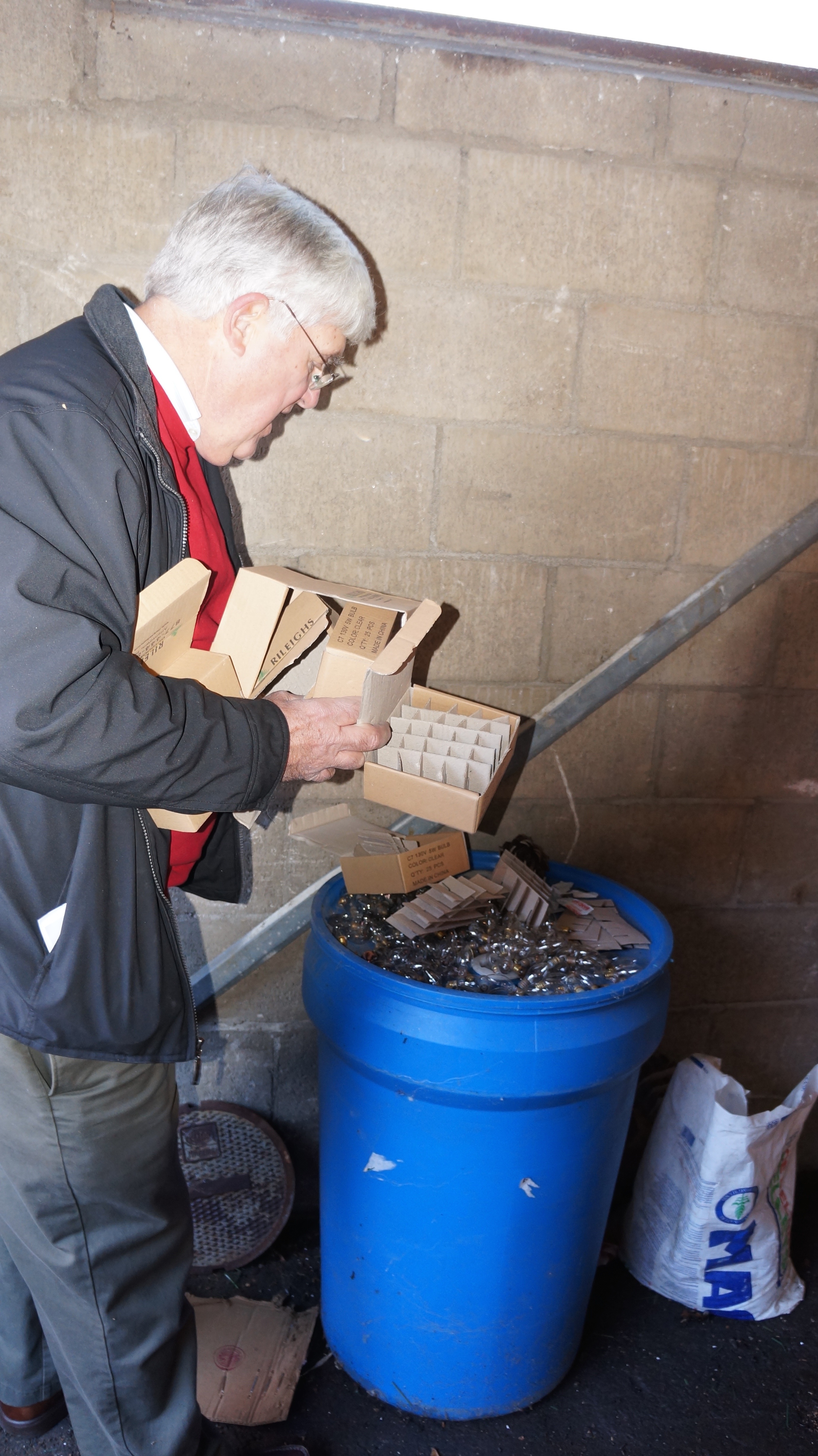
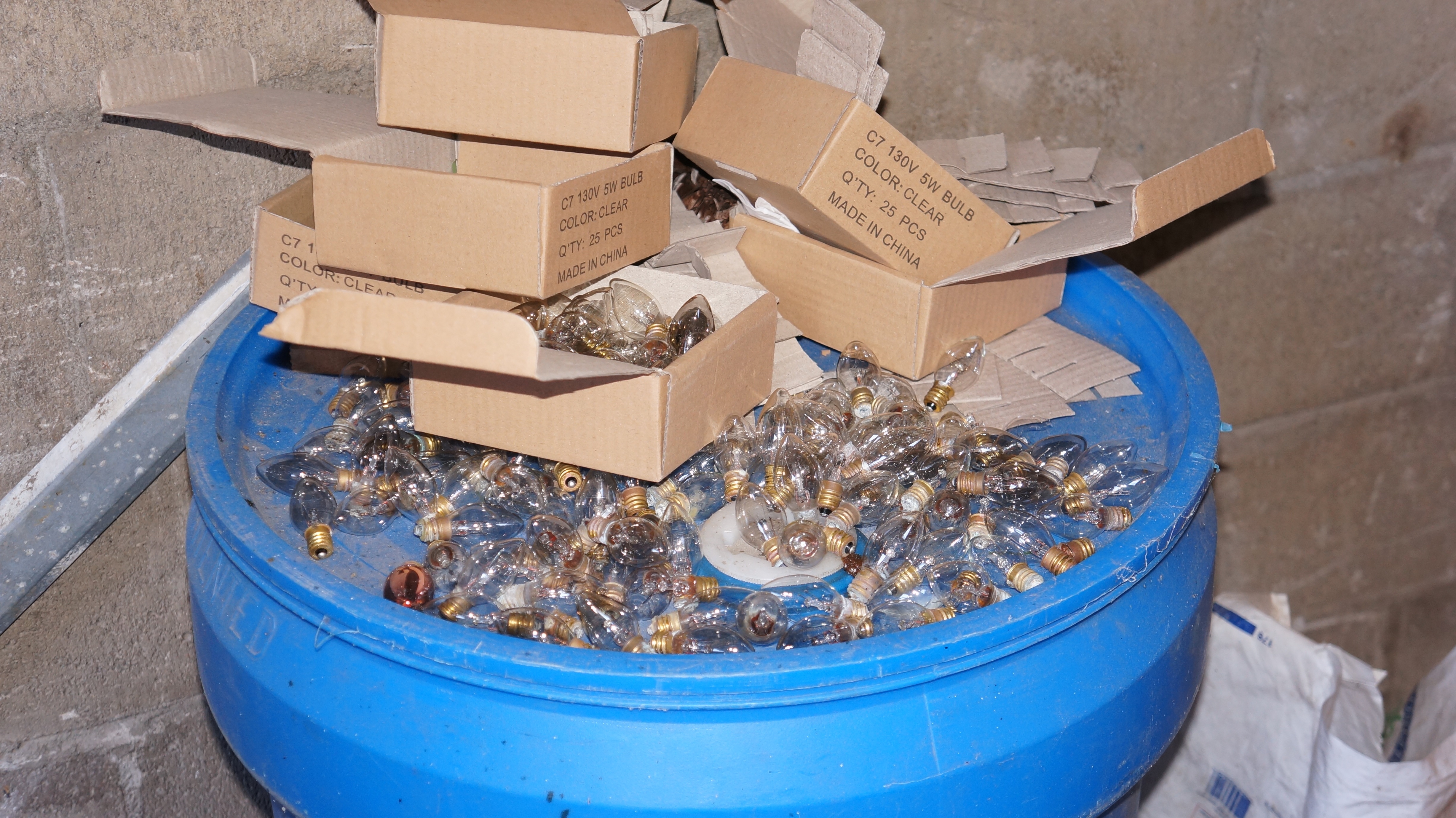
The Darien Men’s Association (DMA) gathered once again  at 9 a.m. on a cold November morning to help the Darien Chamber of Commerce take the wreaths out of storage and check all the lights. They replaced over 190 lights on our town wreaths. Now the wreaths are ready to be put up on the town lamp posts to decorate our town for the Holidays. The trees on Tokeneke Road will also be lit with lights to decorate the road. The Darien Chamber of Commerce raises the annual cost to pay for the wreaths and lights in town to be placed and removed through contributions from our town merchants and residents.

Wreath MaintenanceB

From Left to Right —Lou DeAngelis,, Taylor Strubinger, Tom Williams,Tom Taylor, Jack Fitzgibbons, Alex Garnett, Joe Spain, Bob Smith, Buck Margold , Tom Brayton, , Tony Kwedar

Coffee was available

Coffee and doughnuts were available for the volunteers

DSC02843

DSC02842

DSC02847

Some cleanup needed to be performed by Jack our leader and coordinator.

We replaced about 190 lights

About  190 lights had to be replaced!

Report on the 2014 Silvermine Challenge
by Denny Devere the DMA Team Captain

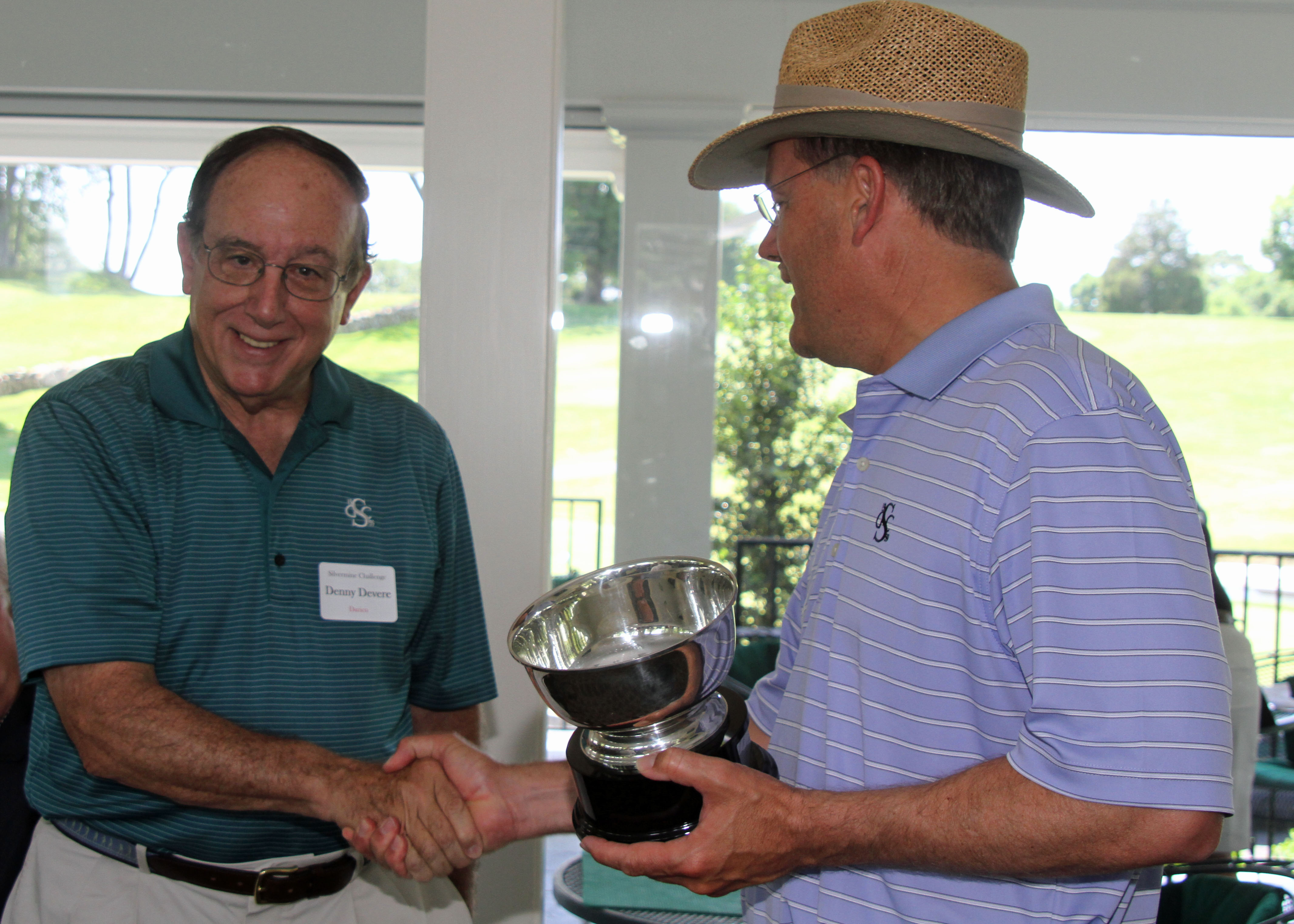
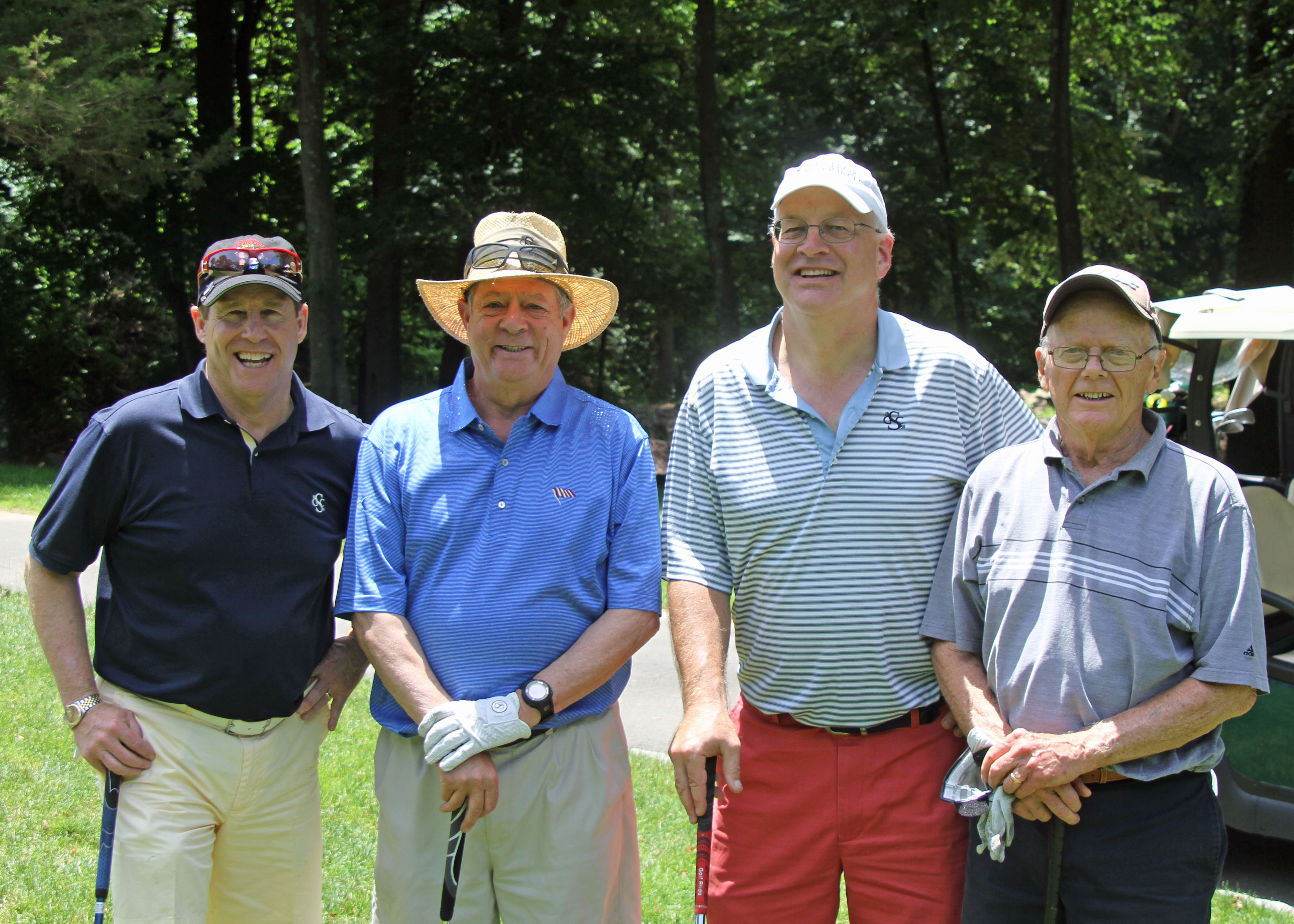
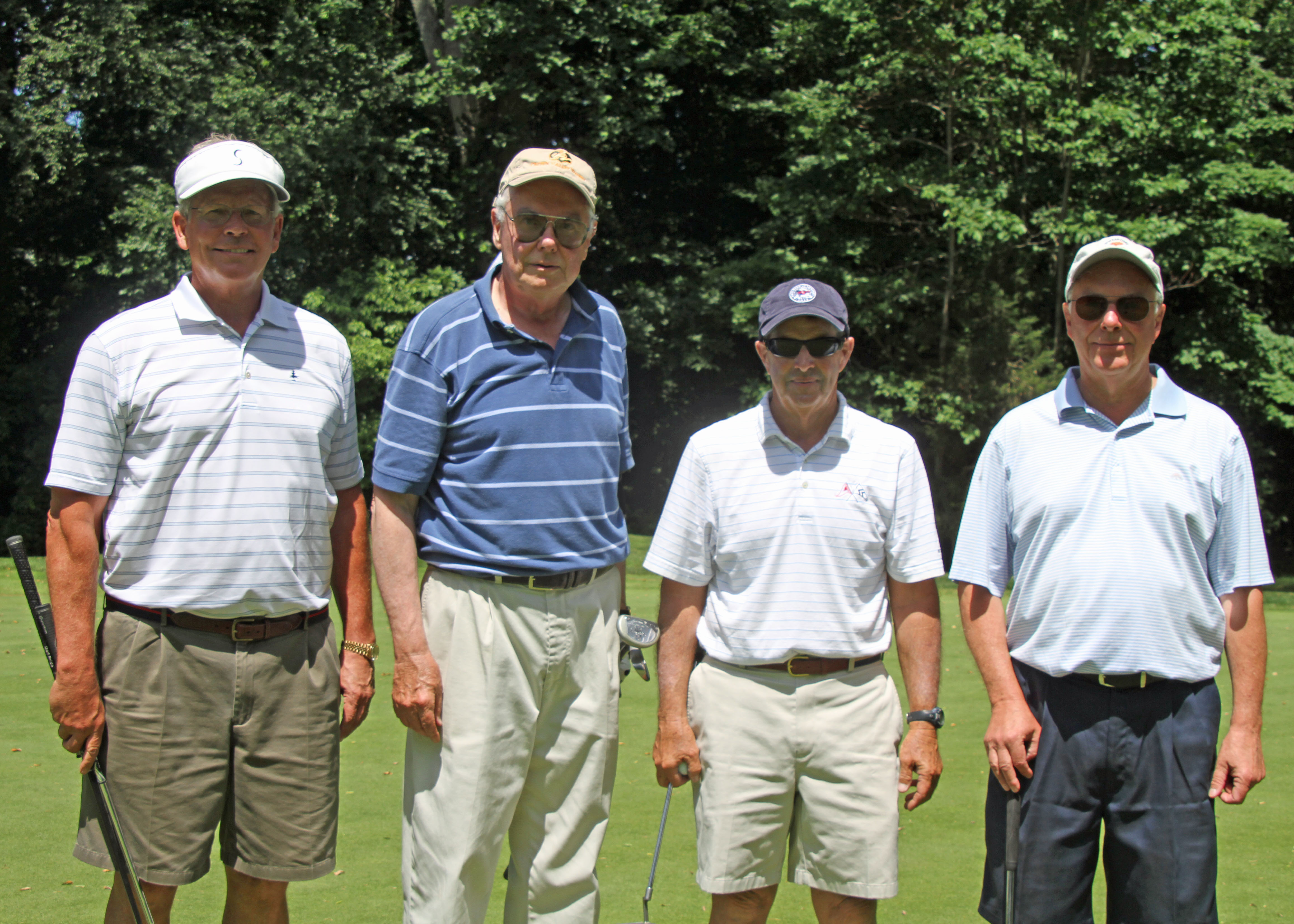
For those who missed my recap at a recent DMA meeting, the DMA – SMCNC (Senior Men’s Club of New Canaan) Golf Tournament was held at the Silvermine Golf Club on June 18, 2014. This is the third year in a row that this golf tournament between the two men’s organizations has been held. After losing the inaugural match in 2012, DMA has won the last two matches and the Silvermine Challenge trophy by identical 18.5 to 11.5 scores. Our own Terry Brewer won the Long Drive Contest for the second year in a row.

I am particularly grateful to the following players who willingly made themselves available to play on the DMA team:

  • Tom Haack
  • Jim Kelly
  • David Mace
  • Bob Baker
  • Peter Carnes
  • Alex Garnett
  • George Gilliam
  • Austin Schraff
  • Tom Hayne
  • Ron Kahan
  • Mike Brennan
  • Tom Reifenheiser
  • Kevin Monahan
  • Doug Campbell
  • Joe Holmes
  • Terry Brewer
  • Jim Crane
  • Fred Conze
  • Chris Filmer.

DMA has a strong golf team when our best players are able to participate. Last-minute cancellations were kept at a minimum which made my job as Captain much easier.

I am grateful as well to Alex Garnett – our Chief Talent Scout and Recruiter. Kudos to Ben Briggs who made time to travel around the course to cheer on the team.

Harvey Place, my counterpart at SMCNC, and I arranged to have the foursomes sit together which enhanced the interaction and camaraderie between the two groups. This is a spirited yet friendly competition. Hopefully, we can continue to schedule this annual golf tournament between DMA and SMCNC for many more years.

slide3

Silvermine Golf Club

Denny receiving the Winner's Trohy

Denny receiving the Winner’s Trohy

IMG_3720_edited-1

IMG_3716_edited-1

IMG_3712_edited-1

IMG_3707_edited-1

IMG_3706_edited-1

IMG_3697_edited-1

IMG_3686_edited-1

IMG_3684_edited-1

IMG_3680_edited-1

IMG_3643_edited-1

IMG_3639_edited-1

IMG_3636_edited-1

IMG_3629_edited-1

IMG_3620_edited-1

IMG_3603_edited-1

IMG_3576_edited-1

IMG_3553_edited-1-2

IMG_3587_edited-1

Speaker – December 17
The DMA’s Christmas Season Cocktail Party will replace the regular meeting and feature a Christmas concert by the Blue Notes singing group

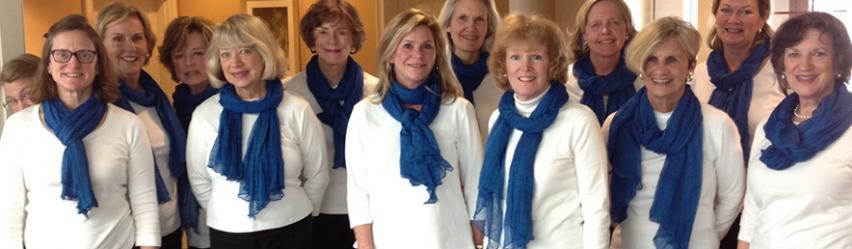
Founded over 60 years ago, the Blue Notes are a philanthropic group of women who volunteer their time and talent for a good cause. Singing music from Big Band to Broadway, the group performs in four-part harmony for senior centers, assisted living venues and for a variety of audiences throughout Southern Fairfield County. Their director, Dr. Craig Scott Symons, is also the director of the First Congregational Church of Greenwich choir.

Blue-Notes-banner1-wpcf_852x249

Happy Wanderers NY Highline, November 20, 2014

Bill Bellis and Taylor Strubinger are leading the Happy Wanderers to explore the High Line Park in NYC on November 20th. It’s always entertaining, educational and healthy! So get your walkin’ shoes on and join them.

The High Line is a 1.45-mile-long New York City linear park built on a section of a disused New York Central Railroad spur called the West Side.

Metro North Train Schedule:

Darien station at 8 58 AM

Noroton Heights at  station 9 02 AM

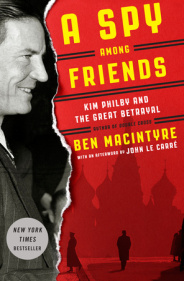
Book Club: A Spy Among Friends: Kim Philby and the Great Betrayal by Ben MacIntyre, January 14, 2015

clip_image003Master storyteller Ben Macintyre’s most ambitious work to date brings to life the twentieth century’s greatest spy story.

Harold ‘Kim’ Philby was the greatest spy in history, a brilliant and charming man who rose to head Britain ’s counterintelligence against the Soviet Union during the height of the Cold War—while he was secretly working for the enemy. And nobody thought he knew Philby like Nicholas Elliott, Philby’s best friend and fellow officer in MI6. The two men had gone to the same schools, belonged to the same exclusive clubs, grown close through the crucible of wartime intelligence work and long nights of drink and revelry. It was madness for one to think the other might be a communist spy, bent on subverting Western values and the power of the free world.

But Philby was secretly betraying his friend. Every word Elliott breathed to Philby was transmitted back to Moscow —and not just Elliott’s words, for in America , Philby had made another powerful friend: James Jesus Angleton, the crafty, paranoid head of CIA counterintelligence. Angleton’s and Elliott’s unwitting disclosures helped Philby sink almost every important Anglo-American spy operation for twenty years, leading countless operatives to their doom. Even as the web of suspicion closed around him, and Philby was driven to greater lies to protect his cover, his two friends never abandoned him—until it was too late. The stunning truth of his betrayal would have devastating consequences on the two men who thought they knew him best, and on the intelligence services he left crippled in his wake.

Told with heart-pounding suspense and keen psychological insight, and based on personal papers and never-before-seen British intelligence files, “A Spy Among Friends” is Ben Macintyre’s best book yet, a high-water mark in Cold War history telling.

The Book Discussion will be held on January 14 at 12:30 p.m. in the Darien Library on the 2nd Floor in the Harris Room.

Copies are available at the Darien Library.

Book Club: Strange Rebels: 1979 and the Birth of the 21st Century by Christian Caryl, December 10, 2014

Tom Reifenheiser will lead this book club discussion of “Strange Rebels: 1979 and the Birth of the 21st Century” by Christian Carrel

Review by Isaac Chotiner a senior editor at The New Republic:

If Christian Caryl had set out to write a book about 1968, showing how the many convulsions and uprisings of that astonishing year were connected, his task would have been an easy one. It might be difficult to prove cause and effect between, say, the May events in Paris and the chaos at the Democratic convention in August, but as people might have said at the time, something was in the air. It wasn’t mere coincidence that led to youth revolts all over the world. In the case of 1989, such connections are even more obvious.

Caryl, a contributing editor at Foreign Policy magazine and a former Newsweek correspondent, is faced with a much harder task in “Strange Rebels,” his engrossing new book of five case studies from 1979. This was the year Deng Xiaoping initiated the reforms that would spur the Chinese economy; the year an anxious Soviet Union invaded Afghanistan after its Communist allies faced resistance from local “freedom fighters”; the year Pope John Paul II made his momentous trip to Poland; the year Margaret Thatcher overturned an etiolated Labour government; and the year Iranian revolutionaries overthrew the shah, Our Man in Tehran.

As Caryl writes, in an effort to link stories that don’t, at first glance, hold together: “It was in 1979 that the twin forces of markets and religion, discounted for so long, came back with a vengeance.” Indeed, the power of both markets and religion registered in places beyond those covered in his main narrative. On the religious front, Gen. Muhammad Zia ul-Haq, the Pakistani military dictator who did so much to aid Afghanistan’s rebels, ordered his predecessor to be hanged and sped forward the Islamicization of his country. And as Caryl briefly mentions, the Moral Majority was formed in 1979. The following year saw the election of Thatcher’s ally Ronald Reagan and — compared with what preceded them — the relatively free-­market policies in Indira Gandhi’s India.

The problem for Caryl is that concepts like “religion” and “markets” are much too broad. John Paul II may have helped undermine the Communist regime in Poland, and the young religious Muslims of Afghanistan may have forced complacent observers to realize that faith wasn’t going to disappear from the world. (The upheaval in Iran, where a theocracy replaced an autocrat, makes this point even more forcefully.) But it’s difficult to draw comparisons between the forces motivating the Polish pope’s admiring countrymen and Iran’s student revolutionaries.

As for markets, it’s true that Thatcher preached their virtues, and that Deng took advantage of China’s awesome economic capacities. “The forces unleashed in 1979 marked the beginning of the end of the great socialist utopias that had dominated so much of the 20th century,” Caryl writes. But what does he mean by “socialist utopias”? Presumably he’s being ironic, but either way, it makes little sense to compare postwar Labour governments (which were certainly subject to diminishing returns but which also gave birth to a highly successful welfare state) to the pathological murderousness of Mao’s China. Caryl notes that Thatcher’s “belief in individual responsibility and the primacy of personal freedom had its roots in a spiritual stance rather than an economic theory” — an attempt to link the free-market “fundamentalism” of the prime minster with the religiosity on display in some of the book’s other sections. But the men Caryl terms the “religious thinkers” of the Iranian Revolution would hardly be conceptual allies of Margaret Thatcher.

“Strange Rebels” is a well-written and thorough work of history whose elements don’t really cohere. About one thing, however, Caryl is certainly right: “The political experiments of 1979 continue to define our world.” It has become something of a cliché to remark on the consequences of these various events, especially — post‑9/11 — the decision of the Soviet Union to invade the future haven of Osama bin Laden. But sometimes clichés exist for an appropriate reason. Noting that things didn’t have to play out the way they did and recognizing that contingencies are a large part of history, Caryl concedes that “to study 1979 is also to study the tyranny of chance.” The clearest conclusion of this book is that 1979 happened, by chance, to be a monumental year.


« Older posts Newer posts »